talk-data.com talk-data.com

Topic

data-engineering

3395

tagged

Activity Trend

1 peak/qtr
2020-Q1 2026-Q1

Activities

3395 activities · Newest first

Getting Started with the INRANGE FC/9000 FICON Director

This IBM Redbooks publication discusses how to install, tailor, and configure the INRANGE FC/9000 FICON Director, in conjunction with the FICON topologies supported by zSeries and 9672 Generation 5 and Generation 6 servers. It focuses on the hardware installation as well as the software definitions needed to provide connectivity for supported FICON environments. This book provides planning information and FICON Director setup information. Also included are helpful utilities for monitoring and managing the INRANGE FC/9000 FICON Director environment. This document is intended for system engineers, SAN administrators, and system programmers who will plan and install INRANGE FC/9000 FICON Directors. A good background in systems planning, hardware and cabling infrastructure planning, and zSeries I/O definitions (HCD or IOCP), as well as Fibre Channel or FICON Directors, is assumed.

Introducing IBM Tivoli License Manager

IBM Tivoli License Manager is a new IBM product that fills a growing need to reconcile software licenses that are already in use in an organization, with the licenses owned by the organization. It offers a technical way to control and apply the software vendors’ pre-defined licensing policies. It allows the Administrator to easily manage different products in different ways, reflecting the rules of each products license agreement. The primary objective of this IBM Redbooks publication is to introduce the new IBM offering for designing and creating a license management solution, and it is targeted at the technical professional responsible for providing license management services in an IT organization. It can be used as a reference book for the deployment of IBM Tivoli License Manager Version 1.1, guiding you during the planning, installation, configuration, administration, tuning, and general product usage phases - focusing on how to effectively deploy this product in a way that quickly generates real business value for customers. This book is a valuable addition to the existing product documentation and should be read in conjunction with the official product documentation, which complements the concepts explained in this book. Please note that the additional material referenced in the text is not available from IBM.

XML Data Management: Native XML and XML-Enabled Database Systems

"This is an excellent book that combines a practical and analytical look at the subject." —Leo Korman, Principal Software Engineer, KANA Software As organizations begin to employ XML within their information-management and exchange strategies, data management issues pertaining to storage, retrieval, querying, indexing, and manipulation increasingly arise. Moreover, new information-modeling challenges also appear. —with its contributions from experts at the forefront of the XML field—addresses these key issues and challenges, offering insights into the advantages and drawbacks of various XML solutions, best practices for modeling information with XML, and developing custom, in-house solutions. XML Data Management In this book, you will find discussions on the newest native XML databases, along with information on working with XML-enabled relational database systems. In addition, thoroughly examines benchmarks and analysis techniques for performance of XML databases. XML Data Management Topics covered include: The power of good grammar and style in modeling information to alleviate the need for redundant domain knowledge Tamino's XML storage, indexing, querying, and data access features The features and APIs of open source eXist Berkeley DB XML's ability to store XML documents natively IBM's DB2 Universal Database and its support for XML applications Xperanto's method of addressing information integration requirements Oracle's XMLType for managing document centric XML documents Microsoft SQL Server 2000's support for exporting and importing XML data A generic architecture for storing XML documents in a relational database X007, XMach-1, XMark, and other benchmarks for evaluating XML database performance Numerous case studies demonstrate real-world problems, industry-tested solutions, and creative applications of XML data management solutions. Written for both XML and relational database professionals, provides a promising new approach to data management, one that is sure to positively impact the way organizations manage and exchange information. XML Data Management 0201844524B01302003

Database Design for Mere Mortals™: A Hands-On Guide to Relational Database Design, Second Edition

“This book takes the somewhat daunting process of database design and breaks it into completely manageable and understandable components. Mike’s approach whilst simple is completely professional, and I can recommend this book to any novice database designer.” – Sandra Barker, Lecturer, University of South Australia, Australia “Databases are a critical infrastructure technology for information systems and today’s business. Mike Hernandez has written a literate explanation of database technology–a topic that is intricate and often obscure. If you design databases yourself, this book will educate you about pitfalls and show you what to do. If you purchase products that use a database, the book explains the technology so that you can understand what the vendor is doing and assess their products better.” – Michael Blaha, consultant and trainer, author of A Manager’s Guide to Database Technology “If you told me that Mike Hernandez could improve on the first edition of Database Design for Mere Mortals I wouldn’t have believed you, but he did! The second edition is packed with more real-world examples, detailed explanations, and even includes database-design tools on the CD-ROM! This is a must-read for anyone who is even remotely interested in relational database design, from the individual who is called upon occasionally to create a useful tool at work, to the seasoned professional who wants to brush up on the fundamentals. Simply put, if you want to do it right, read this book!” – Matt Greer, Process Control Development, The Dow Chemical Company “Mike’s approach to database design is totally common-sense based, yet he’s adhered to all the rules of good relational database design. I use Mike’s books in my starter database-design class, and I recommend his books to anyone who’s interested in learning how to design databases or how to write SQL queries.” – Michelle Poolet, President, MVDS, Inc. “Slapping together sophisticated applications with poorly designed data will hurt you just as much now as when Mike wrote his first edition, perhaps even more. Whether you’re just getting started developing with data or are a seasoned pro; whether you've read Mike’s previous book or this is your first; whether you're happier letting someone else design your data or you love doing it yourself–this is the book for you. Mike’s ability to explain these concepts in a way that’s not only clear, but fun, continues to amaze me.” –From the Foreword by Ken Getz, MCW Technologies, coauthor ASP.NET Developer's JumpStart “The first edition of Mike Hernandez’s book Database Design for Mere Mortals was one of the few books that survived the cut when I moved my office to smaller quarters. The second edition expands and improves on the original in so many ways. It is not only a good, clear read, but contains a remarkable quantity of clear, concise thinking on a very complex subject. It’s a must for anyone interested in the subject of database design.” – Malcolm C. Rubel, Performance Dynamics Associates “Mike’s excellent guide to relational database design deserves a second edition. His book is an essential tool for fledgling Microsoft Access and other desktop database developers, as well as for client/server pros. I recommend it highly to all my readers.” – Roger Jennings, author of Special Edition Using Access 2002 “There are no silver bullets! Database technology has advanced dramatically, the newest crop of database servers perform operations faster than anyone could have imagined six years ago, but none of these technological advances will help fix a bad database design, or capture data that you forgot to include! Database Design for Mere Mortals™, Second Edition, helps you design your database right in the first place!” – Matt Nunn, Product Manager, SQL Server, Microsoft Corporation “When my brother started his professional career as a developer, I gave him Mike’s book to help him understand database concepts and make real-world application of database technology. When I need a refresher on the finer points of database design, this is the book I pick up. I do not think that there is a better testimony to the value of a book than that it gets used. For this reason I have wholeheartedly recommended to my peers and students that they utilize this book in their day-to-day development tasks.” – Chris Kunicki, Senior Consultant, OfficeZealot.com “Mike has always had an incredible knack for taking the most complex topics, breaking them down, and explaining them so that anyone can ‘get it.’ He has honed and polished his first very, very good edition and made it even better. If you're just starting out building database applications, this book is a must-read cover to cover. Expert designers will find Mike’s approach fresh and enlightening and a source of great material for training others.” – John Viescas, President, Viescas Consulting, Inc., author of Running Microsoft Access 2000 and coauthor of SQL Queries for Mere Mortals “Whether you need to learn about relational database design in general, design a relational database, understand relational database terminology, or learn best practices for implementing a relational database, Database Design for Mere Mortals™, Second Edition, is an indispensable book that you’ll refer to often. With his many years of real-world experience designing relational databases, Michael shows you how to analyze and improve existing databases, implement keys, define table relationships and business rules, and create data views, resulting in data integrity, uniform access to data, and reduced data-entry errors.” – Paul Cornell, Site Editor, MSDN Office Developer Center Sound database design can save hours of development time and ensure functionality and reliability. is a straightforward, platform-independent tutorial on the basic principles of relational database design. It provides a commonsense design methodology for developing databases that work. Database Design for Mere Mortals™, Second Edition, Database design expert Michael J. Hernandez has expanded his best-selling first edition, maintaining its hands-on approach and accessibility while updating its coverage and including even more examples and illustrations. This edition features a CD-ROM that includes diagrams of sample databases, as well as design guidelines, documentation forms, and examples of the database design process. This book will give you the knowledge and tools you need to create efficient and effective relational databases.

MySQL Pocket Reference

If you use MySQL, you know why it's the world's most popular open source database: small, fast, and powerful, and so rich in features that no administrator or programmer can stay familiar with all of them. There are always some little-known commands and clauses that could help you become more efficient in your work if you could just keep them in mind. The problem is, you don't always have time to stop and thumb through an exhaustive reference when you're hard at work. If you need a quick reminder, the MySQL Pocket Reference can lead you straight to the answer you need to know to get the job done. Easy to take and use anywhere, this little book provides instant reminders on how to use important MySQL functions in conjunction with key parts of the LAMP open source infrastructure. A complete reference to the MySQL version of SQL, this pocket guide also serves as a convenient companion to our large, in-depth volume, Managing and Using MySQL. The book covers installation of MySQL and includes a description of SQL commands, data types, operators, and functions. In this small book, you get a handy reference to the enormous feature set of MySQL, the dominant database in the open source world. O'Reilly's Pocket References have become a favorite among programmers everywhere. By providing important details in a succinct, well-organized format, these pocket-sized books deliver just what you need to complete the task at hand. When you've reached a sticking point in your work and need to get to a solution quickly, the new MySQL Pocket Reference is the book you'll want to have.

TOAD® Handbook

TOAD Handbook is a guide for developing Oracle applications and administering Oracle databases with TOAD. Starting with installation and configuration, the book covers the TOAD SQL editors in depth, including dozens of helpful, undocumented features. Later chapters discuss reporting and exporting data and using several add-on tools designed to enhance TOAD development. Along the way, the authors provide critical insights into the workings of TOAD and how developers can use it to make the most of their applications. Includes a foreword by Jim McDaniel, the inventor of TOAD.

SAP on DB2 Universal Database for OS/390 and z/OS: Multiple Components in One Database (MCOD)

The Multiple Components in One Database (MCOD) feature of SAP enables a reduction in the number of DB2 systems that need to be installed and maintained. This significantly simplifies overall database administration and is considered one of the major DB2 competitive advantages. Please note that the additional material referenced in the text is not available from IBM.

Moving Data Across the DB2 Family

Moving data across different databases and even different platforms has been a common task in IT shops for quite some time. Applications may have been developed independently and over time, using packages and different technology; and data might reside on different platforms exploiting the specific platform strong points. However, there still is a growing need for applications that need to access all of this data for overall processing. While new Web related technologies are emerging with the intent to provide functions to collect and integrate information across multiple databases and applications for access in real time, moving data to one location for overall processing is still a very common requirement. This IBM Redbooks publication provides an overview of what is currently available within the DB2 Family of products (specifically DB2 for z/OS, and DB2 for UNIX and Windows) in terms of functions, tools, and utilities to satisfy the need for moving data. We focus on discussing High Performance Unload and Cross Loader; the first one is a tool, the second one is a new option of the Load utility, since they are the latest functions that IBM has released. We also introduce the concepts and some examples of using the Federated Database support.

PostgreSQL

PostgreSQL is the world¿s most advanced open-source database. PostgreSQL is the most comprehensive, in-depth, and easy-to-read guide to this award-winning database. This book starts with a thorough overview of SQL, a description of all PostgreSQL data types, and a complete explanation of PostgreSQL commands. If you are a developer or an administrator, you¿ll love the chapter that explores PostgreSQL performance. The authors explain how PostgreSQL stores data on disk (and in memory) and how to measure and influence the effectiveness of PostgreSQL¿s caching mechanisms. You¿ll also learn how PostgreSQL generates and evaluates execution plans. The authors explain all of the query operators that can appear in the results of an EXPLAIN command, describing the performance implications of each operator as well as the conditions which will cause PostgreSQL to use that operator. PostgreSQL is also a complete guide for the developer. Whether you¿re developing with C, C++, ODBC, Embedded SQL, Java, Tcl/Tk, Perl, Python or PHP, you¿ll find a comprehensive description of the PostgreSQL API for your language of choice. Easy to follow exercises will walk you through the development of working applications that fully demonstrate the features offered by each API. You will also find a chapter that describes the PL/pgSQL server-side procedural language, learning how to build triggers, functions, and stored-procedures. The authors have even included a chapter that walks you through the process of extending the PostgreSQL server with custom-written C functions and new data types. The accompanying web site, www.conjectrix.com, contains downloadable versions of all of the sample code and a wealth of PostgreSQL-related resources. The last section of PostgreSQL was written for the PostgreSQL administrator. You will learn how to install PostgreSQL on Windows, Linux, and Unix systems, from source code or from pre-compiled installers. The authors have described all of the PostgreSQL configuration options (compile-time, startup, and on-the-fly). The chapter on PostgreSQL security describes all of the authentication protocols that you can choose from and describes how to secure your database, both internally and externally. If you have to support a multi-national environment, you will find the chapter on internationalization and localization to be invaluable. You won¿t find a more complete guide to PostgreSQL anywhere. The authors have made PostgreSQL approachable by leading the reader from basic concepts to advanced features. Whether you¿re a database beginner or an advanced user, you will find this book a valuable addition to your library.

Absolute Beginner’s Guide to Microsoft® Access 2002

Microsoft Access 2002 is a powerful, relational database software package that makes it easy to create and manage complex databases. With Access, users can create a database quickly from scratch or by using an Access database Wizard. Once the database is created, Access provides all the tools needed to enter and manipulate data. With the help of the Absolute Beginner's Guide, readers are able to quickly start a new database by using the Database Wizard, create tables from scratch or by using a Wizard, add and edit database information by using both tables and forms and manipulate data in a number of tables by using queries and reports. The book assumes absolutely no prior knowledge of the topic, and learning is easy because of the book's lighthearted but no-nonsense style. It serves as an excellent resource for users who are completely new to Access 2002 or who are upgrading from a previous version of the software.

Oracle PL/SQL Language Pocket Reference, Second Edition

Like most PL/SQL programmers, you've found Oracle PL/SQL Programming to be a reference book you can't do without. Packed with examples and recommendations, it's a book that has helped everyone, from Oracle Forms developers to database administrators, make the most of PL/SQL. But you can't always carry it with you, and even at your desk there are times when you just need a reminder, a quick answer to a problem you're up against. For times like those, PL/SQL experts Stephen Feuerstein, Bill Pribyl, and Chip Dawes have written a new edition of Oracle PL/SQL Language Pocket Reference. Updated for Oracle9i, this little book is easy to take with you and use anywhere for quick problem solving. The second edition of the Oracle PL/SQL Language Pocket Reference boils down the most vital information from Oracle PL/SQL Programming into a convenient quick reference to PL/SQL basics. This compact book will be indispensable for new and seasoned Oracle database developers alike. It summarizes features available in Oracle9i and provides essential information on PL/SQL block structure, fundamental language elements, control statements, and use of procedures, functions, packages, triggers, Oracle objects, external procedures, and methods of calling Java classes from PL/SQL. O'Reilly's Pocket References have become a favorite among developers and database administrators everywhere. By providing a wealth of important details in a concise, well-organized format, these handy books deliver just what you need to complete the task at hand. When you've reached a sticking point in your work and need to get to a solution quickly, the new edition of Oracle PL/SQL Language Pocket Reference is the book you'll want to have.

IBM TotalStorage Expert Hands-On Usage Guide

The IBM TotalStorage Expert V2R1 is the rebranded name for the IBM Storwatch Expert. It provides all the function in the StorWatch versions you have come to rely on - and then some. The IBM Total Storage Expert is made up of two component features: Enterprise Storage Server (ESS) Expert and Enterprise Tape Library (ETL) Expert. IBM TotalStorage Expert helps storage administrators boost the productivity of storage resources. It gathers and presents information that helps administrators manage the Enterprise Storage Server (ESS) and three Enterprise Tape Library (ETL) solutions: IBM TotalStorage Enterprise Automated Tape Library, IBM TotalStorage Virtual Tape Server, and IBM TotalStorage Peer-to-Peer Virtual Tape Server. The TotalStorage Expert prepares reports and graphical charts from the data it has collected. These reports and charts can be used in managing assets, capacity, and performance for your ESSs and ETLs. This IBM Redbooks publication will help you to install, tailor, and configure the TotalStorage Expert, and will show you how to use TotalStorage Expert.

Real World XML

Steven Holzner's friendly, easy-to-read style has turned this book (formerly known as Inside XML) into the leading reference on XML. Unlike other XML books, this one is packed with hundreds of real-world examples, fully tested and ready to use! Holzner teaches you XML like no other author can, covering every major XML topic today and detailing the ways XML is used now--connecting XML to databases (both locally and on web servers), stying XML for viewing in today's web browsers, reading and parsing XML documents in browsers, writing and using XML schemas, creating graphical XML browsers, working with the Simple Object Access Protocol (SOAP), and a great deal more. Real World XML is designed to be the standard in XML coverage--more complete, and more accessible, than any other. "The author's approach is definitely bottom up, written in a highly personable tone. He makes efficient use of example code, which sets this book apart from many I have read in the past. His examples bring to life the code without overwhelming the reader, and he does not present any examples for which the reader has not been prepared. In addition, no prior knowledge of XML is assumed. As such, this is an excellent book for both beginners and intermediate level web designers and programmers. Experts, too, will find this book of value, due to its emphasis on real world applicability. Overall, this book will benefit all web developers and programmers, with a special emphasis on beginner and intermediate developers."--Donna A. Dulo, MS, MA, Senior Systems Engineer, U.S. Department of Defense "This book will provide a brilliant basis for anyone wishing to keep up to speed with the new XML developments."--Mr. Andrew Madden, Department of Computer Science, University of Wales "I found this book's strengths to be: its exhaustive specification reference for the conscientious developer; access to the official specs, which is key; the wide variety of choices provided for all aspects of XML; several alternatives provided for each editor, browser, parser, stylesheet transform engine, and programming language; and working examples that show the power of the tools used."--Jaime Ryan, Software Developer/Documentation Manager, Blue Titan Software

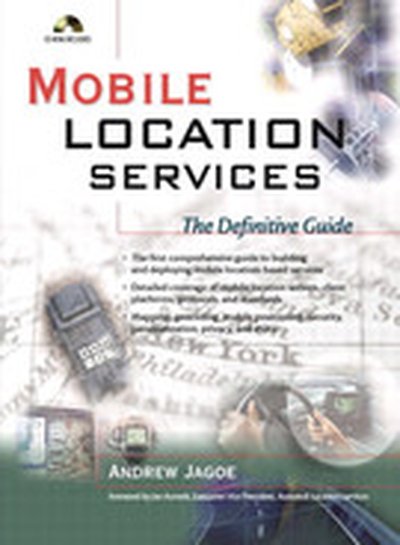
Mobile Location Services: The Definitive Guide

The first comprehensive guide to building and deploying mobile location-based services Detailed coverage of mobile location servers, client platforms, protocols, and standards Mapping, geocoding, mobile positioning, security, personalization, privacy, and more Foreword by Joe Astroth, Executive Vice President, Autodesk Location Services "I expect this comprehensive book to inspire a new generation of engineers and to help propel a new wave of independent software vendors. I only wish it was available to our staff as we developed some of our earliest services." —Joe Astroth, Executive Vice President, Autodesk Location Services The first start-to-finish guide to developing location-based services. Tomorrow's mobile applications must be smarter than ever, accessing and intelligently using a wide range of location data. In Mobile Location Services, leading mobile application consultant Andrew Jagoe presents the first end-to-end solutions guide to building and deploying location-based services and applications. Jagoe addresses every key development challenge and presents insightful case studies and interviews with key industry leaders. Mobile location servers and the components of an end-to-end location-based solution Spatial analysis: digital mapping, geocoding, routing, map image generation, and point-of-interest searches Mobile positioning: using and augmenting GPS technology Authentication and security in location-based applications Personalization, profiling, and privacy Mobile location clients: platform, protocols, languages, and localization issues Key applications: navigation, emergency assistance, travel services, advertising/marketing, and more Includes detailed appendices on the Geography Markup Language (GML), the Location Interoperability Forum's Mobile Location Protocol, and P3P privacy standards CD-ROM INCLUDED The accompanying CD-ROM contains several useful tools for developing mobile location services, as well as a list of important resources on the Internet.

Geac System21 commerce.connect: Implementation on the IBM eServer iSeries Server

This IBM Redbooks publication introduces the new Geac commerce platform .connect applications -- the call.connect and vendor.connect applications. These applications extend and enhance the capabilities of Geac System21 into the intranet and Internet. This book targets consultants or customers who work with these .connect applications. It explains how to install, maintain, integrate, and manage these applications on the IBM eServer iSeries server. It also helps you to understand the architecture and middleware used by the applications. Prior to reading this book, you must be familiar with the basic, traditional use of the iSeries or AS/400 and System21. For example, you should know how to enter simple commands and understand such concepts as the library list. Similarly for System21, you should be familiar with the menus and such tasks as defining a System21 user. As necessary throughout the book, detail is provided about the newer, less traditional features of the iSeries such as the integrated files system (IFS), Qshell, Java, and WebSphere.

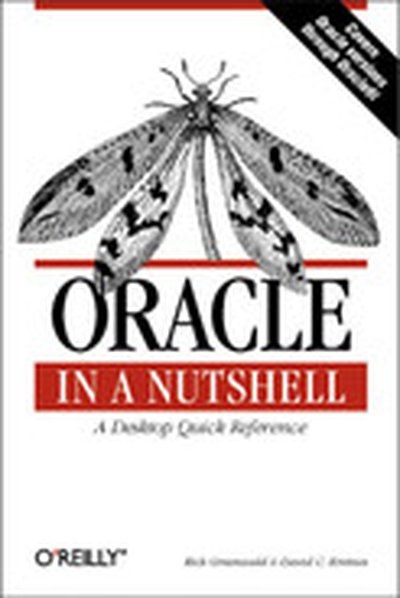
Oracle in a Nutshell

Introduced a quarter-century ago, the Oracle database remains the leading enterprise relational database management system (RDBMS) in the world. Oracle is a complex system, offering a myriad of products, languages, and tools. Frequent updates, releases, and editions complicate the ability of Oracle users to keep up with the huge amounts of frequently changing information about the database and its capabilities.The goal of Oracle in a Nutshell is to pull together the most essential information on Oracle architecture, syntax, and user interfaces. The content and format of this book, an admirable addition to O'Reilly's respected In-a-Nutshell line, combine to boil down vital Oracle commands, language constructs, parameters, and file formats in a succinct and highly accessible desktop reference. Oracle in a Nutshell covers the information that database administrators PL/SQL and Java developers, and system, network, and security administrators need as they manage Oracle databases and write code for these databases. It includes: Oracle Foundations--Overview of the Oracle architecture (memory structures and fundamental concepts), Oracle's various editions and packaging options, summary of the initialization file parameters and data dictionary views, and fundamentals of Oracle's concurrency scheme, security mechanisms (privileges, profiles, roles), and networking files (TNSNAMES.ORA, SQLNET.ORA, LISTENER.ORA, DAP.ORA, NAMES.ORA, CMAN.ORA) and options. Oracle Languages--Syntax summary for SQL language statements, SQL function calls PL/SQL language statements and characteristics, PL/SQL built-in package headers, and Java (JDBC and SQLJ) interfaces to the Oracle database. Oracle Tools--Commands provided with SQLPlus, SQLLoader, Import and Export, Oracle Recovery Manager (RMAN) and other backup/recovery methods, Oracle Enterprise Manager, and various performance tuning tools (Explain Plan, TKPROF, AUTOTRACE, UTLBSTAT, UTLESTAT, Statspack). Appendixes--Summary of Oracle datatypes, operators, expressions, conditions, numeric and date formats, and resources for additional reading.

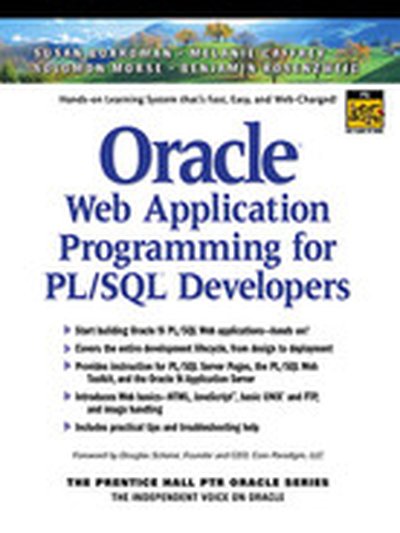
Oracle® Web Application Programming for PL/SQL® Developers

The hands-on, rapid-mastery guide to Oracle PL/SQL Web development. Start building Oracle 9i PL/SQL Web applications—hands on Covers the entire development lifecycle, from design to deployment Provides instruction for PL/SQL Server Pages, the PL/SQL Web Toolkit, and the Oracle 9i Application Server Introduces Web basics—HTML, JavaScript, basic UNIX and FTP, and image handling Reviews PL/SQL and SQL concepts Includes practical tips and troubleshooting help Leverage your SQL and PL/SQL experience to build powerful data-driven Web and e-business applications—starting right now! In this book, a team of Columbia University PL/SQL instructors cover the core pieces of what you need to know, from preliminary configuration to deployment of dynamic, data-driven applications. You'll find practical examples, hands-on exercises, and dozens of practical tips and solutions designed to save you time, effort, and frustration. One step at a time, discover how to: Configure Oracle's Internet Application Server Control Web applications and servers remotely Build Oracle Web applications with PL/SQL Create dynamic, data-driven pages Test, debug, troubleshoot, and deploy your applications Maintain and optimize running Web applications Whether you've been writing simple queries or complex PL/SQL code, this book takes your database development skills onto the Web—and into the future!

Open Source Web Development with LAMP: Using Linux, Apache, MySQL, Perl, and PHP

Open Source technologies are providing contemporary developers with a range of cost-effective and robust alternatives to commercial software for building dynamic, data-driven Web applications. This practical guide presents a comprehensive survey of LAMP (Linux, Apache, MySQL, Perl, and PHP), and it shows how these solutions can be implemented efficiently and securely while improving reliability and dramatically cutting costs. focuses on the most important core material necessary so that developers can "hit the ground running" and begin building applications right away. This book presents a balanced overview of LAMP technologies and allows the reader to decide which tool may be appropriate for the particular task at hand. After a general overview of Open Source technologies, the book presents an overview of the Web before moving on to cover structural, static, dynamic, and embedded technologies. The coverage here provides a description of the strengths and weaknesses of each Open Source technology and also acts as a reference guide for each application. Open Source Web Development with LAMP Topics covered include: A comprehensive survey of Open Source technologies Static and dynamic data and embedded HTML on the Web Linux and Unix distributions, installations, and commands Apache Web Server, Perl, and MySQL Web site META language (WML) Common gateway interface (CGI) and mod_perl Server Side Includes (SSI), Embperl, and Mason PHP syntax and functions In addition to the discussions in the book, a companion Web site--www.opensourcewebbook.com--contains supplemental information, including tools, source code, helpful links to additional resources, and errata as needed. Complete in coverage and practical in presentation, spotlights the tools and technologies today's developers need to create workable, dynamic, and secure Web sites using Open Source technologies. Open Source Web Development with LAMP 020177061XB11072002

Sams Teach Yourself MySQL in 21 Days, Second Edition

MySQL is the most widely installed open-source database. Approximately 3.5 million MySQL servers are in use and more than 45% of databases used on Linux worldwide are MySQL databases. Its latest version, MySQL 4.1 closes the gap between MySQL and other, more sophisticated databases. Version 4.1 permits the use of MySQL as an embedded database, which means it can be compiled into another application and used in a range of devices. The second edition of Sams Teach Yourself MySQL in 21 Days has been completely rewritten by a new author. The book enables a reader to create powerful databases using MySQL. He willnot only learn how to integrate MySQL into a database-driven Web site, but also how to embed MySQL into other compiled applications.

XSLT Cookbook

Critical for converting XML documents, and extremely versatile, the XSLT language nevertheless has complexities that can be daunting. The XSLT Cookbook is a collection of hundreds of solutions to problems that Extensible Stylesheet Language Transformations (XSLT) developers regularly face. The recipes range from simple string-manipulation and mathematical processing to more complex topics like extending XSLT, testing and debugging XSLT stylesheets, and graphics creation with SVG. Recipes can be run directly or tweaked to fit your particular application's needs more precisely. Each recipe walks through a problem and a solution, with explanations of the choices made and techniques used in creating that solution, and many recipes include alternate solutions and explore issues like convenience and performance. Topics covered include: String manipulation Mathematical processing Date and time handling Interactions between calendar systems Selecting content in source documents Efficient tree-manipulation Conversions from XML to plain text Tweaking XML documents with stylesheets Using XSLT to query XML documents Generating HTML with XSLT Creating charts and graphs with SVG and XSLT Generating C and XSLT code using XSLT Processing Visio documents in XSLT Working with XML Topic Maps (XTM) Using XSLT to create SOAP documentation from WSDL Extending XSLT with additional functions Embedding XSLT in other processing Testing and debugging XSLT stylesheets Creating generic XSLT processors which work on many XML vocabularies The XSLT Cookbook provides an ideal companion both for developers still figuring out XSLT's template-based approach who want to learn by example, and for developers who know XSLT and want a collection of quickly reusable recipes. XSLT frequently offers a number of ways to perform a transformation, and the best solution may not always be the most straightforward. The recipes in this Cookbook demonstrate and explain XSLT's template-based logic, a frequent stumbling block for developers new to XSLT. Among the variety of XSLT books now available, none has the explicit solution-oriented approach of this Cookbook.