talk-data.com talk-data.com

Topic

data

2093

tagged

Activity Trend

3 peak/qtr
2020-Q1 2026-Q1

Activities

Showing filtered results

Filtering by: O'Reilly Data Science Books ×
Common Errors in Statistics (and How to Avoid Them), 4th Edition

Praise for Common Errors in Statistics (and How to Avoid Them) "A very engaging and valuable book for all who use statistics in any setting." —CHOICE "Addresses popular mistakes often made in data collection and provides an indispensable guide to accurate statistical analysis and reporting. The authors' emphasis on careful practice, combined with a focus on the development of solutions, reveals the true value of statistics when applied correctly in any area of research." —MAA Reviews Common Errors in Statistics (and How to Avoid Them), Fourth Edition provides a mathematically rigorous, yet readily accessible foundation in statistics for experienced readers as well as students learning to design and complete experiments, surveys, and clinical trials. Providing a consistent level of coherency throughout, the highly readable Fourth Edition focuses on debunking popular myths, analyzing common mistakes, and instructing readers on how to choose the appropriate statistical technique to address their specific task. The authors begin with an introduction to the main sources of error and provide techniques for avoiding them. Subsequent chapters outline key methods and practices for accurate analysis, reporting, and model building. The Fourth Edition features newly added topics, including: Baseline data Detecting fraud Linear regression versus linear behavior Case control studies Minimum reporting requirements Non-random samples The book concludes with a glossary that outlines key terms, and an extensive bibliography with several hundred citations directing readers to resources for further study. Presented in an easy-to-follow style, Common Errors in Statistics, Fourth Edition is an excellent book for students and professionals in industry, government, medicine, and the social sciences.

R For Dummies

Still trying to wrap your head around R? With more than two million users, R is the open-source programming language standard for data analysis and statistical modeling. R is packed with powerful programming capabilities, but learning to use R in the real world can be overwhelming for even the most seasoned statisticians. This easy-to-follow guide explains how to use R for data processing and statistical analysis, and then, shows you how to present your data using compelling and informative graphics. You'll gain practical experience using R in a variety of settings and delve deeper into R's feature-rich toolset. Includes tips for the initial installation of R Demonstrates how to easily perform calculations on vectors, arrays, and lists of data Shows how to effectively visualize data using R's powerful graphics packages Gives pointers on how to find, install, and use add-on packages created by the R community Provides tips on getting additional help from R mailing lists and websites Whether you're just starting out with statistical analysis or are a procedural programming pro, R For Dummies is the book you need to get the most out of R.

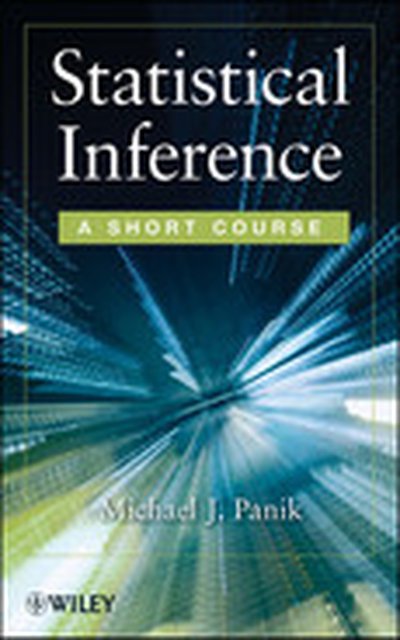
Statistical Inference: A Short Course

A concise, easily accessible introduction to descriptive and inferential techniques Statistical Inference: A Short Course offers a concise presentation of the essentials of basic statistics for readers seeking to acquire a working knowledge of statistical concepts, measures, and procedures. The author conducts tests on the assumption of randomness and normality, provides nonparametric methods when parametric approaches might not work. The book also explores how to determine a confidence interval for a population median while also providing coverage of ratio estimation, randomness, and causality. To ensure a thorough understanding of all key concepts, Statistical Inference provides numerous examples and solutions along with complete and precise answers to many fundamental questions, including: How do we determine that a given dataset is actually a random sample? With what level of precision and reliability can a population sample be estimated? How are probabilities determined and are they the same thing as odds? How can we predict the level of one variable from that of another? What is the strength of the relationship between two variables? The book is organized to present fundamental statistical concepts first, with later chapters exploring more advanced topics and additional statistical tests such as Distributional Hypotheses, Multinomial Chi-Square Statistics, and the Chi-Square Distribution. Each chapter includes appendices and exercises, allowing readers to test their comprehension of the presented material. Statistical Inference: A Short Course is an excellent book for courses on probability, mathematical statistics, and statistical inference at the upper-undergraduate and graduate levels. The book also serves as a valuable reference for researchers and practitioners who would like to develop further insights into essential statistical tools.

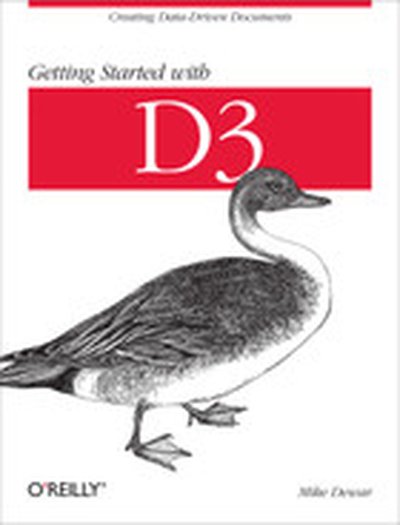
Getting Started with D3

Learn how to create beautiful, interactive, browser-based data visualizations with the D3 JavaScript library. This hands-on book shows you how to use a combination of JavaScript and SVG to build everything from simple bar charts to complex infographics. You’ll learn how to use basic D3 tools by building visualizations based on real data from the New York Metropolitan Transit Authority. Using historical tables, geographical information, and other data, you’ll graph bus breakdowns and accidents and the percentage of subway trains running on time, among other examples. By the end of the book, you’ll be prepared to build your own web-based data visualizations with D3. Join a dataset with elements of a webpage, and modify the elements based on the data Map data values onto pixels and colors with D3’s scale objects Apply axis and line generators to simplify aspects of building visualizations Create a simple UI that allows users to investigate and compare data Use D3 transitions in your UI to animate important aspects of the data Get an introduction to D3 layout tools for building more sophisticated visualizations If you can code and manipulate data, and know how to work with JavaScript and SVG, this book is for you.

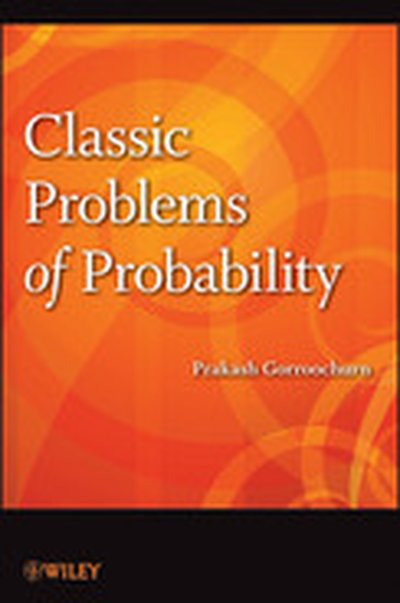
Classic Problems of Probability

"A great book, one that I will certainly add to my personal library." --Paul J. Nahin, Professor Emeritus of Electrical Engineering, University of New Hampshire Classic Problems of Probability presents a lively account of the most intriguing aspects of statistics. The book features a large collection of more than thirty classic probability problems which have been carefully selected for their interesting history, the way they have shaped the field, and their counterintuitive nature. From Cardano's 1564 Games of Chance to Jacob Bernoulli's 1713 Golden Theorem to Parrondo's 1996 Perplexing Paradox, the book clearly outlines the puzzles and problems of probability, interweaving the discussion with rich historical detail and the story of how the mathematicians involved arrived at their solutions. Each problem is given an in-depth treatment, including detailed and rigorous mathematical proofs as needed. Some of the fascinating topics discussed by the author include: Buffon's Needle problem and its ingenious treatment by Joseph Barbier, culminating into a discussion of invariance Various paradoxes raised by Joseph Bertrand Classic problems in decision theory, including Pascal's Wager, Kraitchik's Neckties, and Newcomb's problem The Bayesian paradigm and various philosophies of probability Coverage of both elementary and more complex problems, including the Chevalier de Méré problems, Fisher and the lady testing tea, the birthday problem and its various extensions, and the Borel-Kolmogorov paradox Classic Problems of Probability is an eye-opening, one-of-a-kind reference for researchers and professionals interested in the history of probability and the varied problem-solving strategies employed throughout the ages. The book also serves as an insightful supplement for courses on mathematical probability and introductory probability and statistics at the undergraduate level.

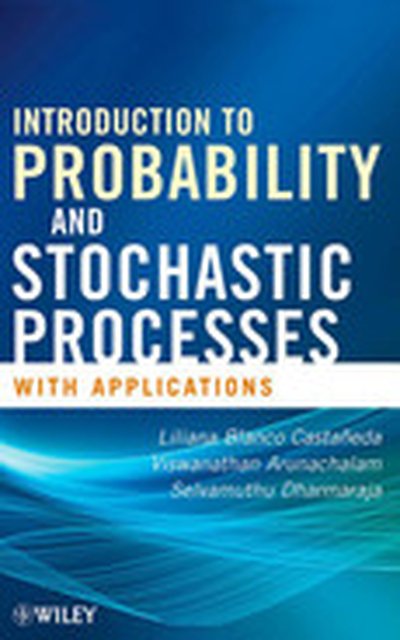
Introduction to Probability and Stochastic Processes with Applications

An easily accessible, real-world approach to probability and stochastic processes Introduction to Probability and Stochastic Processes with Applications presents a clear, easy-to-understand treatment of probability and stochastic processes, providing readers with a solid foundation they can build upon throughout their careers. With an emphasis on applications in engineering, applied sciences, business and finance, statistics, mathematics, and operations research, the book features numerous real-world examples that illustrate how random phenomena occur in nature and how to use probabilistic techniques to accurately model these phenomena. The authors discuss a broad range of topics, from the basic concepts of probability to advanced topics for further study, including Itô integrals, martingales, and sigma algebras. Additional topical coverage includes: Distributions of discrete and continuous random variables frequently used in applications Random vectors, conditional probability, expectation, and multivariate normal distributions The laws of large numbers, limit theorems, and convergence of sequences of random variables Stochastic processes and related applications, particularly in queueing systems Financial mathematics, including pricing methods such as risk-neutral valuation and the Black-Scholes formula Extensive appendices containing a review of the requisite mathematics and tables of standard distributions for use in applications are provided, and plentiful exercises, problems, and solutions are found throughout. Also, a related website features additional exercises with solutions and supplementary material for classroom use. Introduction to Probability and Stochastic Processes with Applications is an ideal book for probability courses at the upper-undergraduate level. The book is also a valuable reference for researchers and practitioners in the fields of engineering, operations research, and computer science who conduct data analysis to make decisions in their everyday work.

Bayesian Estimation and Tracking: A Practical Guide

A practical approach to estimating and tracking dynamic systems in real-worl applications Much of the literature on performing estimation for non-Gaussian systems is short on practical methodology, while Gaussian methods often lack a cohesive derivation. Bayesian Estimation and Tracking addresses the gap in the field on both accounts, providing readers with a comprehensive overview of methods for estimating both linear and nonlinear dynamic systems driven by Gaussian and non-Gaussian noices. Featuring a unified approach to Bayesian estimation and tracking, the book emphasizes the derivation of all tracking algorithms within a Bayesian framework and describes effective numerical methods for evaluating density-weighted integrals, including linear and nonlinear Kalman filters for Gaussian-weighted integrals and particle filters for non-Gaussian cases. The author first emphasizes detailed derivations from first principles of eeach estimation method and goes on to use illustrative and detailed step-by-step instructions for each method that makes coding of the tracking filter simple and easy to understand. Case studies are employed to showcase applications of the discussed topics. In addition, the book supplies block diagrams for each algorithm, allowing readers to develop their own MATLAB toolbox of estimation methods. Bayesian Estimation and Tracking is an excellent book for courses on estimation and tracking methods at the graduate level. The book also serves as a valuable reference for research scientists, mathematicians, and engineers seeking a deeper understanding of the topics.

Statistical Quality Control, 7th Edition

The Seventh Edition of Introduction to Statistical Quality Control provides a comprehensive treatment of the major aspects of using statistical methodology for quality control and improvement. Both traditional and modern methods are presented, including state-of-the-art techniques for statistical process monitoring and control and statistically designed experiments for process characterization, optimization, and process robustness studies. The seventh edition continues to focus on DMAIC (define, measure, analyze, improve, and control--the problem-solving strategy of six sigma) including a chapter on the implementation process. Additionally, the text includes new examples, exercises, problems, and techniques. Statistical Quality Control is best suited for upper-division students in engineering, statistics, business and management science or students in graduate courses.

Audiovisual Archives: Digital Text and Discourse Analysis

Today, audiovisual archives and libraries have become very popular especially in the field of collecting, preserving and transmitting cultural heritage. However, the data in these archives or libraries - videos, images, soundtracks, etc. - constitute as such only potential cognitive resources for a given public (or "target community"). One of the most crucial issues of digital audiovisual libraries is indeed to enable users to actively appropriate audiovisual resources for their own concern (in research, education or any other professional or non-professional context). This means, an adaptation of the audiovisual data to the specific needs of a user or user group can be represented by small and closed "communities" as well as by networks of open communities around the globe. "Active appropriation" is, basically speaking, the use of existing digital audiovisual resources by users or user communities according to their expectations, needs, interests or desires. This process presupposes: 1) the definition and development of models or "scenarios" of cognitive processing of videos by the user; 2) the availability of tools necessary for defining, developing, reusing and sharing meta-linguistic resources such as thesauruses, ontologies or description models by users or user communities. Both aspects are central to the so-called semiotic turn in dealing with digital (audiovisual) texts, corpora of texts or again entire (audiovisual) archives and libraries. They demonstrate practically and theoretically the well-known "from data to metadata" or "from (simple) information to (relevant) knowledge" problem, which obviously directly influences the effective use, social impact and relevancy, and therefore also the future, of digital knowledge archives. This book offers a systematic, comprehensive approach to these questions from a theoretical as well as practical point of view. Contents Part 1. The Practical, Technical and Theoretical Context 1. Analysis of an Audiovisual Resource. 2. The Audiovisual Semiotic Workshop (ASW) Studio - A Brief Presentation. 3. A Concrete Example of a Model for Describing Audiovisual Content. 4. Model of Description and Task of Analysis. Part 2. Tasks in Analyzing an Audiovisual Corpus 5. The Analytical Task of "Describing the Knowledge Object". 6. The Analytical Task of "Contextualizing the Domain of Knowledge". 7. The Analytical Task of "Analyzing the Discourse Production around a Subject". Part 3. Procedures of Description 8. Definition of the Domain of Knowledge and Configuration of the Topical Structure. 9. The Procedure of Free Description of an Audiovisual Corpus. 10. The Procedure of Controlled Description of an Audiovisual Corpus. Part 4. The ASW System of Metalinguistic Resources 11. An Overview of the ASW Metalinguistic Resources. 12. The Meta-lexicon Representing the ASW Universe of Discourse.

Beginning R: The Statistical Programming Language

Conquer the complexities of this open source statistical language R is fast becoming the de facto standard for statistical computing and analysis in science, business, engineering, and related fields. This book examines this complex language using simple statistical examples, showing how R operates in a user-friendly context. Both students and workers in fields that require extensive statistical analysis will find this book helpful as they learn to use R for simple summary statistics, hypothesis testing, creating graphs, regression, and much more. It covers formula notation, complex statistics, manipulating data and extracting components, and rudimentary programming. R, the open source statistical language increasingly used to handle statistics and produces publication-quality graphs, is notoriously complex This book makes R easier to understand through the use of simple statistical examples, teaching the necessary elements in the context in which R is actually used Covers getting started with R and using it for simple summary statistics, hypothesis testing, and graphs Shows how to use R for formula notation, complex statistics, manipulating data, extracting components, and regression Provides beginning programming instruction for those who want to write their own scripts Beginning R offers anyone who needs to perform statistical analysis the information necessary to use R with confidence.

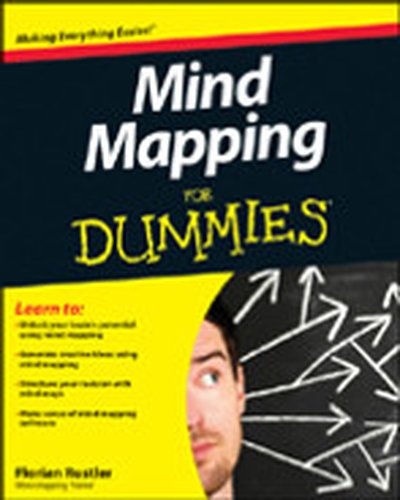
Mind Mapping For Dummies

Unlock your brain's potential using mind mapping Mind mapping is a popular technique that can be applied in a variety of situations and settings. Students can make sense of complex topics and structure their revision with mind mapping; business people can manage projects and collaborate with colleagues using mind maps, and any creative process can be supported by using a mind map to explore ideas and build upon them. Mind maps allow for greater creativity when recording ideas and information whatever the topic, and enable the note-taker to associate words with visual representations. Mind Mapping For Dummies explains how mind mapping works, why it's so successful, and the many ways it can be used. It takes you through the wide range of approaches to mind mapping, looks at the available mind mapping software options, and investigates advanced mind mapping techniques for a range of purposes, including studying for exams, improving memory, project management, and maximizing creativity. Suitable for students of all ages and study levels An excellent resource for people working on creative projects who wish to use mind mapping to develop their ideas Shows businesspeople how to maximize their efficiency, manage projects, and brainstorm effectively If you're a student, artist, writer, or businessperson, Mind Mapping For Dummies shows you how to unlock your brain's potential.

Probability, Statistics, and Stochastic Processes, 2nd Edition

Praise for the First Edition ". . . an excellent textbook . . . well organized and neatly written." — Mathematical Reviews ". . . amazingly interesting . . ." — Technometrics Thoroughly updated to showcase the interrelationships between probability, statistics, and stochastic processes, Probability, Statistics, and Stochastic Processes, Second Edition prepares readers to collect, analyze, and characterize data in their chosen fields. Beginning with three chapters that develop probability theory and introduce the axioms of probability, random variables, and joint distributions, the book goes on to present limit theorems and simulation. The authors combine a rigorous, calculus-based development of theory with an intuitive approach that appeals to readers' sense of reason and logic. Including more than 400 examples that help illustrate concepts and theory, the Second Edition features new material on statistical inference and a wealth of newly added topics, including: Consistency of point estimators Large sample theory Bootstrap simulation Multiple hypothesis testing Fisher's exact test and Kolmogorov-Smirnov test Martingales, renewal processes, and Brownian motion One-way analysis of variance and the general linear model Extensively class-tested to ensure an accessible presentation, Probability, Statistics, and Stochastic Processes, Second Edition is an excellent book for courses on probability and statistics at the upper-undergraduate level. The book is also an ideal resource for scientists and engineers in the fields of statistics, mathematics, industrial management, and engineering.

Research Methods for Studying Groups and Teams

This volume provides an overview of the methodological issues and challenges inherent in the study of small groups from the perspective of seasoned researchers in communication, psychology and other fields in the behavioral and social sciences. It summarizes the current state of group methods in a format that is readable, insightful, and useful for both new and experienced group researchers. This collection of essays will inspire new and established researchers alike to look beyond their current methodological approaches, covering both traditional and new methods for studying groups and exploring the full range of groups in face-to-face and online settings. The volume will be an important addition to graduate study on group research and will be a valuable reference for established group researchers, consultants and other practitioners. The essays in this volume when considered as a whole will be a contemporary interdisciplinary integration on group research methods.

Information Visualization, 3rd Edition

Most designers know that yellow text presented against a blue background reads clearly and easily, but how many can explain why, and what really are the best ways to help others and ourselves clearly see key patterns in a bunch of data? When we use software, access a website, or view business or scientific graphics, our understanding is greatly enhanced or impeded by the way the information is presented. This book explores the art and science of why we see objects the way we do. Based on the science of perception and vision, the author presents the key principles at work for a wide range of applications--resulting in visualization of improved clarity, utility, and persuasiveness. The book offers practical guidelines that can be applied by anyone: interaction designers, graphic designers of all kinds (including web designers), data miners, and financial analysts. Complete update of the recognized source in industry, research, and academic for applicable guidance on information visualizing Includes the latest research and state of the art information on multimedia presentation More than 160 explicit design guidelines based on vision science A new final chapter that explains the process of visual thinking and how visualizations help us to think about problems Packed with over 400 informative full color illustrations, which are key to understanding of the subject

SAS Encoding

Understanding the basic concepts of character encoding is necessary for creating, manipulating, and rendering any type of character data. An encoding is involved whenever data is brought into SAS from various external sources; whenever data is transferred between SAS applications running different locales or across the network via thin clients; and when output is written to external files, SAS data sets, printers, or Web pages. In each of these cases, something can go wrong. It is the encoder’s responsibility to ensure that the data is stored, processed, and rendered in the correct encoding. Manfred Kiefer's SAS Encoding: Understanding the Details explains the basic concepts of characters, encodings, glyphs, and fonts and gives practical examples of how to troubleshoot encoding problems. Addressed to the beginner as well as to the advanced SAS user, this book can help solve your encoding problems. It provides background information about encodings, shows how they are used with SAS software, and explains typical problems and ways to sort those out. It also presents examples of how to set up SAS software in an international environment.

Mathematical Statistics and Stochastic Processes

Generally, books on mathematical statistics are restricted to the case of independent identically distributed random variables. In this book however, both this case AND the case of dependent variables, i.e. statistics for discrete and continuous time processes, are studied. This second case is very important for today's practitioners. Mathematical Statistics and Stochastic Processes is based on decision theory and asymptotic statistics and contains up-to-date information on the relevant topics of theory of probability, estimation, confidence intervals, non-parametric statistics and robustness, second-order processes in discrete and continuous time and diffusion processes, statistics for discrete and continuous time processes, statistical prediction, and complements in probability. This book is aimed at students studying courses on probability with an emphasis on measure theory and for all practitioners who apply and use statistics and probability on a daily basis.

Textual Information Access: Statistical Models

This book presents statistical models that have recently been developed within several research communities to access information contained in text collections. The problems considered are linked to applications aiming at facilitating information access: - information extraction and retrieval; - text classification and clustering; - opinion mining; - comprehension aids (automatic summarization, machine translation, visualization). In order to give the reader as complete a description as possible, the focus is placed on the probability models used in the applications concerned, by highlighting the relationship between models and applications and by illustrating the behavior of each model on real collections. Textual Information Access is organized around four themes: informational retrieval and ranking models, classification and clustering (regression logistics, kernel methods, Markov fields, etc.), multilingualism and machine translation, and emerging applications such as information exploration. Contents Part 1: Information Retrieval 1. Probabilistic Models for Information Retrieval, Stéphane Clinchant and Eric Gaussier. 2. Learnable Ranking Models for Automatic Text Summarization and Information Retrieval, Massih-Réza Amini, David Buffoni, Patrick Gallinari, Tuong Vinh Truong and Nicolas Usunier. Part 2: Classification and Clustering 3. Logistic Regression and Text Classification, Sujeevan Aseervatham, Eric Gaussier, Anestis Antoniadis, Michel Burlet and Yves Denneulin. 4. Kernel Methods for Textual Information Access, Jean-Michel Renders. 5. Topic-Based Generative Models for Text Information Access, Jean-Cédric Chappelier. 6. Conditional Random Fields for Information Extraction, Isabelle Tellier and Marc Tommasi. Part 3: Multilingualism 7. Statistical Methods for Machine Translation, Alexandre Allauzen and François Yvon. Part 4: Emerging Applications 8. Information Mining: Methods and Interfaces for Accessing Complex Information, Josiane Mothe, Kurt Englmeier and Fionn Murtagh. 9. Opinion Detection as a Topic Classification Problem, Juan-Manuel Torres-Moreno, Marc El-Bèze, Patrice Bellot and Fréderic Béchet.

A Quantitative Approach to Commercial Damages: Applying Statistics to the Measurement of Lost Profits, + Website

How-to guidance for measuring lost profits due to business interruption damages A Quantitative Approach to Commercial Damages explains the complicated process of measuring business interruption damages, whether they are losses are from natural or man-made disasters, or whether the performance of one company adversely affects the performance of another. Using a methodology built around case studies integrated with solution tools, this book is presented step by step from the analysis damages perspective to aid in preparing a damage claim. Over 250 screen shots are included and key cell formulas that show how to construct a formula and lay it out on the spreadsheet. Includes Excel spreadsheet applications and key cell formulas for those who wish to construct their own spreadsheets Offers a step-by-step approach to computing damages using case studies and over 250 screen shots Often in the course of business, a firm will be damaged by the actions of another individual or company, such as a fire that shuts down a restaurant for two months. Often, this results in the filing of a business interruption claim. Discover how to measure business losses with the proven guidance found in A Quantitative Approach to Commercial Damages.

Cash Flow Analysis and Forecasting: The Definitive Guide to Understanding and Using Published Cash Flow Data

This book is the definitive guide to cash flow statement analysis and forecasting. It takes the reader from an introduction about how cash flows move within a business, through to a detailed review of the contents of a cash flow statement. This is followed by detailed guidance on how to restate cash flows into a template format. The book shows how to use the template to analyse the data from start up, growth, mature and declining companies, and those using US GAAP and IAS reporting. The book includes real world examples from such companies as Black and Decker (US), Fiat (Italy) and Tesco (UK). A section on cash flow forecasting includes full coverage of spreadsheet risk and good practice. Complete with chapters of particular interest to those involved in credit markets as lenders or counter-parties, those running businesses and those in equity investing, this book is the definitive guide to understanding and interpreting cash flow data.