talk-data.com talk-data.com

Topic

data

2093

tagged

Activity Trend

3 peak/qtr
2020-Q1 2026-Q1

Activities

Showing filtered results

Filtering by: O'Reilly Data Science Books ×
JMP 10 Design of Experiments Guide

The JMP 10 Design of Experiments Guide contains information about the JMP Design of Experiments (DOE) platform, including the JMP Custom Designer. This book covers a wide variety of designs including design evaluation, screening, response surface, full factorial, discrete choice, space-filling, non-linear, Taguchi, augmented, mixture designs, and more.

JMP 10 Modeling and Multivariate Methods

JMP 10 Modeling and Multivariate Methods begins by showing you how to take advantage of classic modeling techniques such as linear, nonlinear, and mixed models. The book continues with discussions on neural networking, time series analysis, multivariate techniques, and stepwise regression along with many other JMP modeling and multivariate methods. Examples guide you through each analysis, and statistical references and algorithms are included.

JMP 10 Quality and Reliability Methods

JMP 10 Quality and Reliability Methods covers platforms used for quality control and reliability engineering. The book provides of an overview of statistical methods, and describes some JMP 10 report windows and options. Read about lifetime distribution, reliability and survival analysis, recurrence analysis, reliability forecasting, and measurement systems analysis. Learn how to model changes in product reliability with Crow-AMSAA models. Also included are instructions for creating control charts, variability charts, Ishikawa diagrams, Pareto plots, and more.

JMP 10 Scripting Guide

The JMP 10 Scripting Guide provides extensive instructions for using the powerful JMP Scripting Language (JSL). This book begins with an introduction to JSL terminology, examples of how to write your own scripts, and details on script development tools such as the debugger and editor. A description of the language elements follows along with examples of writing JSL scripts to manipulate data tables, platforms, display objects, three-dimensional graphs, and matrices. Learn how to integrate JMP with SAS, R, and Microsoft Excel. Design applications in a drag-and-drop interface called Application Builder, and create add-ins to extend JMP functionality with Add-In Builder. Other topics include examples of scripts for common tasks and a syntax reference, which defines the functions, operators, and messages used in JSL.

gnuplot Cookbook

Master the art of technical plotting with 'gnuplot Cookbook'. This book serves as an indispensable guide to utilizing gnuplot's full range of capabilities for creating stunning 2D and 3D plots, interactive graphs, and seamless visual integration into programming projects. What this Book will help me do Gain precise control over the aesthetics and presentation of your graphs. Understand how to create complex graphical illustrations from multiple data sources. Learn to integrate gnuplot effectively into your programming workflows and systems. Discover how to produce professional-grade technical documents with high-quality charts and illustrations. Master interactive graph creation for engaging web content. Author(s) Lee Phillips, a seasoned expert in scientific and technical visualization, has leveraged years of practical experience to provide this comprehensive guide to gnuplot. With a sharp focus on clarity and functionality, Lee brings a hands-on approach to teaching through meticulously crafted examples and detailed explanations. Who is it for? This book is ideal for scientists, engineers, and data analysts who are either just starting or looking to deepen their expertise with gnuplot. It's perfect for those with a foundational understanding of graph plotting, aspiring to produce high-quality visualizations and integrate them effectively into diverse projects.

SAS/GRAPH: Beyond the Basics

Robert Allison's SAS/GRAPH: Beyond the Basics collects examples that demonstrate a variety of techniques you can use to create custom graphs using SAS/GRAPH software. SAS/GRAPH is known for its flexibility and power, but few people know how to use it to its full potential. Written for the SAS programmer with experience using Base SAS to work with data, the book includes examples that can be used in a variety of industry sectors. SAS/GRAPH: Beyond the Basics will help you create the exact graph you want.

Introduction to Random Signals and Applied Kalman Filtering with Matlab Exercises, 4th Edition

The Fourth Edition to the Introduction of Random Signals and Applied Kalman Filtering is updated to cover innovations in the Kalman filter algorithm and the proliferation of Kalman filtering applications from the past decade. The text updates both the research advances in variations on the Kalman filter algorithm and adds a wide range of new application examples. Several chapters include a significant amount of new material on applications such as simultaneous localization and mapping for autonomous vehicles, inertial navigation systems and global satellite navigation systems.

Optimal and Robust Control

While there are many books on advanced control for specialists, there are few that present these topics for nonspecialists. Assuming only a basic knowledge of automatic control and signals and systems, Optimal and Robust Control: Advanced Topics with MATLAB offers a straightforward, self-contained handbook of advanced topics and tools in automatic

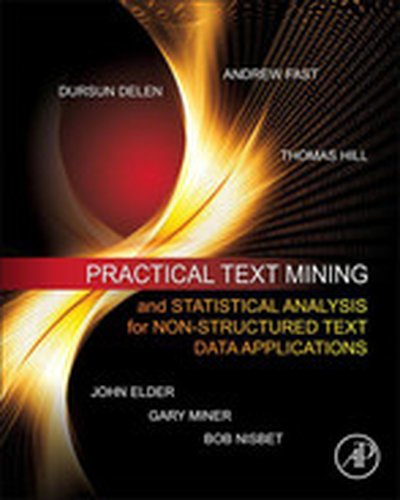
Practical Text Mining and Statistical Analysis for Non-structured Text Data Applications

Practical Text Mining and Statistical Analysis for Non-structured Text Data Applications brings together all the information, tools and methods a professional will need to efficiently use text mining applications and statistical analysis. Winner of a 2012 PROSE Award in Computing and Information Sciences from the Association of American Publishers, this book presents a comprehensive how-to reference that shows the user how to conduct text mining and statistically analyze results. In addition to providing an in-depth examination of core text mining and link detection tools, methods and operations, the book examines advanced preprocessing techniques, knowledge representation considerations, and visualization approaches. Finally, the book explores current real-world, mission-critical applications of text mining and link detection using real world example tutorials in such varied fields as corporate, finance, business intelligence, genomics research, and counterterrorism activities. The world contains an unimaginably vast amount of digital information which is getting ever vaster ever more rapidly. This makes it possible to do many things that previously could not be done: spot business trends, prevent diseases, combat crime and so on. Managed well, the textual data can be used to unlock new sources of economic value, provide fresh insights into science and hold governments to account. As the Internet expands and our natural capacity to process the unstructured text that it contains diminishes, the value of text mining for information retrieval and search will increase dramatically. Extensive case studies, most in a tutorial format, allow the reader to 'click through' the example using a software program, thus learning to conduct text mining analyses in the most rapid manner of learning possible Numerous examples, tutorials, power points and datasets available via companion website on Elsevierdirect.com Glossary of text mining terms provided in the appendix

Practical Data Mining

Intended for those who need a practical guide to proven and up-to-date data mining techniques and processes, this book covers specific problem genres. With chapters that focus on application specifics, it allows readers to go to material relevant to their problem domain. Each section starts with a chapter-length roadmap for the given problem domain. This includes a checklist/decision-tree, which allows the reader to customize a data mining solution for their problem space. The roadmap discusses the technical components of solutions.

Statistical Learning and Data Science

Driven by a vast range of applications, data analysis and learning from data are vibrant areas of research. Various methodologies, including unsupervised data analysis, supervised machine learning, and semi-supervised techniques, have continued to develop to cope with the increasing amount of data collected through modern technology. With a focus on applications, this volume presents contributions from some of the leading researchers in the different fields of data analysis. Synthesizing the methodologies into a coherent framework, the book covers a range of topics, from large-scale machine learning to synthesis objects analysis.

Statistics of Medical Imaging

Statistical investigation into technology not only provides a better understanding of the intrinsic features of the technology (analysis), but also leads to an improved design of the technology (synthesis). Physical principles and mathematical procedures of medical imaging technologies have been extensively studied during past decades. However, less work has been done on their statistical aspect. Filling this gap, this book provides a theoretical framework for statistical investigation into medical technologies. Rather than offer detailed descriptions of statistics of basic imaging protocols of X-ray CT and MRI, the book presents a method to conduct similar statistical investigations into more complicated imaging protocols.

Spectral Feature Selection for Data Mining

Spectral Feature Selection for Data Mining introduces a novel feature selection technique that establishes a general platform for studying existing feature selection algorithms and developing new algorithms for emerging problems in real-world applications. This technique represents a unified framework for supervised, unsupervised, and semisupervise

Web Analytics Action Hero: Using Analysis to Gain Insight and Optimize Your Business

Companies need more than just web analysts and data-savvy marketers to be successful–they need action heroes! While most of us never battle evil scientists or defuse nuclear warheads, successful web analysts benefit from the same attributes that fictional action heroes embody. As a web analyst, your main goal is to improve your organization’s online performance. You can become an “action hero” by translating analysis insights into action that generates significant returns for your company. How you approach analysis is critical to your overall success. In this book, web analytics expert Brent Dykes addresses the unique challenges facing analysts and online marketers working within small and large companies, teaching you how to move beyond reporting and toward analysis to drive action and change. Taking a principle-based rather than a tool-specific approach, Brent introduces you to the Action Hero Framework that breaks down the analysis process into three key stages: Prioritize (what to analyze), Analyze (how to analyze), and Mobilize (how to drive action). And he reinforces these topics with real-world examples and practical tips from seasoned analysts at leading companies. Defines the type of environment in which action heroes thrive–not just survive–as well as how to defeat the villains of web analytics that stand in the way Arms web professionals with a strategic framework for executing online analysis, as well as an arsenal of analysis techniques Reveals how companies need to be both data-driven and action-agile to drive business value from web analytics For more action hero resources and information, check out the book’s companion site at www.Analyticshero.com. "The ideas in this book will take you days (or even weeks) to work your way through, and they fly in the face of the emotional approach to marketing. The question is: would you rather have your competition lead the way with data and science when it comes to reaching your market, or are you going to go first? That's how it is with action heroes--no guts, no glory." - Seth Godin Author We Are All Weird "Don't let the jaunty, breezy style of this book throw you off. Brent successfully - and entertainingly - packs years of experience into these pages along with case studies and insightful help on getting the most out of web analytics, adding value to your company and boosting your career trajectory." - Jim Sterne Founder of eMetrics Marketing Optimization Summit, author of "Social Media Metrics" and Chairman of the Digital Analytics Association

Undocumented Secrets of MATLAB-Java Programming

Many people know that a major part of the functionality of the MATLAB software package is based on Java. But fewer people know how to manipulate Java to achieve improved appearance and functionality and thus heighten MATLAB software's applicability to real world, modern situations. Organized by related functionality/usage and ordered from facile to complex, this book presents examples, instruction, and code snippets in stand-alone, self-contained chapters. Requiring no prior Java knowledge, this book provides numerous online references and resources to show readers how to use and discover new components and functionalities using nothing but MATLAB itself as the discovery tool.

Teaching Elementary Statistics with JMP

Chris Olsen's Teaching Elementary Statistics with JMP demonstrates this powerful software, offering the latest research on "best practice" in teaching statistics and how JMP can facilitate it. Just as statistics is data in a context, this book presents JMP in a context: teaching statistics. Olsen includes numerous examples of interesting data and intersperses JMP techniques and statistical analyses with thoughts from the statistics education literature. Intended for high school-level and college-level instructors who use JMP in teaching elementary statistics, the book uniquely provides a wide variety of data sets that will be of interest to a broad range of teachers and students. This book is part of the SAS Press program.

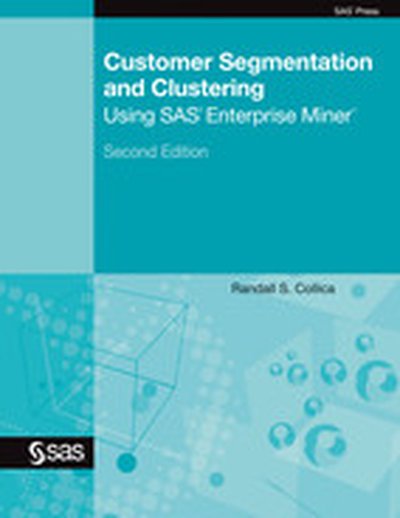
Customer Segmentation and Clustering Using SAS Enterprise Miner, Second Edition, 2nd Edition
In Customer Segmentation and Clustering Using SAS Enterprise Miner, Second Edition, Randy Collica employs SAS Enterprise Miner and the most commonly available techniques for customer relationship management (CRM). You will learn how to segment customers more intelligently and to achieve, or at least get closer to, the one-to-one customer relationship that today's businesses want. Step-by-step examples and exercises clearly illustrate the concepts of segmentation and clustering in the context of CRM. The book is divided into four parts. Part 1 reviews the basics of segmentation and clustering at an introductory level, providing examples from a variety of industries. Part 2 offers an in-depth treatment of segmentation with practical topics such as when and how to update your models and clustering with many attributes. Part 3 goes beyond traditional segmentation practices to introduce recommended strategies for clustering product affinities, handling missing data, and incorporating textual records into your predictive model with SAS Text Miner software. Part 4 takes segmentation to a new level with advanced techniques such as clustering of product associations, developing segmentation scoring models from customer survey data, combining segmentations using ensemble segmentation, and segmentation of customer transactions.

Updates to the second edition include four new chapters in Part 4, Chapters 13-16, that introduce new and advanced analytic techniques that can be valuable in many customer segmentation applications. In addition, Chapter 9 has a new section on using the Imputation node in SAS Enterprise Miner to accomplish missing data imputation, compared to PROC MI used in earlier sections of Chapter 9. Also included are business insights and motivations for selection settings and analytical decisions on many of the examples included in this second edition.

This straightforward guide will appeal to anyone who seeks to better understand customers or prospective customers. Additionally, professors and students will find the book well suited for a business data mining analytics course in an MBA program or related course of study. You should understand basic statistics, but no prior knowledge of data mining or SAS Enterprise Miner is required.

This book is part of the SAS Press program.

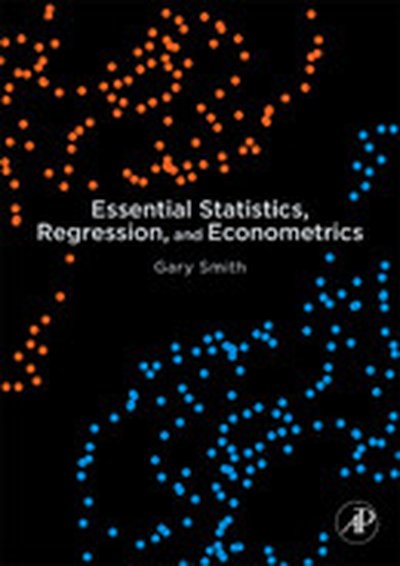
Essential Statistics, Regression, and Econometrics

Essential Statistics, Regression, and Econometrics provides students with a readable, deep understanding of the key statistical topics they need to understand in an econometrics course. It is innovative in its focus, including real data, pitfalls in data analysis, and modeling issues (including functional forms, causality, and instrumental variables). This book is unusually readable and non-intimidating, with extensive word problems that emphasize intuition and understanding. Exercises range from easy to challenging and the examples are substantial and real, to help the students remember the technique better. Readable exposition and exceptional exercises/examples that students can relate to Website includes java applets and Excel applications Focuses on key methods for econometrics students without including unnecessary topics Covers data analysis not covered in other texts Ideal presentation of material (topic order) for econometrics course