talk-data.com talk-data.com

Topic

ERP

Enterprise Resource Planning (ERP)

business_management software integration

71

tagged

Activity Trend

13 peak/qtr
2020-Q1 2026-Q1

Activities

71 activities · Newest first

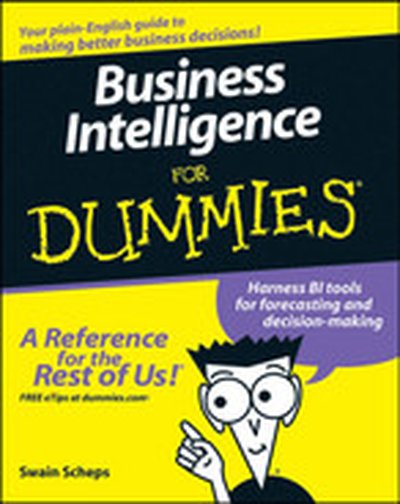
Business Intelligence For Dummies®

You're intelligent, right? So you've already figured out that Business Intelligence can be pretty valuable in making the right decisions about your business. But you’ve heard at least a dozen definitions of what it is, and heard of at least that many BI tools. Where do you start? Business Intelligence For Dummies makes BI understandable! It takes you step by step through the technologies and the alphabet soup, so you can choose the right technology and implement a successful BI environment. You'll see how the applications and technologies work together to access, analyze, and present data that you can use to make better decisions about your products, customers, competitors, and more. You’ll find out how to: Understand the principles and practical elements of BI Determine what your business needs Compare different approaches to BI Build a solid BI architecture and roadmap Design, develop, and deploy your BI plan Relate BI to data warehousing, ERP, CRM, and e-commerce Analyze emerging trends and developing BI tools to see what else may be useful Whether you’re the business owner or the person charged with developing and implementing a BI strategy, checking out Business Intelligence For Dummies is a good business decision.

IBM Tivoli Asset Management for IT Portfolio Overview

This IBM Redbooks publication provides an overview of the IBM Tivoli Asset Management for IT portfolio. The portfolio is made up of the three primary products, IBM Tivoli Asset Management for IT, IBM Tivoli License Compliance Manager for z/OS, and IBM Tivoli License Compliance Manager. By using these products together, you can implement a comprehensive IT asset management solution. This book provides a functional overview of each of the products in the portfolio and also provides example scenarios of how they can be used to address IT asset management disciplines. The IBM Tivoli Asset Management for IT product is a relatively new acquisition. It has its roots in enterprise asset management and has very rich function. This product will be enhanced and adapted to provide functions specific to IT asset management, such as facilities to handle contract management, full asset life-cycle management, integration with Enterprise Resource Planning (ERP) solutions and much more. This book introduces the portfolio and describes its current capabilities. Our intention for the future is to provide additional materials for a deeper understanding of best practices for using the portfolio to implement a complete IT asset management solution.

Mastering Enterprise SOA with SAP NetWeaver® and mySAP™ ERP
  • SAP is investing billions to redesign its flagship R/3 product line based on its ESA, and that ESA will become the standard framework for developing all new SAP ERP applications with NetWeaver * This book provides an overview of the core building blocks of SAP's new ESA, and shows how ESA works with the NetWeaver platform as well as mySAP ERP * A step-by-step action plan proposes ideas for designing ESA-based SAP applications * The companion Web site contains in-depth case examples that show how to build various SAP services and applications using the NetWeaver development tools, plus third-party tools * Some of the SAP tools covered include NetWeaver Developer Studio, WebDynPro and NetWeaver Portal, NetWeaver BI, and the SAP Composite Application Framework
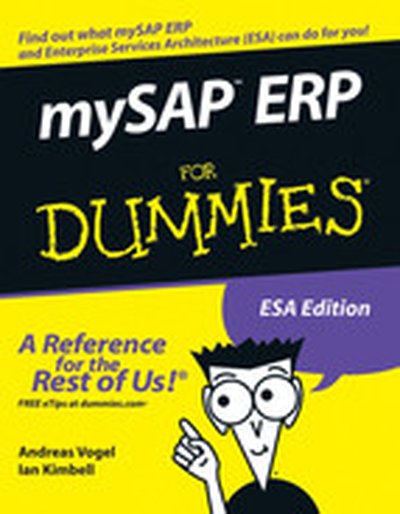
mySAP™ ERP For Dummies®

SAP is the world's leading provider of ERP software and services, with worldwide revenue in 2004 of $9.7 billion and a 57 percent market share among major business application providers; it is one of the world's largest software companies overall ERP is a flexible, open technology platform that helps businesses run more efficiently (and profitably) by providing integrated management of key operations and supply chains Written for IT professionals who find it hard to get through SAP's complex documentation, our book demonstrates how ERP can cut costs, provides a clear overview of how the ESA (enterprise service architecture) model affects ERP, and shows how to implement the new ERP in the real world Topics covered include reducing the cost of an existing IT backbone, using the new ERP to address a company's "pain points" and challenges, and proving the value of ERP through ROI (return on investment) and TCO (total cost of ownership) studies

Building and Scaling SAP Business Information Warehouse on DB2 UDB ESE

SAP is a leading ERP vendor, with a large install base. A key element in their product set is the SAP Business Information Warehouse (BW). The primary objective of this IBM Redbooks publication is to provide guidelines to help you implement your SAP Business Information Warehouse on DB2 UDB ESE. Two major considerations when building a business information warehouse are scalability and performance. In this book, we have demonstrated the wide range of scalability of BW when implemented on DB2, while maintaining the performance requirements that are so critical. The parallelism and data partitioning capabilities of DB2 Universal Database ESE, enables a robust, highly scalable, and high performance business information warehouse. For a common understanding, we first discuss the concepts of data warehousing and then describe the SAP architecture and robust component capabilities of the SAP business information warehouse. To help in your implementation, we provide guidelines for how to configure SAP BW when it is built on DB2. We also describe and discuss the key capabilities and parameters to help you get the best from DB2. Key topics such as sizing, partitioning, performance tuning, and systems administration, are discussed to assist in the implementation and maintenance of your system. This book will help enable you to more quickly and easily implement a robust SAP BW on DB2 UDB ESE.

Packaged Composite Applications

Today's corporate computing environment is too often characterized by silos of data in enterprise applications like ERP, CRM, and supply chain management. Integrating these applications involves hardwiring connections between them, often resulting in a rigid and inefficient IT infrastructure.Packaged Composite Applications (PCAs) are an innovative answer to this dysfunctional scenario. Originated by SAP, one of the worlds foremost technology companies, PCAs represent a new architectural paradigm for enterprise computing. Using web services, they combine new functionality with services from existing applications to enable flexible, cross-functional automation. But is this new model right for your business? That's where this book comes in.Packaged Composite Applications is the result of a systematic search through the brain trust of SAP for all of the relevant arguments, examples, concepts, and analogies related to Packaged Composite Applications. This book is not a marketing treatise about neatly-shaped colored boxes. It is not a backward-looking, outdated description of a product without context. This book, rather, combines the approach of a forward-looking analyst with the perspective of an executive who must make things work, without skimping on the relevant technical details. The author examines the ideas driving PCAs forward in the marketplace and the problems and solutions that an executive and technologist will encounter in implementation. The result is an authoritative text that allows all interested parties to assess the value of PCAs for their lives as executives, technologists, analysts, sales representatives, and users.

Special Edition Using Oracle® 11i

The first part of Special Edition Using Oracle 11i introduces the Oracle ERP applications and R11i concepts. The reader is then educated on proven techniques for implementing these complex and integrated systems. Configuration and usage of each of the financial, distribution, manufacturing, HRMS, and projects applications are covered, followed by a discussion of working with Oracle Support, consulting firms, and compatible software vendors. The appendixes review the employment market, consulting opportunities, and provide the reader with an implementation checklist. All of R11i's new features are covered in-depth and in practical terms. Not only will readers understand Oracle's new capabilities, they will be able to apply them right away.

The 123s of ABC in SAP

Incorporate the Benefits of Activity-Based Costing into the Efficiencies of Your SAP R/3 System Given SAP's dominance in the enterprise resource planning (ERP) market, many companies and their managers encounter SAP AG applications in some form or another. Many of these organizations have recognized the value of utilizing Activity-Based Costing/Management concepts to perform more accurate cost assignments or drive performance initiatives. Managers are then faced with trying to determine how Activity-Based Costing can be incorporated into the SAP environment. The 123s of ABC in SAP is the first book of its kind designed to help business managers understand the capabilities of the SAP R/3 business application to support Activity-Based Costing, Management, and Budgeting. Divided into three parts-the conceptual foundation, the capabilities of SAP ABC, and integration with other tools-the book provides readers with the following: * An explanation of how Activity-Based Costing can be used with SAP * Helpful hints for implementing ABC into SAP * Insights into the most common difficulties and potential solutions when implementing ABC into SAP * Summary tables that highlight key decisions to be made, implementation hints, and organizational challenges * Detailed descriptions of SAP software applications to support the Activity-Based Costing approach as well as the integration of SAP R/3 with Oros software * Examples of the tandem usage of Resource Consumption Accounting with Activity-Based Costing

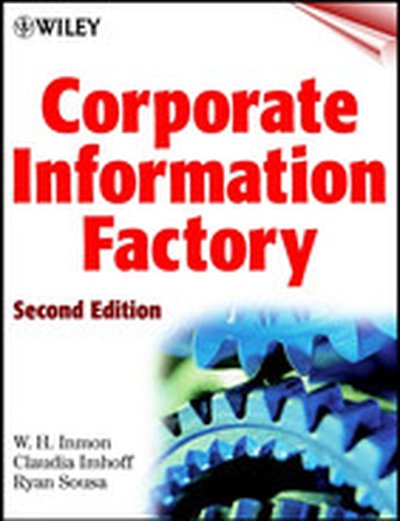
Corporate Information Factory

The "father of data warehousing" incorporates the latest technologies into his blueprint for integrated decision support systems Today's corporate IT and data warehouse managers are required to make a small army of technologies work together to ensure fast and accurate information for business managers. Bill Inmon created the to solve the needs of these managers. Since the First Edition, the design of the factory has grown and changed dramatically. This Second Edition, revised and expanded by 40% with five new chapters, incorporates these changes. This step-by-step guide will enable readers to connect their legacy systems with the data warehouse and deal with a host of new and changing technologies, including Web access mechanisms, e-commerce systems, ERP (Enterprise Resource Planning) systems. The book also looks closely at exploration and data mining servers for analyzing customer behavior and departmental data marts for finance, sales, and marketing. Corporate Information Factory

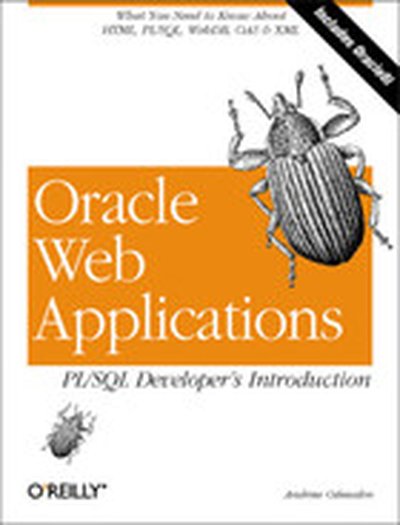
Oracle Web Applications: PL/SQL Developer's Intro

This compact guide provides the jump-start Oracle developers need to make the transition from traditional programming to the development of useful Web applications for Oracle8i. Even readers who start out knowing nothing about HTML, PL/SQL, or Oracle's other tools will learn how to create simple Web applications in a matter of days. The book focuses on Oracle8i, but also covers Web development for earlier Oracle versions (Oracle8 and Oracle7). Background: The explosion in the use of the Internet and the Web has resulted in a whole new way of doing business. Developers who only yesterday were using COBOL to write accounts payable systems are now being asked to create a broad range of new Internet-based applications ranging from electronic commerce (e-commerce) Web sites to internal data warehouses to enterprise resource planning (ERP) systems. Unfortunately, the filesystem architectures of most Web systems aren't up to the task. The new breed of Web applications -- which are quickly becoming critical resources that companies need to survive -- demand a platform that provides production-quality tools for content management, application development, and application integration. And current Web techniques are inadequate in many ways. Oracle8i, Oracle's "Internet database," gives Web developers a way to build Web technology on top of a relational database, rather than on a traditional filesystem. With Oracle8i, companies can apply well understood, reliable, production-quality database methodologies to Web content management. Oracle8i also supports a wide variety of application development platforms and tools that are tightly integrated to the core database. Finally, Oracle8i supports technologies that help companies tie their Web-based applications into legacy applications. There is a lot to learn in Oracle8i. Not only does it enhance basic database features, it introduces Java and a variety of Web development tools. Oracle8i provides a soup-to-nuts platform for Web site and Web application development that extends traditional database concepts to Web content. It replaces the traditional filesystem used by most Web servers with a database management system. Many users are intimidated by the vast array of new technologies in Oracle8i. And yet, they are under pressure to use these technologies to build complex Web applications right now. This book gives such users a way to start using Oracle8i immediately to create useful Web applications. It is a concise, easy-to-read guide to the basic technologies developers need to understand in order to build Web applications. Contains: The book describes the following Web development tools: PL/SQL-- a structured programming language that combines procedural constructs and standard SQL. It offers such features as cursors, loops, conditional and sequential control statements, exception handlers, records, tables, and constructs for developing modular code (functions, procedures, and packages). PL/SQL Toolkit -- a set of PL/SQL packages supplied by Oracle for use in developing Web applications. HTML -- an ASCII-based markup language used to create Web pages. WebDB -- A software system for building, monitoring, and creating content-driven Web sites; it allows users to use a Web browser to access and store information in the Oracle8i database. Oracle Application Server (OAS) -- an extensible Web server that uses plug-in programs called cartridges to allow database-integrated Web systems to be developed in a variety of languages (e.g., PL/SQL, Java, Perl). XML -- An emerging standard for creating self-describing documents. It is similar to HTML but allows you to create your own markup tags. XML is expected to be a key technology in electronic commerce systems. The book also presents several fully realized sample Web applications that will teach you how to build such applications of your own. NOTE: Although this book touches on the Java features of Oracle8i, it doesn't cover Java development per se. Switching to Java represents an enormous change for most Oracle developers. This book provides an evolutionary path for readers who want to do useful Oracle8i Web development now, using mostly familiar tools. Additional books will provide Java training for those who have mastered these Web tools and want to take the next step.