talk-data.com talk-data.com

Topic

ERP

Enterprise Resource Planning (ERP)

business_management software integration

41

tagged

Activity Trend

13 peak/qtr
2020-Q1 2026-Q1

Activities

41 activities · Newest first

Power BI for Finance

Build effective data models and reports in Power BI for financial planning, budgeting, and valuations with practical templates, logic, and step-by-step guidance. Free with your book: DRM-free PDF version + access to Packt's next-gen Reader Key Features Engineer optimal star schema data models for financial planning and analysis Implement common financial logic, calendars, and variance calculations Create dynamic, formatted reports for income statements, balance sheets, and cash flow Purchase of the print or Kindle book includes a free PDF eBook Book Description Martin Kratky brings his global experience of over 20 years as co-founder of Managility and creator of Acterys to empower CFOs and accountants with Power BI for Finance through this hands-on guide to streamlining and enhancing financial processes. Starting with the foundation of every effective BI solution, a well-designed data model, the book shows you how to structure star schemas and integrate common financial data sources like ERP and accounting systems. You’ll then learn to implement key financial logic using DAX and M, covering calendars, KPIs, and variance calculations. The book offers practical advice on creating clear and compliant financial reports, such as income statements, balance sheets, and cash flows with visual design and formatting best practices. With dedicated chapters on advanced workflows, you’ll learn how to handle multi-currency setups, perform group consolidations, and implement planning models like rolling forecasts, annual budgets, and sales and operations planning (S&OP). As you advance, you’ll gain insights from real-world case studies covering company valuations, Excel integration, and the use of write-back methods with Dynamics Business Performance Planning and Acterys. The concluding chapters highlight how AI and Copilot enhance financial analytics. Email sign-up and proof of purchase required What you will learn Apply multi-currency handling and group consolidation techniques in Power BI Model discounted cash flow and company valuation scenarios Design and manage write-back workflows with Dynamics BPP and Acterys Integrate Excel and Power BI using live connections and cube formulas Utilize AI, Copilot, and LLMs to enhance automation and insight generation Create complete finance-focused dashboards for sales and operations planning Who this book is for This book is for finance professionals including CFOs, FP&A managers, controllers, and certified accountants who want to enhance reporting, planning, and forecasting using Power BI. Basic familiarity with Power BI and financial concepts is recommended to get the most out of this hands-on guide.
Extending Microsoft Business Central with Power Platform

Unlock the full potential of Microsoft Business Central by integrating it with the Power Platform through this practical and hands-on guide. With step-by-step tutorials, you'll learn how to combine the capabilities of tools like Power Apps, Power Automate, and Dataverse to build scalable and efficient business solutions. By the end of the book, you'll be equipped to streamline business processes and add significant value. What this Book will help me do Effectively deploy Power Platform functionalities for Microsoft Business Central projects. Seamlessly connect Business Central with cloud and on-premises services. Leverage Dataverse and virtual tables to enhance data modeling and accessibility. Build custom applications using Power Apps and automate workflows with Power Automate. Generate advanced visual reports with Power BI directly integrated with Business Central. Author(s) Kim Congleton and Shawn Sissenwein are industry professionals with extensive experience in ERP systems and Microsoft technologies. With a deep knowledge of Business Central and the Power Platform, they bring practical insights into maximizing business value through technological advancements. Their teaching approach focuses on hands-on learning, real-world application, and empowering readers with actionable skills. Who is it for? This book is ideal for Business Central users, consultants, and solution architects aiming to enhance Business Central's capabilities through the Power Platform. If you're familiar with Business Central's basics and seek to optimize and extend its functionality without requiring extensive programming knowledge, then this guide is tailored for you.

RISE with SAP towards a Sustainable Enterprise

Kickstart your journey towards becoming a sustainable and value-driven enterprise with "RISE with SAP" as your guide. This book explains how to optimize your business processes and implement S/4HANA effectively using RISE with SAP, preparing decision-makers and architects with actionable insights and strategic guidance. What this Book will help me do Understand the challenges organizations face when adopting market trends and how to address them effectively. Learn to build a robust business case for transitioning to SAP S/4HANA using RISE with SAP as the foundational framework. Gain insights into process discovery, data migration, and the best practices for the fit-to-standard approach. Develop skills to design optimized enterprise landscapes effectively on the RISE with SAP platform. Master strategies to leverage SAP tools, services, and cloud ecosystems for industry-specific transformation. Author(s) Adil Zafar, Dharma Alturi, Sanket Taur, and Mihir R. Gor bring together years of combined expertise in enterprise architecture and SAP ecosystems. They leverage their hands-on experience to provide readers with practical advice and cutting-edge insights. Their collaborative work aims to demystify complexities and guide professionals toward sustainable practices. Who is it for? This book is ideal for CXOs, enterprise architects, and solution architects operating in SAP ecosystems who seek practical guidance for transitioning to SAP S/4HANA via RISE with SAP. It caters to readers who wish to build business cases effectively and ensure sustainable and optimized implementation. Prior experience with SAP or ERP systems will enhance the learning experience.

SAP S/4HANA Financial Accounting Configuration: Learn Configuration and Development on an S/4 System

Upgrade your knowledge to learn S/4HANA, the latest version of the SAP ERP system, with its built-in intelligent technologies, including AI, machine learning, and advanced analytics. Since the first edition of this book published as SAP ERP Financial and Controlling: Configuration and Use Management, the perspective has changed significantly as S/4HANA now comes with new features, such as FIORI (new GUI), which focuses on flexible app style development and interactivity with mobile phones. It also has a universal journal, which helps in data integration in a single location, such as centralized processing, and is faster than ECC S/3. It merges FI & CO efficiently, which enables document posting in the Controlling area setup. General Ledger Accounts (FI) and Cost Element (CO) are mapped together in a way that cost elements (both primary and secondary) are part of G/L accounts. And a mandatory setup of customer-vendor integration with business partners is included vs the earlier ECC creation with separate vendor master and customer master.This updated edition presents new features in SAP S/4HANA, with in-depth coverage of the FI syllabus in SAP S/4HANA. A practical and hands-on approach includes scenarios with real-life examples and practical illustrations. There is no unnecessary jargon in this configuration and end-user manual. What You Will Learn Configure SAP FI as a pro in S/4 Master core aspects of Financial Accounting and Controlling Integrate SAP Financial with other SAP modules Gain a thorough hands-on experience with IMG (Implementation Guide) Understand and explain the functionalities of SAP FI Who This Book Is For FI consultants, trainers, developers, accountants, and SAP FI support organizations will find the book an excellent reference guide. Beginners without prior FI configuration experience will find the step-by-step illustrations to be practical and great hands-on experience.

SAP Intelligent RPA for Developers

SAP Intelligent RPA for Developers dives deep into the realm of robotic process automation using SAP Intelligent RPA. It provides a comprehensive guide to leveraging RPA for automating repetitive business processes, ensuring a seamless integrated environment for SAP and non-SAP systems. By the end, you'll be equipped to craft, manage, and optimize automated workflows. What this Book will help me do Master the fundamentals of SAP Intelligent RPA and its architecture. Develop and deploy automation bots to streamline business processes. Utilize low-code and pro-code methodologies effectively in project designs. Debug and troubleshoot RPA solutions to ensure operational efficiency. Understand and plan the migration from SAP Intelligent RPA to SAP Process Automation. Author(s) None Madhuvarshi and None Ganugula are experts in SAP Intelligent RPA with years of experience in ERP systems integration and process automation. Together, they offer a practical and comprehensive approach to mastering and implementing SAP RPA solutions effectively. Who is it for? This book is perfect for developers and business analysts eager to explore SAP Intelligent RPA. It caters to those with a basic knowledge of JavaScript who aspire to leverage RPA for automating monotonous workflows. If you're looking to dive into SAP's automation framework and understand its practical applications, this book is a great fit for you.

SAP S/4HANA Systems in Hyperscaler Clouds: Deploying SAP S/4HANA in AWS, Google Cloud, and Azure

This book helps SAP architects and SAP Basis administrators deploy and operate SAP S/4HANA systems on the most common public cloud platforms. Market-leading cloud offerings are covered, including Amazon Web Services, Microsoft Azure, and Google Cloud. You will gain an end-to-end understanding of the initial implementation of SAP S/4HANA systems on those platforms. You will learn how to move away from the big monolithic SAP ERP systems and arrive at an environment with a central SAP S/4HANA system as the digital core surrounded by cloud-native services. The book begins by introducing the core concepts of Hyperscaler cloud platforms that are relevant to SAP. You will learn about the architecture of SAP S/4HANA systems on public cloud platforms, with specific content provided for each of the major platforms. The book simplifies the deployment of SAP S/4HANA systems in public clouds by providing step-by-step instructions and helping you deal with thecomplexity of such a deployment. Content in the book is based on best practices, industry lessons learned, and architectural blueprints, helping you develop deep insights into the operations of SAP S/4HANA systems on public cloud platforms. Reading this book enables you to build and operate your own SAP S/4HANA system in the public cloud with a minimum of effort. What You Will Learn Choose the right Hyperscaler platform for your future SAP S/4HANA workloads Start deploying your first SAP S/4HANA system in the public cloud Avoid typical pitfalls during your implementation Apply and leverage cloud-native services for your SAP S/4HANA system Save costs by choosing the right architecture and build a robust architecture for your most critical SAP systems Meet your business’ criteria for availability and performance by having the right sizing in place Identify further use cases whenoperating SAP S/4HANA in the public cloud Who This Book Is For SAP architects looking for an answer on how to move SAP S/4HANA systems from on-premises into the cloud; those planning to deploy to one of the three major platforms from Amazon Web Services, Microsoft Azure, and Google Cloud Platform; and SAP Basis administrators seeking a detailed and realistic description of how to get started on a migration to the cloud and how to drive that cloud implementation to completion

SAP S/4HANA Conversion: A Guide to Executing and Simplifying Your Conversion

Succeed in your conversion to SAP S/4HANA. This book will help you understand the core aspects and implement a conversion project. You will start with an overview of the SAP S/4HANA conversion tools: Readiness Check, Simplification Item Check report, Maintenance Planner, Custom Code Analysis, SUM (Software Update Manager), and more. You will understand the preparation activities for SAP FI (Finance), SAP CO (Controlling), SAP AA (Asset Accounting), Material Ledger, and COPA (Controlling–Profitability Analysis). And you will find the SAP CVI (Customer/Vendor Integration) steps that can help consultants understand the mandatory activities to be completed as a part of preparation on the SAP ECC (ERP Central Component) system. You will learn the preparation activities for conversion of accounting to SAP S/4HANA, and migration activities: customizing, asset accounting, controlling, and house bank accounts. You will gain knowledge on data migration activities such as the migration of cost elements, technical check of transactional data, material ledger migration enrichment of data, migration of line items, balances, and general ledger allocations to journal entry tables. After reading this book, you will know how to use the Migration Cockpit for data migration and post-conversion activities to successfully execute and implement an SAP S/4 HANA conversion. What You Will Learn Choose an ideal path and planning tools for SAP S/4HANA Start with the preparation step: General Ledger Accounting, Asset Accounting, Controlling, Material Ledger, and so on Use Migration Cockpit for conversion preparation, migration, and post-migration activities Who This Book Is For SAP application consultants, finance consultants, and CVI consultants who need help with SAP S/4HANA conversion

SAP HANA on IBM Power Systems Backup and Recovery Solutions

This IBM® Redpaper Redbooks publication provides guidance about a backup and recovery solution for SAP High-performance Analytic Appliance (HANA) running on IBM Power Systems. This publication provides case studies and how-to procedures that show backup and recovery scenarios. This publication provides information about how to protect data in an SAP HANA environment by using IBM Spectrum® Protect and IBM Spectrum Copy Data Manager. This publication focuses on the data protection solution, which is described through several scenarios. The information in this publication is distributed on an as-is basis without any warranty that is either expressed or implied. Support assistance for the use of this material is limited to situations where IBM Spectrum Scale or IBM Spectrum Protect are supported and entitled, and where the issues are specific to a blueprint implementation. The goal of the publication is to describe the best aspects and options for backup, snapshots, and restore of SAP HANA Multitenant Database Container (MDC) single and multi-tenant installations on IBM Power Systems by using theoretical knowledge, hands-on exercises, and documenting the findings through sample scenarios. This document provides resources about the following processes: Describing how to determine the best option, including SAP Landscape aspects to back up, snapshot, and restore of SAP HANA MDC single and multi-tenant installations based on IBM Spectrum Computing Suite, Red Hat Linux Relax and Recover (ReAR), and other products. Documenting key aspects, such as recovery time objective (RTO) and recovery point objective (RPO), backup impact (load, duration, scheduling), quantitative savings (for example, data deduplication), integration and catalog currency, and tips and tricks that are not covered in the product documentation. Using IBM Cloud® Object Storage and documenting how to use IBM Spectrum Protect to back up to the cloud. SAP HANA 2.0 SPS 05 has this feature that is built in natively. IBM Spectrum Protect for Enterprise Resource Planning (ERP) has this feature too. Documenting Linux ReaR to cover operating system (OS) backup because ReAR is used by most backup products, such as IBM Spectrum Protect and Symantec Endpoint Protection (SEP) to back up OSs. This publication targets technical readers including IT specialists, systems architects, brand specialists, sales teams, and anyone looking for a guide about how to implement the best options for SAP HANA backup and recovery on IBM Power Systems. Moreover, this publication provides documentation to transfer the how-to-skills to the technical teams and solution guidance to the sales team. This publication complements the documentation that is available at IBM Knowledge Center, and it aligns with the educational materials that are provided by IBM Garage™ for Systems Technical Education and Training.

Deploying SAP Software in Red Hat OpenShift on IBM Power Systems

This IBM® Redpaper publication documents how to containerize and deploy SAP software into Red Hat OpenShift 4 Kubernetes clusters on IBM Power Systems by using predefined Red Hat Ansible scripts, different configurations, and theoretical knowledge, and it documents the findings through sample scenarios. This paper documents the following topics: Running SAP S/4HANA, SAP HANA, and SAP NetWeaver on-premises software in containers that are deployed in Red Hat OpenShift 4 on IBM Power Systems hardware. Existing SAP systems running on IBM Power Systems can be repackaged at customer sites into containers that use predefined Red Hat Ansible scripts. These containers can be deployed multiple times into Red Hat OpenShift 4 Kubernetes clusters on IBM Power Systems. The target audiences for this paper are Chief Information Officers (CIOs) that are interested in containerized solutions of SAP Enterprise Resource Planning (ERP) systems, developers that need containerized environments, and system administrators that provide and manage the infrastructure with underpinning automation. This paper complements the documentation that is available at IBM Knowledge Center, and it aligns with the educational materials that are provided by IBM Garage™ for Systems Education.

Practical Data Science with SAP

Learn how to fuse today's data science tools and techniques with your SAP enterprise resource planning (ERP) system. With this practical guide, SAP veterans Greg Foss and Paul Modderman demonstrate how to use several data analysis tools to solve interesting problems with your SAP data. Data engineers and scientists will explore ways to add SAP data to their analysis processes, while SAP business analysts will learn practical methods for answering questions about the business. By focusing on grounded explanations of both SAP processes and data science tools, this book gives data scientists and business analysts powerful methods for discovering deep data truths. You'll explore: Examples of how data analysis can help you solve several SAP challenges Natural language processing for unlocking the secrets in text Data science techniques for data clustering and segmentation Methods for detecting anomalies in your SAP data Data visualization techniques for making your data come to life

Power BI Data Analysis and Visualization

Power BI Data Analysis and Visualization provides a roadmap to vendor choices and highlights why Microsoft’s Power BI is a very viable, cost effective option for data visualization. The book covers the fundamentals and most commonly used features of Power BI, but also includes an in-depth discussion of advanced Power BI features such as natural language queries; embedding Power BI dashboards; and live streaming data. It discusses real solutions to extract data from the ERP application, Microsoft Dynamics CRM, and also offers ways to host the Power BI Dashboard as an Azure application, extracting data from popular data sources like Microsoft SQL Server and open-source PostgreSQL. Authored by Microsoft experts, this book uses real-world coding samples and screenshots to spotlight how to create reports, embed them in a webpage, view them across multiple platforms, and more. Business owners, IT professionals, data scientists, and analysts will benefit from this thorough presentation of Power BI and its functions.

Business Intelligence Tools for Small Companies: A Guide to Free and Low-Cost Solutions

Learn how to transition from Excel-based business intelligence (BI) analysis to enterprise stacks of open-source BI tools. Select and implement the best free and freemium open-source BI tools for your company's needs and design, implement, and integrate BI automation across the full stack using agile methodologies. Business Intelligence Tools for Small Companies provides hands-on demonstrations of open-source tools suitable for the BI requirements of small businesses. The authors draw on their deep experience as BI consultants, developers, and administrators to guide you through the extract-transform-load/data warehousing (ETL/DWH) sequence of extracting data from an enterprise resource planning (ERP) database freely available on the Internet, transforming the data, manipulating them, and loading them into a relational database. The authors demonstrate how to extract, report, and dashboard key performance indicators (KPIs) in a visually appealing format from the relational database management system (RDBMS). They model the selection and implementation of free and freemium tools such as Pentaho Data Integrator and Talend for ELT, Oracle XE and MySQL/MariaDB for RDBMS, and Qliksense, Power BI, and MicroStrategy Desktop for reporting. This richly illustrated guide models the deployment of a small company BI stack on an inexpensive cloud platform such as AWS. What You'll Learn You will learn how to manage, integrate, and automate the processes of BI by selecting and implementing tools to: Implement and manage the business intelligence/data warehousing (BI/DWH) infrastructure Extract data from any enterprise resource planning (ERP) tool Process and integrate BI data using open-source extract-transform-load (ETL) tools Query, report, and analyze BI data using open-source visualization and dashboard tools Use a MOLAP tool to define next year's budget, integrating real data with target scenarios Deploy BI solutions and big data experiments inexpensively on cloud platforms Who This Book Is For Engineers, DBAs, analysts, consultants, and managers at small companies with limited resources but whose BI requirements have outgrown the limitations of Excel spreadsheets; personnel in mid-sized companies with established BI systems who are exploring technological updates and more cost-efficient solutions

Manufacturing Performance Management using SAP OEE: Implementing and Configuring Overall Equipment Effectiveness

Learn how to configure, implement, enhance, and customize SAP OEE to address manufacturing performance management. Manufacturing Performance Management using SAP OEE will show you how to connect your business processes with your plant systems and how to integrate SAP OEE with ERP through standard workflows and shop floor systems for automated data collection. Manufacturing Performance Management using SAP OEE is a must-have comprehensive guide to implementing SAP OEE. It will ensure that SAP consultants and users understand how SAP OEE can offer solutions for manufacturing performance management in process industries. With this book in hand, managing shop floor execution effectively will become easier than ever. Authors Dipankar Saha and Mahalakshmi Symsunder, both SAP manufacturing solution experts, and Sumanta Chakraborty, product owner of SAP OEE, will explain execution and processing related concepts, manual and automatic data collection through the OEE Worker UI, and how to enhance and customize interfaces and dashboards for your specific purposes. You'll learn how to capture and categorize production and loss data and use it effectively for root-cause analysis. In addition, this book will show you: Various down-time handling scenarios. How to monitor, calculate, and define standard as well as industry-specific KPIs. How to carry out standard operational analytics for continuous improvement on the shop floor, at local plant level using MII and SAP Lumira, and also global consolidated analytics at corporation level using SAP HANA. Steps to benchmark manufacturing performance to compare similar manufacturing plants' performance, leading to a more efficient and effective shop floor. Manufacturing Performance Management using SAP OEE will provide you with in-depth coverage of SAP OEE and how to effectively leverage its features. This will allow you to efficiently manage the manufacturing process and to enhance the shop floor's overall performance, making you the sought-after SAP OEE expert in the organization. Manufacturing Performance Management using SAP OEE will provide you with in-depth coverage of SAP OEE and how to effectively leverage its features. This will allow you to efficiently manage the manufacturing process and to enhance the shop floor's overall performance, making you the sought-after SAP OEE expert in the organization. What You Will Learn Configure your ERP OEE add-on to build your plant and global hierarchy and relevant master data and KPIs Use the SAP OEE standard integration (SAP OEEINT) to integrate your ECC and OEE system to establish bi-directional integration between the enterprise and the shop floor Enable your shop floor operator on the OEE Worker UI to handle shop floor production execution Use SAP OEE as a tool for measuring manufacturing performance Enhance and customize SAP OEE to suit your specific requirements Create local plant-based reporting using SAP Lumira and MII Use standard SAP OEE HANA analytics Who This Book Is For SAP MII, ME, and OEE consultants and users who will implement and use the solution.

Enhancing Enterprise Intelligence: Leveraging ERP, CRM, SCM, PLM, BPM, and BI

Enhancing Enterprise Intelligence: Leveraging ERP, CRM, SCM, PLM, BPM, and BI takes a fresh look at the benefits of enterprise systems (ES), focusing on the fact that ES collectively contribute to enhancing the intelligence quotient of an enterprise. The book provides an overview of the characteristics and essential strengths of various categories of ES, namely, Enterprise Resource Planning (ERP), Customer Relationship Management (CRM), Supply-Chain Management (SCM), Product LifeCycle Management (PLM), Business Process Management (BPM), and Business Intelligence (BI).

Asset Accounting Configuration in SAP ERP: A Step-by-Step Guide

In this book, noted expert Andrew Okungbowa explains SAP Asset Accounting (FI-AA) in SAP-ERP, including its associated business benefits, and guides you through the considerable complexities of SAP-ERP configuration. Using FI-AA for fixed asset management enables you to manage assets in multinational companies across a broad range of industries and produce reports to meet various needs in line with legal requirements. Configuring SAP-ERP can be a daunting exercise, however, and there are few resources that address these issues. Asset Accounting Configuration in SAP ERP fills that resource gap by covering the major aspects of SAP FI-AA for anyone with SAP experience and the basic accounting knowledge and bookkeeping skills necessary to apply configuration. It provides configuration explanations in the simplest forms possible and provides step-by-step guidance with illustrations and practical examples.

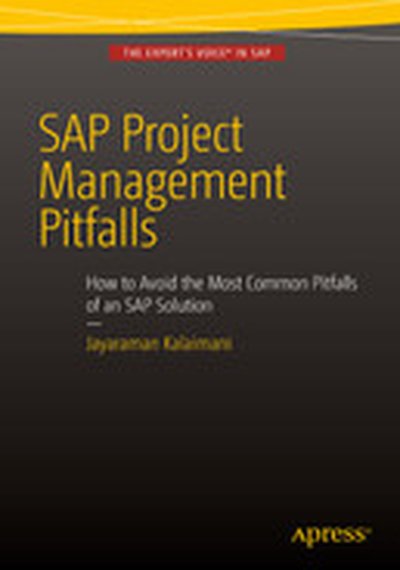
SAP Project Management Pitfalls: How to Avoid the Most Common Pitfalls of an SAP Solution

Master the SAP product ecosystem, the client environment, and the feasibility of implementing critical business process with the required technical and functional configuration. SAP Project Management Pitfalls is the first book to provide you with real examples of the pitfalls that you can avoid, providing you with a road-map to a successful implementation. Jay Kay, a SAP Program Manager for Capgemini, first takes a deep dive into common pitfalls in implementing SAP ERP projects in a complex IT landscape. You will learn about the potential causes of failures, study a selection of relevant project implementation case studies in the area, and see a range of possible countermeasures. Jay Kay also provides background on each - the significance of each implementation area, its relevance to a service company that implements SAP projects, and the current state of research. Key highlights of the book: Tools and techniques for project planning and templates for allocating resources Industry standards and innovations in SAP implementation projects in the form of standard solutions aimed at successful implementation Managing SAP system ECC upgrades, EHP updates and project patches Learn effective ways to implement robust SAP release management practices (change management, BAU) Wearing a practitioner’s insight, Jay Kay explores the relevance of each failed implementation scenario and how to support your company or clients to succeed in a SAP implementation. There are many considerations when implementing SAP, but as you will learn, knowledge, insight, and effective tools to mitigate risks can take you to a successful implementation project.

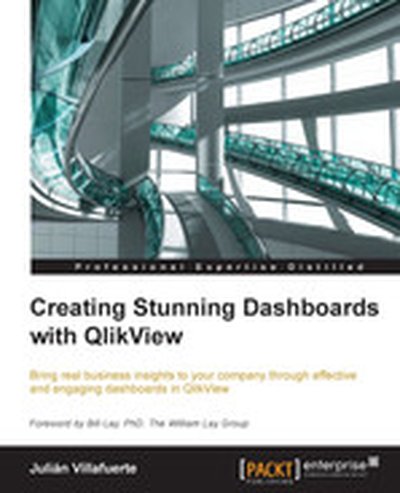
Creating Stunning Dashboards with QlikView

Explore the world of QlikView dashboards with this comprehensive guide that walks you through the entire process of creating effective and visually engaging dashboards for your business needs. From identifying KPIs to rolling out your application, this book provides actionable steps and best practices for delivering data-driven results. What this Book will help me do Define key performance indicators (KPIs) based on business objectives and goals. Design and structure dashboards using best practices in data visualization. Master creating various chart types, including bar, line, pie charts, and advanced visualizations, like heat maps. Integrate data from multiple sources, such as ERP systems and spreadsheets, into a cohesive dashboard. Learn the steps to develop mobile-optimized dashboards for accessibility on the go. Author(s) None Villafuerte, a seasoned expert in data visualization and QlikView development, brings a wealth of experience to this book. With years of hands-on work creating impactful dashboards for various business needs, the author's pragmatic and result-oriented approach provides readers with practical and insightful knowledge. Who is it for? The book is tailored for QlikView developers who already possess a basic understanding of scripting and dashboard layout design. It's ideal for professionals aiming to enhance their design and visualization skills. Additionally, business analysts or managers with a technical inclination could also benefit from its comprehensive approach to creating interactive dashboards. If building effective and appealing dashboards that drive business impact is your goal, this book is for you.

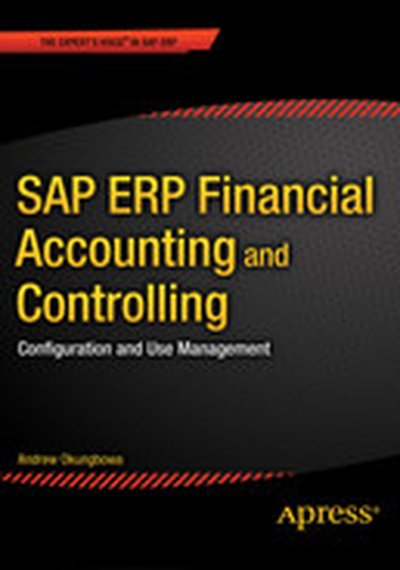
SAP ERP Financial Accounting and Controlling: Configuration and Use Management

SAP ERP modules are notoriously hard to configure and use effectively without a lot of practice and experience. But as SAP ERP Financial Accounting and Controlling : Configuration and Use Management shows, it doesn't have to be so difficult. The book takes a systematic approach that leads SAP Financial Accounting and Controlling (FICO) users step by step through configuring and using all the program’s facets. This approach makes configuration complexities manageable. The book’s author—SAP expert, trainer, and accountant Andrew Okungbowa—ensures that both you and your end users are up and running quickly and confidently with FICO. He also provides sound and tested procedures that ensure your implementation works without error. SAP ERP Financial Accounting and Controlling : Configuration and Use Management is in fact the most comprehensive and easy-to-follow SAP FICO configuration book in the market. It incorporates a hands-on approach, with hundreds of screen shots and practical examples, that allows a person without prior configuration training to make SAP FICO ready for use in the enterprise. You’ll find that you don’t need to be a rocket scientist to grasp the concepts explained and apply them to your work—even when the finances are complicated, such as with the ins and outs of taxes, currency conversions, or special general ledger entries such as down payments or bills of exchange. Providing an in-depth coverage of both configuration and end user procedures, the book covers most aspects of the SAP FICO certification syllabus—SAP’s view of the module’s key tasks and procedures—including: Configuring and using the general ledger and accounts payable and receivable screens Configuring and completing closing procedures, asset accounting, and financial reporting Configuring global settings and enterprise variables Accounting for both profit and cost centers Creating a house bank Integrating FICO with other SAP modules Taking a jargon-free tone and providing an abundance of examples, Andrew Okungbowa provides a clear understanding of configuration techniques and the breadth of functionalities encompassed by SAP FICO. And as an accountant, Okungbowa understands the needs of end users as well as of those answering to the CIO.

SAP HCM - A Complete Tutorial

"SAP HCM - A Complete Tutorial" is your comprehensive guide to mastering SAP HCM concepts and configurations. Through practical examples and real-world solutions, this book ensures that you understand and apply the diverse functionalities within SAP HCM effectively. Learn how to handle challenges, automate processes, and deliver value to organizational HR functions. What this Book will help me do Grasp the core principles and features of SAP HCM. Configure and solve real-time issues within the module. Streamline HR processes using SAP HCM tools and techniques. Leverage best practices for customizing and optimizing SAP HCM functions. Develop proficiency in deploying SAP HCM for business needs. Author(s) Karthik S, an experienced professional in ERP systems and SAP HCM solutions, has spent years guiding organizations in deploying SAP-based solutions. Renowned for clear instruction and practical approaches, Karthik has written this book to help readers quickly learn, implement, and benefit from SAP HCM technologies. Who is it for? This book is ideal for IT professionals and ERP consultants interested in mastering SAP HCM. Whether you're new to SAP or looking to deepen existing knowledge, it's tailored for those seeking practical skills to configure and optimize HCM solutions. Readers should have a basic understanding of ERP concepts and a desire to develop SAP-specific expertise.

Oracle Exadata Survival Guide

Oracle Exadata Survival Guide is a hands-on guide for busy Oracle database administrators who are migrating their skill sets to Oracle's Exadata database appliance. The book covers the concepts behind Exadata, and the available configurations for features such as smart scans, storage indexes, Smart Flash Cache, hybrid columnar compression, and more. You'll learn about performance metrics and execution plans, and how to optimize SQL running in Oracle's powerful, new environment. The authors also cover migration from other servers. Oracle Exadata is fast becoming the standard for large installations such as those running data warehouse, business intelligence, and large-scale OLTP systems. Exadata is like no other platform, and is new ground even for experienced Oracle database administrators. The Oracle Exadata Survival Guide helps you navigate the ins and outs of this new platform, de-mystifying this amazing appliance and its exceptional performance. The book takes a highly practical approach, not diving too deeply into the details, but giving you just the right depth of information to quickly transfer your skills to Oracle's important new platform. Helps transfer your skills to the platform of the future Covers the important ground without going too deep Takes a practical and hands-on approach to everyday tasks What you'll learn Learn the components and basic architecture of an Exadata machine Reduce data transfer overhead by processing queries in the storage layer Examine and take action on Exadata-specific performance metrics Deploy Hybrid Columnar Compression to reduce storage and I/O needs Create worry-free migrations from existing databases into Exadata Understand and address issues specific to ERP migrations Who this book is for Oracle Exadata Survival Guide is for the busy enterprise Oracle DBA who has suddenly been thrust into the Exadata arena. Readers should have a sound grasp of traditional Oracle database administration, and be prepared to learn new aspects that are specific to the Exadata appliance.