talk-data.com talk-data.com

Topic

Oracle

database enterprise_software cloud

541

tagged

Activity Trend

33 peak/qtr
2020-Q1 2026-Q1

Activities

541 activities · Newest first

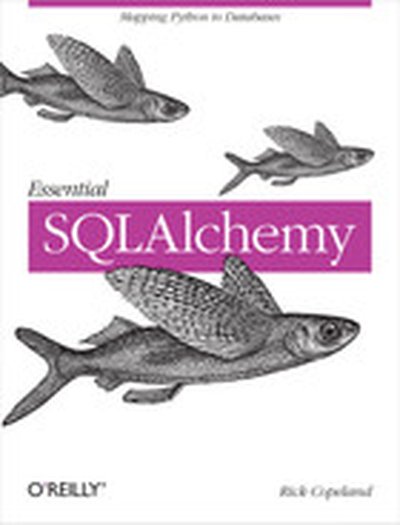
Essential SQLAlchemy

Essential SQLAlchemy introduces a high-level open-source code library that makes it easier for Python programmers to access relational databases such as Oracle, DB2, MySQL, PostgreSQL, and SQLite. SQLAlchemy has become increasingly popular since its release, but it still lacks good offline documentation. This practical book fills the gap, and because a developer wrote it, you get an objective look at SQLAlchemy's tools rather than an advocate's description of all the "cool" features. SQLAlchemy includes both a database server-independent SQL expression language and an object-relational mapper (ORM) that lets you map "plain old Python objects" (POPOs) to database tables without substantially changing your existing Python code. Essential SQLAlchemy demonstrates how to use the library to create a simple database application, walks you through simple queries, and explains how to use SQLAlchemy to connect to multiple databases simultaneously with the same Metadata. You also learn how to: Create custom types to be used in your schema, and when it's useful to use custom rather than built-in types Run queries, updates, and deletes with SQLAlchemy's SQL expression language Build an object mapper with SQLAlchemy, and understand the differences between this and active record patterns used in other ORMs Create objects, save them to a session, and flush them to the database Use SQLAlchemy to model object oriented inheritance Provide a declarative, active record pattern for use with SQLAlchemy using the Elixir extension Use the SQLSoup extension to provide an automatic metadata and object model based on database reflection In addition, you'll learn how and when to use other extensions to SQLAlchemy, including AssociationProxy, OrderingList, and more. Essential SQLAlchemy is the much-needed guide for every Python developer using this code library. Instead of a feature-by-feature documentation, this book takes an "essentials" approach that gives you exactly what you need to become productive with SQLAlchemy right away.
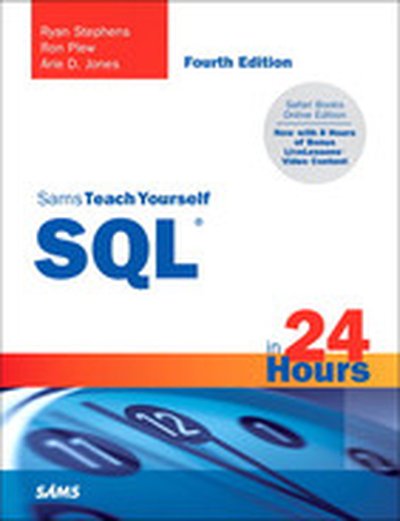
Sams Teach Yourself SQL in 24 Hours, Fourth Edition

In just 24 lessons of one hour or less, you will learn professional techniques to design and build efficient databases and query them to extract useful information. Using a straightforward, step-by-step approach, each lesson builds on the previous one, allowing you to learn the essentials of ANSI SQL from the ground up. Example code demonstrates the authors’ professional techniques, while exercises written for MySQL offer the reader hands-on learning with an open-source database. Included are advanced techniques for using views, managing transactions, database administration, and extending SQL. Step-by-step instructions carefully walk you through the most common SQL tasks. Q&As, Quizzes, and Exercises at the end of each chapter help you test your knowledge. Notes and Tips point out shortcuts and solutions. New terms are clearly defined and explained. Learn how to… Use SQL-2003, the latest standard for the Structured Query Language Design and deploy efficient, secure databases Build advanced queries for information retrieval Sort, group, and summarize information for best presentation Tune databases and queries for maximum performance Understand database administration and security techniques For more than ten years the authors have studied, applied, and documented the SQL standard and its application to critical database systems. Ryan Stephens and Ron Plew are entrepreneurs, speakers, and cofounders of Perpetual Technologies, Inc. (PTI), a fast-growing IT management and consulting firm which specializes in database technologies. They taught database courses for Indiana University–Purdue University in Indianapolis for five years and have authored more than a dozen books on Oracle, SQL, database design, and the high availability of critical systems. Arie D. Jones is Senior SQL Server database administrator and analyst for PTI. He is a regular speaker at technical events and has authored several books and articles. Category: Database Covers: ANSI SQL User Level: Beginning–Intermediate Register your book at informit.com/title/9780672330186 for convenient access to updates and corrections as they become available.

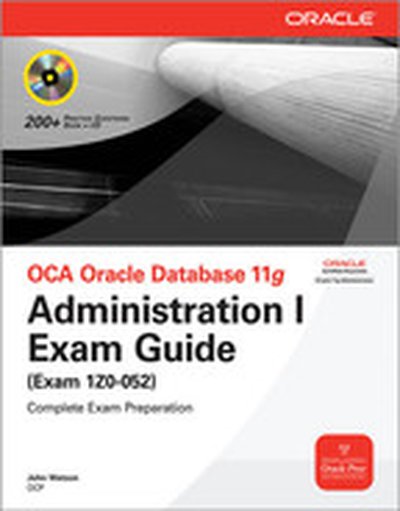
OCA Oracle Database 11g Administration I Exam Guide (Exam 1Z0-052)

A Fully Integrated Study System for OCA Exam 1Z0-052 Prepare for the Oracle Certified Associate Oracle Database 11 g Administration I exam with help from this exclusive Oracle Press guide. In each chapter, you'll find challenging exercises, practice questions, a two-minute drill, and a chapter summary to highlight what you've learned. This authoritative guide will help you pass the test and serve as your essential on-the-job reference. Get complete coverage of all OCA objectives for exam 1Z0-052, including: Database architecture Creating an Oracle Database Managing the Oracle instance Configuring and managing the Oracle network Managing database storage structures Administering user security Managing schema objects, data and concurrency, and undo data Implementing Oracle Database security Database maintenance and performance management Backup and recovery Moving data Intelligent infrastructure enhancements On the CD-ROM: One full practice exam that simulates the actual OCA exam Detailed answers and explanations Score report performance assessment tool Complete electronic book Bonus exam available free with online registration

OCP Oracle Database 11g New Features for Administrators Exam Guide (Exam 1Z0-050)

A Fully Integrated Study System for OCP Exam 1Z0-050 Prepare for the Oracle Certified Professional Oracle Database 11 g New Features for Administrators exam with help from this exclusive Oracle Press guide. In each chapter, you'll find challenging exercises, practice questions, a two-minute drill, and a chapter summary to highlight what you've learned. This authoritative guide will help you pass the test, and serve as your essential on-the-job reference. Get complete coverage of all OCP objectives for exam 1Z0-050, including: Installation and upgrades Partitioning and storage Intelligent infrastructure Diagnostics and fault management Performance Oracle Recovery Manager and Oracle Flashback Security Oracle SQL Performance Analyzer SQL plan management Automatic SQL tuning On the CD-ROM: One full practice exam that simulates the actual OCP exam Detailed answers and explanations Score report performance assessment tool Complete electronic book Bonus exam available free with online registration

Oracle Database 11g PL/SQL Programming

Design Feature-Rich PL/SQL Applications Deliver dynamic, client/server PL/SQL applications with expert guidance from an Oracle programming professional. With full coverage of the latest features and tools, Oracle Database 11g PL/SQL Programming lays out each topic alongside detailed explanations, cut-and-paste syntax examples, and real-world case studies. Access and modify database information, construct powerful PL/SQL statements, execute effective queries, and deploy bulletproof security. You'll also learn how to implement C, C++, and Java procedures, Web-enable your database, cut development time, and optimize performance. Create, debug, and manage Oracle-driven PL/SQL programs Use PL/SQL structures, delimiters, operators, variables, and statements Identify and eliminate errors using PLSQL_WARNINGS and exception handlers Work with functions, procedures, packages, collections, and triggers Define and deploy varray, nested table, and associative array data types Handle external routines, object types, large objects, and secure files Communicate between parallel sessions using DBMS_ALERT and DBMS_PIPE Call external procedures through Oracle Net Services and PL/SQL wrappers Integrate internal and server-side Java class libraries using Oracle JVM Develop robust Web applications using PL/SQL Gateway and Web Toolkit

SQL Bible, Second Edition

Combining theory with everyday practicality, this definitive volume is packed with the up-to-date information, new features, and explanations you need to get the very most out of SQL and its latest standard. The book is unique in that every chapter highlights how the new SQL standard applies to the three major databases, Oracle 11g, IBM DB2 9.5, and Microsoft SQL Server 2008. The result is a comprehensive, useful, and real-world reference for all SQL users, from beginners to experienced developers.

Oracle Database 11g DBA Handbook

The Essential Resource for Oracle DBAs--Fully Updated and Expanded Manage a flexible, highly available Oracle database with help from the expert information contained in this exclusive Oracle Press guide. Fully revised to cover every new feature and utility, Oracle Database 11g DBA Handbook shows how to perform a new installation, upgrade from previous versions, configure hardware and software for maximum efficiency, and employ bulletproof security. You will learn to automate the backup and recovery process, provide transparent failover capability, audit and tune performance, and distribute your enterprise databases with Oracle Net. Plan and deploy permanent, temporary, and bigfile tablespaces Optimize disk allocation, CPU usage, I/O throughput, and SQL queries Develop powerful database management applications Guard against human errors using Oracle Flashback and Oracle Automatic Undo Management Diagnose and tune system performance using Oracle Automatic Workload Repository and SQL Tuning Sets Implement robust security using authentication, authorization, fine-grained auditing, and fine-grained access control Maintain high availability using Oracle Real Application Clusters and Oracle Active Data Guard Respond more efficiently to failure scenarios by leveraging the Oracle Automatic Diagnostic Repository and the Oracle Repair Advisor Back up and restore tables, tablespaces, and databases with Oracle Recovery Manager and Oracle Data Pump Export and Import Work with networked databases, data warehouses, and VLDBs Put the latest Oracle Database 11 g tools to work--Oracle Total Recall, Oracle Flashback Data Archive, and more

Oracle Enterprise Manager 10g Grid Control Implementation Guide

Install and Configure Grid Control to Manage Your Oracle Landscape Build a robust grid computing infrastructure with guidance from an Oracle expert who developed and taught the Grid Control Deep Dive class to Oracle Consulting. Featuring real-world examples and best practices, Oracle Enterprise Manager 10g Grid Control Implementation Guide explains how to reliably and cost-effectively deploy a dynamic Grid Control environment. Learn how to lay the preinstallation groundwork, configure targets for monitoring, create services, implement security, and fine-tune performance. You'll also get full coverage of backup and recovery strategies and high-availability techniques. Prepare infrastructure hosts for Grid Control rollout Install the Oracle management repository, service, and agents Select the Grid Control installation options that fit your needs Discover and manage host, database, and application server targets Set target metrics and policies according to best practices Optimize performance and availability of your Grid Control framework Secure the Grid Control framework to protect data transmitted between components

Oracle Automatic Storage Management: Under-the-Hood & Practical Deployment Guide

Streamline data management and provisioning Build and manage a storage infrastructure with Oracle scalable Automatic Storage Management using Oracle Automatic Storage Management (Oracle ASM) and the detailed information contained in this exclusive Oracle Press resource. Written by a team of database experts, maintain a dynamic, highly available Oracle database Oracle Automatic Storage Management: Under-the-Hood & Practical Deployment Guide explains how to build and storage environment . Inside, you'll learn how to configure storage for Oracle ASM, build disk groups, use data striping and mirroring, and optimize performance. You'll also learn how to ensure consistency across server and storage platforms, maximize data redundancy, and administer Oracle ASM from the command line. Manage Oracle ASM Instances and configure Oracle RDBMS instances to leverage Oracle ASM Define, discover, and manage disk storage under Oracle ASM Create external, normal-redundancy, and high-redundancy disk groups Add and remove Oracle ASM storage without affecting RDMS instance availability Learn how Oracle ASM provides even I/O distribution Work with Oracle ASM directories, files, templates, and aliases Improve storage performance and integrity using the ASMLIB API Simplify system administration with the Oracle ASM command line interface Understand key internal Oracle ASM structures and algorithms

Oracle Database 11g New Features

FOREWORD by Tom Kyte Your Must-Have Guide to Everything New in Oracle Database 11 g Realize the full potential of Oracle Database 11 g with help from the experts. Written by Robert G. Freeman, and with insightful commentary throughout from Arup Nanda, this Oracle Press guide offers full details on the architectural changes, database administration upgrades, availability and recovery revisions, security enhancements, and programming innovations. Every new and updated feature is covered and presented with screenshots, code samples, tables, and charts. Find out how to take full advantage of all the new and improved capabilities of Oracle Database 11 g, including: New Oracle Automatic Storage Management features, such as Fast Disk Resync, Compatibility Attributes, P referred Mirror Read, and Rolling Upgrade components Improved Automated Memory Management capabilities New database design features, such as virtual columns, tablespace encryption, and true table-level data compression New Database Advisors for data recovery and repair, partitioning, and streams performance New tuning features, such as Automatic SQL Tuning and SQL Performance Analyzer Enhancements to Oracle RMAN, including active database duplication and UNDO backup optimization Improved auditing and security capabilities Advanced BI, data warehousing, and partitioning features New SQL and PL/SQL enhancements

Oracle Database 11g SQL

Write powerful SQL statements and PL/SQL programs Learn to access Oracle databases through SQL statements and construct PL/SQL programs with guidance from Oracle expert, Jason Price. Published by Oracle Press, Oracle Database 11g SQL explains how to retrieve and modify database information, use SQL Plus and SQL Developer, work with database objects, write PL/SQL programs, and much more. Inside, you'll find in-depth coverage of the very latest SQL features and tools, performance optimization techniques, advanced queries, Java support, and XML. This book contains everything you need to master SQL. Explore SQL Plus and SQL Developer Use SQL SELECT, INSERT, UPDATE, and DELETE statements Write PL/SQL programs Create tables, sequences, indexes, views, and triggers Write advanced queries containing complex analytical functions Create database objects and collections to handle abstract data Use large objects to handle multimedia files containing music and movies Write Java programs to access an Oracle Database using JDBC Tune your SQL statements to make them execute faster Explore the XML capabilities of the Oracle Database Master the very latest Oracle Database 11 g features, such as PIVOT and UNPIVOT, flashback archives, and much more

Oracle Database 11g: New Features for DBAs and Developers

Oracle Database 11g : New Features for DBAs and Developers is a comprehensive, example-laden review of the most significant new features and improvements offered by the latest release of Oracle Corporation's flagship database product. Learn what's new in Oracle that really counts See actual examples and test run output Make sound decisions on new feature adoption Sift the gold from the silt and discover which new features of the latest release of Oracle's flagship database product are really worth adopting. Years of database administration experience from authors Sam Alapati and Charles Kim are combined with sound, step-by-step testing and a heart-felt emphasis on what matters in the real-world to help you get the most out of Oracle Database 11 g.

Oracle Essentials, 4th Edition

Oracle is an enormous system, with myriad technologies, options, and releases. Most users--even experienced developers and database administrators--find it difficult to get a handle on the full scope of the Oracle database. And, as each new Oracle version is released, users find themselves under increasing pressure to learn about a whole range of new technologies. The latest challenge is Oracle Database 11g. This book distills an enormous amount of information about Oracle into a compact, easy-to-read volume filled with focused text, illustrations, and helpful hints. It contains chapters on: The latest Oracle Database 11g features: query result set caching, Automatic Memory Management, the Real Application Testing, Advanced Compression, Total Recall, and Active Data Guard Option Options, changes to the OLAP Option (transparently accessed and managed as materialized views), the Flashback transaction command, transparent data encryption, the Support Workbench (and diagnosability infrastructure), and partitioning enhancements (including interval and new composite types) Oracle products, options, data structures, and overall architecture for Oracle Database 11g, as well as earlier releases (Oracle Database 10g, Oracle9i, and Oracle8i) Installing, running, managing, monitoring, networking, and tuning Oracle, including Enterprise Manager (EM) and Oracle's self-tuning and management capabilities; and using Oracle security, auditing, and compliance (a new chapter in this edition) Multiuser concurrency, data warehouses, distributed databases, online transaction processing (OLTP), high availability, and hardware architectures (e.g., SMP, clusters, NUMA, and grid computing) Features beyond the Oracle database: Oracle Application Express, Fusion Middleware (including Oracle Application Server), and database SOA support as a Web services provider For new Oracle users, DBAs, developers, and managers, Oracle Essentials provides an invaluable, all-in-one introduction to the full range of Oracle features and technologies, including the just-released Oracle Database 11g features. But even if you already have a library full of Oracle documentation, you'll find that this compact book is the one you turn to, again and again, as your one-stop, truly essential reference. " Oracle Essentials gives a clear explanation of the key database concepts and architecture underlying the Oracle database. It's a great reference for anyone doing development or management of Oracle databases." --Andrew Mendelsohn, Senior Vice President, Database Server Technologies, Oracle Corporation

Pro Oracle Spatial for Oracle Database 11g

Pro Oracle Spatial for Oracle Database 11g shows how to take advantage of Oracle Database's built-in feature set for working with location-based data. Authors Ravi Kothuri and Albert Godfrind address the special nature of spatial data and its role in professional and consumer applications. They also detail issues in spatial data management, such as modeling, storing, accessing, and analyzing spatial data, as well as the Oracle Spatial solution and the integration of spatial data into enterprise databases. In addition, they cover how spatial information is used to understand business and support decisions, to manage customer relations, and to better serve private and corporate users. When you read Pro Oracle Spatial for Oracle Database 11g, you're learning from the very best. Ravi Kothuri is a key member of Oracle's Spatial development team. Albert Godfrind consults widely with Oracle clients on the implementation of Oracle Spatial, develops training courses, and presents frequently at conferences. Together they have crafted a technically sound and authoritative fountain of information on working with spatial data in the Oracle database.

Oracle PL/SQL Language Pocket Reference, 4th Edition

The fourth edition of this popular pocket guide provides quick-reference information that will help you use Oracle's PL/SQL language, including the newest Oracle Database 11g features. It's a companion to Steven Feuerstein and Bill Pribyl's bestselling Oracle PL/SQL Programming. This concise guide boils down the most vital PL/SQL information into an accessible summary of: The new edition describes such Oracle Database 11g elements as PL/SQL's function result cache, compound triggers, the CONTINUE statement, the SIMPLE_INTEGER datatype, and improvements to native compilation, regular expressions, and compiler optimization (including intra-unit inlining). In addition, this book now includes substantial new sections on Oracle's built-in functions and packages. Fundamental language elements (e.g., block structure, datatypes, declarations) Statements for program control, cursor management, and exception handling Records, procedures, functions, triggers, and packages Calling PL/SQL functions in SQL Compilation options, object-oriented features, collections, and Java integration When you need answers quickly, the Oracle PL/SQL Language Pocket Reference will save you hours of frustration.

Oracle PL/SQL Best Practices, 2nd Edition

In this compact book, Steven Feuerstein, widely recognized as one of the world's leading experts on the Oracle PL/SQL language, distills his many years of programming, teaching, and writing about PL/SQL into a set of best practices-recommendations for developing successful applications. Covering the latest Oracle release, Oracle Database 11gR2, Feuerstein has rewritten this new edition in the style of his bestselling Oracle PL/SQL Programming. The text is organized in a problem/solution format, and chronicles the programming exploits of developers at a mythical company called My Flimsy Excuse, Inc., as they write code, make mistakes, and learn from those mistakes-and each other. This book offers practical answers to some of the hardest questions faced by PL/SQL developers, including: What is the best way to write the SQL logic in my application code? How should I write my packages so they can be leveraged by my entire team of developers? How can I make sure that all my team's programs handle and record errors consistently? Oracle PL/SQL Best Practices summarizes PL/SQL best practices in nine major categories: overall PL/SQL application development; programming standards; program testing, tracing, and debugging; variables and data structures; control logic; error handling; the use of SQL in PL/SQL; building procedures, functions, packages, and triggers; and overall program performance. This book is a concise and entertaining guide that PL/SQL developers will turn to again and again as they seek out ways to write higher quality code and more successful applications. "This book presents ideas that make the difference between a successful project and one that never gets off the ground. It goes beyond just listing a set of rules, and provides realistic scenarios that help the reader understand where the rules come from. This book should be required reading for any team of Oracle database professionals." --Dwayne King, President, KRIDAN Consulting

RMAN Recipes for Oracle Database 11g: A Problem-Solution Approach

It's sometimes said that the true job of an Oracle database administrator can be summed up in one, essential skill: to be able to recover your database. There's much wisdom in that statement. Of all the things you are responsible for as a database administrator, nothing is more important than the data itself. Like it or not, the fearsome responsibility of protecting your organization's most critical data falls squarely upon your shoulders: Lose that data and your company could fail. Lose that data and you could be out of a job. Scared? You should be. But there's help. You are not alone. Oracle experts Darl Kuhn, Sam Alapati, and Arup Nanda have come together in this book to show you the power of Recovery Manager, or RMAN, which is Oracle's backup and recovery tool of choice. RMAN Recipes for Oracle Database 11g helps you take advantage of all that RMAN has to offer by providing easy-to-understand solutions to business-critical backup and recovery operations. This handy guide: Demystifies the steps required to protect your business data Provides ready-made and step-by-step solutions to simple and complex backup, restore, and recovery operations Is task-oriented, making it easy for you to find the solution to pressing backup and recovery problems Respects your time by providing example-based solutions, not endless reading material When the pressure's on, you don't have time for long discussions of theory. This book gets right to the point with quick and easy-to-read, step-by-step solutions that can help you backup and recover your data with confidence. What you'll learn Oracle Database experts Darl Kuhn, Sam Alapati, and Arup Nanda show you how to Reliably back up and recover your database using Oracle's Recovery Manager Utilize new Oracle Database 11g features such as the Data Recovery Advisor Let Oracle Database manage your backup files via the Flash Recovery Area Automate backup and recovery tasks by writing scripts Troubleshoot RMAN problems and optimize RMAN performance Interface with a Media Management Layer to manage your backup tape library Recover from the loss of a control file, loss of an online redo log, and other (hopefully!) unusual situations Who this book is for Oracle database administrators responsible for database backup and recovery operations.

Beginning PL/SQL: From Novice to Professional

Get started with PL/SQL, the built-in language that every Oracle developer and database administrator must know, in Beginning PL/SQL, a fast-paced and example-filled tutorial. Learn from author Don Bales extensive experience to discover the most commonly used aspects of PL/SQL, without wasting time with obscure and obsolete features. Bales takes his 20+ years of experience and a wealth of statistics he's gathered on PL/SQL usage over those years and applies the 80/20 rule: cover what's most needed and used by PL/SQL professionals and avoid what's not necessary! The result is a book that covers all the key features of PL/SQL without wasting your time discussing esoteric and obsolete parts of the language. Learn what really matters, so that you can get to work feeling confident with what you know about PL/SQL. Discover the 20% of PL/SQL that gives you 80% of the bang! Key topics covered include variables and datatypes, executing statements, working with cursors, real-world objects, debugging, testing, and more. Learn how to write production-level, object-oriented PL/SQL. You'll explore relational PL/SQL, but unlike most other books on the subject, this one emphasizes the use of PL/SQLs object-oriented features as well. Work through real examples of using of PL/SQL. You'll learn PL/SQL by applying it to real-world business problems, not by heavy theory.

Using the IBM System Storage N Series with Databases

This IBM® Redbooks® publication discusses how to optimize the IBM System Storage™ N series products with some of the major commercially available databases available to customers today. Topics include installation, performance, monitoring, and management when using the IBM System Storage N series with IBM DB2® , Microsoft® SQL, and Oracle® . We also cover best practices and tips for using the IBM System Storage N series with these major database applications.

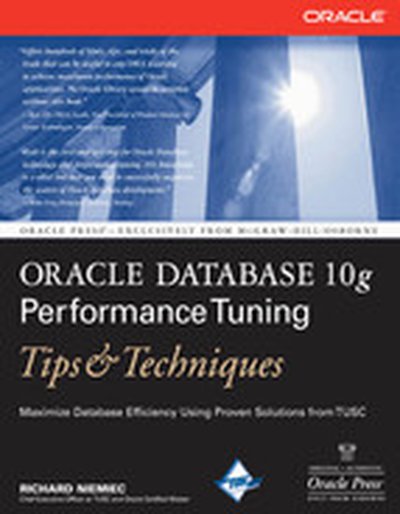
Oracle Database 10g Performance Tuning Tips & Techniques

"Offers hundreds of hints, tips, and tricks of the trade that can be useful to any DBA wanting to achieve maximum performance of Oracle applications. No Oracle library would be complete without this book." --Ken (Dr. DBA) Jacobs, Vice President of Product Strategy for Server Technologies, Oracle Corporation "Rich is the first and last stop for Oracle Database technology and performance tuning. His knowledge is a vital tool that you need to successfully negotiate the waters of Oracle database development." --Mike Frey, Principal Architect, Navteq