talk-data.com talk-data.com

Topic

Oracle

database enterprise_software cloud

16

tagged

Activity Trend

33 peak/qtr
2020-Q1 2026-Q1

Activities

16 activities · Newest first

AWS re:Invent 2025 - Cut costs & operate efficiently on Amazon RDS for SQL Server & Oracle (DAT325)

Discover how leading enterprises are leveraging 15+ years of Amazon RDS operational excellence to power their SQL Server and Oracle databases in the cloud. In this session, explore features across Amazon RDS for SQL Server and Oracle that help you achieve substantial cost savings, enhanced scalability, and efficient operations. Through real-world cost optimization techniques and architectural best practices, learn how organizations are reducing operational overhead and costs while improving availability, scalability, and performance.

Learn more: More AWS events: https://go.aws/3kss9CP

Subscribe: More AWS videos: http://bit.ly/2O3zS75 More AWS events videos: http://bit.ly/316g9t4

ABOUT AWS: Amazon Web Services (AWS) hosts events, both online and in-person, bringing the cloud computing community together to connect, collaborate, and learn from AWS experts. AWS is the world's most comprehensive and broadly adopted cloud platform, offering over 200 fully featured services from data centers globally. Millions of customers—including the fastest-growing startups, largest enterprises, and leading government agencies—are using AWS to lower costs, become more agile, and innovate faster.
AWSreInvent #AWSreInvent2025 #AWS

Partner Opportunities: Modernize Oracle, SAP & VMware on Azure

For years, businesses have relied on Microsoft to power critical systems and applications like VMware, SAP, and Oracle. With Azure, organizations can now modernize these systems more efficiently and securely, enabling innovation at their own pace. Explore partner strategies for transforming workloads and see how leveraging Microsoft’s tools and investments can accelerate success and uncover new opportunities.

AI use cases to transform your Oracle workloads in Azure

Learn how to embed AI across your Oracle estate, spanning apps and databases with Oracle Database@Azure. We’ll walk through blueprints that use Microsoft Foundry, Copilot Studio, and Microsoft Fabric to vectorize Oracle data, build task?specific copilots and agents, and operationalize analytics. Hear customer?proven integration patterns, cost considerations, and reliability tips, and leave with a pragmatic adoption roadmap and next?step resources.

AI-assisted migration: The path to powerful performance on PostgreSQL

Apollo Hospitals unlocked faster performance and sped up innovation by migrating to Azure Database for PostgreSQL. Ready to move beyond your legacy databases? Join us to learn how to make the move seamless with AI-assisted migration for Oracle workloads. Plus, hear how a move to Azure enables innovation and explore the latest features that deliver the resilience and extensibility needed to bolster your databases to support more intelligent applications and demanding workloads.

How Levi’s is transforming their IT estate with Azure

Join us to hear how Levi’s transformed its global IT estate—including Windows Server, SQL Server, SAP, Oracle, and more—through a comprehensive migration and modernization strategy. Learn how they combined data and app modernization with infrastructure re-platforming to unlock agility, scalability, and cost savings. This real-world story will highlight the strategy, lessons learned, and tangible business outcomes that came from taking an end-to-end approach to migration and modernization.

How to modernize Oracle workloads on Azure

Are your Oracle applications and databases stuck on-premises? Azure makes it easy to unlock their full potential by bringing Oracle workloads to the cloud, running them alongside your other cloud applications on the same high-performance, secure network. Unify Oracle data with other critical sources using Microsoft Fabric, and accelerate app modernization with the power of Azure AI services. Discover how to streamline operations, boost agility, and maximize the value of your Oracle investments.

Sponsored by: Anomalo | Reconciling IoT, Policy, and Insurer Data to Deliver Better Customer Discounts

As insurers increasingly leverage IoT data to personalize policy pricing, reconciling disparate datasets across devices, policies, and insurers becomes mission-critical. In this session, learn how Nationwide transitioned from prototype workflows in Dataiku to a hardened data stack on Databricks, enabling scalable data governance and high-impact analytics. Discover how the team orchestrates data reconciliation across Postgres, Oracle, and Databricks to align customer driving behavior with insurer and policy data—ensuring more accurate, fair discounts for policyholders. With Anomalo’s automated monitoring layered on top, Nationwide ensures data quality at scale while empowering business units to define custom logic for proactive stewardship. We’ll also look ahead to how these foundations are preparing the enterprise for unstructured data and GenAI initiatives.

How to Migrate From Oracle to Databricks SQL

Migrating your legacy Oracle data warehouse to the Databricks Data Intelligence Platform can accelerate your data modernization journey. In this session, learn the top strategies for completing this data migration. We will cover data type conversion, basic to complex code conversions, validation and reconciliation best practices. Discover the pros and cons of using CSV files to PySpark or using pipelines to Databricks tables. See before-and-after architectures of customers who have migrated, and learn about the benefits they realized.

AWS re:Invent 2024-Transform your data with Oracle Database@AWS, featuring State Street (DAT246-NEW)

Join this session to learn about Oracle Database@AWS, an offering that helps you easily and quickly migrate Oracle Exadata workloads to AWS with minimal changes, paving the path to modernize applications using the latest innovations in generative AI, machine learning, and analytics. Hear from State Street, one of the world’s leading providers of financial services, on how it plans to use Oracle Database@AWS to supercharge its migration to AWS, unify its data estates across Oracle and AWS, and modernize its applications. Discover other key benefits of Oracle Database@AWS, and learn how to get started.

Learn more: AWS re:Invent: https://go.aws/reinvent. More AWS events: https://go.aws/3kss9CP

Subscribe: More AWS videos: http://bit.ly/2O3zS75 More AWS events videos: http://bit.ly/316g9t4

About AWS: Amazon Web Services (AWS) hosts events, both online and in-person, bringing the cloud computing community together to connect, collaborate, and learn from AWS experts. AWS is the world's most comprehensive and broadly adopted cloud platform, offering over 200 fully featured services from data centers globally. Millions of customers—including the fastest-growing startups, largest enterprises, and leading government agencies—are using AWS to lower costs, become more agile, and innovate faster.
AWSreInvent #AWSreInvent2024

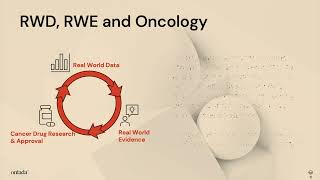
Using Lakehouse to Fight Cancer:Ontada’s Journey to Establish a RWD Platform on Databricks Lakehouse

Ontada, a McKesson business, is an oncology real-world data and evidence, clinical education and provider of technology business dedicated to transforming the fight against cancer. Core to Ontada’s mission is using real-world data (RWD) and evidence generation to improve patient health outcomes and to accelerate life science research.

To support its mission, Ontada embarked on a journey to migrate its enterprise data warehouse (EDW) from an on-premise Oracle database to Databricks Lakehouse. This move allows Ontada to now consume data from any source, including structured and unstructured data from its own EHR and genomics lab results, and realize faster time to insight. In addition, using the Lakehouse has helped Ontada eliminate data silos, enabling the organization to realize the full potential of RWD – from running traditional descriptive analytics to extracting biomarkers from unstructured data. The session will cover the following topics:

  • Oracle to Databricks: migration best practices and lessons learned
  • People, process, and tools: expediting innovation while protecting patient information using Unity Catalog
  • Getting the most out of the Databricks Lakehouse: from BI to genomics, running all analytics under one platform
  • Hyperscale biomarker abstraction: reducing the manual effort needed to extract biomarkers from large unstructured data (medical notes, scanned/faxed documents) using spaCY and John Snow Lab NLP libraries

Join this session to hear how Ontada is transforming RWD to deliver safe and effective cancer treatment.

Talk by: Donghwa Kim

Connect with us: Website: https://databricks.com Twitter: https://twitter.com/databricks LinkedIn: https://www.linkedin.com/company/databricks Instagram: https://www.instagram.com/databricksinc Facebook: https://www.facebook.com/databricksinc

Learnings From the Field: Migration From Oracle DW and IBM DataStage to Databricks on AWS

Legacy data warehouses are costly to maintain, unscalable and cannot deliver on data science, ML and real-time analytics use cases. Migrating from your enterprise data warehouse to Databricks lets you scale as your business needs grow and accelerate innovation by running all your data, analytics and AI workloads on a single unified data platform.

In the first part of this session we will guide you through the well-designed process and tools that will help you from the assessment phase to the actual implementation of an EDW migration project. Also, we will address ways to convert PL/SQL proprietary code to an open standard python code and take advantage of PySpark for ETL workloads and Databricks SQL’s data analytics workload power.

The second part of this session will be based on an EDW migration project of SNCF (French national railways); one of the major enterprise customers of Databricks in France. Databricks partnered with SNCF to migrate its real estate entity from Oracle DW and IBM DataStage to Databricks on AWS. We will walk you through the customer context, urgency to migration, challenges, target architecture, nitty-gritty details of implementation, best practices, recommendations, and learnings in order to execute a successful migration project in a very accelerated time frame.

Talk by: Himanshu Arora and Amine Benhamza

Connect with us: Website: https://databricks.com Twitter: https://twitter.com/databricks LinkedIn: https://www.linkedin.com/company/databricks Instagram: https://www.instagram.com/databricksinc Facebook: https://www.facebook.com/databricksinc

Sponsored: Matillion - OurFamilyWizard Moves and Transforms Data for Databricks Delta Lake Easy

OurFamilyWizard helps families living separately thrive, empowering parents with needed tools after divorce or separation. Migrating to a modern data stack built on a Databricks Delta Lake seemed like the obvious choice for OurFamilyWizard to start integrating 20 years of on-prem Oracle data with event tracking and SaaS cloud data, but they needed tools to do it. OurFamilyWizard turned to Matillion, a powerful and intuitive solution, to quickly load, combine, and transform source data into reporting tables and data marts, and empower them to turn raw data into information the organization can use to make decisions.

In this session, Beth Mattson, OurFamilyWizard Senior Data Engineer, will detail how Matillion helped OurFamilyWizard migrate their data to Databricks fast and provided end-to-end ETL capabilities. In addition, Jamie Baker, Matillion Director of Product Management, will give a brief demo and discuss the Matillion and Databricks partnership and what is on the horizon.

Talk by: Jamie Baker and Beth Mattson

Connect with us: Website: https://databricks.com Twitter: https://twitter.com/databricks LinkedIn: https://www.linkedin.com/company/databricks Instagram: https://www.instagram.com/databricksinc Facebook: https://www.facebook.com/databricksinc

Migrate and Modernize your Data Platform with Confluent and Databricks

Moving and building in the cloud to accelerate analytics development requires enterprises to rethink their data infrastructure. Whether you are moving from an on-prem legacy system or you were born in the cloud, businesses are turning to Confluent and Databricks to help them unlock new real-time customer experiences and intelligence for their backend operations.

Join us to see how Confluent and Databricks enable companies to set data in motion across any system, at any scale, in near real-time. Connecting Confluent with Databricks allows companies to migrate and connect data from on-prem databases and data warehouses like Netezza, Oracle, and Cloudera to Databricks in the cloud to power real-time analytics.

Connect with us: Website: https://databricks.com Facebook: https://www.facebook.com/databricksinc Twitter: https://twitter.com/databricks LinkedIn: https://www.linkedin.com/company/data... Instagram: https://www.instagram.com/databricksinc/

Optimizing Speed and Scale of User-Facing Analytics Using Apache Kafka and Pinot

Apache Kafka is the de facto standard for real-time event streaming, but what do you do if you want to perform user-facing, ad-hoc, real-time analytics too? That's where Apache Pinot comes in.

Apache Pinot is a realtime distributed OLAP datastore, which is used to deliver scalable real time analytics with low latency. It can ingest data from batch data sources (S3, HDFS, Azure Data Lake, Google Cloud Storage) as well as streaming sources such as Kafka. Pinot is used extensively at LinkedIn and Uber to power many analytical applications such as Who Viewed My Profile, Ad Analytics, Talent Analytics, Uber Eats and many more serving 100k+ queries per second while ingesting 1Million+ events per second.

Apache Kafka's highly performant, distributed, fault-tolerant, real-time publish-subscribe messaging platform powers big data solutions at Airbnb, LinkedIn, MailChimp, Netflix, the New York Times, Oracle, PayPal, Pinterest, Spotify, Twitter, Uber, Wikimedia Foundation, and countless other businesses.

Come hear from Neha Power, Founding Engineer at a StarTree and PMC and committer of Apache Pinot, and Karin Wolok, Head of Developer Community at StarTree, on an introduction to both systems and a view of how they work together.

Connect with us: Website: https://databricks.com Facebook: https://www.facebook.com/databricksinc Twitter: https://twitter.com/databricks LinkedIn: https://www.linkedin.com/company/data... Instagram: https://www.instagram.com/databricksinc/

Data Lake for State Health Exchange Analytics using Databricks

One of the largest State based health exchanges in the country was looking to modernize their data warehouse (DWH) environment to support the vision that every decision to design, implement and evaluate their state-based health exchange portal is informed by timely and rigorous evidence about its consumers’ experiences. The scope of the project was to replace existing Oracle-based DWH with an analytics platform that could support a much broader range of requirements with an ability to provide unified analytics capabilities including machine learning. The modernized analytics platform comprises a cloud native data lake and DWH solution using Databricks. The solution provides significantly higher performance and elastic scalability to better handle larger and varying data volumes with a much lower cost of ownership compared to the existing solution. In this session, we will walk through the rationale behind tool selection, solution architecture, project timeline and benefits expected.

Connect with us: Website: https://databricks.com Facebook: https://www.facebook.com/databricksinc Twitter: https://twitter.com/databricks LinkedIn: https://www.linkedin.com/company/data... Instagram: https://www.instagram.com/databricksinc/

Innovate with Oracle Database@Azure and native Azure AI services

Oracle Database@Azure empowers organizations to simplify cloud adoption by running mission-critical Oracle workloads with the reliability of Oracle Exadata Database Service and Autonomous AI Database, directly inside Microsoft Azure. In this session you’ll learn how enterprises are modernizing applications, leveraging existing Azure investments, and unlocking new business opportunities through AI-driven insights.