talk-data.com talk-data.com

Topic

Oracle

database enterprise_software cloud

541

tagged

Activity Trend

33 peak/qtr
2020-Q1 2026-Q1

Activities

541 activities · Newest first

MySQL® Clustering

Clustering is the final component of MySQL that makes it truly enterprise-level and able to compete fully with proprietary databases such as Oracle and Microsoft SQL Server. The increased number of high-demand, high-productivity corporations and institutions choosing MySQL, including MIT, the Department of Homeland Security, NASA, and Nokia, to name a few, need the benefit of clustering databases for high performance and scalability. MySQL AB has stepped up to the plate to offer advanced, high-availability, reliable clustering. As this demand has increased, so has the need for information. MySQL Clustering offers thorough, authoritative instruction on setting up and administering a MySQL Cluster from the developers of the cluster itself. You will learn about everything from installation and configuration to performance and troubleshooting in this authoritative reference guide to MySQL clustering.

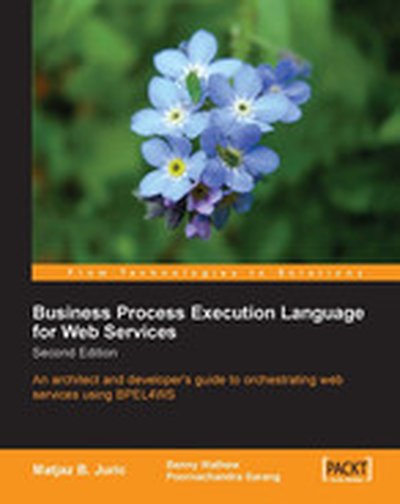
Business Process Execution Language for Web Services - Second Edition

Key Features Architecture, syntax, development and composition of Business Processes and Services using BPEL Advanced BPEL features such as compensation, concurrency, links, scopes, events, dynamic partner links, and correlations Oracle BPEL Process Manager and BPEL Designer Microsoft BizTalk Server as a BPEL server Book Description Web services provide the basic technical platform required for application interoperability. They do not, however, provide higher level control, such as which web services need to be invoked, which operations should be called and in what sequence. Nor do they provide ways to describe the semantics of interfaces, the workflows, or e-business processes. BPEL is the missing link to assemble and integrate web services into a real business process BPEL4WS standardizes process automation between web services. This applies both within the enterprise, where BPEL4WS is used to integrate previously isolated systems, and between enterprises, where BPEL4WS enables easier and more effective integration with business partners. In providing a standard descriptive structure BPEL4WS enables enterprises to define their business processes during the design phase. Wider business benefits can flow from this through business process optimization, reengineering, and the selection of most appropriate processes . Supported by major vendors - including BEA, Hewlett-Packard, IBM, Microsoft, Novell, Oracle, SAP, Sun, and others - BPEL4WS is becoming the accepted standard for business process management. This book provides detailed coverage of BPEL4WS, its syntax, and where, and how, it is used. It begins with an overview of web services, showing both the foundation of, and need for, BPEL. The web services orchestration stack is explained, including standards such as WS-Security, WS-Coordination, WS-Transaction, WS-Addressing, and others. The BPEL language itself is explained in detail, with Code snippets and complete examples illustrating both its syntax and typical construction. Having covered BPEL itself, the book then goes on to show BPEL is used in context. by providing an overview of major BPEL4WS servers. It covers the Oracle BPEL Process Manager and Microsoft BizTalk Server 2004 in detail, and shows how to write BPEL4WS solutions using these servers. What you will learn Chapter 1 provides a detailed introduction to BPEL and Service Oriented Architecture (SOA). It discusses business processes and their automation, explains the role of BPEL, web services, and Enterprise Service Buses (ESB) in SOA, provides insight into business process composition with BPEL, explains the most important features, compares BPEL to other specifications, provides an overview of BPEL servers, and discusses the future of BPEL. Chapter 2 provides a detailed introduction to the Web Services Technology Stack. It discusses the important standards and specifications for using BPEL and implementing SOA with web services, such as WS-Security, WS-Addressing, WS-Coordination, WS-AtomicTransaction, WS-BusinessActivity, WS-Reliable Messaging, etc. Chapter 3 discusses the composition of web services with BPEL. The chapter introduces the core concepts of BPEL and explains how to define synchronous and asynchronous business processes with BPEL. The reader gets familiar with BPEL process structure, partner links, sequential and parallel service invocation, variables, conditions, etc. Chapter 4 goes deeper into the BPEL specification and covers advanced features for modeling complex business processes. Advanced activities, scopes, serialization, fault handing, compensations, event handling, correlation sets, concurrent activities and links, process lifecycle, and dynamic partner links are covered in detail. Chapter 5 explains how to use the Oracle BPEL Process Manager for deploying and executing business processes defined in BPEL. It describes the server architecture, tools, features, and common approaches for managing and debugging BPEL processes. The chapter also looks at graphical development of BPEL processes using Oracle BPEL Designer for JDeveloper and for Eclipse. Chapter 6 takes a detailed look at the advanced features of the Oracle BPEL Process Manager including extension functions, dynamic parallel flows, Web Services Invocation Framework, Java embedding, Notification service, Workflow service, Identity service, and Oracle BPEL Server APIs. Chapter 7 discusses MS BizTalk Server 2004 and its support for BPEL. It explains how to develop business processes in BizTalk and export them to BPEL. It also explains how to import BPEL processes into BizTalk and how to use the Orchestration Designer tool to define processes graphically, and compares BizTalk and BPEL constructs. Appendix A provides a syntax reference for BPEL version 1.1. The appendix covers standard BPEL activities and elements, functions, attributes, and faults. Who this book is for This book is aimed at architects and developers in the design, implementation, and integration phases of advanced information systems and e-business solutions, developing business processes and dealing with the issues of composition, orchestration, transactions, coordination, and security. The book presumes knowledge of XML and web services, web services development (either on J2EE or .NET), and multi-tier architecture

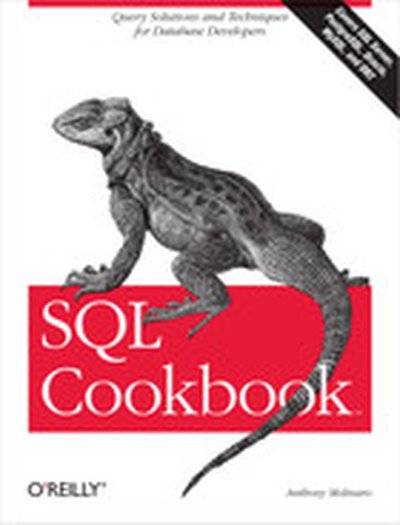
SQL Cookbook

You know the rudiments of the SQL query language, yet you feel you aren't taking full advantage of SQL's expressive power. You'd like to learn how to do more work with SQL inside the database before pushing data across the network to your applications. You'd like to take your SQL skills to the next level. Let's face it, SQL is a deceptively simple language to learn, and many database developers never go far beyond the simple statement: SELECT columns FROM table WHERE conditions. But there is so much more you can do with the language. In the SQL Cookbook, experienced SQL developer Anthony Molinaro shares his favorite SQL techniques and features. You'll learn about: Window functions, arguably the most significant enhancement to SQL in the past decade. If you're not using these, you're missing out Powerful, database-specific features such as SQL Server's PIVOT and UNPIVOT operators, Oracle's MODEL clause, and PostgreSQL's very useful GENERATE_SERIES function Pivoting rows into columns, reverse-pivoting columns into rows, using pivoting to facilitate inter-row calculations, and double-pivoting a result set Bucketization, and why you should never use that term in Brooklyn. How to create histograms, summarize data into buckets, perform aggregations over a moving range of values, generate running-totals and subtotals, and other advanced, data warehousing techniques The technique of walking a string, which allows you to use SQL to parse through the characters, words, or delimited elements of a string Written in O'Reilly's popular Problem/Solution/Discussion style, the SQL Cookbook is sure to please. Anthony's credo is: "When it comes down to it, we all go to work, we all have bills to pay, and we all want to go home at a reasonable time and enjoy what's still available of our days." The SQL Cookbook moves quickly from problem to solution, saving you time each step of the way.

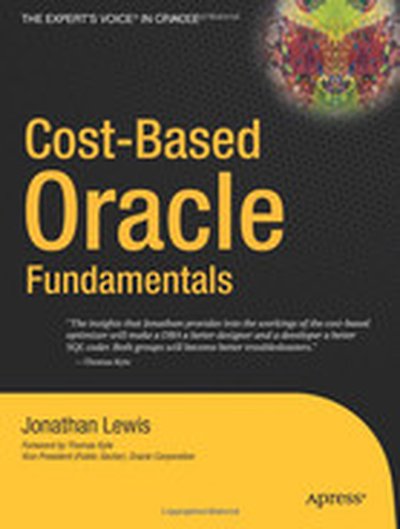
Cost-Based Oracle Fundamentals

The question, "Why isn't Oracle using my index?" must be one of the most popular (or perhaps unpopular) questions ever asked on the Oracle help forums. You've picked exactly the right columns, you've got them in the ideal order, you've computed statistics, you've checked for null columns—and the optimizer flatly refuses to use your index unless you hint it. What could possibly be going wrong? If you've suffered the frustration of watching the optimizer do something completely bizarre when the best execution plan is totally obvious, or spent hours or days trying to make the optimizer do what you want it to do, then this is the book you need. You'll come to know how the optimizer thinks, understand why it makes mistakes, and recognize the data patterns that make it go awry. With this information at your fingertips, you will save an enormous amount of time on designing and trouble-shooting your SQL. The cost-based optimizer is simply a piece of code that contains a model of how Oracle databases work. By applying this model to the statistics about your data, the optimizer tries to efficiently convert your query into an executable plan. Unfortunately, the model can't be perfect, your statistics can't be perfect, and the resulting execution plan may be far from perfect. In Cost-Based Oracle Fundamentals, the first book in a series of three, Jonathan Lewis—one of the foremost authorities in this field—describes the most commonly used parts of the model, what the optimizer does with your statistics, and why things go wrong. With this information, you'll be in a position to fix entire problem areas, not just single SQL statements, by adjusting the model or creating more truthful statistics.

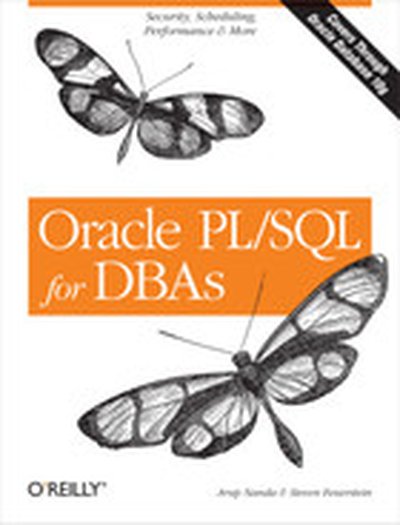
Oracle PL/SQL for DBAs

PL/SQL, Oracle's powerful procedural language, has been the cornerstone of Oracle application development for nearly 15 years. Although primarily a tool for developers, PL/SQL has also become an essential tool for database administration, as DBAs take increasing responsibility for site performance and as the lines between developers and DBAs blur. Until now, there has not been a book focused squarely on the language topics of special concern to DBAs Oracle PL/SQL for DBAs fills the gap. Covering the latest Oracle version, Oracle Database 10g Release 2 and packed with code and usage examples, it contains: A quick tour of the PL/SQL language, providing enough basic information about language fundamentals to get DBAs up and running Extensive coverage of security topics for DBAs: Encryption (including both traditional methods and Oracle's new Transparent Data Encryption, TDE); Row-Level Security(RLS), Fine-Grained Auditing (FGA); and random value generation Methods for DBAs to improve query and database performance with cursors and table functions Coverage of Oracle scheduling, which allows jobs such as database monitoring andstatistics gathering to be scheduled for regular execution Using Oracle's built-in packages (DBMS_CRYPTO, DBMS_RLS, DBMS_FGA, DBMS_RANDOM,DBMS_SCHEDULING) as a base, the book describes ways of building on top of these packages to suit particular organizational needs. Authors are Arup Nanda, Oracle Magazine 2003 DBA of the Year, and Steven Feuerstein, the world's foremost PL/SQL expert and coauthor of the classic reference, Oracle PL/SQL Programming. DBAs who have not yet discovered how helpful PL/SQL can be will find this book a superb introduction to the language and its special database administration features. Even if you have used PL/SQL for years, you'll find the detailed coverage in this book to be an invaluable resource.

Oracle Database 10g Linux Administration

Install and configure Oracle Database 10g on a Linux enterprise platform. This book explains how to set up, administer, monitor, and tune Oracle Database 10g on Linux. You will also learn how to implement High Availability solutions as well as handle backup, recovery, and replication. This exclusive Oracle Press guide is the ideal resource for all Oracle DBAs working in a Linux environment.

Expert Oracle Database Architecture: 9i and 10g Programming Techniques and Solutions

This is a defining book on the Oracle database for any developer or database administrator who works with Oracle-driven database applications. Tom Kyte has a simple philosophy: you can treat Oracle as a black box and just stick data into it or you can understand how it works and exploit it as a powerful computing environment. If you choose the latter, then you will find that there are few information management problems that you cannot solve quickly and elegantly. Expert Oracle Database Architecture is the first of a three-book series that completely explores and defines the Oracle database. It covers all of the most important Oracle architecture features, including: Files, memory structures and processes Locking and latching Transactions, concurrency and multi-versioning Tables and Indexes Datatypes Partitioning and parallelism Each feature is taught in a proof-by-example manner, not only discussing what it is, but also how it works, how to implement software using it, and the common pitfalls associated with it. This fully revised edition covers both the 9 i and 10 g versions. It also comes with a CD containing a searchable PDF of the 8 i version of the book.M Tom has fully revised and expanded the architecture-related sections from Expert One-on-One Oracle (a searchable PDF of which is included on the CD accompanying this book), and added substantial new material. He focuses solely on 9 i and 10 g architecture in this book and refers to the CD for 8 i-specific details. The number of changes will surprise you. In summary, this book provides a one-stop resource containing deep wisdom on the design, development and administration of Oracle applications, written by one of the world's foremost Oracle experts, Thomas Kyte.

Expert Oracle PL/SQL

Experienced PL/SQL programmers and Oracle developers will learn to master Oracle's procedural extension to industry-standard SQL. Using this authoritative resource, readers will become experts at developing robust, high-performance enterprise applications with PL/SQL. Detailed examples describe the practical aspect of each feature, and provide ideas to the reader of how they can best exploit the functionality.

Experiences with Oracle 10g Database for Linux on zSeries

Linux on zSeries offers many advantages to customers who rely upon IBM mainframe systems to run their businesses. Linux on zSeries takes advantage of the qualities of service in the zSeries hardware—making it a robust industrial strength Linux. This provides an excellent platform for consolidating Oracle databases that exist in your enterprise. This IBM Redbooks publication describes experiences gained while installing and testing Oracle10g for Linux on zSeries, such as: -Installing a single instance database of Oracle10g instances for Linux on zSeries Interested readers include database consultants, installers, administrators, and system programmers.

Oracle® Database 10g Insider Solutions

Oracle Database 10g Insider Solutions is a must-have reference guide for all Oracle professionals. It provides much-needed information on best practices, tips, and techniques in debugging, installation, deployment, and tuning of the Oracle 10g database. You can draw upon the experience and knowledge of these authors to find creative ways to put your Oracle database to work. The authors will also address common and not-so-common installation concerns, database administration, development, and tuning. Oracle Database 10g Insider Solutions will bring you the insider information that you can't get anywhere else.

Learning SQL

SQL (Structured Query Language) is a standard programming language for generating, manipulating, and retrieving information from a relational database. If you're working with a relational database--whether you're writing applications, performing administrative tasks, or generating reports--you need to know how to interact with your data. Even if you are using a tool that generates SQL for you, such as a reporting tool, there may still be cases where you need to bypass the automatic generation feature and write your own SQL statements. To help you attain this fundamental SQL knowledge, look to Learning SQL, an introductory guide to SQL, designed primarily for developers just cutting their teeth on the language. Learning SQL moves you quickly through the basics and then on to some of the more commonly used advanced features. Among the topics discussed: The history of the computerized database SQL Data Statements--those used to create, manipulate, and retrieve data stored in your database; example statements include select, update, insert, and delete SQL Schema Statements--those used to create database objects, such as tables, indexes, and constraints How data sets can interact with queries The importance of subqueries Data conversion and manipulation via SQL's built-in functions How conditional logic can be used in Data StatementsBest of all, Learning SQL talks to you in a real-world manner, discussing various platform differences that you're likely to encounter and offering a series of chapter exercises that walk you through the learning process. Whenever possible, the book sticks to the features included in the ANSI SQL standards. This means you'll be able to apply what you learn to any of several different databases; the book covers MySQL, Microsoft SQL Server, and Oracle Database, but the features and syntax should apply just as well (perhaps with some tweaking) to IBM DB2, Sybase Adaptive Server, and PostgreSQL. Put the power and flexibility of SQL to work. With Learning SQL you can master this important skill and know that the SQL statements you write are indeed correct.

Oracle PL/SQL Programming, 4th Edition

For the past ten years, O'Reilly's Oracle PL/SQL Programming has been the bestselling book on PL/SQL, Oracle's powerful procedural language. Packed with examples and helpful recommendations, the book has helped everyone--from novices to experienced developers, and from Oracle Forms developers to database administrators--make the most of PL/SQL. The fourth edition is a comprehensive update, adding significant new content and extending coverage to include the very latest Oracle version, Oracle Database 10 g Release 2. It describes such new features as the PL/SQL optimizing compiler, conditional compilation, compile-time warnings, regular expressions, set operators for nested tables, nonsequential collections in FORALL, the programmer-defined quoting mechanism, the ability to backtrace an exception to a line number, a variety of new built-in packages, and support for IEEE 754 compliant floating-point numbers. The new edition adds brand-new chapters on security (including encryption, row-level security, fine-grained auditing, and application contexts), file, email, and web I/O (including the built-in packages DBMS_OUTPUT, UTL_FILE, UTL_MAIL, UTL_SMTP, and UTL_HTTP) and globalization and localization. Co-authored by the world's foremost PL/SQL authority, Steven Feuerstein, this classic reference provides language syntax, best practices, and extensive code, ranging from simple examples to complete applications--making it a must-have on your road to PL/SQL mastery. A companion web site contains many more examples and additional technical content for enhanced learning.

Oracle DBA Pocket Guide

The Oracle database is one of the most popular in the world, and for good reason. It's compatible, scalable, portable, and capable of performing incredibly fast. The advantages Oracle holds over its competition come with a price, however--it's a highly complex database that's becoming more complex with every release. And this level of detail, of course, can begin to weigh on database administrators (DBAs). Fortunately, the Oracle DBA Pocket Guide from O'Reilly is on the case. This handy reference is designed to help administrators make more effective use of their time by presenting a compact summary of DBA tasks in an easy-to-use form. With this book by your side, you'll have instant access to the most important concepts, best practices, tips, and checklists. Key topics include architecture, installation, configuration, tuning, and backup/recovery. Everything that you absolutely must know to do your job well is right there at your fingertips. Moreover, the Oracle DBA Pocket Guide covers Oracle Database 9i, as well as its latest release, Oracle Database 10g. The first database designed for enterprising grid computing, Oracle Database 10g significantly reduces the cost of managing the IT environment with a simplified install, reduced configuration and management requirements, and automatic performance diagnosis and SQL tuning. The latest in O'Reilly's line of bestselling Oracle titles, this book is an invaluable companion for any database administrator--new or experienced--interested in reviewing core Oracle concepts at a glance.

Toad Pocket Reference for Oracle, 2nd Edition

Toad is an enormously popular interactive environment tool for Oracle development and administration. It allows developers to build, test, debug, and format their code via an easy-to-use graphical user interface, available in both freeware and commercial versions. Toad makes developers far more productive; using Toad, you'll find that program changes that once took hours can now be completed in minutes. Toad allows developers to browse their database tables, procedures, and object types; use code templates; and show errors. It also simplifies database administration by providing a way for DBAs to graphically browse and change database characteristics. Updated for Toad Versions 8.0 and 8.5, this pocket book is packed with quick-reference material: Toad feature and menu summaries, shortcut keys, suggested changes to Toad defaults, productivity tips and tricks, and more. The book includes concise discussions of all the basic Toad components: the SQL Editor, Procedure Editor, SQL Modeler, Schema Browser, Project Manager, and Debugger. The second edition includes coverage of new SQL Editor features, improvements in usability, and new tools such as CodeXpert (a robust code analyzer and advisor) and Script Debugger (the only tool available that provides real-time debugging of SQL*Plus scripts). It also provides helpful hints on using Toad to perform database administration and SQL tuning and optimization. Whether you're a new or experienced Toad user, you'll find this quick reference an indispensable companion to the product and its online help files.

SQL: Visual Quickstart Guide, Second Edition

As dynamic, database-driven Web sites become the standard, more and more nonprogrammers just like yourself are being forced to work with database information and create and edit database objects. With SQL and this task-based guide to it, you can do it too-- no programming experience required! After going over the relational database model and SQL syntax in the first few chapters, veteran author Chris Fehily launches into the tasks that will get you comfortable with SQL fast. In addition to explaining SQL basics, this updated reference covers the ANSI SQL:2003 standard and contains a wealth of brand-new information, including a new chapter on set operations and common tasks, well-placed optimization tips to make your queries run fast, sidebars on advanced topics, and added IBM DB2 coverage. Best of all, the book's examples were tested on the latest versions of Microsoft Access, Microsoft SQL Server, Oracle, IBM DB2, MySQL, and PostgreSQL. On the companion Web site, you can download the SQL scripts and sample database for all these systems and put your knowledge to work immediately on a real database..

Oracle Database 10g DBA Handbook

Everything a DBA needs to know in one volume--this is the must-have reference for anyone working with the Oracle database, and it’s been fully revised and updated for Oracle Database 10 g. Co-author Kevin Loney is the all-time, best-selling Oracle Press author.

Beginning SQL

Taking readers through the basics of the language, right up to some more advanced topics, this book is a practical, hands-on resource and aims to keep the reader involved at all times Focuses on the SQL standard and is loaded with detailed examples and code; each chapter includes practice exercises that readers can challenge themselves with before looking at the sample solutions in the appendix Paul Wilton is a successful Wrox "Beginning" book author and is an ideal author to write for those who want a firm grasp of standard SQL before learning the details specific to a particular database product SQL is an international standard for manipulating data in databases and is used by database programmers in all major database systems: Microsoft, IBM, Oracle, MySQL, and many others

OCP: Oracle 10g Administration II Study Guide: Exam 1Z0-043

Here's the book you need to prepare for the Oracle Database 10g Administration II exam, 1Z0-043. This Study Guide was developed to meet the exacting requirements of today's Oracle certification candidates. In addition to the consistent and accessible instructional approach that has earned Sybex the "Best Study Guide" selection in CertCities Readers' Choice Awards for two consecutive years, this book provides: Clear and concise information on advanced database administration with Oracle 10g Practical examples and insights drawn from the authors' real-world experiences Leading-edge exam preparation software, including a test engine and electronic flashcards You'll also find authoritative coverage of key exam topics, including: Configuring Recovery Manager Understanding the Flashback Database Recovering from User Errors Working with Globalization Support Using the Scheduler to Automate Tasks Monitoring and Managing Storage Securing the Oracle Listener Look to Sybex for the knowledge and skills needed to succeed in today's competitive IT marketplace.

OCA: Oracle 10g™ Administration I: Study Guide

Here's the book you need to prepare for the Oracle Database 10g Administration I exam, 1Z0-042. This Study Guide was developed to meet the exacting requirements of today's Oracle certification candidates. In addition to the consistent and accessible instructional approach that has earned Sybex the "Best Study Guide" selection in CertCities Readers Choice Awards for two consecutive years, this book provides: Clear and concise information on database administration with Oracle 10g Practical examples and insights drawn from the authors' real-world experiences Leading-edge exam preparation software, including a test engine and electronic flashcards You'll also find authoritative coverage of key exam topics, including: Installing Oracle Database 10g Software Creating and Controlling Oracle Databases Administering Users Managing Schema Objects and Data Implementing Oracle Security Features Monitoring Performance Performing Database Backup and Recovery Look to Sybex for the knowledge and skills needed to succeed in today's competitive IT marketplace

Creating Highly Available Database Solutions: Oracle Real Application Clusters (RAC) and Sun Cluster 3.x Software

This book explains how to architect and deploy high availability (HA) solutions with Oracle Real Application Clusters (Oracle RAC) in a Sun™ Cluster 3.x environment. It presents information to help you decide when an Oracle RAC and Sun Cluster software solution is appropriate to satisfy the availability requirements of your business. In addition, this book explains the technology behind these products, describes successful customer deployments, and provides technical tips and preferred practice recommendations. This book features detailed case studies, including A large German bank that has implemented an Oracle RAC and Sun Cluster software solution to meet the ever-increasing business demands of the banking industry. One of the largest companies in Europe for alpine skiing that has implemented Oracle RAC and Sun Cluster software to support HA requirements in a consolidated environment. A benchmark case that describes the use of Oracle RAC with Sun’s Remote Shared Memory (RSM) technology to improve the performance of single-instance databases. A large financial institution that uses Sun Cluster’s HA Oracle agent to provide the necessary level of HA required for their database.