talk-data.com talk-data.com

Topic

postgresql

332

tagged

Activity Trend

6 peak/qtr
2020-Q1 2026-Q1

Activities

332 activities · Newest first

PostgreSQL

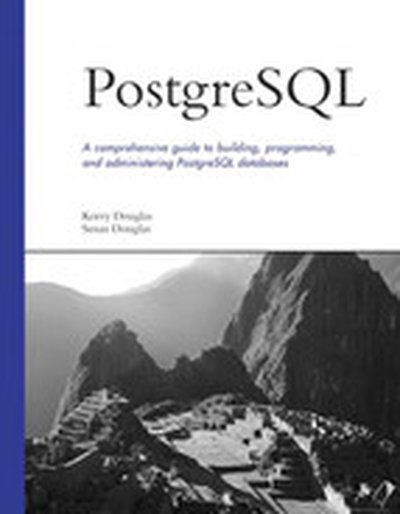
PostgreSQL is the world¿s most advanced open-source database. PostgreSQL is the most comprehensive, in-depth, and easy-to-read guide to this award-winning database. This book starts with a thorough overview of SQL, a description of all PostgreSQL data types, and a complete explanation of PostgreSQL commands. If you are a developer or an administrator, you¿ll love the chapter that explores PostgreSQL performance. The authors explain how PostgreSQL stores data on disk (and in memory) and how to measure and influence the effectiveness of PostgreSQL¿s caching mechanisms. You¿ll also learn how PostgreSQL generates and evaluates execution plans. The authors explain all of the query operators that can appear in the results of an EXPLAIN command, describing the performance implications of each operator as well as the conditions which will cause PostgreSQL to use that operator. PostgreSQL is also a complete guide for the developer. Whether you¿re developing with C, C++, ODBC, Embedded SQL, Java, Tcl/Tk, Perl, Python or PHP, you¿ll find a comprehensive description of the PostgreSQL API for your language of choice. Easy to follow exercises will walk you through the development of working applications that fully demonstrate the features offered by each API. You will also find a chapter that describes the PL/pgSQL server-side procedural language, learning how to build triggers, functions, and stored-procedures. The authors have even included a chapter that walks you through the process of extending the PostgreSQL server with custom-written C functions and new data types. The accompanying web site, www.conjectrix.com, contains downloadable versions of all of the sample code and a wealth of PostgreSQL-related resources. The last section of PostgreSQL was written for the PostgreSQL administrator. You will learn how to install PostgreSQL on Windows, Linux, and Unix systems, from source code or from pre-compiled installers. The authors have described all of the PostgreSQL configuration options (compile-time, startup, and on-the-fly). The chapter on PostgreSQL security describes all of the authentication protocols that you can choose from and describes how to secure your database, both internally and externally. If you have to support a multi-national environment, you will find the chapter on internationalization and localization to be invaluable. You won¿t find a more complete guide to PostgreSQL anywhere. The authors have made PostgreSQL approachable by leading the reader from basic concepts to advanced features. Whether you¿re a database beginner or an advanced user, you will find this book a valuable addition to your library.
PHP and PostgreSQL: Advanced Web Programming

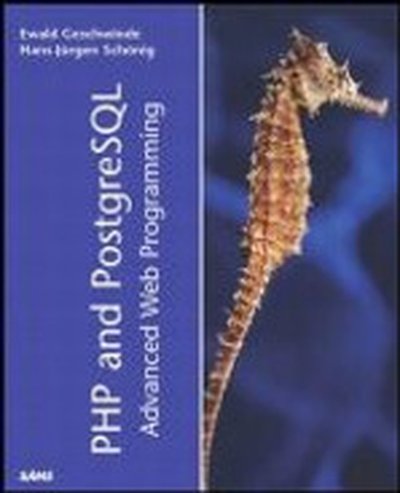
Sams¿ PHP and MySQL Web Development, by Luke Welling and Laura Thomson, showed that there is a strong demand for books that describe how to use PHP together with a specific open-source database to develop Web applications. While MySQL is very popular, PostgreSQL is widely considered to be the more powerful of the two open-source databases. And PostgreSQL is rapidly gaining market share large organizations are beginning to use PostgreSQL instead of Oracle; the demand for PostgreSQL training and support has increased by some accounts 50% in the last six months; and Web hosting services increasingly offer PostgreSQL along with MySQL. PHP and PostgreSQL Advanced Web Programming focuses on the specific needs of a PostgreSQL developer and will detail how to make use of PostgreSQL¿s unique, advanced features to develop high-availability, fail-safe Web applications with PHP and PostgreSQL.

Practical PostgreSQL

Arguably the most capable of all the open source databases, PostgreSQL is an object-relational database management system first developed in 1977 by the University of California at Berkeley. In spite of its long history, this robust database suffers from a lack of easy-to-use documentation. Practical PostgreSQL fills that void with a fast-paced guide to installation, configuration, and usage. This comprehensive new volume shows you how to compile PostgreSQL from source, create a database, and configure PostgreSQL to accept client-server connections. It also covers the many advanced features, such as transactions, versioning, replication, and referential integrity that enable developers and DBAs to use PostgreSQL for serious business applications. The thorough introduction to PostgreSQL's PL/pgSQL programming language explains how you can use this very useful but under-documented feature to develop stored procedures and triggers. The book includes a complete command reference, and database administrators will appreciate the chapters on user management, database maintenance, and backup & recovery. With Practical PostgreSQL, you will discover quickly why this open source database is such a great open source alternative to proprietary products from Oracle, IBM, and Microsoft.

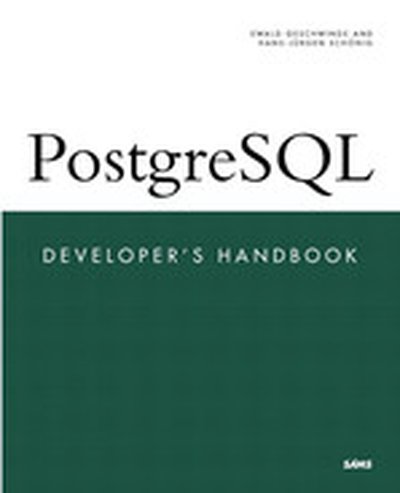
PostgreSQL Developer's Handbook

PostgreSQL is an object-relational database server that is widely considered to be the world¿s most advanced open-source database system. It is ANSI SQL-compatible, and it offers powerful features to enable more complex software design than would be possible with relational databases that are not object-oriented. PostgreSQL is extremely modular, it supports a large number of datatypes, and programming interfaces for PostgreSQL are available for all important programming languages, including C, Perl, Python, Tcl, Java, and PHP. PostgreSQL Developer¿s Handbook provides a complete overview of the PostgreSQL database server and extensive coverage of its core features, including object orientation, PL/pgSQL, and the most important programming interfaces. The book introduces the reader to the language and syntax of PostgreSQL and then moves quickly into advanced programming topics.

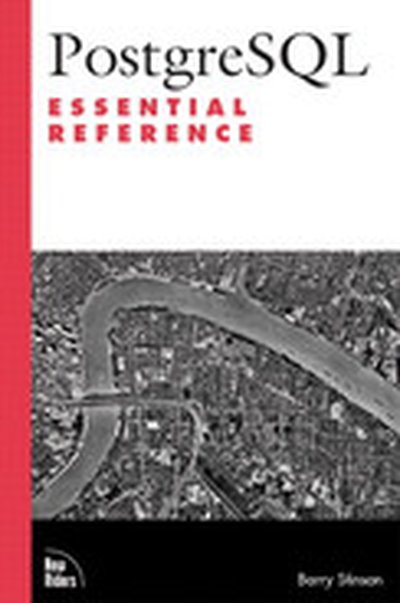
PostgreSQL Essential Reference

PostgreSQL Essential Reference is a reference book for developers and system administrators who are already familiar with SQL database concepts but that need clear and concise documentation that is specific to PostgreSQL. The book is divided into 3 parts; Basic SQL Reference, PostgreSQL specifics, and PostgreSQL administration. On a whole, it provides a command, the syntax, available options, description, and example code. Readers will be able to easily utilize the code and concepts into their use f the product. An added advantage to this book is that provides all reference material in two ways; alphabetically and by task. This is important because readers of the book will be looking for this information by both methods.

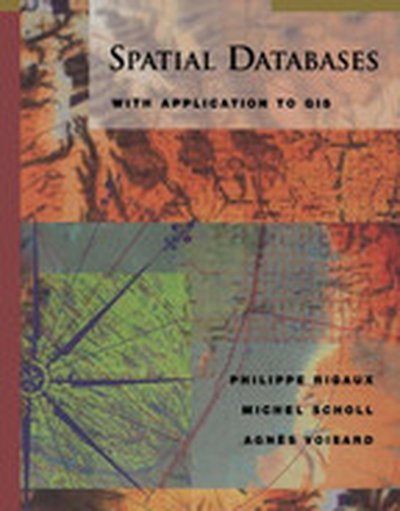
Spatial Databases

Spatial Databases is the first unified, in-depth treatment of special techniques for dealing with spatial data, particularly in the field of geographic information systems (GIS). This book surveys various techniques, such as spatial data models, algorithms, and indexing methods, developed to address specific features of spatial data that are not adequately handled by mainstream DBMS technology. The book also reviews commercial solutions to geographic data handling: ArcInfo, ArcView, and Smallworld GISs; and two extensions to the relational model, PostgreSQL and Oracle Spatial. The authors examine these underlying GIS technologies, assess their strengths and weaknesses, and consider specific uses for which each product is best suited. * Examines the strengths of various query languages and approaches to query processing. * Explains the use of computational geometry in spatial databases GISs, providing necessary background and an in-depth look at key algorithms. * Covers spatial access methods, including the R-tree and several space-driven structures, and is filled with dozens of helpful illustrations.

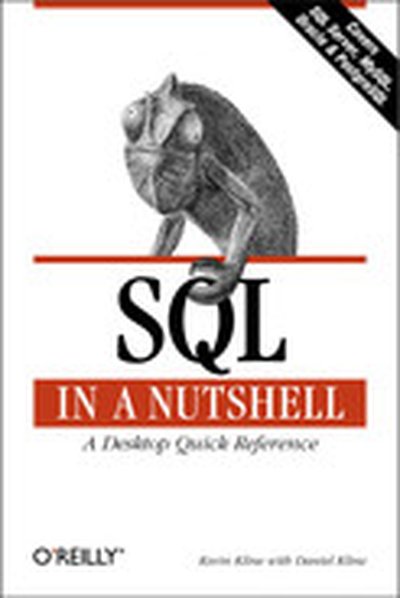
SQL in a Nutshell

SQL (Structured Query Language) is a standardized query language for requesting information from a database. Historically, SQL has been the choice for database management systems running on minicomputers and mainframes. Increasingly, however, SQL is being adapted to PC database systems because it supports distributed databases--databases that are spread out over several computer systems, so that several users on a local-area network can access the same database simultaneously. Although there are different dialects of SQL, it is the closest thing to a standard query language that currently exists. SQL in a Nutshell is a practical and useful command reference to the latest release of the Structured Query Language (SQL99), helping readers learn how their favorite database product supports any standard SQL command. This book presents each of the SQL commands and describes its use in both commercial (Microsoft SQL Server 2000 and Oracle 8 i) and open source (MySQL, PostgreSQL 7.0) implementations. Each command reference includes the command syntax (by vendor, if the syntax differs across implementations), a description, and informative examples that illustrate important concepts and uses. SQL in a Nutshell is more than a convenient reference guide for experienced SQL programmers, analysts, and database administrators. It's also a great learning resource for novice and auxiliary SQL users such as system administrators, users of packaged client/server products, and consultants who need to be familiar with the various SQL dialects across many platforms.

Nasdaq: Secure Innovation with PostgreSQL on Azure

Join Mohsin Shafqat (Nasdaq) and Charles Feddersen (Microsoft Azure) as they reveal how Nasdaq Boardvantage leverages Azure Database for PostgreSQL to build secure, scalable governance data management. Discover how this foundation enables high-volume workloads, tenant-level isolation, and AI-driven features – accelerating innovation without compromising compliance.

Learn how to build an advanced AI agent using Azure Database for PostgreSQL and Semantic Kernel. This hands-on lab walks you through integrating Retrieval-Augmented Generation (RAG), semantic re-ranking, Semantic Operators, and GraphRAG (using Apache AGE) to enable intelligent legal question answering using real case data. Gain practical AI implementation skills with your own PostgreSQL-backed applications.

Practical PostgreSQL and LLM observability on Azure

Whether you're building a chat application, a RAG system, or other AI tools, monitoring remains crucial. We'll show you how Datadog's comprehensive Azure monitoring can help you:

• Get started with PostgresSQL on Azure • Track PostgreSQL performance metrics that matter for GenAI workloads • Create dashboards and alerts that provide meaningful insights