talk-data.com talk-data.com

Topic

RNNs

Recurrent Neural Networks

deep_learning neural_networks machine_learning

4

tagged

Activity Trend

1 peak/qtr
2020-Q1 2026-Q1

Activities

Showing filtered results

Filtering by: O'Reilly Data Science Books ×
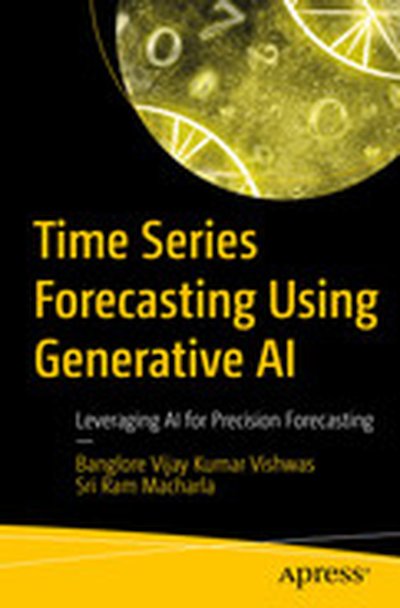
Time Series Forecasting Using Generative AI : Leveraging AI for Precision Forecasting

"Time Series Forecasting Using Generative AI introduces readers to Generative Artificial Intelligence (Gen AI) in time series analysis, offering an essential exploration of cutting-edge forecasting methodologies." The book covers a wide range of topics, starting with an overview of Generative AI, where readers gain insights into the history and fundamentals of Gen AI with a brief introduction to large language models. The subsequent chapter explains practical applications, guiding readers through the implementation of diverse neural network architectures for time series analysis such as Multi-Layer Perceptrons (MLP), WaveNet, Temporal Convolutional Network (TCN), Bidirectional Temporal Convolutional Network (BiTCN), Recurrent Neural Networks (RNN), Long Short-Term Memory (LSTM), Deep AutoRegressive(DeepAR), and Neural Basis Expansion Analysis(NBEATS) using modern tools. Building on this foundation, the book introduces the power of Transformer architecture, exploring its variants such as Vanilla Transformers, Inverted Transformer (iTransformer), DLinear, NLinear, and Patch Time Series Transformer (PatchTST). Finally, The book delves into foundation models such as Time-LLM, Chronos, TimeGPT, Moirai, and TimesFM enabling readers to implement sophisticated forecasting models tailored to their specific needs. This book empowers readers with the knowledge and skills needed to leverage Gen AI for accurate and efficient time series forecasting. By providing a detailed exploration of advanced forecasting models and methodologies, this book enables practitioners to make informed decisions and drive business growth through data-driven insights. ● Understand the core history and applications of Gen AI and its potential to revolutionize time series forecasting. ● Learn to implement different neural network architectures such as MLP, WaveNet, TCN, BiTCN, RNN, LSTM, DeepAR, and NBEATS for time series forecasting. ● Discover the potential of Transformer architecture and its variants, such as Vanilla Transformers, iTransformer, DLinear, NLinear, and PatchTST, for time series forecasting. ● Explore complex foundation models like Time-LLM, Chronos, TimeGPT, Moirai, and TimesFM. ● Gain practical knowledge on how to apply Gen AI techniques to real-world time series forecasting challenges and make data-driven decisions. Who this book is for: Data Scientists, Machine learning engineers, Business Aanalysts, Statisticians, Economists, Financial Analysts, Operations Research Analysts, Data Analysts, Students.
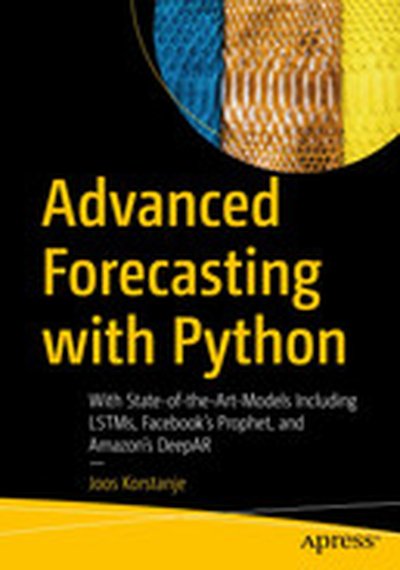
Advanced Forecasting with Python: With State-of-the-Art-Models Including LSTMs, Facebook’s Prophet, and Amazon’s DeepAR

Cover all the machine learning techniques relevant for forecasting problems, ranging from univariate and multivariate time series to supervised learning, to state-of-the-art deep forecasting models such as LSTMs, recurrent neural networks, Facebook’s open-source Prophet model, and Amazon’s DeepAR model. Rather than focus on a specific set of models, this book presents an exhaustive overview of all the techniques relevant to practitioners of forecasting. It begins by explaining the different categories of models that are relevant for forecasting in a high-level language. Next, it covers univariate and multivariate time series models followed by advanced machine learning and deep learning models. It concludes with reflections on model selection such as benchmark scores vs. understandability of models vs. compute time, and automated retraining and updating of models. Each of the models presented in this book is covered in depth, with an intuitive simple explanation ofthe model, a mathematical transcription of the idea, and Python code that applies the model to an example data set. Reading this book will add a competitive edge to your current forecasting skillset. The book is also adapted to those who have recently started working on forecasting tasks and are looking for an exhaustive book that allows them to start with traditional models and gradually move into more and more advanced models. What You Will Learn Carry out forecasting with Python Mathematically and intuitively understand traditional forecasting models and state-of-the-art machine learning techniques Gain the basics of forecasting and machine learning, including evaluation of models, cross-validation, and back testing Select the right model for the right use case Who This Book Is For The advanced nature of the later chapters makes the book relevant for appliedexperts working in the domain of forecasting, as the models covered have been published only recently. Experts working in the domain will want to update their skills as traditional models are regularly being outperformed by newer models.

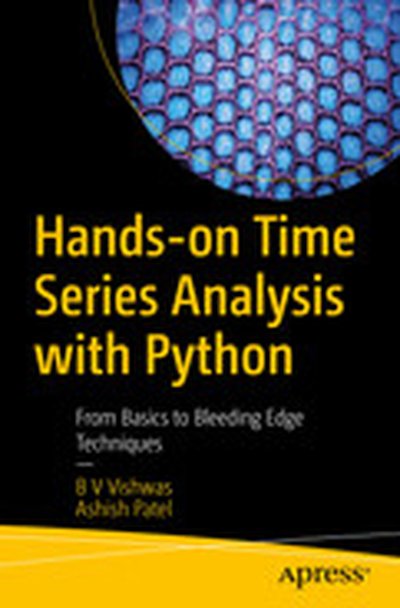
Hands-on Time Series Analysis with Python: From Basics to Bleeding Edge Techniques

Learn the concepts of time series from traditional to bleeding-edge techniques. This book uses comprehensive examples to clearly illustrate statistical approaches and methods of analyzing time series data and its utilization in the real world. All the code is available in Jupyter notebooks. You'll begin by reviewing time series fundamentals, the structure of time series data, pre-processing, and how to craft the features through data wrangling. Next, you'll look at traditional time series techniques like ARMA, SARIMAX, VAR, and VARMA using trending framework like StatsModels and pmdarima. The book also explains building classification models using sktime, and covers advanced deep learning-based techniques like ANN, CNN, RNN, LSTM, GRU and Autoencoder to solve time series problem using Tensorflow. It concludes by explaining the popular framework fbprophet for modeling time series analysis. After reading Hands-On Time Series Analysis with Python, you'll be able to apply these new techniques in industries, such as oil and gas, robotics, manufacturing, government, banking, retail, healthcare, and more. What You'll Learn: · Explains basics to advanced concepts of time series · How to design, develop, train, and validate time-series methodologies · What are smoothing, ARMA, ARIMA, SARIMA,SRIMAX, VAR, VARMA techniques in time series and how to optimally tune parameters to yield best results · Learn how to leverage bleeding-edge techniques such as ANN, CNN, RNN, LSTM, GRU, Autoencoder to solve both Univariate and multivariate problems by using two types of data preparation methods for time series. · Univariate and multivariate problem solving using fbprophet. Who This Book Is For Data scientists, data analysts, financial analysts, and stock market researchers

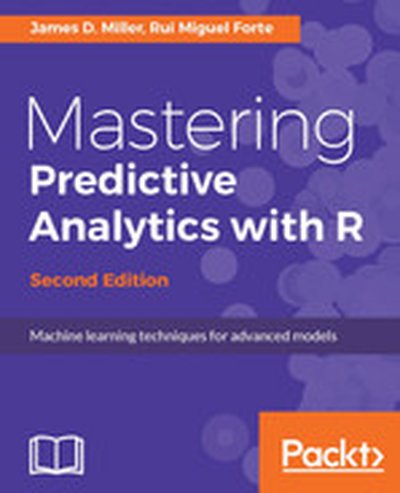
Mastering Predictive Analytics with R, Second Edition - Second Edition

This comprehensive guide dives into predictive analytics with R, exploring the powerful functionality and vast ecosystem of packages available in this programming language. By studying this book, you will gain mastery over predictive modeling techniques and learn how to apply machine learning to real-world problems efficiently and effectively. What this Book will help me do Develop proficiency in predictive modeling processes, from data preparation to model evaluation. Gain hands-on experience with R's diverse packages for machine learning. Understand the theoretical foundations and practical applications of various predictive models. Learn advanced techniques such as deep learning implementations of word embeddings and recurrent neural networks. Acquire the ability to handle large datasets using R for scalable predictive analytics workflows. Author(s) James D. Miller and Rui Miguel Forte are experts in data science and predictive analytics with decades of combined experience in the field. They bring practical insights from their work in both academia and industry. Their clear and engaging writing style aims at making complex concepts accessible to readers by integrating theoretical knowledge with real-world applications. Who is it for? This book is ideal for budding data scientists, predictive modelers, or quantitative analysts with some basic knowledge of R and statistics. Advanced learners aiming to refine their expertise in predictive analytics and those wishing to explore the functionality of R for applied machine learning will also greatly benefit from this resource. The book is suitable for professionals and enthusiasts keen to expand their understanding of predictive modeling and learn advanced techniques.