talk-data.com talk-data.com

Topic

Cyber Security

cybersecurity information_security data_security privacy

615

tagged

Activity Trend

297 peak/qtr
2020-Q1 2026-Q1

Activities

Showing filtered results

Filtering by: O'Reilly Data Engineering Books ×
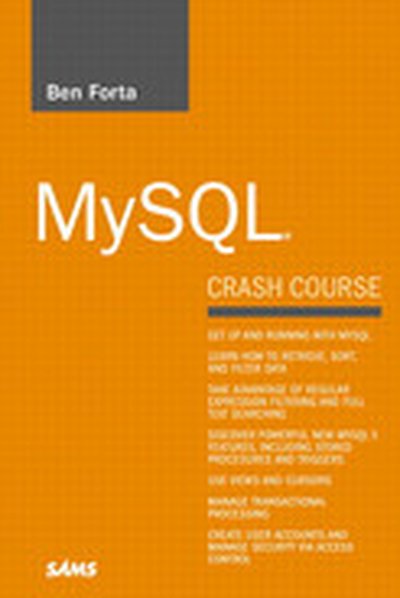
MySQL® Crash Course

MySQL is one of the most popular database management systems available, powering everything from Internet powerhouses to individual corporate databases to simple end-user applications, and everything in between. And this book will teach you all you need to know to be immediately productive with MySQL. By working through 30 highly focused hands-on lessons, your MySQL Crash Course will be both easier and more effective than you'd have thought possible. Learn how to: Retrieve and sort data Filter data using comparisons, regular expressions, full text search, and much more Join relational data Create and alter tables Insert, update, and delete data Leverage the power of stored procedures and triggers Use views and Cursors Manage transactional processing Create user accounts and manage security via access control Ben Forta is Macromedia's Senior Technical Evangelist, and has almost 20 years of experience in the computer industry in product development, support, training, and product marketing. Ben is the author of the best-selling Sams Teach Yourself SQL in 10 Minutes (now in its third edition, and translated into over a dozen languages), ColdFusion Web Application Construction Kit, and Advanced ColdFusion Development (both published by Que Publishing), Sams Teach Yourself Regular Expressions in 10 Minutes, as well as books on SQL, Flash, JSP, HomeSite, WAP, Windows 2000, and other subjects.

Professional LAMP: Linux®, Apache, MySQL®, and PHP5 Web Development

The combination of Linux, Apache, MySQL, and PHP is popular because of interaction, flexibility, customization, and-most importantly-the cost effectiveness of its components Helps LAMP professionals take their skills to the next level with in-depth discussions of OOP; extensions of PHP such as PEAR, GD, XML, and CURL; improving site security; and advanced tools available to the coder Those proficient in other languages such as Java, C++, Perl and ASP will find this guide invaluable when transitioning to the LAMP environment The Web site includes sample scripts created in the course of each chapter, and several applications that can be modified and reused

Oracle PL/SQL for DBAs

PL/SQL, Oracle's powerful procedural language, has been the cornerstone of Oracle application development for nearly 15 years. Although primarily a tool for developers, PL/SQL has also become an essential tool for database administration, as DBAs take increasing responsibility for site performance and as the lines between developers and DBAs blur. Until now, there has not been a book focused squarely on the language topics of special concern to DBAs Oracle PL/SQL for DBAs fills the gap. Covering the latest Oracle version, Oracle Database 10g Release 2 and packed with code and usage examples, it contains: A quick tour of the PL/SQL language, providing enough basic information about language fundamentals to get DBAs up and running Extensive coverage of security topics for DBAs: Encryption (including both traditional methods and Oracle's new Transparent Data Encryption, TDE); Row-Level Security(RLS), Fine-Grained Auditing (FGA); and random value generation Methods for DBAs to improve query and database performance with cursors and table functions Coverage of Oracle scheduling, which allows jobs such as database monitoring andstatistics gathering to be scheduled for regular execution Using Oracle's built-in packages (DBMS_CRYPTO, DBMS_RLS, DBMS_FGA, DBMS_RANDOM,DBMS_SCHEDULING) as a base, the book describes ways of building on top of these packages to suit particular organizational needs. Authors are Arup Nanda, Oracle Magazine 2003 DBA of the Year, and Steven Feuerstein, the world's foremost PL/SQL expert and coauthor of the classic reference, Oracle PL/SQL Programming. DBAs who have not yet discovered how helpful PL/SQL can be will find this book a superb introduction to the language and its special database administration features. Even if you have used PL/SQL for years, you'll find the detailed coverage in this book to be an invaluable resource.

Grid Computing

A decade ago, the corporate world viewed grid computing as a curiosity. Today, it views it as an opportunity--a chance to reduce costs, improve performance, fund new projects, and take advantage of under-utilized capacity. The engineering behind this transformation has been amply documented. Until now, however, little has been written to prepare managers, executives, and other decision-makers to implement grid computing in a sensible and effective way.Grid Computing: The Savvy Manager's Guide examines the technology from a rigorous business perspective, equipping you with the practical knowledge you need to assess your options and determine what grid computing approach is right for your enterprise. This book is heavy on real-world experience, distilling from a rich assortment of case studies the best practices currently at work in a variety of industries. Always attentive to grid computing’s many competitive advantages, it is also realistic about the challenges of selling the idea to staff and making it a part of your company’s culture. Sketches the history of grid computing, showing how it made the leap from academia to business. Examines the criteria you'll need to meet to make your network "grid-enabled." Explains how a grid-based solution can be made to meet key organizational requirements, including security, scheduling, data storage, and fault-tolerance. Surveys the approaches currently available and helps you choose the one that will best meet your needs, both now and in the future. Focuses heavily on the competitive advantages you can reap from grid computing, and provides advice on convincing your organization to adopt grid computing and making a successful transition.

FileMaker Pro 8: The Missing Manual

Used by millions worldwide, FileMaker Pro is an award-winning database program for managing people, projects, images, assets, and other information. It's easy to use and totally customizable--so long as you know what you're doing. But FileMaker Pro doesn't come with a printed manual, so FileMaker Pro: The Missing Manual is the authoritative, jargon-free book that should have been in the box. FileMaker Pro: The Missing Manual approaches FileMaker the way FileMaker approaches you: it's user-friendly and seemingly straightforward enough, but it offers plenty of substance worthy of deeper exploration. Packed with practical information as well as countless expert tips and invaluable guidance, it's an in-depth guide to designing and building useful databases with the powerful and pliable FileMaker Pro. Covering FileMaker for both Windows and Macintosh, FileMaker Pro: The Missing Manual is ideal for small business users, home users, school teachers, developers--anyone who wants to organize information efficiently and effectively. Whether you want to run a business, publish a shopping cart on the Web, plan a wedding, manage a student information system at your school, or program databases for clients, this book delivers. Author Geoff Coffey has many years of experience using FileMaker Pro (he was, in fact, an early beta tester for the product). Author Susan Prosser is a FileMaker Certified Developer who trains other developers. Together, Coffey and Prosser show you how to: Get FileMaker up and running quickly and smoothly Import and organize information with ease Design relational databases that are simple to use, yet powerful Take advantage of FileMaker Pro calculation capabilities Automate processes with scripting Customize FileMaker Pro to your needs and preferences Share information with other people (coworkers, clients, and customers) and other programs Understand and select the best security options What could easily come across as dry and intimidating--things like relational theory, calculations, and scripting--are presented in a way that is interesting and intuitive to mainstream users. In no time, you'll be working more productively and efficiently using FileMaker Pro.

Moving Objects Databases

Moving Objects Databases is the first uniform treatment of moving objects databases, the technology that supports GPS and RFID. It focuses on the modeling and design of data from moving objects — such as people, animals, vehicles, hurricanes, forest fires, oil spills, armies, or other objects — as well as the storage, retrieval, and querying of that very voluminous data. It includes homework assignments at the end of each chapter, exercises throughout the text that students can complete as they read, and a solutions manual in the back of the book. This book is intended for graduate or advanced undergraduate students. It is also recommended for computer scientists and database systems engineers and programmers in government, industry and academia; professionals from other disciplines, e.g., geography, geology, soil science, hydrology, urban and regional planning, mobile computing, bioterrorism and homeland security, etc. Focuses on the modeling and design of data from moving objects--such as people, animals, vehicles, hurricanes, forest fires, oil spills, armies, or other objects--as well as the storage, retrieval, and querying of that very voluminous data. Demonstrates through many practical examples and illustrations how new concepts and techniques are used to integrate time and space in database applications. Provides exercises and solutions in each chapter to enable the reader to explore recent research results in practice.

Oracle PL/SQL Programming, 4th Edition

For the past ten years, O'Reilly's Oracle PL/SQL Programming has been the bestselling book on PL/SQL, Oracle's powerful procedural language. Packed with examples and helpful recommendations, the book has helped everyone--from novices to experienced developers, and from Oracle Forms developers to database administrators--make the most of PL/SQL. The fourth edition is a comprehensive update, adding significant new content and extending coverage to include the very latest Oracle version, Oracle Database 10 g Release 2. It describes such new features as the PL/SQL optimizing compiler, conditional compilation, compile-time warnings, regular expressions, set operators for nested tables, nonsequential collections in FORALL, the programmer-defined quoting mechanism, the ability to backtrace an exception to a line number, a variety of new built-in packages, and support for IEEE 754 compliant floating-point numbers. The new edition adds brand-new chapters on security (including encryption, row-level security, fine-grained auditing, and application contexts), file, email, and web I/O (including the built-in packages DBMS_OUTPUT, UTL_FILE, UTL_MAIL, UTL_SMTP, and UTL_HTTP) and globalization and localization. Co-authored by the world's foremost PL/SQL authority, Steven Feuerstein, this classic reference provides language syntax, best practices, and extensive code, ranging from simple examples to complete applications--making it a must-have on your road to PL/SQL mastery. A companion web site contains many more examples and additional technical content for enhanced learning.

Computer Privacy Annoyances

From the moment you're born, you enter the data stream-from birth certificates to medical records to what you bought on Amazon last week. As your dossier grows, so do the threats, from identity thieves to government snoops to companies who want to sell you something. Computer Privacy Annoyances shows you how to regain control of your life. You'll learn how to keep private information private, stop nosy bosses, get off that incredibly annoying mailing list, and more. Unless you know what data is available about you and how to protect it, you're a sitting duck. Computer Privacy Annoyances is your guide to a safer, saner, and more private life. Written by privacy pro Dan Tynan, and based on interviews with privacy experts from all over the globe, Computer Privacy Annoyances serves up real-world advice in bite-sized portions that will help you stop the snoops in their tracks. The book even addresses non-computing threats, from telemarketer-cum-stalkers, thieves at your mailbox, nosy folks in your HR department, cell phone eavesdroppers, and more. The key areas covered include: Privacy at Home Privacy on the Net Privacy at Work Privacy in Public Privacy and Uncle Sam Privacy in the Future Daniel Tynan has written about Internet privacy and security for nearly a decade. His work has appeared in more than 40 national publications. As executive editor at PC World, Tynan edited a special issue on Internet Privacy that won a Grand Neal Award and was a finalist for a National Magazine Award. He has won more than a dozen other honors, including nine Neals, four Maggies, and two Computer Press Association Awards.

Inescapable Data: Harnessing the Power of Convergence

How "data everywhere" transforms business, technology, and the way you live A pioneering look at grand, new efficiencies forthcoming As communications, computing, and data storage converge, data is becoming utterly ubiquitous...and that changes everything. In this book, two leading data management visionaries reveal how data transforms the way you do business, the technologies you use, the investments you make, the life you live, and the world you live in. Chris Stakutis and John Webster draw on interviews with nearly 50 leading experts: technologists, sociologists, entrepreneurs, consultants, researchers, media leaders, and futurists alike. You'll discover how today's "primordial soup" of wired and wireless gadgetry is quickly coalescing into something immensely more powerful, driving applications you thought were pure science fiction. You'll also gain deep insight into the profound implications of ubiquitous data capture: implications that touch everything from your bedroom to the battlefield: The emerging "Connectivity Divide." Which side of the chasm are you on? Inescapable data's technical components: Async communications, pervasive computing devices, wireless, and XML Global calendars, momentary enterprises: Transforming your life and business Uncontrolled information availability: Its risks to your security and well-being The future of technical infrastructure, grids, smart storage, and beyond Radical, new modes of information delivery: Nonnumeric, nontextual, unobtrusive Future tech: From holographic displays to fertility "wall clocks" Your DNA on a chip: The heart of your personal health and wellness program © Copyright Pearson Education. All rights reserved.

File System Forensic Analysis

The Definitive Guide to File System Analysis: Key Concepts and Hands-on Techniques Most digital evidence is stored within the computer's file system, but understanding how file systems work is one of the most technically challenging concepts for a digital investigator because there exists little documentation. Now, security expert Brian Carrier has written the definitive reference for everyone who wants to understand and be able to testify about how file system analysis is performed. Carrier begins with an overview of investigation and computer foundations and then gives an authoritative, comprehensive, and illustrated overview of contemporary volume and file systems: Crucial information for discovering hidden evidence, recovering deleted data, and validating your tools. Along the way, he describes data structures, analyzes example disk images, provides advanced investigation scenarios, and uses today's most valuable open source file system analysis tools—including tools he personally developed. Coverage includes Preserving the digital crime scene and duplicating hard disks for "dead analysis" Identifying hidden data on a disk's Host Protected Area (HPA) Reading source data: Direct versus BIOS access, dead versus live acquisition, error handling, and more Analyzing DOS, Apple, and GPT partitions; BSD disk labels; and Sun Volume Table of Contents using key concepts, data structures, and specific techniques Analyzing the contents of multiple disk volumes, such as RAID and disk spanning Analyzing FAT, NTFS, Ext2, Ext3, UFS1, and UFS2 file systems using key concepts, data structures, and specific techniques Finding evidence: File metadata, recovery of deleted files, data hiding locations, and more Using The Sleuth Kit (TSK), Autopsy Forensic Browser, and related open source tools When it comes to file system analysis, no other book offers this much detail or expertise. Whether you're a digital forensics specialist, incident response team member, law enforcement officer, corporate security specialist, or auditor, this book will become an indispensable resource for forensic investigations, no matter what analysis tools you use.

Lotus Workplace 2.0.1 Products: Deployment Guide

IBM Lotus software has created IBM Lotus Workplace, an integrated family of products based on open standards. Lotus Workplace combines market-leading collaborative components that can be used with a variety of security-rich clients for simplified access and interaction with other people and a host of collaborative applications such as e-mail, calendaring and scheduling, instant messaging, Web conferencing, team spaces, document and Web content management, and e-learning. IBM Lotus Workplace products include: This IBM Redbooks publication is an installation and deployment guide for the Lotus Workplace 2.0.1 platform. We provide detailed installation procedures for installing the Lotus Workplace products on both a Microsoft Windows 2000 server and a Linux server running SUSE LINUX Enterprise Server 8.1. We also discuss important deployment and planning scenarios, as well as tips, best practices, and techniques for troubleshooting errors during installation.

Using MQSeries for VSE

This IBM Redbooks publication will help you get started with MQSeries for VSE V2R1.2. It explores why and how to use MQSeries with the VSE operating system and shows why MQSeries is more than just another queuing system. This book is meant for those who know VSE but have only a slight understanding of MQSeries and how to use it. This book contains an overview of the MQSeries installation and configuration, explains how to connect clients to servers and servers to servers, how to trigger applications, and the MQI programming interface. It describes the command interface, how the libraries are used, and how to edit, compile, test, and debug a program. This book also provides information about performance and security for the MQSeries for VSE V2.1.2. It explains what has to be done to use MQSeries for communication between VSE and other platforms, such as OS/390 and Windows XP. Examples are given to guide the user through the administrative process of defining connections between different systems, and information regarding security, backup, and recovery is also provided.

Understanding DB2®: Learning Visually with Examples

The Easy, Visual Guide to IBM DB2 V8.2 IBM DB2 Universal Database™ V8.2 for Linux®, UNIX®, and Windows® is a flexible, scalable, cost-effective, and easy-to-use enterprise database. Now, one book makes DB2 even easier. teaches DB2 V8.2 visually, step by step, with dozens of examples and case studies drawn from the authors' unsurpassed experience as DB2 consultants at IBM. Understanding DB2 doesn't just present the big picture. It thoroughly introduces every DB2 concept, procedure, and tool you'll need to get results as an administrator, user, or developer. You'll find authoritative coverage of installation, configuration, objects, database instances, storage, connectivity, security, performance, backup and recovery, SQL fundamentals, and much more. Virtually every new concept is explained with screenshots, diagrams, or tables, all designed to help you learn faster and remember more. Understanding DB2 For those preparing for certification, this book also contains over a hundred sample questions crafted by the authors to reflect the content and format of the IBM DB2 UDB Database Administration Certification exams, with answers and detailed explanations. Coverage includes Understanding the DB2 product family, DB2 commands, and the DB2 environment Configuring client and server connectivity: walkthroughs of four typical scenarios Managing DB2 storage: partitions, tablespaces, buffer pools, and more Leveraging the power of SQL: queries, inserts, deletes, and updates Implementing security: encryption, authentication, and authorization Administering and maintaining data, from LOAD and EXPORT to backup/recovery Providing high availability with online split mirroring and suspended I/O DB2 architecture: process and memory models Managing database performance and troubleshooting

OCA: Oracle 10g™ Administration I: Study Guide

Here's the book you need to prepare for the Oracle Database 10g Administration I exam, 1Z0-042. This Study Guide was developed to meet the exacting requirements of today's Oracle certification candidates. In addition to the consistent and accessible instructional approach that has earned Sybex the "Best Study Guide" selection in CertCities Readers Choice Awards for two consecutive years, this book provides: Clear and concise information on database administration with Oracle 10g Practical examples and insights drawn from the authors' real-world experiences Leading-edge exam preparation software, including a test engine and electronic flashcards You'll also find authoritative coverage of key exam topics, including: Installing Oracle Database 10g Software Creating and Controlling Oracle Databases Administering Users Managing Schema Objects and Data Implementing Oracle Security Features Monitoring Performance Performing Database Backup and Recovery Look to Sybex for the knowledge and skills needed to succeed in today's competitive IT marketplace

Oracle Database Foundations

The world of IT is always evolving, but in every area there are stable, core concepts that anyone just setting out needed to know last year, needs to know this year, and will still need to know next year. The purpose of the Foundations series is to identify these concepts and present them in a way that gives you the strongest possible starting point, no matter what your endeavor. Oracle Database Foundations provides essential knowledge about installing, configuring, maintaining, and querying Oracle 9i and 10g databases. What you learn here will benefit you in the short term, as you acquire and practice your skills, and in the long term, as you use them. Topics covered include: Basic relational database concepts Reporting and querying using SQLPlus and iSQLPlus Creating and maintaining a database Managing user access and security Understanding Oracle database functions Using multiple tables in a query Restricting, sorting, and grouping data Optimizing database performance Creating backups Troubleshooting database errors

DB2 UDB V8.2 on the Windows Environment

IBM DB2 Universal Database Version 8.2 is another significant jump in DBRM technology. It delivers new features to address the ever-increasing demands and requirements of information management customers. This IBM Redbooks publication is an update of DB2 UDB Exploitation of the Windows Environment (SG24-6893), with a focus on DB2 UDB Version 8.2 functions and features. We illustrate, step-by-step, the installation and migration processes. The new autonomic computing technology that makes the DBA’s job easier is described in detail. The new security features and their integration with the Windows environment are discussed intensively. This book covers the new performance and monitoring enhancements of Version 8.2. New, exciting high availability functions are described in detail. Further, we discuss aspects of DB2 application development with .NET 2003 and Java and provide programming details using ADO.NET, CLR, and Java.

Using ThinkVantage Technologies, Volume 1: Creating and Deploying Client Systems

ThinkVantage Technologies bring your IBM PCs one step closer to being self-configured, self-optimizing, self-protecting, or self-healing, to help save you time and money throughout the life of your systems. In short, ThinkVantage Technologies let you focus your attention on your business, rather than on your computer. ThinkVantage Technologies are software tools designed to help customers drive down IT support costs (in particular, the cost of a PC in managing and supporting systems after its initial purchase), increase security and decrease the complexity of today’s IT infrastructure. This series of Redbooks will help you install, tailor and configure the IBM ThinkVantage Technologies on IBM and OEM desktops. Using ThinkVantage Technologies, Volume 1: Creating and Deploying Client Systems describes how to create and deploy client systems. The tools covered include: - ImageUltra Builder

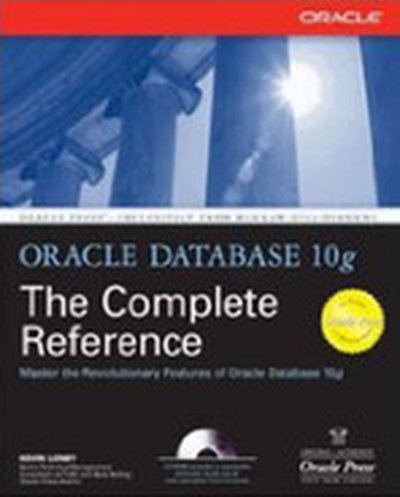
Oracle Database 10g The Complete Reference

Get a thorough understanding of Oracle Database 10 g from the most comprehensive Oracle database reference on the market, published by Oracle Press. From critical architecture concepts to advanced object-oriented concepts, this powerhouse contains nearly 50 chapters designed to enlighten you. Upgrade from earlier versions, use SQL, SQL Plus, and PL/SQL. Get code examples and access popular documentation PDFs--plus a full electronic copy of the book on the included CD-ROM. Go beyond the basics and learn security, text searches, external tables, using Java in Oracle, and a great deal more.

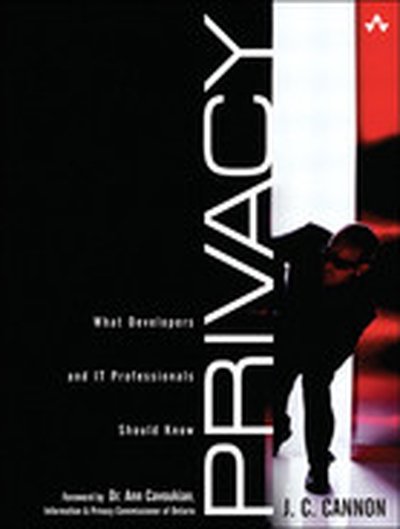
Privacy What Developers and IT Professionals Should Know

Praise for J.C. Cannon's Privacy "A wonderful exploration of the multifaceted work being done to protect the privacy of users, clients, companies, customers, and everyone in between." —Peter Wayner, author of Translucent Databases "Cannon provides an invaluable map to guide developers through the dark forest created by the collision of cutting-edge software development and personal privacy." —Eric Fredericksen, Sr. Software Engineer, PhD., Foundstone, Inc. "Cannon's book is the most comprehensive work today on privacy for managers and developers. I cannot name any technical areas not covered. No practitioners should miss it." —Ray Lai, Principal Engineer, Sun Microsystems, Inc., co-author of Core Security Patterns and author of J2EE Platform Web Services "Every developer should care deeply about privacy and this is the best book I've read on the subject. Get it, read it, and live it." —Keith Ballinger, Program Manager, Advanced Web Services, Microsoft "J.C. Cannon's book demonstrates that information and communication technology can contribute in a significant way to restoring individual privacy and raises more awareness of the complexity and importance of this societal problem." —Dr. John J. Borking, Former Commissioner and Vice-President of the Dutch Data Protection Authority "If you are planning, implementing, coding, or managing a Privacy campaign in your company or your personal computing, there is no more relevant reference. J.C. Cannon nails the issues." —Rick Kingslan, CISSP, Microsoft MVP-Windows Server: Directory Services and Right Management, West Corporation "It's often been said that security is a process, not a product. Privacy is no different! Unlike other privacy books, J.C. Cannon's book has something valuable to convey to everyone involved in the privacy process, from executives to designers and developers, many of whom aren't thinking about privacy but should be." —Keith Brown, Co-founder of Pluralsight and author of The .NET Developer's Guide to Windows Security and Programming Windows Security "J.C. Cannon's new book on electronic privacy is an important addition to the available works in this emerging field of study and practice. Through many humorous (and occasionally frightening) examples of privacy gone wrong, J.C. helps you better understand how to protect your privacy and how to build privacy awareness into your organization and its development process. Keenly illustrating both the pros and cons of various privacy-enhancing and potentially privacy-invading technologies, J.C.'s analysis is thorough and well-balanced. J.C. also explains many of the legal implications of electronic privacy policies and technologies, providing an invaluable domestic and international view." —Steve Riley, Product Manager, Security Business and Technology Unit, Windows Division, Microsoft "Privacy concerns are pervasive in today's high-tech existence. The issues covered by this book should be among the foremost concerns of developers and technology management alike." —Len Sassaman, Security Architect, Anonymizer, Inc. You're responsible for your customers' private information. If you betray their trust, it can destroy your business. Privacy policies are no longer enough. You must make sure your systems truly protect privacy—and it isn't easy. That's where this book comes in. J.C. Cannon, Microsoft's top privacy technology strategist, covers every facet of protecting customer privacy, both technical and organizational. You'll learn how to systematically build privacy safeguards into any application, Web site, or enterprise system, in any environment, on any platform. You'll discover the best practices for building business infrastructure and processes that protect customer privacy. You'll even learn how to help your customers work with you in protecting their own privacy. Coverage includes How privacy and security relate—and why security isn't enough Understanding your legal obligations to protect privacy Contemporary privacy policies, privacy-invasive technologies, and privacy-enhancing solutions Auditing existing systems to identify privacy problem areas Protecting your organization against privacy intrusions Integrating privacy throughout the development process Developing privacy-aware applications: a complete sample application Building a team to promote customer privacy: staffing, training, evangelization, and quick-response Protecting data and databases via role-based access control Using Digital Rights Management to restrict customer information Privacy from the customer's standpoint: spam avoidance, P3P, and other tools and resources Whether you're a manager, IT professional, developer, or security specialist, this book delivers all the information you need to protect your customers—and your organization. The accompanying CD-ROM provides sample privacy-enabling source code and additional privacy resources for developers and managers. J. C. CANNON, privacy strategist at Microsoft's Corporate Privacy Group, specializes in implementing application technologies that maximize consumer control over privacy and enable developers to create privacy-aware applications. He works closely with Microsoft product groups and external developers to help them build privacy into applications. He also contributed the chapter on privacy to Michael Howard's Writing Secure Code (Microsoft Press 2003). Cannon has spent nearly twenty-five years in software development. © Copyright Pearson Education. All rights reserved.

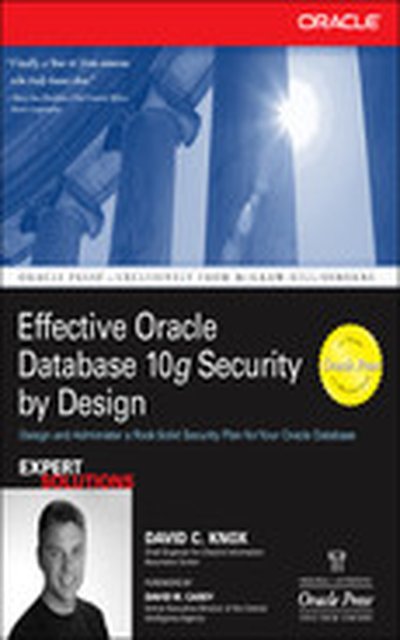
Effective Oracle Database 10g Security by Design

Oracle security expert David Knox explains how to design and develop an integrated, secure Oracle environment. “In my experience in the security world, including 32 years at the Central Intelligence Agency, I’ve not found anyone with more experience in the theory and practice of protecting your data than David Knox.” --Dave Carey, former Executive Director of the CIA