
talk-data.com talk-data.com

Topic

SQL Server

Microsoft SQL Server

relational_database microsoft enterprise

4

tagged

Activity Trend

1 peak/qtr
2020-Q1 2026-Q1

Activities

Showing filtered results

Filtering by: Kevin Kline ×
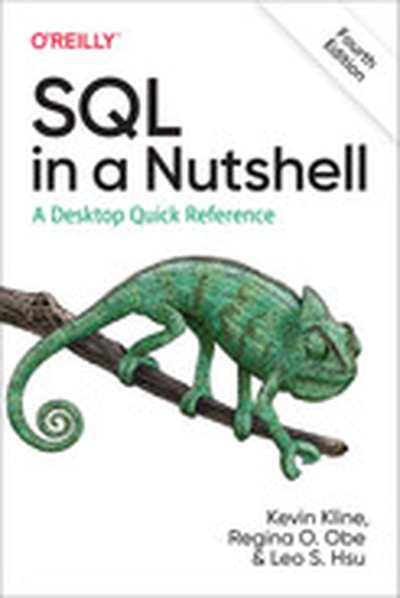
SQL in a Nutshell, 4th Edition

For programmers, analysts, and database administrators, this Nutshell guide is the essential reference for the SQL language used in today's most popular database products. This new fourth edition clearly documents SQL commands according to the latest ANSI/ISO standard and details how those commands are implemented in Microsoft SQL Server 2019 and Oracle 19c, as well as in the MySQL 8, MariaDB 10.5, and PostgreSQL 14 open source database products. You'll also get a concise overview of the relational database management system (RDBMS) model and a clear-cut explanation of foundational RDBMS concepts--all packed into a succinct, comprehensive, and easy-to-use format. Sections include: Background on the relational database model, including current and previous SQL standards Fundamental concepts necessary for understanding relational databases and SQL commands An alphabetical command reference to SQL statements, according to the SQL:2016 ANSI standard The implementation of each command by MySQL, Oracle, PostgreSQL, and SQL Server An alphabetical reference of the ANSI SQL:2016 functions and constructs as well as the vendor implementations Platform-specific functions unique to each implementation
SQL in a Nutshell, 3rd Edition

For programmers, analysts, and database administrators, SQL in a Nutshell is the essential reference for the SQL language used in today's most popular database products. This new edition clearly documents every SQL command according to the latest ANSI standard, and details how those commands are implemented in Microsoft SQL Server 2008, Oracle 11g, and the MySQL 5.1 and PostgreSQL 8.3 open source database products. You'll also get a concise overview of the Relational Database Management System (RDBMS) model, and a clear-cut explanation of foundational RDBMS concepts -- all packed into a succinct, comprehensive, and easy-to-use format. This book provides: Background on the Relational Database Model, including current and previous SQL standards Fundamental concepts necessary for understanding relational databases and SQL commands An alphabetical command reference to SQL statements, according to the SQL2003 ANSI standard The implementation of each command by MySQL, Oracle, PostgreSQL, and SQL Server An alphabetical reference of the ANSI SQL2003 functions, as well as the vendor implementations Platform-specific functions unique to each implementation Beginning where vendor documentation ends, SQL in a Nutshell distills the experiences of professional database administrators and developers who have used SQL variants to support complex enterprise applications. Whether SQL is new to you, or you've been using SQL since its earliest days, you'll get lots of new tips and techniques in this book.
SQL in a Nutshell, 2nd Edition

SQL in a Nutshell applies the eminently useful "Nutshell" format to Structured Query Language (SQL), the elegant--but complex--descriptive language that is used to create and manipulate large stores of data. For SQL programmers, analysts, and database administrators, the new second edition of SQL in a Nutshell is the essential date language reference for the world's top SQL database products. SQL in a Nutshell is a lean, focused, and thoroughly comprehensive reference for those who live in a deadline-driven world.This invaluable desktop quick reference drills down and documents every SQL command and how to use it in both commercial (Oracle, DB2, and Microsoft SQL Server) and open source implementations (PostgreSQL, and MySQL). It describes every command and reference and includes the command syntax (by vendor, if the syntax differs across implementations), a clear description, and practical examples that illustrate important concepts and uses. And it also explains how the leading commercial and open sources database product implement SQL. This wealth of information is packed into a succinct, comprehensive, and extraordinarily easy-to-use format that covers the SQL syntax of no less than 4 different databases.When you need fast, accurate, detailed, and up-to-date SQL information, SQL in a Nutshell, Second Edition will be the quick reference you'll reach for every time. SQL in a Nutshell is small enough to keep by your keyboard, and concise (as well as clearly organized) enough that you can look up the syntax you need quickly without having to wade through a lot of useless fluff. You won't want to work on a project involving SQL without it.

SQL in a Nutshell

SQL (Structured Query Language) is a standardized query language for requesting information from a database. Historically, SQL has been the choice for database management systems running on minicomputers and mainframes. Increasingly, however, SQL is being adapted to PC database systems because it supports distributed databases--databases that are spread out over several computer systems, so that several users on a local-area network can access the same database simultaneously. Although there are different dialects of SQL, it is the closest thing to a standard query language that currently exists. SQL in a Nutshell is a practical and useful command reference to the latest release of the Structured Query Language (SQL99), helping readers learn how their favorite database product supports any standard SQL command. This book presents each of the SQL commands and describes its use in both commercial (Microsoft SQL Server 2000 and Oracle 8 i) and open source (MySQL, PostgreSQL 7.0) implementations. Each command reference includes the command syntax (by vendor, if the syntax differs across implementations), a description, and informative examples that illustrate important concepts and uses. SQL in a Nutshell is more than a convenient reference guide for experienced SQL programmers, analysts, and database administrators. It's also a great learning resource for novice and auxiliary SQL users such as system administrators, users of packaged client/server products, and consultants who need to be familiar with the various SQL dialects across many platforms.