talk-data.com talk-data.com

Topic

statistics

505

tagged

Activity Trend

1 peak/qtr
2020-Q1 2026-Q1

Activities

Showing filtered results

Filtering by: O'Reilly Data Science Books ×
Introduction to Linear Regression Analysis, 5th Edition

Praise for the Fourth Edition "As with previous editions, the authors have produced a leading textbook on regression." —Journal of the American Statistical Association A comprehensive and up-to-date introduction to the fundamentals of regression analysis Introduction to Linear Regression Analysis, Fifth Edition continues to present both the conventional and less common uses of linear regression in today's cutting-edge scientific research. The authors blend both theory and application to equip readers with an understanding of the basic principles needed to apply regression model-building techniques in various fields of study, including engineering, management, and the health sciences. Following a general introduction to regression modeling, including typical applications, a host of technical tools are outlined such as basic inference procedures, introductory aspects of model adequacy checking, and polynomial regression models and their variations. The book then discusses how transformations and weighted least squares can be used to resolve problems of model inadequacy and also how to deal with influential observations. The Fifth Edition features numerous newly added topics, including: A chapter on regression analysis of time series data that presents the Durbin-Watson test and other techniques for detecting autocorrelation as well as parameter estimation in time series regression models Regression models with random effects in addition to a discussion on subsampling and the importance of the mixed model Tests on individual regression coefficients and subsets of coefficients Examples of current uses of simple linear regression models and the use of multiple regression models for understanding patient satisfaction data. In addition to Minitab, SAS, and S-PLUS, the authors have incorporated JMP and the freely available R software to illustrate the discussed techniques and procedures in this new edition. Numerous exercises have been added throughout, allowing readers to test their understanding of the material, and a related FTP site features the presented data sets, extensive problem solutions, software hints, and PowerPoint slides to facilitate instructional use of the book. Introduction to Linear Regression Analysis, Fifth Edition is an excellent book for statistics and engineering courses on regression at the upper-undergraduate and graduate levels. The book also serves as a valuable, robust resource for professionals in the fields of engineering, life and biological sciences, and the social sciences.
Stochastic Modeling and Analysis of Telecoms Networks

This book addresses the stochastic modeling of telecommunication networks, introducing the main mathematical tools for that purpose, such as Markov processes, real and spatial point processes and stochastic recursions, and presenting a wide list of results on stability, performances and comparison of systems. The authors propose a comprehensive mathematical construction of the foundations of stochastic network theory: Markov chains, continuous time Markov chains are extensively studied using an original martingale-based approach. A complete presentation of stochastic recursions from an ergodic theoretical perspective is also provided, as well as spatial point processes. Using these basic tools, stability criteria, performance measures and comparison principles are obtained for a wide class of models, from the canonical M/M/1 and G/G/1 queues to more sophisticated systems, including the current "hot topics" of spatial radio networking, OFDMA and real-time networks. Contents 1. Introduction. Part 1: Discrete-time Modeling 2. Stochastic Recursive Sequences. 3. Markov Chains. 4. Stationary Queues. 5. The M/GI/1 Queue. Part 2: Continuous-time Modeling 6. Poisson Process. 7. Markov Process. 8. Systems with Delay. 9. Loss Systems. Part 3: Spatial Modeling 10. Spatial Point Processes.

Logistic Regression Using SAS, 2nd Edition

If you are a researcher or student with experience in multiple linear regression and want to learn about logistic regression, Paul Allison's Logistic Regression Using SAS: Theory and Application, Second Edition, is for you! Informal and nontechnical, this book both explains the theory behind logistic regression, and looks at all the practical details involved in its implementation using SAS. Several real-world examples are included in full detail. This book also explains the differences and similarities among the many generalizations of the logistic regression model. The following topics are covered: binary logistic regression, logit analysis of contingency tables, multinomial logit analysis, ordered logit analysis, discrete-choice analysis, and Poisson regression. Other highlights include discussions on how to use the GENMOD procedure to do loglinear analysis and GEE estimation for longitudinal binary data. Only basic knowledge of the SAS DATA step is assumed. The second edition describes many new features of PROC LOGISTIC, including conditional logistic regression, exact logistic regression, generalized logit models, ROC curves, the ODDSRATIO statement (for analyzing interactions), and the EFFECTPLOT statement (for graphing nonlinear effects). Also new is coverage of PROC SURVEYLOGISTIC (for complex samples), PROC GLIMMIX (for generalized linear mixed models), PROC QLIM (for selection models and heterogeneous logit models), and PROC MDC (for advanced discrete choice models).

This book is part of the SAS Press program.

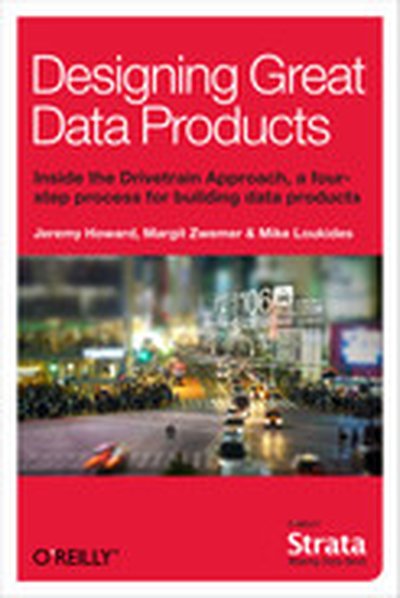
Designing Great Data Products

In the past few years, we’ve seen many data products based on predictive modeling. These products range from weather forecasting to recommendation engines like Amazon's. Prediction technology can be interesting and mathematically elegant, but we need to take the next step: going from recommendations to products that can produce optimal strategies for meeting concrete business objectives. We already know how to build these products: they've been in use for the past decade or so, but they're not as common as they should be. This report shows how to take the next step: to go from simple predictions and recommendations to a new generation of data products with the potential to revolutionize entire industries.

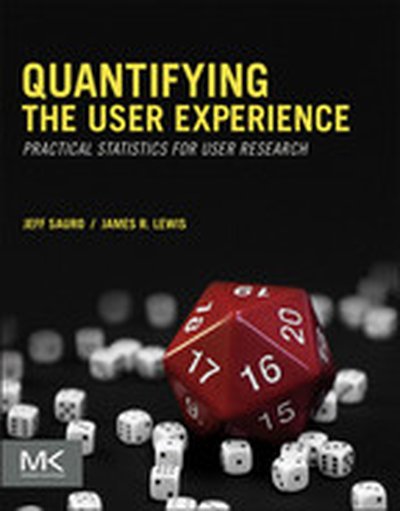
Quantifying the User Experience

Quantifying the User Experience: Practical Statistics for User Research offers a practical guide for using statistics to solve quantitative problems in user research. Many designers and researchers view usability and design as qualitative activities, which do not require attention to formulas and numbers. However, usability practitioners and user researchers are increasingly expected to quantify the benefits of their efforts. The impact of good and bad designs can be quantified in terms of conversions, completion rates, completion times, perceived satisfaction, recommendations, and sales. The book discusses ways to quantify user research; summarize data and compute margins of error; determine appropriate samples sizes; standardize usability questionnaires; and settle controversies in measurement and statistics. Each chapter concludes with a list of key points and references. Most chapters also include a set of problems and answers that enable readers to test their understanding of the material. This book is a valuable resource for those engaged in measuring the behavior and attitudes of people during their interaction with interfaces. Provides practical guidance on solving usability testing problems with statistics for any project, including those using Six Sigma practices Show practitioners which test to use, why they work, best practices in application, along with easy-to-use excel formulas and web-calculators for analyzing data Recommends ways for practitioners to communicate results to stakeholders in plain English Resources and tools available at the authors’ site: http://www.measuringu.com/

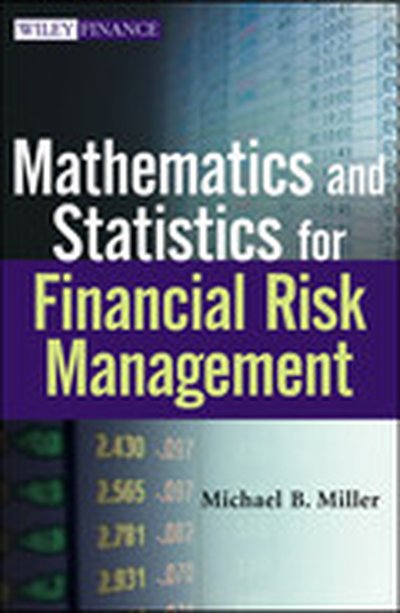
Mathematics and Statistics for Financial Risk Management

Mathematics and Statistics for Financial Risk Management is a practical guide to modern financial risk management for both practitioners and academics. The recent financial crisis and its impact on the broader economy underscore the importance of financial risk management in today's world. At the same time, financial products and investment strategies are becoming increasingly complex. Today, it is more important than ever that risk managers possess a sound understanding of mathematics and statistics. In a concise and easy-to-read style, each chapter of this book introduces a different topic in mathematics or statistics. As different techniques are introduced, sample problems and application sections demonstrate how these techniques can be applied to actual risk management problems. Exercises at the end of each chapter and the accompanying solutions at the end of the book allow readers to practice the techniques they are learning and monitor their progress. A companion website includes interactive Excel spreadsheet examples and templates. This comprehensive resource covers basic statistical concepts from volatility and Bayes' Law to regression analysis and hypothesis testing. Widely used risk models, including Value-at-Risk, factor analysis, Monte Carlo simulations, and stress testing are also explored. A chapter on time series analysis introduces interest rate modeling, GARCH, and jump-diffusion models. Bond pricing, portfolio credit risk, optimal hedging, and many other financial risk topics are covered as well. If you're looking for a book that will help you understand the mathematics and statistics of financial risk management, look no further.

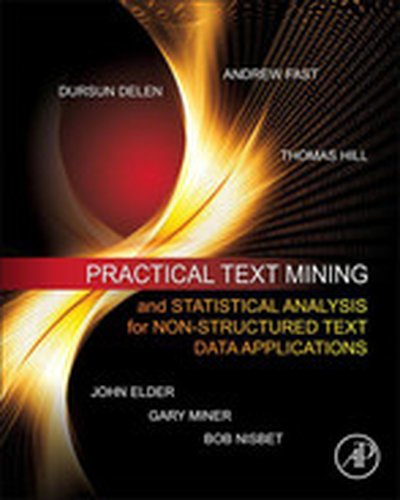
Practical Text Mining and Statistical Analysis for Non-structured Text Data Applications

Practical Text Mining and Statistical Analysis for Non-structured Text Data Applications brings together all the information, tools and methods a professional will need to efficiently use text mining applications and statistical analysis. Winner of a 2012 PROSE Award in Computing and Information Sciences from the Association of American Publishers, this book presents a comprehensive how-to reference that shows the user how to conduct text mining and statistically analyze results. In addition to providing an in-depth examination of core text mining and link detection tools, methods and operations, the book examines advanced preprocessing techniques, knowledge representation considerations, and visualization approaches. Finally, the book explores current real-world, mission-critical applications of text mining and link detection using real world example tutorials in such varied fields as corporate, finance, business intelligence, genomics research, and counterterrorism activities. The world contains an unimaginably vast amount of digital information which is getting ever vaster ever more rapidly. This makes it possible to do many things that previously could not be done: spot business trends, prevent diseases, combat crime and so on. Managed well, the textual data can be used to unlock new sources of economic value, provide fresh insights into science and hold governments to account. As the Internet expands and our natural capacity to process the unstructured text that it contains diminishes, the value of text mining for information retrieval and search will increase dramatically. Extensive case studies, most in a tutorial format, allow the reader to 'click through' the example using a software program, thus learning to conduct text mining analyses in the most rapid manner of learning possible Numerous examples, tutorials, power points and datasets available via companion website on Elsevierdirect.com Glossary of text mining terms provided in the appendix

Statistical Learning and Data Science

Driven by a vast range of applications, data analysis and learning from data are vibrant areas of research. Various methodologies, including unsupervised data analysis, supervised machine learning, and semi-supervised techniques, have continued to develop to cope with the increasing amount of data collected through modern technology. With a focus on applications, this volume presents contributions from some of the leading researchers in the different fields of data analysis. Synthesizing the methodologies into a coherent framework, the book covers a range of topics, from large-scale machine learning to synthesis objects analysis.

Statistics of Medical Imaging

Statistical investigation into technology not only provides a better understanding of the intrinsic features of the technology (analysis), but also leads to an improved design of the technology (synthesis). Physical principles and mathematical procedures of medical imaging technologies have been extensively studied during past decades. However, less work has been done on their statistical aspect. Filling this gap, this book provides a theoretical framework for statistical investigation into medical technologies. Rather than offer detailed descriptions of statistics of basic imaging protocols of X-ray CT and MRI, the book presents a method to conduct similar statistical investigations into more complicated imaging protocols.

Teaching Elementary Statistics with JMP

Chris Olsen's Teaching Elementary Statistics with JMP demonstrates this powerful software, offering the latest research on "best practice" in teaching statistics and how JMP can facilitate it. Just as statistics is data in a context, this book presents JMP in a context: teaching statistics. Olsen includes numerous examples of interesting data and intersperses JMP techniques and statistical analyses with thoughts from the statistics education literature. Intended for high school-level and college-level instructors who use JMP in teaching elementary statistics, the book uniquely provides a wide variety of data sets that will be of interest to a broad range of teachers and students. This book is part of the SAS Press program.

Essential Statistics, Regression, and Econometrics

Essential Statistics, Regression, and Econometrics provides students with a readable, deep understanding of the key statistical topics they need to understand in an econometrics course. It is innovative in its focus, including real data, pitfalls in data analysis, and modeling issues (including functional forms, causality, and instrumental variables). This book is unusually readable and non-intimidating, with extensive word problems that emphasize intuition and understanding. Exercises range from easy to challenging and the examples are substantial and real, to help the students remember the technique better. Readable exposition and exceptional exercises/examples that students can relate to Website includes java applets and Excel applications Focuses on key methods for econometrics students without including unnecessary topics Covers data analysis not covered in other texts Ideal presentation of material (topic order) for econometrics course

Business Statistics: For Contemporary Decision Making, 7th Edition

Black's latest outstanding pedagogy of Business Statistics includes the use of extra problems called "Demonstration Problems" to provide additional insight and explanation to working problems, and presents concepts, topics, formulas, and application in a manner that is palatable to a vast audience and minimizes the use of "scary" formulas. Every chapter opens up with a vignette called a "Decision Dilemma" about real companies, data, and business issues. Solutions to these dilemmas are presented as a feature called "Decision Dilemma Solved." In this edition all cases and "Decision Dilemmas" are updated and revised and 1/3 have been replaced for currency. There is also a significant number of additional problems and an extremely competitive collection of databases (containing real data) on: international stock markets, consumer food, international labor, financial, energy, agribusiness, 12-year gasoline, manufacturing, and hospital. Note: The ebook version does not provide access to the companion files.

Workshop Statistics: Discovery with Data, Fourth Edition

Allan Rossman's 4 th Edition of Workshop Statistics: Discovery with Data, is enhanced from previous issues with more focus and emphasis on collaborative learning. It further requires student observation, and integrates technology for gathering, recording, and synthesizing data. The text offers more flexibility in selecting technology tools for classrooms primarily using technologies other than graphing calculators or Fathom software. Furthermore, it presents more standards for teaching statistics in an innovative, investigative, and accessible as well as provides in-depth guidance and resources to support active learning of statistics and includes updated real data sets with everyday applications in order to promote statistical literacy. TM Dynamic Data

Fundamentals of Stochastic Networks

An interdisciplinary approach to understanding queueing and graphical networks In today's era of interdisciplinary studies and research activities, network models are becoming increasingly important in various areas where they have not regularly been used. Combining techniques from stochastic processes and graph theory to analyze the behavior of networks, Fundamentals of Stochastic Networks provides an interdisciplinary approach by including practical applications of these stochastic networks in various fields of study, from engineering and operations management to communications and the physical sciences. The author uniquely unites different types of stochastic, queueing, and graphical networks that are typically studied independently of each other. With balanced coverage, the book is organized into three succinct parts: Part I introduces basic concepts in probability and stochastic processes, with coverage on counting, Poisson, renewal, and Markov processes Part II addresses basic queueing theory, with a focus on Markovian queueing systems and also explores advanced queueing theory, queueing networks, and approximations of queueing networks Part III focuses on graphical models, presenting an introduction to graph theory along with Bayesian, Boolean, and random networks The author presents the material in a self-contained style that helps readers apply the presented methods and techniques to science and engineering applications. Numerous practical examples are also provided throughout, including all related mathematical details. Featuring basic results without heavy emphasis on proving theorems, Fundamentals of Stochastic Networks is a suitable book for courses on probability and stochastic networks, stochastic network calculus, and stochastic network optimization at the upper-undergraduate and graduate levels. The book also serves as a reference for researchers and network professionals who would like to learn more about the general principles of stochastic networks.

Statistics and Probability with Applications for Engineers and Scientists, Preliminary Edition

All statistical concepts are supported by a large number of examples using data encountered in real life situations; and the text illustrates how the statistical packages MINITAB®, Microsoft Excel ®, and JMP® may be used to aid in the analysis of various data sets. The text also covers an appropriate and understandable level of the design of experiments. This includes randomized block designs, one and two-way designs, Latin square designs, factorial designs, response surface designs, and others. This text is suitable for a one- or two-semester calculus-based undergraduate statistics course for engineers and scientists, and the presentation of material gives instructors flexibility to pick and choose topics for their particular courses.

Mathematical Statistics with Resampling and R

This book bridges the latest software applications with the benefits of modern resampling techniques Resampling helps students understand the meaning of sampling distributions, sampling variability, P-values, hypothesis tests, and confidence intervals. This groundbreaking book shows how to apply modern resampling techniques to mathematical statistics. Extensively class-tested to ensure an accessible presentation, Mathematical Statistics with Resampling and R utilizes the powerful and flexible computer language R to underscore the significance and benefits of modern resampling techniques. The book begins by introducing permutation tests and bootstrap methods, motivating classical inference methods. Striking a balance between theory, computing, and applications, the authors explore additional topics such as: Exploratory data analysis Calculation of sampling distributions The Central Limit Theorem Monte Carlo sampling Maximum likelihood estimation and properties of estimators Confidence intervals and hypothesis tests Regression Bayesian methods Throughout the book, case studies on diverse subjects such as flight delays, birth weights of babies, and telephone company repair times illustrate the relevance of the real-world applications of the discussed material. Key definitions and theorems of important probability distributions are collected at the end of the book, and a related website is also available, featuring additional material including data sets, R scripts, and helpful teaching hints. Mathematical Statistics with Resampling and R is an excellent book for courses on mathematical statistics at the upper-undergraduate and graduate levels. It also serves as a valuable reference for applied statisticians working in the areas of business, economics, biostatistics, and public health who utilize resampling methods in their everyday work.

Introduction to Stochastic Analysis: Integrals and Differential Equations

This is an introduction to stochastic integration and stochastic differential equations written in an understandable way for a wide audience, from students of mathematics to practitioners in biology, chemistry, physics, and finances. The presentation is based on the naïve stochastic integration, rather than on abstract theories of measure and stochastic processes. The proofs are rather simple for practitioners and, at the same time, rather rigorous for mathematicians. Detailed application examples in natural sciences and finance are presented. Much attention is paid to simulation diffusion processes. The topics covered include Brownian motion; motivation of stochastic models with Brownian motion; Itô and Stratonovich stochastic integrals, Itô's formula; stochastic differential equations (SDEs); solutions of SDEs as Markov processes; application examples in physical sciences and finance; simulation of solutions of SDEs (strong and weak approximations). Exercises with hints and/or solutions are also provided.

Statistical Methods for Quality Improvement, Third Edition

Praise for the Second Edition "As a comprehensive statistics reference book for quality improvement, it certainly is one of the best books available." — Technometrics This new edition continues to provide the most current, proven statistical methods for quality control and quality improvement The use of quantitative methods offers numerous benefits in the fields of industry and business, both through identifying existing trouble spots and alerting management and technical personnel to potential problems. Statistical Methods for Quality Improvement, Third Edition guides readers through a broad range of tools and techniques that make it possible to quickly identify and resolve both current and potential trouble spots within almost any manufacturing or nonmanufacturing process. The book provides detailed coverage of the application of control charts, while also exploring critical topics such as regression, design of experiments, and Taguchi methods. In this new edition, the author continues to explain how to combine the many statistical methods explored in the book in order to optimize quality control and improvement. The book has been thoroughly revised and updated to reflect the latest research and practices in statistical methods and quality control, and new features include: Updated coverage of control charts, with newly added tools The latest research on the monitoring of linear profiles and other types of profiles Sections on generalized likelihood ratio charts and the effects of parameter estimation on the properties of CUSUM and EWMA procedures New discussions on design of experiments that include conditional effects and fraction of design space plots New material on Lean Six Sigma and Six Sigma programs and training Incorporating the latest software applications, the author has added coverage on how to use Minitab software to obtain probability limits for attribute charts. new exercises have been added throughout the book, allowing readers to put the latest statistical methods into practice. Updated references are also provided, shedding light on the current literature and providing resources for further study of the topic. Statistical Methods for Quality Improvement, Third Edition is an excellent book for courses on quality control and design of experiments at the upper-undergraduate and graduate levels. the book also serves as a valuable reference for practicing statisticians, engineers, and physical scientists interested in statistical quality improvement.

Statistical Analysis for Business Using JMP(R): A Student's Guide

A complete and thorough introduction to business statistics using JMP. While the book is designed for introductory business statistics courses at the undergraduate or MBA level, industry professionals wanting to brush up on their knowledge of statistics and those wanting an introduction to using JMP for statistical analysis will also find it useful.

Exposure and Understanding the Histogram

What does a histogram tell you about contrast, dynamic range, underexposure, and overexposure? Why does exposure differ for digital photography versus film photography? What happens when the exposure is wrong? The exposure triangle: ISO, aperture, and shutter speed Differences between exposing for raw files and JPEG files Exposing to the right to obtain an optimum raw file Shooting in automatic mode–when to do so and how to use exposure compensation Shooting in manual mode–when to do so and how to adjust exposure