talk-data.com talk-data.com

Event

O'Reilly Data Engineering Books

2001-10-19 – 2027-05-25 Oreilly Visit website ↗

Activities tracked

3432

Collection of O'Reilly books on Data Engineering.

Sessions & talks

Showing 3401–3425 of 3432 · Newest first

Search within this event →
XML Pocket Reference

XML, the Extensible Markup Language, is the next-generation markup language for the Web. It provides a more structured (and therefore more powerful) medium than HTML, allowing us to define new document types and stylesheets as needed. Although the generic tags of HTML are sufficient for everyday text, XML gives us a way to add rich, well-defined markup to electronic documents. The XML Pocket Reference is both a handy introduction to XML terminology and syntax, and a quick reference to XML instructions, attributes, entities, and datatypes. It also covers XSL (Extensible Stylesheet Language), necessary to ensure that your XML documents have a consistent look and feel across platforms. Although XML itself is complex, its basic concepts are simple. This small book acts both as a perfect tutorial for learning the basics of XML, and as a reference to the XML and XSL specifications.

Sams Teach Yourself SQL in 10 Minutes

Sams Teach Yourself SQL in 10 Minutes is a tutorial-based book, organized into a series of easy-to-follow, 10-minute lessons. These well-targeted lessons teach you in 10 minutes what some books take several hours or days to teach. It is for those users who don't have the time to read lengthy chapters, or are not inclined to read "manuals." You will learn retrieving and sorting data, advanced data filtering, using wildcard filtering, manipulating data, combining queries, using views, creating and using stored procedures, and creating triggers.

Oracle Web Applications: PL/SQL Developer's Intro

This compact guide provides the jump-start Oracle developers need to make the transition from traditional programming to the development of useful Web applications for Oracle8i. Even readers who start out knowing nothing about HTML, PL/SQL, or Oracle's other tools will learn how to create simple Web applications in a matter of days. The book focuses on Oracle8i, but also covers Web development for earlier Oracle versions (Oracle8 and Oracle7). Background: The explosion in the use of the Internet and the Web has resulted in a whole new way of doing business. Developers who only yesterday were using COBOL to write accounts payable systems are now being asked to create a broad range of new Internet-based applications ranging from electronic commerce (e-commerce) Web sites to internal data warehouses to enterprise resource planning (ERP) systems. Unfortunately, the filesystem architectures of most Web systems aren't up to the task. The new breed of Web applications -- which are quickly becoming critical resources that companies need to survive -- demand a platform that provides production-quality tools for content management, application development, and application integration. And current Web techniques are inadequate in many ways. Oracle8i, Oracle's "Internet database," gives Web developers a way to build Web technology on top of a relational database, rather than on a traditional filesystem. With Oracle8i, companies can apply well understood, reliable, production-quality database methodologies to Web content management. Oracle8i also supports a wide variety of application development platforms and tools that are tightly integrated to the core database. Finally, Oracle8i supports technologies that help companies tie their Web-based applications into legacy applications. There is a lot to learn in Oracle8i. Not only does it enhance basic database features, it introduces Java and a variety of Web development tools. Oracle8i provides a soup-to-nuts platform for Web site and Web application development that extends traditional database concepts to Web content. It replaces the traditional filesystem used by most Web servers with a database management system. Many users are intimidated by the vast array of new technologies in Oracle8i. And yet, they are under pressure to use these technologies to build complex Web applications right now. This book gives such users a way to start using Oracle8i immediately to create useful Web applications. It is a concise, easy-to-read guide to the basic technologies developers need to understand in order to build Web applications. Contains: The book describes the following Web development tools: PL/SQL-- a structured programming language that combines procedural constructs and standard SQL. It offers such features as cursors, loops, conditional and sequential control statements, exception handlers, records, tables, and constructs for developing modular code (functions, procedures, and packages). PL/SQL Toolkit -- a set of PL/SQL packages supplied by Oracle for use in developing Web applications. HTML -- an ASCII-based markup language used to create Web pages. WebDB -- A software system for building, monitoring, and creating content-driven Web sites; it allows users to use a Web browser to access and store information in the Oracle8i database. Oracle Application Server (OAS) -- an extensible Web server that uses plug-in programs called cartridges to allow database-integrated Web systems to be developed in a variety of languages (e.g., PL/SQL, Java, Perl). XML -- An emerging standard for creating self-describing documents. It is similar to HTML but allows you to create your own markup tags. XML is expected to be a key technology in electronic commerce systems. The book also presents several fully realized sample Web applications that will teach you how to build such applications of your own. NOTE: Although this book touches on the Java features of Oracle8i, it doesn't cover Java development per se. Switching to Java represents an enormous change for most Oracle developers. This book provides an evolutionary path for readers who want to do useful Oracle8i Web development now, using mostly familiar tools. Additional books will provide Java training for those who have mastered these Web tools and want to take the next step.

Access Database Design and Programming, Second Edition

When using software products with graphical interfaces, we frequently focus so much on the details of how to use the interface that we forget about the more general concepts that allow us to understand and put the software to effective use. This is particularly true of a powerful database product like Microsoft Access. Novice, and sometimes even experienced, programmers are so concerned with how something is done in Access that they often lose sight of the general principles that underlie their database applications. Access Database Design & Programming, 2nd Edition, an update to the bestselling first edition, features: A discussion of Access' new VBA Integrated Development Environment, which, for the first time, is the one used by Word, Excel, and PowerPoint An expansion of the discussion of the VBA language itself, in response to reader requests A discussion of Microsoft's latest data access technology, called Active Data Objects (or ADO), along with a discussion of Open Database Connectivity(ODBC), which is intimately connected with ADO Unlike other Access books that take the long, detailed approach to every topic of concern to Access programmers, this book focuses instead on the core concepts, enabling programmers to develop solid, effective database applications. As a result, important topics such as designing forms and reports, database security, database replication, and programming for multiuser applications are simply not discussed. This book is a kind of "second course" in Access that provides a relatively experienced Access user who is new to programming with the frequently overlooked techniques necessary to successfully develop in the Microsoft Access environment. Anyone interested in learning Access in-depth, rather than just scraping the surface, will enjoy and immensely benefit from reading this book. Although this book is really an introduction directed to intermediate Microsoft Access users who are novice programmers, it should appeal to all levels of Access developers. For novice programmers, it focuses on a key body of knowledge that is typically neglected, but is nevertheless essential for developing effective database applications. For intermediate and advanced developers, its treatment of database design and queries provides a handy treatment that otherwise has to be gleaned from relatively uninteresting textbooks, while its programming chapters constitute a handy reference to some basic operations that can be performed using DAO or the Access object model.

MySQL and mSQL

MySQL and mSQL are popular and robust database products that support key subsets of SQL on both Linux and Unix systems. Both products are free for nonprofit use and cost a small amount for commercial use. Even a small organization or web site has uses for a database. Perhaps you keep track of all your customers and find that your information is outgrowing the crude, flat-file format you started with. Or you want to ask your web site's visitors for their interests and preferences and put up a fresh web page that tallies the results. Unlike commercial databases, MySQL and mSQL are affordable and easy to use. If you know basic C, Java, Perl, or Python, you can quickly write a program to interact with your database. In addition, you can embed queries and updates right in an HTML file so that a web page becomes its own interface to the database. This book is all you need to make use of MySQL or mSQL. It takes you through the whole process from installation and configuration to programming interfaces and basic administration. Includes reference chapters and ample tutorial material. Topics include: Introductions to simple database design and SQL Building, installation, and configuration Basic programming APIs for C, C++, Java (JDBC), Perl, and Python CGI programming with databases in C and Perl Web interfaces: PHP, W3-mSQL, Lite, and mSQLPerl

F. Scott Barker's Microsoft® Access 2000 Power Programming

Access 2000 Power Programming gives many practical techniques for the corporate and independent developer. New features of Access 2000 are covered thoroughly and useful examples which will be implemented by programmers in their everyday applications. New topics include a chapter devoted to Data Pages, Microsoft's way of bringing the Web interface into everyday office solutions. Also, a new chapter clarifies the confusion over ADP/MDB and DAO/ADO, including when and where to use each. The book covers a number of new additions to VBA which developers will need good exposure to in order to take advantage of them.

Special Edition Using Microsoft® Access 2000

Special Edition Using Access 2000 is your authoritative guide to mastering the essentials of this powerful 32-bit database development platform. Get started quickly by using the Database Wizard to create a working Access 2000 application in less than 30 minutes. Detailed, step-by-step instructions guide you through the process of designing and using Access tables, queries, forms, and reports. Chapters on VBA techniques pave your way to Access programming. Make the Access-Internet connection by exporting table, queries, and reports to static Web pages, then move into work with Data Access Pages and Active Server pages.

Oracle Database Administration: The Essential Refe

Visit the catalog page for Oracle Database Administration: The Essential RefeVisit the errata page for Oracle Database Administration: The Essential RefeDownload the supplemental electronic content for Oracle Database Administration: The Essential Refe Oracle database administration requires a vast amount of information and an ability to perform a myriad of tasks--from installation to tuning to network troubleshooting to overall daily administration. Oracle provides many tools for performing these tasks; the trick is knowing what tool is right for the job, what commands you need to issue (and when), and what parameters and privileges you need to set. And, as every DBA knows, you need to know how do all this under pressure, while you face crisis after crisis. This book provides a concise reference to the enormous store of information an Oracle DBA needs every day (as well as what's needed only when disaster strikes). It's crammed full of quick-reference tables, task lists, and other summary material that both novice and expert DBAs will use time and time again. It covers the commands and operations new to Oracle8, but also provides Oracle7 information for sites still running earlier versions. Oracle Database Administration provides two types of material: DBA tasks--chapters summarizing how to perform critical DBA functions: installation, performance tuning, preventing data loss, networking, security and monitoring, auditing, query optimization, and the use of various Oracle tools and utilities DBA reference--chapters providing a quick reference to the Oracle instance and database, the initialization (INIT.ORA) parameters, the SQL statements commonly used by DBAs, the data dictionary tables, the system privileges and roles, and the SQLPlus, Export, Import, and SQLLoader syntax The book also includes a resource summary with references to additional books, Web sites, and other online and offline resources of special use to Oracle DBAs. Oracle Database Administration is the single essential reference you'll turn to again and again. If you must choose only one book to use at the office, keep at home, or carry to a site you're troubleshooting, this will be that book.

Oracle Distributed Systems

Any organization that uses the Oracle relational database management system (RDBMS) these days needs to use multiple databases. There are many reasons to use more than a single database in a distributed database system: Different databases may be associated with particular business functions, such as manufacturing or human resources. Databases may be aligned with geographical boundaries, such as a behemoth database at a headquarters site and smaller databases at regional offices. Two different databases may be required to access the same data in different ways, such as an order entry database whose transactions are aggregated and analyzed in a data warehouse. A busy Internet commerce site may create multiple copies of the same database to attain horizontal scalability. A copy of a production database may be created to serve as a development test bed. Tunability Platform autonomy Fault tolerance Scalability Location transparency Site autonomy Introduction to Distributed Database Systems SQLNet and Net8 Configuration and Administration Distributed Database Security Designing the Distributed System Oracle's Distributed System Implementation Sample Configurations 8. Engineering Considerations Oracle Replication Architecture Advanced Replication Option Installation Basic Replication Multi-Master Replication Updateable Snapshots Procedural Replication Conflict Avoidance and Resolution Techniques In a distributed database environment, data in two or more databases is accessible as if it were in a single database. Usually, the different databases are on different servers, which may be located at the same site or a continent away. Communication between the servers takes place via SQLNet (for Oracle7) or Net8 (for Oracle8). Distributed database environments offer a number of benefits over single- database systems, including: This book describes how you can use multiple databases and the distributed features of Oracle to best advantage. It covers: Table of contents: Part I: The Distributed System Part II: Replication Part III: Appendixes Appendix A: Built-in Packages for Distributed Systems Appendix B: Scripts

Oracle PL/SQL Language Pocket Reference

This pocket reference provides quick-reference information that will help you use Oracle's PL/SQL language. It is a companion to Steven Feuerstein and Bill Pribyl's bestselling book, Oracle PL/SQL Programming, and includes coverage of the latest version of Oracle, Oracle8i. Oracle is the most popular database management system in use today, and PL/SQL plays a pivotal role in current and projected Oracle products and applications. PL/SQL provides procedural extensions to the SQL relational database language and to an ever-growing number of Oracle development tools. It offers a myriad of data types, and such features as cursors, loops, conditional and sequential control statements, exception handlers, records, tables, and constructs for developing modular code (functions, procedures, and packages). Originally a rather limited tool, PL/SQL became with Oracle7 a mature and effective language for developers. Now, with the introduction of Oracle8, PL/SQL has taken the next step towards becoming a fully realized programming language providing sophisticated object-oriented capabilities. The book on which this pocket reference is based, Oracle PL/SQL Programming, filled a huge gap in the Oracle market, providing developers with a single, comprehensive guide to building applications with PL/SQL -- and building them the right way. That book has become the bible for PL/SQL developers who have raved about its completeness, readability, and practicality. The book is packed with strategies, code architectures, tips, techniques, and fully realized code. The second edition of the book updated the text with the new Oracle8 PL/SQL features, including object types, collections, external procedures, and large object data types and functions. The pocket reference boils down the most vital information from the large (nearly 1000 pages) book into an accessible quick reference that summarizes the basics of PL/SQL -- its block structure, fundamental language elements (e.g., identifiers, declarations, defaults), data structures (including Oracle8 objects), and statements for program control, loops, exception handling, and database access. It also covers the the basics of using Oracle's procedures, functions, and packages, and the latest features for Oracle8i.

Oracle SQL*Plus: The Definitive Guide

This book is the definitive guide to SQLPlus. If you want to take best advantage of the power and flexibility of this popular Oracle tool, you need this book. SQLPlus is an interactive query tool that is ubiquitous in the Oracle world. It is present in every Oracle installation and is available to almost every Oracle developer and database administrator. SQLPlus has been shipped with Oracle since at least version 6. It continues to be supported and enhanced with each new version of Oracle, including Oracle8 and Oracle8i. It is still the only widely available tool for writing SQL scripts. Despite this wide availability and usage, few developers and DBAs know how powerful SQLPlus really is. This book introduces SQLPlus, includes a quick reference to all of its syntax options, and, most important, provides chapters that describe, in step-by-step fashion, how to perform all of the tasks that Oracle developers and DBAs want to perform with SQLPlus -- and maybe some they didn't realize they COULD perform with SQLPlus. You will learn how to write and execute script files, generate ad hoc reports, extract data from the database, query the data dictionary tables, customize your SQLPlus environment, and use the SQLPlus administrative features (new in Oracle8i). This book is an indispensable resource for readers who are new to SQLPlus, a task-oriented learning tool for those who are already using it, and a quick reference for every user. A table of contents follows: Preface Introduction to SQLPlus Interacting with SQLPlus Generating Reports with SQLPlus Writing SQLPlus Scripts Extracting Data with SQLPlus Exploring Your Database with SQLPlus Advanced Scripting Tuning and Timing The Product User Profile Administration with SQLPlus Customizing Your SQLPlus Environment A. SQLPlus Command Reference B. Connect Strings and the SQLPlus Command Appendices

Sams Teach Yourself SAP R/3 in 10 Minutes

Sams Teach Yourself SAP R/3 in 10 Minutes covers general tasks including basic navigation skills, working with master data and running reports. With Timesaving Tips, Plain English definitions, Panic Button advice and easy-to-follow tutorials that can be completed in 10 minutes or less, you can get productive immediately. Covers the general SAP functions that every end-user of SAP-based applications must know. The book focuses on the user interface, access issues, and basic navigation skills using mini-tutorials. You'll learn all the essential tasks for running SAP-based applications smoothly and easily. 10 minutes is all you need to learn how to log on to SAP R/3, access the SAP R/3 modules, use basic navigation skills, work with master data, generate reports, read and interpret common error messages, and access extensive online help features.

Data Warehousing: Architecture and Implementation

8090B-0 A start-to-finish process for deploying successful data warehouses. This book delivers what every data warehousing project participant needs most: a thorough overview of today's best solutions, and a reliable step-by-step process for building warehouses that meet their objectives. It answers the key questions asked by everyone involved in a data warehouse initiative: project sponsors, developers, managers, and CIOs. And, with over 75 figures, it doesn't just tell you how to get the job done: it shows you. Migration strategies and scenarios Management and support: issue resolution, capacity planning, security, backup, and more Specific answers for project sponsors, managers, and CIOs 12 steps for implementation Best techniques for schema design and metadata Choosing the right hardware, software, and platforms Evolving as new technologies mature Rely on this book's up-to-date listings of vendors and Web resources. Learn to evolve your data warehouse as new technologies mature-including metadata interchange standards, Web solutions, and Windows …Ø NT. Whatever your goals, Data Warehousing for IT Professionals will help you achieve them faster and at lower cost.

IBM Component Broker on System/390

Component Broker is a unique product in the marketplace. It is composed of an industry-leading set of technologies that facilitate the development and deployment of distributed object applications. More specifically, the product is designed to meet the needs of object-oriented programmers responsible for building mission-critical, enterprise-level, transactional application solutions. At its core, Component Broker implements an architecture that defines an object-oriented programming model, an extensible framework supporting the rich composition of business objects from new or existing sources of data, and an integrated set of enterprise-ready object services. These three aspects of the architecture are complemented by an integrated set of application development and assembly tools. Component Broker is packaged with a runtime and systems management component and the Component Broker Toolkit (CBToolkit) that supports application development. This IBM Redbooks publication introduces you to IBM’s Component Broker on System/390. It describes many of the functional aspects and key benefits of the common Component Broker architecture that span multiple platforms. It also examines the specific implementation and business value of Component Broker on the 390 system. System/390, the OS/390 operating system, and the various transactional application execution environments native to the platform have enjoyed a reputation of being one of the most scalable, secure and efficient commercial processing systems in the industry. Component Broker now extends this heritage by bringing the world of object-oriented computing to large-scale business applications. Component Broker is a part of IBM’s WebSphere application server strategy. WebSphere provides customers with a comprehensive solution for developing and deploying networked applications. All WebSphere servers are unified by a common programming architecture that is based on the Enterprise JavaBeans specification. Additionally, Component Broker provides support for the CORBA specification. The ITSO has created a growing library of publications about Component Broker. You can see this library in Appendix , “ ” on page . If after reading this publication you wish to further enhance your knowledge of the general Component Broker architecture, we recommend that you study the IBM Component Broker Overview book (SG24-2022).

Oracle Security

Security in a relational database management system is complex, and too few DBAs, system administrators, managers, and developers understand how Oracle implements system and database security. This book gives you the guidance you need to protect your databases. Oracle security has many facets: Establishing an organization's security policy and plan Protecting system files and passwords Controlling access to database objects (tables, views, rows, columns, etc.) Building appropriate user profiles, roles, and privileges Monitoring system access via audit trails Oracle and Security Oracle System Files Oracle Database Objects The Oracle Data Dictionary Default Roles and User Accounts Profiles, Passwords, and Synonyms Developing a Database Security Plan Installing and Starting Oracle Developing a Simple Security Application Developing an Audit Plan Developing a Sample Audit Application Backing Up and Recovering a Database Using the Oracle Enterprise Manager Maintaining User Accounts Using the Oracle Security Server Using the Internet and the Web Using Extra-Cost Options Oracle Security describes how these basic database security features are implemented and provides many practical strategies for securing Oracle systems and databases. It explains how to use the Oracle Enterprise Manager and Oracle Security Server to enhance your site's security, and it touches on such advanced security features as encryption, Trusted Oracle, and various Internet and World Wide Web protection strategies. A table of contents follows: Preface Part I: Security in an Oracle System Part II: Implementing Security Part III: Enhanced Oracle Security Appendix A. References

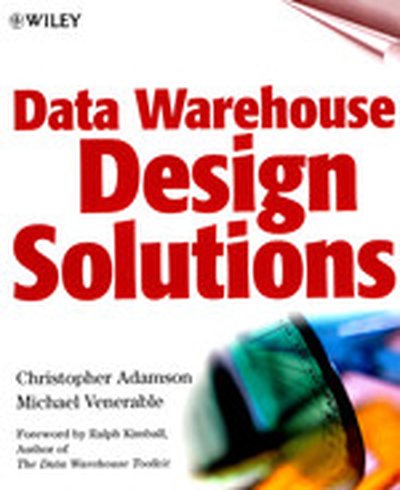
Data Warehouse Design Solutions

"Each chapter is... a practice run for the way we all ought to design our data marts and hence our data warehouses."-Ralph Kimball, from the Foreword. Let the experts show you how to customize data warehouse designs for real business needs in Data Warehouse Design Solutions. To effectively design a data warehouse, you have to understand its many business uses. This guidebook shows you how business managers in different corporate functions actually use data warehouses to make decisions. You'll get a rich set of data warehouse designs that flow from realistic business cases. Two top experts show you how to customize your data warehouse designs for real-life business needs including: Sales and marketing Production and inventory management Budgeting and financial reporting Quality control Product delivery and fulfillment Strategic business analysis such as determining market share, rates of return on investment, and other key analytic ratios. CD-ROM includes All sample data warehouse designs with accompanying preformatted reports in HTML for specific business uses such as marketing, sales, and financial analysis. This title includes additional digital media when purchased in print format. For this digital book edition, media content may not be included. Contact the publisher's customer service directly for assistance.

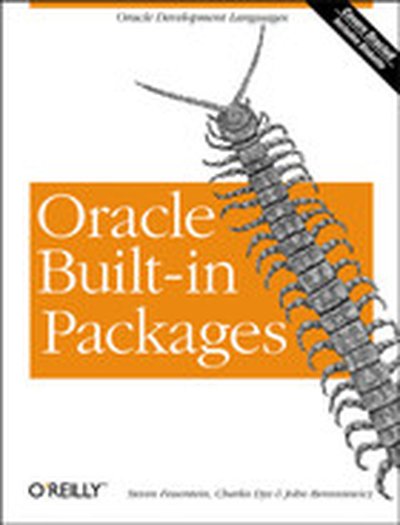
Oracle Built-in Packages

Oracle is the most popular database management system in use today, and PL/SQL plays a pivotal role in current and projected Oracle products and applications. PL/SQL is a programming language providing procedural extensions to the SQL relational database language and to an ever-growing number of oracle development tools. originally a rather limited tool, PL/SQL became with Oracle7 a mature and effective language for developers. now, with the introduction of Oracle8, PL/SQL has taken the next step towards becoming a fully realized programming language providing sophisticated object-oriented capabilities. Steven Feuerstein's Oracle PL/SQL Programming is a comprehensive guide to building applications with PL/SQL. That book has become the bible for PL/SQL developers who have raved about its completeness, readability, and practicality. Built-in packages are collections of PL/SQL objects built by Oracle Corporation and stored directly in the Oracle database. The functionality of these packages is available from any programming environment that can call PL/SQL stored procedures, including Visual Basic, Oracle Developer/2000, Oracle Application Server (for web-based development), and, of course, the Oracle database itself. Built-in packages extend the capabilities and power of PL/SQL in many significant ways. for example: DBMS_SQL executes dynamically constructed SQL statements and PL/SQL blocks of code. DBMS_PIPE communicates between different Oracle sessions through a pipe in the RDBMS shared memory. DBMS_JOB submits and manages regularly scheduled jobs for execution inside the database. DBMS_LOB accesses and manipulates Oracle8's large objects (LOBs) from within PL/SQL programs. 1. Introduction Executing Dynamic SQL and PL/SQL Intersession Communication User Lock and Transaction Management Oracle Advanced Queuing Generating Output from PL/SQL Programs Defining an Application Profile Managing Large Objects Datatype Packages Miscellaneous Packages Managing Session Information Managing Server Resources Job Scheduling in the Database Snapshots Advanced Replication Conflict Resolution Deferred Transactions and Remote Procedure Calls The first edition of Oracle PL/SQL Programming contained a chapter on Oracle's built-in packages. but there is much more to say about the basic PL/SQL packages than Feuerstein could fit in his first book. In addition, now that Oracle8 has been released, there are many new Oracle8 built-in packages not described in the PL/SQL book. There are also packages extensions for specific oracle environments such as distributed database. hence this book. Oracle Built-in Packages pulls together information about how to use the calling interface (API) to Oracle's Built-in Packages, and provides extensive examples on using the built-in packages effectively. The windows diskette included with the book contains the companion guide, an online tool developed by RevealNet, Inc., that provides point-and-click access to the many files of source code and online documentation developed by the authors. The table of contents follows: Preface Part I: Overview Part II: Application Development Packages Part III: Server Management Packages Part IV: Distributed Database Packages Appendix. What's on the companion disk?

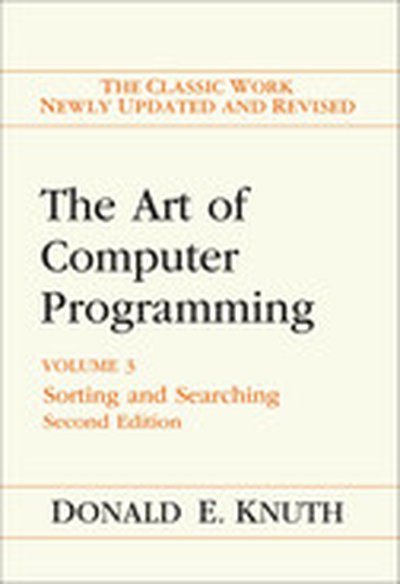
The Art of Computer Programming: Volume 3: Sorting and Searching, 2nd Edition

The bible of all fundamental algorithms and the work that taught many of today’s software developers most of what they know about computer programming. –Byte, September 1995 I can’t begin to tell you how many pleasurable hours of study and recreation they have afforded me! I have pored over them in cars, restaurants, at work, at home... and even at a Little League game when my son wasn’t in the line-up. –Charles Long If you think you’re a really good programmer... read [Knuth’s] Art of Computer Programming... You should definitely send me a resume if you can read the whole thing. –Bill Gates It’s always a pleasure when a problem is hard enough that you have to get the Knuths off the shelf. I find that merely opening one has a very useful terrorizing effect on computers. –Jonathan Laventhol The first revision of this third volume is the most comprehensive survey of classical computer techniques for sorting and searching. It extends the treatment of data structures in Volume 1 to consider both large and small databases and internal and external memories. The book contains a selection of carefully checked computer methods, with a quantitative analysis of their efficiency. Outstanding features of the second edition include a revised section on optimum sorting and new discussions of the theory of permutations and of universal hashing. Ebook (PDF version) produced by Mathematical Sciences Publishers (MSP), http://msp.org .

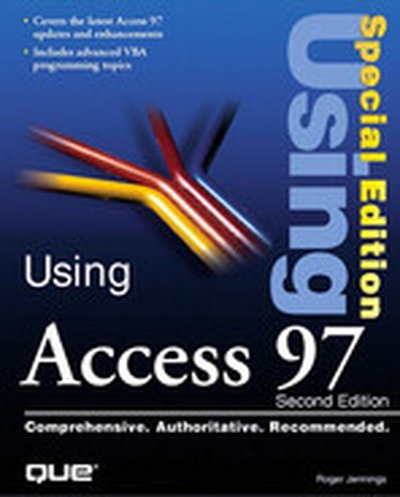
Special Edition Using Access 97, Second Edition

Special Edition Using Access 97, Second Edition, is your authoritative guide to mastering every facet of this powerful 32-bit database development platform. Get started quickly by using the Database Wizard to create a working Access 97 application in less than 30 minutes. Detailed, step-by-step instructions guide you through the process of designing and using Access tables, queries, forms, and reports. Newly added chapters on advanced VBA 5.0 techniques pave your way to Access programming expertise. Plus, you get full coverage of the latest updates to Access 97, including report Snapshot technology from Office Service Release 1 and the Upsizing Wizard for SQL Server 6.5+.

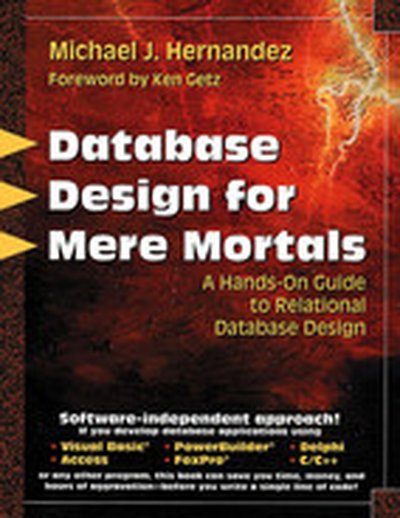
Database Design for Mere Mortals

Sound design can save you hours of development time before you write a single line of code. Based on the author's years of experience teaching this material, Database Design for Mere Mortals is a straightforward, platform-independent tutorial on the basic principles of relational database design. Database design expert Michael J. Hernandez introduces the core concepts of design theory and method without the technical jargon. Database Design for Mere Mortals will provide any developer with a common-sense design methodology for developing databases that work. 0201694719B04062001