talk-data.com talk-data.com

Event

O'Reilly Data Engineering Books

2001-10-19 – 2027-05-25 Oreilly Visit website ↗

Activities tracked

780

Collection of O'Reilly books on Data Engineering.

Filtering by: SQL ×

Sessions & talks

Showing 551–575 of 780 · Newest first

Search within this event →
MySQL®

The Definitive Guide to Using, Programming, and Administering MySQL 5.0 and 5.1 MySQL is an open source relational database management system that has experienced a phenomenal growth in popularity and use. Known for its speed and ease of use, MySQL has proven itself to be particularly well-suited for developing database-backed websites and applications. In MySQL, Paul DuBois provides a comprehensive guide to using and administering MySQL effectively and productively. He describes everything from the basics of getting information into a database and formulating queries, to using MySQL with PHP or Perl to generate dynamic web pages, to writing your own programs that access MySQL databases, to administering MySQL servers. The fourth edition of this bestselling book has been meticulously revised and updated to thoroughly cover the latest features and capabilities of MySQL 5.0, as well as to add new coverage of features introduced with MySQL 5.1. “One of the best technical books I have read on any subject.” –Gregory Haley, C Vu, The Association of C & C++ Users “A top-notch user’s guide and reference manual, and in my opinion, the only book you’ll need for the daily operation and maintenance of MySQL databases.” –Eugene Kim, Web Techniques Introduction 1 Part I: General MySQL Use Chapter 1: Getting Started with MySQL 13 Chapter 2: Using SQL to Manage Data 101 Chapter 3: Data Types 201 Chapter 4: Stored Programs 289 Chapter 5: Query Optimization 303 Part II: Using MySQL Programming Interfaces Chapter 6: Introduction to MySQL Programming 341 Chapter 7: Writing MySQL Programs Using C 359 Chapter 8: Writing MySQL Programs Using Perl DBI 435 Chapter 9: Writing MySQL Programs Using PHP 527 Part III: MySQL Administration Chapter 10: Introduction to MySQL Administration 579 Chapter 11: The MySQL Data Directory 585 Chapter 12: General MySQL Administration 609 Chapter 13: Access Control and Security 699 Chapter 14: Database Maintenance, Backups, and Replication 737 Part IV: Appendixes Appendix A: Obtaining and Installing Software 777 Appendix B: Data Type Reference 797 Appendix C: Operator and Function Reference 813 Appendix D: System, Status, and User Variable Reference 889 Appendix E: SQL Syntax Reference 937 Appendix F: MySQL Program Reference 1037 Note: Appendixes G, H, and I are located online and are accessible either by registering this book at informit.com/register or by visiting www.kitebird.com/mysql-book. Appendix G: C API Reference 1121 Appendix H: Perl DBI API Reference 1177 Appendix I: PHP API Reference 1207 Index 1225
Pro SQL Server 2008 Relational Database Design and Implementation

Learn effective and scalable database design techniques in a SQL Server environment. Pro SQL Server 2008 Relational Database Design and Implementation covers everything from design logic that business users will understand, all the way to the physical implementation of the design in a SQL Server database. Grounded in best practices and a solid understanding of the underlying theory, authors Louis Davidson, Kevin Kline, Scott Klein, and Kurt Windisch show how to 'get it right' in SQL Server database design and lay a solid groundwork for the future use of valuable business data. Solid foundation in best practices and relational theory Maximize SQL Server features to enhance security, performance, scalability Thorough treatment from conceptual design to an effective, physical implementation What you'll learn Develop conceptual models of client data using interviews and client documentation Normalize data models to enhance scalability and the long term use of valuable data Translate conceptual models into high-performing SQL Server databases Secure and protect the integrity of data as part of meeting regulatory requirements Take full advantage of new SQL Server features such as the spatial datatype, XML support, transparent data encryption, and more Create effective indexing to speed query performance Who this book is for Pro SQL Server 2008 Relational Database Design and Implementation is designed for programmers of all types who want to use SQL Server 2008 to store data. Rookie database programmers will find a complete course on the fundamentals of database design that includes conceptual designs and physical implementation. Seasoned veterans will find many tips and tricks for implementing database systems that will be well worth the time invested in reading this book.

Pro SQL Server 2008 Reporting Services

Take full advantage of everything SQL Server 2008 Reporting Services has to offer and deliver customizable, web–enabled reports across your business at a reasonable cost. Learn best–practices from professionals who use SQL Server Reporting Services daily to deliver solutions to paying clients and gain the competitive edge on using Microsoft's enterprise–level reporting platform. Provides best–practices for using Reporting Services Written by practicing professionals with paying clients Your key to delivering business intelligence across the enterprise

Microsoft SQL Server 2008 Reporting Services, 3rd Edition

The Definitive Guide to Microsoft SQL Server 2008 Reporting Services Create and deliver data-rich reports across the enterprise using this complete server-based reporting solution. Written by a member of the original Reporting Services development team, Microsoft SQL Server 2008 Reporting Services covers the entire report-building and distribution process, including data extraction, integration with desktop and Web applications, and end-user access. The book explains how to maximize all of the powerful features, including the new Tablix data format, as well as enhanced performance, scalability, and visualization capabilities. Install, configure, and customize SQL Server 2008 Reporting Services Create SELECT queries to extract data Generate reports from the Report Wizard and from scratch Add charts, images, and gauges Build reusable report templates Use the new Tablix data format to create reports with any structure Export reports to Word, Excel, PDF, HTML, XML, and other formats Enable end-user access to reports via the Report Server and its Report Manager web interface

A Developer’s Guide to Data Modeling for SQL Server: Covering SQL Server 2005 and 2008

“ explains the concepts and practice of data modeling with a clarity that makes the technology accessible to anyone building databases and data-driven applications. A Developer’s Guide to Data Modeling for SQL Server “Eric Johnson and Joshua Jones combine a deep understanding of the science of data modeling with the art that comes with years of experience. If you’re new to data modeling, or find the need to brush up on its concepts, this book is for you.” — Peter Varhol, Executive Editor, Redmond Magazine Model SQL Server Databases That Work Better, Do More, and Evolve More Smoothly Effective data modeling is essential to ensuring that your databases will perform well, scale well, and evolve to meet changing requirements. However, if you’re modeling databases to run on Microsoft SQL Server 2008 or 2005, theoretical or platform-agnostic data modeling knowledge isn’t enough: models that don’t reflect SQL Server’s unique real-world strengths and weaknesses often lead to disastrous performance. is a practical, SQL Server-specific guide to data modeling for every developer, architect, and administrator. This book offers you invaluable start-to-finish guidance for designing new databases, redesigning existing SQL Server data models, and migrating databases from other platforms. A Developer’s Guide to Data Modeling for SQL Server You’ll begin with a concise, practical overview of the core data modeling techniques. Next, you’ll walk through requirements gathering and discover how to convert requirements into effective SQL Server logical models. Finally, you’ll systematically transform those logical models into physical models that make the most of SQL Server’s extended functionality. All of this book’s many examples are available for download from a companion Web site. This book enables you to Understand your data model’s physical elements, from storage to referential integrity Provide programmability via stored procedures, user-defined functions, triggers, and .NET CLR integration Normalize data models, one step at a time Gather and interpret requirements more effectively Learn an effective methodology for creating logical models Overcome modeling problems related to entities, attribute, data types, storage overhead, performance, and relationships Create physical models—from establishing naming guidelines through implementing business rules and constraints Use SQL Server’s unique indexing capabilities, and overcome their limitations Create abstraction layers that enhance security, extensibility, and flexibility

Troubleshooting Oracle Performance

What do you do when your database application isn't running fast enough? You troubleshoot, of course. Finding the slow part of an application is often the easy part of the battle. It's finding a solution that's difficult. Troubleshooting Oracle Performance helps by providing a systematic approach to addressing the underlying causes of poor database application performance. Written for developers by an application developer who has learned by doing Gives a systematic approach to solving database application performance problems Helps you plan for performance as you would for any other application requirement What you'll learn See how to treat and plan for performance as a basic application requirement Identify performance problems using a systematic and repeatable approach Configure your query optimizer to meet your application performance goals Optimize table accesses, joins, and physical table layout Read and recognize inefficient SQL execution plans Reduce inefficiencies from too much procedural code Who this book is for For application developers and database administrators involved in troubleshooting performance problems of Oracle-based applications.

SQL for Microsoft Access, 2nd Edition

SQL for Microsoft Access (2nd Edition) provides a guide to getting the most out of Microsoft Access through the use of Structured Query Language. Step-by-step examples demonstrate how to use SQL script to create tables, add records to tables, and retrieve and manage records. Readers will also learn about calculated fields, Access projects, and the integration of SQL script in VBA and ASP code. Explore the relational database structure and the basics of SQL. Understand how table joins, unions, and subqueries are used to retrieve records from multiple tables simultaneously. Learn how to filter records and group data. Discover how to create parameter queries that prompt users for data. Test your knowledge and comprehension with the end-of-chapter quizzes and projects.

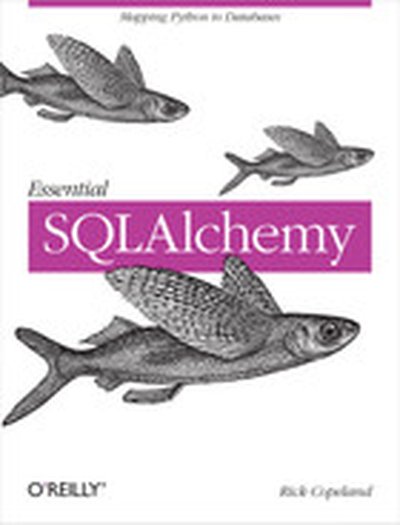
Essential SQLAlchemy

Essential SQLAlchemy introduces a high-level open-source code library that makes it easier for Python programmers to access relational databases such as Oracle, DB2, MySQL, PostgreSQL, and SQLite. SQLAlchemy has become increasingly popular since its release, but it still lacks good offline documentation. This practical book fills the gap, and because a developer wrote it, you get an objective look at SQLAlchemy's tools rather than an advocate's description of all the "cool" features. SQLAlchemy includes both a database server-independent SQL expression language and an object-relational mapper (ORM) that lets you map "plain old Python objects" (POPOs) to database tables without substantially changing your existing Python code. Essential SQLAlchemy demonstrates how to use the library to create a simple database application, walks you through simple queries, and explains how to use SQLAlchemy to connect to multiple databases simultaneously with the same Metadata. You also learn how to: Create custom types to be used in your schema, and when it's useful to use custom rather than built-in types Run queries, updates, and deletes with SQLAlchemy's SQL expression language Build an object mapper with SQLAlchemy, and understand the differences between this and active record patterns used in other ORMs Create objects, save them to a session, and flush them to the database Use SQLAlchemy to model object oriented inheritance Provide a declarative, active record pattern for use with SQLAlchemy using the Elixir extension Use the SQLSoup extension to provide an automatic metadata and object model based on database reflection In addition, you'll learn how and when to use other extensions to SQLAlchemy, including AssociationProxy, OrderingList, and more. Essential SQLAlchemy is the much-needed guide for every Python developer using this code library. Instead of a feature-by-feature documentation, this book takes an "essentials" approach that gives you exactly what you need to become productive with SQLAlchemy right away.

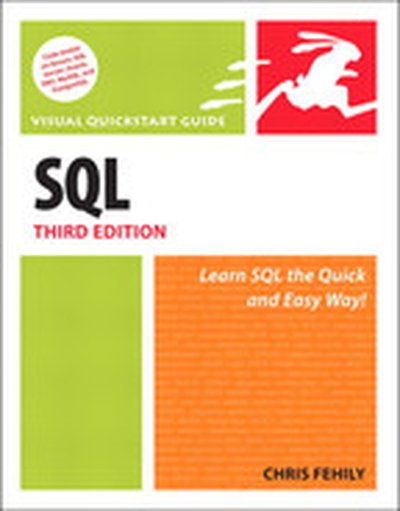
SQL: Visual QuickStart Guide, Third Edition

SQL is a standard interactive and programming language for querying and modifying data and managing databases. This task-based tutorial and reference guide takes the mystery out learning and applying SQL. After going over the relational database model and SQL syntax in the first few chapters, veteran author Chris Fehily immediately launches into the tasks that will get readers comfortable with SQL. In addition to covering all the SQL basics, this thoroughly updated reference contains a wealth of in-depth SQL knowledge and serves as an excellent reference for more experienced users.

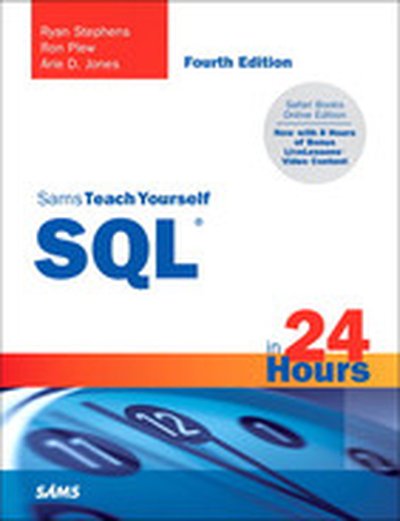
Sams Teach Yourself SQL in 24 Hours, Fourth Edition

In just 24 lessons of one hour or less, you will learn professional techniques to design and build efficient databases and query them to extract useful information. Using a straightforward, step-by-step approach, each lesson builds on the previous one, allowing you to learn the essentials of ANSI SQL from the ground up. Example code demonstrates the authors’ professional techniques, while exercises written for MySQL offer the reader hands-on learning with an open-source database. Included are advanced techniques for using views, managing transactions, database administration, and extending SQL. Step-by-step instructions carefully walk you through the most common SQL tasks. Q&As, Quizzes, and Exercises at the end of each chapter help you test your knowledge. Notes and Tips point out shortcuts and solutions. New terms are clearly defined and explained. Learn how to… Use SQL-2003, the latest standard for the Structured Query Language Design and deploy efficient, secure databases Build advanced queries for information retrieval Sort, group, and summarize information for best presentation Tune databases and queries for maximum performance Understand database administration and security techniques For more than ten years the authors have studied, applied, and documented the SQL standard and its application to critical database systems. Ryan Stephens and Ron Plew are entrepreneurs, speakers, and cofounders of Perpetual Technologies, Inc. (PTI), a fast-growing IT management and consulting firm which specializes in database technologies. They taught database courses for Indiana University–Purdue University in Indianapolis for five years and have authored more than a dozen books on Oracle, SQL, database design, and the high availability of critical systems. Arie D. Jones is Senior SQL Server database administrator and analyst for PTI. He is a regular speaker at technical events and has authored several books and articles. Category: Database Covers: ANSI SQL User Level: Beginning–Intermediate Register your book at informit.com/title/9780672330186 for convenient access to updates and corrections as they become available.

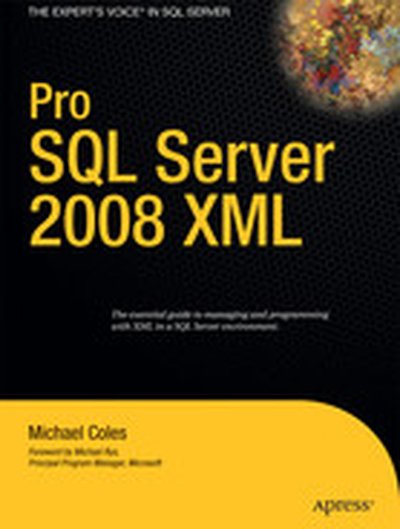
Pro SQL Server 2008 XML

Knowledge and ability to apply XML are de rigueur in today's world, and SQL Server developers and administrators are no exception to that rule. Pro SQL Server 2008 XML is your key to unlocking the powerful XML feature set first introduced in SQL Server 2005 and since refined in SQL Server 2008. Author Michael Coles shows how to store XML using SQL Server's built-in XML data type. Learn to query and manipulate XML data using standard technologies such as XQuery and XSLT. No SQL Server database professional can afford to be without knowledge of the XML feature set. Pro SQL Server 2008 XML delivers on the knowledge that you need to remain competitive in your career. Shows how to store, query, and manipulate XML documents in SQL Server Provides step-by-step examples showing best practices and advanced features Accurately discusses how SQL Server's XML feature set stacks up against the ISO XML standards

OCP Oracle Database 11g New Features for Administrators Exam Guide (Exam 1Z0-050)

A Fully Integrated Study System for OCP Exam 1Z0-050 Prepare for the Oracle Certified Professional Oracle Database 11 g New Features for Administrators exam with help from this exclusive Oracle Press guide. In each chapter, you'll find challenging exercises, practice questions, a two-minute drill, and a chapter summary to highlight what you've learned. This authoritative guide will help you pass the test, and serve as your essential on-the-job reference. Get complete coverage of all OCP objectives for exam 1Z0-050, including: Installation and upgrades Partitioning and storage Intelligent infrastructure Diagnostics and fault management Performance Oracle Recovery Manager and Oracle Flashback Security Oracle SQL Performance Analyzer SQL plan management Automatic SQL tuning On the CD-ROM: One full practice exam that simulates the actual OCP exam Detailed answers and explanations Score report performance assessment tool Complete electronic book Bonus exam available free with online registration

Harnessing Hibernate

Harnessing Hibernate is an ideal introduction to the popular framework that lets Java developers work with information from a relational database easily and efficiently. Databases are a very different world than Java objects, and they often involve people with different skills and specializations. With Hibernate, bridging these two worlds is significantly easier, and with this book, you can get up to speed with Hibernate quickly. Rather than present you with another reference, Harnessing Hibernate lets you explore the system, from download and configuration through a series of projects that demonstrate how to accomplish a variety of practical goals. The new edition of this concise guide walks you through Hibernate's primary features, which include mapping from Java classes to database tables, and from Java data types to SQL data types. You will also learn about Hibernate's data query and retrieval facilities, and much more. By reading and following along with the examples, you can get your own Hibernate environment set up quickly and start using it for real-world tasks right away. Harnessing Hibernate teaches you how to: Perform Object/Relational mapping Work with persistent data from Java code Work with groups and relationships between objects Extend Hibernate's rich type support for your own needs Simplify query creation using criteria and examples Use the Hibernate Query Language (HQL) and understand how it differs from SQL Use Hibernate in conjunction with Spring Use Hibernate in conjunction with other packages, such as the Stripes web framework and the Eclipse IDE Once you're past the first few chapters, you can jump to topics that you find particularly interesting or relevant. All background material and explanations of how Hibernate works and why is in the service of a focused task. Source code can be downloaded from the book's website. If using SQL is an uncomfortable chore, Harnessing Hibernate offers you an effective and trouble-free method for working with the information you store in your applications.

Pro T-SQL 2008 Programmer's Guide

Discussing new and existing features, SQL Server designer and administrator Michael Coles takes you on an expert guided tour of Transact-SQL functionality in SQL Server 2008 in his book, Pro T-SQL 2008 Programmer's Guide. Fully functioning examples and downloadable source code bring Coles' technically accurate and engaging treatment of Transact-SQL into your own hands. Step-by-step explanations ensure clarity, and an advocacy of best-practices will steer you down the road to success. Pro T-SQL 2008 Programmer's Guide is every developer's key to making full use of SQL Server 2008's powerful, built-in Transact-SQL language. Transact-SQL is the language developers and DBAs use to interact with SQL Server. It's used for everything from querying data, to writing stored procedures, to managing the database. New features in SQL Server 2008 include a spatial data type, SQLCLR integration, the MERGE statement, a dramatically improved and market-leading XML feature set, and support for encryption—all of which are covered in this book

Oracle Database 11g PL/SQL Programming

Design Feature-Rich PL/SQL Applications Deliver dynamic, client/server PL/SQL applications with expert guidance from an Oracle programming professional. With full coverage of the latest features and tools, Oracle Database 11g PL/SQL Programming lays out each topic alongside detailed explanations, cut-and-paste syntax examples, and real-world case studies. Access and modify database information, construct powerful PL/SQL statements, execute effective queries, and deploy bulletproof security. You'll also learn how to implement C, C++, and Java procedures, Web-enable your database, cut development time, and optimize performance. Create, debug, and manage Oracle-driven PL/SQL programs Use PL/SQL structures, delimiters, operators, variables, and statements Identify and eliminate errors using PLSQL_WARNINGS and exception handlers Work with functions, procedures, packages, collections, and triggers Define and deploy varray, nested table, and associative array data types Handle external routines, object types, large objects, and secure files Communicate between parallel sessions using DBMS_ALERT and DBMS_PIPE Call external procedures through Oracle Net Services and PL/SQL wrappers Integrate internal and server-side Java class libraries using Oracle JVM Develop robust Web applications using PL/SQL Gateway and Web Toolkit

MySQL in a Nutshell, 2nd Edition

When you need to find the right SQL keyword or MySQL client command-line option right away, turn to this convenient reference, known for the same speed and flexibility as the system it covers so thoroughly. MySQL is packed with so many capabilities that the odds of remembering a particular function or statement at the right moment are pretty slim. With MySQL in a Nutshell, you get the details you need, day in and day out, in one concise and extremely well organized book. The new edition contains all the commands and programming information for version 5.1, including new features and language interfaces. It's ideal for anyone using MySQL, from novices who need to get up to speed to advanced users who want a handy reference. Like all O'Reilly Nutshell references, it's easy to use and highly authoritative, written by the editor of the MySQL Knowledge Base at MySQL AB, the creator and owner of MySQL. Inside, you'll find: A thorough reference to MySQL statements, functions, and administrative utilities Several tutorial chapters to help newcomers get started Programming language APIs for PHP, Perl, and C Brief tutorials at the beginning of each API chapter to help anyone, regardless of experience level, understand and master unfamiliar territory New chapters on replication, triggers, and stored procedures Plenty of new examples of how MySQL is used in practice Useful tips to help you get through the most difficult subjectsWhether you employ MySQL in a mission-critical, heavy-use environment or for applications that are more modest, this book puts a wealth of easy-to-find information at your fingertips, saving you hundreds of hours of trial and error and tedious online searching. If you're ready to take advantage of everything MySQL has to offer, MySQL in a Nutshell has precisely what it takes.

MCITP SQL Server 2005 Database Developer All-in-One Exam Guide (Exams 70-431, 70-441 & 70-442)

All-in-One is All You Need Get complete coverage of all three Microsoft Certified IT Professional database developer exams for SQL Server 2005 in this comprehensive volume. Written by a SQL Server expert and MCITP, this definitive exam guide features learning objectives at the beginning of each chapter, exam tips, practice questions, and in-depth explanations. Detailed and authoritative, the book serves as both a complete certification study guide and an essential on-the-job reference. Get full details on all exam topics including how to: Install and configure SQL Server 2005 Manage database design Use Transact-SQL and XML Work with functions, triggers, and CLR integration Optimize, monitor, and secure databases Create stored procedures Handle disaster recovery Work with Service Broker, Web Services, and MARS Use SQL Server Reporting Services and Notification Services Manage locks, deadlocks, and cursors Transfer data using Replication and SQL Server Integration Services The CD-ROM features: Six full practice exams-two for each exam: 70-431, 70-441, & 70-442 Scripts from the step-by-step exercises in the book Video training clips from the author Complete electronic book

SQL Bible, Second Edition

Combining theory with everyday practicality, this definitive volume is packed with the up-to-date information, new features, and explanations you need to get the very most out of SQL and its latest standard. The book is unique in that every chapter highlights how the new SQL standard applies to the three major databases, Oracle 11g, IBM DB2 9.5, and Microsoft SQL Server 2008. The result is a comprehensive, useful, and real-world reference for all SQL users, from beginners to experienced developers.

Professional SQL Server® 2005 Performance Tuning

Written by a team of expert SQL users, this comprehensive resource approaches performance tuning from a new perspective by showing you a methodical scientific approach to diagnose performance problems. The book first walks you through how to discover bottlenecks when something is wrong and you'll then learn how to identify and remove the problems that are causing poor performance. You'll discover preventive measures you can take to try to avoid a performance problem entirely and you'll learn how to achieve better performance.

Joe Celko's Thinking in Sets: Auxiliary, Temporal, and Virtual Tables in SQL

Perfectly intelligent programmers often struggle when forced to work with SQL. Why? Joe Celko believes the problem lies with their procedural programming mindset, which keeps them from taking full advantage of the power of declarative languages. The result is overly complex and inefficient code, not to mention lost productivity.This book will change the way you think about the problems you solve with SQL programs.. Focusing on three key table-based techniques, Celko reveals their power through detailed examples and clear explanations. As you master these techniques, you’ll find you are able to conceptualize problems as rooted in sets and solvable through declarative programming. Before long, you’ll be coding more quickly, writing more efficient code, and applying the full power of SQL Filled with the insights of one of the world’s leading SQL authorities - noted for his knowledge and his ability to teach what he knows Focuses on auxiliary tables (for computing functions and other values by joins), temporal tables (for temporal queries, historical data, and audit information), and virtual tables (for improved performance) Presents clear guidance for selecting and correctly applying the right table technique

Oracle Database 11g DBA Handbook

The Essential Resource for Oracle DBAs--Fully Updated and Expanded Manage a flexible, highly available Oracle database with help from the expert information contained in this exclusive Oracle Press guide. Fully revised to cover every new feature and utility, Oracle Database 11g DBA Handbook shows how to perform a new installation, upgrade from previous versions, configure hardware and software for maximum efficiency, and employ bulletproof security. You will learn to automate the backup and recovery process, provide transparent failover capability, audit and tune performance, and distribute your enterprise databases with Oracle Net. Plan and deploy permanent, temporary, and bigfile tablespaces Optimize disk allocation, CPU usage, I/O throughput, and SQL queries Develop powerful database management applications Guard against human errors using Oracle Flashback and Oracle Automatic Undo Management Diagnose and tune system performance using Oracle Automatic Workload Repository and SQL Tuning Sets Implement robust security using authentication, authorization, fine-grained auditing, and fine-grained access control Maintain high availability using Oracle Real Application Clusters and Oracle Active Data Guard Respond more efficiently to failure scenarios by leveraging the Oracle Automatic Diagnostic Repository and the Oracle Repair Advisor Back up and restore tables, tablespaces, and databases with Oracle Recovery Manager and Oracle Data Pump Export and Import Work with networked databases, data warehouses, and VLDBs Put the latest Oracle Database 11 g tools to work--Oracle Total Recall, Oracle Flashback Data Archive, and more

Microsoft® Office Access 2007 VBA

Business Solutions Microsoft® Office Access 2007 VBA Develop your Access 2007 VBA expertise instantly with proven techniques Microsoft Office Access 2007 VBA builds on the skills you’ve already developed in creating database applications and helps you take them to the next level—using Visual Basic for Applications (VBA) to accomplish things you once performed manually. To facilitate this lofty goal, Access includes the VBA programming language. Even if you’ve never programmed, this book will help you learn how to leverage the power of VBA to make your work with Access more efficient than ever before. Microsoft Office Access 2007 VBA is for professionals who use Microsoft Access frequently in their daily work. You have serious work to get done and you can’t spend all day reading a computer book. This book teaches you the essential skills you need to automate your databases as quickly as possible. Although written for Access 2007, the techniques and concepts covered will work in most versions of Microsoft Access. Highlights of This Book Include • Navigating within the Visual Basic Editor • Using variables, constants, and data types • Employing built-in functions • Creating procedures • Understanding object-and event-driven coding • Working with arrays • Understanding scope • Working with forms • Using selection controls • Creating reports • Exploring menus, navigation, and ribbons • Using object models • Working with data • Defining database schema • Using the Windows API • Working with XML files • Exploring Access SQL On the Website Download database files used in the book at www.quepublishing.com. Category Office Applications Covers Visual Basic for Applications User Level Intermediate - Advanced Scott B. Diamond is a seasoned database designer and Microsoft Access 2007 MVP. During the last 20+ years, he has designed databases on a wide range of platforms, including dBASE, FoxPro, SQL/DS, Lotus Approach, Lotus Notes, and, for the past 10 years, Microsoft Access. Scott has worked as a consultant, both in-house and freelance, and as a support professional at firms that are among the leaders in their industries. Scott spends some of his free time answering questions at the premier site for Access support: http://www.utteraccess.com. Brent Spaulding started writing applications about 20 years ago and has utilized Microsoft Access since version 2.0. He looks forward to using Access well into the future. In July 2007, he received the Microsoft MVP award for Access, which recognizes his talent and contributions to the Access community. Front cover bullets: Edit and debug your code Use looping and conditional statements Understand the Access object- and event-driven architecture Automate data entry Learn how to use variables for dynamic automation Create user-friendly applications for others Create custom functions and objects Customize the user interface Manipulate data and objects with code

Oracle Database 11g New Features

FOREWORD by Tom Kyte Your Must-Have Guide to Everything New in Oracle Database 11 g Realize the full potential of Oracle Database 11 g with help from the experts. Written by Robert G. Freeman, and with insightful commentary throughout from Arup Nanda, this Oracle Press guide offers full details on the architectural changes, database administration upgrades, availability and recovery revisions, security enhancements, and programming innovations. Every new and updated feature is covered and presented with screenshots, code samples, tables, and charts. Find out how to take full advantage of all the new and improved capabilities of Oracle Database 11 g, including: New Oracle Automatic Storage Management features, such as Fast Disk Resync, Compatibility Attributes, P referred Mirror Read, and Rolling Upgrade components Improved Automated Memory Management capabilities New database design features, such as virtual columns, tablespace encryption, and true table-level data compression New Database Advisors for data recovery and repair, partitioning, and streams performance New tuning features, such as Automatic SQL Tuning and SQL Performance Analyzer Enhancements to Oracle RMAN, including active database duplication and UNDO backup optimization Improved auditing and security capabilities Advanced BI, data warehousing, and partitioning features New SQL and PL/SQL enhancements

Oracle Database 11g SQL

Write powerful SQL statements and PL/SQL programs Learn to access Oracle databases through SQL statements and construct PL/SQL programs with guidance from Oracle expert, Jason Price. Published by Oracle Press, Oracle Database 11g SQL explains how to retrieve and modify database information, use SQL Plus and SQL Developer, work with database objects, write PL/SQL programs, and much more. Inside, you'll find in-depth coverage of the very latest SQL features and tools, performance optimization techniques, advanced queries, Java support, and XML. This book contains everything you need to master SQL. Explore SQL Plus and SQL Developer Use SQL SELECT, INSERT, UPDATE, and DELETE statements Write PL/SQL programs Create tables, sequences, indexes, views, and triggers Write advanced queries containing complex analytical functions Create database objects and collections to handle abstract data Use large objects to handle multimedia files containing music and movies Write Java programs to access an Oracle Database using JDBC Tune your SQL statements to make them execute faster Explore the XML capabilities of the Oracle Database Master the very latest Oracle Database 11 g features, such as PIVOT and UNPIVOT, flashback archives, and much more

DB2® 9 for Linux®, UNIX®, and Windows®: DBA Guide, Reference, and Exam Prep, Sixth Edition

DB2 ® 9 builds on the world's number one enterprise database to simplify the delivery of information as a service, accelerate development, and dramatically improve operational efficiency, security, and resiliency. Now, this new edition offers complete, start-to-finish coverage of DB2 9 administration and development for Linux ®, UNIX ®, and Windows ® platforms, as well as authoritative preparation for the latest IBM DB2 certification exam. Written for both DBAs and developers, this definitive reference and self-study guide covers all aspects of deploying and managing DB2 9, including DB2 database design and development; day-to-day administration and backup; deployment of networked, Internet-centered, and SOA-based applications; migration; and much more. You'll also find an unparalleled collection of expert tips for optimizing performance, availability, and value. Coverage includes: Important security and resiliency enhancements, including advanced access control; fine-grained, label-based security; and the new security administrator role Breakthrough pureXML ™ features that make it easier to succeed with service-oriented architecture Operational improvements that enhance DBA efficiency--including self-tuning memory allocation, automated storage management, and storage optimization Table-partitioning features that improve scalability and manageability Powerful improvements for more agile and rapid development, including the new Eclipse-based Developer Workbench and simple SQL or XQuery access to all data Whatever your role in working with DB2 or preparing for certification, is the one book you can't afford to be without. DB2 9 for Linux, UNIX, and Windows, Sixth Edition Download Complete DB2 V9 Trial Version Visit ibm.com/db2/9/download.html to download a complete trial version of DB2, which enables you to try out dozens of the most powerful features of DB2 for yourself: everything from pureXML support to automated administration and optimization. Straight from IBM, the ultimate guide to running DB2 9 and preparing for the latest IBM DB2 certification exam! Covers powerful DB2 9 enhancements ranging from automated management to improved compression Covers the full spectrum of DBA responsibilities, including server management, data placement, XML concepts, activity analysis, high availability, and security Presents expert tips and best practices from the DB2 customer support organization