talk-data.com talk-data.com

Event

O'Reilly Data Science Books

2013-08-09 – 2026-02-25 Oreilly Visit website ↗

Activities tracked

2093

Collection of O'Reilly books on Data Science.

Filtering by: data ×

Sessions & talks

Showing 401–425 of 2093 · Newest first

Search within this event →
Data Science for Marketing Analytics - Second Edition

In 'Data Science for Marketing Analytics', you'll embark on a journey that integrates the power of data analytics with strategic marketing. With a focus on practical application, this guide walks you through using Python to analyze datasets, implement machine learning models, and derive data-driven insights. What this Book will help me do Gain expertise in cleaning, exploring, and visualizing marketing data using Python. Build machine learning models to predict customer behavior and sales outcomes. Leverage unsupervised learning techniques for effective customer segmentation. Compare and optimize predictive models using advanced evaluation methods. Master Python libraries like pandas and Matplotlib for data manipulation and visualization. Author(s) Mirza Rahim Baig, Gururajan Govindan, and Vishwesh Ravi Shrimali combine their extensive expertise in data analytics and marketing to bring you this comprehensive guide. Drawing from years of applying analytics in real-world marketing scenarios, they provide a hands-on approach to learning data science tools and techniques. Who is it for? This book is perfect for marketing professionals and analysts eager to harness the capabilities of Python to enhance their data-driven strategies. It is also ideal for data scientists looking to apply their skills in marketing across various roles. While a basic understanding of data analysis and Python will help, all key concepts are introduced comprehensively for beginners.
Tableau Desktop Cookbook

Whether you're a beginner just learning how to create data visualizations or a Jedi who's already used Tableau for years, this cookbook has a recipe for everyone. Author Lorna Brown provides more than 100 practical recipes to enhance the way you build Tableau dashboards--and helps you understand your data through the power of Tableau Desktop's interactive datavisualizations. With this cookbook, Tableau beginners will learn hands-on how this unique self-serve tool works, while experienced users will find this book to be an ideal reference guide on how to employ specific techniques. It also links you to online resources and community features, such as Tableau Tip Tuesday and Workout Wednesday. By the time you reach the end, you'll be a competent user of Tableau Desktop. You'll learn how to: Build both basic and complex data visualizations with Tableau Desktop Gain hands-on experience with Tableau's latest features, including set and parameter actions Create interactive dashboards to support business questions Improve your analytical skills to enhance the visualizations you've already created Learn data visualization skills and best practices to help you and your organization

Data Analytics Made Easy

By reading "Data Analytics Made Easy," you'll gain a solid understanding of data analysis and visualization without requiring coding skills. This book emphasizes practical knowledge and use cases, covering storytelling, automation, machine learning, and business dashboards with tools like KNIME and Power BI. What this Book will help me do Understand the fundamentals of data analytics and how to leverage data for business insights. Create and automate data workflows using the no-code KNIME Analytics Platform. Develop interactive dashboards and data visualizations with Microsoft Power BI. Learn the basics of machine learning and how to apply models for business use. Enhance presentations and influence decisions through effective data storytelling. Author(s) None De Mauro is an experienced author and professional in the field of data analytics. Passionate about making complex topics approachable, None specializes in explaining technical concepts in simpler terms, ensuring readers can easily grasp and apply them in their work. Who is it for? This book is perfect for professionals or beginners who want to work with and interpret data effectively. Ideal for individuals in business roles or management positions looking to enhance their skills in data analytics and build a foundational understanding of machine learning and visualization.

Pandas Brain Teasers

This book contains 25 short programs that will challenge your understanding of Pandas. Like any big project, the Pandas developers had to make some design decisions that at times seem surprising. This book uses those quirks as a teaching opportunity. By understanding the gaps in your knowledge, you'll become better at what you do. Some of the teasers are from the author's experience shipping bugs to production, and some from others doing the same. Teasers and puzzles are fun, and learning how to solve them can teach you to avoid programming mistakes and maybe even impress your colleagues and future employers. Working with data is central to nearly everything we do, from disease contact tracing and analyzing health records to smart meters that track utility consumption behavior. With the power of Python's pandas library, you can process and analyze this data in a highly efficient and simple-to-understand way. And with 25 brain teasers designed to turn this technology's quirks into a teaching opportunity, you'll be honing your data science skills while having fun at the same time. Following a simple format, you'll challenge yourself and your understanding of pandas. Read a short Python program that uses pandas, try to guess the output, run the code yourself, and then go to the next page for an explanation of the solution. From common pitfalls and hidden gotchas to unexpected twists and turns, you'll deepen your understanding of pandas, learn to write more efficient code, and reduce the number of bugs in the software you develop. You may even impress your colleagues and your employers, both present and future. Learn the tricks of the trade with Python's pandas, in one of the most fun and creative ways around. What You Need: To run the code you'll need Python version 3.8 or upper and Pandas version 1.0 or upper installed. We use Python version 3.8.3 and Pandas version 1.0.5; the output might change in future versions.

Interactive Reports in SAS® Visual Analytics

Elevate your reports with more user control and interactive elements Want to create exciting, user-friendly visualizations to bring greater intelligence to your organization? By mastering the full power of SAS Visual Analytics, you can add features that will enhance your reports and bring more depth and insight to your data. Interactive Reports in SAS Visual Analytics: Advanced Features and Customization is for experienced users who want to harness the advanced functionality of Visual Analytics on SAS Viya to create visualizations or augment existing reports. The book is full of real-world examples and step-by-step instructions to help you unlock the full potential of your reports. In this book, you will learn how to create interactive URL links to external websites use parameters to give the viewer more control add custom graphs and maps execute SAS code using SAS Viya jobs and more!

Automate It with Zapier

Unlock the power of automation with Zapier by learning how to streamline and optimize your workflows with this thorough guide. By mastering Zapier's tools, you can connect various applications and automate data flows, saving time and improving efficiency. What this Book will help me do Plan and design efficient workflow automations addressing specific business problems. Gain expertise in Zapier's native features and its integrations with third-party apps. Create optimal workflows to automate repetitive tasks efficiently. Utilize Zapier's pre-configured workflows while also designing advanced custom ones. Effectively troubleshoot issues and manage automation workflows with ease. Author(s) Kelly Goss is an experienced automation specialist with a deep understanding of business applications and processes. She has helped numerous organizations optimize their workflows by implementing no-code solutions like Zapier. Her writing focuses on making complex concepts accessible through relatable examples and actionable advice. Who is it for? This book is ideal for professionals in business process fields, such as consultants, analysts, and marketers, as well as SMB owners seeking to implement workflow automation. It caters to beginners with no prior automation experience and to those wanting to enhance their Zapier skills. By addressing key real-world problems, it helps readers achieve practical productivity gains.

Tableau Strategies

If you want to increase Tableau's value to your organization, this practical book has your back. Authors Ann Jackson and Luke Stanke guide data analysts through strategies for solving real-world analytics problems using Tableau. Starting with the basics and building toward advanced topics such as multidimensional analysis and user experience, you'll explore pragmatic and creative examples that you can apply to your own data. Staying competitive today requires the ability to quickly analyze and visualize data and make data-driven decisions. With this guide, data practitioners and leaders alike will learn strategies for building compelling and purposeful visualizations, dashboards, and data products. Every chapter contains the why behind the solution and the technical knowledge you need to make it work. Use this book as a high-value on-the-job reference guide to Tableau Visualize different data types and tackle specific data challenges Create compelling data visualizations, dashboards, and data products Learn how to generate industry-specific analytics Explore categorical and quantitative analysis and comparisons Understand geospatial, dynamic, statistical, and multivariate analysis Communicate the value of the Tableau platform to your team and to stakeholders

Getting Started with Streamlit for Data Science

Getting Started with Streamlit for Data Science is your essential guide to quickly and efficiently building dynamic data science web applications in Python using Streamlit. Whether you're embedding machine learning models, visualizing data, or deploying projects, this book helps you excel in creating and sharing interactive apps with ease. What this Book will help me do Set up a development environment to create your first Streamlit application. Implement and visualize dynamic data workflows by integrating various Python libraries into Streamlit. Develop and showcase machine learning models within Streamlit for clear and interactive presentations. Deploy your projects effortlessly using platforms like Streamlit Sharing, Heroku, and AWS. Utilize tools like Streamlit Components and themes to enhance the aesthetics and usability of your apps. Author(s) Tyler Richards is a data science expert with extensive experience in leveraging technology to present complex data models in an understandable way. He brings practical solutions to readers, aiming to empower them with the tools they need to succeed in the field of data science. Tyler adopts a hands-on teaching method with illustrative examples to ensure clarity and easy learning. Who is it for? This book is designed for anyone involved in data science, from beginners just starting in the field to experienced professionals who want to learn to create interactive web applications using Streamlit. Ideal for those with a working knowledge of Python, this resource will help you streamline your workflows and enhance your project presentations.

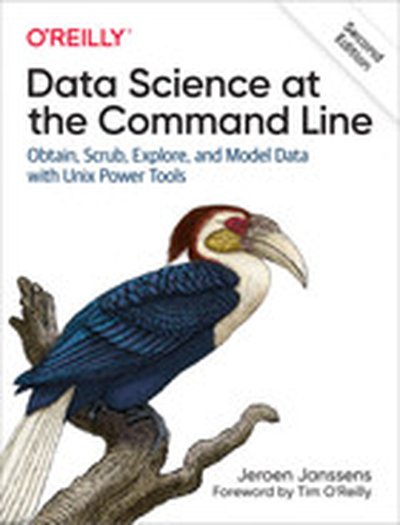
Data Science at the Command Line, 2nd Edition

This thoroughly revised guide demonstrates how the flexibility of the command line can help you become a more efficient and productive data scientist. You'll learn how to combine small yet powerful command-line tools to quickly obtain, scrub, explore, and model your data. To get you started, author Jeroen Janssens provides a Docker image packed with over 100 Unix power tools--useful whether you work with Windows, macOS, or Linux. You'll quickly discover why the command line is an agile, scalable, and extensible technology. Even if you're comfortable processing data with Python or R, you'll learn how to greatly improve your data science workflow by leveraging the command line's power. This book is ideal for data scientists, analysts, engineers, system administrators, and researchers. Obtain data from websites, APIs, databases, and spreadsheets Perform scrub operations on text, CSV, HTML, XML, and JSON files Explore data, compute descriptive statistics, and create visualizations Manage your data science workflow Create your own tools from one-liners and existing Python or R code Parallelize and distribute data-intensive pipelines Model data with dimensionality reduction, regression, and classification algorithms Leverage the command line from Python, Jupyter, R, RStudio, and Apache Spark

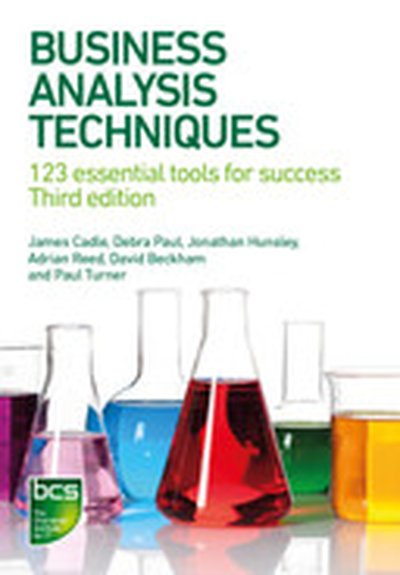
Business Analysis Techniques, 3rd Edition

The development of business analysis as a professional discipline has extended the role of the business analyst who now needs the widest possible array of tools and the skills and knowledge to be able to use each when and where it is required. This new edition provides 123 possible techniques and practical guidance on how and when to apply them.

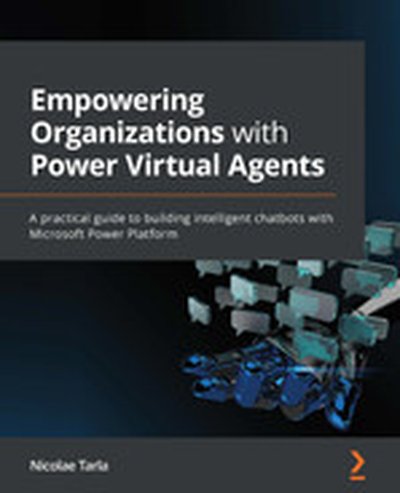
Empowering Organizations with Power Virtual Agents

"Empowering Organizations with Power Virtual Agents" is your go-to guide for learning to create intelligent, automated chatbots using Microsoft Power Platform. Whether it's managing customer queries or automating repetitive tasks, this book equips you with the knowledge to implement tangible solutions to enhance organizational efficiency. What this Book will help me do Learn to use Power Virtual Agents to deploy intelligent chatbots to public websites. Understand how to integrate Power Virtual Agents within the Microsoft Teams environment. Explore various business scenarios and implement practical automation solutions. Master the governance and best practices for utilizing Power Virtual Agents effectively. Discover in-depth integration techniques with the Microsoft Power Platform for a seamless workflow. Author(s) Nicolae Tarla is an experienced professional in the Microsoft Power Platform space, with years of expertise in developing automation and workflow solutions. His passion for simplifying complex systems into approachable tools is evident in his writing. With a deep understanding of Microsoft technologies, Nicolae brings a wealth of practical insights to help readers effectively utilize Power Virtual Agents. Who is it for? This book is ideal for functional consultants, business professionals, and citizen developers looking to automate front-line services using Power Virtual Agents. If you have a basic familiarity with Power Platform and Modern Workplace concepts, you'll be able to implement the hands-on examples to resolve real-world challenges. Readers aiming to create robust chatbot solutions for organizational use will find it highly beneficial.

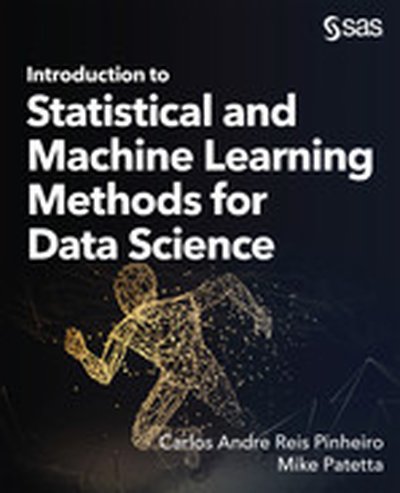
Introduction to Statistical and Machine Learning Methods for Data Science

Boost your understanding of data science techniques to solve real-world problems Data science is an exciting, interdisciplinary field that extracts insights from data to solve business problems. This book introduces common data science techniques and methods and shows you how to apply them in real-world case studies. From data preparation and exploration to model assessment and deployment, this book describes every stage of the analytics life cycle, including a comprehensive overview of unsupervised and supervised machine learning techniques. The book guides you through the necessary steps to pick the best techniques and models and then implement those models to successfully address the original business need. No software is shown in the book, and mathematical details are kept to a minimum. This allows you to develop an understanding of the fundamentals of data science, no matter what background or experience level you have.

Consumption-Based Forecasting and Planning

Discover a new, demand-centric framework for forecasting and demand planning In Consumption-Based Forecasting and Planning, thought leader and forecasting expert Charles W. Chase delivers a practical and novel approach to retail and consumer goods companies demand planning process. The author demonstrates why a demand-centric approach relying on point-of-sale and syndicated scanner data is necessary for success in the new digital economy. The book showcases short- and mid-term demand sensing and focuses on disruptions to the marketplace caused by the digital economy and COVID-19. You’ll also learn: How to improve demand forecasting and planning accuracy, reduce inventory costs, and minimize waste and stock-outs What is driving shifting consumer demand patterns, including factors like price, promotions, in-store merchandising, and unplanned and unexpected events How to apply analytics and machine learning to your forecasting challenges using proven approaches and tactics described throughout the book via several case studies. Perfect for executives, directors, and managers at retailers, consumer products companies, and other manufacturers, Consumption-Based Forecasting and Planning will also earn a place in the libraries of sales, marketing, supply chain, and finance professionals seeking to sharpen their understanding of how to predict future consumer demand.

Knowledge Graphs

Applying knowledge in the right context is the most powerful lever businesses can use to become agile, creative, and resilient. Knowledge graphs add context, meaning, and utility to business data. They drive intelligence into data for unparalleled automation and visibility into processes, products, and customers. Businesses use knowledge graphs to anticipate downstream effects, make decisions based on all relevant information, and quickly respond to dynamic markets. In this report for chief information and data officers, Jesus Barassa, Amy E. Hodler, and Jim Webber from Neo4j show how to use knowledge graphs to gain insights, reveal a flexible and intuitive representation of complex data relationships, and make better predictions based on holistic information. Explore knowledge graph mechanics and common organizing principles Build and exploit a connected representation of your enterprise data environment Use decisioning knowledge graphs to explore the advantages of adding relationships to data analytics and data science Conduct virtual testing using software versions of real-world processes Deploy knowledge graphs for more trusted data, higher accuracies, and better reasoning for contextual AI

Item Response Theory

A complete discussion of fundamental and advanced topics in Item Response Theory written by pioneers in the field In Item Response Theory, accomplished psychometricians Darrell Bock and Robert Gibbons deliver a comprehensive and up-to-date exploration of the theoretical foundations and applications of Item Response Theory (IRT). Covering both unidimensional and multidimensional IRT, as well as related adaptive test administration of previously calibrated item banks, the book addresses the growing need for understanding of this topic as the use of IRT spreads to other fields. The first book on the topic that offers a complete and unified treatment of its subject, Item Response Theory prepares researchers and students to understand and apply IRT and multidimensional IRT to fields like education, mental health and marketing. Accessible to first year-graduate students with a foundation in the behavioral or social sciences, basic statistics, and generalized linear models, the book walks readers through everything from the logic of IRT to cutting edge applications of the technique. Readers will also benefit from the inclusion of: • A thorough introduction to the foundations of Item Response Theory, including its logic and origins, model-based measurement, psychological scaling, and classical test theory • An exploration of selected mathematical and statistical results, including points, point sets, and set operations, probability, sampling, and joint, conditional, and marginal probability • Discussions of unidimensional and multidimensional IRT models, including item parameter estimation with binary and polytomous data • Analysis of dimensionality, differential item functioning, and multiple group IRT Perfect for graduate students and researchers studying and working with psychometrics in psychology, quantitative psychology, educational measurement, marketing, and statistics, Item Response Theory will also benefit researchers interested in patient reported outcomes in health research.

Essentials of Data Science and Analytics

Data science and analytics have emerged as the most desired fields in driving business decisions. Using the techniques and methods of data science, decision makers can uncover hidden patterns in their data, develop algorithms and models that help improve processes and make key business decisions. Data science is a data driven decision making approach that uses several different areas and disciplines with a purpose of extracting insights and knowledge from structured and unstructured data. The algorithms and models of data science along with machine learning and predictive modeling are widely used in solving business problems and predicting future outcomes. This book combines the key concepts of data science and analytics to help you gain a practical understanding of these fields. The four different sections of the book are divided into chapters that explain the core of data science. Given the booming interest in data science, this book is timely and informative.

Advanced Forecasting with Python: With State-of-the-Art-Models Including LSTMs, Facebook’s Prophet, and Amazon’s DeepAR

Cover all the machine learning techniques relevant for forecasting problems, ranging from univariate and multivariate time series to supervised learning, to state-of-the-art deep forecasting models such as LSTMs, recurrent neural networks, Facebook’s open-source Prophet model, and Amazon’s DeepAR model. Rather than focus on a specific set of models, this book presents an exhaustive overview of all the techniques relevant to practitioners of forecasting. It begins by explaining the different categories of models that are relevant for forecasting in a high-level language. Next, it covers univariate and multivariate time series models followed by advanced machine learning and deep learning models. It concludes with reflections on model selection such as benchmark scores vs. understandability of models vs. compute time, and automated retraining and updating of models. Each of the models presented in this book is covered in depth, with an intuitive simple explanation ofthe model, a mathematical transcription of the idea, and Python code that applies the model to an example data set. Reading this book will add a competitive edge to your current forecasting skillset. The book is also adapted to those who have recently started working on forecasting tasks and are looking for an exhaustive book that allows them to start with traditional models and gradually move into more and more advanced models. What You Will Learn Carry out forecasting with Python Mathematically and intuitively understand traditional forecasting models and state-of-the-art machine learning techniques Gain the basics of forecasting and machine learning, including evaluation of models, cross-validation, and back testing Select the right model for the right use case Who This Book Is For The advanced nature of the later chapters makes the book relevant for appliedexperts working in the domain of forecasting, as the models covered have been published only recently. Experts working in the domain will want to update their skills as traditional models are regularly being outperformed by newer models.

MATLAB For Dummies, 2nd Edition

Go from total MATLAB newbie to plotting graphs and solving equations in a flash! MATLAB is one of the most powerful and commonly used tools in the STEM field. But did you know it doesn’t take an advanced degree or a ton of computer experience to learn it? MATLAB For Dummies is the roadmap you’ve been looking for to simplify and explain this feature-filled tool. This handy reference walks you through every step of the way as you learn the MATLAB language and environment inside-and-out. Starting with straightforward basics before moving on to more advanced material like Live Functions and Live Scripts, this easy-to-read guide shows you how to make your way around MATLAB with screenshots and newly updated procedures. It includes: A comprehensive introduction to installing MATLAB, using its interface, and creating and saving your first file Fully updated to include the 2020 and 2021 updates to MATLAB, with all-new screenshots and up-to-date procedures Enhanced debugging procedures and use of the Symbolic Math Toolbox Brand new instruction on working with Live Scripts and Live Functions, designing classes, creating apps, and building projects Intuitive walkthroughs for MATLAB’s advanced features, including importing and exporting data and publishing your work Perfect for STEM students and new professionals ready to master one of the most powerful tools in the fields of engineering, mathematics, and computing, MATLAB For Dummies is the simplest way to go from complete newbie to power user faster than you would have thought possible.

Tableau Desktop Pocket Reference

In a crowded field of data visualization and analytics tools, Tableau Desktop has emerged as the clear leader. This is partly due to its ease of use, but once you dive into Tableau's extensive feature set, you'll understand just how powerful and flexible this software can be for your business or organization. With this handy pocket reference, author Ryan Sleeper (Innovative Tableau) shows you how to translate the vast amounts of data into useful information. Tableau has done an amazing job of making valuable insights accessible to analysts and executives who would otherwise need to rely on IT. This book quickly guides you through Tableau Desktop's learning curve. You'll learn: How to shape data for use with Tableau Desktop How to create the most effective chart types Core concepts including discrete versus continuous Must-know technical features including filters, parameters, and sets Key syntax for creating the most useful analyses How to bring it all together with dashboardsAnd more!

Quantile Regression

QUANTILE REGRESSION A thorough presentation of Quantile Regression designed to help readers obtain richer information from data analyses The conditional least-square or mean-regression (MR) analysis is the quantitative research method used to model and analyze the relationships between a dependent variable and one or more independent variables, where each equation estimation of a regression can give only a single regression function or fitted values variable. As an advanced mean regression analysis, each estimation equation of the mean-regression can be used directly to estimate the conditional quantile regression (QR), which can quickly present the statistical results of a set nine QR(τ)s for τ(tau)s from 0.1 up to 0.9 to predict detail distribution of the response or criterion variable. QR is an important analytical tool in many disciplines such as statistics, econometrics, ecology, healthcare, and engineering. Quantile Regression: Applications on Experimental and Cross Section Data Using EViews provides examples of statistical results of various QR analyses based on experimental and cross section data of a variety of regression models. The author covers the applications of one-way, two-way, and n-way ANOVA quantile regressions, QRs with multi numerical predictors, heterogeneous QRs, and latent variables QRs, amongst others. Throughout the text, readers learn how to develop the best possible quantile regressions and how to conduct more advanced analysis using methods such as the quantile process, the Wald test, the redundant variables test, residual analysis, the stability test, and the omitted variables test. This rigorous volume: Describes how QR can provide a more detailed picture of the relationships between independent variables and the quantiles of the criterion variable, by using the least-square regression Presents the applications of the test for any quantile of any numerical response or ­criterion variable Explores relationship of QR with heterogeneity: how an independent variable affects a dependent variable Offers expert guidance on forecasting and how to draw the best conclusions from the results obtained Provides a step-by-step estimation method and guide to enable readers to conduct QR analysis using their own data sets Includes a detailed comparison of conditional QR and conditional mean regression Quantile Regression: Applications on Experimental and Cross Section Data Using EViews is a highly useful resource for students and lecturers in statistics, data analysis, econometrics, engineering, ecology, and healthcare, particularly those specializing in regression and quantitative data analysis.