talk-data.com talk-data.com

Holden Karau

Speaker

Holden Karau

9

talks

Holden is a transgender Canadian open source developer with a focus on Apache Spark, and related "big data" tools. By day (and night, go go startup life) she works on brining large language models and other AI tools to help healthcare users deal with insurance through https://www.fighthealthinsurance.com & https://www.fightpaperwork.com.

She is the co-author of Learning Spark, High Performance Spark, and a few others. She is a committer and PMC on Apache Spark. She was tricked into the world of big data while trying to improve search and recommendation systems and has long since forgotten her original goal.

Bio from: Small Data SF 2025

Frequent Collaborators

Filter by Event / Source

Talks & appearances

9 activities · Newest first

Search activities →
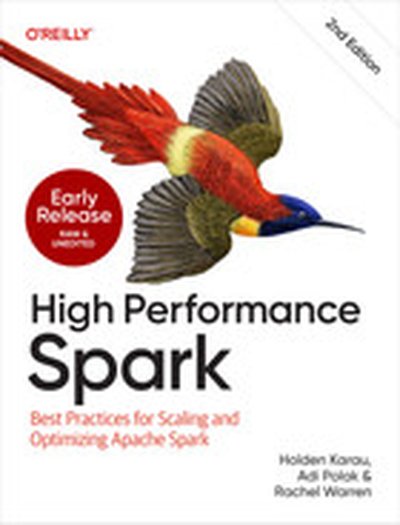
High Performance Spark, 2nd Edition

Apache Spark is amazing when everything clicks. But if you haven't seen the performance improvements you expected or still don't feel confident enough to use Spark in production, this practical book is for you. Authors Holden Karau, Rachel Warren, and Anya Bida walk you through the secrets of the Spark code base, and demonstrate performance optimizations that will help your data pipelines run faster, scale to larger datasets, and avoid costly antipatterns. Ideal for data engineers, software engineers, data scientists, and system administrators, the second edition of High Performance Spark presents new use cases, code examples, and best practices for Spark 3.x and beyond. This book gives you a fresh perspective on this continually evolving framework and shows you how to work around bumps on your Spark and PySpark journey. With this book, you'll learn how to: Accelerate your ML workflows with integrations including PyTorch Handle key skew and take advantage of Spark's new dynamic partitioning Make your code reliable with scalable testing and validation techniques Make Spark high performance Deploy Spark on Kubernetes and similar environments Take advantage of GPU acceleration with RAPIDS and resource profiles Get your Spark jobs to run faster Use Spark to productionize exploratory data science projects Handle even larger datasets with Spark Gain faster insights by reducing pipeline running times
In this talk the somewhat biased Apache Spark PMC Holden will explore the times when using Spark is more likely to lead to disappointment and pages than success and promotions. We'll, of course, look at places where Spark can excel but also explore heuristics like if it fits in Excel double check if you need Spark. By using Spark only when it's truly beneficial you can demonstrate that elusive "thought leadership" that always seems to be required for the next level of promotion. We'll explore how some of Spark's largest disadvantages are changing, but also which ones are likely to stick around -- allowing you to seem like you have a magic tech eightball next time someone asks you to design your analytics strategy. Come for a place to sit after lunch and stay for the OOM therapy.

Building AI Models In Health Care Using Semi-Synthetic Data

Regulated or restricted fields like Health Care make collecting training data complicated. We all want to do the right thing, but how? This talk will look at how Fight Health Insurance used de-identified public and proprietary information to create a semi-synthetic training set for use in fine-tuning machine learning models to power Fight Paperwork. We'll explore how to incorporate the latest "reasoning" techniques in fine tuning as well as how to make models that you can afford to serve — think single GPU inference instead of a cluster of A100s. In addition to the talk we have the code used in a public GitHub repo — although it is a little rough, so you might want to use it more as a source of inspiration rather than directly forking it.

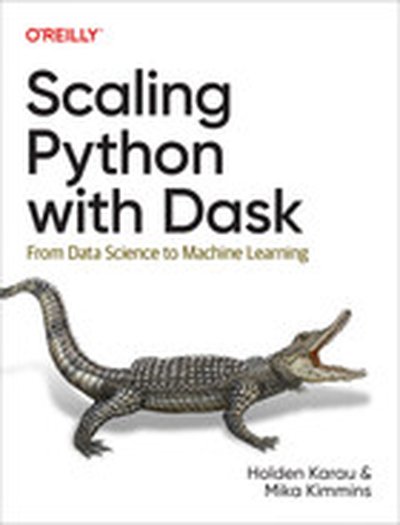
Scaling Python with Dask

Modern systems contain multi-core CPUs and GPUs that have the potential for parallel computing. But many scientific Python tools were not designed to leverage this parallelism. With this short but thorough resource, data scientists and Python programmers will learn how the Dask open source library for parallel computing provides APIs that make it easy to parallelize PyData libraries including NumPy, pandas, and scikit-learn. Authors Holden Karau and Mika Kimmins show you how to use Dask computations in local systems and then scale to the cloud for heavier workloads. This practical book explains why Dask is popular among industry experts and academics and is used by organizations that include Walmart, Capital One, Harvard Medical School, and NASA. With this book, you'll learn: What Dask is, where you can use it, and how it compares with other tools How to use Dask for batch data parallel processing Key distributed system concepts for working with Dask Methods for using Dask with higher-level APIs and building blocks How to work with integrated libraries such as scikit-learn, pandas, and PyTorch How to use Dask with GPUs

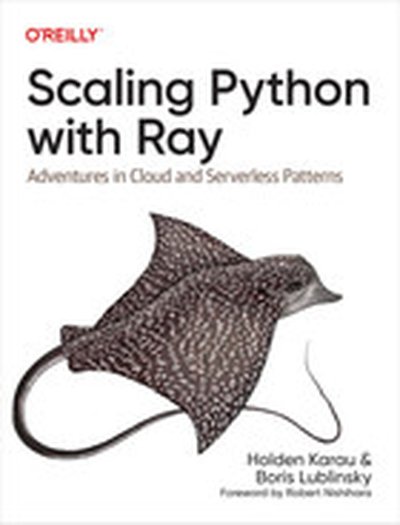
Scaling Python with Ray

Serverless computing enables developers to concentrate solely on their applications rather than worry about where they've been deployed. With the Ray general-purpose serverless implementation in Python, programmers and data scientists can hide servers, implement stateful applications, support direct communication between tasks, and access hardware accelerators. In this book, experienced software architecture practitioners Holden Karau and Boris Lublinsky show you how to scale existing Python applications and pipelines, allowing you to stay in the Python ecosystem while reducing single points of failure and manual scheduling. Scaling Python with Ray is ideal for software architects and developers eager to explore successful case studies and learn more about decision and measurement effectiveness. If your data processing or server application has grown beyond what a single computer can handle, this book is for you. You'll explore distributed processing (the pure Python implementation of serverless) and learn how to: Implement stateful applications with Ray actors Build workflow management in Ray Use Ray as a unified system for batch and stream processing Apply advanced data processing with Ray Build microservices with Ray Implement reliable Ray applications

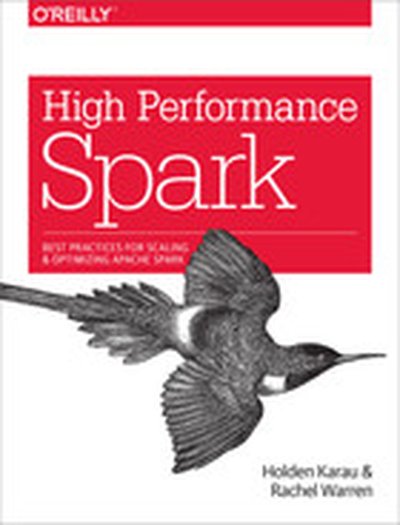
High Performance Spark

Apache Spark is amazing when everything clicks. But if you haven’t seen the performance improvements you expected, or still don’t feel confident enough to use Spark in production, this practical book is for you. Authors Holden Karau and Rachel Warren demonstrate performance optimizations to help your Spark queries run faster and handle larger data sizes, while using fewer resources. Ideal for software engineers, data engineers, developers, and system administrators working with large-scale data applications, this book describes techniques that can reduce data infrastructure costs and developer hours. Not only will you gain a more comprehensive understanding of Spark, you’ll also learn how to make it sing. With this book, you’ll explore: How Spark SQL’s new interfaces improve performance over SQL’s RDD data structure The choice between data joins in Core Spark and Spark SQL Techniques for getting the most out of standard RDD transformations How to work around performance issues in Spark’s key/value pair paradigm Writing high-performance Spark code without Scala or the JVM How to test for functionality and performance when applying suggested improvements Using Spark MLlib and Spark ML machine learning libraries Spark’s Streaming components and external community packages

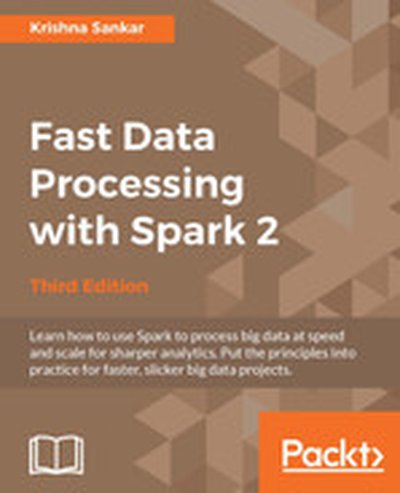
Fast Data Processing with Spark 2 - Third Edition

Fast Data Processing with Spark 2 takes you through the essentials of leveraging Spark for big data analysis. You will learn how to install and set up Spark, handle data using its APIs, and apply advanced functionality like machine learning and graph processing. By the end of the book, you will be well-equipped to use Spark in real-world data processing tasks. What this Book will help me do Install and configure Apache Spark for optimal performance. Interact with distributed datasets using the resilient distributed dataset (RDD) API. Leverage the flexibility of DataFrame API for efficient big data analytics. Apply machine learning models using Spark MLlib to solve complex problems. Perform graph analysis using GraphX to uncover structural insights in data. Author(s) Krishna Sankar is an experienced data scientist and thought leader in big data technologies. With a deep understanding of machine learning, distributed systems, and Apache Spark, Krishna has guided numerous projects in data engineering and big data processing. Matei Zaharia, the co-author, is also widely recognized in the field of distributed systems and cloud computing, contributing to Apache Spark development. Who is it for? This book is catered to software developers and data engineers with a foundational understanding of Scala or Java programming. Beginner to medium-level understanding of big data processing concepts is recommended for readers. If you are aspiring to solve big data problems using scalable distributed computing frameworks, this book is perfect for you. By the end, you will be confident in building Spark-powered applications and analyzing data efficiently.

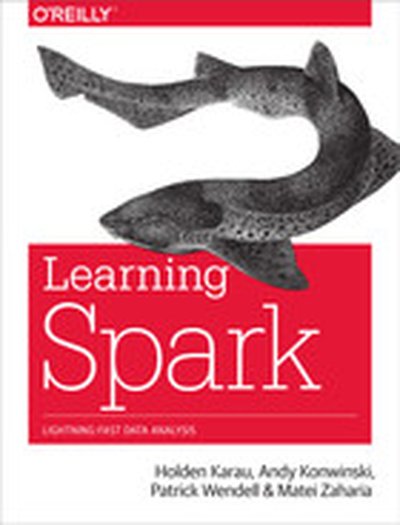
Learning Spark

Data in all domains is getting bigger. How can you work with it efficiently? Recently updated for Spark 1.3, this book introduces Apache Spark, the open source cluster computing system that makes data analytics fast to write and fast to run. With Spark, you can tackle big datasets quickly through simple APIs in Python, Java, and Scala. This edition includes new information on Spark SQL, Spark Streaming, setup, and Maven coordinates.