talk-data.com talk-data.com

Topic

artificial-intelligence-ai

46

tagged

Activity Trend

1 peak/qtr
2020-Q1 2026-Q1

Activities

Showing filtered results

Filtering by: O'Reilly AI & ML Books ×
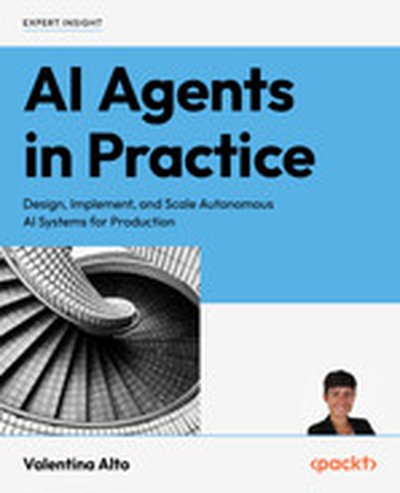
AI Agents in Practice

Discover how to build autonomous AI agents tailored for real-world tasks with 'AI Agents in Practice.' This book guides you through creating and deploying AI systems that go beyond chatbots to solve complex problems, using leading frameworks and practical design patterns. What this Book will help me do Understand and implement core components of AI agents, such as memory, tool integration, and context management. Develop production-ready AI agents for diverse applications using frameworks like LangChain. Design and implement multi-agent systems to enable advanced collaboration and problem-solving. Apply ethical and responsible AI techniques, including monitoring and human oversight, in agent development. Optimize performance and scalability of AI agents for production use cases. Author(s) Valentina Alto is an accomplished AI engineer with years of experience in AI systems design and implementation. Valentina specializes in developing practical solutions utilizing large language models and contemporary frameworks for real-world applications. Through her writing, she conveys complex ideas in an accessible manner, and her goal is to empower AI developers and enthusiasts with the skills to create meaningful solutions. Who is it for? This book is perfect for AI engineers, data scientists, and software developers ready to go beyond foundational knowledge of large language models to implement advanced AI agents. It caters to professionals looking to build scalable solutions and those interested in ethical considerations of AI usage. Readers with a background in machine learning and Python will benefit most from the technical insights provided.
Handbook of Intelligent Automation Systems Using Computer Vision and Artificial Intelligence

The book is essential for anyone seeking to understand and leverage the transformative power of intelligent automation technologies, providing crucial insights into current trends, challenges, and effective solutions that can significantly enhance operational efficiency and decision-making within organizations. Intelligent automation systems, also called cognitive automation, use automation technologies such as artificial intelligence, business process management, and robotic process automation, to streamline and scale decision-making across organizations. Intelligent automation simplifies processes, frees up resources, improves operational efficiencies, and has a variety of applications. Intelligent automation systems aim to reduce costs by augmenting the workforce and improving productivity and accuracy through consistent processes and approaches, which enhance quality, improve customer experience, and address compliance and regulations with confidence. Handbook of Intelligent Automation Systems Using Computer Vision and Artificial Intelligence explores the significant role, current trends, challenges, and potential solutions to existing challenges in the field of intelligent automation systems, making it an invaluable guide for researchers, industry professionals, and students looking to apply these innovative technologies. Readers will find the volume: Offers comprehensive coverage on intelligent automation systems using computer vision and AI, covering everything from foundational concepts to real-world applications and ethical considerations; Provides actionable knowledge with case studies and best practices for intelligent automation systems, computer vision, and AI; Explores the integration of various techniques, including facial recognition, natural language processing, neuroscience and neuromarketing. Audience The book is designed for AI and data scientists, software developers and engineers in industry and academia, as well as business leaders and entrepreneurs who are interested in the applications of intelligent automation systems.

Generative AI for Software Development

In just a few short years, AI has transformed software development, and snazzy new tools continue to arrive, with no let-up in sight. How, as a software engineer, product builder, or CTO, do you keep up? This practical book is the result of Sergio Pereira's mission to test every AI tool he could find and provide practitioners with much-needed guidance through the commotion. Generative AI for Software Development focuses on AI tool comparisons, practical workflows, and real-world case studies, with each chapter encompassing critical evaluations of the tools, their use cases, and their limitations. While product reviews are always relevant, the book goes further and delivers to readers a coherent framework for evaluating the tools and workflows of the future, which will continue to complicate the work of software development. Learn how code generation and autocompletion assistants are reshaping the developer experience Discover a consistent method for rating code-generation tools based on real-world coding challenges Explore the GenAI tools transforming UI/UX design and frontend development Learn how AI is streamlining code reviews and bug detection Review tools that are simplifying software testing and QA Explore AI for documentation and technical writing Understand how modern LLMs have redefined what chatbots can do

Building AI Agents with LLMs, RAG, and Knowledge Graphs

This book provides a comprehensive and practical guide to creating cutting-edge AI agents combining advanced technologies such as LLMs, retrieval-augmented generation (RAG), and knowledge graphs. By reading this book, you'll gain a deep understanding of how to design and build AI agents capable of real-world problem solving, reasoning, and action execution. What this Book will help me do Understand the foundations of LLMs, RAG, and knowledge graphs, and how they can be combined to build effective AI agents. Learn techniques to enhance factual accuracy and grounding through RAG pipelines and knowledge graphs. Develop AI agents that integrate planning, reasoning, and live tool usage to solve complex problems. Master the use of Python and popular AI libraries to build scalable AI agent applications. Acquire strategies for deploying and monitoring AI agents in production for reliable operation. Author(s) This book is written by Salvatore Raieli and Gabriele Iuculano, accomplished experts in artificial intelligence and machine learning. Both authors bring extensive professional experience from their work in AI-related fields, particularly in applying innovative AI methods to solve challenging problems. Through their clear and approachable writing style, they aim to make advanced AI concepts accessible to readers at various levels. Who is it for? This book is ideally suited for data scientists, AI practitioners, and technology enthusiasts seeking to deepen their knowledge in building intelligent AI agents. It is perfect for those who already have a foundational understanding of Python and general artificial intelligence concepts. Experienced professionals looking to explore state-of-the-art AI solutions, as well as beginners eager to advance their technical skills, will find this book invaluable.

Generative AI

This book is essential for anyone eager to understand the groundbreaking advancements in generative AI and its transformative effects across industries, making it a valuable resource for both professional growth and creative inspiration. Generative AI: Disruptive Technologies for Innovative Applications delves into the exciting and rapidly evolving world of generative artificial intelligence and its profound impact on various industries and domains. This comprehensive volume brings together leading experts and researchers to explore the cutting-edge advancements, applications, and implications of generative AI technologies. This volume provides an in-depth exploration of generative AI, which encompasses a range of techniques such as generative adversarial networks, recurrent neural networks, and transformer models like GPT-3. It examines how these technologies enable machines to generate content, including text, images, and audio, that closely mimics human creativity and intelligence. Readers will gain valuable insights into the fundamentals of generative AI, innovative applications, ethical and social considerations, interdisciplinary insights, and future directions of this invaluable emerging technology. Generative AI: Disruptive Technologies for Innovative Applications is an indispensable resource for researchers, practitioners, and anyone interested in the transformative potential of generative AI in revolutionizing industries, unleashing creativity, and pushing the boundaries of what’s possible in artificial intelligence. Audience AI researchers, industry professionals, data scientists, machine learning experts, students, policymakers, and entrepreneurs interested in the innovative field of generative AI.

Building Agentic AI Systems

In "Building Agentic AI Systems", you will explore how to design and create intelligent and autonomous AI agents that can reason, plan, and adapt. This book dives deep into the principles and practices necessary to unlock the potential of generative AI and agentic systems. From foundation to implementation, you'll gain valuable insights into cutting-edge AI architectures and functionalities. What this Book will help me do Understand the foundational concepts of generative AI and the principles of agentic systems. Develop skills to design AI agents capable of self-reflection, tool utilization, and adaptable planning. Explore strategies for ensuring ethical transparency and safety in autonomous AI systems. Learn practical techniques to build effective multi-agent AI collaborations with real-world applications. Gain insights into designing AI systems with scalability, adaptability, and minimal human intervention. Author(s) Anjanava Biswas and Wrick Talukdar are experts in AI development with years of experience working on generative AI frameworks and autonomous systems. They specialize in creating innovative AI solutions and contributing to AI best practices in the industry. Their dedication to teaching and clarity in writing make technical concepts accessible to developers at all levels. Who is it for? This book is ideal for AI developers, machine learning engineers, and software architects seeking to advance their understanding of designing and implementing intelligent autonomous AI systems. Readers should have a foundational understanding of machine learning principles and basic programming experience, particularly in Python, to follow the book effectively. Understanding of generative AI or large language models is helpful but not required. If you're aiming to build or refine your skills in agent-based AI systems and how they adapt, this book is for you.

Building AI-Powered Products

Drawing from her experience at Google and Meta, Dr. Marily Nika delivers the definitive guide for product managers building AI and GenAI powered products. Packed with smart strategies, actionable tools, and real-world examples, this book breaks down the complex world of AI agents and generative AI products into a playbook for driving innovation to help product leaders bridge the gap between niche AI and GenAI technologies and user pain points. Whether you're already leading product teams or are an aspiring product manager, and regardless of your prior knowledge with AI, this guide will empower you to confidently navigate every stage of the AI product lifecycle. Confidently manage AI product development with tools, frameworks, strategic insights, and real-world examples from Google, Meta, OpenAI, and more Lead product orgs to solve real problems via agentic AI and GenAI capabilities Gain AI Awareness and technical fluency to work with AI models, LLMs, and the algorithms that power them; get cross-functional alignment; make strategic trade-offs; and set OKRs

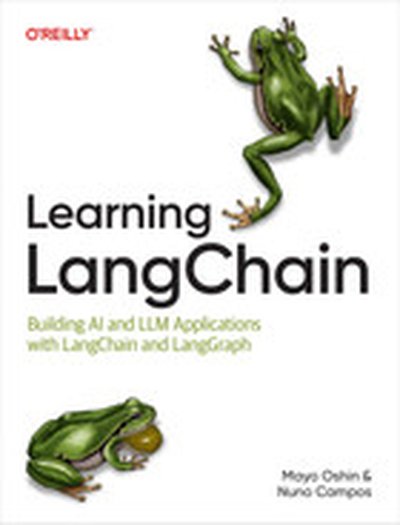
Learning LangChain

If you're looking to build production-ready AI applications that can reason and retrieve external data for context-awareness, you'll need to master--;a popular development framework and platform for building, running, and managing agentic applications. LangChain is used by several leading companies, including Zapier, Replit, Databricks, and many more. This guide is an indispensable resource for developers who understand Python or JavaScript but are beginners eager to harness the power of AI. Authors Mayo Oshin and Nuno Campos demystify the use of LangChain through practical insights and in-depth tutorials. Starting with basic concepts, this book shows you step-by-step how to build a production-ready AI agent that uses your data. Harness the power of retrieval-augmented generation (RAG) to enhance the accuracy of LLMs using external up-to-date data Develop and deploy AI applications that interact intelligently and contextually with users Make use of the powerful agent architecture with LangGraph Integrate and manage third-party APIs and tools to extend the functionality of your AI applications Monitor, test, and evaluate your AI applications to improve performance Understand the foundations of LLM app development and how they can be used with LangChain

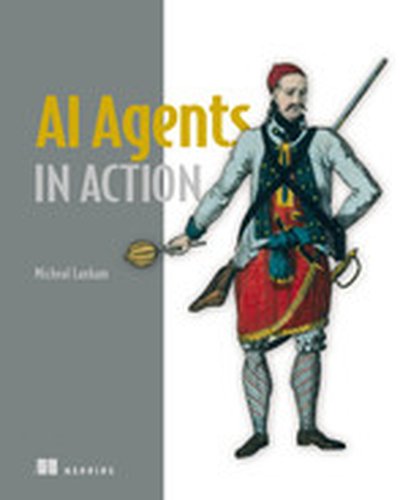
AI Agents in Action

Create LLM-powered autonomous agents and intelligent assistants tailored to your business and personal needs. From script-free customer service chatbots to fully independent agents operating seamlessly in the background, AI-powered assistants represent a breakthrough in machine intelligence. In AI Agents in Action, you'll master a proven framework for developing practical agents that handle real-world business and personal tasks. Author Micheal Lanham combines cutting-edge academic research with hands-on experience to help you: Understand and implement AI agent behavior patterns Design and deploy production-ready intelligent agents Leverage the OpenAI Assistants API and complementary tools Implement robust knowledge management and memory systems Create self-improving agents with feedback loops Orchestrate collaborative multi-agent systems Enhance agents with speech and vision capabilities You won't find toy examples or fragile assistants that require constant supervision. AI Agents in Action teaches you to build trustworthy AI capable of handling high-stakes negotiations. You'll master prompt engineering to create agents with distinct personas and profiles, and develop multi-agent collaborations that thrive in unpredictable environments. Beyond just learning a new technology, you'll discover a transformative approach to problem-solving. About the Technology Most production AI systems require many orchestrated interactions between the user, AI models, and a wide variety of data sources. AI agents capture and organize these interactions into autonomous components that can process information, make decisions, and learn from interactions behind the scenes. This book will show you how to create AI agents and connect them together into powerful multi-agent systems. About the Book In AI Agents in Action, you’ll learn how to build production-ready assistants, multi-agent systems, and behavioral agents. You’ll master the essential parts of an agent, including retrieval-augmented knowledge and memory, while you create multi-agent applications that can use software tools, plan tasks autonomously, and learn from experience. As you explore the many interesting examples, you’ll work with state-of-the-art tools like OpenAI Assistants API, GPT Nexus, LangChain, Prompt Flow, AutoGen, and CrewAI. What's Inside Knowledge management and memory systems Feedback loops for continuous agent learning Collaborative multi-agent systems Speech and computer vision About the Reader For intermediate Python programmers. About the Author Micheal Lanham is a software and technology innovator with over 20 years of industry experience. He has authored books on deep learning, including Manning’s Evolutionary Deep Learning. Quotes This is about to become the hottest area of applied AI. Get a head start with this book! - Richard Davies, author of Prompt Engineering in Practice Couldn’t put this book down! It’s so comprehensive and clear that I felt like I was learning from a master teacher. - Radhika Kanubaddhi, Amazon An enlightening journey! This book transformed my questions into answers. - Jose San Leandro, ACM-SL Expertly guides through creating agent profiles, using tools, memory, planning, and multi-agent systems. Couldn’t be more timely! - Grigory Sapunov author of JAX in Action

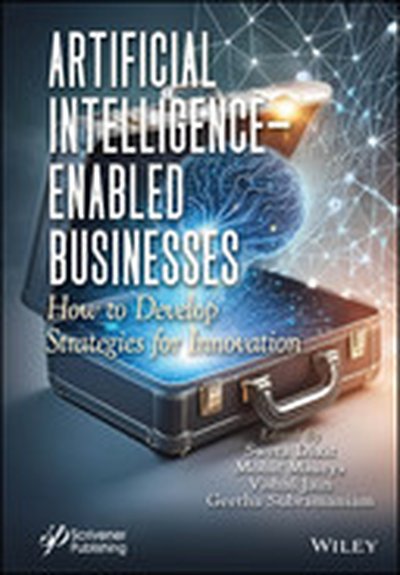
Artificial Intelligence-Enabled Businesses

This book has a multidimensional perspective on AI solutions for business innovation and real-life case studies to achieve competitive advantage and drive growth in the evolving digital landscape. Artificial Intelligence-Enabled Businesses demonstrates how AI is a catalyst for change in business functional areas. Though still in the experimental phase, AI is instrumental in redefining the workforce, predicting consumer behavior, solving real-life marketing dynamics and modifications, recommending products and content, foreseeing demand, analyzing costs, strategizing, managing big data, enabling collaboration of cross-entities, and sparking new ethical, social and regulatory implications for business. Thus, AI can effectively guide the future of financial services, trading, mobile banking, last-mile delivery, logistics, and supply chain with a solution-oriented focus on discrete business problems. Furthermore, it is expected to educate leaders to act in an ever more accurate, complex, and sophisticated business environment with the combination of human and machine intelligence. The book offers effective, efficient, and strategically competent suggestions for handling new challenges and responsibilities and is aimed at leaders who wish to be more innovative. It covers the early stages of AI adoption by organizations across their functional areas and provides insightful guidance for practitioners in the suitable and timely adoption of AI. This book will greatly help to scale up AI by leveraging interdisciplinary collaboration with cross-functional, skill-diverse teams and result in a competitive advantage. Audience This book is for marketing professionals, organizational leaders, and researchers to leverage AI and new technologies across various business functions. It also fits the needs of academics, students, and trainers, providing insights, case studies, and practical strategies for driving growth in the rapidly evolving digital landscape.

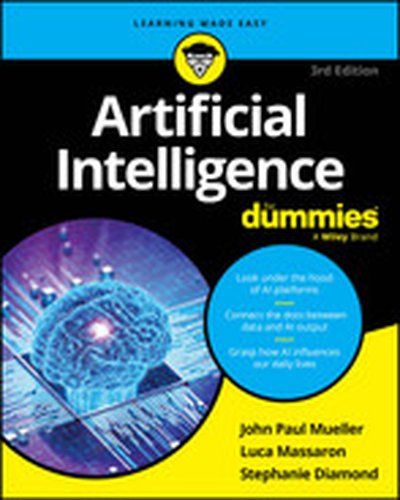
Artificial Intelligence For Dummies, 3rd Edition

Dive into the intelligence that powers artificial intelligence Artificial intelligence is swiftly moving from a sci-fi future to a modern reality. This edition of Artificial Intelligence For Dummies keeps pace with the lighting-fast expansion of AI tools that are overhauling every corner of reality. This book demystifies how artificial intelligence systems operate, giving you a look at the inner workings of AI and explaining the important role of data in creating intelligence. You'll get a primer on using AI in everyday life, and you'll also get a glimpse into possible AI-driven futures. What's next for humanity in the age of AI? How will your job and your life change as AI continue to evolve? How can you take advantage of AI today to make your live easier? This jargon-free Dummies guide answers all your most pressing questions about the world of artificial intelligence. Learn the basics of AI hardware and software, and how intelligence is created from code Get up to date with the latest AI trends and disruptions across industries Wrap your mind around what the AI revolution means for humanity, and for you Discover tips on using generative AI ethically and effectively Artificial Intelligence For Dummies is the ideal starting point for anyone seeking a deeper technological understanding of how artificial intelligence works and what promise it holds for the future.

Artificial Intelligence for Cybersecurity

Explore how artificial intelligence can transform your cybersecurity strategies with "Artificial Intelligence for Cybersecurity". This book provides practical insights into applying AI methods to a variety of cybersecurity problems, from malware analysis to threat detection. By understanding these concepts, you'll gain the knowledge needed to protect your organization's data and networks effectively. What this Book will help me do Understand how AI methods can address cybersecurity concerns effectively. Develop practical skills using AI tools to combat cyber threats. Design AI-powered solutions for malware identification and anomaly detection. Navigate real-world applications of AI in cybersecurity scenarios. Recognize and mitigate common pitfalls while implementing AI methods in cybersecurity. Author(s) The authors, Bojan Kolosnjaji, Huang Xiao, Peng Xu, and Apostolis Zarras, are experts in machine learning and cybersecurity. With extensive backgrounds in both academia and industry, they bring a wealth of knowledge to the book. Their practical and educational approach makes complex AI and cybersecurity concepts accessible, empowering readers to apply these methods to real-world problems. Who is it for? This book is ideal for professionals in cybersecurity who are keen to integrate AI techniques into their frameworks and workflows. It's also suitable for machine learning enthusiasts who want to delve into the realm of cybersecurity. If you possess a basic understanding of Python programming and machine learning fundamentals, this book will guide you through to advanced concepts. Whether you are a student or an industry veteran, this book offers valuable insights for enhancing your cybersecurity strategies with AI.

Integrating AI into Business Processes

Are you grappling with increasing productivity and enhancing creativity within your business processes? As businesses evolve in this digital age, the demand for swift, efficient, and innovative solutions is more pressing than ever. Traditional methods often fall short in keeping pace with the rapid changes and challenges that professionals face daily. Enter this report by Thomas Nield. This curated guide outlines the transformative power of generative AI in various business functions and serves as a much-needed solution to overcoming modern business hurdles. Discover how AI can be your ally in not just meeting but exceeding your productivity and creativity goals. You'll learn how to: Quickly find and use relevant images for presentations, blogs, and articles Save valuable time and refine your communications with AI-assisted email rewriting Easily distill large volumes of information into essential summaries Leverage AI for efficient data-gathering from the web, perfectly suited for analysis Utilize AI-generated text and visuals to craft compelling basic marketing materials

Artificial Intelligence

Artificial Intelligence (AI) revolves around creating and utilizing intelligent machines through science and engineering. This book delves into the theory and practical applications of computer science methods that incorporate AI across many domains. It covers techniques such as Machine Learning (ML), Convolutional Neural Networks (CNN), Deep Learning (DL), and Large Language Models (LLM) to tackle complex issues and overcome various challenges.

Artificial Intelligence: Beyond Classical AI

Pearson’s Artificial Intelligence encompasses a comprehensive text on the fundamental principles and concepts of Artificial Intelligence—a new-age technology that fuels the much-coveted ‘Industry 4.0’. Presented in lucid English, this book covers all the basic concepts, enriched with latest examples. It also discusses all the major components of AI, such as Neural Networks, Natural Language Processing, Reinforcement Learning, Machine Learning, Deep Learning and Computer Vision. The book is a deliberation of classical as well modern AI techniques and related technologies that provides readers with an overall knowledge and understanding of AI in present-day context.

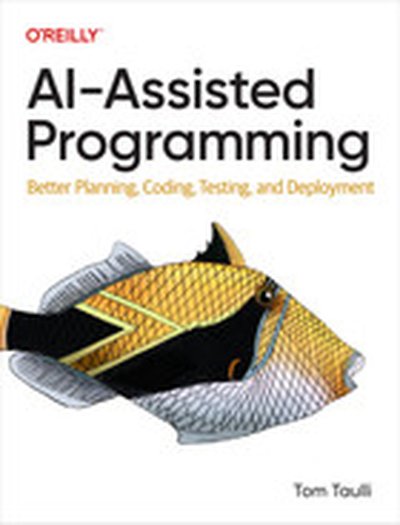
AI-Assisted Programming

Get practical advice on how to leverage AI development tools for all stages of code creation, including requirements, planning, design, coding, debugging, testing, and documentation. With this book, beginners and experienced developers alike will learn how to use a wide range of tools, from general-purpose LLMs (ChatGPT, Gemini, and Claude) to code-specific systems (GitHub Copilot, Tabnine, Cursor, and Amazon CodeWhisperer). You'll also learn about more specialized generative AI tools for tasks such as text-to-image creation. Author Tom Taulli provides a methodology for modular programming that aligns effectively with the way prompts create AI-generated code. This guide also describes the best ways of using general purpose LLMs to learn a programming language, explain code, or convert code from one language to another. This book examines: The core capabilities of AI-based development tools Pros, cons, and use cases of popular systems such as GitHub Copilot and Amazon CodeWhisperer Ways to use ChatGPT, Gemini, Claude, and other generic LLMs for coding Using AI development tools for the software development lifecycle, including requirements, planning, coding, debugging, and testing Prompt engineering for development Using AI-assisted programming for tedious tasks like creating regular expressions, starter code, object-oriented programming classes, and GitHub Actions How to use AI-based low-code and no-code tools, such as to create professional UIs

Applying Artificial Intelligence in Cybersecurity Analytics and Cyber Threat Detection

APPLYING ARTIFICIAL INTELLIGENCE IN CYBERSECURITY ANALYTICS AND CYBER THREAT DETECTION Comprehensive resource providing strategic defense mechanisms for malware, handling cybercrime, and identifying loopholes using artificial intelligence (AI) and machine learning (ML) Applying Artificial Intelligence in Cybersecurity Analytics and Cyber Threat Detection is a comprehensive look at state-of-the-art theory and practical guidelines pertaining to the subject, showcasing recent innovations, emerging trends, and concerns as well as applied challenges encountered, and solutions adopted in the fields of cybersecurity using analytics and machine learning. The text clearly explains theoretical aspects, framework, system architecture, analysis and design, implementation, validation, and tools and techniques of data science and machine learning to detect and prevent cyber threats. Using AI and ML approaches, the book offers strategic defense mechanisms for addressing malware, cybercrime, and system vulnerabilities. It also provides tools and techniques that can be applied by professional analysts to safely analyze, debug, and disassemble any malicious software they encounter. With contributions from qualified authors with significant experience in the field, Applying Artificial Intelligence in Cybersecurity Analytics and Cyber Threat Detection explores topics such as: Cybersecurity tools originating from computational statistics literature and pure mathematics, such as nonparametric probability density estimation, graph-based manifold learning, and topological data analysis Applications of AI to penetration testing, malware, data privacy, intrusion detection system (IDS), and social engineering How AI automation addresses various security challenges in daily workflows and how to perform automated analyses to proactively mitigate threats Offensive technologies grouped together and analyzed at a higher level from both an offensive and defensive standpoint Providing detailed coverage of a rapidly expanding field, Applying Artificial Intelligence in Cybersecurity Analytics and Cyber Threat Detection is an essential resource for a wide variety of researchers, scientists, and professionals involved in fields that intersect with cybersecurity, artificial intelligence, and machine learning.

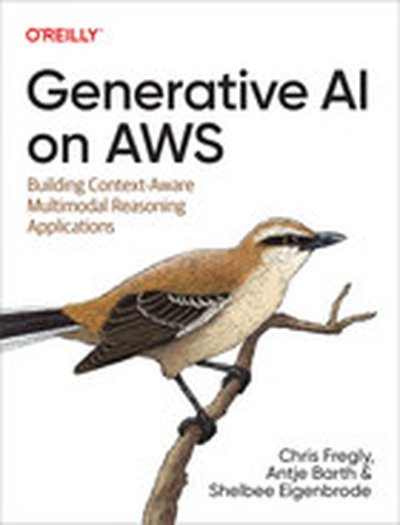
Generative AI on AWS

Companies today are moving rapidly to integrate generative AI into their products and services. But there's a great deal of hype (and misunderstanding) about the impact and promise of this technology. With this book, Chris Fregly, Antje Barth, and Shelbee Eigenbrode from AWS help CTOs, ML practitioners, application developers, business analysts, data engineers, and data scientists find practical ways to use this exciting new technology. You'll learn the generative AI project life cycle including use case definition, model selection, model fine-tuning, retrieval-augmented generation, reinforcement learning from human feedback, and model quantization, optimization, and deployment. And you'll explore different types of models including large language models (LLMs) and multimodal models such as Stable Diffusion for generating images and Flamingo/IDEFICS for answering questions about images. Apply generative AI to your business use cases Determine which generative AI models are best suited to your task Perform prompt engineering and in-context learning Fine-tune generative AI models on your datasets with low-rank adaptation (LoRA) Align generative AI models to human values with reinforcement learning from human feedback (RLHF) Augment your model with retrieval-augmented generation (RAG) Explore libraries such as LangChain and ReAct to develop agents and actions Build generative AI applications with Amazon Bedrock

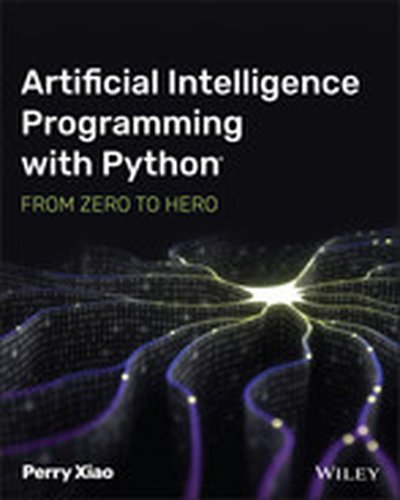
Artificial Intelligence Programming with Python

A hands-on roadmap to using Python for artificial intelligence programming In Practical Artificial Intelligence Programming with Python: From Zero to Hero, veteran educator and photophysicist Dr. Perry Xiao delivers a thorough introduction to one of the most exciting areas of computer science in modern history. The book demystifies artificial intelligence and teaches readers its fundamentals from scratch in simple and plain language and with illustrative code examples. Divided into three parts, the author explains artificial intelligence generally, machine learning, and deep learning. It tackles a wide variety of useful topics, from classification and regression in machine learning to generative adversarial networks. He also includes: Fulsome introductions to MATLAB, Python, AI, machine learning, and deep learning Expansive discussions on supervised and unsupervised machine learning, as well as semi-supervised learning Practical AI and Python “cheat sheet” quick references This hands-on AI programming guide is perfect for anyone with a basic knowledge of programming—including familiarity with variables, arrays, loops, if-else statements, and file input and output—who seeks to understand foundational concepts in AI and AI development.