talk-data.com talk-data.com

Topic

data-science-tools

326

tagged

Activity Trend

1 peak/qtr
2020-Q1 2026-Q1

Activities

Showing filtered results

Filtering by: O'Reilly Data Science Books ×
Advanced Electric Drives: Analysis, Control, and Modeling Using MATLAB/Simulink

With nearly two-thirds of global electricity consumed by electric motors, it should come as no surprise that their proper control represents appreciable energy savings. The efficient use of electric drives also has far-reaching applications in such areas as factory automation (robotics), clean transportation (hybrid-electric vehicles), and renewable (wind and solar) energy resource management. Advanced Electric Drives utilizes a physics-based approach to explain the fundamental concepts of modern electric drive control and its operation under dynamic conditions. Author Ned Mohan, a decades-long leader in Electrical Energy Systems (EES) education and research, reveals how the investment of proper controls, advanced MATLAB and Simulink simulations, and careful forethought in the design of energy systems translates to significant savings in energy and dollars. Offering students a fresh alternative to standard mathematical treatments of dq-axis transformation of a-b-c phase quantities, Mohan's unique physics-based approach "visualizes" a set of representative dq windings along an orthogonal set of axes and then relates their currents and voltages to the a-b-c phase quantities. Advanced Electric Drives is an invaluable resource to facilitate an understanding of the analysis, control, and modelling of electric machines. Gives readers a "physical" picture of electric machines and drives without resorting to mathematical transformations for easy visualization Confirms the physics-based analysis of electric drives mathematically Provides readers with an analysis of electric machines in a way that can be easily interfaced to common power electronic converters and controlled using any control scheme Makes the MATLAB/Simulink files used in examples available to anyone in an accompanying website Reinforces fundamentals with a variety of discussion questions, concept quizzes, and homework problems
Hands-On Programming with R

Learn how to program by diving into the R language, and then use your newfound skills to solve practical data science problems. With this book, you’ll learn how to load data, assemble and disassemble data objects, navigate R’s environment system, write your own functions, and use all of R’s programming tools. RStudio Master Instructor Garrett Grolemund not only teaches you how to program, but also shows you how to get more from R than just visualizing and modeling data. You’ll gain valuable programming skills and support your work as a data scientist at the same time. Work hands-on with three practical data analysis projects based on casino games Store, retrieve, and change data values in your computer’s memory Write programs and simulations that outperform those written by typical R users Use R programming tools such as if else statements, for loops, and S3 classes Learn how to write lightning-fast vectorized R code Take advantage of R’s package system and debugging tools Practice and apply R programming concepts as you learn them

Using R for Statistics

" R is a popular and growing open source statistical analysis and graphics environment as well as a programming language and platform. If you need to use a variety of statistics, then Using R for Statistics will get you the answers to most of the problems you are likely to encounter. Using R for Statistics is a problem-solution primer for using R to set up your data, pose your problems and get answers using a wide array of statistical tests. The book walks you through R basics and how to use R to accomplish a wide variety statistical operations. You'll be able to navigate the R system, enter and import data, manipulate datasets, calculate summary statistics, create statistical plots and customize their appearance, perform hypothesis tests such as the t-tests and analyses of variance, and build regression models. Examples are built around actual datasets to simulate real-world solutions, and programming basics are explained to assist those who do not have a development background. After reading and using this guide, you'll be comfortable using and applying R to your specific statistical analyses or hypothesis tests. No prior knowledge of R or of programming is assumed, though you should have some experience with statistics. "

Learning NumPy Array

This book, 'Learning NumPy Array,' is the ultimate guide to mastering the fundamental library for numerical computing in Python: NumPy. Through concise explanations and practical examples, you will learn how to create and manipulate arrays, perform complex computations, and leverage NumPy's capabilities to streamline data analysis workflows. What this Book will help me do Install and set up NumPy in your Python environment for numerical computing. Create and manipulate multidimensional arrays to handle and process large data sets. Perform complex mathematical and statistical computations with NumPy's built-in methods. Explore time series analysis and signal processing techniques using NumPy. Optimize and improve the performance of Python code leveraging NumPy's efficient operations. Author(s) Ivan Idris is a seasoned programmer and data scientist with a great passion for Python and numerical computing. With years of experience working on data analysis projects, he has solidified his expertise in Python's scientific libraries, including NumPy. Ivan creates practical, reader-friendly guides that not only teach the technical how-to's but also inspire confidence in solving real-world problems. Who is it for? This book is ideal for Python programmers taking their first steps into the world of numerical computing or data analysis. Beginners looking to understand the basics of handling large numerical datasets in Python will find this resource highly enlightening. Developers and scientists wanting to streamline their calculations using efficient techniques will gain valuable insights. If working with Python in a data-driven environment interests you, this book is for you.

Introduction to Scientific Programming and Simulation Using R, Second Edition, 2nd Edition

Learn How to Program Stochastic Models Highly recommended, the best-selling first edition of Introduction to Scientific Programming and Simulation Using R was lauded as an excellent, easy-to-read introduction with extensive examples and exercises. This second edition continues to introduce scientific programming and stochastic modelling in a clear, practical, and thorough way. Readers learn programming by experimenting with the provided R code and data. The book’s four parts teach: Core knowledge of R and programming concepts How to think about mathematics from a numerical point of view, including the application of these concepts to root finding, numerical integration, and optimisation Essentials of probability, random variables, and expectation required to understand simulation Stochastic modelling and simulation, including random number generation and Monte Carlo integration In a new chapter on systems of ordinary differential equations (ODEs), the authors cover the Euler, midpoint, and fourth-order Runge-Kutta (RK4) schemes for solving systems of first-order ODEs. They compare the numerical efficiency of the different schemes experimentally and show how to improve the RK4 scheme by using an adaptive step size. Another new chapter focuses on both discrete- and continuous-time Markov chains. It describes transition and rate matrices, classification of states, limiting behaviour, Kolmogorov forward and backward equations, finite absorbing chains, and expected hitting times. It also presents methods for simulating discrete- and continuous-time chains as well as techniques for defining the state space, including lumping states and supplementary variables. Building readers’ statistical intuition, Introduction to Scientific Programming and Simulation Using R, Second Edition shows how to turn algorithms into code. It is designed for those who want to make tools, not just use them. The code and data are available for download from CRAN.

Hedge Fund Modelling and Analysis using MATLAB

The second book in Darbyshire and Hampton's Hedge Fund Modelling and Analysis series, Hedge Fund Modelling and Analysis Using MATLAB® takes advantage of the huge library of built-in functions and suite of financial and analytic packages available to MATLAB®. This allows for a more detailed analysis of some of the more computationally intensive and advanced topics, such as hedge fund classification, performance measurement and mean-variance optimisation. Darbyshire and Hampton's first book in the series, Hedge Fund Modelling and Analysis Using Excel & and VBA, is seen as a valuable supplementary text to this book. Starting with an overview of the hedge fund industry the book then looks at a variety of commercially available hedge fund data sources. After covering key statistical techniques and methods, the book discusses mean-variance optimisation, hedge fund classification and performance with an emphasis on risk-adjusted return metrics. Finally, common hedge fund market risk management techniques, such as traditional Value-at-Risk methods, modified extensions and expected shortfall are covered. The book's dedicated website, www.darbyshirehampton.com provides free downloads of all the data and MATLAB® source code, as well as other useful resources. Hedge Fund Modelling and Analysis Using MATLAB® serves as a definitive introductory guide to hedge fund modelling and analysis and will provide investors, industry practitioners and students alike with a useful range of tools and techniques for analysing and estimating alpha and beta sources of return, performing manager ranking and market risk management.

Nonlinear Parameter Optimization Using R Tools

Nonlinear Parameter Optimization Using R John C. Nash, Telfer School of Management, University of Ottawa, Canada A systematic and comprehensive treatment of optimization software using R In recent decades, optimization techniques have been streamlined by computational and artificial intelligence methods to analyze more variables, especially under non-linear, multivariable conditions, more quickly than ever before. Optimization is an important tool for decision science and for the analysis of physical systems used in engineering. Nonlinear Parameter Optimization with R explores the principal tools available in R for function minimization, optimization, and nonlinear parameter determination and features numerous examples throughout. Nonlinear Parameter Optimization with R: Provides a comprehensive treatment of optimization techniques Examines optimization problems that arise in statistics and how to solve them using R Enables researchers and practitioners to solve parameter determination problems Presents traditional methods as well as recent developments in R Is supported by an accompanying website featuring R code, examples and datasets Researchers and practitioners who have to solve parameter determination problems who are users of R but are novices in the field optimization or function minimization will benefit from this book. It will also be useful for scientists building and estimating nonlinear models in various fields such as hydrology, sports forecasting, ecology, chemical engineering, pharmaco-kinetics, agriculture, economics and statistics.

Robust Response Surfaces, Regression, and Positive Data Analyses

Although widely used in science and technology for experimental data generating, modeling, and optimization, the response surface methodology (RSM) has many limitations. Showing how robust response surface methodology (RRSM) can overcome these limitations, Robust Response Surfaces, Regression, and Positive Data Analyses presents RRS designs, along with the relevant regression and positive data analysis techniques. It explains how to use RRSM in experimental designs and regression analysis. The book addresses problems of RRS designs, such as rotatability, slope-rotatability, weak rotatability, and optimality. It describes methods for estimating model parameters as well as positive data analysis techniques. The author illustrates the concepts and methods with real examples of lifetime responses, resistivity, replicated measures, and more. The range of topics and applications gives the book broad appeal both to theoreticians and practicing professionals. The book helps quality engineers, scientists in any area, medical practitioners, demographers, economists, and statisticians understand the theory and applications of RRSM. It can also be used in a second course on the design of experiments.

An Engineer's Guide to Mathematica

Free Mathematica 10 Update Included! Now available from www.wiley.com/go/magrab Updated material includes: - Creating regions and volumes of arbitrary shape and determining their properties: arc length, area, centroid, and area moment of inertia - Performing integrations, solving equations, and determining the maximum and minimum values over regions of arbitrary shape - Solving numerically a class of linear second order partial differential equations in regions of arbitrary shape using finite elements An Engineer's Guide to Mathematica enables the reader to attain the skills to create Mathematica 9 programs that solve a wide range of engineering problems and that display the results with annotated graphics. This book can be used to learn Mathematica, as a companion to engineering texts, and also as a reference for obtaining numerical and symbolic solutions to a wide range of engineering topics. The material is presented in an engineering context and the creation of interactive graphics is emphasized. The first part of the book introduces Mathematica's syntax and commands useful in solving engineering problems. Tables are used extensively to illustrate families of commands and the effects that different options have on their output. From these tables, one can easily determine which options will satisfy one's current needs. The order of the material is introduced so that the engineering applicability of the examples increases as one progresses through the chapters. The second part of the book obtains solutions to representative classes of problems in a wide range of engineering specialties. Here, the majority of the solutions are presented as interactive graphics so that the results can be explored parametrically. Key features: Material is based on Mathematica 9 Presents over 85 examples on a wide range of engineering topics, including vibrations, controls, fluids, heat transfer, structures, statistics, engineering mathematics, and optimization Each chapter contains a summary table of the Mathematica commands used for ease of reference Includes a table of applications summarizing all of the engineering examples presented. Accompanied by a website containing Mathematica notebooks of all the numbered examples An Engineer's Guide to Mathematica is a must-have reference for practitioners, and graduate and undergraduate students who want to learn how to solve engineering problems with Mathematica.

R Quick Syntax Reference

The R Quick Syntax Reference is a handy reference book detailing the intricacies of the R language. Not only is R a free, open-source tool, R is powerful, flexible, and has state of the art statistical techniques available. With the many details which must be correct when using any language, however, the R Quick Syntax Reference makes using R easier. Starting with the basic structure of R, the book takes you on a journey through the terminology used in R and the syntax required to make R work. You will find looking up the correct form for an expression quick and easy. With a copy of the R Quick Syntax Reference in hand, you will find that are able to use the multitude of functions available to the R user and are even able to write your own functions to explore and analyze data. Takes you through learning R, from download to statistical analysis. Clears the confusion around object types and how to use and convert the types. Tells you how to search for statistical techniques using the R help pages. What you'll learn Download R and R packages for your platform. Work with R within your file structure. Enter data from the keyboard and from external files. Determine and assign modes, classes, and types of objects Do calculations using the computational tools in R. Use R functions and create new functions. Who this book is for The R Quick Syntax Reference is for statisticians and other data analysts who are starting to use the R language. It is also for veteran R users who want a quick reference to the language. The book is an excellent choice for the busy data scientist who likes to experiment with new ways of analysis and who needs the flexibility of the data editing available in R.

Introduction to Numerical Electrostatics Using MATLAB

Readers are guided step by step through numerous specific problems and challenges, covering all aspects of electrostatics with an emphasis on numerical procedures. The author focuses on practical examples, derives mathematical equations, and addresses common issues with algorithms. Introduction to Numerical Electrostatics contains problem sets, an accompanying web site with simulations, and a complete list of computer codes. Computer source code listings on accompanying web site Problem sets included with book Readers using MATLAB or other simulation packages will gain insight as to the inner workings of these packages, and how to account for their limitations Example computer code is provided in MATLAB Solutions Manual The first book of its kind uniquely devoted to the field of computational electrostatics

Minitab Cookbook

Minitab Cookbook is your hands-on guide to mastering Minitab, a powerful tool for statistical analysis. With over 110 practical recipes, this book will guide you through data organization, analysis, and graphing techniques, equipping you with skills to tackle diverse real-world data problems. What this Book will help me do Master data importation into Minitab and preprocessing workflows. Generate and customize impactful visualizations for your datasets. Apply statistical techniques such as hypothesis testing in Minitab. Perform regression analysis and understand model outcomes. Utilize Minitab's advanced tools for process capability and quality improvement. Author(s) Isaac A Newton, an experienced statistician, has years of professional expertise in statistical analysis and its applications across various domains. Passionate about data visualization and statistical modeling, he aims to make intricate statistical topics approachable and practical with Minitab. His engaging writing style brings clarity to complex techniques. Who is it for? This book is perfect for statisticians and professionals with basic statistical knowledge looking to harness the capabilities of Minitab for their projects. Ideal for both newcomers to Minitab and those seeking advanced recipes to improve their efficiency. Whether you're analyzing simple datasets or complex statistical phenomena, this book will be a valuable resource. Educational professionals and students can also benefit greatly from its clear, practical approach to learning Minitab.

Explorations of Mathematical Models in Biology with MATLAB

Explore and analyze the solutions of mathematical models from diverse disciplines As biology increasingly depends on data, algorithms, and models, it has become necessary to use a computing language, such as the user-friendly MATLAB, to focus more on building and analyzing models as opposed to configuring tedious calculations. Explorations of Mathematical Models in Biology with MATLAB provides an introduction to model creation using MATLAB, followed by the translation, analysis, interpretation, and observation of the models. With an integrated and interdisciplinary approach that embeds mathematical modeling into biological applications, the book illustrates numerous applications of mathematical techniques within biology, ecology, and environmental sciences. Featuring a quantitative, computational, and mathematical approach, the book includes: Examples of real-world applications, such as population dynamics, genetics, drug administration, interacting species, and the spread of contagious diseases, to showcase the relevancy and wide applicability of abstract mathematical techniques Discussion of various mathematical concepts, such as Markov chains, matrix algebra, eigenvalues, eigenvectors, first-order linear difference equations, and nonlinear first-order difference equations Coverage of difference equations to model a wide range of real-life discrete time situations in diverse areas as well as discussions on matrices to model linear problems Solutions to selected exercises and additional MATLAB codes Explorations of Mathematical Models in Biology with MATLAB is an ideal textbook for upper-undergraduate courses in mathematical models in biology, theoretical ecology, bioeconomics, forensic science, applied mathematics, and environmental science. The book is also an excellent reference for biologists, ecologists, mathematicians, biomathematicians, and environmental and resource economists.

MATLAB: An Introduction with Applications 5th Edition

More college students use Amos Gilat's MATLAB: An Introduction with Applications than any other MATLAB textbook. This concise book is known for its just-in-time learning approach that gives students information when they need it. The new edition gradually presents the latest MATLAB functionality in detail. Equally effective as a freshmen-level text, self-study tool, or course reference, the book is generously illustrated through computer screen shots and step-by-step tutorials, with abundant and motivating applications to problems in mathematics, science, and engineering.

MATLAB for Neuroscientists, 2nd Edition

MATLAB for Neuroscientists serves as the only complete study manual and teaching resource for MATLAB, the globally accepted standard for scientific computing, in the neurosciences and psychology. This unique introduction can be used to learn the entire empirical and experimental process (including stimulus generation, experimental control, data collection, data analysis, modeling, and more), and the 2nd Edition continues to ensure that a wide variety of computational problems can be addressed in a single programming environment. This updated edition features additional material on the creation of visual stimuli, advanced psychophysics, analysis of LFP data, choice probabilities, synchrony, and advanced spectral analysis. Users at a variety of levels—advanced undergraduates, beginning graduate students, and researchers looking to modernize their skills—will learn to design and implement their own analytical tools, and gain the fluency required to meet the computational needs of neuroscience practitioners. The first complete volume on MATLAB focusing on neuroscience and psychology applications Problem-based approach with many examples from neuroscience and cognitive psychology using real data Illustrated in full color throughout Careful tutorial approach, by authors who are award-winning educators with strong teaching experience

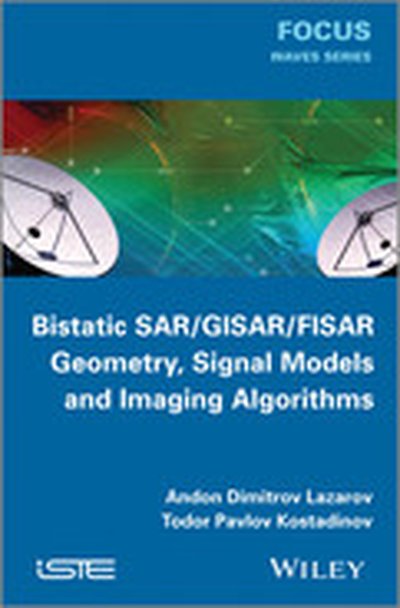
Bistatic SAR/GISAR/FISAR Geometry, Signal Models and Imaging Algorithms

Bistatic radar consists of a radar system which comprises a transmitter and receiver which are separated by a distance comparable to the expected target distance. This book provides a general theoretical description of such bistatic technology in the context of synthetic aperture, inverse synthetic aperture and forward scattering radars from the point of view of analytical geometrical and signal formation as well as processing theory. Signal formation and image reconstruction algorithms are developed with the application of high informative linear frequency and phase code modulating techniques, and numerical experiments that confirm theoretical models are carried out. The authors suggest the program implementation of developed algorithms. A theoretical summary of the latest results in the field of bistatic radars is provided, before applying an analytical geometrical description of scenarios of bistatic synthetic aperture, inverse synthetic aperture and forward scattering radars with cooperative and non-cooperative transmitters. Signal models with linear frequency and phase code modulation are developed, and special phase modulations with C/A (coarse acquisition) and P (precision) of GPS satellite transmitters are considered. The authors suggest Matlab implementations of all geometrical models and signal formation and processing algorithms. Contents 1. Bistatic Synthetic Aperture Radar (BSAR) Survey. 2. BSAR Geometry. 3. BSAR Waveforms and Signal Models. 4. BSAR Image Reconstruction Algorithms. 5. Analytical Geometrical Determination of BSAR Resolution. 6. BSAR Experimental Results. 7. BSAR Matlab Implementation. A general theoretical description of bistatic technology within the scope of synthetic aperture, inverse synthetic aperture and forward scattering radars from the point of view of analytical geometrical and signal formation and processing theory. Signal formation and image reconstruction algorithms are developed in this title, with application of high informative linear frequency and phase code modulating techniques. Numerical experiments that confirm theoretical models are carried out and the authors suggest program implementation for the algorithms developed.

Programming in MATLAB ®

MATLAB ® provides an interactive programming interface for numerical computation and data visualization making it the default framework used for analysis, design and research in many domains of science and industry. Programming in MATLAB ®: A problem-solving approach is intended as an aid to engineers and scientists with no prior programming expertise. The book focuses on the systematic development of practical programming skills through MATLAB language constructs, backed by several well-designed examples and exercises. Designed to be as much a MATLAB reference tool for researchers in varied fields as it is a guide for undergraduate readers, the book builds on the concepts sequentially as it progresses through the chapters. Each chapter is complete, independent of the book's remaining contents. Thus, for teaching purposes, one can suitably the relevant portions.

R for Everyone: Advanced Analytics and Graphics

Statistical Computation for Programmers, Scientists, Quants, Excel Users, and Other Professionals Using the open source R language, you can build powerful statistical models to answer many of your most challenging questions. R has traditionally been difficult for non-statisticians to learn, and most R books assume far too much knowledge to be of help. R for Everyone is the solution. Drawing on his unsurpassed experience teaching new users, professional data scientist Jared P. Lander has written the perfect tutorial for anyone new to statistical programming and modeling. Organized to make learning easy and intuitive, this guide focuses on the 20 percent of R functionality you’ll need to accomplish 80 percent of modern data tasks. Lander’s self-contained chapters start with the absolute basics, offering extensive hands-on practice and sample code. You’ll download and install R; navigate and use the R environment; master basic program control, data import, and manipulation; and walk through several essential tests. Then, building on this foundation, you’ll construct several complete models, both linear and nonlinear, and use some data mining techniques. By the time you’re done, you won’t just know how to write R programs, you’ll be ready to tackle the statistical problems you care about most. COVERAGE INCLUDES • Exploring R, RStudio, and R packages • Using R for math: variable types, vectors, calling functions, and more • Exploiting data structures, including data.frames, matrices, and lists • Creating attractive, intuitive statistical graphics • Writing user-defined functions • Controlling program flow with if, ifelse, and complex checks • Improving program efficiency with group manipulations • Combining and reshaping multiple datasets • Manipulating strings using R’s facilities and regular expressions • Creating normal, binomial, and Poisson probability distributions • Programming basic statistics: mean, standard deviation, and t-tests • Building linear, generalized linear, and nonlinear models • Assessing the quality of models and variable selection • Preventing overfitting, using the Elastic Net and Bayesian methods • Analyzing univariate and multivariate time series data • Grouping data via K-means and hierarchical clustering • Preparing reports, slideshows, and web pages with knitr • Building reusable R packages with devtools and Rcpp • Getting involved with the R global community

Data Mining Applications with R

Data Mining Applications with R is a great resource for researchers and professionals to understand the wide use of R, a free software environment for statistical computing and graphics, in solving different problems in industry. R is widely used in leveraging data mining techniques across many different industries, including government, finance, insurance, medicine, scientific research and more. This book presents 15 different real-world case studies illustrating various techniques in rapidly growing areas. It is an ideal companion for data mining researchers in academia and industry looking for ways to turn this versatile software into a powerful analytic tool. R code, Data and color figures for the book are provided at the RDataMining.com website. Helps data miners to learn to use R in their specific area of work and see how R can apply in different industries Presents various case studies in real-world applications, which will help readers to apply the techniques in their work Provides code examples and sample data for readers to easily learn the techniques by running the code by themselves

Introduction to R for Quantitative Finance

Explore how to use the statistical computing language R to solve complex quantitative finance problems with "Introduction to R for Quantitative Finance." This book offers a blend of theory and practice, empowering readers with both the foundational understanding and practical skills to tackle real-world challenges using R, making it an ideal resource for beginners and seasoned professionals alike. What this Book will help me do Utilize time series analysis in R to model and forecast financial and economic data. Apply key portfolio selection theories to analyze and optimize investment portfolios. Understand and implement a variety of pricing models, including the Capital Asset Pricing Model in R. Analyze and interpret fixed income instruments and derivatives, focusing on practical applications in finance. Leverage R for risk analysis through techniques such as Extreme Value Theory and copula-based modeling. Author(s) The authors of "Introduction to R for Quantitative Finance" are seasoned experts in the fields of quantitative finance and computational statistics. They bring a wealth of industry and academic experience to the table, having applied R to solve intricate financial problems in practical settings. Their approachable writing style ensures complex subjects remain accessible and engaging. Who is it for? This book is ideal for quantitative analysts, data scientists, or finance professionals eager to leverage R for financial analysis. It caters to individuals with a foundation in finance but new to the R programming language. Readers who aim to model, predict, and interpret financial phenomena using advanced statistical tools will particularly benefit from this guide.