talk-data.com talk-data.com

Topic

data-science-tools

333

tagged

Activity Trend

1 peak/qtr
2020-Q1 2026-Q1

Activities

333 activities · Newest first

Text Mining with R

Much of the data available today is unstructured and text-heavy, making it challenging for analysts to apply their usual data wrangling and visualization tools. With this practical book, you’ll explore text-mining techniques with tidytext, a package that authors Julia Silge and David Robinson developed using the tidy principles behind R packages like ggraph and dplyr. You’ll learn how tidytext and other tidy tools in R can make text analysis easier and more effective. The authors demonstrate how treating text as data frames enables you to manipulate, summarize, and visualize characteristics of text. You’ll also learn how to integrate natural language processing (NLP) into effective workflows. Practical code examples and data explorations will help you generate real insights from literature, news, and social media. Learn how to apply the tidy text format to NLP Use sentiment analysis to mine the emotional content of text Identify a document’s most important terms with frequency measurements Explore relationships and connections between words with the ggraph and widyr packages Convert back and forth between R’s tidy and non-tidy text formats Use topic modeling to classify document collections into natural groups Examine case studies that compare Twitter archives, dig into NASA metadata, and analyze thousands of Usenet messages
Advanced Object-Oriented Programming in R: Statistical Programming for Data Science, Analysis and Finance

Learn how to write object-oriented programs in R and how to construct classes and class hierarchies in the three object-oriented systems available in R. This book gives an introduction to object-oriented programming in the R programming language and shows you how to use and apply R in an object-oriented manner. You will then be able to use this powerful programming style in your own statistical programming projects to write flexible and extendable software. After reading Advanced Object-Oriented Programming in R, you'll come away with a practical project that you can reuse in your own analytics coding endeavors. You'll then be able to visualize your data as objects that have state and then manipulate those objects with polymorphic or generic methods. Your projects will benefit from the high degree of flexibility provided by polymorphism, where the choice of concrete method to execute depends on the type of data being manipulated. What You'll Learn Define and use classes and generic functions using R Work with the R class hierarchies Benefit from implementation reuse Handle operator overloading Apply the S4 and R6 classes Who This Book Is For Experienced programmers and for those with at least some prior experience with R programming language.

R: Mining Spatial, Text, Web, and Social Media Data

Create data mining algorithms About This Book Develop a strong strategy to solve predictive modeling problems using the most popular data mining algorithms Real-world case studies will take you from novice to intermediate to apply data mining techniques Deploy cutting-edge sentiment analysis techniques to real-world social media data using R Who This Book Is For This Learning Path is for R developers who are looking to making a career in data analysis or data mining. Those who come across data mining problems of different complexities from web, text, numerical, political, and social media domains will find all information in this single learning path. What You Will Learn Discover how to manipulate data in R Get to know top classification algorithms written in R Explore solutions written in R based on R Hadoop projects Apply data management skills in handling large data sets Acquire knowledge about neural network concepts and their applications in data mining Create predictive models for classification, prediction, and recommendation Use various libraries on R CRAN for data mining Discover more about data potential, the pitfalls, and inferencial gotchas Gain an insight into the concepts of supervised and unsupervised learning Delve into exploratory data analysis Understand the minute details of sentiment analysis In Detail Data mining is the first step to understanding data and making sense of heaps of data. Properly mined data forms the basis of all data analysis and computing performed on it. This learning path will take you from the very basics of data mining to advanced data mining techniques, and will end up with a specialized branch of data mining—social media mining. You will learn how to manipulate data with R using code snippets and how to mine frequent patterns, association, and correlation while working with R programs. You will discover how to write code for various predication models, stream data, and time-series data. You will also be introduced to solutions written in R based on R Hadoop projects. Now that you are comfortable with data mining with R, you will move on to implementing your knowledge with the help of end-to-end data mining projects. You will learn how to apply different mining concepts to various statistical and data applications in a wide range of fields. At this stage, you will be able to complete complex data mining cases and handle any issues you might encounter during projects. After this, you will gain hands-on experience of generating insights from social media data. You will get detailed instructions on how to obtain, process, and analyze a variety of socially-generated data while providing a theoretical background to accurately interpret your findings. You will be shown R code and examples of data that can be used as a springboard as you get the chance to undertake your own analyses of business, social, or political data. This Learning Path combines some of the best that Packt has to offer in one complete, curated package. It includes content from the following Packt products: Learning Data Mining with R by Bater Makhabel R Data Mining Blueprints by Pradeepta Mishra Social Media Mining with R by Nathan Danneman and Richard Heimann Style and approach A complete package with which will take you from the basics of data mining to advanced data mining techniques, and will end up with a specialized branch of data mining—social media mining. Downloading the example code for this book. You can download the example code files for all Packt books you have purchased from your account at http://www.PacktPub.com. If you purchased this book elsewhere, you can visit http://www.PacktPub.com/support and register to have the code file.

MATLAB Deep Learning: With Machine Learning, Neural Networks and Artificial Intelligence

Get started with MATLAB for deep learning and AI with this in-depth primer. In this book, you start with machine learning fundamentals, then move on to neural networks, deep learning, and then convolutional neural networks. In a blend of fundamentals and applications, MATLAB Deep Learning employs MATLAB as the underlying programming language and tool for the examples and case studies in this book. With this book, you'll be able to tackle some of today's real world big data, smart bots, and other complex data problems. You'll see how deep learning is a complex and more intelligent aspect of machine learning for modern smart data analysis and usage. What You'll Learn Use MATLAB for deep learning Discover neural networks and multi-layer neural networks Work with convolution and pooling layers Build a MNIST example with these layers Who This Book Is For Those who want to learn deep learning using MATLAB. Some MATLAB experience may be useful.

R for Everyone: Advanced Analytics and Graphics, 2nd Edition

Statistical Computation for Programmers, Scientists, Quants, Excel Users, and Other Professionals Using the open source R language, you can build powerful statistical models to answer many of your most challenging questions. R has traditionally been difficult for non-statisticians to learn, and most R books assume far too much knowledge to be of help. is the solution. R for Everyone, Second Edition, Drawing on his unsurpassed experience teaching new users, professional data scientist Jared P. Lander has written the perfect tutorial for anyone new to statistical programming and modeling. Organized to make learning easy and intuitive, this guide focuses on the 20 percent of R functionality you'll need to accomplish 80 percent of modern data tasks. Lander's self-contained chapters start with the absolute basics, offering extensive hands-on practice and sample code. You'll download and install R; navigate and use the R environment; master basic program control, data import, manipulation, and visualization; and walk through several essential tests. Then, building on this foundation, you'll construct several complete models, both linear and nonlinear, and use some data mining techniques. After all this you'll make your code reproducible with LaTeX, RMarkdown, and Shiny. By the time you're done, you won't just know how to write R programs, you'll be ready to tackle the statistical problems you care about most. Coverage includes Explore R, RStudio, and R packages Use R for math: variable types, vectors, calling functions, and more Exploit data structures, including data.frames, matrices, and lists Read many different types of data Create attractive, intuitive statistical graphics Write user-defined functions Control program flow with if, ifelse, and complex checks Improve program efficiency with group manipulations Combine and reshape multiple datasets Manipulate strings using R's facilities and regular expressions Create normal, binomial, and Poisson probability distributions Build linear, generalized linear, and nonlinear models Program basic statistics: mean, standard deviation, and t-tests Train machine learning models Assess the quality of models and variable selection Prevent overfitting and perform variable selection, using the Elastic Net and Bayesian methods Analyze univariate and multivariate time series data Group data via K-means and hierarchical clustering Prepare reports, slideshows, and web pages with knitr Display interactive data with RMarkdown and htmlwidgets Implement dashboards with Shiny Build reusable R packages with devtools and Rcpp

Metaprogramming in R: Advanced Statistical Programming for Data Science, Analysis and Finance

Learn how to manipulate functions and expressions to modify how the R language interprets itself. This book is an introduction to metaprogramming in the R language, so you will write programs to manipulate other programs. Metaprogramming in R shows you how to treat code as data that you can generate, analyze, or modify. R is a very high-level language where all operations are functions and all functions are data that can be manipulated. This book shows you how to leverage R's natural flexibility in how function calls and expressions are evaluated, to create small domain-specific languages to extend R within the R language itself. What You'll Learn Find out about the anatomy of a function in R Look inside a function call Work with R expressions and environments Manipulate expressions in R Use substitutions Who This Book Is For Those with at least some experience with R and certainly for those with experience in other programming languages

Learning Social Media Analytics with R

Explore the intricacies of using R for social media analytics with 'Learning Social Media Analytics with R'. This comprehensive guide introduces readers to tools and techniques to extract, analyze, and visualize data from popular platforms like Twitter and Facebook. Gain insights into advanced methods such as sentiment analysis, topic modeling, and social network analysis. What this Book will help me do Master the art of leveraging R to retrieve, process, and clean data from major social media platforms. Use actionable insights from sentiment analysis and topic modeling to improve decision-making processes. Develop an understanding of social network structures by analyzing community connections and user interactions. Create impactful data visualizations that showcase trends and insights effectively using the R ecosystem. Integrate advanced R packages such as ggplot2, dplyr, and caret to streamline data analysis workflows. Author(s) The authors of this book, None Sarkar, Karthik Ganapathy, Raghav Bali, and None Sharma, are experts in data science and R programming with extensive experience in the industry. They bring a passion for teaching and a clear, step-by-step methodology to help learners grasp complex concepts. Who is it for? This book is ideal for data scientists, analysts, IT professionals, and social media marketers who aim to gain actionable insights from social data. Whether you're a beginner or have some experience with R, this book is highly approachable and beneficial. Readers will find practical examples and comprehensive tutorials tailored for their level of expertise.

Mastering Machine Learning with R - Second Edition

Dive into the world of advanced machine learning techniques with "Mastering Machine Learning with R, Second Edition." This comprehensive guide equips you with the skills to implement sophisticated algorithms and create powerful prediction models using R 3.x. You will explore topics such as supervised and unsupervised learning, decision trees, ensemble methods, and deep learning. What this Book will help me do Implement machine learning workflows using a variety of R packages like XGBOOST. Effectively use linear and logistic regression for statistical analysis and pattern recognition. Develop skills in advanced methods such as support vector machines and neural networks. Learn actionable techniques to create recommendation engines and perform text mining. Gain hands-on experience running R-based machine learning analyses on cloud platforms. Author(s) None Lesmeister, a seasoned data scientist, combines extensive hands-on experience and a passion for teaching to deliver technical concepts in a practical, engaging manner. With a strong background in statistical analysis and machine learning, they are dedicated to providing readers with actionable knowledge and step-by-step guidance. Who is it for? This book is ideal for data scientists, analysts, and machine learning practitioners aiming to deepen their expertise in R. Readers should have a fundamental understanding of machine learning concepts and a basic knowledge of R programming. If you're looking to master advanced learning methods and apply them effectively, this book is tailored for you.

R: Predictive Analysis

Master the art of predictive modeling About This Book Load, wrangle, and analyze your data using the world's most powerful statistical programming language Familiarize yourself with the most common data mining tools of R, such as k-means, hierarchical regression, linear regression, Naïve Bayes, decision trees, text mining and so on. We emphasize important concepts, such as the bias-variance trade-off and over-fitting, which are pervasive in predictive modeling Who This Book Is For If you work with data and want to become an expert in predictive analysis and modeling, then this Learning Path will serve you well. It is intended for budding and seasoned practitioners of predictive modeling alike. You should have basic knowledge of the use of R, although it’s not necessary to put this Learning Path to great use. What You Will Learn Get to know the basics of R’s syntax and major data structures Write functions, load data, and install packages Use different data sources in R and know how to interface with databases, and request and load JSON and XML Identify the challenges and apply your knowledge about data analysis in R to imperfect real-world data Predict the future with reasonably simple algorithms Understand key data visualization and predictive analytic skills using R Understand the language of models and the predictive modeling process In Detail Predictive analytics is a field that uses data to build models that predict a future outcome of interest. It can be applied to a range of business strategies and has been a key player in search advertising and recommendation engines. The power and domain-specificity of R allows the user to express complex analytics easily, quickly, and succinctly. R offers a free and open source environment that is perfect for both learning and deploying predictive modeling solutions in the real world. This Learning Path will provide you with all the steps you need to master the art of predictive modeling with R. We start with an introduction to data analysis with R, and then gradually you’ll get your feet wet with predictive modeling. You will get to grips with the fundamentals of applied statistics and build on this knowledge to perform sophisticated and powerful analytics. You will be able to solve the difficulties relating to performing data analysis in practice and find solutions to working with “messy data”, large data, communicating results, and facilitating reproducibility. You will then perform key predictive analytics tasks using R, such as train and test predictive models for classification and regression tasks, score new data sets and so on. By the end of this Learning Path, you will have explored and tested the most popular modeling techniques in use on real-world data sets and mastered a diverse range of techniques in predictive analytics. This Learning Path combines some of the best that Packt has to offer in one complete, curated package. It includes content from the following Packt products: Data Analysis with R, Tony Fischetti Learning Predictive Analytics with R, Eric Mayor Mastering Predictive Analytics with R, Rui Miguel Forte Style and approach Learn data analysis using engaging examples and fun exercises, and with a gentle and friendly but comprehensive "learn-by-doing" approach. This is a practical course, which analyzes compelling data about life, health, and death with the help of tutorials. It offers you a useful way of interpreting the data that’s specific to this course, but that can also be applied to any other data. This course is designed to be both a guide and a reference for moving beyond the basics of predictive modeling. Downloading the example code for this book. You can download the example code files for all Packt books you have purchased from your account at http://www.PacktPub.com. If you purchased this book elsewhere, you can visit http://www.PacktPub.com/support and register to have the code file.

Statistical Analysis with R For Dummies

Understanding the world of R programming and analysis has never been easier Most guides to R, whether books or online, focus on R functions and procedures. But now, thanks to Statistical Analysis with R For Dummies, you have access to a trusted, easy-to-follow guide that focuses on the foundational statistical concepts that R addresses—as well as step-by-step guidance that shows you exactly how to implement them using R programming. People are becoming more aware of R every day as major institutions are adopting it as a standard. Part of its appeal is that it's a free tool that's taking the place of costly statistical software packages that sometimes take an inordinate amount of time to learn. Plus, R enables a user to carry out complex statistical analyses by simply entering a few commands, making sophisticated analyses available and understandable to a wide audience. Statistical Analysis with R For Dummies enables you to perform these analyses and to fully understand their implications and results. Gets you up to speed on the #1 analytics/data science software tool Demonstrates how to easily find, download, and use cutting-edge community-reviewed methods in statistics and predictive modeling Shows you how R offers intel from leading researchers in data science, free of charge Provides information on using R Studio to work with R Get ready to use R to crunch and analyze your data—the fast and easy way!

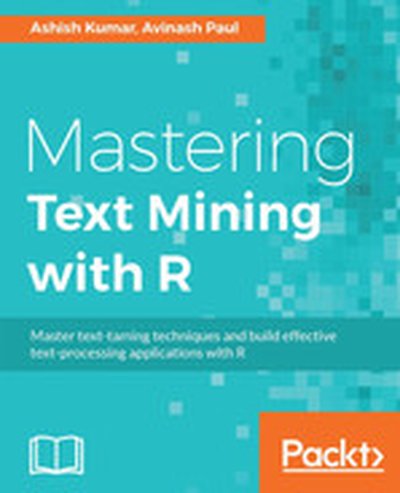
Mastering Text Mining with R

Mastering Text Mining with R is your go-to guide for learning how to process and analyze textual data using R. Throughout the book, you'll gain the skills necessary to perform data extraction and natural language processing, equipping you with practical applications tailored to real-world scenarios. What this Book will help me do Learn to access and manipulate textual data from various sources using R. Understand text processing techniques and employ them with tools like OpenNLP. Explore methods for text categorization, reduction, and summarization with hands-on exercises. Perform text classification tasks such as sentiment analysis and entity recognition. Build custom applications using text mining techniques and frameworks. Author(s) Ashish Kumar is a seasoned data scientist and software developer with years of experience in text analytics and the R programming language. He has a knack for explaining complex topics in an accessible and practical manner, ideal for learners embracing their text mining journey. Who is it for? This book is for anyone keen on mastering text mining with R. If you're an R programmer, data analyst, or data scientist looking to delve into text analytics, you'll find it ideal. Some familiarity with basic programming and statistics will enhance your experience, but all concepts are introduced clearly and effectively.

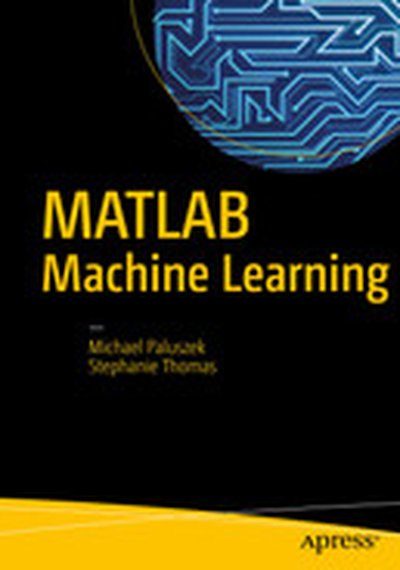
MATLAB Machine Learning

This book is a comprehensive guide to machine learning with worked examples in MATLAB. It starts with an overview of the history of Artificial Intelligence and automatic control and how the field of machine learning grew from these. It provides descriptions of all major areas in machine learning. The book reviews commercially available packages for machine learning and shows how they fit into the field. The book then shows how MATLAB can be used to solve machine learning problems and how MATLAB graphics can enhance the programmer’s understanding of the results and help users of their software grasp the results. Machine Learning can be very mathematical. The mathematics for each area is introduced in a clear and concise form so that even casual readers can understand the math. Readers from all areas of engineering will see connections to what they know and will learn new technology. The book then provides complete solutions in MATLAB for several important problems in machine learning including face identification, autonomous driving, and data classification. Full source code is provided for all of the examples and applications in the book. What you'll learn: An overview of the field of machine learning Commercial and open source packages in MATLAB How to use MATLAB for programming and building machine learning applications MATLAB graphics for machine learning Practical real world examples in MATLAB for major applications of machine learning in big data Who is this book for: The primary audiences are engineers and engineering students wanting a comprehensive and practical introduction to machine learning.

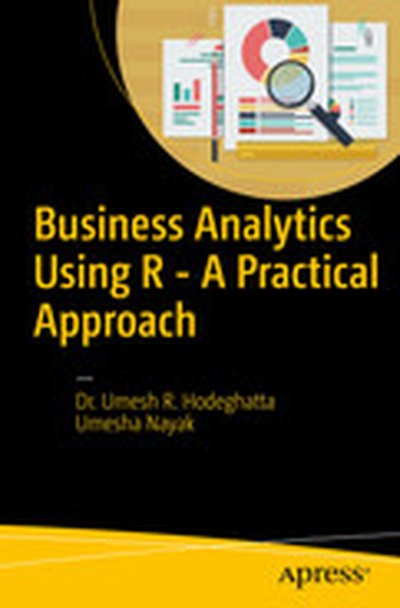
Business Analytics Using R - A Practical Approach

Learn the fundamental aspects of the business statistics, data mining, and machine learning techniques required to understand the huge amount of data generated by your organization. This book explains practical business analytics through examples, covers the steps involved in using it correctly, and shows you the context in which a particular technique does not make sense. Further, Practical Business Analytics using R helps you understand specific issues faced by organizations and how the solutions to these issues can be facilitated by business analytics. This book will discuss and explore the following through examples and case studies: An introduction to R: data management and R functions The architecture, framework, and life cycle of a business analytics project Descriptive analytics using R: descriptive statistics and data cleaning Data mining: classification, association rules, and clustering Predictive analytics: simple regression, multiple regression, and logistic regression This book includes case studies on important business analytic techniques, such as classification, association, clustering, and regression. The R language is the statistical tool used to demonstrate the concepts throughout the book. What You Will Learn • Write R programs to handle data • Build analytical models and draw useful inferences from them • Discover the basic concepts of data mining and machine learning • Carry out predictive modeling • Define a business issue as an analytical problem Who This Book Is For Beginners who want to understand and learn the fundamentals of analytics using R. Students, managers, executives, strategy and planning professionals, software professionals, and BI/DW professionals.

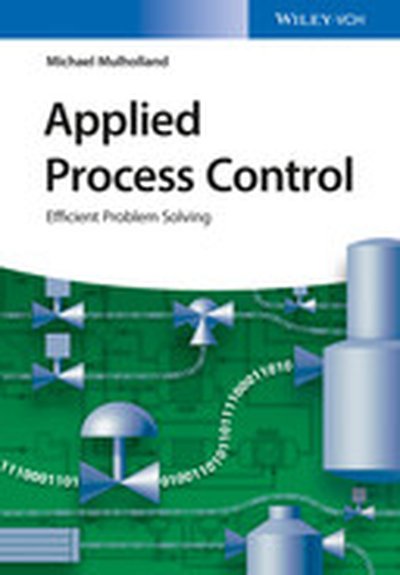
Applied Process Control

Bridging theory and practice, this book contains over 200 practical exercises and their solutions, to develop the problem-solving abilities of process engineers. The problems were developed by the author during his many years of teaching at university and are kept brief, taken from the fields of instrumentation, modelling, plant control, control strategy design and stability of control. The algorithm flows and codes, which are mostly based on MATLAB®, are given in many cases and allow for easy translation into applications. Since the text is structured according to "Applied Process Control: Essential Methods", all of the necessary background information on the underlying methods can be easily and quickly found in this accompanying book.

Efficient data processing with R

What you’ll learn—and how you can apply it You’ll learn to perform efficient data carpentry—the process of taking rough, raw, and to some extent randomly arranged input data and creating neatly organized and tidy data. Working with clean data will be beneficial for every subsequent stage of your R project. In this Lesson, readers will learn how to create user-friendly data frames with tibble, reshape data with tidyr operations such as gather and separate, process data efficiently with dplyr’s functions, and connect R to a range of database types. This lesson is for you because You are working on a project in R and have reached the data processing stage. You want to clean, manipulate, and tidy your dataset to get it ready for the next stage (typically modeling and visualization). Prerequisites Some knowledge of R Materials or downloads needed in advance Installed RStudio This Lesson relies on a number of packages for data cleaning and processing. Check that they are installed on your computer and load them with: library("tibble") library("tidyr") library("stringr") library("readr") library("dplyr") library("data.table") RSQLite and ggmap are also used in a couple of examples, though they are not central to the Lesson’s content.

Efficient R optimization

What you’ll learn—and how you can apply it You’ll learn how to optimize your tried and tested code. In this Lesson, learners will understand how to profile code to identify and prevent key bottlenecks in R performance, as well as tricks that may improve performance on row and column operations and matrices. This Lesson also presents an example of specific improvements that can be made to enhance performance of the movie_square() function. This lesson is for you because You already have well-developed code that is mature conceptually and has been tried and tested. Now, you want to optimize this code. Prerequisites: Some knowledge of R and have well-developed R code Materials or downloads needed: Installed RStudio Some examples in this Lesson require a working C++ compiler

Efficient R Programming

There are many excellent R resources for visualization, data science, and package development. Hundreds of scattered vignettes, web pages, and forums explain how to use R in particular domains. But little has been written on how to simply make R work effectively—until now. This hands-on book teaches novices and experienced R users how to write efficient R code. Drawing on years of experience teaching R courses, authors Colin Gillespie and Robin Lovelace provide practical advice on a range of topics—from optimizing the set-up of RStudio to leveraging C++—that make this book a useful addition to any R user’s bookshelf.

Dynamics of Structures with MATLAB® Applications by Pearsom

This book is designed for undergraduate and graduate students taking a first course in Dynamics of Structures, Structural Dynamics or Earthquake Engineering. It includes several topics on the theory of structural dynamics and the applications of this theory to the analysis of buildings, bridges, towers and other structures subjected to dynamic and earthquake forces. This comprehensive text demonstrates the applications of numerical solution techniques to a large variety of practical, real-world problems under dynamic loads.

About The Authors –

Dr Ashok K. Jain is Professor of Civil Engineering at the Indian Institute of Technology Roorkee (formerly University of Roorkee), obtained his B.E. and M.E. degrees with honours from the University of Roorkee in 1972 and 1974, and a doctorate degree from the University of Michigan, Ann Arbor, in 1978. His main areas of interest include multistoreyed buildings, concrete and steel bridges, and nonlinear seismic response of structures. Besides teaching and research, he has been a structural consultant to various state and central government agencies as well as many private companies. A recipient of several awards, he has been a research fellow at the University of Michigan; a visiting Professor at the McGill University, Montreal; Director, Malaviya National Institute of Technology, Jaipur; and Head of Civil Engineering Department, I.I.T. Roorkee.

Book Contents –

Part 1 Single degree of Freedom Systems Part 2 Multi-degree of Freedom Systems Part 3 Application to Earthquake Engineering Part 4 Wind Load Appendix 1 Measuring Earthquakes: Magnitude and Intensity Appendix 2 MATLAB Basics Answers to Selected Problems Index

R for Data Science

Learn how to use R to turn raw data into insight, knowledge, and understanding. This book introduces you to R, RStudio, and the tidyverse, a collection of R packages designed to work together to make data science fast, fluent, and fun. Suitable for readers with no previous programming experience, R for Data Science is designed to get you doing data science as quickly as possible. Authors Hadley Wickham and Garrett Grolemund guide you through the steps of importing, wrangling, exploring, and modeling your data and communicating the results. You’ll get a complete, big-picture understanding of the data science cycle, along with basic tools you need to manage the details. Each section of the book is paired with exercises to help you practice what you’ve learned along the way. You’ll learn how to: Wrangle—transform your datasets into a form convenient for analysis Program—learn powerful R tools for solving data problems with greater clarity and ease Explore—examine your data, generate hypotheses, and quickly test them Model—provide a low-dimensional summary that captures true "signals" in your dataset Communicate—learn R Markdown for integrating prose, code, and results