talk-data.com talk-data.com

Topic

data

2093

tagged

Activity Trend

3 peak/qtr
2020-Q1 2026-Q1

Activities

Showing filtered results

Filtering by: O'Reilly Data Science Books ×
The Manga Guide to Statistics

Think you can't have fun learning statistics? Think again. The Manga Guide to Statistics will teach you everything you need to know about this essential discipline, while entertaining you at the same time. With its unique combination of Japanese-style comics called manga and serious educational content, the EduManga format is already a hit in Japan. In The Manga Guide to Statistics, our heroine Rui is determined to learn about statistics to impress the dreamy Mr. Igarashi and begs her father for a tutor. Soon she's spending her Saturdays with geeky, bespectacled Mr. Yamamoto, who patiently teaches her all about the fundamentals of statistics: topics like data categorization, averages, graphing, and standard deviation. After all her studying, Rui is confident in her knowledge of statistics, including complex concepts like probability, coefficients of correlation, hypothesis tests, and tests of independence. But is it enough to impress her dream guy? Or maybe there's someone better, right in front of her? Reluctant statistics students of all ages will enjoy learning along with Rui in this charming, easy-to-read guide, which uses real-world examples like teen magazine quizzes, bowling games, test scores, and ramen noodle prices. Examples, exercises, and answer keys help you follow along and check your work. An appendix showing how to perform statistics calculations in Microsoft Excel makes it easy to put Rui's lessons into practice. This EduManga book is a translation from a bestselling series in Japan, co-published with Ohmsha, Ltd. of Tokyo, Japan.
Head First Statistics

Wouldn't it be great if there were a statistics book that made histograms, probability distributions, and chi square analysis more enjoyable than going to the dentist? Head First Statistics brings this typically dry subject to life, teaching you everything you want and need to know about statistics through engaging, interactive, and thought-provoking material, full of puzzles, stories, quizzes, visual aids, and real-world examples. Whether you're a student, a professional, or just curious about statistical analysis, Head First's brain-friendly formula helps you get a firm grasp of statistics so you can understand key points and actually use them. Learn to present data visually with charts and plots; discover the difference between taking the average with mean, median, and mode, and why it's important; learn how to calculate probability and expectation; and much more. Head First Statistics is ideal for high school and college students taking statistics and satisfies the requirements for passing the College Board's Advanced Placement (AP) Statistics Exam. With this book, you'll: Study the full range of topics covered in first-year statistics Tackle tough statistical concepts using Head First's dynamic, visually rich format proven to stimulate learning and help you retain knowledge Explore real-world scenarios, ranging from casino gambling to prescription drug testing, to bring statistical principles to life Discover how to measure spread, calculate odds through probability, and understand the normal, binomial, geometric, and Poisson distributions Conduct sampling, use correlation and regression, do hypothesis testing, perform chi square analysis, and more Before you know it, you'll not only have mastered statistics, you'll also see how they work in the real world. Head First Statistics will help you pass your statistics course, and give you a firm understanding of the subject so you can apply the knowledge throughout your life.

Crystal Reports 2008: The Complete Reference

Your One-Stop Guide to Enterprise Reporting with Crystal Reports 2008 Transform disconnected corporate data into compelling, interactive business intelligence using all of the powerful tools available in Crystal Reports 2008. Through detailed explanations, real-world examples, and expert advice, this comprehensive guide shows you how to create, maintain, and distribute dynamic, visually appealing enterprise database reports. Crystal Reports 2008: The Complete Reference explains how to select and gather pertinent business data, organize it into manageable groups, and assemble it into user-friendly business reports. You will learn how to improve report interactivity with sort controls and the parameter panel; solve complex reporting problems with cross-tabs and subreports; integrate Crystal Xcelsius dashboards; reduce development time; and publish your results to Web and Windows applications. Integrate pictures, multimedia files, graphs, and charts Allow user-controlled report sorting with new sort controls Develop sophisticated formulas and custom functions with the Formula Workshop Embed Flash files, including Xcelsius 2008 interactive dashboards Create complex cross-tab reports with new derived rows and columns Export reports into Word, Excel, Acrobat, and updated XML formats Enhance Web interactivity with the new parameter panel and optional parameter fields Work with SQL databases, OLAP cubes, and proprietary systems Centralize design elements and auto-update reports using the repository Schedule and distribute reports with the latest BusinessObjects Enterprise XI 3.0 Embed reports in Web and Windows applications using Visual Studio 2008

Statistics in a Nutshell

Need to learn statistics as part of your job, or want some help passing a statistics course? Statistics in a Nutshell is a clear and concise introduction and reference that's perfect for anyone with no previous background in the subject. This book gives you a solid understanding of statistics without being too simple, yet without the numbing complexity of most college texts. You get a firm grasp of the fundamentals and a hands-on understanding of how to apply them before moving on to the more advanced material that follows. Each chapter presents you with easy-to-follow descriptions illustrated by graphics, formulas, and plenty of solved examples. Before you know it, you'll learn to apply statistical reasoning and statistical techniques, from basic concepts of probability and hypothesis testing to multivariate analysis. Organized into four distinct sections, Statistics in a Nutshell offers you: Introductory material: Different ways to think about statistics Basic concepts of measurement and probability theory Data management for statistical analysis Research design and experimental design How to critique statistics presented by others Basic inferential statistics: Basic concepts of inferential statistics The concept of correlation, when it is and is not an appropriate measure of association Dichotomous and categorical data The distinction between parametric and nonparametric statistics Advanced inferential techniques: The General Linear Model Analysis of Variance (ANOVA) and MANOVA Multiple linear regression Specialized techniques: Business and quality improvement statistics Medical and public health statistics Educational and psychological statistics Unlike many introductory books on the subject, Statistics in a Nutshell doesn't omit important material in an effort to dumb it down. And this book is far more practical than most college texts, which tend to over-emphasize calculation without teaching you when and how to apply different statistical tests. With Statistics in a Nutshell, you learn how to perform most common statistical analyses, and understand statistical techniques presented in research articles. If you need to know how to use a wide range of statistical techniques without getting in over your head, this is the book you want.

Integrating and Extending BIRT

The world-wide developer community has downloaded over three million copies of BIRT (Business Intelligence and Reporting Tools) from the Eclipse web site. Built on the open-source Eclipse platform, BIRT is a powerful reporting system that provides an end-to-end solution, from creating and deploying reports to integrating report capabilities in enterprise applications. The second of a two-book series on business intelligence and reporting technology, introduces programmers to BIRT architecture and the reporting framework. BIRT technology makes it possible for a programmer to build a customized report using scripting and BIRT APIs. A programmer can also extend the BIRT framework by creating a new plug-in using the Eclipse Plug-in Development Environment. This book provides extensive examples on how to build plug-ins to extend the features of the BIRT framework. The source code for these examples is available for download. Integrating and Extending BIRT, Second Edition The topics discussed include Installing and deploying BIRT Deploying a BIRT report to an application server Understanding BIRT architecture Scripting in a BIRT report design Integrating BIRT functionality into applications Working with the BIRT extension framework This second edition, revised and expanded, adds the following new content Updated architectural diagrams Expanded scripting examples Tag library descriptions In-depth description of BIRT Web Viewer Configuring BIRT to use a JNDI connection XML report rendering plug-in example Fragment plug-in localization example Open Data Access (ODA) plug-in example implementing the new Data Tools Platform (DTP) design and run-time wizards

BIRT: A Field Guide to Reporting

The world-wide developer community has downloaded over three million copies of BIRT (Business Intelligence and Reporting Tools) from the Eclipse web site. Built on the open-source Eclipse platform, BIRT is a powerful reporting system that provides an end-to-end solution, from creating and deploying reports to integrating report capabilities in enterprise applications. The first in a two-book series about this exciting technology, is the authoritative guide to using BIRT Report Designer, the graphical tool that enables users of all levels to build reports, simple to sophisticated, without any programming. BIRT, Second Edition: A Field Guide to Reporting is an essential resource for users who want to create presentation quality reports from day one. The extensive examples, step-by-step instructions, and abundant illustrations help new users develop their report design skills quickly. Power users can find the information they need to make the most of the product’s rich set of features to build complex and compelling reports. By the time you finish this book, you learn the following and more BIRT, Second Edition: A Field Guide to Reporting Design effective business and corporate reports that convey information through images, charts, tables, and cross tabs Build reports using data from a variety of sources, including databases, XML documents, spreadsheets, and web services Enliven reports with interactive features, such as hyperlinks, Tooltips, and highlighting Create consistently styled reports and collaborate with other report designers through the use of templates and libraries of reusable elements Localize reports for an international audience This second edition, revised and expanded, adds updated examples and covers all the new and improved product features, including Cross tabs and OLAP cubes New chart types, including Gantt, bubble, tube, and cone charts Web services as a new data source New report output formats, including doc, ppt, xls, and PostScript The capability for reports to reference CSS Localization of report parameter and data values

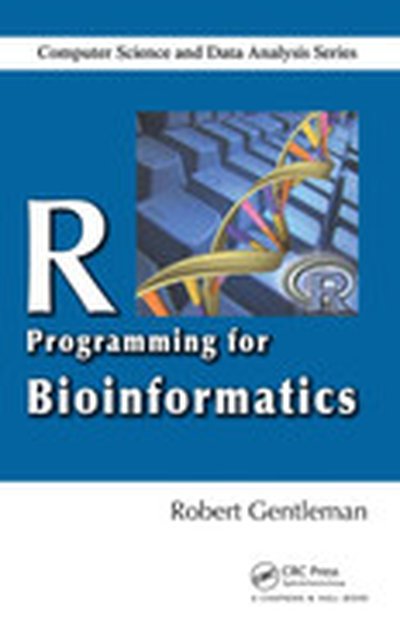
R Programming for Bioinformatics

Due to its data handling and modeling capabilities as well as its flexibility, R is becoming the most widely used software in bioinformatics. R Programming for Bioinformatics explores the programming skills needed to use this software tool for the solution of bioinformatics and computational biology problems. Drawing on the author’s first-hand experiences as an expert in R, the book begins with coverage on the general properties of the R language, several unique programming aspects of R, and object-oriented programming in R. It presents methods for data input and output as well as database interactions. The author also examines different facets of string handling and manipulations, discusses the interfacing of R with other languages, and describes how to write software packages. He concludes with a discussion on the debugging and profiling of R code. With numerous examples and exercises, this practical guide focuses on developing R programming skills in order to tackle problems encountered in bioinformatics and computational biology.

Mind Mapping For a Business Advantage

Today's information environment demands that we all save time, improve efficiency, and be more creative in our thinking. Mind Mapping is an essential business tool you can add to your intellectual armory. This Infoline will introduce you to the concept of Mind Mapping. You will learn how to read and create Mind Maps, use Mind Maps for common business and training processes, and increase your creativity and effectiveness by using Mind Maps. Trainers can more specifically use Mind Maps to outline prospective courses or programs, illustrate a business case for new projects or funding, organize training program content, l generate ideas during meetings and training sessions, andl draw connections between business needs and developmental efforts.

The Little SAS® Book: A Primer, Fourth Edition

Now in its fourth edition, The Little SAS Book is a classic, helping many people learn SAS programming. Authors Lora Delwiche and Susan Slaughter's friendly, easy-to-read writing style gently introduces readers to the most commonly used features of the SAS language. Topics include basic SAS concepts such as the DATA and PROC steps, inputting data, modifying and combining data sets, summarizing data, producing reports, and debugging SAS programs. Each topic is presented in a self-contained two-page layout complete with examples and graphics. This clear and concise format enables new users to get up and running quickly, while the examples allow readers to type in the program and see it work! New topics in the fourth edition include ODS Graphics for statistical procedures, PROC SGPLOT for graphics, creating new variables in PROC REPORT with a COMPUTE block, WHERE= data set option, SORTSEQ=LINGUISTIC option in PROC SORT, and more functions, including ANYALPHA, CAT, PROPCASE, and YRDIF.

Time Series Analysis: Forecasting and Control, Fourth Edition

A modernized new edition of one of the most trusted books on time series analysis. Since publication of the first edition in 1970, Time Series Analysis has served as one of the most influential and prominent works on the subject. This new edition maintains its balanced presentation of the tools for modeling and analyzing time series and also introduces the latest developments that have occurred n the field over the past decade through applications from areas such as business, finance, and engineering. The Fourth Edition provides a clearly written exploration of the key methods for building, classifying, testing, and analyzing stochastic models for time series as well as their use in five important areas of application: forecasting; determining the transfer function of a system; modeling the effects of intervention events; developing multivariate dynamic models; and designing simple control schemes. Along with these classical uses, modern topics are introduced through the book's new features, which include: A new chapter on multivariate time series analysis, including a discussion of the challenge that arise with their modeling and an outline of the necessary analytical tools New coverage of forecasting in the design of feedback and feedforward control schemes A new chapter on nonlinear and long memory models, which explores additional models for application such as heteroscedastic time series, nonlinear time series models, and models for long memory processes Coverage of structural component models for the modeling, forecasting, and seasonal adjustment of time series A review of the maximum likelihood estimation for ARMA models with missing values Numerous illustrations and detailed appendices supplement the book,while extensive references and discussion questions at the end of each chapter facilitate an in-depth understanding of both time-tested and modern concepts. With its focus on practical, rather than heavily mathematical, techniques, time Series Analysis, Fourth Edition is the upper-undergraduate and graduate levels. this book is also an invaluable reference for applied statisticians, engineers, and financial analysts.

Crystal Reports® 2008 For Dummies®

A report is only useful if those who receive it understand what it means. Knowing how to use Crystal Reports gives you the edge in producing reports from your database that really are crystal clear. Crystal Reports 2008 For Dummies is a quick and easy guide to get you going with the latest version of this bestselling report-writing software. In fact, it’s so popular that previous editions have made it a bestseller too. Crystal Reports 2008 For Dummies gives you just what you should know to produce the reports you’ll need most often, including how to: Pull specific information from your database, sort and group it, and find the details you need Use dynamic or cascading prompts Troubleshoot and print reports and save time with templates View reports on your LAN Write formulas to retrieve specific information Create and update OLAP reports Format reports, control page breaks, and even add graphics or Flash files Enhance your reports with charts and maps Use Crystal Reports in the enterprise There’s also a companion Web site with sample reports from the book and links to sites with more related information. With Crystal Reports 2008 For Dummies by your side, you’ll soon be able to create reports from simple to spectacular, whenever the need arises.

IBM Cognos 8 Business Intelligence: The Official Guide

The Only Authorized Guide to IBM Cognos 8 Business Intelligence Develop, deploy, and maintain a complete BI solution across your enterprise. IBM Cognos 8 Business Intelligence: The Official Guide shows you how to take full advantage of the robust service-oriented architecture and simplified role-based user interfaces. Learn how to create, share, and analyze data-rich reports that lead to increased productivity and better business decisions. Featuring real-world insight and expert tips, this is a must-have guide for IBM Cognos 8 Business Intelligence users of all levels, from administrators to end users. Measure and monitor performance using dashboards and scorecards Assign user roles and privileges Provide complete and consistent access to a broad range of data sources via Cognos Connection Use Cognos 8 Go! to extend BI to Office applications, mobile devices, and search engines Enable business users to create reports with Query Studio Develop new insights by exploring data in multiple dimensions and perspectives with Analysis Studio Build Dimensional Reports with Report Studio Use Event Studio to identify and deliver mission-critical information Create, modify, organize, and publish a model from Cognos Framework Manager Implement sound security measures Take advantage of the management tools in Cognos Administration to ensure maximum reliability and availability

BusinessObjects™ XI Release 2 for Dummies®

BusinessObjects XI Release 2 For Dummies In no time, you'll be finding your way around Universes to see how everything is shaping up, viewing and creating reports, building powerful queries on your organizations database, and measuring your company's performance using BusinessObjects XI Release 2. This completely jargon-free handbook will put you in complete control of the ways and means of a truly exciting and powerful suite of business intelligence tools. Discover how to: Make business decisions with help from BusinessObjects Use BusinessObjects XI wizards Perform a server installation Create and define a Universe Set up desktop reporting Customize and use InfoView Measure performance with Dashboard and Analytics Take advantage of data marts and understand how they fit into your BusinessObjects system Created by a team with more than 15 years combined experience working with BusinessObjects tools, BusinessObjects XI Release 2 For Dummies comes complete with several short lists of useful information, including tips on how to prepare for a successful BusinessObjects integration and helpful resources beyond the pages of this book. You'll also find an overview of Crystal Reports, BusinessObjects’ companion reporting tool.

Programming for Chemical Engineers Using C, C++, and MATLAB®

Designed for chemical engineering students and industry professionals, Programming for Chemical Engineers Using C, C++, and MATLAB® shows how to write reusable computer programs by guiding the reader through the process of: establishing the theoretical concept; determining the applicable numerical methods; testing the algorithm through manual calculation; writing and debugging the computer program based on the algorithm; and validating the result, using statistical analysis. All programs in the book are written in the three most popular languages (C, C++, and MATLAB) currently used in the chemical engineering curriculum and in industry. Because the book is written by a chemical engineer, practitioners and students will learn to write programs for appropriate subject matter of interest to them.

Applied Survival Analysis: Regression Modeling of Time to Event Data, 2nd Edition

THE MOST PRACTICAL, UP-TO-DATE GUIDE TO MODELLING AND ANALYZING TIME-TO-EVENT DATA—NOW IN A VALUABLE NEW EDITION Since publication of the first edition nearly a decade ago, analyses using time-to-event methods have increase considerably in all areas of scientific inquiry mainly as a result of model-building methods available in modern statistical software packages. However, there has been minimal coverage in the available literature to9 guide researchers, practitioners, and students who wish to apply these methods to health-related areas of study. Applied Survival Analysis, Second Edition provides a comprehensive and up-to-date introduction to regression modeling for time-to-event data in medical, epidemiological, biostatistical, and other health-related research. This book places a unique emphasis on the practical and contemporary applications of regression modeling rather than the mathematical theory. It offers a clear and accessible presentation of modern modeling techniques supplemented with real-world examples and case studies. Key topics covered include: variable selection, identification of the scale of continuous covariates, the role of interactions in the model, assessment of fit and model assumptions, regression diagnostics, recurrent event models, frailty models, additive models, competing risk models, and missing data. Features of the Second Edition include: Expanded coverage of interactions and the covariate-adjusted survival functions The use of the Worchester Heart Attack Study as the main modeling data set for illustrating discussed concepts and techniques New discussion of variable selection with multivariable fractional polynomials Further exploration of time-varying covariates, complex with examples Additional treatment of the exponential, Weibull, and log-logistic parametric regression models Increased emphasis on interpreting and using results as well as utilizing multiple imputation methods to analyze data with missing values New examples and exercises at the end of each chapter Analyses throughout the text are performed using Stata® Version 9, and an accompanying FTP site contains the data sets used in the book. Applied Survival Analysis, Second Edition is an ideal book for graduate-level courses in biostatistics, statistics, and epidemiologic methods. It also serves as a valuable reference for practitioners and researchers in any health-related field or for professionals in insurance and government.

Excel® 2007 Dashboards & Reports For Dummies®

What’s the use of putting out reports that no one reads? Properly created dashboards are graphical representations that put data in a context for your audience, and they look really cool! How cool? You’ll find out when you see the dazzling examples in Excel 2007 Dashboards & Reports For Dummies. And, before long, everyone’s eyes will be riveted to your dashboards and reports too! This revolutionary guide shows you how to turn Excel into your own personal Business Intelligence tool. You’ll learn the fundamentals of using Excel 2007 to go beyond simple tables to creating dashboard-studded reports that wow management. Get ready to catch dashboard fever as you find out how to use basic analysis techniques, build advanced dashboard components, implement advanced reporting techniques, and import external date into your Excel reports. Discover how to: Unleash the power of Excel as a business intelligence tool Create dashboards that communicate and get noticed Think about your data in a new way Present data more effectively and increase the value of your reports Create dynamic labels that support visualization Represent time and seasonal trending Group and bucket data Display and measure values versus goals Implement macro-charged reporting Using Excel 2007 as a BI tool is the most cost-efficient way for organizations of any size create powerful and insightful reports and distribute throughout the enterprise. And Excel 2007 Dashboards and Reports for Dummies is the fastest you for you to catch dashboard fever!

Deployment Guide Series: ITCAM for Response Time V6.2

This IBM® Redbooks® publication is written as part of the deployment guide series. This book provides a step-by-step guide for deploying ITCAM for Response Time V6.2. This deployment guide can help an IBM or business partner service person plan and perform the deployment of the product. The discussion of ITCAM for Response Time includes the explanation of product architecture and its components. We discuss planning and sizing considerations before you implement the product and some guidelines on setting up service engagement for the product. The deployment explained in the book would fit for a demonstration or a small deployment system, although the information is highly relevant for larger deployment engagements. This book also explains some usage scenario that can be performed for demonstrating the product.