talk-data.com talk-data.com

Topic

data

5765

tagged

Activity Trend

3 peak/qtr
2020-Q1 2026-Q1

Activities

5765 activities · Newest first

IBM Workplace Collaboration Services: Release 2.5 Deployment Guide

IBM, a leader in collaboration, has created IBM Workplace Collaboration Services--a new completely, integrated collaborative environment based on open standards. IBM Workplace Collaboration Services provides a wide range of integrated, ready-to-use communication and collaboration capabilities as services for the IBM Workplace environment. This includes capabilities such e-mail, calendaring and scheduling, presence and awareness, instant messaging, learning, team spaces, Web conferencing, and document and Web content management. This IBM Redbooks publication is an installation and deployment guide for IBM Workplace Collaboration Services Release 2.5. We provide detailed installation procedures for Microsoft Windows and Novell SUSE Linux and highlight clustered deployment.

Building the Data Warehouse

The new edition of the classic bestseller that launched the data warehousing industry covers new approaches and technologies, many of which have been pioneered by Inmon himself In addition to explaining the fundamentals of data warehouse systems, the book covers new topics such as methods for handling unstructured data in a data warehouse and storing data across multiple storage media Discusses the pros and cons of relational versus multidimensional design and how to measure return on investment in planning data warehouse projects Covers advanced topics, including data monitoring and testing Although the book includes an extra 100 pages worth of valuable content, the price has actually been reduced from $65 to $55

Hidden Power

American democracy, argues Charles Derber, is being subverted in the name of democracy itself. Derber shows how the current regime has maintained power by intensifying the red/blue culture wars—supporting religious extremists, exploiting terrorism fears, and manipulating the electoral process. And he reveals our best hope for positive change: an alliance between the Democratic Party and another source of hidden power—the grass roots progressive movements that have always been catalysts for change. Thoughtful, eloquent, and compelling, Hidden Power offers real hope for restoring genuine democracy to America.

Deployment Guide for IBM Tivoli Storage Manager Version 5.3

Deploying a storage management solution for a small or medium-size business begins with a thorough analysis of the existing business and IT environment. The next step after fully understanding the organization is planning and sizing. This is the key stage, because deployment success depends on how well you plan and size. This IBM Redbooks publication takes a step-by-step approach to deploying a storage management solution based on IBM Tivoli Storage Manager. The first two chapters introduce overall planning and sizing issues. Then we focus on the detailed installation and configuration of Tivoli Storage Manager, and offer some deployment scenarios and troubleshooting of storage management implementation. Readers should be familiar with the following topics: This book does not cover whole IBM Tivoli Storage Manager components or other discussions for the planning and sizing experience.

mySAP™ ERP For Dummies®

SAP is the world's leading provider of ERP software and services, with worldwide revenue in 2004 of $9.7 billion and a 57 percent market share among major business application providers; it is one of the world's largest software companies overall ERP is a flexible, open technology platform that helps businesses run more efficiently (and profitably) by providing integrated management of key operations and supply chains Written for IT professionals who find it hard to get through SAP's complex documentation, our book demonstrates how ERP can cut costs, provides a clear overview of how the ESA (enterprise service architecture) model affects ERP, and shows how to implement the new ERP in the real world Topics covered include reducing the cost of an existing IT backbone, using the new ERP to address a company's "pain points" and challenges, and proving the value of ERP through ROI (return on investment) and TCO (total cost of ownership) studies

Managing Disk Subsystems using IBM TotalStorage Productivity Center

IBM TotalStorage Productivity Center is designed to provide a single point of control for managing networked storage devices that implement the Storage Management Initiative Specification (SMI-S), including the IBM TotalStorage SAN Volume Controller, Enterprise Storage Server, and FAStT. TotalStorage Productivity Center includes the IBM Tivoli Bonus Pack for SAN Management, bringing together device management with fabric management, to help enable the storage administrator to manage the Storage Area Network from a central point. The storage administrator has the ability to configure storage devices, manage the devices, and view the Storage Area Network from a single point. This software offering is intended to complement other members of the IBM TotalStorage Virtualization family by simplifying and consolidating storage management activities. This IBM Redbooks publication includes an introduction to the TotalStorage Productivity Center and its components. It provides detailed information about the installation and configuration of TotalStorage Productivity Center for Disk and TotalStorage Productivity Center for Replication and how to use them. It is intended for anyone wanting to learn about TotalStorage Productivity Center and how it complements an on demand environment and for those planning to install and use the product.

Ambient Findability

How do you find your way in an age of information overload? How can you filter streams of complex information to pull out only what you want? Why does it matter how information is structured when Google seems to magically bring up the right answer to your questions? What does it mean to be "findable" in this day and age? This eye-opening new book examines the convergence of information and connectivity. Written by Peter Morville, author of the groundbreaking Information Architecture for the World Wide Web, the book defines our current age as a state of unlimited findability. In other words, anyone can find anything at any time. Complete navigability. Morville discusses the Internet, GIS, and other network technologies that are coming together to make unlimited findability possible. He explores how the melding of these innovations impacts society, since Web access is now a standard requirement for successful people and businesses. But before he does that, Morville looks back at the history of wayfinding and human evolution, suggesting that our fear of being lost has driven us to create maps, charts, and now, the mobile Internet. The book's central thesis is that information literacy, information architecture, and usability are all critical components of this new world order. Hand in hand with that is the contention that only by planning and designing the best possible software, devices, and Internet, will we be able to maintain this connectivity in the future. Morville's book is highlighted with full color illustrations and rich examples that bring his prose to life. Ambient Findability doesn't preach or pretend to know all the answers. Instead, it presents research, stories, and examples in support of its novel ideas. Are we truly at a critical point in our evolution where the quality of our digital networks will dictate how we behave as a species? Is findability indeed the primary key to a successful global marketplace in the 21st century and beyond. Peter Morville takes you on a thought-provoking tour of these memes and more -- ideas that will not only fascinate but will stir your creativity in practical ways that you can apply to your work immediately. "A lively, enjoyable and informative tour of a topic that's only going to become more important." --David Weinberger, Author, Small Pieces Loosely Joined and The Cluetrain Manifesto "I envy the young scholar who finds this inventive book, by whatever strange means are necessary. The future isn't just unwritten--it's unsearched." --Bruce Sterling, Writer, Futurist, and Co-Founder, The Electronic Frontier Foundation "Search engine marketing is the hottest thing in Internet business, and deservedly so. Ambient Findability puts SEM into a broader context and provides deeper insights into human behavior. This book will help you grow your online business in a world where being found is not at all certain." --Jakob Nielsen, Ph.D., Author, Designing Web Usability: The Practice of Simplicity "Information that's hard to find will remain information that's hardly found--from one of the fathers of the discipline of information architecture, and one of its most experienced practitioners, come penetrating observations on why findability is elusive and how the act of seeking changes us." --Steve Papa, Founder and Chairman, Endeca "Whether it's a fact or a figure, a person or a place, Peter Morville knows how to make it findable. Morville explores the possibilities of a world where everything can always be found--and the challenges in getting there--in this wide-ranging, thought-provoking book." --Jesse James Garrett, Author, The Elements of User Experience "It is easy to assume that current searching of the World Wide Web is the last word in finding and using information. Peter Morville shows us that search engines are just the beginning. Skillfully weaving together information science research with his own extensive experience, he develops for the reader a feeling for the near future when information is truly findable all around us. There are immense implications, and Morville's lively and humorous writing brings them home." --Marcia J. Bates, Ph.D., University of California Los Angeles "I've always known that Peter Morville was smart. After reading Ambient Findability, I now know he's (as we say in Boston) wicked smart. This is a timely book that will have lasting effects on how we create our future. --Jared Spool, Founding Principal, User Interface Engineering "In Ambient Findability, Peter Morville has put his mind and keyboard on the pulse of the electronic noosphere. With tangible examples and lively writing, he lays out the challenges and wonders of finding our way in cyberspace, and explains the mutually dependent evolution of our changing world and selves. This is a must read for everyone and a practical guide for designers." --Gary Marchionini, Ph.D., University of North Carolina "Find this book! Anyone interested in making information easier to find, or understanding how finding and being found is changing, will find this thoroughly researched, engagingly written, literate, insightful and very, very cool book well worth their time. Myriad examples from rich and varied domains and a valuable idea on nearly every page. Fun to read, too! --Joseph Janes, Ph.D., Founder, Internet Public Library

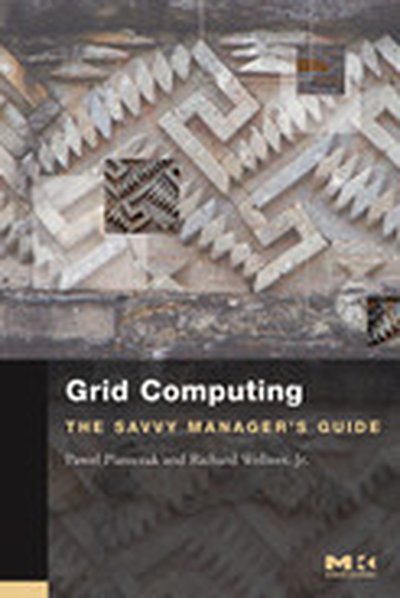
Grid Computing

A decade ago, the corporate world viewed grid computing as a curiosity. Today, it views it as an opportunity--a chance to reduce costs, improve performance, fund new projects, and take advantage of under-utilized capacity. The engineering behind this transformation has been amply documented. Until now, however, little has been written to prepare managers, executives, and other decision-makers to implement grid computing in a sensible and effective way.Grid Computing: The Savvy Manager's Guide examines the technology from a rigorous business perspective, equipping you with the practical knowledge you need to assess your options and determine what grid computing approach is right for your enterprise. This book is heavy on real-world experience, distilling from a rich assortment of case studies the best practices currently at work in a variety of industries. Always attentive to grid computing’s many competitive advantages, it is also realistic about the challenges of selling the idea to staff and making it a part of your company’s culture. Sketches the history of grid computing, showing how it made the leap from academia to business. Examines the criteria you'll need to meet to make your network "grid-enabled." Explains how a grid-based solution can be made to meet key organizational requirements, including security, scheduling, data storage, and fault-tolerance. Surveys the approaches currently available and helps you choose the one that will best meet your needs, both now and in the future. Focuses heavily on the competitive advantages you can reap from grid computing, and provides advice on convincing your organization to adopt grid computing and making a successful transition.

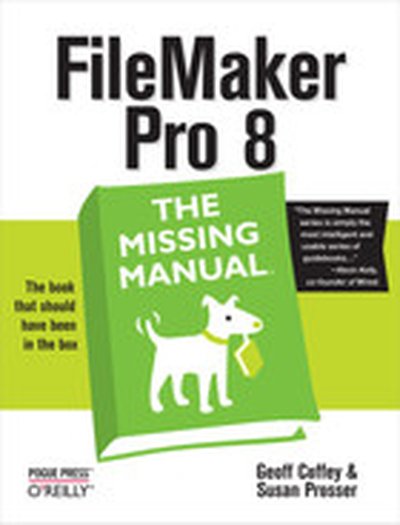
FileMaker Pro 8: The Missing Manual

Used by millions worldwide, FileMaker Pro is an award-winning database program for managing people, projects, images, assets, and other information. It's easy to use and totally customizable--so long as you know what you're doing. But FileMaker Pro doesn't come with a printed manual, so FileMaker Pro: The Missing Manual is the authoritative, jargon-free book that should have been in the box. FileMaker Pro: The Missing Manual approaches FileMaker the way FileMaker approaches you: it's user-friendly and seemingly straightforward enough, but it offers plenty of substance worthy of deeper exploration. Packed with practical information as well as countless expert tips and invaluable guidance, it's an in-depth guide to designing and building useful databases with the powerful and pliable FileMaker Pro. Covering FileMaker for both Windows and Macintosh, FileMaker Pro: The Missing Manual is ideal for small business users, home users, school teachers, developers--anyone who wants to organize information efficiently and effectively. Whether you want to run a business, publish a shopping cart on the Web, plan a wedding, manage a student information system at your school, or program databases for clients, this book delivers. Author Geoff Coffey has many years of experience using FileMaker Pro (he was, in fact, an early beta tester for the product). Author Susan Prosser is a FileMaker Certified Developer who trains other developers. Together, Coffey and Prosser show you how to: Get FileMaker up and running quickly and smoothly Import and organize information with ease Design relational databases that are simple to use, yet powerful Take advantage of FileMaker Pro calculation capabilities Automate processes with scripting Customize FileMaker Pro to your needs and preferences Share information with other people (coworkers, clients, and customers) and other programs Understand and select the best security options What could easily come across as dry and intimidating--things like relational theory, calculations, and scripting--are presented in a way that is interesting and intuitive to mainstream users. In no time, you'll be working more productively and efficiently using FileMaker Pro.

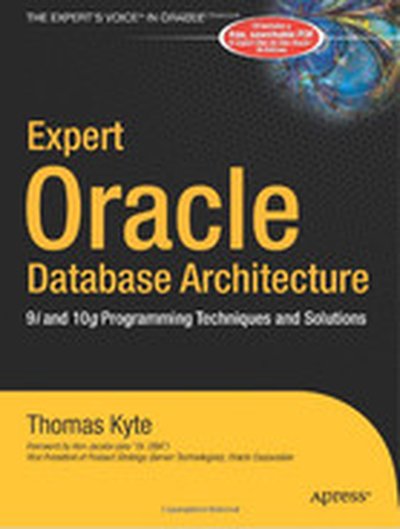
Expert Oracle Database Architecture: 9i and 10g Programming Techniques and Solutions

This is a defining book on the Oracle database for any developer or database administrator who works with Oracle-driven database applications. Tom Kyte has a simple philosophy: you can treat Oracle as a black box and just stick data into it or you can understand how it works and exploit it as a powerful computing environment. If you choose the latter, then you will find that there are few information management problems that you cannot solve quickly and elegantly. Expert Oracle Database Architecture is the first of a three-book series that completely explores and defines the Oracle database. It covers all of the most important Oracle architecture features, including: Files, memory structures and processes Locking and latching Transactions, concurrency and multi-versioning Tables and Indexes Datatypes Partitioning and parallelism Each feature is taught in a proof-by-example manner, not only discussing what it is, but also how it works, how to implement software using it, and the common pitfalls associated with it. This fully revised edition covers both the 9 i and 10 g versions. It also comes with a CD containing a searchable PDF of the 8 i version of the book.M Tom has fully revised and expanded the architecture-related sections from Expert One-on-One Oracle (a searchable PDF of which is included on the CD accompanying this book), and added substantial new material. He focuses solely on 9 i and 10 g architecture in this book and refers to the CD for 8 i-specific details. The number of changes will surprise you. In summary, this book provides a one-stop resource containing deep wisdom on the design, development and administration of Oracle applications, written by one of the world's foremost Oracle experts, Thomas Kyte.

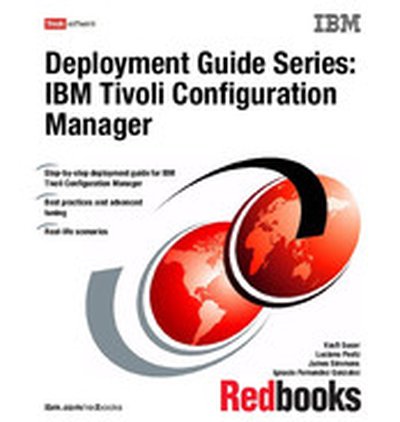
Deployment Guide Series: IBM Tivoli Configuration Manager

IBM Tivoli Configuration Manager controls software distribution and asset management inventory in a multiplatform environment. It is designed for configuration, distribution, change, version, and asset management in a distributed computing environment. Working on top of IBM Tivoli Management Framework, IBM Tivoli Configuration Manager provides an integrated solution for managing complex, distributed enterprise environments. This IBM Redbooks publication introduces the IBM Tivoli Configuration Manager logical and physical components and covers detailed planning and implementation steps to deploy IBM Tivoli Configuration Manager in small-to-medium and large-sized environments, including IBM AIX 5L, Microsoft Windows, Linux, and IBM OS/400 systems. In addition, we talk about best practices, advanced customization, and tuning topics for IBM Tivoli Configuration Manager. This book will be useful for IT specialists responsible for implementing IBM Tivoli Configuration Manager V4.2.x in customer environments. Please note that the additional material referenced in the text is not available from IBM.

Expert Oracle PL/SQL

Experienced PL/SQL programmers and Oracle developers will learn to master Oracle's procedural extension to industry-standard SQL. Using this authoritative resource, readers will become experts at developing robust, high-performance enterprise applications with PL/SQL. Detailed examples describe the practical aspect of each feature, and provide ideas to the reader of how they can best exploit the functionality.

Experiences with Oracle 10g Database for Linux on zSeries

Linux on zSeries offers many advantages to customers who rely upon IBM mainframe systems to run their businesses. Linux on zSeries takes advantage of the qualities of service in the zSeries hardware—making it a robust industrial strength Linux. This provides an excellent platform for consolidating Oracle databases that exist in your enterprise. This IBM Redbooks publication describes experiences gained while installing and testing Oracle10g for Linux on zSeries, such as: -Installing a single instance database of Oracle10g instances for Linux on zSeries Interested readers include database consultants, installers, administrators, and system programmers.

THE POWER OF THE PURSE: HOW SMART BUSINESSES ARE ADAPTING TO THE WORLD'S MOST IMPORTANT CONSUMERS—WOMEN

Women now drive some 80% of all buying decisions. By 2010, they'll account for half of America's private wealth: $13 trillion dollars. A few remarkable companies have learned how to refocus on women -- and, in so doing, have achieved truly stunning results. In The Power of the Purse, top journalist Fara Warner takes you behind the scenes at those companies, revealing how they did it -- and how you can, too. Unlike previous books on marketing to women, this one doesn't settle for generalities: it offers in-depth, start-to-finish case studies. Discover how McDonald's turned around its business by recognizing women as full-fledged consumers, not just 'Moms.' Learn how Kodak's digital camera business soared from fourth to first by recognizing women's importance as family 'memory makers'. See how P G built Swiffer into a cultural revolution, and how the diamond industry did the same for right-hand rings. Watch Bratz topple Barbie, Torrid create its enormously successful plus-size stores for teenagers, and Avon connect with a radically new generation of women. From Nike to Home Depot, each story is unique -- but in every case, these companies put women at the center of their strategies, and listened intently to what real women consumers were telling them. It's not about 'painting your products pink': it's about transforming the way you think about women. Do that, and you'll create products that sell better to everyone.

Moving Objects Databases

Moving Objects Databases is the first uniform treatment of moving objects databases, the technology that supports GPS and RFID. It focuses on the modeling and design of data from moving objects — such as people, animals, vehicles, hurricanes, forest fires, oil spills, armies, or other objects — as well as the storage, retrieval, and querying of that very voluminous data. It includes homework assignments at the end of each chapter, exercises throughout the text that students can complete as they read, and a solutions manual in the back of the book. This book is intended for graduate or advanced undergraduate students. It is also recommended for computer scientists and database systems engineers and programmers in government, industry and academia; professionals from other disciplines, e.g., geography, geology, soil science, hydrology, urban and regional planning, mobile computing, bioterrorism and homeland security, etc. Focuses on the modeling and design of data from moving objects--such as people, animals, vehicles, hurricanes, forest fires, oil spills, armies, or other objects--as well as the storage, retrieval, and querying of that very voluminous data. Demonstrates through many practical examples and illustrations how new concepts and techniques are used to integrate time and space in database applications. Provides exercises and solutions in each chapter to enable the reader to explore recent research results in practice.

BusinessObjects XI (Release 2): The Complete Reference

This book is a must read for anyone deploying BusinessObjects. It covers everything from planning your upgrade to the latest release, to best practices in universe design, and powerful report creation that maximizes business insight. This book covers the most frequently used features for the full BI suite, in one comprehensive book. There's in depth coverage of Designer, security via the Central Management Console, InfoView, Web Intelligence, and Desktop Intelligence. It goes beyond step-by-step instructions to cover how and why in a business context. Transition notes are interspersed for version 5 and 6 customers to understand the biggest changes in XI Release 2. If you drive BI requirements in your company or are a data warehouse program manager, Business Objects administrator, report author or consumer, this book is for you.

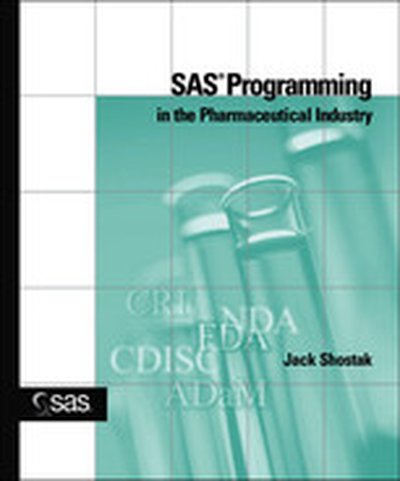
SAS® Programming in the Pharmaceutical Industry

At last! A real-world reference guide for clinical trial SAS programming, packed with solutions that programmers can apply to their day-to-day problems. Discover key techniques and tools available within Base SAS (including the macro language and PROC SQL), SAS/GRAPH, and SAS/STAT that can be used to resolve many common issues in working with clinical trial data. Organized to reflect the statistical programmer's work flow, this user-friendly text begins with an introduction to the working environment, then presents chapters on importing and massaging data into analysis data sets, producing clinical trial output, and exporting data. Valuable plug-and-play programming examples are provided throughout. Whether you're a novice seeking an introduction to SAS programming for the pharmaceutical industry or a junior-level programmer exploring new approaches to problem solving, you'll find a wealth of practical suggestions to help you sharpen your skills.

Microsoft® SQL Server 2005: Changing the Paradigm (SQL Server 2005 Public Beta Edition)

Microsoft SQL Server 2005: Changing the Paradigm (SQL Server 2005 Public Beta Edition) will prepare database administrators for upcoming changes in SQL Server 2005. Obtain the skills necessary to run SQL Server 2005 from the experts at Microsoft Gold Partner. Get a head-start to understanding the new concepts and features of SQL Server 2005 from the database administrator's perspective, including: SQL Server 2005 Architecture Tool Sets Scalability, Reliability and High Availability Chapter Performance Tuning Replication .NET CLR Integration DTS and Business Intelligence Minimize the surprises in SQL Server 2005 with the help of Microsoft SQL Server 2005: Changing the Paradigm (SQL Server 2005 Public Beta Edition).

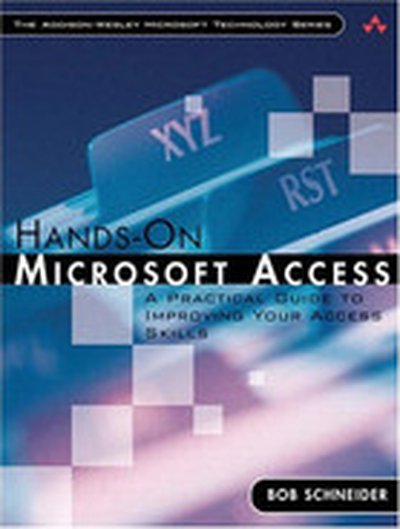
Hands-On Microsoft Access: A Practical Guide to Improving Your Access Skills

Praise for Hands-On Microsoft Access “Bob has distilled the essence of database design and Access development into a highly valuable and easily understandable resource that I wish was available when I first started out.” —Graham R. Seach, Microsoft Access MVP “If you’ve been using Access with that typical uncertainty, asking yourself 'Just how could I do that?' or 'Why isn’t this working?', if you’d like to know what you’re doing before you hit the wall, this book is probably perfect for you.” —Olaf Rabbachin, CEO, IntuiDev IT-solutions “Life at the cutting edge of Access development is exciting and very challenging. The knowledge and experience gained over many years of research and trial-and-error has been hard won. But Bob's new book encapsulates the knowledge we now take for granted, and for the first time the beginner is afforded the opportunity to bypass all that hard work. In this his latest work, Bob has distilled the essence of database design and Access development into a highly valuable and easily understandable resource that I wish was available when I first started out.” —Graham R Seach, MCP, MCAD, MCSD, Microsoft Access MVP, author “This is an excellent book for beginners, with an easy reading style. It is now on my recommended list of books that I hand out in every Access class that I teach.” —M.L. “Sco” Scofield, Microsoft Access MVP, MCSD, Senior Instructor, Scofield Business Services “If you've been using Access with that typical uncertainty, asking yourself 'Just how could I do that?' or 'Why isn't this working?', or if you'd like to know what you're doing before you hit the wall, this book is perfect for you. Access is a tremendous product and a database is created using a few clicks; but without at least some theoretical background you're bound to encounter problems soon. I wish a book like this one would've been available when I started getting deeper into working with Access some ten years ago.” —Olaf Rabbachin, CEO, IntuiDev IT-solutions “This book is for any level DB developer/user. It is packed full of real-world examples and solutions that are not the normal Northwind database that most Access books use. The examples and the technical content surrounding them are the real strength of the book. Schneider uses real-world scenarios that make for excellent reading. It made me want to go and redo a lot of my older Access DBs that were not written as well as they could have been. This book taught me different approaches to doing some routine tasks.” —Ron Crumbaker, Microsoft MVP – SMS “While a very powerful application (or perhaps because of its power), Microsoft Access does have a steep learning curve and can be intimidating to new users. Bob Schneider has managed to write a book that's both understandable and enjoyable to read. His examples should be understandable to all readers, and he extends them in a logical manner. This book should leave the reader well equipped to make use of what many consider to be the best desktop database product available.” —Doug Steele, Microsoft Access MVP “The author takes what is potentially a very dry subject and adds fantastic color through entertaining analogies and metaphors. For instance, his examples using the NBA, the Beatles, and Donald Rumsfeld help us 'get it' without realizing we have just traversed what could be very stale database theory. Brilliant!” —Kel Good, MCT, MCSD for Microsoft.NET, Custom Software Development Inc. (www.customsoftware.ca) Go from Access “beginner” to Access “master”! Millions of people use Microsoft Access, but only a small fraction of them are really comfortable with it. If you're ready to go “beyond the wizards”—and become a confident, highly effective Access user— Hands-On Microsoft Access was written for you. In plain English, Bob Schneider helps you master crucial principles for building flexible, powerful databases. Discover how to enter data more easily, retrieve it more freely, manipulate it more successfully, analyze it with greater sophistication, and share it more effectively. Schneider's dozens of hands-on examples thoroughly demystify Access, and his friendly, conversational style makes it more approachable than ever before. Hands-On Microsoft Access presents solutions for the challenges you're most likely to encounter, including How do Access objects and interfaces fit together, and when should I use each one? What's the best way for me to organize my fields into tables? How can I modify the tables, forms, and reports an Access wizard created for me? How can I design forms and reports for people to use more effectively? How do primary keys and relationships work, and why are they so important? How do I make sure my data stays consistent and accurate? How do I build queries that give me the right information—quickly, efficiently, and reliably? How do I use data from other sources, or deliver Access data to other people or programs? What are PivotTables and PivotCharts, what can I do with them, and how do I use them? Written for Access 2003, this book also contains special instructions for Access 2002 users and extensive coverage of issues relevant to Access 95, 97, and 2000.