D&A value is not possible without data storytelling that offers a better way to engage communication findings than just BI reporting or data science notebooks. Join this session to know about the fundamentals of data storytelling and how to fill the gap between data science speakers and decision makers. It further discusses how to tell the best data storytelling and how to upscale data storytelling for future in landscape of GenAI.
 talk-data.com
Topic
Data Science
machine_learning
statistics
analytics
1516
tagged
Activity Trend
68
peak/qtr
2020-Q1
2026-Q2
Top Events
O'Reilly Data Science Books
324
DATA MINER Big Data Europe Conference 2020
107
DataFramed
101
O'Reilly Data Engineering Books
84
DataTalks.Club
66
Data Engineering Podcast
59
Data Hackers
54
The Future of Data Podcast | conversation with leaders, influencers, and change makers in the World of Data & Analytics
44
Databricks DATA + AI Summit 2023
43
Data Skeptic
39
Data Career Podcast: Helping You Land a Data Analyst Job FAST
38
Making Data Simple
37
This presentation provides a look at the multiple Hype Cycles that are pertinent to AI initiatives. This would include: Hype Cycle for AI, generative AI, data science and machine learning platforms, analytics and business intelligence, and possibly others.
D&A value is not possible without data storytelling that offers a better way to engage communication findings than just BI reporting or data science notebooks. Join this session to know about the fundamentals of data storytelling and how to fill the gap between data science speakers and decision makers. It further discusses how to tell the best data storytelling and how to upscale data storytelling for future in landscape of GenAI.
GPU acceleration is transforming how data scientists tackle computationally intensive problems in the AI and materials science fields. When dealing with billions of potential molecular combinations or massive datasets requiring dimensionality reduction, traditional CPU approaches often become prohibitively slow and expensive. How can data professionals determine when GPU acceleration will provide meaningful benefits to their workflows? Understanding the right applications for this technology can mean the difference between waiting hours versus minutes for critical results. Nick Becker is a Group Product Manager at NVIDIA, focused on building RAPIDS and the broader accelerated data science ecosystem. Nick has a professional background in technology and government. Prior to NVIDIA, he worked at Enigma Technologies, a data science startup. Before Enigma, he conducted economics research and forecasting at the Federal Reserve Board of Governors, the central bank of the United States. Dan Hannah is an Associate Director at SES AI Corporation. At SES, Dan leads a research program focused on discovering new battery materials using machine learning, chemical informatics, and physics-driven simulations. Prior to joining SES, Dan spent several years as a data scientist in the cybersecurity industry. Dan holds a Ph.D. in Physical Chemistry from Northwestern University and did a postdoctoral fellowship at Berkeley National Lab, where his focus was the discovery of novel inorganic materials for energy applications. In the episode, Richie, Nick, and Dan explore the quest for new battery technologies, the role of data science and machine learning in material discovery, the integration of NVIDIA's GPU technology, the balance between computational simulations and lab work, and much more. Links Mentioned in the Show: NVIDIA RAPIDSSES AI CorporationConnect with Dan and NickCareer Track: Machine Learning Scientist in PythonRelated Episode: Data Science Trends from 2 Kaggle Grandmasters with Jean-Francois Puget, Distinguished Engineer at NVIDIA & Chris Deotte, Senior Data Scientist at NVIDIARewatch sessions from RADAR: Skills Edition New to DataCamp? Learn on the go using the DataCamp mobile appEmpower your business with world-class data and AI skills with DataCamp for business
Rapid changes demand innovative decision-making tools beyond traditional methods. Businesses are turning to AI, BI, and data science to gain a competitive edge. The perfect blend of these technologies can be a true differentiator.
Take a quick look at what to expect from this session:
-Challenges in data and analytics today
-Unlocking the power of AI, BI, and data science
-The transformative role of AI-powered self-service BI platforms
-Live demos of next-generation analytics in action
Learn how these innovations can drive better decisions to deliver transformative business outcomes.
What happens when a passion for data science meets the fast-paced world of stock trading? In this episode, we're joined by Matt Dancho, Founder of Business Science, Quant Science, and the creator of the popular tidyquant package, who shares his journey from data scientist to launching Business Science and the projects and packages he's built along the way. We explore how he leverages Python and R to trade stocks, as well as the lessons he's learned from building a business in the data. Whether you're a data professional, a stock market enthusiast, or an aspiring entrepreneur, this episode is packed with actionable insights to level up your skills and strategies. What You'll Learn: Taking your data skills and furthering your career to make money. Tips for working with stock data. How AI is changing analytics Register for free to be part of the next live session: https://bit.ly/3XB3A8b Follow us on Socials: LinkedIn YouTube Instagram (Mavens of Data) Instagram (Maven Analytics) TikTok Facebook Medium X/Twitter
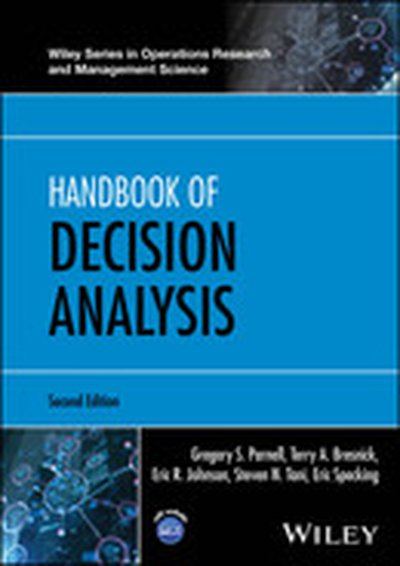
Qualitative and quantitative techniques to apply decision analysis to real-world decision problems, supported by sound mathematics, best practices, soft skills, and more With substantive illustrations based on the authors’ personal experiences throughout, Handbook of Decision Analysis describes the philosophy, knowledge, science, and art of decision analysis. Key insights from decision analysis applications and behavioral decision analysis research are presented, and numerous decision analysis textbooks, technical books, and research papers are referenced for comprehensive coverage. This book does not introduce new decision analysis mathematical theory, but rather ensures the reader can understand and use the most common mathematics and best practices, allowing them to apply rigorous decision analysis with confidence. The material is supported by examples and solution steps using Microsoft Excel and includes many challenging real-world problems. Given the increase in the availability of data due to the development of products that deliver huge amounts of data, and the development of data science techniques and academic programs, a new theme of this Second Edition is the use of decision analysis techniques with big data and data analytics. Written by a team of highly qualified professionals and academics, Handbook of Decision Analysis includes information on: Behavioral decision-making insights, decision framing opportunities, collaboration with stakeholders, information assessment, and decision analysis modeling techniques Principles of value creation through designing alternatives, clear value/risk tradeoffs, and decision implementation Qualitative and quantitative techniques for each key decision analysis task, as opposed to presenting one technique for all decisions. Stakeholder analysis, decision hierarchies, and influence diagrams to frame descriptive, predictive, and prescriptive analytics decision problems to ensure implementation success Handbook of Decision Analysis is a highly valuable textbook, reference, and/or refresher for students and decision professionals in business, management science, engineering, engineering management, operations management, mathematics, and statistics who want to increase the breadth and depth of their technical and soft skills for success when faced with a professional or personal decision.

Ganesh Kumar Suresh: Agile Meets Data Science: Agile Strategies for High-Impact Data Science & Machine Learning Projects
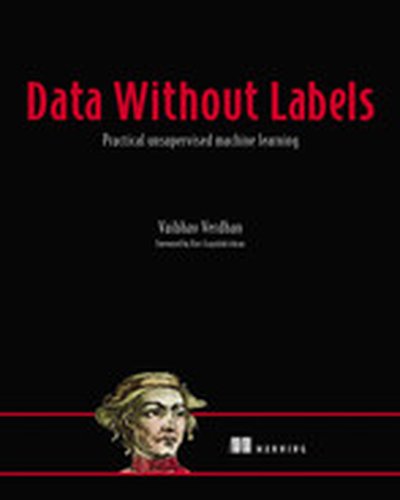
Discover all-practical implementations of the key algorithms and models for handling unlabeled data. Full of case studies demonstrating how to apply each technique to real-world problems. In Data Without Labels you’ll learn: Fundamental building blocks and concepts of machine learning and unsupervised learning Data cleaning for structured and unstructured data like text and images Clustering algorithms like K-means, hierarchical clustering, DBSCAN, Gaussian Mixture Models, and Spectral clustering Dimensionality reduction methods like Principal Component Analysis (PCA), SVD, Multidimensional scaling, and t-SNE Association rule algorithms like aPriori, ECLAT, SPADE Unsupervised time series clustering, Gaussian Mixture models, and statistical methods Building neural networks such as GANs and autoencoders Dimensionality reduction methods like Principal Component Analysis and multidimensional scaling Association rule algorithms like aPriori, ECLAT, and SPADE Working with Python tools and libraries like sci-kit learn, numpy, Pandas, matplotlib, Seaborn, Keras, TensorFlow, and Flask How to interpret the results of unsupervised learning Choosing the right algorithm for your problem Deploying unsupervised learning to production Maintenance and refresh of an ML solution Data Without Labels introduces mathematical techniques, key algorithms, and Python implementations that will help you build machine learning models for unannotated data. You’ll discover hands-off and unsupervised machine learning approaches that can still untangle raw, real-world datasets and support sound strategic decisions for your business. Don’t get bogged down in theory—the book bridges the gap between complex math and practical Python implementations, covering end-to-end model development all the way through to production deployment. You’ll discover the business use cases for machine learning and unsupervised learning, and access insightful research papers to complete your knowledge. About the Technology Generative AI, predictive algorithms, fraud detection, and many other analysis tasks rely on cheap and plentiful unlabeled data. Machine learning on data without labels—or unsupervised learning—turns raw text, images, and numbers into insights about your customers, accurate computer vision, and high-quality datasets for training AI models. This book will show you how. About the Book Data Without Labels is a comprehensive guide to unsupervised learning, offering a deep dive into its mathematical foundations, algorithms, and practical applications. It presents practical examples from retail, aviation, and banking using fully annotated Python code. You’ll explore core techniques like clustering and dimensionality reduction along with advanced topics like autoencoders and GANs. As you go, you’ll learn where to apply unsupervised learning in business applications and discover how to develop your own machine learning models end-to-end. What's Inside Master unsupervised learning algorithms Real-world business applications Curate AI training datasets Explore autoencoders and GANs applications About the Reader Intended for data science professionals. Assumes knowledge of Python and basic machine learning. About the Author Vaibhav Verdhan is a seasoned data science professional with extensive experience working on data science projects in a large pharmaceutical company. Quotes An invaluable resource for anyone navigating the complexities of unsupervised learning. A must-have. - Ganna Pogrebna, The Alan Turing Institute Empowers the reader to unlock the hidden potential within their data. - Sonny Shergill, Astra Zeneca A must-have for teams working with unstructured data. Cuts through the fog of theory ili Explains the theory and delivers practical solutions. - Leonardo Gomes da Silva, onGRID Sports Technology The Bible for unsupervised learning! Full of real-world applications, clear explanations, and excellent Python implementations. - Gary Bake, Falconhurst Technologies
Session focused on data, exploratory data analysis (EDA), and basic feature engineering as part of a 7-week data science project program. Includes guidance on finding/collecting datasets, quick EDA to understand the data, and starting feature engineering.
Two outstanding founders. One hour full of innovation, impact, and inspiration. Meet Nina Germanus (Green Fusion) and Nina Heine (SHIT2POWER) in an exclusive fireside chat at GITEX Europe in Berlin. Together, they will discuss how innovative technologies are transforming the energy sector—and why female founders are key drivers of this change.
In this episode, we welcome you to the 2025 Women in Data Science Charlottesville event hosted at the University of Virginia School of Data Science. WiDS Charlottesville seeks to increase the participation of women in data science and feature outstanding women doing outstanding work.
Leading the conversation is Lisa Bowers, a former executive with Genentech/Roche and current director of UVA’s Enterprise Studio. She is joined by our keynote speaker Lexi Reese, CEO and Co-Founder of Lanai Software and UVA alumna, who brings experience spanning tech giants like Google and Gusto. Drawing from their wealth of knowledge at the intersection of innovation and enterprise, Reese and Bowers share their unique perspectives on how data science is shaping the future of work and innovation.
From empowering the next generation of data scientists to the real-world impact of AI, this fireside chat dives deep into what it means to build meaningful, transformative careers in data science.
Kickoff and project setup for Week 1 of the Build & Learn: Data Science Meetup.
Introductory keynote session featuring Katarzyna (Kasia) Stoltmann (Head of Data Science & Artificial Intelligence, AstraZeneca; Founder, Women in Big Data Berlin), Aliya Boranbayeva (Communications & Events, Hertie School Data Science Lab), and Neil Metzler (Founder, Stealth AI Startup; Host of 'Your Next Big Thing'; ally in tech) discussing community development and allyship.
Successful data science teams require the alignment of technical talent, business goals and collaborative culture to drive high-impact analytics outcomes. Leaders and members of these teams have a vital role to play to ensure optimal collaboration and impact. This session highlights what modern data science teams look like, the vital and exciting work they do, and how to ensure these teams thrive.
Rapid changes demand innovative decision-making tools beyond traditional methods. Businesses are turning to AI, BI, and data science to gain a competitive edge. The perfect blend of these technologies can be a true differentiator.
- Take a quick look at what to expect from this session
- Challenges in data and analytics today
- Unlocking the power of AI, BI, and data science
- The transformative role of AI-powered self-service BI platforms
- Live demos of next-generation analytics in action
Learn how these innovations can drive better decisions to deliver transformative business outcomes.
How can data science accelerate the energy transition? In this session, UK Power Networks’ Data Science team presents real-world tools driving a smarter, more flexible electricity grid on the path to Net Zero. From democratising access to grid insights to automating decision-making for clean energy, this talk highlights how applied AI and analytics are transforming infrastructure at scale, with lessons for any data professional tackling high-impact, real-world problems.
While AI is popular in the media, surveys show about half of organizations struggle with basic data science, fearing they will fall behind. This fear can hinder progress, especially in certain industries. However, they don't have to choose between AI and foundational data science. By combining predictive and prescriptive analytics, organizations can leverage the best of both worlds to create better solutions.
Five years ago, Rolls-Royce had no dedicated data science capabilities. Today, over 7,000 users—from coders to citizen data scientists—actively leverage AI. This transformation extends beyond technology, emphasizing AI democratization, a data-driven culture, and responsible scaling. This session explores key strategies for enterprise-wide adoption, from use case ideation to realisation of significant AI value.
D&A value is not possible without data storytelling that offers a better way to engage communication findings than just BI reporting or data science notebooks. Join this session to know about the fundamentals of data storytelling and how to fill the gap between data science speakers and decision makers. It further discusses how to tell the best data storytelling and how to upscale data storytelling for future in landscape of GenAI.