talk-data.com talk-data.com

Topic

DataViz

Data Visualization

bi charts dashboards

434

tagged

Activity Trend

43 peak/qtr
2020-Q1 2026-Q1

Activities

434 activities · Newest first

Data Warehousing Fundamentals for IT Professionals

Cutting-edge content and guidance from a data warehousing expert—now expanded to reflect field trends Data warehousing has revolutionized the way businesses in a wide variety of industries perform analysis and make strategic decisions. Since the first edition of Data Warehousing Fundamentals, numerous enterprises have implemented data warehouse systems and reaped enormous benefits. Many more are in the process of doing so. Now, this new, revised edition covers the essential fundamentals of data warehousing and business intelligence as well as significant recent trends in the field. The author provides an enhanced, comprehensive overview of data warehousing together with in-depth explanations of critical issues in planning, design, deployment, and ongoing maintenance. IT professionals eager to get into the field will gain a clear understanding of techniques for data extraction from source systems, data cleansing, data transformations, data warehouse architecture and infrastructure, and the various methods for information delivery. This practical Second Edition highlights the areas of data warehousing and business intelligence where high-impact technological progress has been made. Discussions on developments include data marts, real-time information delivery, data visualization, requirements gathering methods, multi-tier architecture, OLAP applications, Web clickstream analysis, data warehouse appliances, and data mining techniques. The book also contains review questions and exercises for each chapter, appropriate for self-study or classroom work, industry examples of real-world situations, and several appendices with valuable information. Specifically written for professionals responsible for designing, implementing, or maintaining data warehousing systems, Data Warehousing Fundamentals presents agile, thorough, and systematic development principles for the IT professional and anyone working or researching in information management.
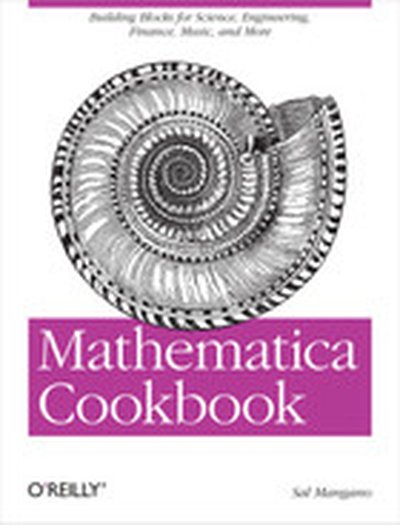

Mathematica Cookbook

Visit the catalog page for Mathematica CookbookVisit the errata page for Mathematica Cookbook Mathematica Cookbook helps you master the application's core principles by walking you through real-world problems. Ideal for browsing, this book includes recipes for working with numerics, data structures, algebraic equations, calculus, and statistics. You'll also venture into exotic territory with recipes for data visualization using 2D and 3D graphic tools, image processing, and music. Although Mathematica 7 is a highly advanced computational platform, the recipes in this book make it accessible to everyone -- whether you're working on high school algebra, simple graphs, PhD-level computation, financial analysis, or advanced engineering models. Learn how to use Mathematica at a higher level with functional programming and pattern matching Delve into the rich library of functions for string and structured text manipulation Learn how to apply the tools to physics and engineering problems Draw on Mathematica's access to physics, chemistry, and biology data Get techniques for solving equations in computational finance Learn how to use Mathematica for sophisticated image processing Process music and audio as musical notes, analog waveforms, or digital sound samples

R in a Nutshell

Why learn R? Because it's rapidly becoming the standard for developing statistical software. R in a Nutshell provides a quick and practical way to learn this increasingly popular open source language and environment. You'll not only learn how to program in R, but also how to find the right user-contributed R packages for statistical modeling, visualization, and bioinformatics. The author introduces you to the R environment, including the R graphical user interface and console, and takes you through the fundamentals of the object-oriented R language. Then, through a variety of practical examples from medicine, business, and sports, you'll learn how you can use this remarkable tool to solve your own data analysis problems. Understand the basics of the language, including the nature of R objects Learn how to write R functions and build your own packages Work with data through visualization, statistical analysis, and other methods Explore the wealth of packages contributed by the R community Become familiar with the lattice graphics package for high-level data visualization Learn about bioinformatics packages provided by Bioconductor "I am excited about this book. R in a Nutshell is a great introduction to R, as well as a comprehensive reference for using R in data analytics and visualization. Adler provides 'real world' examples, practical advice, and scripts, making it accessible to anyone working with data, not just professional statisticians."

Making Sense of Data II: A Practical Guide to Data Visualization, Advanced Data Mining Methods, and Applications

A hands-on guide to making valuable decisions from data using advanced data mining methods and techniques This second installment in the Making Sense of Data series continues to explore a diverse range of commonly used approaches to making and communicating decisions from data. Delving into more technical topics, this book equips readers with advanced data mining methods that are needed to successfully translate raw data into smart decisions across various fields of research including business, engineering, finance, and the social sciences. Following a comprehensive introduction that details how to define a problem, perform an analysis, and deploy the results, Making Sense of Data II addresses the following key techniques for advanced data analysis: Data Visualization reviews principles and methods for understanding and communicating data through the use of visualization including single variables, the relationship between two or more variables, groupings in data, and dynamic approaches to interacting with data through graphical user interfaces. Clustering outlines common approaches to clustering data sets and provides detailed explanations of methods for determining the distance between observations and procedures for clustering observations. Agglomerative hierarchical clustering, partitioned-based clustering, and fuzzy clustering are also discussed. Predictive Analytics presents a discussion on how to build and assess models, along with a series of predictive analytics that can be used in a variety of situations including principal component analysis, multiple linear regression, discriminate analysis, logistic regression, and Naïve Bayes. Applications demonstrates the current uses of data mining across a wide range of industries and features case studies that illustrate the related applications in real-world scenarios. Each method is discussed within the context of a data mining process including defining the problem and deploying the results, and readers are provided with guidance on when and how each method should be used. The related Web site for the series ( www.makingsenseofdata.com) provides a hands-on data analysis and data mining experience. Readers wishing to gain more practical experience will benefit from the tutorial section of the book in conjunction with the TraceisTM software, which is freely available online. With its comprehensive collection of advanced data mining methods coupled with tutorials for applications in a range of fields, Making Sense of Data II is an indispensable book for courses on data analysis and data mining at the upper-undergraduate and graduate levels. It also serves as a valuable reference for researchers and professionals who are interested in learning how to accomplish effective decision making from data and understanding if data analysis and data mining methods could help their organization.

Making Sense of Data: A Practical Guide to Exploratory Data Analysis and Data Mining

A practical, step-by-step approach to making sense out of data Making Sense of Data educates readers on the steps and issues that need to be considered in order to successfully complete a data analysis or data mining project. The author provides clear explanations that guide the reader to make timely and accurate decisions from data in almost every field of study. A step-by-step approach aids professionals in carefully analyzing data and implementing results, leading to the development of smarter business decisions. With a comprehensive collection of methods from both data analysis and data mining disciplines, this book successfully describes the issues that need to be considered, the steps that need to be taken, and appropriately treats technical topics to accomplish effective decision making from data. Readers are given a solid foundation in the procedures associated with complex data analysis or data mining projects and are provided with concrete discussions of the most universal tasks and technical solutions related to the analysis of data, including: Problem definitions Data preparation Data visualization Data mining Statistics Grouping methods Predictive modeling Deployment issues and applications Throughout the book, the author examines why these multiple approaches are needed and how these methods will solve different problems. Processes, along with methods, are carefully and meticulously outlined for use in any data analysis or data mining project. From summarizing and interpreting data, to identifying non-trivial facts, patterns, and relationships in the data, to making predictions from the data, Making Sense of Data addresses the many issues that need to be considered as well as the steps that need to be taken to master data analysis and mining.

Visualization Handbook

The Visualization Handbook provides an overview of the field of visualization by presenting the basic concepts, providing a snapshot of current visualization software systems, and examining research topics that are advancing the field. This text is intended for a broad audience, including not only the visualization expert seeking advanced methods to solve a particular problem, but also the novice looking for general background information on visualization topics. The largest collection of state-of-the-art visualization research yet gathered in a single volume, this book includes articles by a “who’s who? of international scientific visualization researchers covering every aspect of the discipline, including: · Virtual environments for visualization · Basic visualization algorithms · Large-scale data visualization · Scalar data isosurface methods · Visualization software and frameworks · Scalar data volume rendering · Perceptual issues in visualization · Various application topics, including information visualization. * Edited by two of the best known people in the world on the subject; chapter authors are authoritative experts in their own fields; * Covers a wide range of topics, in 47 chapters, representing the state-of-the-art of scientific visualization.

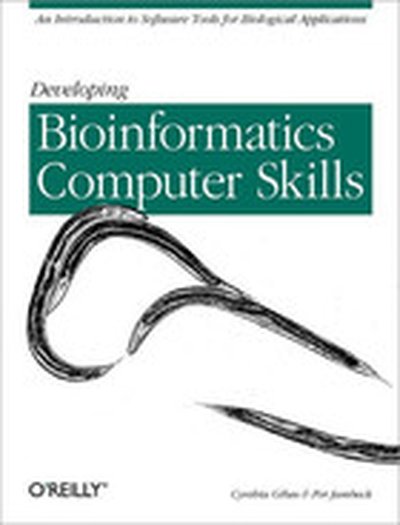
Developing Bioinformatics Computer Skills

Bioinformatics--the application of computational and analytical methods to biological problems--is a rapidly evolving scientific discipline. Genome sequencing projects are producing vast amounts of biological data for many different organisms, and, increasingly, storing these data in public databases. Such biological databases are growing exponentially, along with the biological literature. It's impossible for even the most zealous researcher to stay on top of necessary information in the field without the aid of computer-based tools. Bioinformatics is all about building these tools. Developing Bioinformatics Computer Skills is for scientists and students who are learning computational approaches to biology for the first time, as well as for experienced biology researchers who are just starting to use computers to handle their data. The book covers the Unix file system, building tools and databases for bioinformatics, computational approaches to biological problems, an introduction to Perl for bioinformatics, data mining, and data visualization. Written in a clear, engaging style, Developing Bioinformatics Computer Skills will help biologists develop a structured approach to biological data as well as the tools they'll need to analyze the data.

In today's data-driven landscape, the need for adaptable and versatile reporting is paramount. The challenge often lies in accommodating diverse requirements without overwhelming your report with redundant visuals.\n\nEnter Field Parameters—a robust feature designed to add dynamic flexibility to your reports.\n\nIn this session, attendees will gain hands-on experience in implementing field parameters within a reporting framework. This will empower users to interactively explore their data in a methodical and efficient manner, thereby eliminating the need for multiple static visuals and enhancing the user experience.\nLearn how to make your reports not just informative, but also intuitive and user-friendly through the incorporation of Field Parameters.