talk-data.com talk-data.com

Topic

ibm-db2

83

tagged

Activity Trend

1 peak/qtr
2020-Q1 2026-Q1

Activities

83 activities · Newest first

Architecting and Deploying DB2 with BLU Acceleration

IBM® DB2® with BLU Acceleration is a revolutionary technology that is delivered in DB2 for Linux, UNIX, and Windows Release 10.5. BLU Acceleration delivers breakthrough performance improvements for analytic queries by using dynamic in-memory columnar technologies. Different from other vendor solutions, BLU Acceleration allows the unified computing of OLTP and analytics data inside a single database, therefore, removing barriers and accelerating results for users. With observed hundredfold improvement in query response time, BLU Acceleration provides a simple, fast, and easy-to-use solution for the needs of today's organizations; quick access to business answers can be used to gain a competitive edge, lower costs, and more. This IBM Redbooks® publication introduces the concepts of DB2 with BLU Acceleration. It discusses the steps to move from a relational database to using BLU Acceleration, optimizing BLU usage, and deploying BLU into existing analytic solutions today, with an example of IBM Cognos®. This book also describes integration of DB2 with BLU Acceleration into SAP Business Warehouse (SAP BW) and SAP's near-line storage solution on DB2. This publication is intended to be helpful to a wide-ranging audience, including those readers who want to understand the technologies and those who have planning, deployment, and support responsibilities.
Reliability and Performance with IBM DB2 Analytics Accelerator V4.1

The IBM® DB2® Analytics Accelerator for IBM z/OS® is a high-performance appliance that integrates the IBM zEnterprise® infrastructure with IBM PureData™ for Analytics, powered by IBM Netezza® technology. With this integration, you can accelerate data-intensive and complex queries in a DB2 for z/OS highly secure and available environment. DB2 and the Analytics Accelerator appliance form a self-managing hybrid environment running online transaction processing and online transactional analytical processing concurrently and efficiently. These online transactions run together with business intelligence and online analytic processing workloads. DB2 Analytics Accelerator V4.1 expands the value of high-performance analytics. DB2 Analytics Accelerator V4.1 opens to static Structured Query Language (SQL) applications and row set processing, minimizes data movement, reduces latency, and improves availability. This IBM Redbooks® publication provides technical decision-makers with an understanding of the benefits of version 4.1 of the Analytics Accelerator with DB2 11 for z/OS. It describes the installation of the new functions, and the advantages to existing analytical processes as measured in our test environment. This book also introduces the DB2 Analytics Accelerator Loader V1.1, a tool that facilitates the data population of the DB2 Analytics Accelerator.

Architecting and Deploying IBM DB2 with BLU Acceleration in Your Analytical Environment

IBM® DB2® with BLU Acceleration is a revolutionary technology that is delivered in DB2 for Linux, UNIX, and Windows Release 10.5. BLU Acceleration delivers breakthrough performance improvements for analytic queries by using dynamic in-memory columnar technologies. Different from other vendor solutions, BLU Acceleration allows the unified computing of online transaction processing (OLTP) and analytics data inside a single database, therefore, removing barriers and accelerating results for users. With observed hundredfold improvement in query response time, BLU Acceleration provides a simple, fast, and easy-to-use solution for the needs of today's organizations; quick access to business answers can be used to gain a competitive edge, lower costs, and more. This IBM Redbooks® publication introduces the concepts of DB2 with BLU Acceleration. It discusses the steps to move from a relational database to using BLU Acceleration, optimizing BLU usage, and deploying BLU into existing analytic solutions today, with an example of IBM Cognos®. This book also describes integration of DB2 with BLU Acceleration into SAP Business Warehouse (SAP BW) and SAP's near-line storage solution on DB2. This publication is intended to be helpful to a wide-ranging audience, including those readers who want to understand the technologies and readers who have planning, deployment, and support responsibilities.
IBM DB2 Web Query for i Version 2.1 Implementation Guide

Business Intelligence (BI) is a broad term relating to applications designed to analyze data for purposes of understanding and acting on the key metrics that drive profitability in an enterprise. Key to analyzing that data is providing fast, easy access to it while delivering it in formats or tools that best fit the needs of the end user. At the core of any business intelligence solution are end user query and reporting tools that provide intuitive access to data supporting a spectrum of end users from executives to "power users," from spreadsheet aficionados to the external Internet consumer. IBM® DB2 Web Query for i offers a set of modernized tools for a more robust, extensible, and productive reporting solution than the popular Query for System i tool (also known as Query/400). IBM DB2 Web Query for i preserves investments in the reports developed with Query/400 by offering a choice of importing definitions into the new technology or continuing to run existing Query/400 reports as-is. But it also offers significant productivity and performance enhancements by leveraging the latest in DB2 for i query optimization technology. This IBM Redbooks® publication provides a broad understanding of the new DB2 Web Query product. It entails a group of self-explanatory tutorials to help you get up to speed quickly. Overall, this book is designed for IT users. You can use Part 2, "Tutorials for DB2 Web Query" on page 161, as stand-alone tutorials for anyone who is developing their own queries.

DB2 10.5 with BLU Acceleration

UPGRADE TO THE NEW GENERATION OF DATABASE SOFTWARE FOR THE ERA OF BIG DATA! If big data is an untapped natural resource, how do you find the gold hidden within? Leaders realize that big data means all data, and are moving quickly to extract more value from both structured and unstructured application data. However, analyzing this data can prove costly and complex, especially while protecting the availability, performance and reliability of essential business applications. In the new era of big data, businesses require data systems that can blend always-available transactions with speed-of-thought analytics. DB2 10.5 with BLU Acceleration provides this speed, simplicity, and affordability while making it easier to build next-generation applications with NoSQL features, such as a mongo-styled JSON document store, a graph store, and more. Dynamic in-memory columnar processing and other innovations deliver faster insights from more data, and enhanced pureScale clustering technology delivers high-availability transactions with application-transparent scalability for business continuity. With this book, you'll learn about the power and flexibility of multiworkload, multi-platform database software. Use the comprehensive knowledge from a team of DB2 developers and experts to get started with the latest DB2 trial version you can download at ibm.com/developerworks/downloads/im/db2/. Stay up to date on DB2 by visiting ibm.com/db2/.

Hybrid Analytics Solution using IBM DB2 Analytics Accelerator for z/OS V3.1

The IBM® DB2® Analytics Accelerator Version 3.1 for IBM z/OS® (simply called Accelerator in this book) is a union of the IBM System z® quality of service and IBM Netezza® technology to accelerate complex queries in a DB2 for z/OS highly secure and available environment. Superior performance and scalability with rapid appliance deployment provide an ideal solution for complex analysis. In this IBM Redbooks® publication, we provide technical decision-makers with a broad understanding of the benefits of Version 3.1 of the Accelerator's major new functions. We describe their installation and the advantages to existing analytical processes as measured in our test environment. We also describe the IBM zEnterprise® Analytics System 9700, a hybrid System z solution offering that is surrounded by a complete set of optional packs to enable customers to custom tailor the system to their unique needs..

Oracle to DB2 Conversion Guide: Compatibility Made Easy

This IBM® Redbooks® publication describes IBM DB2® SQL compatibility features. The latest version of DB2 includes extensive native support for the PL/SQL procedural language, new data types, scalar functions, improved concurrency, built-in packages, OCI, SQL*Plus, and more. These features can help with developing applications that run on both DB2 and Oracle and can help simplify the process of moving from Oracle to DB2. In addition, IBM now provides tools to simplify the enablement process, such as the highly scalable IBM Data Movement Tool for moving schema and data into DB2, and an Editor and Profiler for PL/SQL provided by the IBM Data Studio tool suite. This Oracle to DB2 migration guide describes new technology, preferred practices for moving to DB2, and common scenarios that can help you as you move from Oracle to DB2. This book is intended for IT architects and developers who are converting from Oracle to DB2. DB2 compatibility with Oracle is provided through native support. The new capabilities in DB2 that provide compatibility are implemented at the lowest and most intimate levels of the database kernel, as though they were originally engineered for DB2. means that the DB2 implementation is done without the aid of an emulation layer. This intimacy leads to the scalable implementation that DB2 offers, providing identical performance between DB2 compatibility features and DB2 other language elements. For example, DB2 runs SQL PL at the same performance as PL/SQL implementations of the same function.

DB2 10 for Linux on System z Using z/VM v6.2, Single System Image Clusters and Live Guest Relocation

IBM® z/VM® 6.2 introduced significant changes to z/VM with a multi-system clustering technology that allows up to four z/VM instances in a single system image (SSI) cluster. This technology is important because it offers you an attractive alternative to vertical growth by adding new z/VM systems. In the past, this capability required duplicate efforts to install, maintain, and manage each system. With SSI, these duplicate efforts are reduced or eliminated. Support for live guest relocation (LGR) allows you to move Linux virtual servers without disrupting your business or incurring loss of service, thus reducing planned outages. The z/VM systems are aware of each other and take advantage of their combined resources. LGR enables you to relocate guests from a system requiring maintenance to a system that will remain active during maintenance. A major advantage for DB2 v10 customers is that using z/VM 6.2 does not require any changes to existing DB2 structures. This remarkable benefit is due to the fact that DB2 v10 is installed as part of the LInux guest on z/VM and is fully integrated into LGR. This allows you to smoothly move DB2 v10 when you move Linux virtual servers, without interrupting either DB2 v10 or z/VM operations and services. This IBM Redbooks® publication will help you understand how DB2 10 on Linux for System z® behaves while running on a z/VM that is being relocated using z/VM’s 6.2 Live Guest Relocation feature. In this book, we explore memory management, the DB2 Self-tuning memory manager feature, time synchronization, networking, and storage and performance considerations with regards to relocation. We also offer some best practices found during a live guest relocation for DB2 v10.

Delivering Continuity and Extreme Capacity with the IBM DB2 pureScale Feature

The IBM® DB2® pureScale® feature offers clustering technology that helps deliver high availability and exceptional scalability transparent to applications. The DB2 pureScale feature helps you to meet your business needs around availability and scalability, and is also easy to configure and administer. This IBM Redbooks® publication addresses the DB2 pureScale feature that is available in IBM DB2 10.1 for Linux, UNIX, and Windows operating systems. It can help you build skills and deploy the DB2 pureScale feature. This book bundles all the information necessary for a in-depth analysis into the functions of the DB2 pureScale feature, including the actual hardware requirements. It includes validated step-by-step hardware and software installation instructions. In addition, this book provides detailed examples about how to work effectively with a DB2 pureScale cluster and how to plan and run an upgrade for all DB2 related components to DB2 10.1. This book is intended for database administrators (DBAs) who use IBM DB2 10.1 for Linux, UNIX, and Windows operating systems who want to explore and get started with the DB2 pureScale feature.

Unleashing DB2 10 for Linux, UNIX, and Windows

This IBM® Redbooks® publication provides a broad understanding of the key features in IBM DB2® 10 and how to use these features to get more value from business applications. It includes information about the following features: Time Travel Query, which you use to store and retrieve time-based data by using capability built into DB2 10, without needing to build your own solution Adaptive compression, an enhanced compression technology that adapts to changing data patterns, yielding extremely high compression ratios Multi-temperature storage, which you may use to optimize storage costs by identifying and managing data based on its “temperature” or access requirements Row and column access control, which offers security access enforcement on your data, at the row or column level, or both Availability enhancements, which provide different DB2 availability features for different enterprise needs; high availability disaster recovery (HADR) multiple-standby databases provide availability and data recovery in one technology, and the IBM DB2 pureScale® Feature provides continuous availability and scalability that is transparent to applications Oracle compatibility, which allows many applications written for Oracle to run on DB2, virtually unchanged Ingest utility, a feature-rich data movement utility that allows queries to run concurrently with minimal impact on data availability

Complete Analytics with IBM DB2 Query Management Facility: Accelerating Well-Informed Decisions Across the Enterprise

There is enormous pressure today for businesses across all industries to cut costs, enhance business performance, and deliver greater value with fewer resources. To take business analytics to the next level and drive tangible improvements to the bottom line, it is important to manage not only the volume of data, but the speed with which actionable findings can be drawn from a wide variety of disparate sources. The findings must be easily communicated to those responsible for making both strategic and tactical decisions. At the same time, strained IT budgets require that the solution be self-service for everyone from DBAs to business users, and easily deployed to thin, browser-based clients. Business analytics hosted in the Query Management Facility™ (QMF™) on DB2® and System z® allow you to tackle these challenges in a practical way, using new features and functions that are easily deployed across the enterprise and easily consumed by business users who do not have prior IT experience. This IBM® Redbooks® publication provides step-by-step instructions on using these new features: Access to data that resides in any JDBC-compliant data source OLAP access through XMLA 150+ new analytical functions Graphical query interfaces and graphical reports Graphical, interactive dashboards Ability to integrate QMF functions with third-party applications Support for the IBM DB2 Analytics Accelerator A new QMF Classic perspective in QMF for Workstation Ability to start QMF for TSO as a DB2 for z/OS stored procedure New metadata capabilities, including ER diagrams and capability to federate data into a single virtual source

Optimizing DB2 Queries with IBM DB2 Analytics Accelerator for z/OS

The IBM® DB2® Analytics Accelerator Version 2.1 for IBM z/OS® (also called DB2 Analytics Accelerator or Query Accelerator in this book and in DB2 for z/OS documentation) is a marriage of the IBM System z® Quality of Service and Netezza® technology to accelerate complex queries in a DB2 for z/OS highly secure and available environment. Superior performance and scalability with rapid appliance deployment provide an ideal solution for complex analysis. This IBM Redbooks® publication provides technical decision-makers with a broad understanding of the IBM DB2 Analytics Accelerator architecture and its exploitation by documenting the steps for the installation of this solution in an existing DB2 10 for z/OS environment. In this book we define a business analytics scenario, evaluate the potential benefits of the DB2 Analytics Accelerator appliance, describe the installation and integration steps with the DB2 environment, evaluate performance, and show the advantages to existing business intelligence processes. Please note that the additional material referenced in the text is not available from IBM.

IBM DB2 9.7 Advanced Application Developer Cookbook

"IBM DB2 9.7 Advanced Application Developer Cookbook" is your guide to mastering advanced techniques for database application development with IBM DB2. This practical book provides over 70 hands-on recipes that cover everything from performance tuning to utilizing the latest DB2 features. By diving into these solutions, you will be able to design secure, robust, and cutting-edge DB2 applications. What this Book will help me do Implement and leverage new features of DB2 9.7 for enhanced application development. Apply performance tuning techniques to improve the efficiency of your database applications. Design secure DB2 applications while understanding advanced security configurations. Migrate Oracle database objects to DB2, enabling Oracle application support on DB2. Utilize advanced DB2 capabilities such as pureXML efficiently for Web 2.0 and SOA integrations. Author(s) The author is a seasoned database professional with extensive experience in IBM DB2 development and administration. Having worked on numerous high-profile DB2 applications, their expertise spans the full application lifecycle, from design to optimization. They present complex technical concepts in a clear and approachable way, ensuring that readers can easily grasp and apply advanced database techniques. Who is it for? This book is ideal for professional IBM DB2 developers who wish to deepen their expertise in advanced application development. It's suited for individuals with a foundational understanding of DB2 who aim to leverage its powerful features for building robust and optimized applications. If you are tasked with migrating Oracle applications to DB2 or enhancing DB2's performance for high-demand systems, this guide is for you.

Security Functions of IBM DB2 10 for z/OS

IBM® DB2® 9 and 10 for z/OS® have added functions in the areas of security, regulatory compliance, and audit capability that provide solutions for the most compelling requirements. DB2 10 enhances the DB2 9 role-based security with additional administrative and other finer-grained authorities and privileges. This authority granularity helps separate administration and data access that provide only the minimum appropriate authority. The authority profiles provide better separation of duties while limiting or eliminating blanket authority over all aspects of a table and its data. In addition, DB2 10 provides a set of criteria for auditing for the possible abuse and overlapping of authorities within a system. In DB2 10, improvements to security and regulatory compliance focus on data retention and protecting sensitive data from privileged users and administrators. Improvements also help to separate security administration from database administration. DB2 10 also lets administrators enable security on a particular column or particular row in the database complementing the privilege model. This IBM Redbooks® publication provides a detailed description of DB2 10 security functions from the implementation and usage point of view. It is intended to be used by database, audit, and security administrators.

Sybase to DB2 Conversion Guide

IBM® DB2® for Linux®, UNIX®, and Windows® has long been known for its technology leadership. The IBM DB2 SQL Skin feature for applications that are compatible with Sybase ASE (IBM DB2 SSacSA), offered in DB2 9.7, provides a revolutionary approach to switch to DB2. The IBM DB2 SSacSA feature is an enablement technology that immediately equips most Sybase ASE applications to run against DB2, usually with little to no up front conversion work required. This approach minimizes the costs and risks of a traditional migration. In this IBM Redbooks® publication, we discuss the considerations and methodology for transitioning from Sybase to DB2 for Linux, UNIX, and Windows, addressing the basic topic areas of data, applications, and administration. We also describe the IBM DB2 SSacSA architecture and give information about the no charge IBM Data Movement Tool that helps you move database objects and data from Sybase to DB2. This book is for anyone who is interested or will be involved in Sybase to DB2 conversion. It contains application enablement and database performance tuning considerations and tips. With this information, you can plan your transition and its requirements in an orderly and cost effective manner.

IBM z/OS V1R12 Communications Server TCP/IP Implementation: Volume 1 Base Functions, Connectivity, and Routing

For more than 40 years, IBM® mainframes have supported an extraordinary portion of the world’s computing work, providing centralized corporate databases and mission-critical enterprise-wide applications. The IBM System z®, the latest generation of the IBM distinguished family of mainframe systems, has come a long way from its IBM System/360 heritage. Likewise, its IBM z/OS® operating system is far superior to its predecessors in providing, among many other capabilities, world class and state-of-the-art support for the TCP/IP Internet protocol suite. TCP/IP is a large and evolving collection of communication protocols managed by the Internet Engineering Task Force (IETF), an open, volunteer organization. Because of its openness, the TCP/IP protocol suite has become the foundation for the set of technologies that form the basis of the Internet. The convergence of IBM mainframe capabilities with Internet technology, connectivity, and standards (particularly TCP/IP) is dramatically changing the face of information technology and driving requirements for even more secure, scalable, and highly available mainframe TCP/IP implementations. The z/OS Communications Server TCP/IP Implementation series provides understandable, step-by-step guidance about how to enable the most commonly used and important functions of z/OS Communications Server TCP/IP. In this IBM Redbooks® publication, we provide an introduction to z/OS Communications Server TCP/IP. We then discuss the system resolver, showing the implementation of global and local settings for single and multi-stack environments. We present implementation scenarios for TCP/IP Base functions, Connectivity, Routing, Virtual MAC support, and sysplex subplexing.

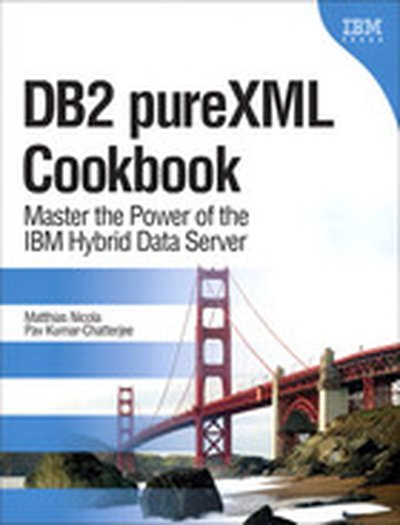
DB2® pureXML® Cookbook: Master the Power of the IBM® Hybrid Data Server

DB2 pureXML Cookbook Master the Power of the IBM Hybrid Data Server Hands-On Solutions and Best Practices for Developing and Managing XML Database Applications with DB2 More and more database developers and DBAs are being asked to develop applications and manage databases that involve XML data. Many are utilizing the highly praised DB2 pureXML technology from IBM. In the DB2 pureXML Cookbook, two leading experts from IBM offer the practical solutions and proven code samples that database professionals need to build better XML solutions faster. Organized by task, this book is packed with more than 700 easy-to-adapt “recipe-style” examples covering the entire application lifecycle–from planning and design through coding, optimization, and troubleshooting. This extraordinary library of recipes includes more than 250 XQuery and SQL/XML queries. With the authors’ hands-on guidance, you’ll learn how to combine pureXML “ingredients” to efficiently perform virtually any XML data management task, from the simplest to the most advanced. Coverage includes pureXML in DB2 9 for z/OS and DB2 9.1, 9.5, and 9.7 for Linux, UNIX, and Windows Best practices for designing XML data, applications, and storage objects Importing, exporting, loading, replicating, and federating XML data Querying XML data, from start to finish: XPath and XQuery data model and languages, SQL/XML, stored procedures, UDFs, and much more Avoiding common errors and inefficient XML queries Converting relational data to XML and vice versa Updating and transforming XML documents Defining and working with XML indexes Monitoring and optimizing the performance of XML queries and other operations Using XML Schemas to constrain and validate XML documents XML application development–including code samples for Java, .NET, C, COBOL,PL/1, PHP, and Perl

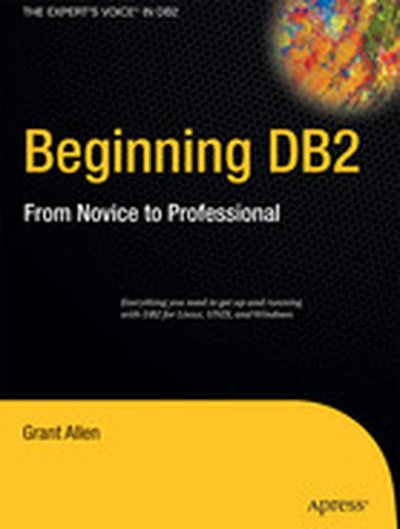
Beginning DB2: From Novice to Professional

IBM's DB2 Express Edition is one of the most capable of the free database platforms available in today's marketplace. In Beginning DB2, author Grant Allen gets you started using DB2 Express Edition for web sites, desktop applications, and more. The author covers the basics of DB2 for developers and database administrators, shows you how to manage data in both XML and relational form, and includes numerous code examples so that you are never in doubt as to how things work. In this book, you'll find: A friendly introduction to DB2 Express Edition, an industrial-strength, relational database from IBM Dozens of examples so that you are never in doubt as to how things work Coverage of important language interfaces, such as from PHP, Ruby, C#, Python, and more The book is aimed at developers who want a robust database to back their applications.

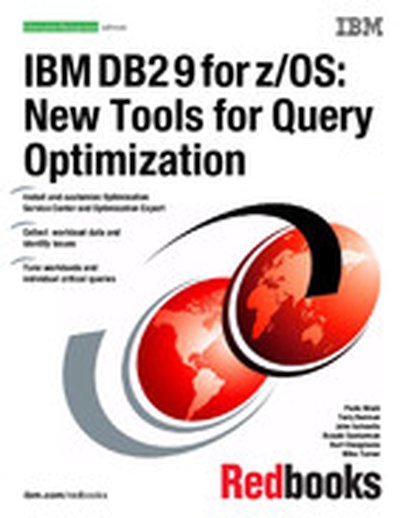
IBM DB2 9 for z/OS: New Tools for Query Optimization

The cost-based optimizer of IBM DB2 for z/OS has continually evolved since its initial inception. Support has included new optimization algorithms, join methods, complex relational data structures, such as star schemas. DB2 for z/OS V8 has provided access path visualization and a Statistics Advisor function through a new Visual Explain. DB2 9 for z/OS starts addressing the challenge of reducing cost of ownership by extending query optimization through expert-based query and workload analysis, server enhancements, and an Index Advisory function. These functions are delivered with two tools: DB2 Optimization Service Center and DB2 Optimization Expert. This book helps you understand the installation, customization, and usage aspects of the tools. You are guided through scenarios of gradually increasing complexity where the functions of the tools are exploited for query optimization.

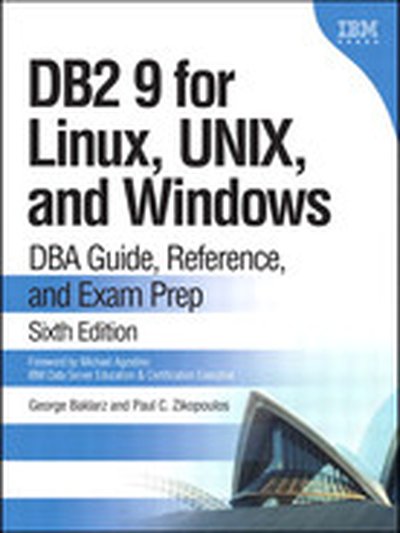
DB2® 9 for Linux®, UNIX®, and Windows®: DBA Guide, Reference, and Exam Prep, Sixth Edition

DB2 ® 9 builds on the world's number one enterprise database to simplify the delivery of information as a service, accelerate development, and dramatically improve operational efficiency, security, and resiliency. Now, this new edition offers complete, start-to-finish coverage of DB2 9 administration and development for Linux ®, UNIX ®, and Windows ® platforms, as well as authoritative preparation for the latest IBM DB2 certification exam. Written for both DBAs and developers, this definitive reference and self-study guide covers all aspects of deploying and managing DB2 9, including DB2 database design and development; day-to-day administration and backup; deployment of networked, Internet-centered, and SOA-based applications; migration; and much more. You'll also find an unparalleled collection of expert tips for optimizing performance, availability, and value. Coverage includes: Important security and resiliency enhancements, including advanced access control; fine-grained, label-based security; and the new security administrator role Breakthrough pureXML ™ features that make it easier to succeed with service-oriented architecture Operational improvements that enhance DBA efficiency--including self-tuning memory allocation, automated storage management, and storage optimization Table-partitioning features that improve scalability and manageability Powerful improvements for more agile and rapid development, including the new Eclipse-based Developer Workbench and simple SQL or XQuery access to all data Whatever your role in working with DB2 or preparing for certification, is the one book you can't afford to be without. DB2 9 for Linux, UNIX, and Windows, Sixth Edition Download Complete DB2 V9 Trial Version Visit ibm.com/db2/9/download.html to download a complete trial version of DB2, which enables you to try out dozens of the most powerful features of DB2 for yourself: everything from pureXML support to automated administration and optimization. Straight from IBM, the ultimate guide to running DB2 9 and preparing for the latest IBM DB2 certification exam! Covers powerful DB2 9 enhancements ranging from automated management to improved compression Covers the full spectrum of DBA responsibilities, including server management, data placement, XML concepts, activity analysis, high availability, and security Presents expert tips and best practices from the DB2 customer support organization