talk-data.com talk-data.com

Topic

Java

programming_language object_oriented enterprise

243

tagged

Activity Trend

25 peak/qtr
2020-Q1 2026-Q1

Activities

Showing filtered results

Filtering by: O'Reilly Data Engineering Books ×
Java & XML Data Binding

More Java developers today want to work with XML, the technology that enables data to be transported intact over the Internet, but they don't have time to become XML experts. If this describes you, then you'll appreciate data binding, the new way of converting XML documents into Java objects, so those documents can be worked on and manipulated like any other Java object, then converted back to XML This new title provides an in-depth technical look at XML Data Binding. The book offers complete documentation of all features in both the Sun Microsystems JAXB API and popular open source alternative implementations (Enhydra Zeus, Exolabs Castor and Quick). It also gets into significant detail about when data binding is appropriate to use, and provides numerous practical examples of using data binding in applications. As Author Brett McLaughlin says "Too many books are written about technologies by people who barely understand them. I've already written two data binding implementations (Zeus, and a previous one for IBM DeveloperWorks.) I've actually used data binding for longer than the official specification has been in existence, and I've really been able to dig into what it takes to code an effective data biding implementation, as well as use one correctly. This book is part user guide, part under-the-hood manual, and part use-case. It's a powerful combination, and one I think people need."
Managing & Using MySQL, 2nd Edition

MySQL is a popular and robust open source database product that supports key subsets of SQL on both Linux and Unix systems. MySQL is free for nonprofit use and costs a small amount for commercial use. Unlike commercial databases, MySQL is affordable and easy to use. This book includes introductions to SQL and to relational database theory. If you plan to use MySQL to build web sites or other Linux or Unix applications, this book teaches you to do that, and it will remain useful as a reference once you understand the basics. Ample tutorial material and examples are included throughout. This book has all you need to take full advantage of this powerful database management system. It takes you through the whole process from installation and configuration to programming interfaces and database administration. This second edition has a greatly enhanced administration chapter that includes information on administrative tools, server configuration, server startup and shutdown, log file management, database backup and restore, and database administration and repair. In addition, a new chapter on security describes data, server, and client-server security, while a chapter on extending MySQL provides an overview of MySQL internals and describes the use of MySQL user-defined functions. If you know C/C++, Java, Perl, PHP, or Python, you can write programs to interact with your MySQL database. In addition, you can embed queries and updates directly in an HTML file so that a web page becomes its own interface to the database. Managing and Using MySQL includes chapters on the programming language interfaces, and it also includes a complete reference section with specific function calls for each language. Also included in the reference section are references to the SQL language, and details of the MySQL system variables, programs, and utilities. New to the second edition is a reference to the internal MySQL tables, which will be of particular interest to those who want to work extensively with MySQL security.

Web Services Essentials

As a developer new to Web Services, how do you make sense of thisemerging framework so you can start writing your own servicestoday? This concise book gives programmers both a concreteintroduction and a handy reference to XML web services, first byexplaining the foundations of this new breed of distributedservices, and then by demonstrating quick ways to create serviceswith open-source Java tools. Web Services make it possible fordiverse applications to discover each other and exchange dataseamlessly via the Internet. For instance, programs written in Javaand running on Solaris can find and call code written in C# thatrun on Windows XP, or programs written in Perl that run on Linux,without any concern about the details of how that service isimplemented. A common set of Web Services is at the core ofMicrosoft's new .NET strategy, Sun Microsystems's Sun One Platform,and the W3C's XML Protocol Activity Group. In this book, authorEthan Cerami explores four key emerging technologies: XML Remote Procedure Calls (XML-RPC) SOAP - The foundation for most commercial WebServices development Universal Discovery, Description and Integration(UDDI) Web Services Description Language (WSDL) For each of these topics, Web Services Essentials provides aquick overview, Java tutorials with sample code, samples of the XMLdocuments underlying the service, and explanations offreely-available Java APIs. Cerami also includes a guide to thecurrent state of Web Services, pointers to open-source tools and acomprehensive glossary of terms. If you want to break through theWeb Services hype and find useful information on these evolvingtechnologies, look no further than Web Services Essentials.

SAX2

This concise book gives you the information you need to effectively use the Simple API for XML (SAX2), the dominant API for efficient XML processing with Java. With the SAX2 API, developers have access to the information in XML documents as they are read, without imposing major memory constraints or a large code footprint. SAX2 is often used by other APIs "under the covers", and provides a foundation for processing and creating both XML and non-XML information. While generally considered the most efficient approach to handling XML document parsing, SAX2 also carries a significant learning curve. In SAX2, author David Brownell explores the many details of managing XML parsers, filtering the information those parsers return, generating your own SAX2 events to convert non-XML information to an XML form, and developing strategies for using event-based parsing in a variety of application scenarios. Created in a public process by the XML-Dev mailing list, the SAX2 API is compact and highly functional. SAX2 uses callbacks to report the information in an XML document as the document is read, allowing you to create your own program structures around the content of documents. No intermediary model of an entire XML document is necessary, and the mapping from XML structures to Java structures and back is straightforward. Both developers learning about SAX2 for the first time and developers returning for reference and advanced material about SAX2 will find useful information in this book. Chapters provide detailed explanations and examples of many different aspects of SAX2 development, while appendices provide a reference to the API and an explanation of the relationships between the SAX2 API and the XML Information Set. While the core of the API is quite approachable, many of its more advanced features are both obscure and powerful. You can use SAX2 to filter, modify, and restructure information in layers of processing which make it easy to reuse generic tools. SAX2 also has some significant limitations that applications need to address in their own ways. This new book gives you the detail and examples required to use SAX2 to its full potential, taking advantage of its power while avoiding its limitations.

PostgreSQL Developer's Handbook

PostgreSQL is an object-relational database server that is widely considered to be the world¿s most advanced open-source database system. It is ANSI SQL-compatible, and it offers powerful features to enable more complex software design than would be possible with relational databases that are not object-oriented. PostgreSQL is extremely modular, it supports a large number of datatypes, and programming interfaces for PostgreSQL are available for all important programming languages, including C, Perl, Python, Tcl, Java, and PHP. PostgreSQL Developer¿s Handbook provides a complete overview of the PostgreSQL database server and extensive coverage of its core features, including object orientation, PL/pgSQL, and the most important programming interfaces. The book introduces the reader to the language and syntax of PostgreSQL and then moves quickly into advanced programming topics.

XML and SQL: Developing Web Applications

"Dan's book provides something that the formal standards and development manuals sorely lack: a context that helps developers understand how to use XML in their own projects." --Tim Kientzle, Independent Software Consultant is a guide for Web developers and database programmers interested in building robust XML applications backed by SQL databases. It makes it easier than ever for Web developers to create and manage scalable database applications optimized for the Internet. XML and SQL: Developing Web Applications The author offers an understanding of the many advantages of both XML and SQL and provides practical information and techniques for utilizing the best of both systems. The book explores the stages of application development step by step, featuring a real-world perspective and many examples of when and how each technology is most effective. Specific topics covered include: Project definition for a data-oriented application Creating a bullet-proof data model DTDs (document type definitions) and the design of XML documents When to use XML, and what parts of your data should remain purely relational Related standards, such as XSLT and XML Schema How to use the XML support incorporated into Microsoft's SQL Server™ 2000 The XML-specific features of J2EE™ (Java™ 2 Enterprise Edition) Throughout this book, numerous concrete examples illustrate how to use each of these powerful technologies to circumvent the other's limitations. If you want to use the best part of XML and SQL to create robust, data-centric systems then there is no better resource than this book. 0201657961B10152001

Learning Oracle PL/SQL

PL/SQL, Oracle's programming language for stored procedures, delivers a world of possibilities for your database programs. PL/SQL supplements the standard relational database language, SQL, with a wide range of procedural features, including loops, IF-THEN statements, advanced data structures, and rich transactional control--all closely integrated with the Oracle database server. Knowing where to start with Oracle's procedural language is not always obvious to a newcomer, especially considering the language's feature set and the sheer size of the official documentation (not to mention Oracle's ever-increasing number of pre-built PL/SQL programs). But Learning Oracle PL/SQL offers the signposts and guidance you need to come up to speed on the language, delivered in a manageable number of pages while covering all the essentials. Topics include: PL/SQL--what is it, and why use it? Why use PL/SQL instead of Java? Syntax and examples of all core language constructs Creating, using, and reusing stored procedures, functions, and packages Building web-based applications using PL/SQL features available "out of the box" (such as PL/SQL Server Pages) Securing PL/SQL programs against attack Benefits of third-party developer tools and integrated development environments Connecting PL/SQL to email, Java, and the Internet Meticulously crafted with all-new examples downloadable from examples.oreilly.com/learnoracle, the book addresses language features available in all versions of Oracle, from Oracle7 to Oracle8i to Oracle9i. Learning Oracle PL/SQL was written by PL/SQL experts Bill Pribyl and Steven Feuerstein, whose easy-to-read style and attention to detail has made other O'Reilly books (such as the bestselling Oracle PL/SQL Programming) very popular among Oracle developers worldwide. Learning Oracle PL/SQL is meant for a wide range of target audiences, including both beginning programmers and those already experienced with other programming languages. Whether you are a new developer, a crossover programmer from another database system, or a new database administrator who needs to learn PL/SQL, this book will get you well on your way. It is the perfect introduction to Oracle PL/SQL Programming, also by Pribyl and Feuerstein.

Web Security, Privacy & Commerce, 2nd Edition

Since the first edition of this classic reference was published, World Wide Web use has exploded and e-commerce has become a daily part of business and personal life. As Web use has grown, so have the threats to our security and privacy--from credit card fraud to routine invasions of privacy by marketers to web site defacements to attacks that shut down popular web sites. Web Security, Privacy & Commerce goes behind the headlines, examines the major security risks facing us today, and explains how we can minimize them. It describes risks for Windows and Unix, Microsoft Internet Explorer and Netscape Navigator, and a wide range of current programs and products. In vast detail, the book covers: Web technology--The technological underpinnings of the modern Internet and the cryptographic foundations of e-commerce are discussed, along with SSL (the Secure Sockets Layer), the significance of the PKI (Public Key Infrastructure), and digital identification, including passwords, digital signatures, and biometrics. Web privacy and security for users--Learn the real risks to user privacy, including cookies, log files, identity theft, spam, web logs, and web bugs, and the most common risk, users' own willingness to provide e-commerce sites with personal information. Hostile mobile code in plug-ins, ActiveX controls, Java applets, and JavaScript, Flash, and Shockwave programs are also covered. Web server security--Administrators and service providers discover how to secure their systems and web services. Topics include CGI, PHP, SSL certificates, law enforcement issues, and more. Web content security--Zero in on web publishing issues for content providers, including intellectual property, copyright and trademark issues, P3P and privacy policies, digital payments, client-side digital signatures, code signing, pornography filtering and PICS, and other controls on web content. Nearly double the size of the first edition, this completely updated volume is destined to be the definitive reference on Web security risks and the techniques and technologies you can use to protect your privacy, your organization, your system, and your network.

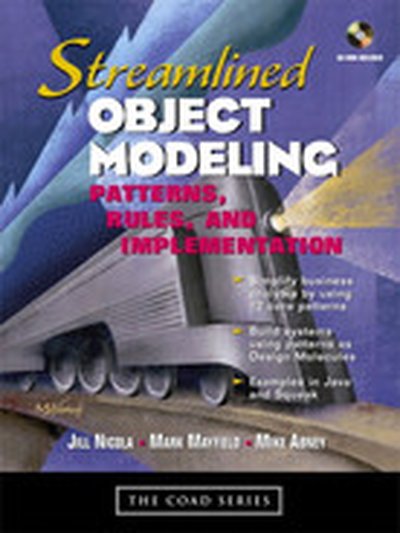
Streamlined Object Modeling: Patterns, Rules, and Implementation

A rigorous and practical framework for modeling business systems Pares object modeling down to its core concepts, making it easier than ever. Twelve object collaboration patterns that address virtually any business scenario Powerful techniques–not fancy notation! Streamlined Object Modeling presents the first rigorous, practical framework for object modeling complex business domains, rules, and systems. Three world-renowned leaders in object development have pared object modeling down to the core concepts for all business domains, business rules, and business services. Starting from the first principles of "object think," the authors offer a fully integrated approach to building, validating, and critiquing object models. Coverage includes: Proven principles and techniques for successfully modeling the structure and operations of any business domain. Guidelines for finding and associating objects, assembling object models, and distributing system behavior among objects. Rigorous methods for discovering, organizing, and implementing business rules around objects. Twelve all-encompassing "collaboration patterns"–what they represent, how they relate, and how to apply them. Five kinds of business rules, three types of services, and six categories of properties completely specify object-oriented business requirements From start to finish, the book makes extensive use of examples drawn from real commercial applications. To illustrate how streamlined object modeling flows from analysis to code, it also presents a complete case study derived from a real-world application, and implemented in two leading object-oriented languages-Java, and the Squeak implementation of Smalltalk.

Java and XML, Second Edition

While the XML "buzz" still dominates talk among Internet developers, the critical need is for information that cuts through the hype and lets Java programmers put XML to work. Java & XML shows how to use the APIs, tools, and tricks of XML to build real-world applications, with the end result that both the data and the code are portable. This second edition of Java & XML adds chapters on Advanced SAX and Advanced DOM, new chapters on SOAP and data binding, and new examples throughout. A concise chapter on XML basics introduces concepts, and the rest of the book focuses on using XML from your Java applications. Java developers who need to work with XML, or think that they will in the future--as well as developers involved in the new peer-to-peer movement, messaging, or web services--will find the new Java & XML a constant companion. This book covers: The basics of XML, including DTDs, namespaces, XML Schema, XPath, and XSL The SAX API, including all handlers, the SAX 2 extensions, filters, and writers The DOM API, including DOM Level 2, Level 3, and the Traversal, Range, CSS, Events, and HTML modules. The JDOM API, including the core, a look at XPath support, and JDOM as a JSR Using web publishing frameworks like Apache Cocoon Developing applications with XML-RPC Using SOAP and UDDI for web services Data Binding, using both DTDs and XML Schema for constraints Building business-to-business applications with XML Building information channels with RSS and dynamic content with XSP Includes a quick reference on SAX 2.0, DOM Level 2, and JDOM.

Inside XSLT

Inside XSLT is designed to be a companion guide to Inside XML. This example oriented book covers XML to HTML, XML to Music, XML with Java, style sheet creation and usage, nodes and attributes, sorting data, creating Xpath expressions, using Xpath and XSLT functions, namespaces, names templates, name variables, designing style sheets and using XSLT processor API's, the 56 XSL formatting objects, the XSLT DTD, and much much more.

Programming Web Services with XML-RPC

Have you ever needed to share processing between two or more computers running programs written in different languages on different operating systems? Or have you ever wanted to publish information on the Web so that programs other than browsers could work with it? XML-RPC, a system for remote procedure calls built on XML and the ubiquitous HTTP protocol, is the solution you've been looking for. Programming Web Services with XML-RPC introduces the simple but powerful capabilities of XML-RPC, which lets you connect programs running on different computers with a minimum of fuss, by wrapping procedure calls in XML and establishing simple pathways for calling functions. With XML-RPC, Java programs can talk to Perl scripts, which can talk to Python programs, ASP applications, and so on. You can provide access to procedure calls without having to worry about the system on the other end, so it's easy to create services that are available on the Web.XML-RPC isn't the only solution for web services; the Simple Object Access Protocol (SOAP) is another much-hyped protocol for implementing web services. While XML-RPC provides fewer capabilities than SOAP, it also has far fewer interoperability problems and its capabilities and limitations are much better understood. XML-RPC is also stable, with over 30 implementations on a wide variety of platforms, so you can start doing real work with it immediately. Programming Web Services with XML-RPC covers the details of five XML-RPC implementations, so you can get started developing distributed applications in Java, Perl, Python, ASP, or PHP. The chapters on these implementations contain code examples that you can use as the basis for your own work. This book also provides in-depth coverage of the XML-RPC specification, which is helpful for low-level debugging of XML-RPC clients and servers. And if you want to build your own XML-RPC implementation for another environment, the detailed explanations in this book will serve as a foundation for that work.

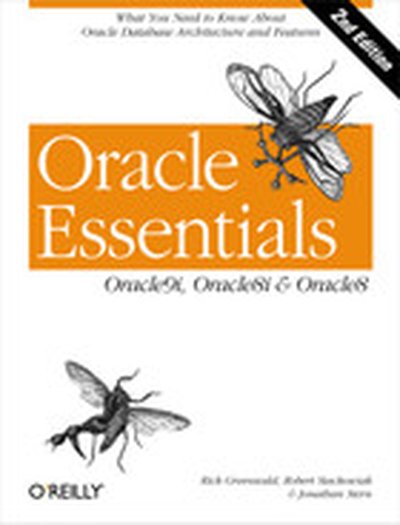
Oracle Essentials: Oracle9i, Oracle8i and Oracle8, Second Edition

The second edition of O'Reilly's bestselling Oracle Essentials has been updated to include the latest Oracle release, Oracle9 i. Oracle Essentials distills an enormous amount of information about Oracle's myriad technologies and releases into a compact, easy-to-read volume filled with focused text, illustrations, and helpful hints. Oracle9 i promises to be an even more significant upgrade than Oracle8 i, offering such major features as Real Application Clusters, flashback queries, Oracle personalization, clickstream intelligence, and Oracle Database Cache and Web Cache; it also promises significant improvements in Oracle's business intelligence, XML integration, high availability, and management capabilities. The book includes overviews of these features, as well as the new Oracle9 I Application Server (Oracle9 iAS) and Oracle9 i Portal. The book contains chapters on: Oracle products, options, and overall architecture for Oracle9 i and other recent releases Installing and running Oracle: creating databases, configuring Net8 (known as Oracle Net in Oracle9 i), starting up and shutting down Oracle Oracle data structures, datatypes, and ways of extending datatypes Managing Oracle: security, the Oracle Enterprise Manager, fragmentation and reorganization, and backup and recovery Oracle networking, monitoring, and tuning Multi-user concurrency, online transaction processing (OLTP), and high availability Hardware architectures (e.g., SMP, MPP, NUMA) and their impact on Oracle Data warehousing and distributed databases Oracle9 i, Oracle8 i, and the Web, including the latest Java, web, and XML technologies, interMedia, Oracle9 i Application Server, and Oracle9 i Portal For new Oracle users, DBAs, developers, and managers, Oracle Essentials is an all-in-one introduction to the full range of Oracle features and technologies, including the just-released Oracle9 i features. But even if you already have a library full of Oracle documentation, this compact book is the one you'll turn to, again and again, as your one-stop, truly essential reference.

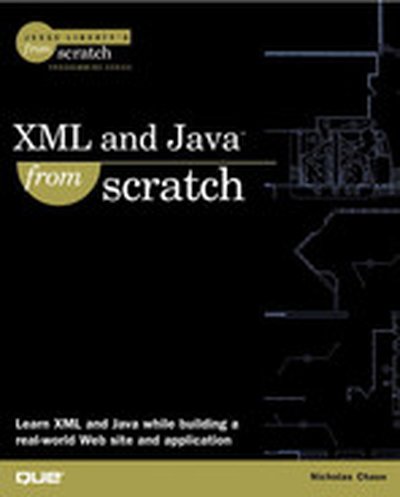
XML and Java™ from scratch

With the help of XML and Java from scratch, you will build a Web site and application for ChaseWeb Furniture-a fictitious catalog furniture company. All of the information on products, prices, vendors, and so on, is rendered in XML. You'll learn how to display products on the company Web site, take orders, produce a paper catalog, and communicate with the external databases of vendors using XML. The from scratch format is designed to teach novice programmers the hows and whys of programming in the context of creating a functioning application.

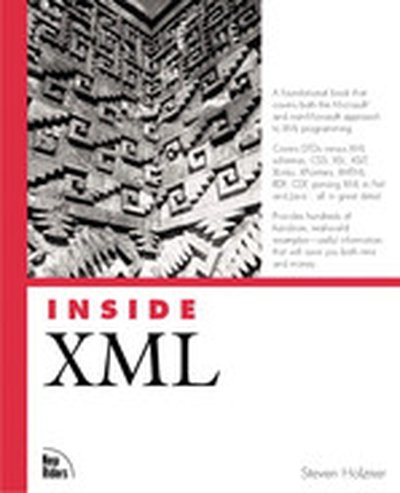
Inside XML

The XML explosion hardly needs any introduction-it's everywhere and there just seems to be no end to what can be done with XML. While writing to the W3C standards, and keeping up with the pace for corporate implementation, you, the programmer or web developer, will need a comprehensive guide to get you started and show you what XML and its related technologies can do. A thorough guide is imperative to success because you will need to know and understand the full scope of XML from day one in order to work with it successfully. With your time constraints and impossible project schedules, you need a comprehensive guide that fulfills your needs in one complete book. Inside XML is an anchor book that covers both the Microsoft and non-Microsoft approach to XML programming. It covers in detail the hot aspects of XML; such as, DTD's vs. XML Schemas, CSS, XSL, XSLT, Xlinks, Xpointers, XHTML, RDF, CDF, parsing XML in Perl and Java, and much more.

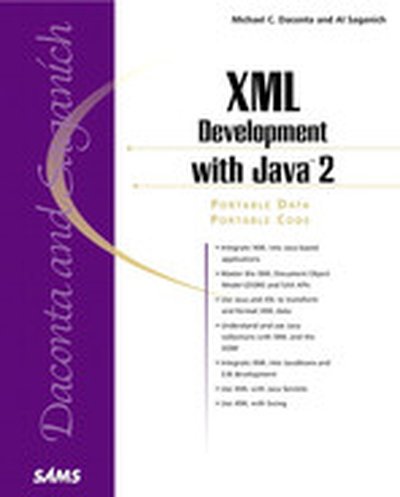
XML Development with Java™ 2

XML Development with Java 2 provides the information and techniques a Java developer will need to integrate XML into Java-based applications. This book presents a fast-paced introduction to XML and moves quickly into the areas where XML has the biggest impact on Java Development. The book covers crucial topics such as the XML Documet Object Model (DOM), Using Java and XSL to transform and format XML data, Integrating XML into JavaBeans and EJB development, and using XML with Java Servlets. The authors also cover the impact XML has on Java database access and the way XML works with the Swing classes.

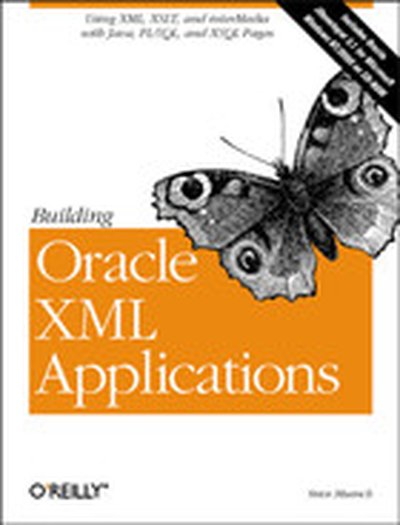
Building Oracle XML Applications

This rich and detailed look at the many Oracle tools that support XML development shows Java and PL/SQL developers how to combine the power of XML and XSLT with the speed, functionality, and reliability of the Oracle database. The nearly 800 pages of entertaining text, helpful and time-saving hints, and extensive examples can be put to use immediately to build custom XML applications. Includes a CD-ROM with JDeveloper 3.1, an integrated development environment for Java developers.

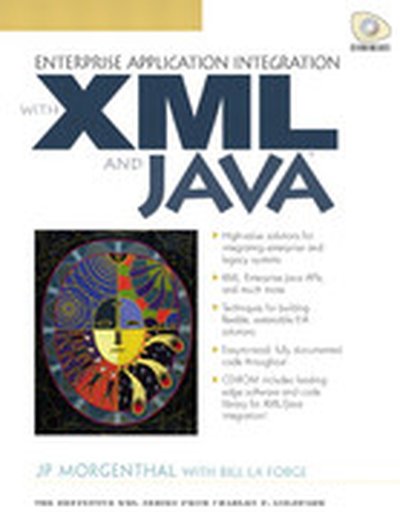
Enterprise Application Integration With XML and Java™

High-value solutions for integrating enterprise and legacy systems XML, Enterprise JavaAPIs, and much more Techniques for building flexible, extensible EIA solutions Easy-to-read, fully-documented code throughout CD-ROM includes leading-edge software and code library for XML/Java integration! "XML is the amazing new web standard for universal data interchange. With this book and XML you can integrate your applications without converting the code!" —Charles F. Goldfarb Integrate your enterprise with XML and Java! Enterprise Application Integration (EAI) links diverse applications, platforms, and operating systems so they work as one-and deliver powerful business results seamlessly. Platform-independent Java is one powerful tool for building EAI applications, and XML adds the missing link: robust mechanisms to exchange data with non-Java applications. Now there's a complete, step-by-step guide to using Java and XML together to deliver enterprise integration solutions that work! Enterprise Application Integration With XML and Java covers all this, and more: Demonstrating why XML is such a powerful EAI infrastructure solution Identifying your key requirements for sharing and exchanging data Building robust, high-performance Java applications for parsing and processing XML documents Moving data between Java and non-Java applications Integrating XML with relational databases Serializing Java objects into XML, and asynchronous messaging with XML Providing convenient references to XML 1.0 grammar and the W3C Document Object Model Whether you're a technical manager planning for enterprise application integration, or a Java developer tasked with delivering it, Enterprise Application Integration With XML and Java delivers the in-depth solutions and real-world expertise you need. CD-ROM INCLUDED The CD-ROM contains extensive source code from the book, plus a remarkable library of leading-edge software and trialware, including: Bluestone Visual-XML desktop XML development environment; IBM XML4J Java-based parser; and Push-technologies SpiritWAVE2 implementation of the Java Messaging Service!

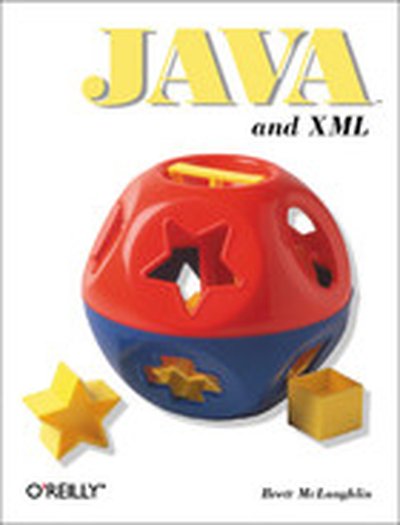
Java and XML

XML has been the biggest buzzword on the Internet community for the past year. But how do you cut through all the hype and actually put it to work? Java revolutionized the programming world by providing a platform-independent programming language. XML takes the revolution a step further with a platform-independent language for interchanging data. Java and XML share many features that are ideal for building web-based enterprise applications, such as platform-independence, extensibility, reusability, and global language (Unicode) support, and both are based on industry standards. Together Java and XML allow enterprises to simplify and lower costs of information sharing and data exchange. Java and XML shows how to put the two together, building real-world applications in which both the code and the data are truly portable. This book covers: The basics of XML Using standard Java APIs to parse XML Designing new document types using DTDs and Schemas Writing programs that generate XML data Transforming XML into different forms using XSL transformations (XSL/T) XML-RPC Using a web publishing framework like Apache-Cocoon This is the first book to cover the most recent versions of the DOM specification (DOM 2), the SAX API (SAX 2) and Sun's Java API for XML.

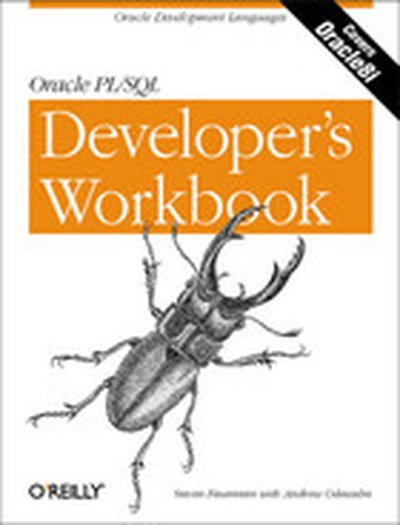
Oracle PL/SQL Programming: A Developer's Workbook

However excellent they are, most computer books are inherently passive--readers simply take in text without having any opportunity to react to it. The Oracle PL/SQL Developer's Workbook is a different kind of animal! It's designed to engage you actively, to get you solving programming problems immediately, and to help you apply what you've learned about PL/SQL--and in the process deepen your knowledge of the language. By tackling the exercises in this workbook, you'll find yourself moving more rapidly along the learning curve to join the growing ranks of PL/SQL experts. The Oracle PL/SQL Developer's Workbook is a companion to Steven Feuerstein's bestselling Oracle PL/SQL Programming and his other PL/SQL books from O'Reilly. It contains a carefully constructed set of problems and solutions that will test your language skills and help you become a better developer--both with PL/SQL and with other languages. Exercises are provided at three levels: beginner, intermediate, and expert. The workbook exercises cover all the major features of PL/SQL, including those new to Oracle8i (e.g., Java and web features, autonomous transactions, and bulk binds).You'll find chapters on: Basic language elements--variables, naming, loops, conditional and sequential control, exception handling, and records. Data structures--index-by tables, nested tables, variables arrays (VARRAYs), and object technology. Database interaction--cursors, DML and transaction management, cursor variables, and native dynamic SQL Program construction--procedures, functions, blocks, packages, database triggers, and calling PL/SQL functions in SQL. Built-in functionality--the character, date, conversion, numeric, and miscellaneous functions, and the DBMS_SQL, DBMS_PIPE, DBMS_OUTPUT, UTL_FILE, and DBMS_JOB built-in packages. Miscellaneous topics--using Java with PL/SQL, external programs, PL/SQL web development, tuning PL/SQL, and PL/SQL for DBAs.