
talk-data.com talk-data.com

Topic

Matplotlib

data_visualization plotting_library python

63

tagged

Activity Trend

6 peak/qtr
2020-Q1 2026-Q1

Activities

63 activities · Newest first

Numpy Beginner's Guide (Update)

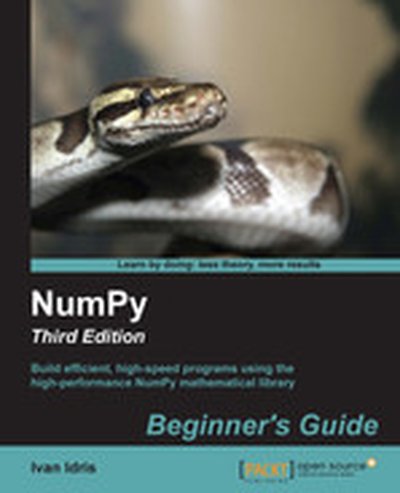
Delve into the capabilities of NumPy, the cornerstone of mathematical computations in Python. In this guide, you will learn how to utilize NumPy to its fullest by exploring its powerful array and matrix operations, and also integrate it with other libraries like SciPy and matplotlib for advanced analysis and visualization. What this Book will help me do Master the installation and configuration of the NumPy library on different systems. Perform advanced array and matrix operations efficiently using NumPy. Understand and utilize commonly used NumPy modules for computational tasks. Design and generate complex plots using the matplotlib library. Learn best practices for testing and validating numerical computations with NumPy. Author(s) Ivan Idris is an experienced data analyst and Python enthusiast, proficient in utilizing numerical and scientific libraries to address complex problems. With a strong background in mathematics and computer science, Ivan brings a practical approach to his teachings. He emphasizes clarity and hands-on practice, making expert-level concepts accessible and engaging for learners. Who is it for? This book is perfect for scientists, engineers, and data professionals with a solid foundation in Python. It's meant for those seeking to deepen their understanding of numerical methods and scientific computing. If you want to harness the power of NumPy to streamline your computations and develop high-performance solutions, this guide is for you.
matplotlib Plotting Cookbook

The "matplotlib Plotting Cookbook" equips you with the skills to create impactful scientific visualizations using Python's matplotlib library. Through a series of concise recipes, this book covers everything from basic plotting to advanced techniques, ensuring you can create impressive graphics for your data. What this Book will help me do Learn to produce standard 2D plots like line, bar, and scatter plots. Master advanced plotting techniques such as 3D plotting and data overlays. Enhance plots with detailed annotations, rich legends, and labeling. Understand the use of colors, styles, and scales to maximize readability. Use matplotlib to generate plots programmatically or integrate with applications. Author(s) Alexandre Devert, the author of the "matplotlib Plotting Cookbook," is an experienced data scientist with a strong foundation in Python and data visualization techniques. Alexandre has worked extensively in the field of data analysis, and his expertise is reflected in the practical examples and hands-on guidance provided throughout this book. He takes a learner-focused approach to presenting technical topics in an accessible way. Who is it for? This book is designed for Python developers, data scientists, and researchers who need to create clear, professional-quality visualizations. If you are at a beginner or intermediate level in using matplotlib or visualization libraries, this book will empower you with essential plotting skills. Readers looking to save time while producing meaningful insights through data visualizations will find this book valuable. It is suitable for those aiming to improve their data representation skills for presentations or publications.

Python for Data Analysis

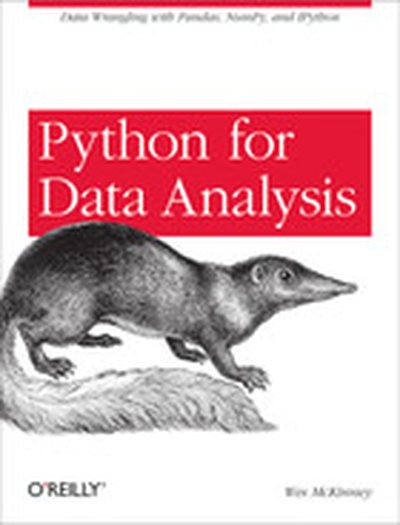
Python for Data Analysis is concerned with the nuts and bolts of manipulating, processing, cleaning, and crunching data in Python. It is also a practical, modern introduction to scientific computing in Python, tailored for data-intensive applications. This is a book about the parts of the Python language and libraries you’ll need to effectively solve a broad set of data analysis problems. This book is not an exposition on analytical methods using Python as the implementation language. Written by Wes McKinney, the main author of the pandas library, this hands-on book is packed with practical cases studies. It’s ideal for analysts new to Python and for Python programmers new to scientific computing. Use the IPython interactive shell as your primary development environment Learn basic and advanced NumPy (Numerical Python) features Get started with data analysis tools in the pandas library Use high-performance tools to load, clean, transform, merge, and reshape data Create scatter plots and static or interactive visualizations with matplotlib Apply the pandas groupby facility to slice, dice, and summarize datasets Measure data by points in time, whether it’s specific instances, fixed periods, or intervals Learn how to solve problems in web analytics, social sciences, finance, and economics, through detailed examples