talk-data.com talk-data.com

Topic

python-viz-tools

11

tagged

Activity Trend

1 peak/qtr
2020-Q1 2026-Q1

Activities

11 activities · Newest first

Data Storytelling with Altair and AI

Great data presentations tell a story. Learn how to organize, visualize, and present data using Python, generative AI, and the cutting-edge Altair data visualization toolkit. Take the fast track to amazing data presentations! Data Storytelling with Altair and AI introduces a stack of useful tools and tried-and-tested methodologies that will rapidly increase your productivity, streamline the visualization process, and leave your audience inspired. In Data Storytelling with Altair and AI you’ll discover: Using Python Altair for data visualization Using Generative AI tools for data storytelling The main concepts of data storytelling Building data stories with the DIKW pyramid approach Transforming raw data into a data story Data Storytelling with Altair and AI teaches you how to turn raw data into effective, insightful data stories. You’ll learn exactly what goes into an effective data story, then combine your Python data skills with the Altair library and AI tools to rapidly create amazing visualizations. Your bosses and decision-makers will love your new presentations—and you’ll love how quick Generative AI makes the whole process! About the Technology Every dataset tells a story. After you’ve cleaned, crunched, and organized the raw data, it’s your job to share its story in a way that connects with your audience. Python’s Altair data visualization library, combined with generative AI tools like Copilot and ChatGPT, provide an amazing toolbox for transforming numbers, code, text, and graphics into intuitive data presentations. About the Book Data Storytelling with Altair and AI teaches you how to build enhanced data visualizations using these tools. The book uses hands-on examples to build powerful narratives that can inform, inspire, and motivate. It covers the Altair data visualization library, along with AI techniques like generating text with ChatGPT, creating images with DALL-E, and Python coding with Copilot. You’ll learn by practicing with each interesting data story, from tourist arrivals in Portugal to population growth in the USA to fake news, salmon aquaculture, and more. What's Inside The Data-Information-Knowledge-Wisdom (DIKW) pyramid Publish data stories using Streamlit, Tableau, and Comet Vega and Vega-Lite visualization grammar About the Reader For data analysts and data scientists experienced with Python. No previous knowledge of Altair or Generative AI required. About the Author Angelica Lo Duca is a researcher at the Institute of Informatics and Telematics of the National Research Council, Italy. The technical editor on this book was Ninoslav Cerkez. Quotes This book’s step-by-step approach, illustrated through real-world examples, makes complex data accessible and actionable. - Alexey Grigorev, DataTalks.Club A clear and concise guide to data storytelling. Highly recommended. - Andrew Madson, Insights x Design Data storytelling in a way that anyone can do! This book feels ahead of its time. - Avery Smith, Data Career Jumpstart Excellent hands-on exercises that combine two of my favorite tools: AI and the Altair library. - Jose Berengueres, Author of DataViz and Storytelling
Hands-on Matplotlib: Learn Plotting and Visualizations with Python 3

Learn the core aspects of NumPy, Matplotlib, and Pandas, and use them to write programs with Python 3. This book focuses heavily on various data visualization techniques and will help you acquire expert-level knowledge of working with Matplotlib, a MATLAB-style plotting library for Python programming language that provides an object-oriented API for embedding plots into applications. You'll begin with an introduction to Python 3 and the scientific Python ecosystem. Next, you'll explore NumPy and ndarray data structures, creation routines, and data visualization. You'll examine useful concepts related to style sheets, legends, and layouts, followed by line, bar, and scatter plots. Chapters then cover recipes of histograms, contours, streamplots, and heatmaps, and how to visualize images and audio with pie and polar charts. Moving forward, you'll learn how to visualize with pcolor, pcolormesh, and colorbar, and how to visualize in 3D in Matplotlib, create simple animations, and embed Matplotlib with different frameworks. The concluding chapters cover how to visualize data with Pandas and Matplotlib, Seaborn, and how to work with the real-life data and visualize it. After reading Hands-on Matplotlib you'll be proficient with Matplotlib and able to comfortably work with ndarrays in NumPy and data frames in Pandas. What You'll Learn Understand Data Visualization and Python using Matplotlib Review the fundamental data structures in NumPy and Pandas Work with 3D plotting, visualizations, and animations Visualize images and audio data Who This Book Is For Data scientists, machine learning engineers and software professionals with basic programming skills.

Mastering Matplotlib 2.x

Mastering Matplotlib 2.x guides you through the art and science of creating sophisticated data visualizations with Python's powerful Matplotlib library. You will start by learning the basics of plotting and customizing your charts, progressing to more advanced topics such as 3D visualization, geospatial data display, and creating interactive plots using Jupyter Notebook. What this Book will help me do Create complex and highly customizable data plots using Matplotlib. Effectively visualize data in three dimensions, including geospatial data. Use advanced matplotlib features to represent non-Cartesian and vector data. Build interactive visualizations using Jupyter Notebook and Python. Develop special-purpose and movie-style plots to enhance data representation. Author(s) None Keller is a seasoned software engineer and data visualization enthusiast with years of experience using Python for data analysis. Their practical and hands-on approach ensures that readers can directly apply the concepts taught in their projects. None aims to make advanced visualization techniques accessible to all. Who is it for? This book is perfect for developers, scientists, and analysts who need sophisticated visualization tools for their projects. Prior experience with Python and basic familiarity with Matplotlib will help you get the most out of the book. If you're looking to deepen your understanding of data visualization or to create interactive and advanced visualizations, this book is for you.

Matplotlib 3.0 Cookbook

Matplotlib 3.0 Cookbook is your go-to guide for mastering the Matplotlib library in Python for creating a wide range of data visualizations. Through 150+ practical recipes, you will learn how to design intuitive and detailed charts, graphs, and dashboards, navigating from simple plots to advanced interactive and 3D visualizations. What this Book will help me do Develop professional-quality data visualizations using Matplotlib. Leverage Matplotlib's API for both quick plotting and advanced customization. Create interactive and animative plots for engaging data representation. Extend Matplotlib functionalities with toolkits like cartopy and axisartist. Integrate Matplotlib figures into GUI applications for broader usage. Author(s) None Poladi and None Borkar are experienced Python developers and enthusiasts who have collaborated in creating a resourceful guide to Matplotlib. They bring extensive experience in data science visualization and Python programming. Their collaborative effort ensures clarity and an approachable learning curve for anyone delving into graphical data representation using Matplotlib. Who is it for? This book is ideal for data scientists, Python developers, and visualization enthusiasts eager to enhance their technical plotting skills. The content covers both fundamentals and advanced topics, suitable for users ranging from beginners curious about Python visualization to experts seeking streamlined workflows and advanced techniques.

Python Graphics: A Reference for Creating 2D and 3D Images

This book will show you how to use Python to create graphic objects for technical illustrations and data visualization. Often, the function you need to produce the image you want cannot be found in a standard Python library. Knowing how to create your own graphics will free you from the chore of looking for a function that may not exist or be difficult to use. This book will give you the tools to eliminate that process and create and customize your own graphics to satisfy your own unique requirements. Using basic geometry and trigonometry, you will learn how to create math models of 2D and 3D shapes. Using Python, you will then learn how to project these objects onto the screen of your monitor, translate and rotate them in 2D and 3D, remove hidden lines, add shading, view in perspective, view intersections between surfaces, and display shadows cast from one object onto another. You will also learn how to visualize and analyze 2D and 3D data sets, fit lines, splines and functions. The final chapter includes demonstrations from quantum mechanics, astronomy and climate science. Includes Python programs written in a clear and open style with detailed explanation of the code. What You Will Learn How to create math and Python models of 2D and 3D shapes. How to rotate, view in perspective, shade, remove hidden lines, display projected shadows, and more. How to analyze and display data sets as curves and surfaces, fit lines and functions. Who This Book Is For Python developers, scientists, engineers, and students using Python to produce technical illustrations, display and analyze data sets. Assumes familiarity with vectors, matrices, geometry and trigonometry.

Matplotlib for Python Developers - Second Edition

"Matplotlib for Python Developers" is your comprehensive guide to creating interactive and informative data visualizations using the Matplotlib library in Python. This book covers all the essentials-from building static plots to integrating dynamic graphics with web applications. What this Book will help me do Design and customize stunning data visualizations including heatmaps and scatter plots. Integrate Matplotlib visualization seamlessly into GUI applications using GTK3 or Qt. Utilize advanced plotting libraries like Seaborn and GeoPandas for enhanced visual representation. Develop web-based dashboards and plots that dynamically update using Django. Master techniques to prepare your Matplotlib projects for deployment in a cloud-based environment. Author(s) Authors Aldrin Yim, Claire Chung, and Allen Yu are seasoned developers and data scientists with extensive experience in Python and data visualization. They bring a practical touch to technical concepts, aiming to bridge theory with hands-on applications. With such a skilled team behind this book, you'll gain both foundational knowledge and advanced insights into Matplotlib. Who is it for? This book is the ideal resource for Python developers and data analysts looking to enhance their data visualization skills. If you're familiar with Python and want to create engaging, clear, and dynamic visualizations, this book will give you the tools to achieve that. Designed for a range of expertise, from beginners understanding the basics to experienced users diving into complex integrations, this book has something for everyone. You'll be guided through every step, ensuring you build the confidence and skills needed to thrive in this area.

Matplotlib 2.x By Example

"Matplotlib 2.x By Example" is your comprehensive guide to mastering data visualization in Python using the Matplotlib library. Through detailed explanations and hands-on examples, this book will teach you how to create stunning, insightful, and professional-looking visual representations of your data. You'll learn valuable skills tailored towards practical applications in science, marketing, and data analysis. What this Book will help me do Understand the core features of Matplotlib and how to use them effectively. Create professional 2D and 3D visualizations, such as scatter plots, line graphs, and more. Develop skills to transform raw data into meaningful insights through visualization. Enhance your data visualizations with interactive elements and animations. Leverage additional libraries such as Seaborn and Pandas to expand functionality. Author(s) Allen Yu, Claire Chung, and Aldrin Yim are seasoned data scientists and technical authors with extensive experience in Python and data visualization. Allen and his coauthors are dedicated to helping readers bridge the gap between their raw data and meaningful insights through visualization. With practical applications and real-world examples, their approachable writing makes complex libraries like Matplotlib accessible and production-ready. Who is it for? This book is perfect for data enthusiasts, analysts, and Python programmers looking to enhance their data visualization skills. Whether you're a professional aiming to create high-quality visual reports or a student eager to understand and present data effectively, this book provides practical and actionable insights. Basic Python knowledge is expected, while all Matplotlib-related aspects are thoroughly explained.

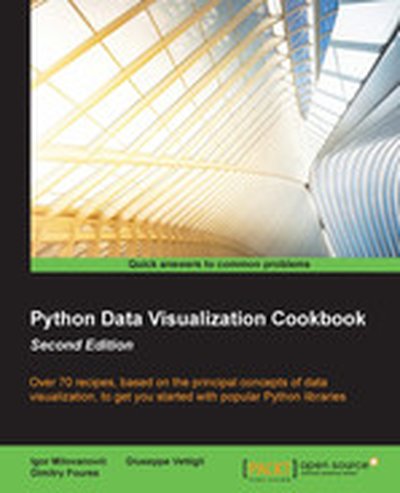
Python Data Visualization Cookbook (Second Edition)

In 'Python Data Visualization Cookbook (Second Edition)', you'll learn how to create stunning and meaningful visual representations of data using Python's powerful libraries. Through step-by-step, recipe-based guidance, this book equips you to transform raw data into comprehensible and compelling visual stories. What this Book will help me do Master setting up Python and its libraries for data visualization. Learn how to import, clean, and organize data effectively. Create a variety of plots and charts tailored to your data's needs. Explore 3D visualizations and animations for more complex data insights. Incorporate visualization into environments like LaTeX and web frameworks. Author(s) The authors Igor Milovanovic, None Foures, and Giuseppe Vettigli bring extensive experience in Python programming and data analysis. With a passion for teaching and a clear instructional style, they make complex topics approachable and engaging. Their expertise ensures you gain practical knowledge you can apply immediately. Who is it for? This book is perfect for Python programmers who want to deepen their understanding of data and learn how to visualize it effectively. It's suitable for readers with basic Python knowledge, looking to elevate their skills in data visualization. Whether you aim to improve at data-driven storytelling or analyze data in clarity, this book has you covered.

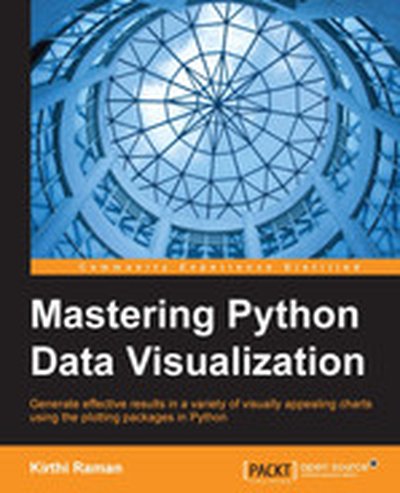
Mastering Python Data Visualization

Mastering Python Data Visualization provides thorough, hands-on guidance for creating impactful visual representations of data by leveraging Python's powerful libraries such as Matplotlib, Pandas, and Scikit-Learn. By following this book, you will gain proficiency in understanding data, performing analyses, and ultimately presenting your findings in a clear and engaging way. What this Book will help me do Effectively transform raw data into insightful visualizations using Python's rich ecosystem of libraries. Understand and apply best practices for selecting the most appropriate visualization techniques for different datasets and objectives. Master the use of Python for interactive plotting, regression analysis, clustering, and classification tasks. Develop a solid foundation in data visualization aesthetics and how to convey information clearly through visuals. Utilize Python for specialized fields such as finance, bioinformatics, and social network analysis, incorporating advanced computation techniques. Author(s) Kirthi Raman is an experienced data scientist and Python advocate with a strong background in technical computing and data visualization. He has hands-on experience in using Python's ecosystem to solve real-world data problems and a passion for sharing knowledge. Raman's writing focuses on blending practical insights with comprehensive explanations, ensuring readers not only learn the tools but also apply them effectively. Who is it for? This book is ideal for data analysts, data scientists, and researchers who want to deepen their knowledge of Python-based data visualization techniques. It requires readers to have a basic understanding of Python and data manipulation. If your goal is to create professional and informative visual narratives that are both visually appealing and data-driven, this book is for you.

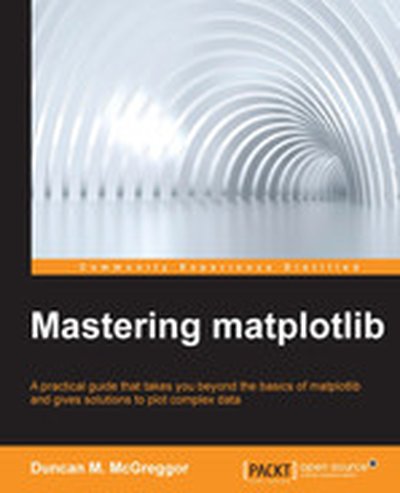
Mastering Matplotlib

Mastering Matplotlib provides readers with the tools to not just create visualizations but to fully harness the capabilities of the Matplotlib library. You will explore advanced features, work on interactive visualizations, and learn to optimize plots for various platforms and datasets. By the end, you will be adept at using Matplotlib in complex projects involving data analysis and visualization. What this Book will help me do Understand the architecture and internals of Matplotlib to better utilize and extend its features. Develop visually dynamic and interactive plots that update in real-time with changes in the user interface. Leverage third-party libraries to visualize complex datasets and relationships efficiently. Create tailored styling for visualizations, meeting publication and presentation standards. Deploy and integrate Matplotlib-based visualizations into cloud environments and big data workflows seamlessly. Author(s) Duncan M. McGreggor is a seasoned software engineer with years of hands-on experience in data visualization and scientific computing. He specializes in utilizing Matplotlib for dynamic charting and advanced plotting use cases. His approach to writing focuses on empowering readers to apply and integrate visualization solutions in real-world scenarios. Who is it for? This book is ideal for scientists, software engineers, programmers, and students who have a foundational understanding of Matplotlib and are looking to take their skills to an advanced level. If you're aiming to leverage Matplotlib to handle intricate datasets or to create sophisticated visual representations, this book is for you. It caters to learners seeking practical guidance for professional or academic projects. Expand your visualization toolkit with this insightful guide.

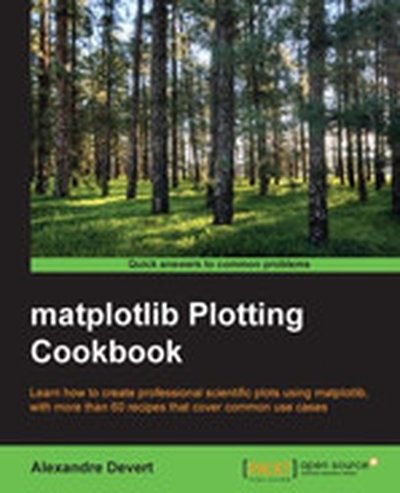
matplotlib Plotting Cookbook

The "matplotlib Plotting Cookbook" equips you with the skills to create impactful scientific visualizations using Python's matplotlib library. Through a series of concise recipes, this book covers everything from basic plotting to advanced techniques, ensuring you can create impressive graphics for your data. What this Book will help me do Learn to produce standard 2D plots like line, bar, and scatter plots. Master advanced plotting techniques such as 3D plotting and data overlays. Enhance plots with detailed annotations, rich legends, and labeling. Understand the use of colors, styles, and scales to maximize readability. Use matplotlib to generate plots programmatically or integrate with applications. Author(s) Alexandre Devert, the author of the "matplotlib Plotting Cookbook," is an experienced data scientist with a strong foundation in Python and data visualization techniques. Alexandre has worked extensively in the field of data analysis, and his expertise is reflected in the practical examples and hands-on guidance provided throughout this book. He takes a learner-focused approach to presenting technical topics in an accessible way. Who is it for? This book is designed for Python developers, data scientists, and researchers who need to create clear, professional-quality visualizations. If you are at a beginner or intermediate level in using matplotlib or visualization libraries, this book will empower you with essential plotting skills. Readers looking to save time while producing meaningful insights through data visualizations will find this book valuable. It is suitable for those aiming to improve their data representation skills for presentations or publications.