talk-data.com talk-data.com

Topic

postgresql

83

tagged

Activity Trend

6 peak/qtr
2020-Q1 2026-Q1

Activities

Showing filtered results

Filtering by: O'Reilly Data Engineering Books ×
Instant PostgreSQL Backup and Restore How-to

Are you tasked with managing and protecting your PostgreSQL databases? "Instant PostgreSQL Backup and Restore How-to" provides practical, step-by-step guidance for backing up and restoring both simple and complex PostgreSQL databases safely and efficiently. You'll learn essential skills to ensure your critical data is always secure and available. What this Book will help me do Master the process of backing up and restoring PostgreSQL databases effectively. Learn to target specific data for backup with partial dumps for higher flexibility. Utilize advanced compression techniques to optimize backup time and storage. Implement streaming replication for up-to-date standby servers. Apply file system snapshot techniques to ensure consistent online binary backups. Author(s) The authors of this book are experienced database administrators and PostgreSQL experts. They bring years of hands-on expertise in safeguarding and managing enterprise-level databases. Known for their engaging teaching style, they focus on delivering clear instructions and actionable insights to enable all database professionals to succeed with PostgreSQL. Who is it for? This book is designed for database administrators and IT professionals responsible for the durability, reliability, and recovery of data housed in PostgreSQL systems. It is well-suited for professionals ranging from beginners looking to understand PostgreSQL backup basics to experienced admins seeking to refine advanced restoration techniques. Readers should possess a basic familiarity with database concepts but do not need prior experience with PostgreSQL backup procedures.
Resilience and Reliability on AWS

Cloud services are just as susceptible to network outages as any other platform. This concise book shows you how to prepare for potentially devastating interruptions by building your own resilient and reliable applications in the public cloud. Guided by engineers from 9apps—an independent provider of Amazon Web Services and Eucalyptus cloud solutions—you’ll learn how to combine AWS with open source tools such as PostgreSQL, MongoDB, and Redis. This isn’t a book on theory. With detailed examples, sample scripts, and solid advice, software engineers with operations experience will learn specific techniques that 9apps routinely uses in its cloud infrastructures. Build cloud applications with the "rip, mix, and burn" approach Get a crash course on Amazon Web Services Learn the top ten tips for surviving outages in the cloud Use elasticsearch to build a dependable NoSQL data store Combine AWS and PostgreSQL to build an RDBMS that scales well Create a highly available document database with MongoDB Replica Set and SimpleDB Augment Redis with AWS to provide backup/restore, failover, and monitoring capabilities Work with CloudFront and Route 53 to safeguard global content delivery

Sams Teach Yourself SQL in 10 Minutes, Fourth Edition

Sams Teach Yourself SQL in 10 Minutes, Fourth Edition New full-color code examples help you see how SQL statements are structured Whether you're an application developer, database administrator, web application designer, mobile app developer, or Microsoft Office users, a good working knowledge of SQL is an important part of interacting with databases. And Sams Teach Yourself SQL in 10 Minutes offers the straightforward, practical answers you need to help you do your job. Expert trainer and popular author Ben Forta teaches you just the parts of SQL you need to know–starting with simple data retrieval and quickly going on to more complex topics including the use of joins, subqueries, stored procedures, cursors, triggers, and table constraints. You'll learn methodically, systematically, and simply–in 22 short, quick lessons that will each take only 10 minutes or less to complete. With the Fourth Edition of this worldwide bestseller, the book has been thoroughly updated, expanded, and improved. Lessons now cover the latest versions of IBM DB2, Microsoft Access, Microsoft SQL Server, MySQL, Oracle, PostgreSQL, SQLite, MariaDB, and Apache Open Office Base. And new full-color SQL code listings help the beginner clearly see the elements and structure of the language. 10 minutes is all you need to learn how to... Use the major SQL statements Construct complex SQL statements using multiple clauses and operators Retrieve, sort, and format database contents Pinpoint the data you need using a variety of filtering techniques Use aggregate functions to summarize data Join two or more related tables Insert, update, and delete data Create and alter database tables Work with views, stored procedures, and more Table of Contents 1 Understanding SQL 2 Retrieving Data 3 Sorting Retrieved Data 4 Filtering Data 5 Advanced Data Filtering 6 Using Wildcard Filtering 7 Creating Calculated Fields 8 Using Data Manipulation Functions 9 Summarizing Data 10 Grouping Data 11 Working with Subqueries 12 Joining Tables 13 Creating Advanced Joins 14 Combining Queries 15 Inserting Data 16 Updating and Deleting Data 17 Creating and Manipulating Tables 18 Using Views 19 Working with Stored Procedures 20 Managing Transaction Processing 21 Using Cursors 22 Understanding Advanced SQL Features Appendix A: Sample Table Scripts Appendix B: Working in Popular Applications Appendix C : SQL Statement Syntax Appendix D: Using SQL Datatypes Appendix E: SQL Reserved Words

PostgreSQL: Up and Running

If you’re thinking about migrating to the PostgreSQL open source database system, this guide provides a concise overview to help you quickly understand and use PostgreSQL’s unique features. Not only will you learn about the enterprise class features in the 9.2 release, you’ll also discover that PostgeSQL is more than just a database system—it’s also an impressive application platform. With numerous examples throughout this book, you’ll learn how to achieve tasks that are difficult or impossible in other databases.

Seven Databases in Seven Weeks

Data is getting bigger and more complex by the day, and so are the choices in handling that data. As a modern application developer you need to understand the emerging field of data management, both RDBMS and NoSQL. Seven Databases in Seven Weeks takes you on a tour of some of the hottest open source databases today. In the tradition of Bruce A. Tate's Seven Languages in Seven Weeks, this book goes beyond your basic tutorial to explore the essential concepts at the core each technology. Redis, Neo4J, CouchDB, MongoDB, HBase, Riak and Postgres. With each database, you'll tackle a real-world data problem that highlights the concepts and features that make it shine. You'll explore the five data models employed by these databases-relational, key/value, columnar, document and graph-and which kinds of problems are best suited to each. You'll learn how MongoDB and CouchDB are strikingly different, and discover the Dynamo heritage at the heart of Riak. Make your applications faster with Redis and more connected with Neo4J. Use MapReduce to solve Big Data problems. Build clusters of servers using scalable services like Amazon's Elastic Compute Cloud (EC2). Discover the CAP theorem and its implications for your distributed data. Understand the tradeoffs between consistency and availability, and when you can use them to your advantage. Use multiple databases in concert to create a platform that's more than the sum of its parts, or find one that meets all your needs at once. Seven Databases in Seven Weeks will take you on a deep dive into each of the databases, their strengths and weaknesses, and how to choose the ones that fit your needs. What You Need: To get the most of of this book you'll have to follow along, and that means you'll need a *nix shell (Mac OSX or Linux preferred, Windows users will need Cygwin), and Java 6 (or greater) and Ruby 1.8.7 (or greater). Each chapter will list the downloads required for that database.

PostGIS in Action

PostGIS in Action teaches readers of all levels to write spatial queries that solve real-world problems. It first gives you a background in vector-based GIS and then quickly moves into analyzing, viewing, and mapping data. You'll learn how to optimize queries for maximum speed, simplify geometries for greater efficiency, and create custom functions for your own applications. The book covers PostgreSQL 8.4, 9.0, and 9.1 features and shows you how to integrate with other GIS tools. About the Technology PostGIS is an open source spatial database extender for PostgreSQL. It equals or surpasses proprietary alternatives, allowing you to create location-aware queries with just a few lines of SQL code, and provides a back-end for mapping applications with minimal effort. About the Book What's Inside An introduction to spatial databases Geometry types, functions, and queries Applying PostGIS to real-world problems Extending PostGIS to web and desktop applications About the Reader Familiarity with relational database concepts is helpful but not required. About the Authors Regina Obe and Leo Hsu are database consultants. Regina is a member of the PostGIS core development team and the Project Steering Committee. They are hosts of BostonGIS.com and PostgresOnLine.com. Quotes From the forward: A concise guide that's truly one of a kind. - Paul Ramsey, Chair, PostGIS Steering Committee An elegant introduction to a difficult domain. - Mark Leslie, LISAsoft Pty Ltd The ultimate PostGIS tour guide. - Brent Wood, NIWA Will give you the Aha! moment you've been waiting for. - Jeff Addison, Southgate Software Ltd Want to get the most out of PostGIS? This is required reading for you. - James Fee, WeoGeo.com

PostgreSQL 9.0 High Performance

"PostgreSQL 9.0 High Performance" is your comprehensive guide to optimizing and troubleshooting PostgreSQL databases. This book blends theoretical principles with practical guidance to address performance challenges, covering hardware, software configuration, query optimization, and more. By following the insights in this book, you will enhance your skills in creating high-performance database systems. What this Book will help me do Understand best practices for improving PostgreSQL database performance. Learn how to select and configure hardware and operating systems to optimize database speed. Become proficient in optimizing queries and leveraging indexing for improved query performance. Discover techniques for scaling PostgreSQL databases using replication and partitioning. Understand how to monitor and analyze database performance using built-in and external tools. Author(s) The authors of this book are experienced database administrators and engineers with extensive industry experience, having scaled and optimized PostgreSQL installations for demanding applications. They specialize in sharing pragmatic, hands-on advice backed by deep theoretical knowledge. Their goal is to make complex database performance topics approachable for professionals. Who is it for? The ideal audience for this book includes intermediate to advanced database administrators who are currently using or planning to use PostgreSQL. It is also suitable for systems administrators wanting to optimize PostgreSQL deployment and developers who are interested in advanced database internals to improve application performance.

Essential SQLAlchemy

Essential SQLAlchemy introduces a high-level open-source code library that makes it easier for Python programmers to access relational databases such as Oracle, DB2, MySQL, PostgreSQL, and SQLite. SQLAlchemy has become increasingly popular since its release, but it still lacks good offline documentation. This practical book fills the gap, and because a developer wrote it, you get an objective look at SQLAlchemy's tools rather than an advocate's description of all the "cool" features. SQLAlchemy includes both a database server-independent SQL expression language and an object-relational mapper (ORM) that lets you map "plain old Python objects" (POPOs) to database tables without substantially changing your existing Python code. Essential SQLAlchemy demonstrates how to use the library to create a simple database application, walks you through simple queries, and explains how to use SQLAlchemy to connect to multiple databases simultaneously with the same Metadata. You also learn how to: Create custom types to be used in your schema, and when it's useful to use custom rather than built-in types Run queries, updates, and deletes with SQLAlchemy's SQL expression language Build an object mapper with SQLAlchemy, and understand the differences between this and active record patterns used in other ORMs Create objects, save them to a session, and flush them to the database Use SQLAlchemy to model object oriented inheritance Provide a declarative, active record pattern for use with SQLAlchemy using the Elixir extension Use the SQLSoup extension to provide an automatic metadata and object model based on database reflection In addition, you'll learn how and when to use other extensions to SQLAlchemy, including AssociationProxy, OrderingList, and more. Essential SQLAlchemy is the much-needed guide for every Python developer using this code library. Instead of a feature-by-feature documentation, this book takes an "essentials" approach that gives you exactly what you need to become productive with SQLAlchemy right away.

SQL Hacks

Whether you're running Access, MySQL, SQL Server, Oracle, or PostgreSQL, this book will help you push the limits of traditional SQL to squeeze data effectively from your database. The book offers 100 hacks -- unique tips and tools -- that bring you the knowledge of experts who apply what they know in the real world to help you take full advantage of the expressive power of SQL. You'll find practical techniques to address complex data manipulation problems. Learn how to: Wrangle data in the most efficient way possible Aggregate and organize your data for meaningful and accurate reporting Make the most of subqueries, joins, and unions Stay on top of the performance of your queries and the server that runs them Avoid common SQL security pitfalls, including the dreaded SQL injection attack Let SQL Hacks serve as your toolbox for digging up and manipulating data. If you love to tinker and optimize, SQL is the perfect technology and SQL Hacks is the must-have book for you.

The Relational Database Dictionary

Avoid misunderstandings that can affect the design, programming, and use of database systems. Whether you're using Oracle, DB2, SQL Server, MySQL, or PostgreSQL, The Relational Database Dictionary will prevent confusion about the precise meaning of database-related terms (e.g., attribute, 3NF, one-to-many correspondence, predicate, repeating group, join dependency), helping to ensure the success of your database projects. Carefully reviewed for clarity, accuracy, and completeness, this authoritative and comprehensive quick-reference contains more than 600 terms, many with examples, covering issues and concepts arising from the relational model of data. This one-of-a-kind dictionary provides a single, compact source where DBAs, database designers, DBMS implementers, application developers, and database professors and students can find the accurate definitions they need on a daily basis, information that isn't readily available anywhere else. If you're working with or learning about relational databases, you need this pocket-sized quick-reference.

Learning SQL

SQL (Structured Query Language) is a standard programming language for generating, manipulating, and retrieving information from a relational database. If you're working with a relational database--whether you're writing applications, performing administrative tasks, or generating reports--you need to know how to interact with your data. Even if you are using a tool that generates SQL for you, such as a reporting tool, there may still be cases where you need to bypass the automatic generation feature and write your own SQL statements. To help you attain this fundamental SQL knowledge, look to Learning SQL, an introductory guide to SQL, designed primarily for developers just cutting their teeth on the language. Learning SQL moves you quickly through the basics and then on to some of the more commonly used advanced features. Among the topics discussed: The history of the computerized database SQL Data Statements--those used to create, manipulate, and retrieve data stored in your database; example statements include select, update, insert, and delete SQL Schema Statements--those used to create database objects, such as tables, indexes, and constraints How data sets can interact with queries The importance of subqueries Data conversion and manipulation via SQL's built-in functions How conditional logic can be used in Data StatementsBest of all, Learning SQL talks to you in a real-world manner, discussing various platform differences that you're likely to encounter and offering a series of chapter exercises that walk you through the learning process. Whenever possible, the book sticks to the features included in the ANSI SQL standards. This means you'll be able to apply what you learn to any of several different databases; the book covers MySQL, Microsoft SQL Server, and Oracle Database, but the features and syntax should apply just as well (perhaps with some tweaking) to IBM DB2, Sybase Adaptive Server, and PostgreSQL. Put the power and flexibility of SQL to work. With Learning SQL you can master this important skill and know that the SQL statements you write are indeed correct.

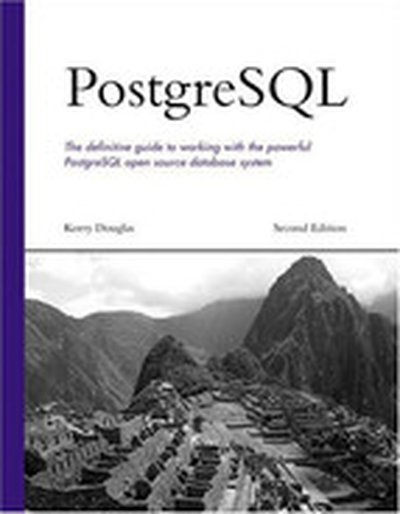
PostgreSQL, Second Edition

The second edition of the best-selling PostgreSQL has been updated to completely cover new features and capabilities of the 8.0 version of PostgreSQL. You will be lead through the internals of the powerful PostgreSQL open source database chapter, offering an easy-to-read, code-based approach that makes it easy to understand how each feature is implemented, how to best use each feature, and how to get more performance from database applications. This definitive guide to building, programming and administering the powerful PostgreSQL open-source database system will help you harness one of the most widely used open source, enterprise-level database systems.

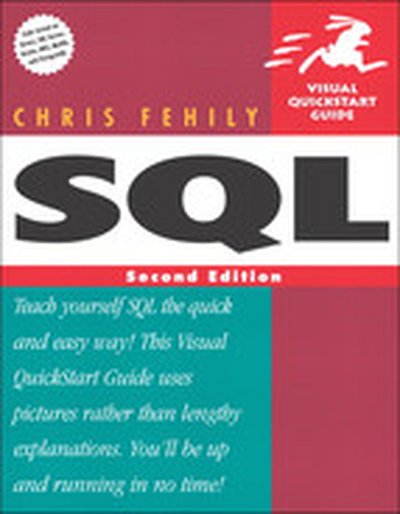
SQL: Visual Quickstart Guide, Second Edition

As dynamic, database-driven Web sites become the standard, more and more nonprogrammers just like yourself are being forced to work with database information and create and edit database objects. With SQL and this task-based guide to it, you can do it too-- no programming experience required! After going over the relational database model and SQL syntax in the first few chapters, veteran author Chris Fehily launches into the tasks that will get you comfortable with SQL fast. In addition to explaining SQL basics, this updated reference covers the ANSI SQL:2003 standard and contains a wealth of brand-new information, including a new chapter on set operations and common tasks, well-placed optimization tips to make your queries run fast, sidebars on advanced topics, and added IBM DB2 coverage. Best of all, the book's examples were tested on the latest versions of Microsoft Access, Microsoft SQL Server, Oracle, IBM DB2, MySQL, and PostgreSQL. On the companion Web site, you can download the SQL scripts and sample database for all these systems and put your knowledge to work immediately on a real database..

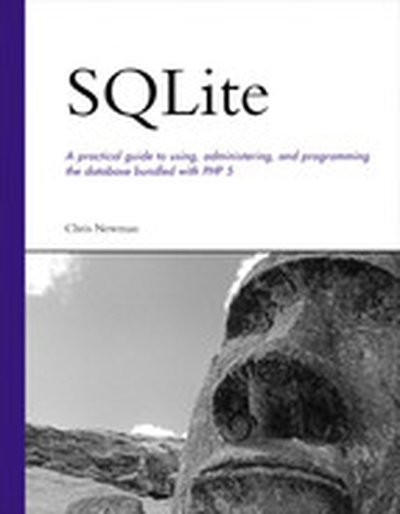
SQLite

SQLite is a small, fast, embeddable database. What makes it popular is the combination of the database engine and interface into a single library as well as the ability to store all the data in a single file. Its functionality lies between MySQL and PostgreSQL, however it is faster than both databases. In SQLite, author Chris Newman provides a thorough, practical guide to using, administering and programming this up-and-coming database. If you want to learn about SQLite or about its use in conjunction with PHP this is the book for you.

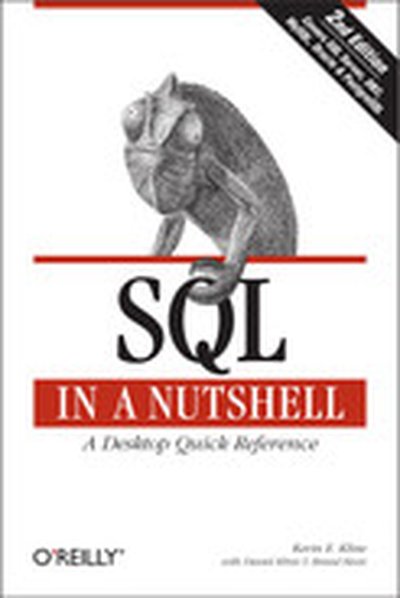
SQL in a Nutshell, 2nd Edition

SQL in a Nutshell applies the eminently useful "Nutshell" format to Structured Query Language (SQL), the elegant--but complex--descriptive language that is used to create and manipulate large stores of data. For SQL programmers, analysts, and database administrators, the new second edition of SQL in a Nutshell is the essential date language reference for the world's top SQL database products. SQL in a Nutshell is a lean, focused, and thoroughly comprehensive reference for those who live in a deadline-driven world.This invaluable desktop quick reference drills down and documents every SQL command and how to use it in both commercial (Oracle, DB2, and Microsoft SQL Server) and open source implementations (PostgreSQL, and MySQL). It describes every command and reference and includes the command syntax (by vendor, if the syntax differs across implementations), a clear description, and practical examples that illustrate important concepts and uses. And it also explains how the leading commercial and open sources database product implement SQL. This wealth of information is packed into a succinct, comprehensive, and extraordinarily easy-to-use format that covers the SQL syntax of no less than 4 different databases.When you need fast, accurate, detailed, and up-to-date SQL information, SQL in a Nutshell, Second Edition will be the quick reference you'll reach for every time. SQL in a Nutshell is small enough to keep by your keyboard, and concise (as well as clearly organized) enough that you can look up the syntax you need quickly without having to wade through a lot of useless fluff. You won't want to work on a project involving SQL without it.

Sams Teach Yourself SQL™ in 10 Minutes, Third Edition

Sams Teach Yourself SQL in 10 Minutes has established itself as the gold standard for introductory SQL books, offering a fast-paced accessible tutorial to the major themes and techniques involved in applying the SQL language. Forta¿s examples are clear and his writing style is crisp and concise. As with earlier editions, this revision includes coverage of current versions of all major commercial SQL platforms. New this time around is coverage of MySQL, and PostgreSQL. All examples have been tested against each SQL platform, with incompatibilities or platform distinctives called out and explained.

PostgreSQL

PostgreSQL is the world¿s most advanced open-source database. PostgreSQL is the most comprehensive, in-depth, and easy-to-read guide to this award-winning database. This book starts with a thorough overview of SQL, a description of all PostgreSQL data types, and a complete explanation of PostgreSQL commands. If you are a developer or an administrator, you¿ll love the chapter that explores PostgreSQL performance. The authors explain how PostgreSQL stores data on disk (and in memory) and how to measure and influence the effectiveness of PostgreSQL¿s caching mechanisms. You¿ll also learn how PostgreSQL generates and evaluates execution plans. The authors explain all of the query operators that can appear in the results of an EXPLAIN command, describing the performance implications of each operator as well as the conditions which will cause PostgreSQL to use that operator. PostgreSQL is also a complete guide for the developer. Whether you¿re developing with C, C++, ODBC, Embedded SQL, Java, Tcl/Tk, Perl, Python or PHP, you¿ll find a comprehensive description of the PostgreSQL API for your language of choice. Easy to follow exercises will walk you through the development of working applications that fully demonstrate the features offered by each API. You will also find a chapter that describes the PL/pgSQL server-side procedural language, learning how to build triggers, functions, and stored-procedures. The authors have even included a chapter that walks you through the process of extending the PostgreSQL server with custom-written C functions and new data types. The accompanying web site, www.conjectrix.com, contains downloadable versions of all of the sample code and a wealth of PostgreSQL-related resources. The last section of PostgreSQL was written for the PostgreSQL administrator. You will learn how to install PostgreSQL on Windows, Linux, and Unix systems, from source code or from pre-compiled installers. The authors have described all of the PostgreSQL configuration options (compile-time, startup, and on-the-fly). The chapter on PostgreSQL security describes all of the authentication protocols that you can choose from and describes how to secure your database, both internally and externally. If you have to support a multi-national environment, you will find the chapter on internationalization and localization to be invaluable. You won¿t find a more complete guide to PostgreSQL anywhere. The authors have made PostgreSQL approachable by leading the reader from basic concepts to advanced features. Whether you¿re a database beginner or an advanced user, you will find this book a valuable addition to your library.

PHP and PostgreSQL: Advanced Web Programming

Sams¿ PHP and MySQL Web Development, by Luke Welling and Laura Thomson, showed that there is a strong demand for books that describe how to use PHP together with a specific open-source database to develop Web applications. While MySQL is very popular, PostgreSQL is widely considered to be the more powerful of the two open-source databases. And PostgreSQL is rapidly gaining market share large organizations are beginning to use PostgreSQL instead of Oracle; the demand for PostgreSQL training and support has increased by some accounts 50% in the last six months; and Web hosting services increasingly offer PostgreSQL along with MySQL. PHP and PostgreSQL Advanced Web Programming focuses on the specific needs of a PostgreSQL developer and will detail how to make use of PostgreSQL¿s unique, advanced features to develop high-availability, fail-safe Web applications with PHP and PostgreSQL.

Practical PostgreSQL

Arguably the most capable of all the open source databases, PostgreSQL is an object-relational database management system first developed in 1977 by the University of California at Berkeley. In spite of its long history, this robust database suffers from a lack of easy-to-use documentation. Practical PostgreSQL fills that void with a fast-paced guide to installation, configuration, and usage. This comprehensive new volume shows you how to compile PostgreSQL from source, create a database, and configure PostgreSQL to accept client-server connections. It also covers the many advanced features, such as transactions, versioning, replication, and referential integrity that enable developers and DBAs to use PostgreSQL for serious business applications. The thorough introduction to PostgreSQL's PL/pgSQL programming language explains how you can use this very useful but under-documented feature to develop stored procedures and triggers. The book includes a complete command reference, and database administrators will appreciate the chapters on user management, database maintenance, and backup & recovery. With Practical PostgreSQL, you will discover quickly why this open source database is such a great open source alternative to proprietary products from Oracle, IBM, and Microsoft.

PostgreSQL Developer's Handbook

PostgreSQL is an object-relational database server that is widely considered to be the world¿s most advanced open-source database system. It is ANSI SQL-compatible, and it offers powerful features to enable more complex software design than would be possible with relational databases that are not object-oriented. PostgreSQL is extremely modular, it supports a large number of datatypes, and programming interfaces for PostgreSQL are available for all important programming languages, including C, Perl, Python, Tcl, Java, and PHP. PostgreSQL Developer¿s Handbook provides a complete overview of the PostgreSQL database server and extensive coverage of its core features, including object orientation, PL/pgSQL, and the most important programming interfaces. The book introduces the reader to the language and syntax of PostgreSQL and then moves quickly into advanced programming topics.