talk-data.com talk-data.com

Topic

SSAS

SQL Server Analysis Services (SSAS)

olap data_mining business_intelligence

10

tagged

Activity Trend

1 peak/qtr
2020-Q1 2026-Q1

Activities

10 activities · Newest first

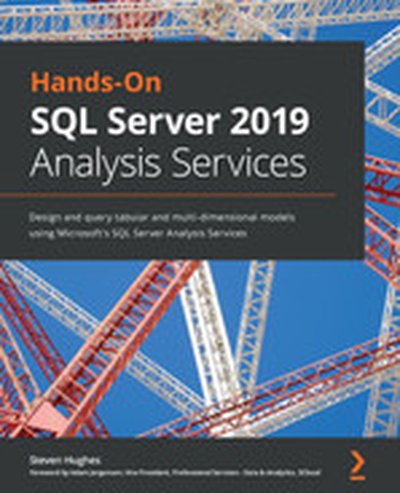
Hands-On SQL Server 2019 Analysis Services

"Hands-On SQL Server 2019 Analysis Services" is a comprehensive guide to mastering data analysis using SQL Server Analysis Services (SSAS). This book provides you with step-by-step directions on creating and deploying tabular and multi-dimensional models, as well as using tools like MDX and DAX to query and analyze data. By the end, you'll be confident in designing effective data models for business analytics. What this Book will help me do Understand how to create and optimize both tabular and multi-dimensional models with SQL Server Analysis Services. Learn to use MDX and DAX to query and manipulate your data for enhanced insights. Integrate SSAS models with visualization tools like Excel and Power BI for effective decision-making. Implement robust security measures to safeguard data within your SSAS deployments. Master scaling and optimizing best practices to ensure high-performance analytical models. Author(s) Steven Hughes is a data analytics expert with extensive experience in business intelligence and SQL Server technologies. With years of practical experience in using SSAS and teaching data professionals, Steven has a knack for breaking down complex concepts into actionable knowledge. His approach to writing involves combining clear explanations with real-world examples. Who is it for? This book is intended for BI professionals, data analysts, and database developers who want to gain hands-on expertise with SQL Server 2019 Analysis Services. Ideal readers should have familiarity with database querying and a basic understanding of business intelligence tools like Power BI and Excel. It's perfect for those aiming to refine their skills in modeling and deploying robust analytics solutions.
XML and JSON Recipes for SQL Server: A Problem-Solution Approach

Quickly find solutions to dozens of common problems encountered while using XML and JSON features that are built into SQL Server. Content is presented in the popular problem-solution format. Look up the problem that you want to solve. Read the solution. Apply the solution directly in your own code. Problem solved! This book shows how to take advantage of XML and JSON to share data and automate tasks. JSON is commonly used to move data back and forth between the database and front-end applications, often running in a browser. This book shows all you need to know about transforming query results into JSON format, and back again. Also covered are the processes and techniques for moving data into and out of XML format for business intelligence and other purposes, such as when transferring data from a reporting system into a data warehouse, or between different database brands such as between SQL Server and Oracle. Microsoft intensively implements XML in SQL Server, and in many related products. Execution plans are generated in XML format, and this book shows you how to parse those plans and automate the detection of performance problems. The relatively new Extended Events feature writes tracing data into XML files, and the recipes in this book help in parsing those files. XML is also used in SQL Server's BI tool set, including in SSIS, SSR, and SSAS. XML is used in many configuration files, and is even behind the construction of DDL triggers. In reading this book you’ll dive deeply into the features that allow you to build and parse XML, and also JSON, which is a specific format of XML used to transmit objects in a web-friendly format between a database and its front-end applications. What You Will Learn Build XML and JSON objects in support of automation and data transfer Import and parse XML and JSON from operating system files Build appropriate indexes on XML objects to improve query performance Move data from query result sets into JSON format, and back again Automate the detection of database performance problems by querying and parsing the database’s own execution plans Replace external and manual JSON processes with SQL Server's internal, JSON functionality Who This Book Is For Database administrators, .NET developers, business intelligence developers, and other professionals who want a deep and detailed skill set around working with XML and JSON in a SQL Server database environment. Web developers will particularly find the book useful for its coverage of transforming database result sets into JSON text that can be transmitted to front-end web applications.

The Biml Book: Business Intelligence and Data Warehouse Automation

Learn Business Intelligence Markup Language (Biml) for automating much of the repetitive, manual labor involved in data integration. We teach you how to build frameworks and use advanced Biml features to get more out of SQL Server Integration Services (SSIS), Transact-SQL (T-SQL), and SQL Server Analysis Services (SSAS) than you ever thought possible. The first part of the book starts with the basics—getting your development environment configured, Biml syntax, and scripting essentials. Whether a beginner or a seasoned Biml expert, the next part of the book guides you through the process of using Biml to build a framework that captures both your design patterns and execution management. Design patterns are reusable code blocks that standardize the approach you use to perform certain types of data integration, logging, and other key data functions. Design patterns solve common problems encountered when developing data integration solutions. Because you do not have to build the code from scratch each time, design patterns improve your efficiency as a Biml developer. In addition to leveraging design patterns in your framework, you will learn how to build a robust metadata store and how to package your framework into Biml bundles for deployment within your enterprise. In the last part of the book, we teach you more advanced Biml features and capabilities, such as SSAS development, T-SQL recipes, documentation autogeneration, and Biml troubleshooting. The Biml Book: Provides practical and applicable examples Teaches you how to use Biml to reduce development time while improving quality Takes you through solutions to common data integration and BI challenges What You'll Learn Master the basics of Business Intelligence Markup Language (Biml) Study patterns for automating SSIS package generation Build a Biml Framework Import and transform database schemas Automate generation of scripts and projects Who This Book Is For BI developers wishing to quickly locate previously tested solutions, Microsoft BI specialists, those seeking more information about solution automation and code generation, and practitioners of Data Integration Lifecycle Management (DILM) in the DevOps enterprise

Exam Ref 70-768 Developing SQL Data Models, First Edition

Prepare for Microsoft Exam 70-768–and help demonstrate your real-world mastery of Business Intelligence (BI) solutions development with SQL Server 2016 Analysis Services (SSAS), including modeling and queries. Designed for experienced IT professionals ready to advance their status, Exam Ref focuses on the critical thinking and decision-making acumen needed for success at the MCSA level. Focus on the expertise measured by these objectives: • Design a multidimensional BI semantic model • Design a tabular BI semantic model • Develop queries using Multidimensional Expressions (MDX) and Data Analysis Expressions (DAX) • Configure and maintain SSAS This Microsoft Exam Ref: • Organizes its coverage by exam objectives • Features strategic, what-if scenarios to challenge you • Assumes you are a database or BI professional with experience creating models, writing MDX or DAX queries, and using SSAS

Tabular Modeling with SQL Server 2016 Analysis Services Cookbook

With "Tabular Modeling with SQL Server 2016 Analysis Services Cookbook," you'll discover how to harness the full potential of the latest Tabular models in SQL Server Analysis Services (SSAS). This practical guide equips data professionals with the tools, techniques, and knowledge to optimize data analytics and deliver fast, reliable, and impactful business insights. What this Book will help me do Understand the fundamentals of Tabular modeling and its advantages over traditional methods. Use SQL Server 2016 SSAS features to build and deploy Tabular models tailored to business needs. Master DAX for creating powerful calculated fields and optimized measures. Administer and secure your models effectively, ensuring robust BI solutions. Optimize performance and explore advanced features in Tabular solutions for maximum efficiency. Author(s) None Wilson is an experienced SQL BI professional with a strong background in database modeling and analytics. With years of hands-on experience in developing BI solutions, Wilson takes a practical and straightforward teaching approach. Their guidance in this book makes the complex topics of Tabular modeling and SSAS accessible to both seasoned professionals and newcomers to the field. Who is it for? This book is tailored for SQL BI professionals, database architects, and data analysts aiming to leverage Tabular models in SQL Server Analysis Services. It caters to those familiar with database management and basic BI concepts who are eager to improve their analysis solutions. It's a valuable resource if you aim to gain expertise in using tabular modeling for business intelligence.

Microsoft SQL Server 2014 Business Intelligence Development Beginner's Guide

Microsoft SQL Server 2014 Business Intelligence Development Beginner's Guide introduces you to Microsoft's BI tools and systems. You'll gain hands-on experience building solutions that handle data warehousing, reporting, and predictive analytics. With step-by-step tutorials, you'll be equipped to transform data into actionable insights. What this Book will help me do Understand and implement multidimensional data models using SSAS and MDX. Write and use DAX queries and leverage SSAS tabular models effectively. Improve and maintain data integrity using MDS and DQS tools. Design and develop polished, insightful dashboards and reports using PerformancePoint, Power View, and SSRS. Explore advanced data analysis features, such as Power Query, Power Map, and basic data mining techniques. Author(s) Abolfazl Radgoudarzi and Reza Rad are experienced practitioners and educators in the field of business intelligence. They specialize in SQL Server BI technologies and have extensive careers helping organizations harness data for decision-making. Their approach combines clear explanations with practical examples, ensuring readers can effectively apply what they learn. Who is it for? This book is ideal for database developers, system analysts, and IT professionals looking to build strong foundations in Microsoft SQL Server's BI technologies. Beginners in business intelligence or data management will find the topics accessible. Intermediate practitioners will expand their ability to build complete BI solutions. It's designed for anyone eager to develop skills in data modeling, analysis, and visualization.

Expert Cube Development with SSAS Multidimensional Models

"Expert Cube Development with SSAS Multidimensional Models" is a comprehensive guide designed for professionals looking to elevate their competence in creating and optimizing SSAS cube solutions. Focused on the multidimensional model, this book provides a detailed, pragmatic approach to delivering high-performance Business Intelligence solutions. What this Book will help me do Master the core features of multidimensional modeling with SSAS. Develop efficient and scalable OLAP cubes for business analysis. Implement advanced calculations and measures using MDX. Optimize and troubleshoot SSAS performance for real-world scenarios. Integrate SSAS models for insightful data visualization. Author(s) The authors of this book are seasoned SSAS consultants and developers, each with years of hands-on experience working with Microsoft Analysis Services in enterprise environments. Their deep understanding of multidimensional modeling shines through in this detailed and well-structured book, providing readers with not only practical guidance but also invaluable tips drawn from real-world projects. Who is it for? This book is tailored for BI developers and data professionals who already have some familiarity with Microsoft Analysis Services and want to deepen their expertise in SSAS multidimensional models. It is ideal for those looking to enhance their ability to design, implement, and optimize robust cube solutions for complex business scenarios. With step-by-step tutorials, it caters to intermediate to advanced learners seeking to take their SSAS skills to the next level.

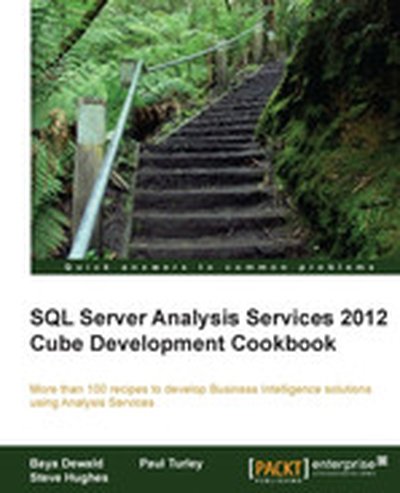
SQL Server Analysis Services 2012 Cube Development Cookbook

The 'SQL Server Analysis Services 2012 Cube Development Cookbook' equips you with the practical skills needed to design and implement OLAP cubes using both multidimensional and tabular models. By working through hands-on recipes, you'll quickly gain the expertise to create robust Business Intelligence solutions with SQL Server Analysis Services. What this Book will help me do Build and enhance multidimensional and tabular models for effective data analysis. Implement key OLAP features like dimensions, cubes, actions, and aggregations. Scale and optimize your Business Intelligence solutions for enterprise-level performance. Utilize MDX and DAX languages proficiently to query and manipulate data. Develop skills in securing, monitoring, and troubleshooting SQL Server Analysis Services. Author(s) None Dewald is an experienced business intelligence professional with years of hands-on expertise with SQL Server Analysis Services. His approach to teaching focuses on practical application and equipping his audience with tools to be successful in deploying and maintaining BI solutions. Who is it for? This book is perfect for BI and ETL developers who work with SQL Server Analysis Services to build OLAP cubes. It assumes familiarity with relational database management systems, Excel, and SQL. If you're looking to deepen your understanding of Microsoft's BI stack and improve your practical skills in SSAS, this book is for you.

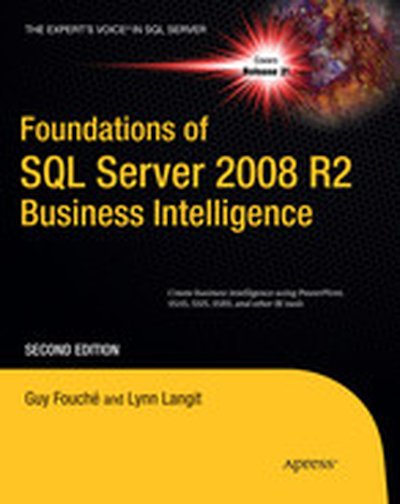
Foundations of SQL Server 2008 R2 Business Intelligence, Second Edition

Foundations of SQL Server 2008 R2 Business Intelligence introduces the exciting gamut of business intelligence tools included with SQL Server 2008. Microsoft has designed SQL Server 2008 to be more than just a database. It's a complete business intelligence (BI) platform. The database is at the core, and surrounding the database are tools for data mining, modeling, reporting, analyzing, charting, and integration with other, enterprise-level software packages. SQL Server 2008 puts an incredible amount of BI functionality at your disposal. But how do you take advantage of it? That's what this book is all about. Authors Guy Fouché and Lynn Langit show how to implement end-to-end BI solutions using SQL Server Analysis Services (SSAS), SQL Server Integration Services (SSIS), SQL Server Reporting Services (SSRS), and other tools in the Microsoft BI toolkit. You'll learn about all-new features such as PowerPivot and Report Builder 3.0. Also provided are clear examples of predictive analysis made possible through powerful data mining features in SQL Server. If you're an analyst or developer working with SQL Server 2008 who is charged with delivering results that drive business success, you can't afford to be without this book; you can't afford to ignore the powerful BI suite that Microsoft has placed at your disposal. Provides the "big picture" of Microsoft's BI tool suite Covers PowerPivot and other game-changing technologies introduced alongside SQL Server 2008 Release 2 Gives a practical analysis of features based on real-world practices What you'll learn Apply dimensional- and fact-based modeling to create OLAP schemas Optimize data extraction and transformation with SQL Server Integration Services Develop OLAP and data-mining solutions using SQL Server Analysis Services Create compelling reports using the new Report Builder 3.0 in SQL Server Reporting Services Deliver self-service business-intelligence via Microsoft PowerPivot Manage and maintain control over your business intelligence environment Who this book is for Foundations of SQL Server 2008 R2 Business Intelligence is for business intelligence analysts and developers wanting to employ the full stack of business intelligence tools that are part of SQL Server. The book also appeals to database administrators managing databases in support of business intelligence efforts.

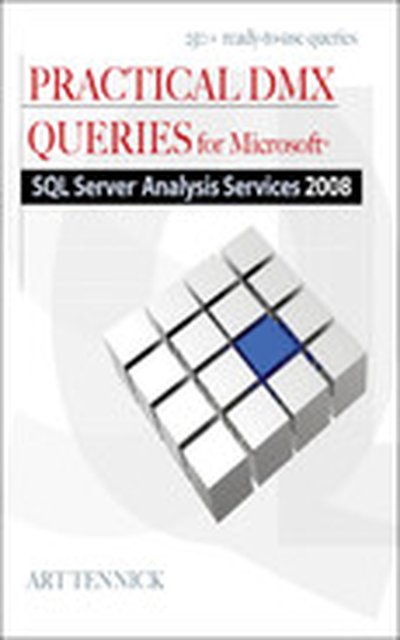
Practical DMX Queries for Microsoft SQL Server Analysis Services 2008

250+ Ready-to-Use, Powerful DMX Queries Transform data mining model information into actionable business intelligence using the Data Mining Extensions (DMX) language. Practical DMX Queries for Microsoft SQL Server Analysis Services 2008 contains more than 250 downloadable DMX queries you can use to extract and visualize data. The application, syntax, and results of each query are described in detail. The book emphasizes DMX for use in SSMS against SSAS, but the queries also apply to SSRS, SSIS, DMX in SQL, WinForms, WebForms, and many other applications. Techniques for generating DMX syntax from graphical tools are also demonstrated in this valuable resource. View cases within data mining structures and models using DMX Case queries Examine the content of a data mining model with DMX Content queries Perform DMX Prediction queries based on the Decision Trees algorithm and the Time Series algorithm Run Prediction and Cluster queries based on the Clustering algorithm Execute Prediction queries with Association and Sequence Clustering algorithms Use DMX DDL queries to create, alter, drop, back up, and restore data mining objects Display various parameters for each algorithm with Schema queries Examine the values of discrete, discretized, and continuous structure columns using Column queries Use graphical interfaces to generate Prediction, Content, Cluster, and DDL queries Deliver DMX query results to end users Download the source code from www.mhprofessional.com/computingdownload