talk-data.com talk-data.com

Event

O'Reilly SQL Books

2002-09-10 – 2026-08-25 Oreilly Visit website ↗

Activities tracked

103

Collection of O'Reilly books on SQL.

Filtering by: SQL ×

Sessions & talks

Showing 76–100 of 103 · Newest first

Search within this event →
Oracle Database 12c SQL

Write Powerful SQL Statements and PL/SQL Programs Learn how to access Oracle databases through SQL statements and construct PL/SQL programs. Oracle Database 12c SQL offers complete coverage of the latest database features and techniques. Find out how to write SQL statements to retrieve and modify database information, use SQLPlus and SQL Developer, work with database objects, write PL/SQL programs, use performance optimization techniques, incorporate XML, and more. This Oracle Press guide contains everything you need to know to master SQL. Use SQL statements to access an Oracle database Work with SQLPlus and SQL Developer Write PL/SQL programs Create tables, sequences, indexes, views, and triggers Design advanced queries containing complex calculations Create database objects to handle abstract data Use date, time stamp, and time interval data types Establish user roles and privileges Handle multimedia files using large objects Tune SQL statements to make them execute faster Generate, process, and store XML data Master the very latest Oracle Database 12 c features Code examples in the book are available for download.

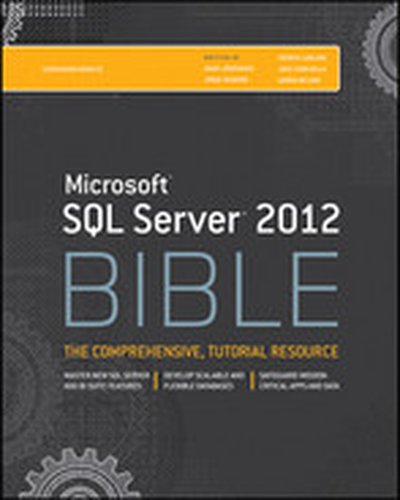
Microsoft SQL Server 2012 Bible

Harness the powerful new SQL Server 2012 Microsoft SQL Server 2012 is the most significant update to this product since 2005, and it may change how database administrators and developers perform many aspects of their jobs. If you're a database administrator or developer, Microsoft SQL Server 2012 Bible teaches you everything you need to take full advantage of this major release. This detailed guide not only covers all the new features of SQL Server 2012, it also shows you step by step how to develop top-notch SQL Server databases and new data connections and keep your databases performing at peak. The book is crammed with specific examples, sample code, and a host of tips, workarounds, and best practices. In addition, downloadable code is available from the book's companion web site, which you can use to jumpstart your own projects. Serves as an authoritative guide to Microsoft's SQL Server 2012 for database administrators and developers Covers all the software's new features and capabilities, including SQL Azure for cloud computing, enhancements to client connectivity, and new functionality that ensures high-availability of mission-critical applications Explains major new changes to the SQL Server Business Intelligence tools, such as Integration, Reporting, and Analysis Services Demonstrates tasks both graphically and in SQL code to enhance your learning Provides source code from the companion web site, which you can use as a basis for your own projects Explores tips, smart workarounds, and best practices to help you on the job Get thoroughly up to speed on SQL Server 2012 with Microsoft SQL Server 2012 Bible.

SQL and Relational Theory, 2nd Edition

SQL is full of difficulties and traps for the unwary. You can avoid them if you understand relational theory, but only if you know how to put the theory into practice. In this insightful book, author C.J. Date explains relational theory in depth, and demonstrates through numerous examples and exercises how you can apply it directly to your use of SQL. This second edition includes new material on recursive queries, “missing information” without nulls, new update operators, and topics such as aggregate operators, grouping and ungrouping, and view updating. If you have a modest-to-advanced background in SQL, you’ll learn how to deal with a host of common SQL dilemmas. Why is proper column naming so important? Nulls in your database are causing you to get wrong answers. Why? What can you do about it? Is it possible to write an SQL query to find employees who have never been in the same department for more than six months at a time? SQL supports “quantified comparisons,” but they’re better avoided. Why? How do you avoid them? Constraints are crucially important, but most SQL products don’t support them properly. What can you do to resolve this situation? Database theory and practice have evolved since the relational model was developed more than 40 years ago. SQL and Relational Theory draws on decades of research to present the most up-to-date treatment of SQL available. C.J. Date has a stature that is unique within the database industry. A prolific writer well known for the bestselling textbook An Introduction to Database Systems (Addison-Wesley), he has an exceptionally clear style when writing about complex principles and theory.

Discovering SQL: A Hands-On Guide for Beginners

Teaching the SQL skills that businesses demand when hiring programmers If you're a SQL beginner, you don't just want to learn SQL basics, you also want to get some practical SQL skills you can use in the job market. This book gives you both. Covering the basics through intermediate topics with clear explanations, hands-on exercises, and helpful solutions, this book is the perfect introduction to SQL. Topics include both the current SQL:2008 standards, the upcoming SQL:2011 standards, and also how to use SQL against current releases of the most popular commercial SQL databases, such as Oracle, SQL Server, and MySQL. Introduces SQL concepts, explains SQL statements, and clearly shows how to write efficient and effective SQL code Uses a hands-on style and a sample database that incorporates all SQL concepts taught in the book; this database will be enhanced through the book as key points and lessons are covered Covers topics such as how SQL interacts with the sample database via various interfaces, including vendor-provided utilities, programming languages, SQL clients, and productivity software Includes appendices with primers on database normalization, set theory and bollean algebra, RDBMS software step-by-step setup guides, and database connectivity Learn how to write effective, efficient SQL code with Discovering SQL: A Hands-On Guide for Beginners.

SQL Pocket Guide, 3rd Edition

If you're a programmer or database administrator who uses SQL in your day-to-day work, this popular pocket guide is the ideal on-the-job reference. You'll find many examples that address the language's complexity, along with key aspects of SQL used in IBM DB2 Release 9.7, MySQL 5.1, Oracle Database 11g Release 2, PostgreSQL 9.0, and Microsoft SQL Server 2008 Release 2. SQL Pocket Guide describes how these database systems implement SQL syntax for querying, managing transactions, and making changes to data. It also shows how the systems use SQL functions, regular expression syntax, and type conversion functions and formats. All example SQL statements in this book execute against a set of tables, with data that you can quickly download. The third edition covers important database changes, including: Oracle's support of the recursive WITH syntax, and addition of PIVOT and UNPIVOT operators Functions new to Oracle, such as LISTAGG, NTH_VALUE, and more PostgreSQL’s support of recursive WITH and some window functions DB2 syntax and datatypes, some compatible with Oracle MySQL features such as the TIMESTAMP type and the TO_SECONDS function

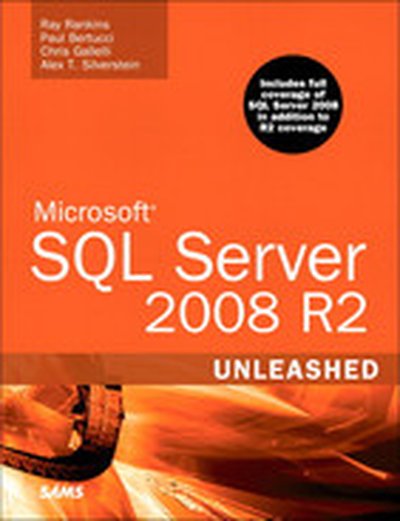
Microsoft® SQL Server 2008 R2 Unleashed

This is the industry’s most comprehensive and useful guide to SQL Server 2008 and 2008 R2. It presents start-to-finish coverage of SQL Server’s core database server and management capabilities, plus complete introductions to Integration, Reporting, and Analysis Services, application development, and much more. Four expert SQL Server administrators, developers, and consultants have packed this book with real-world information, tips, guidelines, and samples drawn from their own extensive experience creating and managing complex database solutions. Writing for intermediate-to-advanced-level SQL Server professionals, they focus on the product’s most complex and powerful capabilities, and its newest tools and features. For example, you’ll find invaluable information on administering SQL Server more efficiently, analyzing and optimizing queries, implementing data warehouses, ensuring high availability, and tuning performance. The accompanying CD-ROM contains an extraordinary library of practical tools and information including sample databases and all code examples. Whether you’re responsible for SQL Server 2008 analysis, design, implementation, support, administration, or troubleshooting, no other book offers you this much value. Understand the Microsoft SQL Server 2008 environment, R2’s newest features, and each edition’s capabilities Manage SQL Server 2008 more effectively with SQL Server Management Studio, the SQLCMD command-line query tool, and Powershell Efficiently manage security, users, backup/restore, replication, Database Mail, and database objects—from tables and indexes to stored procedures and triggers Increase availability with clustering, database mirroring, and other features Use new Policy-Based Management to centrally configure and operate SQL Server throughout the organization Use SQL Server Profiler to capture queries and identify bottlenecks Improve performance by optimizing queries, design more effective databases, and manage workloads with the new Resource Governor Develop applications using SQL Server 2008’s enhancements to T-SQL and SQLCLR, .NET integration, LINQ to SQL, XML, and XQuery Make the most of Analysis Services, Integration Services, and Reporting Services—especially Microsoft’s new R2 reporting improvements Improve data security using Column-level and Transparent Data Encryption CD-ROM includes: 15 additional chapters Code samples, scripts, and databases utilized within the book Free version of SQL Shot (performance & tuning software)

SQL

SQL is a solid guide and reference to the key elements of SQL and how to use it effectively. Developed by authors who needed a good resource for students in their database class, this is an ideal supplement for database courses — no matter what main text you use or what flavor of SQL is required. It features a short and inexpensive introduction to SQL for students who have some programming experience and need to learn the main features of SQL; and suggested shortcuts for learning and practice, depending on the experience of the user. This book is recommended for novice developers, programmers, and database administrators as well as students in database courses, business courses, and IT-related courses. Provides tutorial-based instruction for the main features of SQL for programmers and other technical professionals in need of a brief but really good introduction to SQL. The approach is vendor-neutral—so very adaptable and flexible The focus is on teaching concepts by walking through concrete examples and explanations, and self-review exercises are included at the end of each chapter. Coverage is on the key features of the language that are required to understand SQL and begin using it effectively. SQL 2003-compliant.

SQL Antipatterns

Bill Karwin has helped thousands of people write better SQL and build stronger relational databases. Now he's sharing his collection of antipatterns--the most common errors he's identified in those thousands of requests for help. Most developers aren't SQL experts, and most of the SQL that gets used is inefficient, hard to maintain, and sometimes just plain wrong. This book shows you all the common mistakes, and then leads you through the best fixes. What's more, it shows you what's behind these fixes, so you'll learn a lot about relational databases along the way. Each chapter in this book helps you identify, explain, and correct a unique and dangerous antipattern. The four parts of the book group the anti​patterns in terms of logical database design, physical database design, queries, and application development. The chances are good that your application's database layer already contains problems such as Index Shotgun, Keyless Entry, Fear of the Unknown, and Spaghetti Query. This book will help you and your team find them. Even better, it will also show you how to fix them, and how to avoid these and other problems in the future. SQL Antipatterns gives you a rare glimpse into an SQL expert's playbook. Now you can stamp out these common database errors once and for all. Whatever platform or programming language you use, whether you're a junior programmer or a Ph.D., SQL Antipatterns will show you how to design and build databases, how to write better database queries, and how to integrate SQL programming with your application like an expert. You'll also learn the best and most current technology for full-text search, how to design code that is resistant to SQL injection attacks, and other techniques for success.

Oracle PL/SQL Programming, 5th Edition

This book is the definitive reference on PL/SQL, considered throughout the database community to be the best Oracle programming book available. Like its predecessors, this fifth edition of Oracle PL/SQL Programming covers language fundamentals, advanced coding techniques, and best practices for using Oracle's powerful procedural language. Thoroughly updated for Oracle Database 11g Release 2, this edition reveals new PL/SQL features and provides extensive code samples, ranging from simple examples to complex and complete applications, in the book and on the companion website. This indispensable reference for both novices and experienced Oracle programmers will help you: Get PL/SQL programs up and running quickly, with clear instructions for executing, tracing, testing, debugging, and managing PL/SQL code Optimize PL/SQL performance with the aid of a brand-new chapter in the fifth edition Explore datatypes, conditional and sequential control statements, loops, exception handling, security features, globalization and localization issues, and the PL/SQL architecture Understand and use new Oracle Database 11g features, including the edition-based redefinition capability, the function result cache, the new CONTINUE statement, fine-grained dependency tracking, sequences in PL/SQL expressions, supertype invocation from subtypes, and enhancements to native compilation, triggers, and dynamic SQL Use new Oracle Database 11g tools and techniques such as PL/Scope, the PL/SQL hierarchical profiler, and the SecureFiles technology for large objects Build modular PL/SQL applications using procedures, functions, triggers, and packages

Microsoft® SQL Server® 2008 Bible

Harness the power of SQL Server, Microsoft’s high-performance database and data analysis software package, by accesing everything you need to know in Microsoft SQL Server 2008 Bible. Learn the best practices, tips, and tricks from this comprehensive tutorial and reference, which includes specific examples and sample code, with nearly every task demonstrated in both a graphical and SQL code method. Understand how to develop SQL Server databases and data connections, how to administer the SQL Server and keep databases performing optimally, and how to navigate all the new features of the 2008 release.

Oracle SQL By Example

“The book...has enough depth for even a seasoned professional to pick up enough tips to pay back the price of the book many times over.” –Dr. Paul Dorsey, President, Dulcian, Inc., Oracle Magazine PL/SQL Developer of the Year 2007, and President Emeritus, New York Oracle Users Group “This is a fascinating guide into the world of Oracle SQL with an abundance of well-collected examples. Without a doubt, this book is helpful to beginners and experts alike who seek alternative ways to resolve advanced scenarios.”–Oleg Voskoboynikov, Ph.D., Database Architect The World’s #1 Hands-On Oracle SQL Workbook–Fully Updated for Oracle 11 g Crafted for hands-on learning and tested in classrooms worldwide, this book illuminates in-depth every Oracle SQL technique you’ll need. From the simplest query fundamentals to regular expressions and with newly added coverage of Oracle’s powerful new SQL Developer tool, you will focus on the tasks that matter most. Hundreds of step-by-step, guided lab exercises will systematically strengthen your expertise in writing effective, high-performance SQL. Along the way, you’ll acquire a powerful arsenal of useful skills–and an extraordinary library of solutions for your real-world challenges with Oracle SQL. Coverage includes 100% focused on Oracle SQL for Oracle 11 g, today’s #1 database platform–not “generic” SQL! Master all core SQL techniques including every type of join such as equijoins, self joins, and outer joins Understand Oracle functions in depth, especially character, number, date, timestamp, interval, conversion, aggregate, regular expressions, analytical, and more Practice all types of subqueries, such as correlated and scalar subqueries, and learn about set operators and hierarchical queries Build effective queries and learn fundamental Oracle SQL Developer and SQL*Plus skills Make the most of the Data Dictionary and create tables, views, indexes, and sequences Secure databases using Oracle privileges, roles, and synonyms Explore Oracle 11 g’s advanced data warehousing features Learn many practical tips about performance optimization, security, and architectural solutions Avoid common pitfalls and understand and solve common mistakes For every database developer, administrator, designer, or architect, regardless of experience!

SQL Injection Attacks and Defense, 2nd Edition

SQL Injection Attacks and Defense, First Edition: Winner of the Best Book Bejtlich Read Award "SQL injection is probably the number one problem for any server-side application, and this book unequaled in its coverage." –Richard Bejtlich, Tao Security blog SQL injection represents one of the most dangerous and well-known, yet misunderstood, security vulnerabilities on the Internet, largely because there is no central repository of information available for penetration testers, IT security consultants and practitioners, and web/software developers to turn to for help. SQL Injection Attacks and Defense, Second Edition is the only book devoted exclusively to this long-established but recently growing threat. This is the definitive resource for understanding, finding, exploiting, and defending against this increasingly popular and particularly destructive type of Internet-based attack. SQL Injection Attacks and Defense, Second Edition includes all the currently known information about these attacks and significant insight from its team of SQL injection experts, who tell you about: Understanding SQL Injection – Understand what it is and how it works Find, confirm and automate SQL injection discovery Tips and tricks for finding SQL injection within code Create exploits for using SQL injection Design apps to avoid the dangers these attacks SQL injection on different databases SQL injection on different technologies SQL injection testing techniques Case Studies Securing SQL Server, Second Edition is the only book to provide a complete understanding of SQL injection, from the basics of vulnerability to discovery, exploitation, prevention, and mitigation measures Covers unique, publicly unavailable information, by technical experts in such areas as Oracle, Microsoft SQL Server, and MySQL---including new developments for Microsoft SQL Server 2012 (Denali) Written by an established expert, author, and speaker in the field, with contributions from a team of equally renowned creators of SQL injection tools, applications, and educational materials

SQL Injection Attacks and Defense

Winner of the Best Book Bejtlich Read in 2009 award! "SQL injection is probably the number one problem for any server-side application, and this book is unequaled in its coverage." Richard Bejtlich, http://taosecurity.blogspot.com/ SQL injection represents one of the most dangerous and well-known, yet misunderstood, security vulnerabilities on the Internet, largely because there is no central repository of information to turn to for help. This is the only book devoted exclusively to this long-established but recently growing threat. It includes all the currently known information about these attacks and significant insight from its contributing team of SQL injection experts. What is SQL injection?-Understand what it is and how it works Find, confirm, and automate SQL injection discovery Discover tips and tricks for finding SQL injection within the code Create exploits using SQL injection Design to avoid the dangers of these attacks

Learning SQL, 2nd Edition

Updated for the latest database management systems -- including MySQL 6.0, Oracle 11g, and Microsoft's SQL Server 2008 -- this introductory guide will get you up and running with SQL quickly. Whether you need to write database applications, perform administrative tasks, or generate reports, Learning SQL, Second Edition, will help you easily master all the SQL fundamentals. Each chapter presents a self-contained lesson on a key SQL concept or technique, with numerous illustrations and annotated examples. Exercises at the end of each chapter let you practice the skills you learn. With this book, you will: Move quickly through SQL basics and learn several advanced features Use SQL data statements to generate, manipulate, and retrieve data Create database objects, such as tables, indexes, and constraints, using SQL schema statements Learn how data sets interact with queries, and understand the importance of subqueries Convert and manipulate data with SQL's built-in functions, and use conditional logic in data statements Knowledge of SQL is a must for interacting with data. With Learning SQL, you'll quickly learn how to put the power and flexibility of this language to work.

Simply SQL

Simply SQL is a practical step-by-step guide to writing SQL. You'll learn how to make the most of your data using best-practice SQL code. Rather than bore you with theory, it focuses on the practical use of SQL with common databases and uses plenty of diagrams, easy-to-read text, and examples to help make learning SQL easy and fun.

SQL in a Nutshell, 3rd Edition

For programmers, analysts, and database administrators, SQL in a Nutshell is the essential reference for the SQL language used in today's most popular database products. This new edition clearly documents every SQL command according to the latest ANSI standard, and details how those commands are implemented in Microsoft SQL Server 2008, Oracle 11g, and the MySQL 5.1 and PostgreSQL 8.3 open source database products. You'll also get a concise overview of the Relational Database Management System (RDBMS) model, and a clear-cut explanation of foundational RDBMS concepts -- all packed into a succinct, comprehensive, and easy-to-use format. This book provides: Background on the Relational Database Model, including current and previous SQL standards Fundamental concepts necessary for understanding relational databases and SQL commands An alphabetical command reference to SQL statements, according to the SQL2003 ANSI standard The implementation of each command by MySQL, Oracle, PostgreSQL, and SQL Server An alphabetical reference of the ANSI SQL2003 functions, as well as the vendor implementations Platform-specific functions unique to each implementation Beginning where vendor documentation ends, SQL in a Nutshell distills the experiences of professional database administrators and developers who have used SQL variants to support complex enterprise applications. Whether SQL is new to you, or you've been using SQL since its earliest days, you'll get lots of new tips and techniques in this book.

Head First SQL

Is your data dragging you down? Are your tables all tangled up? Well we've got the tools to teach you just how to wrangle your databases into submission. Using the latest research in neurobiology, cognitive science, and learning theory to craft a multi-sensory SQL learning experience, Head First SQL has a visually rich format designed for the way your brain works, not a text-heavy approach that puts you to sleep. Maybe you've written some simple SQL queries to interact with databases. But now you want more, you want to really dig into those databases and work with your data. Head First SQL will show you the fundamentals of SQL and how to really take advantage of it. We'll take you on a journey through the language, from basic INSERT statements and SELECT queries to hardcore database manipulation with indices, joins, and transactions. We all know "Data is Power" - but we'll show you how to have "Power over your Data". Expect to have fun, expect to learn, and expect to be querying, normalizing, and joining your data like a pro by the time you're finished reading!

Microsoft® SQL Server 2005 Unleashed

Microsoft SQL Server 2005 Unleashed offers comprehensive coverage of SQL Server 2005 that goes beyond the basic syntax and information you’ll find in the product manuals, providing in-depth information derived from the authors’ real-world experience to help you build upon your working knowledge of the product and take your experience and knowledge to a higher level. This book focuses primarily on the information needed by system and database administrators, as well as for users with overlapping duties as both DBA and developer. Included is extensive coverage of the new features and upgraded tools and capabilities of SQL Server 2005, including .NET Framework integration, Integration Services, Service Broker, Database Mirroring and Snapshots, and Reporting Services. Detailed information on… Installing, upgrading, and administering SQL Server 2005 Database maintenance, backup, and recovery Creating and managing tables, views, stored procedures, triggers, and user-defined functions Database and index design SQL Server query optimization, and performance monitoring and tuning Transactions, transaction management, and distributed transactions SQL Server Management Studio—NEW! SQL Server Notification Services; Integration Services—NEW!; Analysis Services; Reporting Services—NEW!; Web Services—NEW! SQL Server Service Broker—NEW! SQL Server and Microsoft .NET Framework integration, including CLR-based stored procedures, functions, and triggers—NEW! SQL Server high availability and SQL Server clustering and replication Database Mirroring—NEW! Database Snapshots—NEW! Using XML in SQL Server 2005 SQL Server tools and utilities CD-ROM includes 8 bonus chapters covering topics such as Notification Services, Service Broker, and Full-Text Search Code samples, scripts, and sample databases A PDF version of the entire book Introduction Part I Welcome to Microsoft SQL Server 1 SQL Server 2005 Overview 2 What’s New in SQL Server 2005 Part II SQL Server Tools and Utilities 3 SQL Server Management Studio 4 SQL Server Command-Line Utilities 5 SQL Server Profiler Part III SQL Server Administration 6 SQL Server System and Database Administration 7 Installing SQL Server 2005 8 Upgrading to SQL Server 2005 9 Client Installation and Configuration 10 Security and User Administration 11 Database Backup and Restore 12 Database Mail 13 SQL Server Scheduling and Notification 14 SQL Server High Availability. 15 Replication 16 Database Mirroring 17 SQL Server Clustering Part IV Database Administration 18 Creating and Managing Databases 19 Creating and Managing Tables 20 Creating and Managing Indexes 21 Implementing Data Integrity 22 Creating and Managing Views in SQL Server 23 Creating and Managing Stored Procedures 24 Creating and Managing User-Defined Functions 25 Creating and Managing Triggers 26 Transaction Management and the Transaction Log 27 Database Snapshots 28 Database Maintenance Part V SQL Server Performance and Optimization 29 Indexes and Performance 30 Understanding Query Optimization 31 Query Analysis 32 Locking and Performance 33 Database Design and Performance 34 Monitoring SQL Server Performance Part VI SQL Server Application Development 35 What’s New for Transact-SQL in SQL Server 2005 36 SQL Server and the .NET Framework 37 Using XML in SQL Server 2005 38 SQL Server Web Services Part VII SQL Server Business Intelligence Features 39 SQL Server 2005 Analysis Services 40 SQL Server Integration Services 41 SQL Server 2005 Reporting Services Bonus Chapters on the CD 42 Managing Linked and Remote Servers 43 Configuring, Tuning, and Optimizing SQL Server Options 44 Administering Very Large SQL Server Databases 45 SQL Server Disaster Recovery Planning 46 Transact-SQL Programming Guidelines, Tips, and Tricks 47 SQL Server Notification Services 48 SQL Server Service Broker 49 SQL Server Full-Text Search Index

SQL Server™ 2005 Bible

Use this comprehensive tutorial and reference to increase productivity and write stored procedures using the language with which you're most familiar. The revised content covers new features such as XML integration, Web services, the .NET Common Language Runtime (CLR), and security updates, making this book a must for any developer or database administrator transitioning to the new version of SQL Server. You'll learn to develop SQL Server database and data connections, administer SQL Server, and keep databases performing at their peak. In addition, you'll find dozens of specific examples in both a graphical format and as SQL code as well as numerous best practices describing the most effective way to accomplish a given task. A companion Web site provides all of the code examples found in the book.

Learning SQL on SQL Server 2005

Anyone who interacts with today's modern databases needs to know SQL (Structured Query Language), the standard language for generating, manipulating, and retrieving database information. In recent years, the dramatic rise in the popularity of relational databases and multi-user databases has fueled a healthy demand for application developers and others who can write SQL code efficiently and correctly. If you're new to databases, or need a SQL refresher, Learning SQL on SQL Server 2005 is an ideal step-by-step introduction to this database query tool, with everything you need for programming SQL using Microsoft's SQL Server 2005-one of the most powerful and popular database engines used today. Plenty of books explain database theory. This guide lets you apply the theory as you learn SQL. You don't need prior database knowledge, or even prior computer knowledge. Based on a popular university-level course designed by authors Sikha Saha Bagui and Richard Walsh Earp, Learning SQL on SQL Server 2005 starts with very simple SQL concepts, and slowly builds into more complex query development. Every topic, concept, and idea comes with examples of code and output, along with exercises to help you gain proficiency in SQL and SQL Server 2005. With this book, you'll learn: Beginning SQL commands, such as how and where to type an SQL query, and how to create, populate, alter and delete tables How to customize SQL Server 2005's settings and about SQL Server 2005's functions About joins, a common database mechanism for combining tables Query development, the use of views and other derived structures, and simple set operations Subqueries, aggregate functions and correlated subqueries, as well as indexes and constraints that can be added to tables in SQL Server 2005 Whether you're an undergraduate computer science or MIS student, a self-learner who has access to the new Microsoft database, or work for your company's IT department, Learning SQL on SQL Server 2005 will get you up to speed on SQL in no time.

SQL Cookbook

You know the rudiments of the SQL query language, yet you feel you aren't taking full advantage of SQL's expressive power. You'd like to learn how to do more work with SQL inside the database before pushing data across the network to your applications. You'd like to take your SQL skills to the next level. Let's face it, SQL is a deceptively simple language to learn, and many database developers never go far beyond the simple statement: SELECT columns FROM table WHERE conditions. But there is so much more you can do with the language. In the SQL Cookbook, experienced SQL developer Anthony Molinaro shares his favorite SQL techniques and features. You'll learn about: Window functions, arguably the most significant enhancement to SQL in the past decade. If you're not using these, you're missing out Powerful, database-specific features such as SQL Server's PIVOT and UNPIVOT operators, Oracle's MODEL clause, and PostgreSQL's very useful GENERATE_SERIES function Pivoting rows into columns, reverse-pivoting columns into rows, using pivoting to facilitate inter-row calculations, and double-pivoting a result set Bucketization, and why you should never use that term in Brooklyn. How to create histograms, summarize data into buckets, perform aggregations over a moving range of values, generate running-totals and subtotals, and other advanced, data warehousing techniques The technique of walking a string, which allows you to use SQL to parse through the characters, words, or delimited elements of a string Written in O'Reilly's popular Problem/Solution/Discussion style, the SQL Cookbook is sure to please. Anthony's credo is: "When it comes down to it, we all go to work, we all have bills to pay, and we all want to go home at a reasonable time and enjoy what's still available of our days." The SQL Cookbook moves quickly from problem to solution, saving you time each step of the way.

Oracle SQL

Developers and DBAs use Oracle SQL coding on a daily basis, whether for application development, finding problems, fine-tuning solutions to those problems, or other critical DBA tasks. Oracle SQL: Jumpstart with Examples is the fastest way to get started and to quickly locate answers to common (and uncommon) questions. It includes all the basic queries: filtering, sorting, operators, conditionals, pseudocolumns, single row functions, joins, grouping and summarizing, grouping functions, subqueries, composite queries, hierarchies, flashback queries, parallel queries, expressions and regular expressions, DML, datatypes (including collections), XML in Oracle, DDL for basic database objects such as tales, views and indexes, Oracle Partitioning, security, and finally PL/SQL. * Each of the hundreds of SQL code examples was tested on a working Oracle 10g database * Invaluable everyday tool that provides an absolute plethora of properly tested examples of Oracle SQL code * Authors have four decades of commercial experience between them as developers and database administrators

Mastering Oracle SQL, 2nd Edition

The vast majority of Oracle SQL books discuss some syntax, provide the barest rudiments of using Oracle SQL, and perhaps include a few simple examples. It might be enough to pass a survey course, or give you some buzz words to drop in conversation with real Oracle DBAs. But if you use Oracle SQL on a regular basis, you want much more. You want to access the full power of SQL to write queries in an Oracle environment. You want a solid understanding of what's possible with Oracle SQL, creative techniques for writing effective and accurate queries, and the practical, hands-on information that leads to true mastery of the language. Simply put, you want useful, expert best practices that can be put to work immediately, not just non-vendor specific overview or theory.Updated to cover the latest version of Oracle, Oracle 10g, this edition of the highly regarded Mastering Oracle SQL has a stronger focus on technique and on Oracle's implementation of SQL than any other book on the market. It covers Oracle s vast library of built-in functions, the full range of Oracle SQL query-writing features, regular expression support, new aggregate and analytic functions, subqueries in the SELECT and WITH clauses, multiset union operators, enhanced support for hierarchical queries: leaf and loop detection, and the CONNECT_BY_ROOT operator, new partitioning methods (some introduced in Oracle9i Release 2), and the native XML datatype, XMLType. Mastering Oracle SQL, 2nd Edition fills the gap between the sometimes spotty vendor documentation, and other books on SQL that just don't explore the full depth of what is possible with Oracle-specific SQL. For those who want to harness the untapped (and often overlooked) power of Oracle SQL, this essential guide for putting Oracle SQL to work will prove invaluable.

SQL Tuning

A poorly performing database application not only costs users time, but also has an impact on other applications running on the same computer or the same network. SQL Tuning provides an essential next step for SQL developers and database administrators who want to extend their SQL tuning expertise and get the most from their database applications.There are two basic issues to focus on when tuning SQL: how to find and interpret the execution plan of an SQL statement and how to change SQL to get a specific alternate execution plan. SQL Tuning provides answers to these questions and addresses a third issue that's even more important: how to find the optimal execution plan for the query to use.Author Dan Tow outlines a timesaving method he's developed for finding the optimum execution plan--rapidly and systematically--regardless of the complexity of the SQL or the database platform being used. You'll learn how to understand and control SQL execution plans and how to diagram SQL queries to deduce the best execution plan for a query. Key chapters in the book include exercises to reinforce the concepts you've learned. SQL Tuning concludes by addressing special concerns and unique solutions to "unsolvable problems."Whether you are a programmer who develops SQL-based applications or a database administrator or other who troubleshoots poorly tuned applications, SQL Tuning will arm you with a reliable and deterministic method for tuning your SQL queries to gain optimal performance.