talk-data.com talk-data.com

Event

O'Reilly Data Engineering Books

2001-10-19 – 2027-05-25 Oreilly Visit website ↗

Activities tracked

407

Collection of O'Reilly books on Data Engineering.

Filtering by: Microsoft ×

Sessions & talks

Showing 251–275 of 407 · Newest first

Search within this event →
Microsoft® SQL Server® 2008 Administrator's Pocket Consultant

Get the practical, pocket-sized guide for IT professionals who need to administer, maintain, and optimize SQL Server 2008. Written by award-winning author William Stanek, this portable reference delivers essential details for using SQL Server 2008 to help protect and manage your company s data whether automating tasks, creating indexes and views, performing backups and recovery, replicating transactions, tuning performance, managing server activity, importing and exporting data, or performing other key tasks. Featuring quick-reference tables, lists, and step-by-step instructions, this handy, one-stop guide provides fast, accurate answers on the spot whether you re at your desk or in the field! Key Book Benefits Provides fast facts and immediate reference for administering SQL Server 2008 Delivers must-know details for taking advantage of the improved scalability, security features, and management tools in SQL Server 2008 Features concise tables, easy-to-scan lists, and step-by-step instructions for fast answers, wherever you need them

SQL Fundamentals, Third Edition

SQL for the Real World Don’t just learn “generic” SQL. Learn SQL to get results with the world’s top database platforms–Oracle for the enterprise and Microsoft Access for the desktop. Based on John Patrick’s hands-on SQL course at the University of California, Berkeley Extension, this book shows exactly how to retrieve the data you want, when you need it, in any application–from ad hoc reports to the data warehouse. Thoroughly updated for the newest versions of Oracle, Access, and the SQL standard, this book contains more exercises, techniques, and solutions than ever before. You’ll learn exactly how to write SQL queries that are easy to understand, verify, modify, and extend–even if you’ve never worked with databases before. teaches you how to SQL Fundamentals,Third Edition, Build simple statements to retrieve, store, or modify data Craft complex queries that draw information from multiple tables Sort and summarize your data just the way you want it Create and edit your own tables Protect the integrity of your data Create more efficient, high-performance queries Work with unions, subqueries, self joins, cross joins, inner joins, and outer joins Use the Oracle Data Dictionary About the Web Site The accompanying Web site, https://www.box.com/shared/ylbckg2fn0 , contains all the SQL code and tables from the book, including the full databases for several versions of Access and code for building the corresponding Oracle databases. It also provides solutions to many of the book’s problems and an open area for discussions with the author and other readers.

Pro SQL Server 2008 Reporting Services

Take full advantage of everything SQL Server 2008 Reporting Services has to offer and deliver customizable, web–enabled reports across your business at a reasonable cost. Learn best–practices from professionals who use SQL Server Reporting Services daily to deliver solutions to paying clients and gain the competitive edge on using Microsoft's enterprise–level reporting platform. Provides best–practices for using Reporting Services Written by practicing professionals with paying clients Your key to delivering business intelligence across the enterprise

Microsoft SQL Server 2008 Reporting Services, 3rd Edition

The Definitive Guide to Microsoft SQL Server 2008 Reporting Services Create and deliver data-rich reports across the enterprise using this complete server-based reporting solution. Written by a member of the original Reporting Services development team, Microsoft SQL Server 2008 Reporting Services covers the entire report-building and distribution process, including data extraction, integration with desktop and Web applications, and end-user access. The book explains how to maximize all of the powerful features, including the new Tablix data format, as well as enhanced performance, scalability, and visualization capabilities. Install, configure, and customize SQL Server 2008 Reporting Services Create SELECT queries to extract data Generate reports from the Report Wizard and from scratch Add charts, images, and gauges Build reusable report templates Use the new Tablix data format to create reports with any structure Export reports to Word, Excel, PDF, HTML, XML, and other formats Enable end-user access to reports via the Report Server and its Report Manager web interface

A Developer’s Guide to Data Modeling for SQL Server: Covering SQL Server 2005 and 2008

“ explains the concepts and practice of data modeling with a clarity that makes the technology accessible to anyone building databases and data-driven applications. A Developer’s Guide to Data Modeling for SQL Server “Eric Johnson and Joshua Jones combine a deep understanding of the science of data modeling with the art that comes with years of experience. If you’re new to data modeling, or find the need to brush up on its concepts, this book is for you.” — Peter Varhol, Executive Editor, Redmond Magazine Model SQL Server Databases That Work Better, Do More, and Evolve More Smoothly Effective data modeling is essential to ensuring that your databases will perform well, scale well, and evolve to meet changing requirements. However, if you’re modeling databases to run on Microsoft SQL Server 2008 or 2005, theoretical or platform-agnostic data modeling knowledge isn’t enough: models that don’t reflect SQL Server’s unique real-world strengths and weaknesses often lead to disastrous performance. is a practical, SQL Server-specific guide to data modeling for every developer, architect, and administrator. This book offers you invaluable start-to-finish guidance for designing new databases, redesigning existing SQL Server data models, and migrating databases from other platforms. A Developer’s Guide to Data Modeling for SQL Server You’ll begin with a concise, practical overview of the core data modeling techniques. Next, you’ll walk through requirements gathering and discover how to convert requirements into effective SQL Server logical models. Finally, you’ll systematically transform those logical models into physical models that make the most of SQL Server’s extended functionality. All of this book’s many examples are available for download from a companion Web site. This book enables you to Understand your data model’s physical elements, from storage to referential integrity Provide programmability via stored procedures, user-defined functions, triggers, and .NET CLR integration Normalize data models, one step at a time Gather and interpret requirements more effectively Learn an effective methodology for creating logical models Overcome modeling problems related to entities, attribute, data types, storage overhead, performance, and relationships Create physical models—from establishing naming guidelines through implementing business rules and constraints Use SQL Server’s unique indexing capabilities, and overcome their limitations Create abstraction layers that enhance security, extensibility, and flexibility

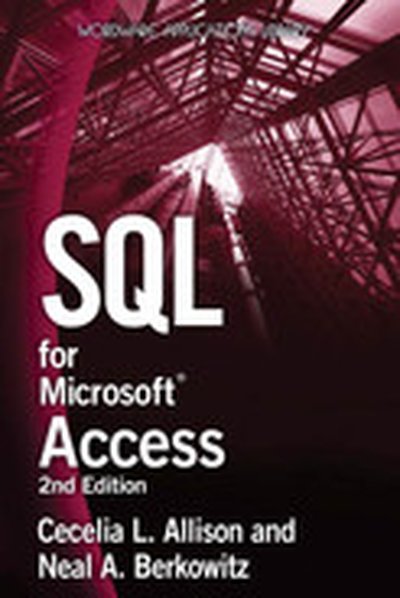
SQL for Microsoft Access, 2nd Edition

SQL for Microsoft Access (2nd Edition) provides a guide to getting the most out of Microsoft Access through the use of Structured Query Language. Step-by-step examples demonstrate how to use SQL script to create tables, add records to tables, and retrieve and manage records. Readers will also learn about calculated fields, Access projects, and the integration of SQL script in VBA and ASP code. Explore the relational database structure and the basics of SQL. Understand how table joins, unions, and subqueries are used to retrieve records from multiple tables simultaneously. Learn how to filter records and group data. Discover how to create parameter queries that prompt users for data. Test your knowledge and comprehension with the end-of-chapter quizzes and projects.

Blown to Bits: Your Life, Liberty, and Happiness After the Digital Explosion, First Edition

“If you want to understand the future before it happens, you’ll love this book. If you want to change the future before it happens to you, this book is required reading.” – Reed Hundt, former Chairman of the Federal Communications Commission “There is no simpler or clearer statement of the radical change that digital technologies will bring, nor any book that better prepares one for thinking about the next steps.” – Lawrence Lessig, Stanford Law School and Author of Code and Other Laws of Cyberspace “ Blown to Bits will blow you away. In highly accessible and always fun prose, it explores all the nooks and crannies of the digital universe, exploring not only how this exploding space works but also what it means.” – Debora Spar, President of Barnard College, Author of Ruling the Waves and The Baby Business “This is a wonderful book–probably the best since Hal Varian and Carl Schultz wrote Digital Rules. The authors are engineers, not economists. The result is a long, friendly talk with the genie, out of the lamp, and willing to help you avoid making the traditional mistake with that all-important third wish.” – David Warsh, Author of Knowledge and the Wealth of Nations “ Blown to Bits is one of the clearest expositions I’ve seen of the social and political issues arising from the Internet. Its remarkably clear explanations of how the Net actually works lets the hot air out of some seemingly endless debates. You’ve made explaining this stuff look easy. Congratulations!” – David Weinberger, Coauthor of The Cluetrain Manifesto and Author of Everything Is Miscellaneous: The Power of the New Digital Disorder. “ Blown to Bits is a timely, important, and very readable take on how information is produced and consumed today, and more important, on the approaching sea change in the way that we as a society deal with the consequences.” – Craig Silverstein, Director of Technology, Google, Inc. “This book gives an overview of the kinds of issues confronting society as we become increasingly dependent on the Internet and the World Wide Web. Every informed citizen should read this book and then form their own opinion on these and related issues. And after reading this book you will rethink how (and even whether) you use the Web to form your opinions…” – James S. Miller, Senior Director for Technology Policy and Strategy, Microsoft Corporation “Most writing about the digital world comes from techies writing about technical matter for other techies or from pundits whose turn of phrase greatly exceeds their technical knowledge. In Blown to Bits, experts in computer science address authoritatively the practical issues in which we all have keen interest.” – Howard Gardner, Hobbs Professor of Cognition and Education, Harvard Graduate School of Education, Author of Multiple Intelligences and Changing Minds “Regardless of your experience with computers, Blown to Bits provides a uniquely entertaining and informative perspective from the computing industry’s greatest minds. A fascinating, insightful and entertaining book that helps you understand computers and their impact on the world in a whole new way. This is a rare book that explains the impact of the digital explosion in a way that everyone can understand and, at the same time, challenges experts to think in new ways.” – Anne Margulies, Assistant Secretary for Information Technology and Chief Information Officer of the Commonwealth of Massachusetts “ Blown to Bits is fun and fundamental. What a pleasure to see real teachers offering such excellent framework for students in a digital age to explore and understand their digital environment, code and law, starting with the insight of Claude Shannon. I look forward to you teaching in an open online school.” – Professor Charles Nesson, Harvard Law School, Founder, Berkman Center for Internet and Society “To many of us, computers and the Internet are magic. We make stuff, send stuff, receive stuff, and buy stuff. It’s all pointing, clicking, copying, and pasting. But it’s all mysterious. This book explains in clear and comprehensive terms how all this gear on my desk works and why we should pay close attention to these revolutionary changes in our lives. It’s a brilliant and necessary work for consumers, citizens, and students of all ages.” – Siva Vaidhyanathan, cultural historian and media scholar at the University of Virginia and author of Copyrights and Copywrongs: The Rise of Intellectual Property and How it Threatens Creativity “The world has turned into the proverbial elephant and we the blind men. The old and the young among us risk being controlled by, rather than in control of, events and technologies. Blown to Bits is a remarkable and essential Rosetta Stone for beginning to figure out how all of the pieces of the new world we have just begun to enter–law, technology, culture, information–are going to fit together. Will life explode with new possibilities, or contract under pressure of new horrors? The precipice is both exhilarating and frightening. Hal Abelson, Ken Ledeen, and Harry Lewis, together, have ably managed to describe the elephant. Readers of this compact book describing the beginning stages of a vast human adventure will be one jump ahead, for they will have a framework on which to hang new pieces that will continue to appear with remarkable speed. To say that this is a ‘must read’ sounds trite, but, this time, it’s absolutely true.” – Harvey Silverglate, criminal defense and civil liberties lawyer and writer Every day, billions of photographs, news stories, songs, X-rays, TV shows, phone calls, and emails are being scattered around the world as sequences of zeroes and ones: bits. We can’t escape this explosion of digital information and few of us want to–the benefits are too seductive. The technology has enabled unprecedented innovation, collaboration, entertainment, and democratic participation. But the same engineering marvels are shattering centuries-old assumptions about privacy, identity, free expression, and personal control as more and more details of our lives are captured as digital data. Can you control who sees all that personal information about you? Can email be truly confidential, when nothing seems to be private? Shouldn’t the Internet be censored the way radio and TV are? Is it really a federal crime to download music? When you use Google or Yahoo! to search for something, how do they decide which sites to show you? Do you still have free speech in the digital world? Do you have a voice in shaping government or corporate policies about any of this? Blown to Bits offers provocative answers to these questions and tells intriguing real-life stories. This book is a wake-up call to the human consequences of the digital explosion. Preface xiii Chapter 1: Digital Explosion: Why Is It Happening, and What Is at Stake? 1 Chapter 2: Naked in the Sunlight: Privacy Lost, Privacy Abandoned 19 Chapter 3: Ghosts in the Machine: Secrets and Surprises of Electronic Documents 73 Chapter 4: Needles in the Haystack: Google and Other Brokers in the Bits Bazaar 109 Chapter 5: Secret Bits: How Codes Became Unbreakable 161 Chapter 6: Balance Toppled: Who Owns the Bits? 195 Chapter 7: You Can’t Say That on the Internet: Guarding the Frontiers of Digital Expression 229 Chapter 8: Bits in the Air: Old Metaphors, New Technologies, and Free Speech 259 Conclusion: After the Explosion 295 Appendix: The Internet as System and Spirit 301 Endnotes 317 Index 347

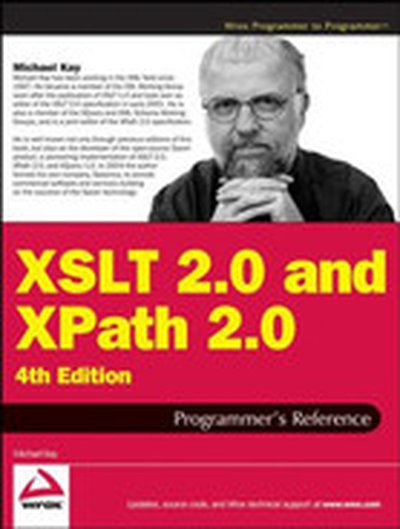
XSLT 2.0 and XPath 2.0 Programmer's Reference, 4th Edition

This book is primarily a practical reference book for professional XSLT developers. It assumes no previous knowledge of the language, and many developers have used it as their first introduction to XSLT; however, it is not structured as a tutorial, and there are other books on XSLT that provide a gentler approach for beginners. The book does assume a basic knowledge of XML, HTML, and the architecture of the Web, and it is written for experienced programmers. There's no assumption that you know any particular language such as Java or Visual Basic, just that you recognize the concepts that all programming languages have in common. The book is suitable both for XSLT 1.0 users upgrading to XSLT 2.0, and for newcomers to XSLT. The book is also equally suitable whether you work in the Java or .NET world. As befits a reference book, a key aim is that the coverage should be comprehensive and authoritative. It is designed to give you all the details, not just an overview of the 20 percent of the language that most people use 80 percent of the time. It's designed so that you will keep coming back to the book whenever you encounter new and challenging programming tasks, not as a book that you skim quickly and then leave on the shelf. If you like detail, you will enjoy this book; if not, you probably won't. But as well as giving the detail, this book aims to explain the concepts, in some depth. It's therefore a book for people who not only want to use the language but who also want to understand it at a deep level. The book aims to tell you everything you need to know about the XSLT 2.0 language. It gives equal weight to the things that are new in XSLT 2.0 and the things that were already present in version 1.0. The book is about the language, not about specific products. However, there are appendices about Saxon (the author's own implementation of XSLT 2.0), about the Altova XSLT 2.0 implementation, and about the Java and Microsoft APIs for controlling XSLT transformations, which will no doubt be upgraded to handle XSLT 2.0 as well as 1.0. A third XSLT 2.0 processor, Gestalt, was released shortly before the book went to press, too late to describe it in any detail. But the experience of XSLT 1.0 is that there has been a very high level of interoperability between different XSLT processors, and if you can use one of them, then you can use them all. In the previous edition we split XSLT 2.0 and XPath 2.0 into separate volumes. The idea was that some readers might be interested in XPath alone. However, many bought the XSLT 2.0 book without its XPath companion and were left confused as a result; so this time, the material is back together. The XPath reference information is in self-contained chapters, so it should still be accessible when you use XPath in contexts other than XSLT. The book does not cover XSL Formatting Objects, a big subject in its own right. Nor does it cover XML Schemas in any detail. If you want to use these important technologies in conjunction with XSLT, there are other books that do them justice. This book contains twenty chapters and eight appendixes (the last of which is a glossary) organized into four parts. The following section outlines what you can find in each part, chapter, and appendix. Part I: Foundations: The first part of the book covers essential concepts. You should read these before you start coding. If you ignore this advice, as most people do, then you read them when you get to that trough of despair when you find it impossible to make the language do anything but the most trivial tasks. XSLT is different from other languages, and to make it work for you, you need to understand how it was designed to be used. Chapter 1: XSLT in Context: This chapter explains how XSLT fits into the big picture: how the language came into being and how it sits alongside other technologies. It also has a few simple coding examples to keep you alert. Chapter 2: The XSLT Processing Model: This is about the architecture of an XSLT processor: the inputs, the outputs, and the data model. Understanding the data model is perhaps the most important thing that distinguishes an XSLT expert from an amateur; it may seem like information that you can't use immediately, but it's knowledge that will stop you making a lot of stupid mistakes. Chapter 3: Stylesheet Structure: XSLT development is about writing stylesheets, and this chapter takes a bird's eye view of what stylesheets look like. It explains the key concepts of rule-based programming using templates, and explains how to undertake programming-in-the-large by structuring your application using modules and pipelines. Chapter 4: Stylesheets and Schemas: A key innovation in XSLT 2.0 is that stylesheets can take advantage of knowledge about the structure of your input and output documents, provided in the form of an XML Schema. This chapter provides a quick overview of XML Schema to describe its impact on XSLT development. Not everyone uses schemas, and you can skip this chapter if you fall into that category. Chapter 5: The Type System: XPath 2.0 and XSLT 2.0 offer strong typing as an alternative to the weak typing approach of the 1.0 languages. This means that you can declare the types of your variables, functions, and parameters, and use this information to get early warning of programming errors. This chapter explains the data types available and the mechanisms for creating user-defined types. Part II: XSLT and XPath Reference: This section of the book contains reference material, organized in the hope that you can easily find what you need when you need it. It's not designed for sequential reading, though you might well want to leaf through the pages to discover what's there. Chapter 6: XSLT Elements: This monster chapter lists all the XSLT elements you can use in a stylesheet, in alphabetical order, giving detailed rules for the syntax and semantics of each element, advice on usage, and examples. This is probably the part of the book you will use most frequently as you become an expert XSLT user. It's a "no stone unturned" approach, based on the belief that as a professional developer you need to know what happens when the going gets tough, not just when the wind is in your direction. Chapter 7: XPath Fundamentals: This chapter explains the basics of XPath: the low-level constructs such as literals, variables, and function calls. It also explains the context rules, which describe how the evaluation of XPath expressions depends on the XSLT processing context in which they appear. Chapter 8: XPath: Operators on Items: XPath offers the usual range of operators for performing arithmetic, boolean comparison, and the like. However, these don't always behave exactly as you would expect, so it's worth reading this chapter to see what's available and how it differs from the last language that you used. Chapter 9: XPath: Path Expressions: Path expressions are what make XPath special; they enable you to navigate around the structure of an XML document. This chapter explains the syntax of path expressions, the 13 axes that you can use to locate the nodes that you need, and associated operators such as union, intersection, and difference. Chapter 10: XPath: Sequence Expressions: Unlike XPath 1.0, in version 2.0 all values are sequences (singletons are just a special case). Some of the most important operators in XPath 2.0 are those that manipulate sequences, notably the "for" expression, which translates one sequence into another by applying a mapping. Chapter 11: XPath: Type Expressions: The type system was explained in Chapter 5; this chapter explains the operations that you can use to take advantage of types. This includes the "cast" operation which is used to convert values from one type to another.A big part of this chapter is devoted to the detailed rules for how these conversions are done. Chapter 12: XSLT Patterns: This chapter returns from XPath to a subject that's specific to XSLT. Patterns are used to define template rules, the essence of XSLT's rule-based programming approach. The reason for explaining them now is that the syntax and semantics of patterns depends strongly on the corresponding rules for XPath expressions. Chapter 13: The Function Library: XPath 2.0 includes a library of functions that can be called from any XPath expression; XSLT 2.0 extends this with some additional functions that are available only when XPath is used within XSLT. The library has grown immensely since XPath 1.0. This chapter provides a single alphabetical reference for all these functions. Chapter 14: Regular Expressions: Processing of text is an area where XSLT 2.0 and XPath 2.0 are much more powerful than version 1.0, and this is largely through the use of constructs that exploit regular expressions. If you're familiar with regexes from languages such as Perl, this chapter tells you how XPath regular expressions differ. If you're new to the subject, it explains it from first principles. Chapter 15: Serialization: Serialization in XSLT means the ability to generate a textual XML document from the tree structure that's manipulated by a stylesheet. This isn't part of XSLT processing proper, so (following W3C's lead) it's separated it into its own chapter. You can control serialization from the stylesheet using an declaration, but many products also allow you to control it directly via an API. Part III: Exploitation: The final section of the book is advice and guidance on how to take advantage of XSLT to write real applications. It's intended to make you not just a competent XSLT coder, but a competent designer too. The best way of learning is by studying the work of others, so the emphasis here is on practical case studies. Chapter 16: Extensibility: This chapter describes the "hooks" provided in the XSLT specification to allow vendors and users to plug in extra functionality. The way this works will vary from one implementation to another, so we can't cover all possibilities, but one important aspect that the chapter does cover is how to use such extensions and still keep your code portable. Chapter 17: Stylesheet Design Patterns: This chapter explores a number of design and coding patterns for XSLT programming, starting with the simplest "fill-in-the-blanks" stylesheet, and extending to the full use of recursive programming in the functional programming style, which is needed to tackle problems of any computational complexity. This provides an opportunity to explain the thinking behind functional programming and the change in mindset needed to take full advantage of this style of development. Chapter 18: Case Study: XMLSpec: XSLT is often used for rendering documents, so where better to look for a case study than the stylesheets used by the W3C to render the XML and XSLT specifications, and others in the same family, for display on the web? The resulting stylesheets are typical of those you will find in any publishing organization that uses XML to develop a series of documents with a compatible look-and-feel. Chapter 19: Case Study: A Family Tree: Displaying a family tree is another typical XSLT application. This example with semi-structured data—a mixture of fairly complex data and narrative text—that can be presented in many different ways for different audiences. It also shows how to tackle another typical XSLT problem, conversion of the data into XML from a legacy text-based format. As it happens, this uses nearly all the important new XSLT 2.0 features in one short stylesheet. But another aim of this chapter is to show a collection of stylesheets doing different jobs as part of a complete application. Chapter 20: Case Study: Knight's Tour: Finding a route around a chessboard where a knight visits every square without ever retracing its steps might sound a fairly esoteric application for XSLT, but it's a good way of showing how even the most complex of algorithms are within the capabilities of the language. You may not need to tackle this particular problem, but if you want to construct an SVG diagram showing progress against your project plan, then the problems won't be that dissimilar. Part IV: Appendices: Appendix A: XPath 2.0 Syntax Summary: Collects the XPath grammar rules and operator precedences into one place for ease of reference. Appendix B: Error Codes: A list of all the error codes defined in the XSLT and XPath language specifications, with brief explanations to help you understand what's gone wrong. Appendix C: Backward Compatibility: The list of things you need to look out for when converting applications from XSLT 1.0. Appendix D: Microsoft XSLT Processors: Although the two Microsoft XSLT processors don't yet support XSLT 2.0, we thought many readers would find it useful to have a quick summary here of the main objects and methods used in their APIs. Appendix E: JAXP: the Java API for XML Processing: JAXP is an interface rather than a product. Again, it doesn't have explicit support yet for XSLT 2.0, but Java programmers will often be using it in XSLT 2.0 projects, so the book includes an overview of the classes and methods available. Appendix F: Saxon: At the time of writing Saxon (developed by the author of this book) provides the most comprehensive implementation of XSLT 2.0 and XPath 2.0, so its interfaces and extensions are covered in some detail. Appendix G: Altova: Altova, the developers of XML Spy, have an XSLT 2.0 processor that can be used either as part of the development environment or as a freestanding component. This appendix gives details of its interfaces. Appendix H: Glossary Note: CD-ROM/DVD and other supplementary materials are not included as part of eBook file.

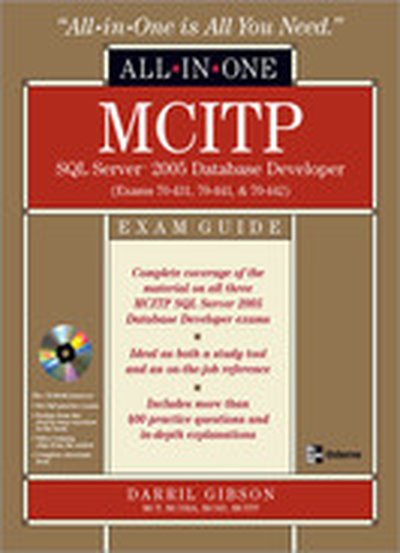
MCITP SQL Server 2005 Database Developer All-in-One Exam Guide (Exams 70-431, 70-441 & 70-442)

All-in-One is All You Need Get complete coverage of all three Microsoft Certified IT Professional database developer exams for SQL Server 2005 in this comprehensive volume. Written by a SQL Server expert and MCITP, this definitive exam guide features learning objectives at the beginning of each chapter, exam tips, practice questions, and in-depth explanations. Detailed and authoritative, the book serves as both a complete certification study guide and an essential on-the-job reference. Get full details on all exam topics including how to: Install and configure SQL Server 2005 Manage database design Use Transact-SQL and XML Work with functions, triggers, and CLR integration Optimize, monitor, and secure databases Create stored procedures Handle disaster recovery Work with Service Broker, Web Services, and MARS Use SQL Server Reporting Services and Notification Services Manage locks, deadlocks, and cursors Transfer data using Replication and SQL Server Integration Services The CD-ROM features: Six full practice exams-two for each exam: 70-431, 70-441, & 70-442 Scripts from the step-by-step exercises in the book Video training clips from the author Complete electronic book

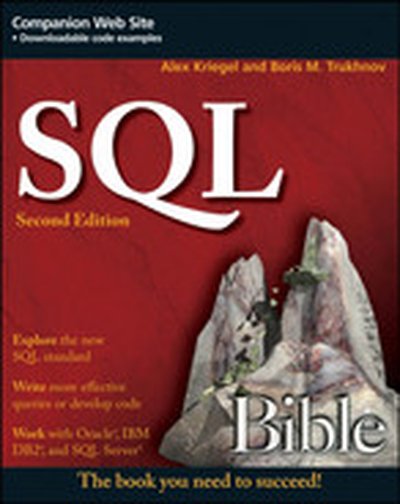
SQL Bible, Second Edition

Combining theory with everyday practicality, this definitive volume is packed with the up-to-date information, new features, and explanations you need to get the very most out of SQL and its latest standard. The book is unique in that every chapter highlights how the new SQL standard applies to the three major databases, Oracle 11g, IBM DB2 9.5, and Microsoft SQL Server 2008. The result is a comprehensive, useful, and real-world reference for all SQL users, from beginners to experienced developers.

Ferret

With the introduction of Ferret, Ruby users now have one of the fastest and most flexible search libraries available. And it's surprisingly easy to use. This book will show you how to quickly get up and running with Ferret. You'll learn how to index different document types such as PDF, Microsoft Word, and HTML, as well as how to deal with foreign languages and different character encodings. Ferret describes the Ferret Query Language in detail along with the object-oriented approach to building queries. You will also be introduced to sorting, filtering, and highlighting your search results, with an explanation of exactly how you need to set up your index to perform these tasks. You will also learn how to optimize a Ferret index for lightning fast indexing and split-second query results.

SOA and ESB Architecture with BizTalk

This Wrox Blox explores Service Orientated Architecture and the Enterprise Service Bus, focusing on how it can be implemented using Microsoft BizTalk Server. It explains the need for SOA Architecture in an enterprise business and looks at the key Business and IT Drivers in business, how they can interact, and where there are conflicts that SOA can help resolve. Specifically, the author discusses Microsoft ESB Guidance and how, by using BizTalk 2006, ESB implementation can provide a solid platform for SOA development; management across the IT and Business Space with the Governance and tools provided in the ESB Toolkit; pointers to online resources, including guides on installing and deploying ESB; and how to avoid common SOA pitfalls. The target audience for this Wrox Blox is IT Managers, Business Managers, Architects, Developers, and Business Analysts who want to find architectural guidance information on Service Oriented Architecture, BizTalk, and Enterprise Service Bus.

Microsoft® Office Access 2007 VBA

Business Solutions Microsoft® Office Access 2007 VBA Develop your Access 2007 VBA expertise instantly with proven techniques Microsoft Office Access 2007 VBA builds on the skills you’ve already developed in creating database applications and helps you take them to the next level—using Visual Basic for Applications (VBA) to accomplish things you once performed manually. To facilitate this lofty goal, Access includes the VBA programming language. Even if you’ve never programmed, this book will help you learn how to leverage the power of VBA to make your work with Access more efficient than ever before. Microsoft Office Access 2007 VBA is for professionals who use Microsoft Access frequently in their daily work. You have serious work to get done and you can’t spend all day reading a computer book. This book teaches you the essential skills you need to automate your databases as quickly as possible. Although written for Access 2007, the techniques and concepts covered will work in most versions of Microsoft Access. Highlights of This Book Include • Navigating within the Visual Basic Editor • Using variables, constants, and data types • Employing built-in functions • Creating procedures • Understanding object-and event-driven coding • Working with arrays • Understanding scope • Working with forms • Using selection controls • Creating reports • Exploring menus, navigation, and ribbons • Using object models • Working with data • Defining database schema • Using the Windows API • Working with XML files • Exploring Access SQL On the Website Download database files used in the book at www.quepublishing.com. Category Office Applications Covers Visual Basic for Applications User Level Intermediate - Advanced Scott B. Diamond is a seasoned database designer and Microsoft Access 2007 MVP. During the last 20+ years, he has designed databases on a wide range of platforms, including dBASE, FoxPro, SQL/DS, Lotus Approach, Lotus Notes, and, for the past 10 years, Microsoft Access. Scott has worked as a consultant, both in-house and freelance, and as a support professional at firms that are among the leaders in their industries. Scott spends some of his free time answering questions at the premier site for Access support: http://www.utteraccess.com. Brent Spaulding started writing applications about 20 years ago and has utilized Microsoft Access since version 2.0. He looks forward to using Access well into the future. In July 2007, he received the Microsoft MVP award for Access, which recognizes his talent and contributions to the Access community. Front cover bullets: Edit and debug your code Use looping and conditional statements Understand the Access object- and event-driven architecture Automate data entry Learn how to use variables for dynamic automation Create user-friendly applications for others Create custom functions and objects Customize the user interface Manipulate data and objects with code

Expert Access™ 2007 Programming

Expert Access 2007 Programming shows experienced developers how to create professional-level Access database applications. The authors—software engineers on the Access development team at Microsoft—show how to apply software engineering methodologies to Access application development. The book is organized to cover all phases of Access development. The authors demonstrate techniques for creating Access controls, forms, and reports that help streamline development and produce more user-friendly applications. They also cover such overlooked areas as custom deployment and documentation. The book contains many useful code examples designed so they can be used with minimal modification.

Create Amazing Custom User Interfaces with WPF, C#, and XAML in .NET 3.0

This Wrox Blox presents WPF along with the Extensible Application Markup Language (XAML), showing developers how to customize existing user interface controls such as the Button, Progress Bar, CheckBox, Radio Button, and Label along with creating two new custom controls. The Windows Presentation Foundation (WPF) released with the .NET 3.0 SDK provides a rich foundation for developing and customizing user interfaces. Unlike existing user interface development tools like GDI and GDI+, WPF is entirely vector-based, offering the developer enhanced two-dimensional and even three-dimensional rendering in the presentation layer. The author customizes these existing controls using XAML to: Create control templates to define their appearance and behaviors. Create two new custom controls, one derived from System.Windows.UserControl and the second from System.Windows.Control. Illustrate the interoperability of WPF content in Windows Forms and Win32 applications. Create the code samples using Microsoft Visual Studio 2005 with extensions for .NET 3.0 and the .NET 3.0 SDK. These code samples contain four projects: A C# WPF control library that contains the control templates and a User Control containing the customized Windows controls and the two new custom controls; a C# WPF application to host the WPF User Control; a C# Windows Forms application to host the WPF User Control; and a C++ Win32 application to host the WPF User Control. Usage Rights for Wiley Wrox Blox Any Wrox Blox you purchase from this site will come with certain restrictions that allow Wiley to protect the copyrights of its products. After you purchase and download this title, you: Are entitled to three downloads Are entitled to make a backup copy of the file for your own use Are entitled to print the Wrox Blox for your own use Are entitled to make annotations and comments in the Wrox Blox file for your own use May not lend, sell or give the Wrox Blox to another user May not place the Wrox Blox file on a network or any file sharing service for use by anyone other than yourself or allow anyone other than yourself to access it May not copy the Wrox Blox file other than as allowed above May not copy, redistribute, or modify any portion of the Wrox Blox contents in any way without prior permission from Wiley If you have any questions about these restrictions, you may contact Customer Care at (877) 762-2974 (8 a.m. - 5 p.m. EST, Monday - Friday). If you have any issues related to Technical Support, please contact us at 800-762-2974 (United States only) or 317-572-3994 (International) 8 a.m. - 8 p.m. EST, Monday - Friday).

Microsoft® SQL Server 2005 Management and Administration

Microsoft SQL Server 2005 Management and Administration, based on Service Pack 2, addresses the challenges database administrators regularly encounter on SQL Server 2005 by providing detailed guidance in the areas of management, administration, security, and monitoring. With coverage of the new features and functionality of SQL Server 2005 Service Pack 2, this book is designed to be comprehensive, resulting in something for all database administrators—from simple tips to tactical solutions. Microsoft SQL Server 2005 Management and Administration goes far beyond the basic installation and setup information found in many other resources. The book looks at day-to-day administration, best practices, tips, and step-by-step configurations based on real-world examples found in the industry. Unlike others, this book includes not only administration and management details on the Database Engine, but also coverage of other SQL Server 2005 components often overlooked, including Analysis Services, Reporting Services, and more. Understand how to… Configure and tune the Database Engine, Reporting Services, Analysis Services, Integration Services, and Notification Services Harden a SQL Server implementation Implement SQL Server highavailability alternatives, such as Failover Clustering, Log Shipping, Database Mirroring, and Replication Monitor a SQL Server 2005 infrastructure with Operations Manager 2007, including how to configure the SQL Server Management Pack and install Operations Manager 2007 Automate SQL Server routine maintenance Encrypt SQL Server data and communications, including setting up a Certificate Authority Performance tune and troubleshoot a SQL Server environment Create Integration Services packages and transfer data On the Web: Download bonus chapters from www.informit.com/title/9780672329562 Introduction 1 Part I Administering SQL Server Components 1 Administering SQL Server 2005 Database Engine 11 2 Administering SQL Server 2005 Analysis Services 67 3 Administering SQL Server 2005 Reporting Services 99 4 Administering SQL Server 2005 Notification Services 149 5 Administering SQL Server 2005 Integration Services 183 6 Administering SQL Server Replication 209 Part II Managing SQL Server 2005 7 Conducting a SQL Server 2005 Health Check 261 8 SQL Server 2005 Maintenance Practices 289 9 Managing and Optimizing SQL Server 2005 Indexes 317 10 Managing Full-Text Catalogs 353 11 Creating Packages and Transferring Data 387 Part III Securing the SQL Server Implementation 12 Hardening a SQL Server 2005 Environment 435 13 Administering SQL Server Security 469 14 Encrypting SQL Server Data and Communications 509 The following chapters are located online: Part IV SQL Server 2005 Overview (located online) 15 SQL Server 2005 Technology Primer 537 16 Tools of the Trade 571 Part V Disaster Recovery and High Availability (located online) 17 Backing Up and Restoring the SQL Server 2005 Environment 597 18 Administering and Managing Failover Clustering 647 19 Administering and Managing Database Mirroring 691 20 Administering and Managing Log Shipping 721 Part VI Monitoring and Troubleshooting SQL Server (located online) 21 Monitoring SQL Server 2005 753 22 Performance Tuning and Troubleshooting SQL Server 2005 787 Appendix SQL Server 2005 Management and Administration 821

Inside Microsoft® SQL Server™ 2005: Query Tuning and Optimization

Dive deep into the internals of query tuning and optimization in SQL Server 2005 with this comprehensive reference. Understanding the internals of SQL Server helps database developers and administrators to better create, access, and effectively process information from enterprise data. Written by experts on SQL Server, this volume from the Inside Microsoft SQL Server series of books focuses on query tuning and optimization. You'll take an in-depth look at the best ways to make queries more efficient and effective, while maximizing existing resources. Includes extensive code samples and table examples to help database developers and administrators understand the intricacies and help promote mastery of query tuning and optimization.

SQL Queries for Mere Mortals: A Hands-On Guide to Data Manipulation in SQL, Second Edition

Unless you are working at a very advanced level, this is the only SQL book you will ever need. The authors have taken the mystery out of complex queries and explained principles and techniques with such clarity that a "Mere Mortal" will indeed be empowered to perform the superhuman. Do not walk past this book! --Graham Mandeno, Database Consultant provides a step-by-step, easy-to-read introduction to writing SQL queries. It includes hundreds of examples with detailed explanations. This book provides the tools you need to understand, modify, and create SQL queries SQL Queries for Mere Mortals --Keith W. Hare, Convenor, ISO/IEC JTC1 SC32 WG3--the International SQL Standards Committee I learned SQL primarily from the first edition of this book, and I am pleased to see a second edition of this book so that others can continue to benefit from its organized presentation of the language. Starting from how to design your tables so that SQL can be effective (a common problem for database beginners), and then continuing through the various aspects of SQL construction and capabilities, the reader can become a moderate expert upon completing the book and its samples. Learning how to convert a question in English into a meaningful SQL statement will greatly facilitate your mastery of the language. Numerous examples from real life will help you visualize how to use SQL to answer the questions about the data in your database. Just one of the "watch out for this trap" items will save you more than the cost of the book when you avoid that problem when writing your queries. I highly recommend this book if you want to tap the full potential of your database. --Kenneth D. Snell, Ph.D., Database Designer/Programmer I don't think they do this in public schools any more, and it is a shame, but do you remember in the seventh and eighth grades when you learned to diagram a sentence? Those of you who do may no longer remember how you did it, but all of you do write better sentences because of it. John Viescas and Mike Hernandez must have remembered because they take everyday English queries and literally translate them into SQL. This is an important book for all database designers. It takes the complexity of mathematical Set Theory and of First Order Predicate Logic, as outlined in E. F. Codd's original treatise on relational database design, and makes it easy for anyone to understand. If you want an elementary- through intermediate-level course on SQL, this is the one book that is a requirement, no matter how many others you buy. --Arvin Meyer, MCP, MVP Even in this day of wizards and code generators, successful database developers still require a sound knowledge of Structured Query Language (SQL, the standard language for communicating with most database systems). In this book, John and Mike do a marvelous job of making what's usually a dry and difficult subject come alive, presenting the material with humor in a logical manner, with plenty of relevant examples. I would say that this book should feature prominently in the collection on the bookshelf of all serious developers, except that I'm sure it'll get so much use that it won't spend much time on the shelf! -- Doug Steele, Microsoft Access Developer and author Over the last several decades, SQL has evolved from a language known only to computer specialists to a widely used international standard of the computer industry. The number of new applications deployed each year using SQL now totals in the millions. If you are accessing corporate information from the Internet or from an internal network, you are probably using SQL. This new edition of helps new users learn the foundations of SQL queries, and is an essential reference guide for intermediate and advanced users. SQL Queries for Mere Mortals The accompanying CD contains five sample databases used for the example queries throughout the book in four different formats: Microsoft SQL Server 2000 and later, Microsoft Access 2000 and later, MySQL version 5.0 and later, and SQL scripts that can be used with most other implementations of the language.

Using the IBM System Storage N Series with Databases

This IBM® Redbooks® publication discusses how to optimize the IBM System Storage™ N series products with some of the major commercially available databases available to customers today. Topics include installation, performance, monitoring, and management when using the IBM System Storage N series with IBM DB2® , Microsoft® SQL, and Oracle® . We also cover best practices and tips for using the IBM System Storage N series with these major database applications.

Sams Teach Yourself Microsoft® SQL Server T-SQL in 10 Minutes

Sams Teach Yourself Microsoft SQL Server T-SQL in 10 Minutes offers straightforward, practical answers when you need fast results. By working through 10-minute lessons, you’ll learn everything you need to know to take advantage of Microsoft SQL Server’s T-SQL language. This handy pocket guide starts with simple data retrieval and moves on to more complex topics, including the use of joins, subqueries, full text-based searches, functions and stored procedures, cursors, triggers, table constraints, XML, and much more. You’ll learn what you need to know methodically, systematically, and simply–in highly focused lessons designed to make you immediately and effortlessly productive. Tips point out shortcuts and solutions Cautions help you avoid common pitfalls Notes explain additional concepts, and provide additional information 10 minutes is all you need to learn how to… Use T-SQL in the Microsoft SQL Server environment Construct complex T-SQL statements using multiple clauses and operators Filter data so you get the information you need quickly Retrieve, sort, and format database contents Join two or more related tables Make SQL Server work for you with globalization and localization Create subqueries to pinpoint your data Automate your workload with triggers Create and alter database tables Work with views, stored procedures, and more Register your book at www.samspublishing.com/register to download examples and source code from this book.

Microsoft SQL Server 2005, Compact Edition

SQL Server Compact Edition is a slimmed down version of SQL Server that you can use on Pocket PCs, Smart phones, Tablet PCs, and Desktops. With this book, you will learn how to build applications for resource constrained devices. You’ll discover how the SQL Server Compact Edition database can also be used as an embedded in-proc database for desktop-based applications. You’ll learn how to manage the SQL Server Compact Edition database using SQL Server Management Studio, Visual Studio, and Query Analyzer. Laptops, Tablet PCs, and mobile devices enable information workers to access enterprise data from remote locations. With the step-by-step exercises provided in this book, you’ll learn how to synchronize data between SQL Server and SQL Server Compact Edition. You’ll also learn Remote Data Access–a lightweight method to exchange data between SQL Server and SQL Server Compact Edition. Also in this book are code samples to help you write database applications for mobile devices and for desktop PCs. Throughout the book you’ll find expert tips for building and deploying enterprise applications. Understand how to… Build mobile and desktop applications using SQL Server Compact Edition Set up the development and production environment with Visual Studio, SQL Server, and SQL Server Compact Edition Optimize performance and plan for security Manage databases using SQL Server Management Studio, Visual Studio, and Query Analyzer Develop applications using ADO.NET and OLEDB provider for SQL Server Compact Edition Upgrade from earlier versions of SQL CE, .NET Compact Framework, and Visual Studio Use Merge Replication to synchronize data between SQL Server and SQL Server Compact Edition Exchange data between SQL Server and SQL Server Compact Edition using Remote Data Access Introduction 1 1 Getting Started with SQL Server 2005 Compact Edition 7 2 Platform Support and Installation35 3 Getting to Know the Tools 63 4 Managing the SQL Server 2005 Compact Edition Database 109 5 Defining Database Structure 131 6 Manipulating the Database 175 7 Programming SQL Server 2005 Compact Edition with ADO.NET 205 8 Introducing Native Access 247 9 Using Operators in SQL Server 2005 Compact Edition 279 10 Using the Built-In Functions 295 11 Upgrading from a Previous Version 327 12 Synchronizing Data with Merge Replication 345 13 Synchronizing Data with Remote Data Access 411 14 Securing the SQL Server 2005 Compact Edition Database 459 15 SQL Server 2005 Compact Edition Performance Tuning 505 Index 551

SOA Solutions Using IBM Information Server

This IBM Redbooks publication provides an overview of IBM Information Server, its architecture, and processing flow. It describes the development and implementation of a financial services business scenario that showcases the Service Oriented Architecture (SOA) capabilities of the IBM Information Server product and WebSphere Integration Developer. It includes details on how a DataStage job, QualityStage job, Federated queries, and DB2 Stored Procedures can be surfaced as an SOA service. It describes the development of applications that consume the services generated by IBM Information Server and WebSphere Integration Developer using Rational Application Developer and Microsoft Visual Studio .NET Professional Edition. It is aimed at an audience of IT architects, Information Management specialists, and Information Integration specialists.

MCITP Administrator: Microsoft® SQL Server™ 2005 Optimization and Maintenance (70-444): Study Guide

This ebook does not provide access to the CD-ROM files. Covering Microsoft's brand-new SQL 2005 administrator exam, this study guide walks you through setting up, maintaining, and troubleshooting database solutions. You'll review key topics such as defining high-availability solutions, automating administrative tasks, defining security solutions, monitoring and troubleshooting the database server, and designing and executing deployments. Plus, the CD-ROM features leading exam prep software with an assessment test, test engine of case study practice questions, and electronic flashcards.

Microsoft® SQL Server™ 2005 Integration Services Step by Step

Teach yourself the fundamentals of SQL Server Integration Services—one step at a time. This practical, learn-by-doing tutorial delivers the guidance you need to transform and consolidate data—and build solutions that support your business intelligence needs. Discover how to: Design and execute packages that transform data between files and relational databases Configure connection managers to access other data sources Create data flows that alter, split, match, and merge data Develop event-handlers and monitor package performance Encrypt sensitive information and control access to packages Customize script code to automate Control Flow and Data Flow tasks Debug, troubleshoot, and optimize packages CD features: All practice exercises Sample databases Fully searchable eBook For customers who purchase an ebook version of this title, instructions for downloading the CD files can be found in the ebook.

Alison Balter’s Mastering Microsoft® Office Access 2007 Development

Microsoft Office 2007 is a major upgrade from the last version of Office; Access will also be greatly revised. Alison Balter is the name that Access developers will trust to guide them through Access 2007's new features. She has the rare ability to take complex topics and explain them clearly, as shown by the success of her ten previous books on Access. Balter is known for providing real-world solutions to specific Access development problems. She also is known for her ability to back up her practical examples with just enough underlying theory to give the reader a good overall understanding of Access. In short, this book will provide beginning and intermediate Access developers with everything that they need to know to design and build Access 2007 applications. It should also appeal to DBAs and power users who want or need to get started building custom Access apps. This latest book in her Mastering Access series will not disappoint her many fans who anxiously await each new version, and should win her new fans as well. Introduction Part I The Basics of Access Development 1 Access as a Development Tool. . . . . . . . . . . . . . . . . . . . . . . . . . . . . . . . . . . . . . . . . . . . . . . . . . . . . . . . . . . 7 2 What Every Developer Needs to Know About Databases and Tables . . . . . . . 75 3 Relationships: Your Key to Data Integrity . . . . . . . . . . . . . . . . . . . . . . . . . . . . . . . . . . . . . . . . 115 4 What Every Developer Needs to Know About Query Basics. . . . . . . . . . . . . . . . . 137 5 What Every Developer Needs to Know About Forms. . . . . . . . . . . . . . . . . . . . . . . . . . 189 6 What Every Developer Needs to Know About Reports. . . . . . . . . . . . . . . . . . . . . . . . 269 7 What Are Macros, and When Do You Need Them? . . . . . . . . . . . . . . . . . . . . . . . . . . . 315 8 VBA: An Introduction . . . . . . . . . . . . . . . . . . . . . . . . . . . . . . . . . . . . . . . . . . . . . . . . . . . . . . . . . . . . . . . . . . 345 9 Objects, Properties, Methods, and Events Explained . . . . . . . . . . . . . . . . . . . . . . . . . . 401 10 Advanced Form Techniques. . . . . . . . . . . . . . . . . . . . . . . . . . . . . . . . . . . . . . . . . . . . . . . . . . . . . . . . . . . 431 11 Advanced Report Techniques. . . . . . . . . . . . . . . . . . . . . . . . . . . . . . . . . . . . . . . . . . . . . . . . . . . . . . . . . 493 12 Advanced Query Techniques . . . . . . . . . . . . . . . . . . . . . . . . . . . . . . . . . . . . . . . . . . . . . . . . . . . . . . . . . 539 13 Advanced VBA Techniques. . . . . . . . . . . . . . . . . . . . . . . . . . . . . . . . . . . . . . . . . . . . . . . . . . . . . . . . . . . . 599 14 Exploiting the Power of Class Modules. . . . . . . . . . . . . . . . . . . . . . . . . . . . . . . . . . . . . . . . . . . . 637 15 What Are ActiveX Data Objects, and Why Are They Important?. . . . . . . . . . 671 Part II What to Do When Things Don’t Go as Planned 16 Debugging: Your Key to Successful Development . . . . . . . . . . . . . . . . . . . . . . . . . . . . . . 727 17 Error Handling: Preparing for the Inevitable . . . . . . . . . . . . . . . . . . . . . . . . . . . . . . . . . . . . 755 18 Optimizing Your Application. . . . . . . . . . . . . . . . . . . . . . . . . . . . . . . . . . . . . . . . . . . . . . . . . . . . . . . . . 801 Part III Developing Multiuser and Enterprise Applications 19 A Strategy to Developing Access Applications. . . . . . . . . . . . . . . . . . . . . . . . . . . . . . . . . . . 835 20 Using External Data. . . . . . . . . . . . . . . . . . . . . . . . . . . . . . . . . . . . . . . . . . . . . . . . . . . . . . . . . . . . . . . . . . . . . 847 21 Access 2007 and SharePoint . . . . . . . . . . . . . . . . . . . . . . . . . . . . . . . . . . . . . . . . . . . . . . . . . . . . . . . . . . 883 22 Developing Multiuser and Enterprise Applications . . . . . . . . . . . . . . . . . . . . . . . . . . . . 909 00_0672329328_FM.qxd 5/4/07 9:23 AM Page iii Part IV Black Belt Programming 23 Working with and Customizing Ribbons . . . . . . . . . . . . . . . . . . . . . . . . . . . . . . . . . . . . . . . . . 935 24 Automation: Communicating with Other Applications. . . . . . . . . . . . . . . . . . . . . . 949 25 Exploiting the Power of the Windows API . . . . . . . . . . . . . . . . . . . . . . . . . . . . . . . . . . . . . . . 985 26 Creating Your Own Libraries. . . . . . . . . . . . . . . . . . . . . . . . . . . . . . . . . . . . . . . . . . . . . . . . . . . . . . . . 1011 27 Using Builders and Wizards . . . . . . . . . . . . . . . . . . . . . . . . . . . . . . . . . . . . . . . . . . . . . . . . . . . . . . . . . 1027 28 An Introduction to Access and the Internet/Intranet. . . . . . . . . . . . . . . . . . . . . . . . 1055 Part V Adding Polish to Your Application 29 Documenting Your Application. . . . . . . . . . . . . . . . . . . . . . . . . . . . . . . . . . . . . . . . . . . . . . . . . . . . 1073 30 Maintaining Your Application. . . . . . . . . . . . . . . . . . . . . . . . . . . . . . . . . . . . . . . . . . . . . . . . . . . . . . 1091 31 Database Security Made Easy . . . . . . . . . . . . . . . . . . . . . . . . . . . . . . . . . . . . . . . . . . . . . . . . . . . . . . . 1103 The following appendixes are available for download at www.samspublishing.com/title/0672329328. Part VI Appendixes A Naming Conventions. . . . . . . . . . . . . . . . . . . . . . . . . . . . . . . . . . . . . . . . . . . . . . . . . . . . . . . . . . . PDF:1131 B Table Structures. . . . . . . . . . . . . . . . . . . . . . . . . . . . . . . . . . . . . . . . . . . . . . . .