talk-data.com talk-data.com

Event

O'Reilly Data Science Books

2013-08-09 – 2026-02-25 Oreilly Visit website ↗

Activities tracked

794

Collection of O'Reilly books on Data Science.

Filtering by: data-science-tasks ×

Sessions & talks

Showing 551–575 of 794 · Newest first

Search within this event →
Using OpenRefine

Using OpenRefine provides a comprehensive guide to managing and cleaning large datasets efficiently. By following a practical, recipe-based approach, this book ensures readers can quickly master OpenRefine's features to enhance their data handling skills. Whether dealing with transformations, entity recognition, or dataset linking, you'll gain the tools to make your data work for you. What this Book will help me do Import and structure various formats of data for seamless processing. Apply both basic and advanced transformations to optimize data quality. Utilize regular expressions for sophisticated filtering and partitioning. Perform named-entity extraction and advanced reconciliation tasks. Master the General Refine Expression Language for powerful data operations. Author(s) The author is an experienced data analyst and educator, specializing in data preparation and transformation for real-world applications. Their approach combines a thorough technical understanding with an accessible teaching style, ensuring that complex concepts are easy to grasp. Who is it for? This book is crafted for anyone working with large datasets, from novices learning to handle and clean data to experienced practitioners seeking advanced techniques. If you aim to improve your data management skills or deliver quality insights from messy data, this book is for you.

Mondrian in Action

Mondrian in Action teaches business users and developers how to use Mondrian and related tools for strategic business analysis. You'll learn how to design and populate a data warehouse and present the data via a multidimensional model. You'll follow examples showing how to create a Mondrian schema and then expand it to add basic security based on the users' roles. About the Technology Mondrian is an open source, lightning-fast data analysis engine designed to help you explore your business data and perform speed-of-thought analysis. Mondrian can be integrated into a wide variety of business analysis applications and learning it requires no specialized technical knowledge. About the Book Mondrian in Action teaches you to use Mondrian for strategic business analysis. In it, you'll learn how to organize and present data in a multidimensional manner. You'll follow apt and thoroughly explained examples showing how to create a Mondrian schema and then expand it to add basic security based on users' roles. Developers will discover how to integrate Mondrian using its olap4j Java API and web service calls via XML for Analysis. What's Inside Mondrian from the ground up -- no experience required A primer on business analytics Using Mondrian with a variety of leading applications Optimizing and restricting business data for fast, secure analysis About the Reader Written for developers building data analysis solutions. Appropriate for tech-savvy business users and DBAs needing to query and report on data. About the Authors William D. Back is an Enterprise Architect and Director of Pentaho Services. Nicholas Goodman is a Business Intelligence pro who has authored training courses on OLAP and Mondrian. Julian Hyde founded Mondrian and is the project's lead developer. Quotes A wonderful introduction to Business Intelligence and Analytics. - Lorenzo De Leon, Authentify, Inc. A great overview of the Mondrian engine that guided me through all the technical details. - Alexander Helf, veenion GmbH A significant complement to the online documentation, and an excellent introduction to how to think about designing a data warehouse. - Mark Newman, Heads Up Analytics Comprehensive ... highly recommended. - Najib Coutya, IMD Group

Handbook of Economic Forecasting

The highly prized ability to make financial plans with some certainty about the future comes from the core fields of economics. In recent years the availability of more data, analytical tools of greater precision, and ex post studies of business decisions have increased demand for information about economic forecasting. Volumes 2A and 2B, which follows Nobel laureate Clive Granger's Volume 1 (2006), concentrate on two major subjects. Volume 2A covers innovations in methodologies, specifically macroforecasting and forecasting financial variables. Volume 2B investigates commercial applications, with sections on forecasters' objectives and methodologies. Experts provide surveys of a large range of literature scattered across applied and theoretical statistics journals as well as econometrics and empirical economics journals. The Handbook of Economic Forecasting Volumes 2A and 2B provide a unique compilation of chapters giving a coherent overview of forecasting theory and applications in one place and with up-to-date accounts of all major conceptual issues. Focuses on innovation in economic forecasting via industry applications Presents coherent summaries of subjects in economic forecasting that stretch from methodologies to applications Makes details about economic forecasting accessible to scholars in fields outside economics

Handbook of Economic Forecasting

The highly prized ability to make financial plans with some certainty about the future comes from the core fields of economics. In recent years the availability of more data, analytical tools of greater precision, and ex post studies of business decisions have increased demand for information about economic forecasting. Volumes 2A and 2B, which follows Nobel laureate Clive Granger's Volume 1 (2006), concentrate on two major subjects. Volume 2A covers innovations in methodologies, specifically macroforecasting and forecasting financial variables. Volume 2B investigates commercial applications, with sections on forecasters' objectives and methodologies. Experts provide surveys of a large range of literature scattered across applied and theoretical statistics journals as well as econometrics and empirical economics journals. The Handbook of Economic Forecasting Volumes 2A and 2B provide a unique compilation of chapters giving a coherent overview of forecasting theory and applications in one place and with up-to-date accounts of all major conceptual issues. Focuses on innovation in economic forecasting via industry applications Presents coherent summaries of subjects in economic forecasting that stretch from methodologies to applications Makes details about economic forecasting accessible to scholars in fields outside economics

Credible Checklists and Quality Questionnaires

Credible Checklists and Quality Questionnaires starts off with an examination of the critical but commonly overlooked checklist method. In the second chapter, questionnaires and surveys are discussed. Asking questions sounds simple, but the hard truth is that asking questions (and designing questionnaires) is a difficult task. This chapter discusses being mindful of the choice of words, order of questions and how early questions influence later questions, answer scales and how they impact the user response, questionnaire design, and much more. The final chapter provides examples of some common questionnaires (both free and fee-based) for assessing the usability of products. After reading this book, readers will be able to use these user design tools with greater confidence and certainty.

A/B Testing: The Most Powerful Way to Turn Clicks Into Customers

A guide to delivering a better user experience through A/B testing A/B Testing outlines a simple way to test several different versions of a web page with live traffic, and then measure the effect each version has on visitors. Using A/B testing you can determine the most effective way to increase conversion rate—the rate at which visitors convert into customers. The average conversion rate across the web is only 2%. That means 98% of visitors to most websites don't end up converting. Using A/B testing, companies can improve the effectiveness of their marketing and user experience and in doing so can sometimes double or triple their conversion rates. In the past, marketing teams were dependent on IT and engineering to implement A/B tests, and that proved to be a costly bottleneck. Today, the market for A/B testing is growing very fast, in no small part due to this transition from IT to marketing. Offers best practices and lessons learned from over 100,000 experiments run by over 2,000 Optimizely customers Details a roadmap for how to use A/B testing to personalize your customer's web experience and a practical guide to start A/B testing today Authors Dan Siroker and Pete Koomen are cofounders of Optimizely.com, an user-friendly testing system that more than 2,000 organizations use Marketers and web professionals will become obsolete if they don't embrace a data-driven approach to decision making. This book shows you how, no matter your technical expertise.

Demand-Driven Forecasting: A Structured Approach to Forecasting, 2nd Edition

An updated new edition of the comprehensive guide to better business forecasting Many companies still look at quantitative forecasting methods with suspicion, but a new awareness is emerging across many industries as more businesses and professionals recognize the value of integrating demand data (point-of-sale and syndicated scanner data) into the forecasting process. Demand-Driven Forecasting equips you with solutions that can sense, shape, and predict future demand using highly sophisticated methods and tools. From a review of the most basic forecasting methods to the most advanced and innovative techniques in use today, this guide explains demand-driven forecasting, offering a fundamental understanding of the quantitative methods used to sense, shape, and predict future demand within a structured process. Offering a complete overview of the latest business forecasting concepts and applications, this revised Second Edition of Demand-Driven Forecasting is the perfect guide for professionals who need to improve the accuracy of their sales forecasts. Completely updated to include the very latest concepts and methods in forecasting Includes real case studies and examples, actual data, and graphical displays and tables to illustrate how effective implementation works Ideal for CEOs, CFOs, CMOs, vice presidents of supply chain, vice presidents of demand forecasting and planning, directors of demand forecasting and planning, supply chain managers, demand planning managers, marketing analysts, forecasting analysts, financial managers, and any other professional who produces or contributes to forecasts Accurate forecasting is vital to success in today's challenging business climate. Demand-Driven Forecasting offers proven and effective insight on making sure your forecasts are right on the money.

Tableau 8: The Official Guide

Present a unified view of complex BI using the entire Tableau 8 toolkit Create and distribute dynamic, feature-rich data visualizations and highly interactive BI dashboards—quickly and easily! Tableau 8: The Official Guide provides the hands-on instruction and best practices you need to meet your business intelligence objectives and drive better decision making. Discover how to work from the Tableau GUI, load BI from disparate sources, drag and drop to analyze data, set up custom visualizations, and build robust dashboards. This practical guide shows you, step by step, how to design and publish meaningful business communications to end users across your enterprise. Navigate the Tableau user interface and data window Connect to spreadsheets, databases, and other sources Select data fields and drag them to desired screen locations Work with pre-defined visualizations and sample workbooks Display background maps and perform geographic analysis Add calculated fields, graphs, charts, tables, and statistics Combine multiple data sources into real-time dashboards Export your visualizations to the Web or in various file formats Electronic content includes: Videos that demonstrate the techniques presented in the book Sample Tableau workbooks

Designing and Conducting Business Surveys

Designing and Conducting Business Surveys provides a coherent overview of the business survey process, from start to finish. It uniquely integrates an understanding of how businesses operate, a total survey error approach to data quality that focuses specifically on business surveys, and sound project management principles. The book brings together what is currently known about planning, designing, and conducting business surveys, with producing and disseminating statistics or other research results from the collected data. This knowledge draws upon a variety of disciplines such as survey methodology, organizational sciences, sociology, psychology, and statistical methods. The contents of the book formulate a comprehensive guide to scholarly material previously dispersed among books, journal articles, and conference papers. This book provides guidelines that will help the reader make educated trade-off decisions that minimize survey errors, costs, and response burden, while being attentive to survey data quality. Major topics include: Determining the survey content, considering user needs, the business context, and total survey quality Planning the survey as a project Sampling frames, procedures, and methods Questionnaire design and testing for self-administered paper, web, and mixed-mode surveys Survey communication design to obtain responses and facilitate the business response process Conducting and managing the survey using paradata and project management tools Data processing, including capture, editing, and imputation, and dissemination of statistical outputs Designing and Conducting Business Surveys is an indispensable resource for anyone involved in designing and/or conducting business or organizational surveys at statistical institutes, central banks, survey organizations, etc.; producing statistics or other research results from business surveys at universities, research organizations, etc.; or using data produced from business surveys. The book also lays a foundation for new areas of research in business surveys.

Probability and Statistics for Computer Scientists, 2nd Edition

Student-Friendly Coverage of Probability, Statistical Methods, Simulation, and Modeling ToolsIncorporating feedback from instructors and researchers who used the previous edition, Probability and Statistics for Computer Scientists, Second Edition helps students understand general methods of stochastic modeling, simulation, and data analysis; make o

Biostatistics For Dummies

Score your highest in biostatistics Biostatistics is a required course for students of medicine, epidemiology, forestry, agriculture, bioinformatics, and public health. In years past this course has been mainly a graduate-level requirement; however its application is growing and course offerings at the undergraduate level are exploding. Biostatistics For Dummies is an excellent resource for those taking a course, as well as for those in need of a handy reference to this complex material. Biostatisticians—analysts of biological data—are charged with finding answers to some of the world's most pressing health questions: how safe or effective are drugs hitting the market today? What causes autism? What are the risk factors for cardiovascular disease? Are those risk factors different for men and women or different ethnic groups? Biostatistics For Dummies examines these and other questions associated with the study of biostatistics. Provides plain-English explanations of techniques and clinical examples to help Serves as an excellent course supplement for those struggling with the complexities of the biostatistics Tracks to a typical, introductory biostatistics course Biostatistics For Dummies is an excellent resource for anyone looking to succeed in this difficult course.

Point and Figure Charting: The Essential Application for Forecasting and Tracking Market Prices, 4th Edition

An up-to-date look at point and figure charting from one of the foremost authorities in the field If you're looking for an investment approach that has stood the test of time—during both bull and bear markets—and is easy enough to learn, whether you're an expert or aspiring investor, then Point and Figure Charting, Fourth Edition is the book for you. Filled with in-depth insights and expert advice, this practical guide will help you grow your assets in any market. In this reliable resource, the world's top point and figure charting expert, Tom Dorsey returns to explain how traders and investors alike can use this classic technique—borne out of the irrefutable laws of supply and demand—to identify and capitalize on market trends. Describes, step-by-step, how to create, maintain, and interpret your own point and figure charts with regard to markets, sectors, and individual securities Explains how to use other indicators, including moving averages, advance-decline lines, and relative strength to augment point and figure analysis Reveals how to use this approach to track and forecast market prices and develop an overall investment strategy Skillfully explains how to use point and figure analysis to evaluate the strength of international markets and rotate exposure from country to country Today's investment arena is filled with a variety of strategies that never seem to deliver on what they promise. But there is one approach to investment analysis that has proven itself in all types of markets, and it's found right here in Point and Figure Charting, Fourth Edition.

Visio® 2013 Absolute Beginner’s Guide

Make the most of Visio 2013– without becoming a technical expert! This book is the fastest way to master Visio and use it to build powerful, useful diagrams, org charts, and flowcharts of all kinds! Even if you’ve never used Visio before, you’ll learn how to do what you want, one incredibly clear and easy step at a time. Visio has never, ever been this simple! Who knew how simple Visio 2013 could be? This is the easiest, most practical beginner’s guide to using Microsoft Visio 2013...simple, reliable instructions for doing everything you really want to do! Here’s a small sample of what you’ll learn: Master new tools for creating intuitive, visually appealing diagrams Learn high-efficiency touch features for Windows 8 and tablets Create business and engineering diagrams, flowcharts, maps, floor plans, network diagrams, schedules, and more Instantly set or change diagram designs with enhanced templates and themes Simplify diagramming with built-in shapes and stencils–or create your own Craft more sophisticated diagrams with containers, callouts, screentips, and layers Import external images, from SVG graphics to AutoCAD drawings Visually present Excel spreadsheet data in Visio drawings Dynamically update diagrams with real-time data to support better decision-making Share diagrams to improve team collaboration

Numbersense: How to Use Big Data to Your Advantage

How to make simple sense of complex statistics--from the author of Numbers Rule Your World We live in a world of Big Data--and it's getting bigger every day. Virtually every choice we make hinges on how someone generates data . . . and how someone else interprets it--whether we realize it or not. Where do you send your child for the best education? Big Data. Which airline should you choose to ensure a timely arrival? Big Data. Who will you vote for in the next election? Big Data. The problem is, the more data we have, the more difficult it is to interpret it. From world leaders to average citizens, everyone is prone to making critical decisions based on poor data interpretations. In Numbersense, expert statistician Kaiser Fung explains when you should accept the conclusions of the Big Data "experts"--and when you should say, "Wait . . . what?" He delves deeply into a wide range of topics, offering the answers to important questions, such as: How does the college ranking system really work? Can an obesity measure solve America's biggest healthcare crisis? Should you trust current unemployment data issued by the government? How do you improve your fantasy sports team? Should you worry about businesses that track your data? Don't take for granted statements made in the media, by our leaders, or even by your best friend. We're on information overload today, and there's a lot of bad information out there. Numbersense gives you the insight into how Big Data interpretation works--and how it too often doesn't work. You won't come away with the skills of a professional statistician. But you will have a keen understanding of the data traps even the best statisticians can fall into, and you'll trust the mental alarm that goes off in your head when something just doesn't seem to add up. Praise for Numbersense " Numbersense correctly puts the emphasis not on the size of big data, but on the analysis of it. Lots of fun stories, plenty of lessons learned—in short, a great way to acquire your own sense of numbers!" Thomas H. Davenport, coauthor of Competing on Analytics and President’s Distinguished Professor of IT and Management, Babson College "Kaiser’s accessible business book will blow your mind like no other. You’ll be smarter, and you won’t even realize it. Buy. It. Now." Avinash Kaushik, Digital Marketing Evangelist, Google, and author, Web Analytics 2.0 "Each story in Numbersense goes deep into what you have to think about before you trust the numbers. Kaiser Fung ably demonstrates that it takes skill and resourcefulness to make the numbers confess their meaning." John Sall, Executive Vice President, SAS Institute "Kaiser Fung breaks the bad news—a ton more data is no panacea—but then has got your back, revealing the pitfalls of analysis with stimulating stories from the front lines of business, politics, health care, government, and education. The remedy isn’t an advanced degree, nor is it common sense. You need Numbersense." Eric Siegel, founder, Predictive Analytics World, and author, Predictive Analytics "I laughed my way through this superb-useful-fun book and learned and relearned a lot. Highly recommended!" Tom Peters, author of In Search of Excellence

Surviving the Top Ten Challenges of Software Testing: A People-Oriented Approach

This is the digital version of hte printed book (Copyright © 1997). Software testers require technical and political skills to survive what can often be a lose-lose relationship with developers and managers. Whether testing is your specialty or your stepping stone to a career as a developer, there's no better way to survive the pressures put on testers than to meet the ten challenges described in this practical handbook. This book goes beyond the technical skills required for effective testing to address the political realities that can't be solved by technical knowledge alone. Communication and negotiation skills must be in every tester's tool kit. Authors Perry and Rice compile a "top ten" list of the challenges faced by testers and offer tactics for success. They combine their years of experience in developing testing processes, writing books and newsletters on testing, and teaching seminars on how to test. The challenges are addressed in light of the way testing fits into the context of software development and how testers can maximize their relationships with managers, developers, and customers. In fact, anyone who works with software testers should read this book for insight into the unique pressures put on this part of the software development process. "Somewhere between the agony of rushed deadlines and the luxury of all the time in the world has got to be a reasonable approach to testing."—from Chapter 8 The Top Ten People Challenges Facing Testers Challenge #10: Getting Trained in Testing Challenge #9: Building Relationships with Developers Challenge #8: Testing Without Tools Challenge #7: Explaining Testing to Managers Challenge #6: Communicating with Customers—And Users Challenge #5: Making Time for Testing Challenge #4: Testing What's Thrown Over the Wall Challenge #3: Hitting a Moving Target Challenge #2: Fighting a Lose-Lose Situation Challenge #1: Having to Say No

Infoglut

Today, more mediated information is available to more people than at any other time in human history. New and revitalized sense-making strategies multiply in response to the challenges of "cutting through the clutter" of competing narratives and taming the avalanche of information. Data miners, "sentiment analysts," and decision markets offer to help bodies of data "speak for themselves"—making sense of their own patterns so we don’t have to. Neuromarketers and body language experts promise to peer behind people’s words to see what their brains are really thinking and feeling. New forms of information processing promise to displace the need for expertise and even comprehension—at least for those with access to the data. Infoglut explores the connections between these wide-ranging sense-making strategies for an era of information overload and "big data," and the new forms of control they enable. Andrejevic critiques the popular embrace of deconstructive debunkery, calling into question the post-truth, post-narrative, and post-comprehension politics it underwrites, and tracing a way beyond them.

Solar Energy Forecasting and Resource Assessment

Solar Energy Forecasting and Resource Assessment is a vital text for solar energy professionals, addressing a critical gap in the core literature of the field. As major barriers to solar energy implementation, such as materials cost and low conversion efficiency, continue to fall, issues of intermittency and reliability have come to the fore. Scrutiny from solar project developers and their financiers on the accuracy of long-term resource projections and grid operators’ concerns about variable short-term power generation have made the field of solar forecasting and resource assessment pivotally important. This volume provides an authoritative voice on the topic, incorporating contributions from an internationally recognized group of top authors from both industry and academia, focused on providing information from underlying scientific fundamentals to practical applications and emphasizing the latest technological developments driving this discipline forward. The only reference dedicated to forecasting and assessing solar resources enables a complete understanding of the state of the art from the world’s most renowned experts. Demonstrates how to derive reliable data on solar resource availability and variability at specific locations to support accurate prediction of solar plant performance and attendant financial analysis. Provides cutting-edge information on recent advances in solar forecasting through monitoring, satellite and ground remote sensing, and numerical weather prediction.

Exercises and Solutions in Statistical Theory

This book helps readers obtain an in-depth understanding of statistical theory by working on and reviewing solutions to interesting and challenging exercises of practical importance. Unlike similar books, this one incorporates many exercises that apply to real-world settings and provides much more thorough solutions. The exercises and selected detailed solutions cover from basic probability theory through to the theory of statistical inference. By mastering the theoretical statistical strategies necessary to solve the exercises, readers will be prepared to successfully study even higher-level statistical theory.

Longitudinal Data Analysis

This book provides accessible treatment to state-of-the-art approaches to analyzing longitudinal studies. Comprehensive coverage of the most popular analysis tools allows readers to pick and choose the techniques that best fit their research. The analyses are illustrated with examples from major longitudinal data sets including practical information about their content and design. Illustrations from popular software packages offer tips on how to interpret the results. Each chapter features suggested readings for additional study and a list of articles that further illustrate how to implement the analysis and report the results. Syntax examples for several software packages for each of the chapter examples are provided at www.psypress.com/longitudinal-data-analysis. Although many of the examples address health or social science questions related to aging, readers from other disciplines will find the analyses relevant to their work. In addition to demonstrating statistical analysis of longitudinal data, the book shows how to interpret and analyze the results within the context of the research design. The methods covered in this book are applicable to a range of applied problems including short- to long-term longitudinal studies using a range of sample sizes. The book provides non-technical, practical introductions to the concepts and issues relevant to longitudinal analysis. Topics include use of publicly available data sets, weighting and adjusting for complex sampling designs with longitudinal studies, missing data and attrition, measurement issues related to longitudinal research, the use of ANOVA and regression for average change over time, mediation analysis, growth curve models, basic and advanced structural equation models, and survival analysis. An ideal supplement for graduate level courses on data analysis and/or longitudinal modeling taught in psychology, gerontology, public health, human development, family studies, medicine, sociology, social work, and other behavioral, social, and health sciences, this multidisciplinary book will also appeal to researchers in these fields.

Risk Assessment and Decision Analysis with Bayesian Networks

Although many Bayesian Network (BN) applications are now in everyday use, BNs have not yet achieved mainstream penetration. Focusing on practical real-world problem solving and model building, as opposed to algorithms and theory, Risk Assessment and Decision Analysis with Bayesian Networks explains how to incorporate knowledge with data to develop and use (Bayesian) causal models of risk that provide powerful insights and better decision making. Provides all tools necessary to build and run realistic Bayesian network models Supplies extensive example models based on real risk assessment problems in a wide range of application domains provided; for example, finance, safety, systems reliability, law, and more Introduces all necessary mathematics, probability, and statistics as needed The book first establishes the basics of probability, risk, and building and using BN models, then goes into the detailed applications. The underlying BN algorithms appear in appendices rather than the main text since there is no need to understand them to build and use BN models. Keeping the body of the text free of intimidating mathematics, the book provides pragmatic advice about model building to ensure models are built efficiently. A dedicated website, www.BayesianRisk.com, contains executable versions of all of the models described, exercises and worked solutions for all chapters, PowerPoint slides, numerous other resources, and a free downloadable copy of the AgenaRisk software.

Statistical Concepts - A Second Course, 4th Edition

Statistical Concepts consists of the last 9 chapters of An Introduction to Statistical Concepts, 3rd ed. Designed for the second course in statistics, it is one of the few texts that focuses just on intermediate statistics. The book highlights how statistics work and what they mean to better prepare students to analyze their own data and interpret SPSS and research results. As such it offers more coverage of non-parametric procedures used when standard assumptions are violated since these methods are more frequently encountered when working with real data. Determining appropriate sample sizes is emphasized throughout. Only crucial equations are included. The new edition features: New co-author, Debbie L. Hahs-Vaughn, the 2007 recipient of the University of Central Florida's College of Education Excellence in Graduate Teaching Award. A new chapter on logistic regression models for today's more complex methodologies. Much more on computing confidence intervals and conducting power analyses using G*Power. All new SPSS version 19 screenshots to help navigate through the program and annotated output to assist in the interpretation of results. Sections on how to write-up statistical results in APA format and new templates for writing research questions. New learning tools including chapter-opening vignettes, outlines, a list of key concepts, "Stop and Think" boxes, and many more examples, tables, and figures. More tables of assumptions and the effects of their violation including how to test them in SPSS. 33% new conceptual, computational, and all new interpretative problems. A website with Power Points, answers to the even-numbered problems, detailed solutions to the odd-numbered problems, and test items for instructors, and for students the chapter outlines, key concepts, and datasets. Each chapter begins with an outline, a list of key concepts, and a research vignette related to the concepts. Realistic examples from education and the behavioral sciences illustrate those concepts. Each example examines the procedures and assumptions and provides tips for how to run SPSS and develop an APA style write-up. Tables of assumptions and the effects of their violation are included, along with how to test assumptions in SPSS. Each chapter includes computational, conceptual, and interpretive problems. Answers to the odd-numbered problems are provided. The SPSS data sets that correspond to the book’s examples and problems are available on the web. The book covers basic and advanced analysis of variance models and topics not dealt with in other texts such as robust methods, multiple comparison and non-parametric procedures, and multiple and logistic regression models. Intended for courses in intermediate statistics and/or statistics II taught in education and/or the behavioral sciences, predominantly at the master's or doctoral level. Knowledge of introductory statistics is assumed.

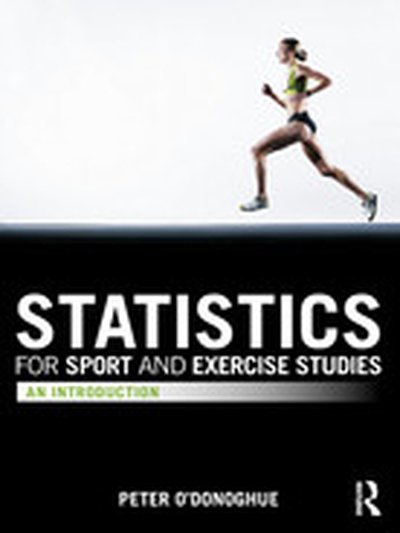
Statistics for Sport and Exercise Studies

Statistics for Sport and Exercise Studies guides the student through the full research process, from selecting the most appropriate statistical procedure, to analysing data, to the presentation of results, illustrating every key step in the process with clear examples, case-studies and data taken from real sport and exercise settings. Every chapter includes a range of features designed to help the student grasp the underlying concepts and relate each statistical procedure to their own research project, including definitions of key terms, practical exercises, worked examples and clear summaries. The book also offers an in-depth and practical guide to using SPSS in sport and exercise research, the most commonly used data analysis software in sport and exercise departments. In addition, a companion website includes more than 100 downloadable data sets and work sheets for use in or out of the classroom, full solutions to exercises contained in the book, plus over 1,300 PowerPoint slides for use by tutors and lecturers. Statistics for Sport and Exercise Studies is a complete, user-friendly introduction to the use of statistical tests, techniques and procedures in sport, exercise and related subjects. Visit the companion website at: www.routledge.com/cw/odonoghue

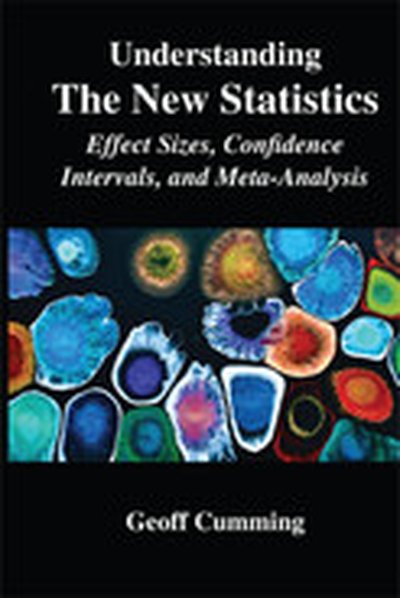
Understanding The New Statistics

This is the first book to introduce the new statistics - effect sizes, confidence intervals, and meta-analysis - in an accessible way. It is chock full of practical examples and tips on how to analyze and report research results using these techniques. The book is invaluable to readers interested in meeting the new APA Publication Manual guidelines by adopting the new statistics - which are more informative than null hypothesis significance testing, and becoming widely used in many disciplines. Accompanying the book is the Exploratory Software for Confidence Intervals (ESCI) package, free software that runs under Excel and is accessible at www.thenewstatistics.com. The book’s exercises use ESCI's simulations, which are highly visual and interactive, to engage users and encourage exploration. Working with the simulations strengthens understanding of key statistical ideas. There are also many examples, and detailed guidance to show readers how to analyze their own data using the new statistics, and practical strategies for interpreting the results. A particular strength of the book is its explanation of meta-analysis, using simple diagrams and examples. Understanding meta-analysis is increasingly important, even at undergraduate levels, because medicine, psychology and many other disciplines now use meta-analysis to assemble the evidence needed for evidence-based practice. The book’s pedagogical program, built on cognitive science principles, reinforces learning: Boxes provide "evidence-based" advice on the most effective statistical techniques. Numerous examples reinforce learning, and show that many disciplines are using the new statistics. Graphs are tied in with ESCI to make important concepts vividly clear and memorable. Opening overviews and end of chapter take-home messages summarize key points. Exercises encourage exploration, deep understanding, and practical applications. This highly accessible book is intended as the core text for any course that emphasizes the new statistics, or as a supplementary text for graduate and/or advanced undergraduate courses in statistics and research methods in departments of psychology, education, human development , nursing, and natural, social, and life sciences. Researchers and practitioners interested in understanding the new statistics, and future published research, will also appreciate this book. A basic familiarity with introductory statistics is assumed.

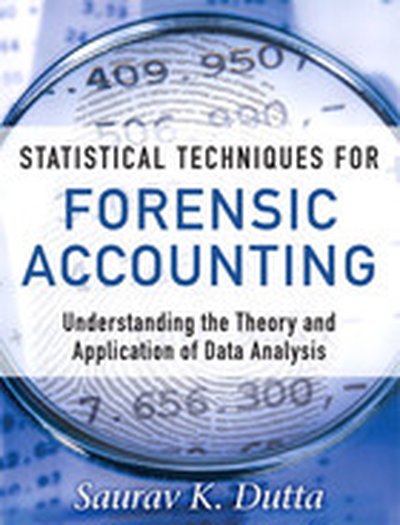
Statistical Techniques for Forensic Accounting: Understanding the Theory and Application of Data Analysis

Master powerful statistical techniques for uncovering fraud or misrepresentation in complex financial data. The discipline of statistics has developed sophisticated, well-accepted approaches for identifying financial fraud and demonstrating that it is deliberate. Statistical Techniques for Forensic Accounting is the first comprehensive guide to these tools and techniques. Leading expert Dr. Saurav Dutta explains their mathematical underpinnings, shows how to use them properly, and guides you in communicating your findings to other interested and knowledgeable parties, or assessing others' analyses. Dutta is singularly well-qualified to write this book: he has been engaged as an expert in many of the world's highest-profile financial fraud cases, including Worldcom, Global Crossing, Cendant, and HealthSouth. Here, he covers everything professionals need to know to construct and conduct valid and defensible statistical tests, perform analyses, and interpret others' analyses. Coverage includes: exploratory data analysis to identify the "Fraud Triangle" and other red flags… data mining tools, usage, and limitations… statistical terms and methods applicable to forensic accounting… relevant uncertainty and probability concepts… Bayesian analysis and networks… statistical inference, sampling, sample size, estimation, regression, correlation, classification, prediction, and much more. For all forensic accountants, auditors, investigators, and litigators involved with corporate financial reporting; and for all students interested in forensic accounting and related fields.