talk-data.com talk-data.com

Event

O'Reilly Data Science Books

2013-08-09 – 2026-02-25 Oreilly Visit website ↗

Activities tracked

170

Collection of O'Reilly books on Data Science.

Filtering by: DataViz ×

Sessions & talks

Showing 51–75 of 170 · Newest first

Search within this event →
Interactive Dashboards and Data Apps with Plotly and Dash

This book, "Interactive Dashboards and Data Apps with Plotly and Dash", is a practical guide to building dynamic dashboards and applications using the Dash Python framework. It covers creating visualizations, integrating interactive controls, and deploying the apps, all without requiring JavaScript expertise. What this Book will help me do Master creating interactive data dashboards using Dash and Plotly. Understand how to integrate controls such as sliders and dropdowns into apps. Learn to use Plotly Express for visually representing data with ease. Develop capabilities to deploy a fully functional web app for data interaction. Understand how to use multi-page configurations and URLs for advanced apps. Author(s) None Dabbas is a seasoned Python developer with extensive expertise in data visualization and full-stack development. Drawing from real-world experience, None brings a practical approach to teaching, ensuring that learners understand not only how to build applications but why the approach works. Who is it for? This book is ideal for data analysts, engineers, and developers looking to enhance their visualization capabilities. If you are familiar with Python and have basic HTML skills, you will find this book accessible and rewarding. Beginners looking to explore advanced dashboard creation without JavaScript will also appreciate the clear approach.
Microsoft Power BI Quick Start Guide - Second Edition

"Microsoft Power BI Quick Start Guide" is your essential companion to mastering data visualization and analysis using Microsoft Power BI. This book offers step-by-step guidance on exploring data sources, creating effective dashboards, and leveraging advanced features like dataflows and AI insights to derive actionable intelligence quickly and effectively. What this Book will help me do Connect and import data from various sources using Power BI tools. Transform and cleanse data using the Power BI Query Editor and other techniques. Design optimized data models with relationships and DAX calculations. Create dynamic and visually compelling reports and dashboards. Implement row-level security and manage Power BI deployments within an organization. Author(s) Devin Knight, Erin Ostrowsky, and Mitchell Pearson are seasoned Power BI experts with extensive experience in business intelligence and data analytics. They bring a hands-on approach to teaching, focusing on practical skills and real-world applications. Their joint experience ensures a thorough and clear learning experience. Who is it for? This book is tailored for aspiring business intelligence professionals who wish to harness the power of Microsoft Power BI. If you have foundational knowledge of business intelligence concepts and are eager to apply them practically, this guide is for you. It's also ideal for individuals looking to upgrade their BI skill set and adopt modern data analysis tools. Whether a beginner or looking to enhance your current skills, you'll find tremendous value here.

The Big R-Book

Introduces professionals and scientists to statistics and machine learning using the programming language R Written by and for practitioners, this book provides an overall introduction to R, focusing on tools and methods commonly used in data science, and placing emphasis on practice and business use. It covers a wide range of topics in a single volume, including big data, databases, statistical machine learning, data wrangling, data visualization, and the reporting of results. The topics covered are all important for someone with a science/math background that is looking to quickly learn several practical technologies to enter or transition to the growing field of data science. The Big R-Book for Professionals: From Data Science to Learning Machines and Reporting with R includes nine parts, starting with an introduction to the subject and followed by an overview of R and elements of statistics. The third part revolves around data, while the fourth focuses on data wrangling. Part 5 teaches readers about exploring data. In Part 6 we learn to build models, Part 7 introduces the reader to the reality in companies, Part 8 covers reports and interactive applications and finally Part 9 introduces the reader to big data and performance computing. It also includes some helpful appendices. Provides a practical guide for non-experts with a focus on business users Contains a unique combination of topics including an introduction to R, machine learning, mathematical models, data wrangling, and reporting Uses a practical tone and integrates multiple topics in a coherent framework Demystifies the hype around machine learning and AI by enabling readers to understand the provided models and program them in R Shows readers how to visualize results in static and interactive reports Supplementary materials includes PDF slides based on the book’s content, as well as all the extracted R-code and is available to everyone on a Wiley Book Companion Site The Big R-Book is an excellent guide for science technology, engineering, or mathematics students who wish to make a successful transition from the academic world to the professional. It will also appeal to all young data scientists, quantitative analysts, and analytics professionals, as well as those who make mathematical models.

Beginning R 4: From Beginner to Pro

Learn how to use R 4, write and save R scripts, read in and write out data files, use built-in functions, and understand common statistical methods. This in-depth tutorial includes key R 4 features including a new color palette for charts, an enhanced reference counting system (useful for big data), and new data import settings for text (as well as the statistical methods to model text-based, categorical data). Each chapter starts with a list of learning outcomes and concludes with a summary of any R functions introduced in that chapter, along with exercises to test your new knowledge. The text opens with a hands-on installation of R and CRAN packages for both Windows and macOS. The bulk of the book is an introduction to statistical methods (non-proof-based, applied statistics) that relies heavily on R (and R visualizations) to understand, motivate, and conduct statistical tests and modeling. Beginning R 4 shows the use of R in specific cases such as ANOVA analysis, multiple and moderated regression, data visualization, hypothesis testing, and more. It takes a hands-on, example-based approach incorporating best practices with clear explanations of the statistics being done. You will: Acquire and install R and RStudio Import and export data from multiple file formats Analyze data and generate graphics (including confidence intervals) Interactively conduct hypothesis testing Code multiple and moderated regression solutions Who This Book Is For Programmers and data analysts who are new to R. Some prior experience in programming is recommended.

Mastering SAS Programming for Data Warehousing

"Mastering SAS Programming for Data Warehousing" dives into the effective use of SAS for handling large-scale data environments like data warehouses and data lakes. You will learn to design and manage ETL processes using SAS, standardize workflows with macros and arrays, and connect SAS to other systems to enhance reporting and data visualization. What this Book will help me do Master efficient data input/output management in SAS environments. Design and maintain robust ETL pipelines using SAS macros and arrays. Identify and address data warehouse user requirements. Utilize Output Delivery System (ODS) to create professional reports. Integrate SAS with external systems for optimized data processing. Author(s) Monika Wahi brings extensive SAS programming experience coupled with a strong background in data warehousing and data analysis. Her insightful approach demystifies complex topics, focusing on equipping readers with practical skills. Her collaborative writing style makes advanced concepts accessible and applicable to real-world scenarios. Who is it for? This book is designed for data professionals such as architects, managers leading data-intensive projects, and SAS programmers or developers. It's ideal for those with foundational SAS experience who aspire to manage, maintain, or develop data lakes, marts, or warehouses effectively. The book offers a logical progression from basic concepts to advanced implementations, tailored for ambitious learners.

GNU Octave by Example: A Fast and Practical Approach to Learning GNU Octave

Get a quick start to learn, understand, and apply GNU Octave using a math- and programming-friendly approach. This book focuses on an end-to-end track to teach mathematical programming, data science, signal processing, and image processing with GNU Octave. GNU Octave by Example starts with an introduction to GNU Octave, a free and open-source alternative to MATLAB. Next, it explains the processes to install GNU Octave on popular operating systems such as Windows, Ubuntu, Raspberry Pi, and other platforms. Further, it covers hands-on exercises with GNU Octave exploring the basic functionality and command line in interactive mode. This is followed by covering matrices and various operations including how to read and analyze data from various sources. Moving forward, it introduces commonly used programming constructs in data visualization. It explains 2D and 3D data visualization along with data analysis. It also demonstrates the concepts related to geometry and its application with GNU Octave. It concludes with coverage of signal processing followed by image, video, and audio processing techniques. After reading this book, you will be able to write your own programs for scientific and numerical applications. What You Will Learn ● Understand the practical aspects of GNU Octave with math and programming-friendly abstractions ● Install GNU Octave on multiple platforms including Windows, Raspberry Pi, and Ubuntu ● Work with GNU Octave using the GUI, the command line, and Jupyter notebooks ● Implement 2D and 3D data visualization and analysis with GNU Octave Who This Book Is For Software engineers, data engineers, data science enthusiasts, and computer vision professionals.

Learning Tableau 2020 - Fourth Edition

"Learning Tableau 2020" is a comprehensive resource designed to strengthen your understanding of Tableau. It takes you from mastering the fundamentals to achieving proficiency in advanced visualization and data handling techniques. Through this book, you will gain the ability to create impactful data visualizations and interactive dashboards, effectively leveraging the capabilities of Tableau 2020. What this Book will help me do Effectively utilize Tableau 2020 features to develop data visualizations and dashboards. Apply advanced Tableau techniques, such as LOD and table calculations, to solve complex data analysis problems. Clean and structure data using Tableau Prep, enhancing data quality and reliability. Incorporate mapping and geospatial visualization for geographic data insights. Master storytelling with data by constructing engaging and interactive dashboards. Author(s) Joshua N. Milligan, the author of "Learning Tableau 2020," is an experienced Tableau training consultant and professional. With extensive years in the data visualization and analytics field, Joshua brings a practical perspective to the book. He excels at breaking down complex topics into accessible learning paths, making advanced Tableau concepts approachable for learners of all levels. Who is it for? This book is perfect for aspiring data analysts, IT professionals, and data enthusiasts who aim to understand and create compelling business intelligence reports. Beginners in Tableau will find the learning process straightforward due to its structured and incremental lessons. Advanced users can refine their skills with the wide range of complex examples covered. A basic familiarity with working with data is beneficial, though not required.

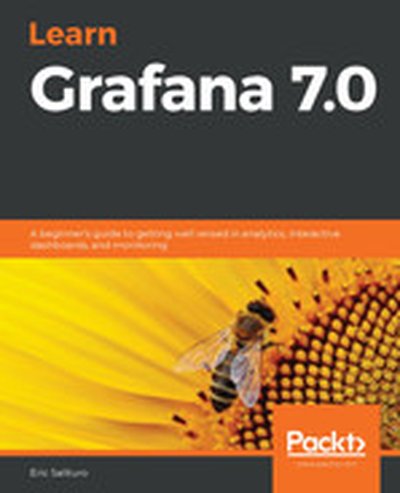
Learn Grafana 7.0

"Learn Grafana 7.0" is the ultimate beginner's guide to leveraging Grafana's capabilities for analytics and interactive dashboards. You'll master real-time data monitoring, visualization, and learn how to query and explore metrics with a hands-on approach to Grafana 7.0's new features. What this Book will help me do Learn to install and configure Grafana from scratch, preparing you for real-world data analysis tasks. Navigate and utilize the Graph panel in Grafana effectively, ensuring clear and actionable visual insights. Incorporate advanced dashboard features such as annotations, templates, and links to enhance data monitoring. Integrate Grafana with major cloud providers like AWS and Azure for robust monitoring solutions. Implement secure user authentication and fine-tuned permissions for managing teams and sharing insights safely. Author(s) None Salituro, the author of "Learn Grafana 7.0," is an experienced data visualization expert with years of experience in software development and analytics. Salituro focuses on creating understandable and accessible resources for developers and analysts of all skill levels, bringing a hands-on practical approach to technical learning. Who is it for? This book is perfect for data analysts, business intelligence developers, and administrators looking to build skills in data visualization and monitoring with Grafana 7.0. If you're eager to create interactive dashboards and learn practical applications of Grafana's features, this book is for you. Beginners to Grafana are fully accommodated, though familiarity with data visualization principles is beneficial. For those seeking to monitor cloud services like AWS with Grafana, this book is indispensable.

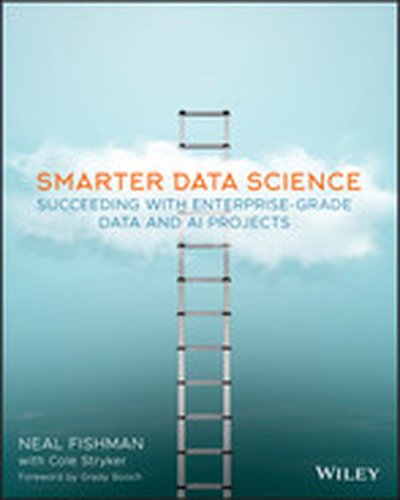
Smarter Data Science

Organizations can make data science a repeatable, predictable tool, which business professionals use to get more value from their data Enterprise data and AI projects are often scattershot, underbaked, siloed, and not adaptable to predictable business changes. As a result, the vast majority fail. These expensive quagmires can be avoided, and this book explains precisely how. Data science is emerging as a hands-on tool for not just data scientists, but business professionals as well. Managers, directors, IT leaders, and analysts must expand their use of data science capabilities for the organization to stay competitive. Smarter Data Science helps them achieve their enterprise-grade data projects and AI goals. It serves as a guide to building a robust and comprehensive information architecture program that enables sustainable and scalable AI deployments. When an organization manages its data effectively, its data science program becomes a fully scalable function that’s both prescriptive and repeatable. With an understanding of data science principles, practitioners are also empowered to lead their organizations in establishing and deploying viable AI. They employ the tools of machine learning, deep learning, and AI to extract greater value from data for the benefit of the enterprise. By following a ladder framework that promotes prescriptive capabilities, organizations can make data science accessible to a range of team members, democratizing data science throughout the organization. Companies that collect, organize, and analyze data can move forward to additional data science achievements: Improving time-to-value with infused AI models for common use cases Optimizing knowledge work and business processes Utilizing AI-based business intelligence and data visualization Establishing a data topology to support general or highly specialized needs Successfully completing AI projects in a predictable manner Coordinating the use of AI from any compute node. From inner edges to outer edges: cloud, fog, and mist computing When they climb the ladder presented in this book, businesspeople and data scientists alike will be able to improve and foster repeatable capabilities. They will have the knowledge to maximize their AI and data assets for the benefit of their organizations.

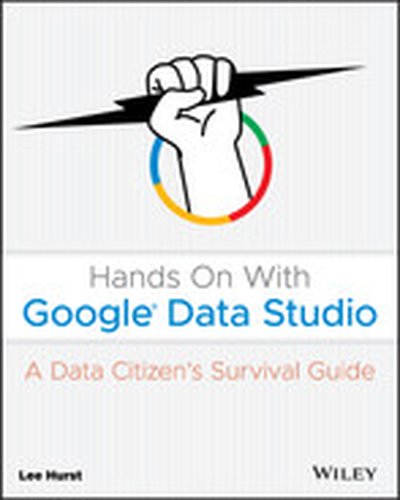
Hands On With Google Data Studio

Learn how to easily transform your data into engaging, interactive visual reports! Data is no longer the sole domain of tech professionals and scientists. Whether in our personal, business, or community lives, data is rapidly increasing in both importance and sheer volume. The ability to visualize all kinds of data is now within reach for anyone with a computer and an internet connection. Google Data Studio, quickly becoming the most popular free tool in data visualization, offers users a flexible, powerful way to transform private and public data into interactive knowledge that can be easily shared and understood. Hands On With Google Data Studio teaches you how to visualize your data today and produce professional quality results quickly and easily. No previous experience is required to get started right away—all you need is this guide, a Gmail account, and a little curiosity to access and visualize data just like large businesses and organizations. Clear, step-by-step instructions help you identify business trends, turn budget data into a report, assess how your websites or business listings are performing, analyze public data, and much more. Practical examples and expert tips are found throughout the text to help you fully understand and apply your new knowledge to a wide array of real-world scenarios. This engaging, reader-friendly guide will enable you to: Use Google Data Studio to access various types of data, from your own personal data to public sources Build your first data set, navigate the Data Studio interface, customize reports, and share your work Learn the fundamentals of data visualization, personal data accessibility, and open data API's Harness the power of publicly accessible data services including Google’s recently released Data Set Search Add banners, logos, custom graphics, and color palettes Hands On With Google Data Studio: A Data Citizens Survival Guide is a must-have resource for anyone starting their data visualization journey, from individuals, consultants, and small business owners to large business and organization managers and leaders.

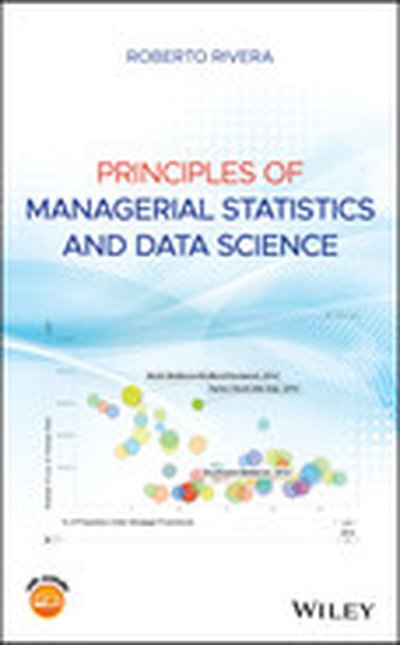
Principles of Managerial Statistics and Data Science

Introduces readers to the principles of managerial statistics and data science, with an emphasis on statistical literacy of business students Through a statistical perspective, this book introduces readers to the topic of data science, including Big Data, data analytics, and data wrangling. Chapters include multiple examples showing the application of the theoretical aspects presented. It features practice problems designed to ensure that readers understand the concepts and can apply them using real data. Over 100 open data sets used for examples and problems come from regions throughout the world, allowing the instructor to adapt the application to local data with which students can identify. Applications with these data sets include: Assessing if searches during a police stop in San Diego are dependent on driver’s race Visualizing the association between fat percentage and moisture percentage in Canadian cheese Modeling taxi fares in Chicago using data from millions of rides Analyzing mean sales per unit of legal marijuana products in Washington state Topics covered in Principles of Managerial Statistics and Data Science include:data visualization; descriptive measures; probability; probability distributions; mathematical expectation; confidence intervals; and hypothesis testing. Analysis of variance; simple linear regression; and multiple linear regression are also included. In addition, the book offers contingency tables, Chi-square tests, non-parametric methods, and time series methods. The textbook: Includes academic material usually covered in introductory Statistics courses, but with a data science twist, and less emphasis in the theory Relies on Minitab to present how to perform tasks with a computer Presents and motivates use of data that comes from open portals Focuses on developing an intuition on how the procedures work Exposes readers to the potential in Big Data and current failures of its use Supplementary material includes: a companion website that houses PowerPoint slides; an Instructor's Manual with tips, a syllabus model, and project ideas; R code to reproduce examples and case studies; and information about the open portal data Features an appendix with solutions to some practice problems Principles of Managerial Statistics and Data Science is a textbook for undergraduate and graduate students taking managerial Statistics courses, and a reference book for working business professionals.

Effective Data Storytelling

Master the art and science of data storytelling—with frameworks and techniques to help you craft compelling stories with data. The ability to effectively communicate with data is no longer a luxury in today’s economy; it is a necessity. Transforming data into visual communication is only one part of the picture. It is equally important to engage your audience with a narrative—to tell a story with the numbers. Effective Data Storytelling will teach you the essential skills necessary to communicate your insights through persuasive and memorable data stories. Narratives are more powerful than raw statistics, more enduring than pretty charts. When done correctly, data stories can influence decisions and drive change. Most other books focus only on data visualization while neglecting the powerful narrative and psychological aspects of telling stories with data. Author Brent Dykes shows you how to take the three central elements of data storytelling—data, narrative, and visuals—and combine them for maximum effectiveness. Taking a comprehensive look at all the elements of data storytelling, this unique book will enable you to: Transform your insights and data visualizations into appealing, impactful data stories Learn the fundamental elements of a data story and key audience drivers Understand the differences between how the brain processes facts and narrative Structure your findings as a data narrative, using a four-step storyboarding process Incorporate the seven essential principles of better visual storytelling into your work Avoid common data storytelling mistakes by learning from historical and modern examples Effective Data Storytelling: How to Drive Change with Data, Narrative and Visuals is a must-have resource for anyone who communicates regularly with data, including business professionals, analysts, marketers, salespeople, financial managers, and educators.

Big Data Analytics Methods

Big Data Analytics Methods unveils secrets to advanced analytics techniques ranging from machine learning, random forest classifiers, predictive modeling, cluster analysis, natural language processing (NLP), Kalman filtering and ensembles of models for optimal accuracy of analysis and prediction. More than 100 analytics techniques and methods provide big data professionals, business intelligence professionals and citizen data scientists insight on how to overcome challenges and avoid common pitfalls and traps in data analytics. The book offers solutions and tips on handling missing data, noisy and dirty data, error reduction and boosting signal to reduce noise. It discusses data visualization, prediction, optimization, artificial intelligence, regression analysis, the Cox hazard model and many analytics using case examples with applications in the healthcare, transportation, retail, telecommunication, consulting, manufacturing, energy and financial services industries. This book's state of the art treatment of advanced data analytics methods and important best practices will help readers succeed in data analytics.

Beginning MATLAB and Simulink: From Novice to Professional

Employ essential and hands-on tools and functions of the MATLAB and Simulink packages, which are explained and demonstrated via interactive examples and case studies. This book contains dozens of simulation models and solved problems via m-files/scripts and Simulink models which help you to learn programming and modeling essentials. You’ll become efficient with many of the built-in tools and functions of MATLAB/Simulink while solving engineering and scientific computing problems. Beginning MATLAB and Simulink explains various practical issues of programming and modelling in parallel by comparing MATLAB and Simulink. After reading and using this book, you'll be proficient at using MATLAB and applying the source code from the book's examples as templates for your own projects in data science or engineering. What You Will Learn Get started using MATLAB and Simulink Carry out data visualization with MATLAB Gain the programming and modeling essentials of MATLAB Build a GUI with MATLAB Work with integration and numerical root finding methods Apply MATLAB to differential equations-based models and simulations Use MATLAB for data science projects Who This Book Is For Engineers, programmers, data scientists, and students majoring in engineering and scientific computing.

Avoiding Data Pitfalls

Avoid data blunders and create truly useful visualizations Avoiding Data Pitfalls is a reputation-saving handbook for those who work with data, designed to help you avoid the all-too-common blunders that occur in data analysis, visualization, and presentation. Plenty of data tools exist, along with plenty of books that tell you how to use them—but unless you truly understand how to work with data, each of these tools can ultimately mislead and cause costly mistakes. This book walks you step by step through the full data visualization process, from calculation and analysis through accurate, useful presentation. Common blunders are explored in depth to show you how they arise, how they have become so common, and how you can avoid them from the outset. Then and only then can you take advantage of the wealth of tools that are out there—in the hands of someone who knows what they're doing, the right tools can cut down on the time, labor, and myriad decisions that go into each and every data presentation. Workers in almost every industry are now commonly expected to effectively analyze and present data, even with little or no formal training. There are many pitfalls—some might say chasms—in the process, and no one wants to be the source of a data error that costs money or even lives. This book provides a full walk-through of the process to help you ensure a truly useful result. Delve into the "data-reality gap" that grows with our dependence on data Learn how the right tools can streamline the visualization process Avoid common mistakes in data analysis, visualization, and presentation Create and present clear, accurate, effective data visualizations To err is human, but in today's data-driven world, the stakes can be high and the mistakes costly. Don't rely on "catching" mistakes, avoid them from the outset with the expert instruction in Avoiding Data Pitfalls.

Pro D3.js: Use D3.js to Create Maintainable, Modular, and Testable Charts

Go beyond the basics of D3.js to create maintainable, modular, and testable charts and to package them into a library that can be distributed as open source software or kept for private use. This book will show you how to transform regular D3.js chart code into reusable and extendable modules.You know the basics of working with D3.js, but it's time to become a professional D3.js practitioner. This book is your launching pad to refactoring code, composing complex visualizations from small components, working as a team with other developers, and integrating charts with a Continuous Integration system. You'll begin by creating a production-ready chart using D3.js v5, ES2015, and a test-driven approach and then move on to using and extending Britecharts, the reusable charting library based on Reusable API patterns. Finally, you'll see how to use D3.js along with React to document and build your charts to compose a charting library you can release into the NPM repository. With Pro D3.js, you'll become an accomplished D3.js developer in no time. What You Will Learn Create v5 D3.js charts with ES2016 and unit tests Develop modular, testable and extensible code with the Reusable API pattern Work with and extend Britecharts, a reusable charting library created at Eventbrite Use Webpack and npm to create and publish a charting library from your own chart collections Write reference documentation and build a documentation homepage for your library. Who This Book Is For Data scientists, data visualization engineers, and frontend developers with a fundamental knowledge of D3.js and some experience with JavaScript, as well as data journalists and consultants.

R Bioinformatics Cookbook

In the "R Bioinformatics Cookbook", you will explore the full potential of the R programming language and the Bioconductor ecosystem to overcome challenges in bioinformatics. By working through real-world examples, you will learn to handle biological data effectively and gain insights into genomics, RNA sequencing, and advanced data visualization. What this Book will help me do Develop skills to analyze RNA sequencing data using R and Bioconductor packages such as edgeR and DESeq. Learn to create professional-grade graphical representations of biological data using ggplot and other visualization tools. Understand how to perform genome-wide studies like variant calling and metagenomics analysis with R. Master the integration of external genomic databases with Ensembl for functional annotation. Explore machine learning applications in bioinformatics including classification and clustering models. Author(s) None MacLean and Dr. Dan Maclean are experienced bioinformatics researchers and R programmers. With a deep understanding of computational biology and visualization techniques, they bring years of academic and practical expertise to help readers excel in bioinformatics. Their approachable writing style ensures that complex topics are made accessible. Who is it for? This book is ideal for bioinformatics professionals and data analysts with an interest in applying R to biological data. It is particularly suited for those with a basic knowledge of R and bioinformatics looking to enhance their analysis skills. Researchers seeking to integrate genomics and computational methods into their workflows will find this book valuable. It's perfect for anyone aiming to tackle intermediate to advanced topics in biological data analysis.

Getting Started with Tableau 2019.2 - Second Edition

"Getting Started with Tableau 2019.2" is your primer to mastering the latest version of Tableau, a leading tool for data visualization and analysis. Whether you're new to Tableau or looking to upgrade your skills, this book will guide you through both foundational and advanced features, enabling you to create impactful dashboards and visual analytics. What this Book will help me do Understand and utilize the latest features introduced in Tableau 2019.2, including natural language queries in Ask Data. Learn how to connect to diverse data sources, transform data by pivoting fields, and split columns effectively. Gain skills to design intuitive data visualizations and dashboards using various Tableau mark types and properties. Develop interactive and storytelling-based dashboards to communicate insights visually and effectively. Discover methods to securely share your analyses through Tableau Server, enhancing collaboration. Author(s) Tristan Guillevin is an experienced data visualization consultant and an expert in Tableau. Having helped several organizations adopt Tableau for business intelligence, he brings a practical and results-oriented approach to teaching. Tristan's philosophy is to make data accessible and actionable for everyone, no matter their technical background. Who is it for? This book is ideal for Tableau users and data professionals looking to enhance their skills on Tableau 2019.2. If you're passionate about uncovering insights from data but need the right tools to communicate and collaborate effectively, this book is for you. It's suited for those with some prior experience in Tableau but also offers introductory content for newcomers. Whether you're a business analyst, data enthusiast, or BI professional, this guide will build solid foundations and sharpen your Tableau expertise.

Hands-On Time Series Analysis with R

Dive into the intricacies of time series analysis and forecasting with R in this comprehensive guide. From foundational concepts to practical implementations, this book equips you with the tools and techniques to analyze, understand, and predict time-dependent data. What this Book will help me do Develop insights by visualizing time-series data and identifying patterns. Master statistical time-series concepts including autocorrelation and moving averages. Learn and implement forecasting models like ARIMA and exponential smoothing. Apply machine learning methodologies for advanced time-series predictions. Work with key R packages for cleaning, manipulating, and analyzing time-series data. Author(s) Rami Krispin is an accomplished statistician and R programmer with extensive experience in data analysis and time-series modeling. His hands-on approach in utilizing R packages and libraries brings clarity to complex time-series concepts. With a passion for teaching and simplifying intricate topics, Rami ensures readers both grasp the theories and apply them effectively. Who is it for? This book is ideal for data analysts, statisticians, and R developers interested in mastering time-series analysis for real-world applications. Designed for readers with a basic understanding of statistics and R programming, it offers a practical approach to learning effective forecasting and data visualization techniques. Professionals aiming to expand their skillset in predictive analytics will find it particularly beneficial.

Visual Analytics with Tableau

A four-color journey through a complete Tableau visualization Tableau is a popular data visualization tool that’s easy for individual desktop use as well as enterprise. Used by financial analysts, marketers, statisticians, business and sales leadership, and many other job roles to present data visually for easy understanding, it’s no surprise that Tableau is an essential tool in our data-driven economy. Visual Analytics with Tableau is a complete journey in Tableau visualization for a non-technical business user. You can start from zero, connect your first data, and get right into creating and publishing awesome visualizations and insightful dashboards. • Learn the different types of charts you can create • Use aggregation, calculated fields, and parameters • Create insightful maps • Share interactive dashboards Geared toward beginners looking to get their feet wet with Tableau, this book makes it easy and approachable to get started right away.

Learn D3.js

Dive into the world of data visualization with 'Learn D3.js'. This comprehensive guide introduces D3.js-the leading JavaScript library for creating interactive, data-driven visualizations on the web. By following practical examples, you'll understand core concepts of D3.js, learn to implement various types of visualizations, and develop skills to bring dynamic, responsive graphics to your projects. What this Book will help me do Master the fundamentals of D3.js and use it to produce stunning web-based data visualizations. Bind data to the DOM using D3.js and configure interactive transitions and animations. Gain experience generating a multitude of chart types such as bar, pie, scatter charts, and more. Incorporate user interactivity into your visualizations using D3.js effectively. Work with map-based data visualizations using GIS data and various geographical projections. Author(s) Helder da Rocha is an experienced developer and educator with a passion for data visualization. With a solid background in JavaScript and web technologies, he has crafted this book to make the complexities of D3.js accessible and engaging. His approach emphasizes practical, hands-on learning, nurturing both new and seasoned developers alike. Who is it for? Are you a web developer, designer, or data scientist aiming to create interactive data visualizations for the web? If you have foundational knowledge of HTML, CSS, and JavaScript, this book is your perfect guide. Whether you're dipping your toes into web-based charts or seeking to craft advanced interactive graphics, 'Learn D3.js' is tailored to empower your journey.

TIBCO Spotfire: A Comprehensive Primer - Second Edition

Explore the possibilities of TIBCO Spotfire with this comprehensive guide. You'll start with fundamental data visualization principles and progress to creating powerful, professional-grade analytics dashboards and applications. By following this book, you'll master both basic usage and advanced features such as predictive and spatial analytics. What this Book will help me do Understand the fundamentals of TIBCO Spotfire and its various interfaces including web and desktop clients. Utilize Spotfire's range of visualization tools to effectively analyze and present data. Develop robust analytics dashboards and applications tailored for enterprise needs. Implement advanced features like predictive analytics and location-based data representations. Learn strategies for deploying and administrating Spotfire in a scalable, enterprise-oriented environment. Author(s) The authors, None Berridge and None Phillips, bring years of experience in business intelligence and data analytics. Their practical knowledge and real-world perspective shape the book into a practical resource for learning Spotfire. Their approach ensures that concepts are clearly explained with relatable examples, improving accessibility for all readers. Who is it for? This book is intended for business intelligence professionals, data analysts, and developers who aim to enhance their analytics skills using TIBCO Spotfire. It is suitable for beginners as no prior experience with Spotfire or advanced analytics is required. Readers looking to develop enterprise-grade visualization and analytical solutions will find it valuable.

Learn RStudio IDE: Quick, Effective, and Productive Data Science

Discover how to use the popular RStudio IDE as a professional tool that includes code refactoring support, debugging, and Git version control integration. This book gives you a tour of RStudio and shows you how it helps you do exploratory data analysis; build data visualizations with ggplot; and create custom R packages and web-based interactive visualizations with Shiny. In addition, you will cover common data analysis tasks including importing data from diverse sources such as SAS files, CSV files, and JSON. You will map out the features in RStudio so that you will be able to customize RStudio to fit your own style of coding. Finally, you will see how to save a ton of time by adopting best practices and using packages to extend RStudio. Learn RStudio IDE is a quick, no-nonsense tutorial of RStudio that will give you a head start to develop the insights you need in your data science projects. What YouWill Learn Quickly, effectively, and productively use RStudio IDE for building data science applications Install RStudio and program your first Hello World application Adopt the RStudio workflow Make your code reusable using RStudio Use RStudio and Shiny for data visualization projects Debug your code with RStudio Import CSV, SPSS, SAS, JSON, and other data Who This Book Is For Programmers who want to start doing data science, but don’t know what tools to focus on to get up to speed quickly.

Learning Tableau 2019 - Third Edition

Discover how to harness the power of Tableau 2019 to transform raw data into insightful, actionable business intelligence. This book serves as a comprehensive guide to mastering Tableau's features-from creating stunning visualizations to managing complex datasets with Tableau Prep. By the end, you'll be well-equipped to use Tableau for informed decision-making. What this Book will help me do Master the essential features of Tableau 2019 to become proficient in data visualization. Learn to prepare and integrate data effectively using Tableau Prep. Develop advanced visual analytics skills, including calculations and table calculations. Understand how to craft compelling dashboards and data stories for impactful communication. Leverage new Tableau features like set actions and transparent views for enhanced analytics. Author(s) Joshua N. Milligan is a Tableau-certified professional and Tableau Zen Master with extensive industry experience in data analytics. Known for his clarity in teaching, Joshua takes a practical and comprehensive approach to help users navigate Tableau effectively. His passion for empowering data-driven decisions is evident in his writing. Who is it for? This book is ideal for data professionals, analysts, or anyone new to Tableau who seeks to gain proficiency in data visualization and analysis. It is suitable for beginners, as it walks the reader through foundational concepts before introducing complex topics. Readers looking to enhance their skills in advanced Tableau techniques will also find value here. Familiarity with databases is helpful but not mandatory.

Hands-On Dashboard Development with QlikView

"Hands-On Dashboard Development with QlikView" is a practical guide that will teach you how to create interactive and visually appealing business intelligence dashboards using QlikView. You will learn to connect data from various sources, build effective data models, and craft dynamic visualizations to communicate critical insights with stakeholders. What this Book will help me do Learn the latest features of QlikView and how to effectively apply them. Connect QlikView to diverse data sources, including databases and websites. Develop comprehensive data models that avoid circular references. Utilize advanced visualization techniques to create maps, charts, and dashboards. Implement robust security measures and manage user access efficiently. Author(s) None Agarwal is a seasoned Business Intelligence professional with extensive experience in building and managing BI solutions for different industries. Having a passion for data visualization, None dedicates themselves to empowering others through clear, actionable, and concise tutorials. Their warm, instructive style makes advanced concepts approachable for learners of all levels. Who is it for? This book is ideal for business intelligence professionals, data analysts, and aspiring QlikView developers with fundamental knowledge of data visualization and BI concepts. It is designed for those looking to enhance their skills in QlikView and create impactful dashboards to leverage their data effectively. Beginners who are eager to learn QlikView will also find this book to be a great resource.