talk-data.com talk-data.com

Event

O'Reilly Data Science Books

2013-08-09 – 2026-02-25 Oreilly Visit website ↗

Activities tracked

794

Collection of O'Reilly books on Data Science.

Filtering by: data-science-tasks ×

Sessions & talks

Showing 776–794 of 794 · Newest first

Search within this event →
Visualization Handbook

The Visualization Handbook provides an overview of the field of visualization by presenting the basic concepts, providing a snapshot of current visualization software systems, and examining research topics that are advancing the field. This text is intended for a broad audience, including not only the visualization expert seeking advanced methods to solve a particular problem, but also the novice looking for general background information on visualization topics. The largest collection of state-of-the-art visualization research yet gathered in a single volume, this book includes articles by a “who’s who? of international scientific visualization researchers covering every aspect of the discipline, including: · Virtual environments for visualization · Basic visualization algorithms · Large-scale data visualization · Scalar data isosurface methods · Visualization software and frameworks · Scalar data volume rendering · Perceptual issues in visualization · Various application topics, including information visualization. * Edited by two of the best known people in the world on the subject; chapter authors are authoritative experts in their own fields; * Covers a wide range of topics, in 47 chapters, representing the state-of-the-art of scientific visualization.
Even You Can Learn Statistics A Guide for Everyone Who Has Ever Been Afraid of Statistics

Even You Can Learn Statistics A Guide for Everyone Who Has Ever Been Afraid Of Statistics One easy step at a time, this book will teach you the key statistical techniques you'll need for finance, quality, marketing, the social sciences, or just about any other field. Each technique is introduced with a simple, jargon-free explanation, practical examples, and hands-on guidance for solving real problems with Excel or a TI-83/84 series calculator, including Plus models. Hate math? No sweat. You'll be amazed how little you need! For those who do have an interest in mathematics, optional "Equation Blackboard" sections review the equations that provide the foundations for important concepts. David M. Levine is a much-honored innovator in statistics education. He is Professor Emeritus of Statistics and Computer Information Systems at Bernard M. Baruch College (CUNY), and co-author of several best-selling books, including Statistics for Managers using Microsoft Excel, Basic Business Statistics, Quality Management, and Six Sigma for Green Belts and Champions. Instructional designer David F. Stephan pioneered the classroom use of personal computers, and is a leader in making Excel more accessible to statistics students. He has co-authored several textbooks with David M. Levine. Here's just some of what you'll learn how to do... Use statistics in your everyday work or study Perform common statistical tasks using a Texas Instruments statistical calculator or Microsoft Excel Build and interpret statistical charts and tables "Test Yourself" at the end of each chapter to review the concepts and methods that you learned in the chapter Work with mean, median, mode, standard deviation, Z scores, skewness, and other descriptive statistics Use probability and probability distributions Work with sampling distributions and confidence intervals Test hypotheses and decision-making risks with Z, t, Chi-Square, ANOVA, and other techniques Perform regression analysis and modeling The easy, practical introduction to statistics–for everyone! Thought you couldn't learn statistics? Think again. You can–and you will! Complementary Web site Downloadable practice files at http://www.ftpress.com/youcanlearnstatistics

Say It With Charts Workbook

Hands-on tips for powerful presentations in this all-new companion to the bestselling Say It with Charts Through four editions, Gene Zelazny's classic how-to Say It with Charts has generated more than $1.5 million in revenues. Now, in the companion Say It with Charts Workbook, Zelazny shows you how to make even more of your visual communication skills, working "one-on-one" with you on how to masterfully use the latest techniques and tools to enliven every presentation. More than just a rote listing of techniques, Say It with Charts Workbook features performance-improving strategies and suggestions that will help keep both you--and, even more important, the audience--comfortable and at ease. Part refresher course, part workbook, part self-test, it arms you with: • Step-by-step instructions and guidelines • Performance-improving strategies and suggestions • Tactics for customizing graphics to specific audiences

Algorithmic Graph Theory and Perfect Graphs, 2nd Edition

Algorithmic Graph Theory and Perfect Graphs, first published in 1980, has become the classic introduction to the field. This new Annals edition continues to convey the message that intersection graph models are a necessary and important tool for solving real-world problems. It remains a stepping stone from which the reader may embark on one of many fascinating research trails. The past twenty years have been an amazingly fruitful period of research in algorithmic graph theory and structured families of graphs. Especially important have been the theory and applications of new intersection graph models such as generalizations of permutation graphs and interval graphs. These have lead to new families of perfect graphs and many algorithmic results. These are surveyed in the new Epilogue chapter in this second edition. New edition of the "Classic" book on the topic Wonderful introduction to a rich research area Leading author in the field of algorithmic graph theory Beautifully written for the new mathematician or computer scientist Comprehensive treatment

Spidering Hacks

The Internet, with its profusion of information, has made us hungry for ever more, ever better data. Out of necessity, many of us have become pretty adept with search engine queries, but there are times when even the most powerful search engines aren't enough. If you've ever wanted your data in a different form than it's presented, or wanted to collect data from several sites and see it side-by-side without the constraints of a browser, then Spidering Hacks is for you. Spidering Hacks takes you to the next level in Internet data retrieval--beyond search engines--by showing you how to create spiders and bots to retrieve information from your favorite sites and data sources. You'll no longer feel constrained by the way host sites think you want to see their data presented--you'll learn how to scrape and repurpose raw data so you can view in a way that's meaningful to you.Written for developers, researchers, technical assistants, librarians, and power users, Spidering Hacks provides expert tips on spidering and scraping methodologies. You'll begin with a crash course in spidering concepts, tools (Perl, LWP, out-of-the-box utilities), and ethics (how to know when you've gone too far: what's acceptable and unacceptable). Next, you'll collect media files and data from databases. Then you'll learn how to interpret and understand the data, repurpose it for use in other applications, and even build authorized interfaces to integrate the data into your own content. By the time you finish Spidering Hacks, you'll be able to: Aggregate and associate data from disparate locations, then store and manipulate the data as you like Gain a competitive edge in business by knowing when competitors' products are on sale, and comparing sales ranks and product placement on e-commerce sites Integrate third-party data into your own applications or web sites Make your own site easier to scrape and more usable to others Keep up-to-date with your favorite comics strips, news stories, stock tips, and more without visiting the site every dayLike the other books in O'Reilly's popular Hacks series, Spidering Hacks brings you 100 industrial-strength tips and tools from the experts to help you master this technology. If you're interested in data retrieval of any type, this book provides a wealth of data for finding a wealth of data.

Database Modeling with Microsoft® Visio for Enterprise Architects

This book is for database designers and database administrators using Visio, which is the database component of Microsoft's Visual Studio .NET for Enterprise Architects suite, also included in MSDN subscriptions. This is the only guide to this product that tells DBAs how to get their job done. Although primarily focused on tool features, the book also provides an introduction to data modeling, and includes practical advice on managing database projects. The principal author was the program manager of VEA's database modeling solutions. · Explains how to model databases with Microsoft® Visio for Enterprise Architects (VEA), focusing on tool features.· Provides a platform-independent introduction to data modeling using both Object Role Modeling (ORM) and Entity Relationship Modeling (ERM), and includes practical advice on managing database projects.· Additional ORM models, course notes, and add-ins available online.

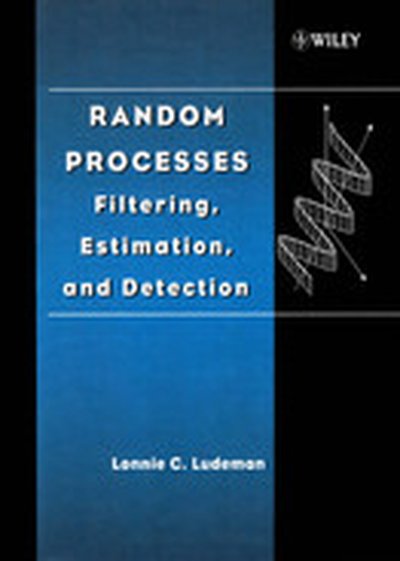
Random Processes: Filtering, Estimation, and Detection

An understanding of random processes is crucial to many engineering fields-including communication theory, computer vision, and digital signal processing in electrical and computer engineering, and vibrational theory and stress analysis in mechanical engineering. The filtering, estimation, and detection of random processes in noisy environments are critical tasks necessary in the analysis and design of new communications systems and useful signal processing algorithms. Random Processes: Filtering, Estimation, and Detection clearly explains the basics of probability and random processes and details modern detection and estimation theory to accomplish these tasks. In this book, Lonnie Ludeman, an award-winning authority in digital signal processing, joins the fundamentals of random processes with the standard techniques of linear and nonlinear systems analysis and hypothesis testing to give signal estimation techniques, specify optimum estimation procedures, provide optimum decision rules for classification purposes, and describe performance evaluation definitions and procedures for the resulting methods. The text covers four main, interrelated topics: Probability and characterizations of random variables and random processes Linear and nonlinear systems with random excitations Optimum estimation theory including both the Wiener and Kalman Filters Detection theory for both discrete and continuous time measurements Lucid, thorough, and well-stocked with numerous examples and practice problems that emphasize the concepts discussed, Random Processes: Filtering, Estimation, and Detection is an understandable and useful text ideal as both a self-study guide for professionals in the field and as a core text for graduate students.

Enhance Your Business Applications: Simple Integration of Advanced Data Mining Functions

Today data mining is no longer thought of as a set of stand-alone techniques, far from the business applications, and used only by data mining specialists or statisticians. Integrating data mining with mainstream applications is becoming an important issue for e-business applications. To support this move to applications, data mining is now an extension of the relational databases that database administrators or IT developers use. They use data mining as they would use any other standard relational function that they manipulate. This IBM Redbooks publication positions the new DB2 data mining functions: Part 1 of this book helps business analysts and implementers to understand and position these new DB2 data mining functions. Part 2 provides examples for implementers on how to easily and quickly integrate the data mining functions in business applications to enhance them. And part 3 helps database administrators and IT developers to configure these functions once to prepare them for use and integration in any application. Please note that the additional material referenced in the text is not available from IBM.

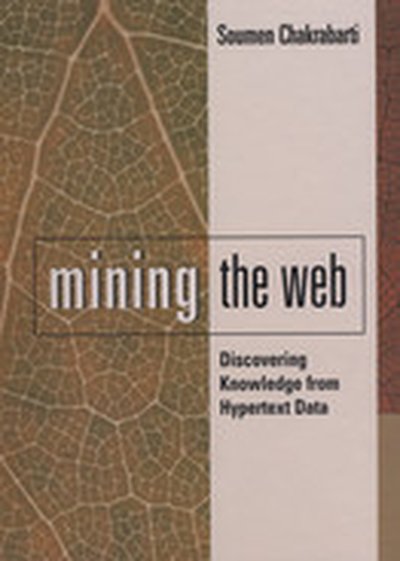
Mining the Web

Mining the Web: Discovering Knowledge from Hypertext Data is the first book devoted entirely to techniques for producing knowledge from the vast body of unstructured Web data. Building on an initial survey of infrastructural issues—including Web crawling and indexing—Chakrabarti examines low-level machine learning techniques as they relate specifically to the challenges of Web mining. He then devotes the final part of the book to applications that unite infrastructure and analysis to bring machine learning to bear on systematically acquired and stored data. Here the focus is on results: the strengths and weaknesses of these applications, along with their potential as foundations for further progress. From Chakrabarti's work—painstaking, critical, and forward-looking—readers will gain the theoretical and practical understanding they need to contribute to the Web mining effort. * A comprehensive, critical exploration of statistics-based attempts to make sense of Web Mining. * Details the special challenges associated with analyzing unstructured and semi-structured data. * Looks at how classical Information Retrieval techniques have been modified for use with Web data. * Focuses on today's dominant learning methods: clustering and classification, hyperlink analysis, and supervised and semi-supervised learning. * Analyzes current applications for resource discovery and social network analysis. * An excellent way to introduce students to especially vital applications of data mining and machine learning technology.

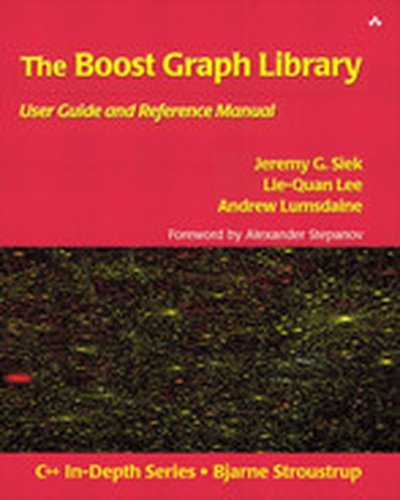
The Boost Graph Library: User Guide and Reference Manual

The Boost Graph Library (BGL) is the first C++ library to apply the principles of generic programming to the construction of the advanced data structures and algorithms used in graph computations. Problems in such diverse areas as Internet packet routing, molecular biology, scientific computing, and telephone network design can be solved by using graph theory. This book presents an in-depth description of the BGL and provides working examples designed to illustrate the application of BGL to these real-world problems. Written by the BGL developers, gives you all the information you need to take advantage of this powerful new library. Part I is a complete user guide that begins by introducing graph concepts, terminology, and generic graph algorithms. This guide also takes the reader on a tour through the major features of the BGL; all motivated with example problems. Part II is a comprehensive reference manual that provides complete documentation of all BGL concepts, algorithms, and classes. The Boost Graph Library: User Guide and Reference Manual Readers will find coverage of: Graph terminology and concepts Generic programming techniques in C++ Shortest-path algorithms for Internet routing Network planning problems using the minimum-spanning tree algorithms BGL algorithms with implicitly defined graphs BGL Interfaces to other graph libraries BGL concepts and algorithms BGL classes–graph, auxiliary, and adaptor Groundbreaking in its scope, this book offers the key to unlocking the power of the BGL for the C++ programmer looking to extend the reach of generic programming beyond the Standard Template Library.

Ten Minute Guide to Microsoft® Visio® 2002

Because most people don't have the luxury of sitting down uninterrupted for hours at a time to learn Visio, this 10-Minute Guide focuses on the most often used features, covering them in lessons designed to take 10 minutes or less to complete. In addition, this guide teaches the user how to use Visio without relying on technical jargon, by providing straightforward, easy-to-follow explanations and lists of numbered steps that tell the user which keys to press and which options to select.

Say It With Charts: The Executive’s Guide to Visual Communication, 4th Edition

Step-by-step guide to creating compelling, memorable presentations A chart that once took ten hours to prepare can now be produced by anyone with ten minutes and a computer keyboard. What hasn't changed, however, are the basics behind creating a powerful visual - what to say, why to say it, and how to say it for the most impact. In Say It With Charts, Fourth Edition --the latest, cutting-edge edition of his best-selling presentation guide -- Gene Zelazny reveals time-tested tips for preparing effective presentations. Then, this presentation guru shows you how to combine those tips with today's hottest technologies for sharper, stronger visuals. Look to this comprehensive presentation encyclopedia for information on: * How to prepare different types of charts -- pie, bar, column, line, or dot -- and when to use each * Lettering size, color choice, appropriate chart types, and more * Techniques for producing dramatic eVisuals using animation, scanned images, sound, video, and links to pertinent websites

Reliability: Modeling, Prediction, and Optimization

Bringing together business and engineering to reliability analysis With manufactured products exploding in numbers and complexity, reliability studies play an increasingly critical role throughout a product's entire life cycle-from design to post-sale support. Reliability: Modeling, Prediction, and Optimization presents a remarkably broad framework for the analysis of the technical and commercial aspects of product reliability, integrating concepts and methodologies from such diverse areas as engineering, materials science, statistics, probability, operations research, and management. Written in plain language by two highly respected experts in the field, this practical work provides engineers, operations managers, and applied statisticians with both qualitative and quantitative tools for solving a variety of complex, real-world reliability problems. A wealth of examples and case studies accompanies: Comprehensive coverage of assessment, prediction, and improvement at each stage of a product's life cycle Clear explanations of modeling and analysis for hardware ranging from a single part to whole systems Thorough coverage of test design and statistical analysis of reliability data A special chapter on software reliability Coverage of effective management of reliability, product support, testing, pricing, and related topics Lists of sources for technical information, data, and computer programs Hundreds of graphs, charts, and tables, as well as over 500 references PowerPoint slides are available from the Wiley editorial department.

Professional Development with Visio® 2000

Professional Development with Visio 2000 empowers you to create your own Visio solutions quickly and easily. Using client-proven methods, and the success of his training seminars worldwide, Visio insider David Edson provides you with an understanding of the Visio development platform, and guides you through the use of Visual Basic for Applications (VBA), enabling you to create your own Visio solutions. You will benefit from David's expert knowledge of topics including understanding Visio solutions, working with SmartShapes, customizing ShapeSheets, Visio VBA automation, Generating Visio Drawings with ActiveX Automation, and much more.

APPLIED MULTIVARIATE STATISTICS: WITH SAS® SOFTWARE

Real-world problems and data sets are the backbone of Ravindra Khattree and Dayanand Naik's Applied Multivariate Statistics with SAS Software, Second Edition, which provides a unique approach to the topic, integrating statistical methods, data analysis, and applications. Now extensively revised, the book includes new information about mixed effects models, applications of the MIXED procedure, regression diagnostics with the corresponding IML procedure code, and covariance structures. The authors' approach to the information will aid professors, researchers, and students in a variety of disciplines and industries. Extensive SAS code and the corresponding high-resolution output accompany sample problems, and clear explanations of SAS procedures are included. Emphasis is on correct interpretation of the output to draw meaningful conclusions. Featuring both the theoretical and the practical, topics covered include multivariate analysis of experimental data and repeated measures data, graphical representation of data including biplots, and multivariate regression. In addition, a quick introduction to the IML procedure with special reference to multivariate data is available in an appendix. SAS programs and output integrated with the text make it easy to read and follow the examples.

System Identification: Theory for the User, 2nd Edition

65669-4 The field’s leading text, now completely updated. Modeling dynamical systems — theory, methodology, and applications. Lennart Ljung’s System Identification: Theory for the User is a complete, coherent description of the theory, methodology, and practice of System Identification. This completely revised Second Edition introduces subspace methods, methods that utilize frequency domain data, and general non-linear black box methods, including neural networks and neuro-fuzzy modeling. The book contains many new computer-based examples designed for Ljung’s market-leading software, System Identification Toolbox for MATLAB. Ljung combines careful mathematics, a practical understanding of real-world applications, and extensive exercises. He introduces both black-box and tailor-made models of linear as well as non-linear systems, and he describes principles, properties, and algorithms for a variety of identification techniques: Nonparametric time-domain and frequency-domain methods. Parameter estimation methods in a general prediction error setting. Frequency domain data and frequency domain interpretations. Asymptotic analysis of parameter estimates. Linear regressions, iterative search methods, and other ways to compute estimates. Recursive (adaptive) estimation techniques. Ljung also presents detailed coverage of the key issues that can make or break system identification projects, such as defining objectives, designing experiments, controlling the bias distribution of transfer-function estimates, and carefully validating the resulting models. The first edition of System Identification has been the field’s most widely cited reference for over a decade. This new edition will be the new text of choice for anyone concerned with system identification theory and practice.

Modelling Stock Market Volatility

This essay collection focuses on the relationship between continuous time models and Autoregressive Conditionally Heteroskedastic (ARCH) models and applications. For the first time, Modelling Stock Market Volatility provides new insights about the links between these two models and new work on practical estimation methods for continuous time models. Featuring the pioneering scholarship of Daniel Nelson, the text presents research about the discrete time model, continuous time limits and optimal filtering of ARCH models, and the specification and estimation of continuous time processes. This work will lead to a rapid growth in their empirical application as they are increasingly subjected to routine specification testing. Key Features * Provides for the first time new insights on the links between continuous time and ARCH models * Collects seminal scholarship by some of the most renowned researchers in finance and econometrics * Captures complex arguments underlying the approximation and proper statistical modelling of continuous time volatility dynamics