Gives you a quick, convenient overview of new functionality, enhanced features, and new products that you might use in SAS 9.4.
 talk-data.com
Activities tracked
245
Collection of O'Reilly books on Data Science.
Sessions & talks
Showing 76–100 of 245 · Newest first
Gives you a quick, convenient overview of new functionality, enhanced features, and new products that you might use in SAS 9.4.
For decades researchers and programmers have used SAS to analyze, summarize, and report clinical trial data. Now Chris Holland and Jack Shostak have updated their popular Implementing CDISC Using SAS, the first comprehensive book on applying clinical research data and metadata to the Clinical Data Interchange Standards Consortium (CDISC) standards.
Implementing CDISC Using SAS: An End-to-End Guide, Second Edition, is an all-inclusive guide on how to implement and analyze the Study Data Tabulation Model (SDTM) and the Analysis Data Model (ADaM) data and prepare clinical trial data for regulatory submission. Updated to reflect the 2017 FDA mandate for adherence to CDISC standards, this new edition covers creating and using metadata, developing conversion specifications, implementing and validating SDTM and ADaM data, determining solutions for legacy data conversions, and preparing data for regulatory submission. The book covers products such as Base SAS, SAS Clinical Data Integration, and the SAS Clinical Standards Toolkit, as well as JMP Clinical. Topics included in this new edition include an implementation of the Define-XML 2.0 standard, new SDTM domains, validation with Pinnacle 21 software, event narratives in JMP Clinical, and of course new versions of SAS and JMP software.
Any manager or user of clinical trial data in this day and age is likely to benefit from knowing how to either put data into a CDISC standard or analyzing and finding data once it is in a CDISC format. If you are one such person--a data manager, clinical and/or statistical programmer, biostatistician, or even a clinician--then this book is for you.
Learn how to solve basic statistical problems with Ron Cody's easy-to-follow style using the point-and-click SAS Studio tasks. Aimed specifically at the health sciences, Biostatistics by Example Using SAS Studio, provides an introduction to SAS Studio tasks. The book includes many biological and health-related problem sets and is fully compatible with SAS University Edition. After reading this book you will be able to understand temporary and permanent SAS data sets, and you will learn how to create them from various data sources. You will also be able to use SAS Studio statistics tasks to generate descriptive statistics for continuous and categorical data. The inferential statistics portion of the book covers the following topics: paired and unpaired t tests one-way analysis of variance N-way ANOVA correlation simple and multiple regression logistic regression categorical data analysis power and sample size calculations Besides describing each of these statistical tests, the book also discusses the assumptions that need to be met before running and interpreting these tests. For two-sample tests and N-way tests, nonparametric tests are also described. This book leads you step-by-step through each of the statistical tests with numerous screen shots, and you will see how to read and interpret all of the output generated by these tests. Experience with some basic statistical tests used to analyze medical data or classroom experience in biostatistics or statistics is required. Although the examples are related to the medical and biology fields, researchers in other fields such as psychology or education will find this book helpful. No programming experience is required. Loading data files into SAS University Edition? Click here for more information.
Use aggregate data to answer high-level business questions!
Data miners, data scientists, analytic managers, and analysts who work in all industries will find the insights in Randy Collica's Strategic Analytics and SAS: Using Aggregate Data to Drive Organizational Initiatives invaluable in their work. This book shows you how to use your existing data at aggregate levels to answer high-level business questions. Written in a detailed, step-by-step format, the multi-industry use cases begin with a high-level question that a C-level executive might ask. Collica then progresses through the steps to perform the analysis, including many tables and screenshots to guide you along the way. He then ends each use case with the solution to the high-level question. Topics covered include logistic analysis, models developed from surveys, survival analysis, confidence intervals, text mining and analysis, visual analytics, hypothesis tests, and size and magnitude of analytic effects. Connect the dots between detailed data on your customers and the high-level business goals of your organization with Strategic Analytics and SAS!
How to lead the change Analytics are driving big changes, not only in what marketing departments do but in how they are organized, staffed, led, and run. Leaders are grappling with issues that range from building an analytically driven marketing organization and determining the kinds of structure and talent that are needed to leading interactions with IT, finance, and sales and creating a unified view of the customer. The Analytical Marketer provides critical insight into the changing marketing organizationdigital, agile, and analyticaland the tools for reinventing it. Written by the head of global marketing for SAS, The Analytical Marketer is based on the author’s firsthand experience of transforming a marketing organization from art” to art and science.” Challenged and inspired by their company’s own analytics products, the SAS marketing team was forced to rethink itself in order to take advantage of the new capabilities that those tools offer the modern marketer. Key marketers and managers at SAS tell their stories alongside the author’s candid lessons learned as she led the marketing organization’s transformation. With additional examples from other leading companies, this book is a practical guide and set of best practices for creating a new marketing culture that thrives on and adds value through data and analytics.

Using JMP 13 shows you how to perform common tasks such as importing data, setting column properties, exporting analyses as graphics or HTML, and modifying JMP preferences. Details about connecting to SAS and working in the Formula Editor are also provided.
Design quality SAS software and evaluate SAS software quality SAS Data Analytic Development is the developer’s compendium for writing better-performing software and the manager’s guide to building comprehensive software performance requirements. The text introduces and parallels the International Organization for Standardization (ISO) software product quality model, demonstrating 15 performance requirements that represent dimensions of software quality, including: reliability, recoverability, robustness, execution efficiency (i.e., speed), efficiency, scalability, portability, security, automation, maintainability, modularity, readability, testability, stability, and reusability. The text is intended to be read cover-to-cover or used as a reference tool to instruct, inspire, deliver, and evaluate software quality. A common fault in many software development environments is a focus on functional requirements—the what and how—to the detriment of performance requirements, which specify instead how well software should function (assessed through software execution) or how easily software should be maintained (assessed through code inspection). Without the definition and communication of performance requirements, developers risk either building software that lacks intended quality or wasting time delivering software that exceeds performance objectives—thus, either underperforming or gold-plating, both of which are undesirable. Managers, customers, and other decision makers should also understand the dimensions of software quality both to define performance requirements at project outset as well as to evaluate whether those objectives were met at software completion. As data analytic software, SAS transforms data into information and ultimately knowledge and data-driven decisions. Not surprisingly, data quality is a central focus and theme of SAS literature; however, code quality is far less commonly described and too often references only the speed or efficiency with which software should execute, omitting other critical dimensions of software quality. SAS® software project definitions and technical requirements often fall victim to this paradox, in which rigorous quality requirements exist for data and data products yet not for the software that undergirds them. By demonstrating the cost and benefits of software quality inclusion and the risk of software quality exclusion, stakeholders learn to value, prioritize, implement, and evaluate dimensions of software quality within risk management and project management frameworks of the software development life cycle (SDLC). Thus, SAS Data Analytic Development recalibrates business value, placing code quality on par with data quality, and performance requirements on par with functional requirements.
For SAS programmers or analysts who need to generalize their programs or improve programming efficiency, Art Carpenter thoroughly updates his highly successful second edition of Carpenter's Complete Guide to the SAS Macro Language with an extensive collection of new macro language techniques and examples. Addressing the composition and operation of the SAS macro facility and the SAS macro language, this third edition offers nearly 400 ready-to-use macros, macro functions, and macro tools that enable you to convert SAS code to macros, define macro variables, and more! Users with a basic understanding of Base SAS who are new to the SAS macro language will find more detail, utilities, and references to additional learning opportunities; advanced macro language programmers who need help with data-driven macros and dynamic application development will find greatly expanded treatment of these topics. This revised and enlarged edition includes the following topics: New and expanded introduction to the macro language Functions, automatic macro variables, and macro statements new to the macro language Expanded macro language tools that interface with the operating system Expanded data-driven methodologies used to build dynamic applications Expanded discussion of list processing, with four alternative approaches presented Additional file and data management examples Expanded discussion of CALL EXECUTE and DOSUBL New discussion of using the macro language on remote servers Expanded discussion and examples of macro quoting Far beyond a reference manual issued from an “ivory tower,” this book is pragmatic and example-driven: Yes, you will find syntax examples; yes, the code is explained. But the focus of this book is on actual code used to solve real-world business problems. In fact, an entire appendix is dedicated to listing the nearly 70 classes of problems that are solved by programs covered in this edition. Discussion of the examples elucidates the pros and cons of the particular solution and often suggests alternative approaches. Therefore, this book provides you both a compendium of reusable and adaptable code, and opportunities for deepening your understanding and growing as a SAS programmer.
Data Analysis Plans: A Blueprint for Success Using SAS gets you started on building an effective data analysis plan with a solid foundation for planning and managing your analytics projects. Data analysis plans are critical to the success of analytics projects and can improve the workflow of your project when implemented effectively. This book provides step-by-step instructions on writing, implementing, and updating your data analysis plan. It emphasizes the concept of an analysis plan as a working document that you update throughout the life of a project.
This book will help you manage the following tasks:
control client expectations
limit and refine the scope of the analysis
enable clear communication and understanding among team members
organize and develop your final report
SAS users of any level of experience will benefit from this book, but beginners will find it extremely useful as they build foundational knowledge for performing data analysis and hypotheses testing. Subject areas include medical research, public health research, social studies, educational testing and evaluation, and environmental studies.
Filled with helpful examples and real-life projects of SAS users, A Recipe for Success Using SAS University Edition is an easy guide on how to start applying the analytical power of SAS to real-world scenarios. This book shows you: how to start using analytics how to use SAS to accomplish a project goal how to effectively apply SAS to your community or school how users like you implemented SAS to solve their analytical problems A beginner’s guide on how to create and complete your first analytics project using SAS University Edition, this book is broken down into easy-to-read chapters that also include quick takeaway tips. It introduces you to the vocabulary and structure of the SAS language, shows you how to plan and execute a successful project, introduces you to basic statistics, and it walks you through case studies to inspire and motivate you to complete your own projects. Following a recipe for success using this book, harness the power of SAS to plan and complete your first analytics project!
Enhance your SAS® data wrangling skills with high precision and parallel data manipulation using the new DS2 programming language.
This book addresses the new DS2 programming language from SAS, which combines the precise procedural power and control of the Base SAS DATA step language with the simplicity and flexibility of SQL. DS2 provides simple, safe syntax for performing complex data transformations in parallel and enables manipulation of native database data types at full precision. It also introduces PROC FEDSQL, a modernized SQL language that blends perfectly with DS2. You will learn to harness the power of parallel processing to speed up CPU-intensive computing processes in Base SAS and how to achieve even more speed by processing DS2 programs on massively parallel database systems. Techniques for leveraging Internet APIs to acquire data, avoiding large data movements when working with data from disparate sources, and leveraging DS2’s new data types for full-precision numeric calculations are presented, with examples of why these techniques are essential for the modern data wrangler.
While working through the code samples provided with this book, you will build a library of custom, reusable, and easily shareable DS2 program modules, execute parallelized DATA step programs to speed up a CPU-intensive process, and conduct advanced data transformations using hash objects and matrix math operations.
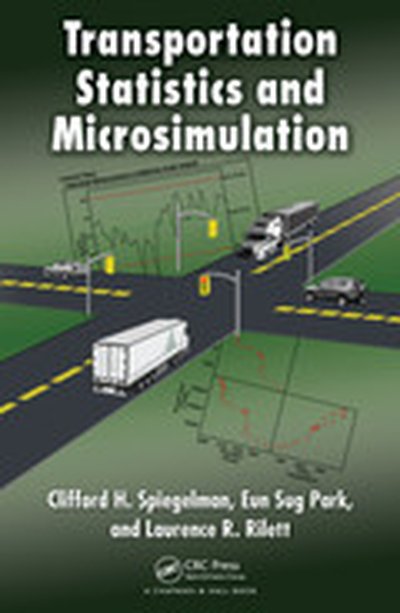
By discussing statistical concepts in the context of transportation planning and operations, this text provides the necessary background for making informed transportation-related decisions. It explains the why behind standard methods and uses real-world transportation examples and problems to illustrate key concepts. The book covers the statistical techniques most frequently employed by transportation and pavement professionals. To familiarize readers with the underlying theory and equations, it contains problems that can be solved using SAS's JMP package, which enables users to interactively explore and visualize data.
Explore the mysteries of Exploratory Factor Analysis (EFA) with SAS with an applied and user-friendly approach.
Exploratory Factor Analysis with SAS focuses solely on EFA, presenting a thorough and modern treatise on the different options, in accessible language targeted to the practicing statistician or researcher. This book provides real-world examples using real data, guidance for implementing best practices in the context of SAS, interpretation of results for end users, and it provides resources on the book's author page. Faculty teaching with this book can utilize these resources for their classes, and individual users can learn at their own pace, reinforcing their comprehension as they go.
Exploratory Factor Analysis with SAS reviews each of the major steps in EFA: data cleaning, extraction, rotation, interpretation, and replication. The last step, replication, is discussed less frequently in the context of EFA but, as we show, the results are of considerable use. Finally, two other practices that are commonly applied in EFA, estimation of factor scores and higher-order factors, are reviewed. Best practices are highlighted throughout the chapters.
A rudimentary working knowledge of SAS is required but no familiarity with EFA or with the SAS routines that are related to EFA is assumed.
Using SAS University Edition? You can use the code and data sets provided with this book. This helpful link will get you started: http://support.sas.com/publishing/import_ue.data.html
The SAS Programmer's PROC REPORT Handbook: Basic to Advanced Reporting Techniques is intended for programmers of all skill levels. Learn how to link multiple reports, add graphics and logos, and manipulate table of contents values to help refine your programs, macrotize where possible, troubleshoot easily, and get great-looking reports every time. From beginner to advanced, the examples in this book will help you harness all the power and capability of PROC REPORT.
With dozens of useful examples, this book is completely unique in three ways. First, this book describes the default behavior of table of contents nodes and labels, and how to change the nodes inside of PROC REPORT. The chapter also explains how to use PROC DOCUMENT in conjunction with PROC REPORT. Secondly, an entire chapter is dedicated to the troubleshooting of errors, warnings, and notes that are produced by PROC REPORT, including explanations of what generated the log message and how to avoid it. Third, the book explains how to preprocess your data in order to get the best output from PROC REPORT, and it explores reports that require multiple steps to create. Whether you work in banking/finance, pharmaceuticals, the health and life sciences, or government, this handbook is sure to be your new favorite reporting reference.
SAS users in the Health and Life Sciences industry need to create complex graphs to analyze biostatistics data and clinical data, and they need to submit drugs for approval to the FDA. Graphs used in the HLS industry are complex in nature and require innovative usage of the graphics features. Clinical Graphs Using SAS® provides the knowledge, the code, and real-world examples that enable you to create common clinical graphs using SAS graphics tools, such as the Statistical Graphics procedures and the Graph Template Language.
This book describes detailed processes to create many commonly used graphs in the Health and Life Sciences industry. For SAS® 9.3 and SAS® 9.4 it covers many improvements in the graphics features that are supported by the Statistical Graphics procedures and the Graph Template Language, many of which are a direct result of the needs of the Health and Life Sciences community. With the addition of new features in SAS® 9.4, these graphs become positively easy to create.
Topics covered include the usage of SGPLOT procedure, the SGPANEL procedure and the Graph Template Language for the creation of graphs like forest plots, swimmer plots, and survival plots.
The issue facing most SAS programmers today is not that data space has become bigger ("Big Data"), but that our programming problem space has become bigger. Through the power of DS2, this book shows programmers how easily they can manage complex problems using modular coding techniques.
The DS2 Procedure: SAS Programming Methods at Work outlines the basic structure of a DS2 program and teaches you how each component can help you address problems. The DS2 programming language in SAS 9.4 simplifies and speeds data preparation with user-defined methods, storing methods and attributes in shareable packages, and threaded execution on multicore symmetric multiprocessing (SMP) and massively parallel processing (MPP) machines. This book is intended for all BASE SAS programmers looking to learn about DS2; readers need only an introductory level of SAS to get started. Topics covered include introductions to Object Oriented Programming methods, DATA step programs, user-defined methods, predefined packages, and threaded processing.
Clear, practical IPSAS guidance, explanation, and examples Interpretation and Application of IPSAS provides practical guidance on the implementation and application of the International Public Sector Accounting Standards. This book brings readers up to date on the standards, and describes their proper interpretation and real-world application. Examples and mini-case studies clarify the standards' roles throughout, giving readers a better understanding of complex processes, especially where the IPSAS deviate from IFRS. Readers also gain insight into smoothly navigating the transition for a public sector entity, which is moving to either IPSAS under accrual basis of accounting or to cash accounting IPSAS, plus an overview of IPSAS adoption status and methods around the world. Global public sector accounting is highly diversified, resulting in ongoing moves to harmonise standards worldwide. The IPSAS are international standards that largely follow the IFRS model, but differ in some key areas and include standards in places where IFRS has none. This book provides complete guidance to IPSAS, with clear explanation and expert insight. Understand the meaning and role of each standard Apply the standards to real-world scenarios Manage the process of transition to IPSAS These standards are meant to be followed by all public sector entities, including national and regional governments and local authorities. They've been adopted by the UN, NATO, the European Commission, and others, and either have been or soon will be adopted in Malaysia, Switzerland, Spain, and more.
Provides a point of entry for understanding the basics of the SAS Intelligence Platform. It discusses the benefits of the SAS Intelligence Platform to businesses, describes the architecture, and provides an overview of each software component. This document can be used alone or as an introduction to the deployment and administration guides.
Aimed at econometricians who have completed at least one course in time series modeling, Multiple Time Series Modeling Using the SAS VARMAX Procedure will teach you the time series analytical possibilities that SAS offers today. Estimations of model parameters are now performed in a split second. For this reason, working through the identifications phase to find the correct model is unnecessary. Instead, several competing models can be estimated, and their fit can be compared instantaneously.
Consequently, for time series analysis, most of the Box and Jenkins analysis process for univariate series is now obsolete. The former days of looking at cross-correlations and pre-whitening are over, because distributed lag models are easily fitted by an automatic lag identification method. The same goes for bivariate and even multivariate models, for which PROC VARMAX models are automatically fitted. For these models, other interesting variations arise: Subjects like Granger causality testing, feedback, equilibrium, cointegration, and error correction are easily addressed by PROC VARMAX.
One problem with multivariate modeling is that it includes many parameters, making parameterizations unstable. This instability can be compensated for by application of Bayesian methods, which are also incorporated in PROC VARMAX. Volatility modeling has now become a standard part of time series modeling, because of the popularity of GARCH models. Both univariate and multivariate GARCH models are supported by PROC VARMAX. This feature is especially interesting for financial analytics in which risk is a focus.
This book teaches with examples. Readers who are analyzing a time series for the first time will find PROC VARMAX easy to use; readers who know more advanced theoretical time series models will discover that PROC VARMAX is a useful tool for advanced model building.
Master Data Analytics Hands-On by Solving Fascinating Problems You’ll Actually Enjoy! Harvard Business Review recently called data science “The Sexiest Job of the 21st Century.” It’s not just sexy: For millions of managers, analysts, and students who need to solve real business problems, it’s indispensable. Unfortunately, there’s been nothing easy about learning data science–until now. Getting Started with Data Science takes its inspiration from worldwide best-sellers like Freakonomics and Malcolm Gladwell’s Outliers: It teaches through a powerful narrative packed with unforgettable stories. Murtaza Haider offers informative, jargon-free coverage of basic theory and technique, backed with plenty of vivid examples and hands-on practice opportunities. Everything’s software and platform agnostic, so you can learn data science whether you work with R, Stata, SPSS, or SAS. Best of all, Haider teaches a crucial skillset most data science books ignore: how to tell powerful stories using graphics and tables. Every chapter is built around real research challenges, so you’ll always know why you’re doing what you’re doing. You’ll master data science by answering fascinating questions, such as: • Are religious individuals more or less likely to have extramarital affairs? • Do attractive professors get better teaching evaluations? • Does the higher price of cigarettes deter smoking? • What determines housing prices more: lot size or the number of bedrooms? • How do teenagers and older people differ in the way they use social media? • Who is more likely to use online dating services? • Why do some purchase iPhones and others Blackberry devices? • Does the presence of children influence a family’s spending on alcohol? For each problem, you’ll walk through defining your question and the answers you’ll need; exploring how others have approached similar challenges; selecting your data and methods; generating your statistics; organizing your report; and telling your story. Throughout, the focus is squarely on what matters most: transforming data into insights that are clear, accurate, and can be acted upon.
Describes the basics of using the SQL procedure and provides comprehensive reference information. The usage information includes retrieving data from single and multiple tables; selecting specific data from tables; subsetting, ordering, and summarizing data; updating tables; combining tables to create new tables and useful reports; performing queries on database management system (DBMS) tables; using PROC SQL with the SAS macro facility; and debugging and optimizing PROC SQL code. The reference information includes statements, dictionary components, and system options.
Students and instructors of statistics courses using SAS University Edition will welcome this book. Learning fundamental statistics is essential to solving problems with SAS. Essential Statistics Using SAS University Edition demonstrates how to use SAS University Edition to apply a variety of statistical methodologies, from the simple to the not-so-simple, to a range of data sets. Learn how to apply the appropriate statistical method to answer a particular question about a data set, and correctly interpret the numerical results that you obtain. SAS University Edition users who are new to SAS or who need a refresher course will benefit from the statistics overview and topics, such as multiple linear regression, logistic regression, and Poisson regression.
Get the tools you need to use SAS® in clinical trial design!
Unique and multifaceted, Modern Approaches to Clinical Trials Using SAS: Classical, Adaptive, and Bayesian Methods, edited by Sandeep M. Menon and Richard C. Zink, thoroughly covers several domains of modern clinical trial design: classical, group sequential, adaptive, and Bayesian methods that are applicable to and widely used in various phases of pharmaceutical development. Written for biostatisticians, pharmacometricians, clinical developers, and statistical programmers involved in the design, analysis, and interpretation of clinical trials, as well as students in graduate and postgraduate programs in statistics or biostatistics, the book touches on a wide variety of topics, including dose-response and dose-escalation designs; sequential methods to stop trials early for overwhelming efficacy, safety, or futility; Bayesian designs that incorporate historical data; adaptive sample size re-estimation; adaptive randomization to allocate subjects to more effective treatments; and population enrichment designs. Methods are illustrated using clinical trials from diverse therapeutic areas, including dermatology, endocrinology, infectious disease, neurology, oncology, and rheumatology. Individual chapters are authored by renowned contributors, experts, and key opinion leaders from the pharmaceutical/medical device industry or academia. Numerous real-world examples and sample SAS code enable users to readily apply novel clinical trial design and analysis methodologies in practice.
Contains the complete reference for all Base SAS procedures. Provides information about what each procedure does and, if relevant, the kind of output that it produces.
This guide explains how to apply health economic evaluation techniques to both clinical trial and non-clinical trial data. Through a simple, applied approach using examples and SAS software, the book helps statisticians and researchers in health economics assess cost-effectiveness. It covers trial design, case report form design, quality of life measures, sample sizes, submissions to regulatory authorities for reimbursement, Markov models, cohort models, and decision trees. Examples and case studies are provided at the end of each chapter.