talk-data.com talk-data.com

Event

O'Reilly Data Science Books

2013-08-09 – 2026-02-25 Oreilly Visit website ↗

Activities tracked

2118

Collection of O'Reilly books on Data Science.

Sessions & talks

Showing 1376–1400 of 2118 · Newest first

Search within this event →
Predictive Analytics and Data Mining

Put Predictive Analytics into ActionLearn the basics of Predictive Analysis and Data Mining through an easy to understand conceptual framework and immediately practice the concepts learned using the open source RapidMiner tool. Whether you are brand new to Data Mining or working on your tenth project, this book will show you how to analyze data, uncover hidden patterns and relationships to aid important decisions and predictions. Data Mining has become an essential tool for any enterprise that collects, stores and processes data as part of its operations. This book is ideal for business users, data analysts, business analysts, business intelligence and data warehousing professionals and for anyone who wants to learn Data Mining.You’ll be able to:1. Gain the necessary knowledge of different data mining techniques, so that you can select the right technique for a given data problem and create a general purpose analytics process.2. Get up and running fast with more than two dozen commonly used powerful algorithms for predictive analytics using practical use cases.3. Implement a simple step-by-step process for predicting an outcome or discovering hidden relationships from the data using RapidMiner, an open source GUI based data mining tool Predictive analytics and Data Mining techniques covered: Exploratory Data Analysis, Visualization, Decision trees, Rule induction, k-Nearest Neighbors, Naïve Bayesian, Artificial Neural Networks, Support Vector machines, Ensemble models, Bagging, Boosting, Random Forests, Linear regression, Logistic regression, Association analysis using Apriori and FP Growth, K-Means clustering, Density based clustering, Self Organizing Maps, Text Mining, Time series forecasting, Anomaly detection and Feature selection. Implementation files can be downloaded from the book companion site at www.LearnPredictiveAnalytics.com Demystifies data mining concepts with easy to understand language Shows how to get up and running fast with 20 commonly used powerful techniques for predictive analysis Explains the process of using open source RapidMiner tools Discusses a simple 5 step process for implementing algorithms that can be used for performing predictive analytics Includes practical use cases and examples
Mastering QlikView

"Mastering QlikView" is your advanced guide to unlocking the potential of business intelligence through QlikView. Dive deep into powerful data modeling, performance tuning, and visualization techniques, crafted to empower you in making data-driven decisions and optimizing your BI workflows. What this Book will help me do Understand and implement advanced QlikView data modeling techniques for efficient analysis. Master performance tuning methods to ensure your QlikView applications are fast and scalable. Apply industry best practices for ETL and data loading using QVDs and other QlikView features. Create advanced visualizations and dashboards that distill analytics into actionable insights. Leverage metadata management tools and governance techniques to maintain data integrity and consistency. Author(s) Stephen Redmond, an expert in business intelligence and data visualization, brings years of hands-on experience with QlikView and Qlik Sense. As a seasoned developer and thought leader, Stephen specializes in distilling complex BI methodologies into practical skills. His approachable style makes advanced topics accessible and engaging to readers. Who is it for? This book is tailored for business application developers and system analysts already familiar with QlikView. Ideal for professionals seeking to enhance their BI proficiency with advanced QlikView capabilities. If you're aiming to solve complex data challenges or refine your visualization skills, this book provides the expert guidance to take your knowledge further.

Statistics: An Introduction Using R, 2nd Edition

"...I know of no better book of its kind..." (Journal of the Royal Statistical Society, Vol 169 (1), January 2006) A revised and updated edition of this bestselling introductory textbook to statistical analysis using the leading free software package R This new edition of a bestselling title offers a concise introduction to a broad array of statistical methods, at a level that is elementary enough to appeal to a wide range of disciplines. Step-by-step instructions help the non-statistician to fully understand the methodology. The book covers the full range of statistical techniques likely to be needed to analyse the data from research projects, including elementary material like t--tests and chi--squared tests, intermediate methods like regression and analysis of variance, and more advanced techniques like generalized linear modelling. Includes numerous worked examples and exercises within each chapter.

Text Mining and Analysis

Big data: It's unstructured, it's coming at you fast, and there's lots of it. In fact, the majority of big data is text-oriented, thanks to the proliferation of online sources such as blogs, emails, and social media.

However, having big data means little if you can't leverage it with analytics. Now you can explore the large volumes of unstructured text data that your organization has collected with Text Mining and Analysis: Practical Methods, Examples, and Case Studies Using SAS.

This hands-on guide to text analytics using SAS provides detailed, step-by-step instructions and explanations on how to mine your text data for valuable insight. Through its comprehensive approach, you'll learn not just how to analyze your data, but how to collect, cleanse, organize, categorize, explore, and interpret it as well. Text Mining and Analysis also features an extensive set of case studies, so you can see examples of how the applications work with real-world data from a variety of industries.

Text analytics enables you to gain insights about your customers' behaviors and sentiments. Leverage your organization's text data, and use those insights for making better business decisions with Text Mining and Analysis.

This book is part of the SAS Press program.

Multiple Factor Analysis by Example Using R

Multiple factor analysis (MFA) enables users to analyze tables of individuals and variables in which the variables are structured into quantitative, qualitative, or mixed groups. Written by the co-developer of the methodology, this book brings together the theoretical and methodological aspects of MFA. It also covers principal component analysis, multiple correspondence analysis, factor analysis for mixed data, hierarchical MFA, and more. The book also includes examples of applications and details on how to implement MFA using an R package, with the data and R scripts available online.

Correspondence Analysis: Theory, Practice and New Strategies

A comprehensive overview of the internationalisation of correspondence analysis Correspondence Analysis: Theory, Practice and New Strategies examines the key issues of correspondence analysis, and discusses the new advances that have been made over the last 20 years. The main focus of this book is to provide a comprehensive discussion of some of the key technical and practical aspects of correspondence analysis, and to demonstrate how they may be put to use. Particular attention is given to the history and mathematical links of the developments made. These links include not just those major contributions made by researchers in Europe (which is where much of the attention surrounding correspondence analysis has focused) but also the important contributions made by researchers in other parts of the world. Key features include: A comprehensive international perspective on the key developments of correspondence analysis. Discussion of correspondence analysis for nominal and ordinal categorical data. Discussion of correspondence analysis of contingency tables with varying association structures (symmetric and non-symmetric relationship between two or more categorical variables). Extensive treatment of many of the members of the correspondence analysis family for two-way, three-way and multiple contingency tables. Correspondence Analysis offers a comprehensive and detailed overview of this topic which will be of value to academics, postgraduate students and researchers wanting a better understanding of correspondence analysis. Readers interested in the historical development, internationalisation and diverse applicability of correspondence analysis will also find much to enjoy in this book.

Introduction to Mixed Modelling: Beyond Regression and Analysis of Variance, 2nd Edition

Mixed modelling is very useful, and easier than you think! Mixed modelling is now well established as a powerful approach to statistical data analysis. It is based on the recognition of random-effect terms in statistical models, leading to inferences and estimates that have much wider applicability and are more realistic than those otherwise obtained. Introduction to Mixed Modelling leads the reader into mixed modelling as a natural extension of two more familiar methods, regression analysis and analysis of variance. It provides practical guidance combined with a clear explanation of the underlying concepts. Like the first edition, this new edition shows diverse applications of mixed models, provides guidance on the identification of random-effect terms, and explains how to obtain and interpret best linear unbiased predictors (BLUPs). It also introduces several important new topics, including the following: Use of the software SAS, in addition to GenStat and R. Meta-analysis and the multiple testing problem. The Bayesian interpretation of mixed models. Including numerous practical exercises with solutions, this book provides an ideal introduction to mixed modelling for final year undergraduate students, postgraduate students and professional researchers. It will appeal to readers from a wide range of scientific disciplines including statistics, biology, bioinformatics, medicine, agriculture, engineering, economics, archaeology and geography. Praise for the first edition: "One of the main strengths of the text is the bridge it provides between traditional analysis of variance and regression models and the more recently developed class of mixed models...Each chapter is well-motivated by at least one carefully chosen example...demonstrating the broad applicability of mixed models in many different disciplines...most readers will likely learn something new, and those previously unfamiliar with mixed models will obtain a solid foundation on this topic."— Kerrie Nelson University of South Carolina, in American Statistician, 2007

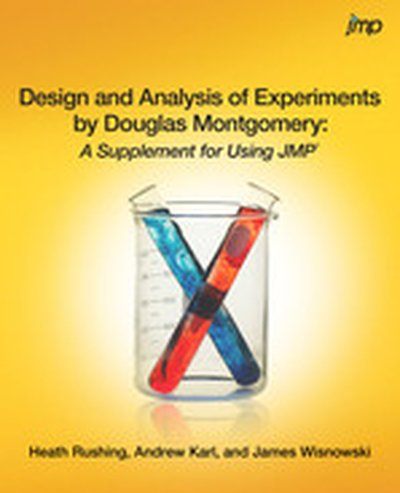
Design and Analysis of Experiments by Douglas Montgomery: A Supplement for Using JMP

With a growing number of scientists and engineers using JMP software for design of experiments, there is a need for an example-driven book that supports the most widely used textbook on the subject, Design and Analysis of Experiments by Douglas C. Montgomery. Design and Analysis of Experiments by Douglas Montgomery: A Supplement for Using JMP meets this need and demonstrates all of the examples from the Montgomery text using JMP. In addition to scientists and engineers, undergraduate and graduate students will benefit greatly from this book.
While users need to learn the theory, they also need to learn how to implement this theory efficiently on their academic projects and industry problems. In this first book of its kind using JMP software, Rushing, Karl and Wisnowski demonstrate how to design and analyze experiments for improving the quality, efficiency, and performance of working systems using JMP. Topics include JMP software, two-sample t-test, ANOVA, regression, design of experiments, blocking, factorial designs, fractional-factorial designs, central composite designs, Box-Behnken designs, split-plot designs, optimal designs, mixture designs, and 2 k factorial designs. JMP platforms used include Custom Design, Screening Design, Response Surface Design, Mixture Design, Distribution, Fit Y by X, Matched Pairs, Fit Model, and Profiler.
With JMP software, Montgomery’s textbook, and Design and Analysis of Experiments by Douglas Montgomery: A Supplement for Using JMP, users will be able to fit the design to the problem, instead of fitting the problem to the design. This book is part of the SAS Press program.

Fixed Effects Regression Methods for Longitudinal Data Using SAS

Fixed Effects Regression Methods for Longitudinal Data Using SAS, written by Paul Allison, is an invaluable resource for all researchers interested in adding fixed effects regression methods to their tool kit of statistical techniques. First introduced by economists, fixed effects methods are gaining widespread use throughout the social sciences. Designed to eliminate major biases from regression models with multiple observations (usually longitudinal) for each subject (usually a person), fixed effects methods essentially offer control for all stable characteristics of the subjects, even characteristics that are difficult or impossible to measure. This straightforward and thorough text shows you how to estimate fixed effects models with several SAS procedures that are appropriate for different kinds of outcome variables. The theoretical background of each model is explained, and the models are then illustrated with detailed examples using real data. The book contains thorough discussions of the following uses of SAS procedures: PROC GLM for estimating fixed effects linear models for quantitative outcomes, PROC LOGISTIC for estimating fixed effects logistic regression models, PROC PHREG for estimating fixed effects Cox regression models for repeated event data, PROC GENMOD for estimating fixed effects Poisson regression models for count data, and PROC CALIS for estimating fixed effects structural equation models. To gain the most benefit from this book, readers should be familiar with multiple linear regression, have practical experience using multiple regression on real data, and be comfortable interpreting the output from a regression analysis. An understanding of logistic regression and Poisson regression is a plus. Some experience with SAS is helpful, but not required. This book is part of the SAS Press program.

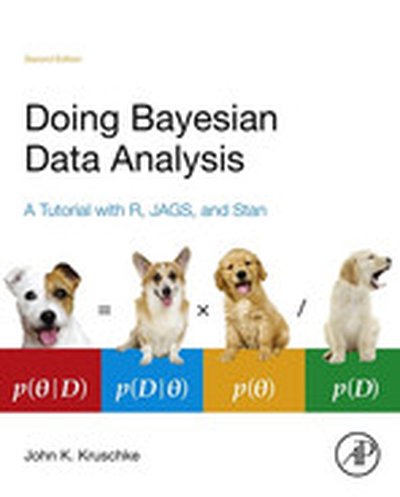
Doing Bayesian Data Analysis, 2nd Edition

Doing Bayesian Data Analysis: A Tutorial with R, JAGS, and Stan, Second Edition provides an accessible approach for conducting Bayesian data analysis, as material is explained clearly with concrete examples. Included are step-by-step instructions on how to carry out Bayesian data analyses in the popular and free software R and WinBugs, as well as new programs in JAGS and Stan. The new programs are designed to be much easier to use than the scripts in the first edition. In particular, there are now compact high-level scripts that make it easy to run the programs on your own data sets. The book is divided into three parts and begins with the basics: models, probability, Bayes’ rule, and the R programming language. The discussion then moves to the fundamentals applied to inferring a binomial probability, before concluding with chapters on the generalized linear model. Topics include metric-predicted variable on one or two groups; metric-predicted variable with one metric predictor; metric-predicted variable with multiple metric predictors; metric-predicted variable with one nominal predictor; and metric-predicted variable with multiple nominal predictors. The exercises found in the text have explicit purposes and guidelines for accomplishment. This book is intended for first-year graduate students or advanced undergraduates in statistics, data analysis, psychology, cognitive science, social sciences, clinical sciences, and consumer sciences in business. Accessible, including the basics of essential concepts of probability and random sampling Examples with R programming language and JAGS software Comprehensive coverage of all scenarios addressed by non-Bayesian textbooks: t-tests, analysis of variance (ANOVA) and comparisons in ANOVA, multiple regression, and chi-square (contingency table analysis) Coverage of experiment planning R and JAGS computer programming code on website Exercises have explicit purposes and guidelines for accomplishment Provides step-by-step instructions on how to conduct Bayesian data analyses in the popular and free software R and WinBugs

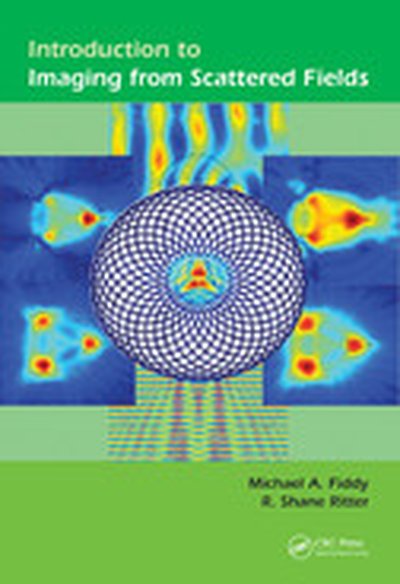
Introduction to Imaging from Scattered Fields

Obtain the Best Estimate of a Strongly Scattering Object from Limited Scattered Field Data Introduction to Imaging from Scattered Fields presents an overview of the challenging problem of determining information about an object from measurements of the field scattered from that object. It covers widely used approaches to recover information about the objects and examines the assumptions made a priori about the object and the consequences of recovering object information from limited numbers of noisy measurements of the scattered fields. The book explores the strengths and weaknesses of using inverse methods for weak scattering. These methods, including Fourier-based signal and image processing techniques, allow more straightforward inverse algorithms to be exploited based on a simple mapping of scattered field data. The authors also discuss their recent approach based on a nonlinear filtering step in the inverse algorithm. They illustrate how to use this algorithm through numerous two-dimensional electromagnetic scattering examples. MATLAB® code is provided to help readers quickly apply the approach to a wide variety of inverse scattering problems. In later chapters of the book, the authors focus on important and often forgotten overarching constraints associated with exploiting inverse scattering algorithms. They explain how the number of degrees of freedom associated with any given scattering experiment can be found and how this allows one to specify a minimum number of data that should be measured. They also describe how the prior discrete Fourier transform (PDFT) algorithm helps in estimating the properties of an object from scattered field measurements. The PDFT restores stability and improves estimates of the object even with severely limited data (provided it is sufficient to meet a criterion based on the number of degrees of freedom). Suitable for graduate students and researchers working on medical, geophysical, defense, and industrial inspection inverse problems, this self-contained book provides the necessary details for readers to design improved experiments and process measured data more effectively. It shows how to obtain the best estimate of a strongly scattering object from limited scattered field data.

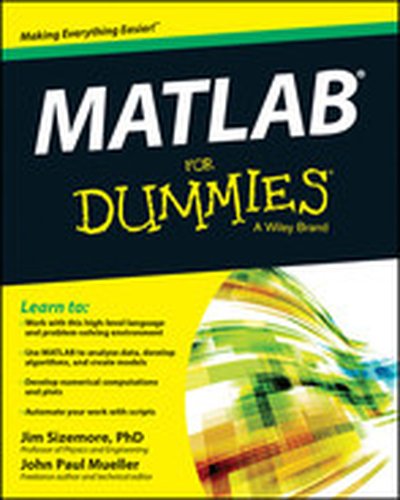
MATLAB For Dummies

Plot graphs, solve equations, and write code in a flash! If you work in a STEM field, chances are you'll be using MATLAB on a daily basis. MATLAB is a popular and powerful computational tool and this book provides everything you need to start manipulating and plotting your data. MATLAB has rapidly become the premier data tool, and MATLAB For Dummies is a comprehensive guide to the fundamentals. MATLAB For Dummies guides you through this complex computational language from installation to visualization to automation. Learn MATLAB's language fundamentals including syntax, operators, and data types Understand how to use the most important window in MATLAB - the Command Window Get the basics of linear algebra to get up and running with vectors, matrices, and hyperspace Automate your work with programming scripts and functions Plot graphs in 2D and 3D to visualize your data Includes a handy guide for MATLAB's functions and plotting routines MATLAB is an essential part of the analysis arsenal and MATLAB For Dummies provides clear, thorough guidance to get the most out of your data.

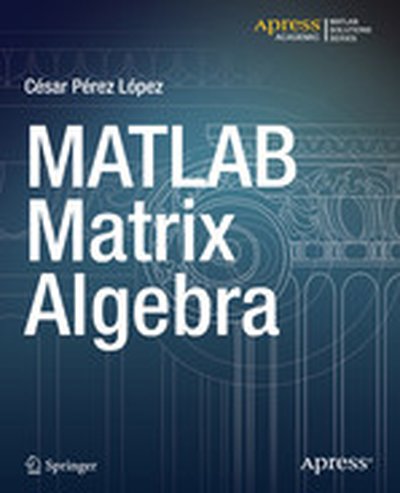
MATLAB Matrix Algebra

" MATLAB is a high-level language and environment for numerical computation, visualization, and programming. Using MATLAB, you can analyze data, develop algorithms, and create models and applications. The language, tools, and built-in math functions enable you to explore multiple approaches and reach a solution faster than with spreadsheets or traditional programming languages, such as C/C++ or Java. MATLAB Matrix Algebra introduces you to the MATLAB language with practical hands-on instructions and results, allowing you to quickly achieve your goals. Starting with a look at symbolic and numeric variables, with an emphasis on vector and matrix variables, you will go on to examine functions and operations that support vectors and matrices as arguments, including those based on analytic parent functions. Computational methods for finding eigenvalues and eigenvectors of matrices are detailed, leading to various matrix decompositions. Applications such as change of bases, the classification of quadratic forms and how to solve systems of linear equations are described, with numerous examples. A section is dedicated to sparse matrices and other types of special matrices. In addition to its treatment of matrices, you will also learn how MATLAB can be used to work with arrays, lists, tables, sequences and sets."

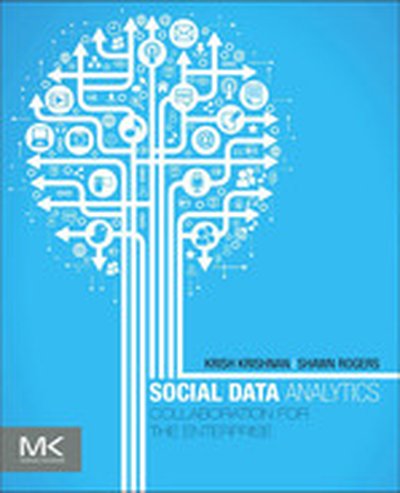
Social Data Analytics

Social Data Analytics is the first practical guide for professionals who want to employ social data for analytics and business intelligence (BI). This book provides a comprehensive overview of the technologies and platforms and shows you how to access and analyze the data. You'll explore the five major types of social data and learn from cases and platform examples to help you make the most of sentiment, behavioral, social graph, location, and rich media data. A four-step approach to the social BI process will help you access, evaluate, collaborate, and share social data with ease. You'll learn everything you need to know to monitor social media and get an overview of the leading vendors in a crowded space of BI applications. By the end of this book, you will be well prepared for your organization’s next social data analytics project. Provides foundational understanding of new and emerging technologies—social data, collaboration, big data, advanced analytics Includes case studies and practical examples of success and failures Will prepare you to lead projects and advance initiatives that will benefit you and your organization

Analysis of Observational Health Care Data Using SAS

This book guides researchers in performing and presenting high-quality analyses of all kinds of non-randomized studies, including analyses of observational studies, claims database analyses, assessment of registry data, survey data, pharmaco-economic data, and many more applications. The text is sufficiently detailed to provide not only general guidance, but to help the researcher through all of the standard issues that arise in such analyses. Just enough theory is included to allow the reader to understand the pros and cons of alternative approaches and when to use each method. The numerous contributors to this book illustrate, via real-world numerical examples and SAS code, appropriate implementations of alternative methods. The end result is that researchers will learn how to present high-quality and transparent analyses that will lead to fair and objective decisions from observational data.

This book is part of the SAS Press program.

MATLAB Optimization Techniques

MATLAB is a high-level language and environment for numerical computation, visualization, and programming. Using MATLAB, you can analyze data, develop algorithms, and create models and applications. The language, tools, and built-in math functions enable you to explore multiple approaches and reach a solution faster than with spreadsheets or traditional programming languages, such as C/C++ or Java. MATLAB Optimization Techniques introduces you to the MATLAB language with practical hands-on instructions and results, allowing you to quickly achieve your goals. It begins by introducing the MATLAB environment and the structure of MATLAB programming before moving on to the mathematics of optimization. The central part of the book is dedicated to MATLABs Optimization Toolbox, which implements state-of-the-art algorithms for solving multiobjective problems, non-linear minimization with boundary conditions and restrictions, minimax optimization, semi-infinitely constrained minimization and linear and quadratic programming. A wide range of exercises and examples are included, illustrating the most widely used optimization methods.
Behind Every Good Decision

So you’re not a numbers person? No worries! You say that you can’t understand how to read, let alone implement, these complex software programs that crunch all the data and spit out . . . more data? Not a problem either! There is a costly misconception in business today--that the only data that matters is BIG data, and that elaborate tools and data scientists are required to extract any practical information. But actually, nothing could be further from the truth. In , authors and analytics experts Piyanka Jain and Puneet Sharma demystify the process of business analytics and demonstrate how professionals at any level can take the information at their disposal and in only five simple steps--using only Excel as a tool!--make the decision necessary to increase revenue, decrease costs, improve product, or whatever else is being asked of them at that time. Readers will learn how to: Behind Every Good Decision Clarify the business question Lay out a hypothesis-driven plan Pull relevant data Convert it to insights Make decisions that make an impact Packed with examples and exercises, this refreshingly accessible book explains the four fundamental analytic techniques that can help solve a surprising 80 percent of all business problems. It doesn’t take a numbers person to know that is a formula you need!

Experimental Design

This book is a concise and innovative book that gives a complete presentation of the design and analysis of experiments in approximately one half the space of competing books. With only the modest prerequisite of a basic (non-calculus) statistics course, this text is appropriate for the widest possible audience. Two procedures are generally used to analyze experimental design data—analysis of variance (ANOVA) and regression analysis. Because ANOVA is more intuitive, this book devotes most of its first three chapters to showing how to use ANOVA to analyze balanced (equal sample size) experimental design data. The text first discusses regression analysis at the end of Chapter 2, where regression is used to analyze data that cannot be analyzed by ANOVA: unbalanced (unequal sample size) data from two-way factorials and data from incomplete block designs. Regression is then used again in Chapter 4 to analyze data resulting from two-level fractional factorial and block confounding experiments.

Service Fanatics: How to Build Superior Patient Experience the Cleveland Clinic Way

THE PROVEN MODEL FOR DRIVING POSITIVE ORGANIZATIONAL CHANGE Cleveland Clinic has long been recognized for driving some of the best clinical outcomes in the nation, but it was not always a leader in patient experience. There was atime when this revered organization ranked among the lowest in the country in this area. Within ten years, however, it had climbed to among the highest and has emerged as the thought leader in the space. How did Cleveland Clinic turn itself around so effectively and so quickly? More important, how can you do the same with your organization? In gripping, visceral, on-the ground fashion, Service Fanatics reveals the strategies and tactics the Clinic applied to become one of today's leading patient-experience healthcare organizations--methods that seamlessly translate to any business seeking to improveits customer experience. This strategic guide covers: How the Clinic's leaders redefined the concept of patient experience and developed a strategy to improve it Critical lessons learned regarding organization, recruitment, training, and measuring service excellence Ways in which the Clinic aligned its entire workforce around its Patients First strategy How leaders improved the critical element of physician communication Rather than view patients simply as sick people who need treatment, Cleveland Clinic sees them also as important stakeholders in the organization's success. Patients are customers--who desire, pay for, and deserve the best possible care and experience during what is often a challenging time in their lives. Featuring customer service case studies, as well as invaluable insight from C-level executives at top corporations in various industries, Service Fanatics provides actionable lessons for any manager and business leader beyond healthcare. Whether you run a healthcare institution, nonprofit, or for-profit business, Service Fanatics will help you create the kind of customer experience that promises to transform your organization into an industry powerhouse.

Simulation Technologies in Networking and Communications

Simulation is a widely used mechanism for validating the theoretical models of networking and communication systems. Although the claims made based on simulations are considered to be reliable, how reliable they really are is best determined with real-world implementation trials. Simulation Technologies in Networking and Communications: Selecting the Best Tool for the Test Considers superefficient Monte Carlo simulations Describes how to simulate and evaluate multicast routing algorithms Covers simulation tools for cloud computing and broadband passive optical networks Reports on recent developments in simulation tools for WSNs Examines modeling and simulation of vehicular networks The book compiles expert perspectives about the simulation of various networking and communications technologies. These experts review and evaluate popular simulation modeling tools and recommend the best tools for your specific tests. They also explain how to determine when theoretical modeling would be preferred over simulation.

Data-Driven Healthcare: How Analytics and BI are Transforming the Industry

Healthcare is changing, and data is the catalyst Data is taking over in a powerful way, and it's revolutionizing the healthcare industry. You have more data available than ever before, and applying the right analytics can spur growth. Benefits extend to patients, providers, and board members, and the technology can make centralized patient management a reality. Despite the potential for growth, many in the industry and government are questioning the value of data in health care, wondering if it's worth the investment. Data-Driven Healthcare: How Analytics and BI are Transforming the Industry tackles the issue and proves why BI is not only worth it, but necessary for industry advancement. Healthcare BI guru Laura Madsen challenges the notion that data have little value in healthcare, and shows how BI can ease regulatory reporting pressures and streamline the entire system as it evolves. Madsen illustrates how a data-driven organization is created, and how it can transform the industry. Learn why BI is a boon to providers Create powerful infographics to communicate data more effectively Find out how Big Data has transformed other industries, and how it applies to healthcare Data-Driven Healthcare: How Analytics and BI are Transforming the Industry provides tables, checklists, and forms that allow you to take immediate action in implementing BI in your organization. You can't afford to be behind the curve. The industry is moving on, with or without you. Data-Driven Healthcare: How Analytics and BI are Transforming the Industry is your guide to utilizing data to advance your operation in an industry where data-fueled growth will be the new norm.

Probability and Stochastic Processes

A comprehensive and accessible presentation of probability and stochastic processes with emphasis on key theoretical concepts and real-world applications With a sophisticated approach, Probability and Stochastic Processes successfully balances theory and applications in a pedagogical and accessible format. The book's primary focus is on key theoretical notions in probability to provide a foundation for understanding concepts and examples related to stochastic processes. Organized into two main sections, the book begins by developing probability theory with topical coverage on probability measure; random variables; integration theory; product spaces, conditional distribution, and conditional expectations; and limit theorems. The second part explores stochastic processes and related concepts including the Poisson process, renewal processes, Markov chains, semi-Markov processes, martingales, and Brownian motion. Featuring a logical combination of traditional and complex theories as well as practices, Probability and Stochastic Processes also includes: Multiple examples from disciplines such as business, mathematical finance, and engineering Chapter-by-chapter exercises and examples to allow readers to test their comprehension of the presented material A rigorous treatment of all probability and stochastic processes concepts An appropriate textbook for probability and stochastic processes courses at the upper-undergraduate and graduate level in mathematics, business, and electrical engineering, Probability and Stochastic Processes is also an ideal reference for researchers and practitioners in the fields of mathematics, engineering, and finance.

An Introduction to Probability and Statistical Inference, 2nd Edition

An Introduction to Probability and Statistical Inference, Second Edition, guides you through probability models and statistical methods and helps you to think critically about various concepts. Written by award-winning author George Roussas, this book introduces readers with no prior knowledge in probability or statistics to a thinking process to help them obtain the best solution to a posed question or situation. It provides a plethora of examples for each topic discussed, giving the reader more experience in applying statistical methods to different situations. This text contains an enhanced number of exercises and graphical illustrations where appropriate to motivate the reader and demonstrate the applicability of probability and statistical inference in a great variety of human activities. Reorganized material is included in the statistical portion of the book to ensure continuity and enhance understanding. Each section includes relevant proofs where appropriate, followed by exercises with useful clues to their solutions. Furthermore, there are brief answers to even-numbered exercises at the back of the book and detailed solutions to all exercises are available to instructors in an Answers Manual. This text will appeal to advanced undergraduate and graduate students, as well as researchers and practitioners in engineering, business, social sciences or agriculture. Content, examples, an enhanced number of exercises, and graphical illustrations where appropriate to motivate the reader and demonstrate the applicability of probability and statistical inference in a great variety of human activities Reorganized material in the statistical portion of the book to ensure continuity and enhance understanding A relatively rigorous, yet accessible and always within the prescribed prerequisites, mathematical discussion of probability theory and statistical inference important to students in a broad variety of disciplines Relevant proofs where appropriate in each section, followed by exercises with useful clues to their solutions Brief answers to even-numbered exercises at the back of the book and detailed solutions to all exercises available to instructors in an Answers Manual

The Synoptic Problem and Statistics

This book lays the foundations for a new area of interdisciplinary research that uses statistical techniques to investigate the synoptic problem in New Testament studies, which concerns the relationships between the Gospels of Matthew, Mark, and Luke. There are potential applications of the techniques to study other sets of similar documents. The book presents core statistical material on the use of hidden Markov models to analyze binary time series. The binary time series data sets and R code used are available on the author's website.

Mathematical Statistics for Applied Econometrics

An Introductory Econometrics Text Mathematical Statistics for Applied Econometrics covers the basics of statistical inference in support of a subsequent course on classical econometrics. The book shows students how mathematical statistics concepts form the basis of econometric formulations. It also helps them think about statistics as more than a toolbox of techniques. Uses Computer Systems to Simplify Computation The text explores the unifying themes involved in quantifying sample information to make inferences. After developing the necessary probability theory, it presents the concepts of estimation, such as convergence, point estimators, confidence intervals, and hypothesis tests. The text then shifts from a general development of mathematical statistics to focus on applications particularly popular in economics. It delves into matrix analysis, linear models, and nonlinear econometric techniques. Students Understand the Reasons for the Results Avoiding a cookbook approach to econometrics, this textbook develops students’ theoretical understanding of statistical tools and econometric applications. It provides them with the foundation for further econometric studies.