talk-data.com talk-data.com

Event

O'Reilly Data Science Books

2013-08-09 – 2026-02-25 Oreilly Visit website ↗

Activities tracked

326

Collection of O'Reilly books on Data Science.

Filtering by: data-science-tools ×

Sessions & talks

Showing 126–150 of 326 · Newest first

Search within this event →
Data Analysis with R, Second Edition - Second Edition

"Data Analysis with R, Second Edition" is your ultimate guide to mastering data analysis in R, encompassing everything from foundational concepts to advanced techniques. You will learn to manipulate, analyze, and visualize data effectively, applying cutting-edge R packages like ggplot2 and dplyr. Through rich examples, this comprehensive book thoroughly prepares you to tackle real-world analytical challenges. What this Book will help me do Understand foundational statistical reasoning and sampling methods. Perform hypothesis testing and apply Bayesian methods to data analysis. Build and evaluate regression, classification, and time series models. Handle messy and missing data using advanced R techniques and methods. Optimize performance through parallel processing, Rcpp, and efficient data manipulation. Author(s) Chris Burnett is an experienced data analyst with over 15 years of expertise harnessing R for insights. A passionate advocate for accessible computing, Chris integrates practical exercises and rich examples to demystify complex analytical techniques. Their experience and dedication shine in this approachable yet detailed guide. Who is it for? This book is ideal for budding and professional data analysts or data scientists who wish to deepen their expertise in R. It suits learners with a basic understanding of R who aim to extend their proficiency in applied data analysis. The guide provides significant value for professionals aiming to implement effective analytical models. Readers seeking to grow within the analytics sector will find this resource indispensable.
HBR Guide to Data Analytics Basics for Managers (HBR Guide Series)

Don't let a fear of numbers hold you back. Today's business environment brings with it an onslaught of data. Now more than ever, managers must know how to tease insight from data--to understand where the numbers come from, make sense of them, and use them to inform tough decisions. How do you get started? Whether you're working with data experts or running your own tests, you'll find answers in the HBR Guide to Data Analytics Basics for Managers. This book describes three key steps in the data analysis process, so you can get the information you need, study the data, and communicate your findings to others. You'll learn how to: Identify the metrics you need to measure Run experiments and A/B tests Ask the right questions of your data experts Understand statistical terms and concepts Create effective charts and visualizations Avoid common mistakes

Business Case Analysis with R: Simulation Tutorials to Support Complex Business Decisions

This tutorial teaches you how to use the statistical programming language R to develop a business case simulation and analysis. It presents a methodology for conducting business case analysis that minimizes decision delay by focusing stakeholders on what matters most and suggests pathways for minimizing the risk in strategic and capital allocation decisions. Business case analysis, often conducted in spreadsheets, exposes decision makers to additional risks that arise just from the use of the spreadsheet environment. R has become one of the most widely used tools for reproducible quantitative analysis, and analysts fluent in this language are in high demand. The R language, traditionally used for statistical analysis, provides a more explicit, flexible, and extensible environment than spreadsheets for conducting business case analysis. The main tutorial follows the case in which a chemical manufacturing company considers constructing a chemical reactor and production facility to bring a new compound to market. There are numerous uncertainties and risks involved, including the possibility that a competitor brings a similar product online. The company must determine the value of making the decision to move forward and where they might prioritize their attention to make a more informed and robust decision. While the example used is a chemical company, the analysis structure it presents can be applied to just about any business decision, from IT projects to new product development to commercial real estate. The supporting tutorials include the perspective of the founder of a professional service firm who wants to grow his business and a member of a strategic planning group in a biomedical device company who wants to know how much to budget in order to refine the quality of information about critical uncertainties that might affect the value of a chosen product development pathway. What You’ll Learn Set upa business case abstraction in an influence diagram to communicate the essence of the problem to other stakeholders Model the inherent uncertainties in the problem with Monte Carlo simulation using the R language Communicate the results graphically Draw appropriate insights from the results Develop creative decision strategies for thorough opportunity cost analysis Calculate the value of information on critical uncertainties between competing decision strategies to set the budget for deeper data analysis Construct appropriate information to satisfy the parameters for the Monte Carlo simulation when little or no empirical data are available Who This Book Is For Financial analysts, data practitioners, and risk/business professionals; also appropriate for graduate level finance, business, or data science students

SQL Server 2017 Machine Learning Services with R

Learn how to leverage SQL Server 2017 Machine Learning Services and the R programming language to create robust, efficient data analysis and machine learning solutions. This book provides actionable insights and practical examples to help you implement and manage database-oriented analytics and predictive modeling. What this Book will help me do Understand and use SQL Server 2017 Machine Learning Services integrated with R. Gain experience in installing, configuring, and maintaining R services in SQL Server. Create and operationalize predictive models using RevoScaleR and other R packages. Improve database solutions by incorporating advanced analytics techniques. Monitor and manage R-based services effectively for reliable production solutions. Author(s) Tomaž Kaštrun and None Koesmarno bring a wealth of expertise as practitioners and educators in data science and SQL Server technologies. They share their experience innovatively, making intricate subjects approachable. Their unified teaching method ensures readers can directly benefit from practical examples and real-world applications. Who is it for? This book is tailored for database administrators, data analysts, and data scientists eager to integrate R with SQL Server. It caters to professionals with varying levels of R experience who are looking to enhance their proficiency in database-oriented analytics. Readers will benefit most if they are motivated to design effective, data-driven solutions in SQL Server environments.

R Projects For Dummies

Make the most of R’s extensive toolset R Projects For Dummies offers a unique learn-by-doing approach. You will increase the depth and breadth of your R skillset by completing a wide variety of projects. By using R’s graphics, interactive, and machine learning tools, you’ll learn to apply R’s extensive capabilities in an array of scenarios. The depth of the project experience is unmatched by any other content online or in print. And you just might increase your statistics knowledge along the way, too! R is a free tool, and it’s the basis of a huge amount of work in data science. It's taking the place of costly statistical software that sometimes takes a long time to learn. One reason is that you can use just a few R commands to create sophisticated analyses. Another is that easy-to-learn R graphics enable you make the results of those analyses available to a wide audience. This book will help you sharpen your skills by applying them in the context of projects with R, including dashboards, image processing, data reduction, mapping, and more. Appropriate for R users at all levels Helps R programmers plan and complete their own projects Focuses on R functions and packages Shows how to carry out complex analyses by just entering a few commands If you’re brand new to R or just want to brush up on your skills, R Projects For Dummies will help you complete your projects with ease.

Interval Finite Element Method with MATLAB

Interval Finite Element Method with MATLAB provides a thorough introduction to an effective way of investigating problems involving uncertainty using computational modeling. The well-known and versatile Finite Element Method (FEM) is combined with the concept of interval uncertainties to develop the Interval Finite Element Method (IFEM). An interval or stochastic environment in parameters and variables is used in place of crisp ones to make the governing equations interval, thereby allowing modeling of the problem. The concept of interval uncertainties is systematically explained. Several examples are explored with IFEM using MATLAB on topics like spring mass, bar, truss and frame. Provides a systematic approach to understanding the interval uncertainties caused by vague or imprecise data Describes the interval finite element method in detail Gives step-by-step instructions for how to use MATLAB code for IFEM Provides a range of examples of IFEM in use, with accompanying MATLAB codes

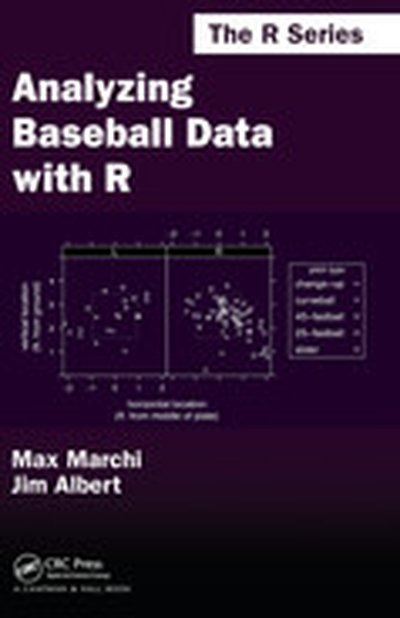
Analyzing Baseball Data with R

With its flexible capabilities and open-source platform, R has become a major tool for analyzing detailed, high-quality baseball data. Analyzing Baseball Data with R provides an introduction to R for sabermetricians, baseball enthusiasts, and students interested in exploring the rich sources of baseball data. It equips readers with the necessary skills and software tools to perform all of the analysis steps, from gathering the datasets and entering them in a convenient format to visualizing the data via graphs to performing a statistical analysis. The authors first present an overview of publicly available baseball datasets and a gentle introduction to the type of data structures and exploratory and data management capabilities of R. They also cover the traditional graphics functions in the base package and introduce more sophisticated graphical displays available through the lattice and ggplot2 packages. Much of the book illustrates the use of R through popular sabermetrics topics, including the Pythagorean formula, runs expectancy, career trajectories, simulation of games and seasons, patterns of streaky behavior of players, and fielding measures. Each chapter contains exercises that encourage readers to perform their own analyses using R. All of the datasets and R code used in the text are available online. This book helps readers answer questions about baseball teams, players, and strategy using large, publically available datasets. It offers detailed instructions on downloading the datasets and putting them into formats that simplify data exploration and analysis. Through the book’s various examples, readers will learn about modern sabermetrics and be able to conduct their own baseball analyses.

R Programming By Example

"R Programming By Example" serves as an engaging and practical introduction to the R programming language for data analysis and visualization. Through step-by-step examples and comprehensive guides, this book builds your understanding from foundational knowledge to advanced applications in R. You will master programming practices while analyzing real-world scenarios. What this Book will help me do Gain proficiency in leveraging R's versatile features and package ecosystem to tackle data analysis tasks. Learn to create and customize high-quality visualizations, including 3D graphs, for enhanced data presentation. Understand statistical modeling and descriptive analysis techniques for extracting insights from data. Discover efficient programming strategies in R, including code profiling and parallelization, to optimize performance. Acquire the skills to interface R with databases and RESTful APIs for robust data integration. Author(s) The authors, None Trejo Navarro and Omar Trejo Navarro, bring a wealth of experience in statistical programming and data analysis. Having worked extensively with R, they focus on practical and results-driven teaching. They have a passion for making complex topics accessible to learners. Who is it for? This book is aimed at aspiring data scientists, statisticians, or analysts looking to learn R. It is particularly suitable for readers familiar with basic programming concepts and who wish to apply R in practical scenarios. Whether you're analyzing data, building models, or creating visualizations, this book will guide you effectively. If you're eager to advance your R skills through hands-on projects, this is for you.

SciPy Recipes

Dive into the world of scientific computing with 'SciPy Recipes', a practical guide tailored for anyone seeking hands-on experience with the SciPy stack. With over 110 detailed recipes, you'll gain expertise in handling real-world data challenges, from statistical computations to crafting intricate visualizations and beyond. What this Book will help me do Learn to use the SciPy Stack libraries like NumPy, pandas, and matplotlib effectively for scientific computing tasks. Master data wrangling techniques using pandas for efficient data manipulation. Understand the process of creating informative visualizations using matplotlib. Perform advanced statistical and numerical computations with simplicity. Solve real-world problems like numerical analysis and linear algebra using SciPy components. Author(s) None Martins, Ruben Oliva Ramos, and V Kishore Ayyadevara bring years of experience in scientific computing and Python programming to this book. Individually, they have contributed extensively to the implementation of computational tools and systems. Together, they've crafted this book to be both accessible to learners and insightful for practitioners, blending instruction with real-world practical applications. Who is it for? This book is designed for Python developers, data scientists, and analysts eager to venture into scientific computing. If you have a basic understanding of Python and aspire to effectively manipulate and visualize data using the SciPy stack, this book is perfect for you. It's equally beneficial for those who seek practical solutions to complex computational challenges. Begin your journey into scientific computing with this essential guide.

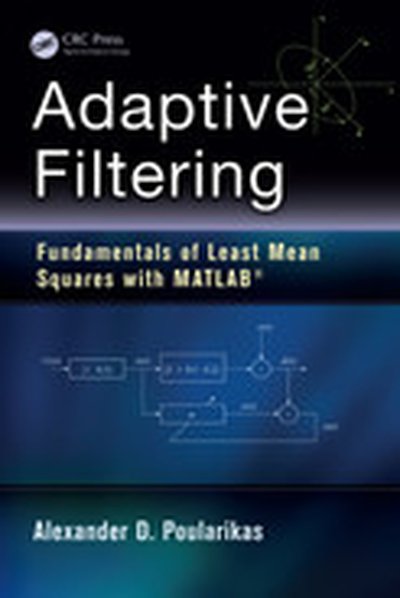
Adaptive Filtering

This book covers the fundamentals of adaptive filtering, with a focus on the least mean square (LMS) adaptive filter. It discusses random variables, stochastic processes, vectors, matrices, determinants, discrete random signals, and probability distributions, while delivering a concise introduction to MATLAB®—complete with problems, computer experiments, and over 110 functions and script files. The text not only addresses the basics of the LMS adaptive filter algorithm but also explores the Wiener filter and its applications, details the steepest descent method, and develops the Newton’s algorithm.

Electronically Scanned Arrays MATLAB® Modeling and Simulation

Electronically scanned arrays (ESAs) have become a key technology for sensor electronic systems. MATLAB® provides an excellent framework for ESA design and analysis, and this book is an invaluable resource for those who require simulation analysis tools that provide insight and understanding for ESA design. In addition to covering ESA fundamentals such as pattern synthesis, grating lobes, and instantaneous bandwidth, the text also provides insight into pattern optimization, subarray beamforming, space-based application of ESAs, and ESA reliability modeling. The book provides MATLAB code, giving readers an opportunity to model ESAs and develop an in-depth understanding that other books do not offer.

Pandas for Everyone: Python Data Analysis, First Edition

The Hands-On, Example-Rich Introduction to Pandas Data Analysis in Python Today, analysts must manage data characterized by extraordinary variety, velocity, and volume. Using the open source Pandas library, you can use Python to rapidly automate and perform virtually any data analysis task, no matter how large or complex. Pandas can help you ensure the veracity of your data, visualize it for effective decision-making, and reliably reproduce analyses across multiple datasets. brings together practical knowledge and insight for solving real problems with Pandas, even if you’re new to Python data analysis. Daniel Y. Chen introduces key concepts through simple but practical examples, incrementally building on them to solve more difficult, real-world problems. Pandas for Everyone Chen gives you a jumpstart on using Pandas with a realistic dataset and covers combining datasets, handling missing data, and structuring datasets for easier analysis and visualization. He demonstrates powerful data cleaning techniques, from basic string manipulation to applying functions simultaneously across dataframes. Once your data is ready, Chen guides you through fitting models for prediction, clustering, inference, and exploration. He provides tips on performance and scalability, and introduces you to the wider Python data analysis ecosystem. Work with DataFrames and Series, and import or export data Create plots with matplotlib, seaborn, and pandas Combine datasets and handle missing data Reshape, tidy, and clean datasets so they’re easier to work with Convert data types and manipulate text strings Apply functions to scale data manipulations Aggregate, transform, and filter large datasets with groupby Leverage Pandas’ advanced date and time capabilities Fit linear models using statsmodels and scikit-learn libraries Use generalized linear modeling to fit models with different response variables Compare multiple models to select the “best” Regularize to overcome overfitting and improve performance Use clustering in unsupervised machine learning Register your product at informit.com/register for convenient access to downloads, updates, and/or corrections as they become available.

R Data Mining

Dive into the world of data mining with 'R Data Mining' and discover how to utilize R's vast tools for uncovering insights in data. This hands-on guide immerses you in real-world cases, teaching both foundational concepts and advanced techniques like regression models and text mining. You'll emerge with a sharp understanding of how to transform raw data into actionable information. What this Book will help me do Gain proficiency in R packages such as dplyr and ggplot2 for data manipulation and visualization. Master the CRISP-DM methodology to systematically approach data mining projects. Develop skillsets in data cleaning and validation to ensure quality data analysis. Understand and implement multiple regression and classification techniques effectively. Learn to use ensemble learning methods and produce reporting with R Markdown. Author(s) Andrea Cirillo brings extensive expertise in data science and R programming as the author of 'R Data Mining.' Their practical approach, drawing from professional experiences in various industries, makes complex techniques accessible and engaging. Their passion for teaching translates into a meticulously crafted learning journey for aspiring data miners. Who is it for? This book is ideal for beginner to intermediate-level data analysts or aspiring data scientists eager to delve into the field of data mining using R. If you're familiar with the basics of programming in R and want to expand into practical applications of data mining methodologies, this is the resource for you. Gain hands-on experience by engaging with real-world datasets and scenarios.

Introduction to MATLAB for Engineers and Scientists: Solutions for Numerical Computation and Modeling

Familiarize yourself with MATLAB using this concise, practical tutorial that is focused on writing code to learn concepts. Starting from the basics, this book covers array-based computing, plotting and working with files, numerical computation formalism, and the primary concepts of approximations. Introduction to MATLAB is useful for industry engineers, researchers, and students who are looking for open-source solutions for numerical computation. In this book you will learn by doing, avoiding technical jargon, which makes the concepts easy to learn. First you’ll see how to run basic calculations, absorbing technical complexities incrementally as you progress toward advanced topics. Throughout, the language is kept simple to ensure that readers at all levels can grasp the concepts. What You'll Learn Apply sample code to your engineering or science problems Work with MATLAB arrays, functions, and loops Use MATLAB’s plotting functions for data visualization Solve numerical computing and computational engineering problems with a MATLAB case study Who This Book Is For Engineers, scientists, researchers, and students who are new to MATLAB. Some prior programming experience would be helpful but not required.

Functional Data Structures in R: Advanced Statistical Programming in R

Get an introduction to functional data structures using R and write more effective code and gain performance for your programs. This book teaches you workarounds because data in functional languages is not mutable: for example you’ll learn how to change variable-value bindings by modifying environments, which can be exploited to emulate pointers and implement traditional data structures. You’ll also see how, by abandoning traditional data structures, you can manipulate structures by building new versions rather than modifying them. You’ll discover how these so-called functional data structures are different from the traditional data structures you might know, but are worth understanding to do serious algorithmic programming in a functional language such as R. By the end of Functional Data Structures in R, you’ll understand the choices to make in order to most effectively work with data structures when you cannot modify the data itself. These techniques are especially applicable for algorithmic development important in big data, finance, and other data science applications. What You'll Learn Carry out algorithmic programming in R Use abstract data structures Work with both immutable and persistent data Emulate pointers and implement traditional data structures in R Build new versions of traditional data structures that are known Who This Book Is For Experienced or advanced programmers with at least a comfort level with R. Some experience with data structures recommended.

R Data Analysis Projects

Step into the world of advanced data analysis with 'R Data Analysis Projects.' In this hands-on guide, you will learn to build efficient analytics systems and pipelines using R for practical applications in finance, social media, and more. By following real-world projects, you'll enhance your data analysis skills, from implementing recommender systems to performing time-series modeling. What this Book will help me do Develop end-to-end data analysis and visualization solutions using R. Create scalable predictive analytics systems with actionable insights. Leverage RShiny to build interactive dashboards for effective communication. Master popular R packages like dplyr, ggplot2, and recommenderlab. Tackle real-world data challenges in varied domains such as finance and social networks. Author(s) Gopi Subramanian is an experienced data scientist and educator with an extensive background in statistical modeling and analytics. With years of hands-on practice and teaching, Gopi specializes in making complex concepts accessible through practical examples. His passion for R programming and real-world applications shines in his approachable style, making learning empowering and engaging. Who is it for? This book is designed for readers with a foundational understanding of R and data analysis, aiming to advance their skills to a professional level. Ideal for data analysts, R programmers, and aspiring data scientists seeking practical experience in building analytics systems. Whether you're transitioning to or deepening your expertise in R, this guide offers actionable knowledge to enhance your projects.

Practical Data Wrangling

"Practical Data Wrangling" provides a comprehensive guide to cleaning and preparing data for analysis, focusing on techniques in Python and R. As you progress through the book, you'll learn how to handle various datasets, reshape their formats, and prepare them for insights, empowering you to derive more value from your data. What this Book will help me do Understand the data wrangling process and its importance in the data analysis pipeline. Learn how to retrieve, parse, and shape raw data into structured formats. Master packages and tools in Python and R to efficiently clean and manipulate data. Gain proficiency in using regular expressions for text data preparation. Acquire skills to analyze, merge, and transform datasets to meet analytics needs. Author(s) None Visochek has years of experience working with data and analytics, with expertise in using Python and R for solving real-world data challenges. Their teaching approach emphasizes practical examples and accessible explanations, ensuring complex concepts are easy to understand. Who is it for? This book is for data scientists, analysts, or statisticians who work with real-world data and want to optimize their data preparation process. It is ideal for professionals with basic knowledge of Python and R looking to enhance their skills in data wrangling and data preparation techniques. If you're seeking to streamline your data analysis workflow through better wrangling techniques, this book is for you.

Python for R Users

The definitive guide for statisticians and data scientists who understand the advantages of becoming proficient in both R and Python The first book of its kind, Python for R Users: A Data Science Approach makes it easy for R programmers to code in Python and Python users to program in R. Short on theory and long on actionable analytics, it provides readers with a detailed comparative introduction and overview of both languages and features concise tutorials with command-by-command translations—complete with sample code—of R to Python and Python to R. Following an introduction to both languages, the author cuts to the chase with step-by-step coverage of the full range of pertinent programming features and functions, including data input, data inspection/data quality, data analysis, and data visualization. Statistical modeling, machine learning, and data mining—including supervised and unsupervised data mining methods—are treated in detail, as are time series forecasting, text mining, and natural language processing. • Features a quick-learning format with concise tutorials and actionable analytics • Provides command-by-command translations of R to Python and vice versa • Incorporates Python and R code throughout to make it easier for readers to compare and contrast features in both languages • Offers numerous comparative examples and applications in both programming languages • Designed for use for practitioners and students that know one language and want to learn the other • Supplies slides useful for teaching and learning either software on a companion website Python for R Users: A Data Science Approach is a valuable working resource for computer scientists and data scientists that know R and would like to learn Python or are familiar with Python and want to learn R. It also functions as textbook for students of computer science and statistics. A. Ohri is the founder of Decisionstats.com and currently works as a senior data scientist. He has advised multiple startups in analytics off-shoring, analytics services, and analytics education, as well as using social media to enhance buzz for analytics products. Mr. Ohri's research interests include spreading open source analytics, analyzing social media manipulation with mechanism design, simpler interfaces for cloud computing, investigating climate change and knowledge flows. His other books include R for Business Analytics and R for Cloud Computing.

Machine Learning with R Cookbook - Second Edition

Machine Learning with R Cookbook, Second Edition, is your hands-on guide to applying machine learning principles using R. Through simple, actionable examples and detailed step-by-step recipes, this book will help you build predictive models, analyze data, and derive actionable insights. Explore core topics in data science, including regression, classification, clustering, and more. What this Book will help me do Apply the Apriori algorithm for association analysis to uncover relationships in transaction datasets. Effectively visualize data patterns and associations using a variety of plots and graphing methods. Master the application of regression techniques to address predictive modeling challenges. Leverage the power of R and Hadoop for performing big data machine learning efficiently. Conduct advanced analyses such as survival analysis and improve machine learning model performance. Author(s) Yu-Wei, Chiu (David Chiu), the author, is an experienced data scientist and R programmer who specializes in applying data science and machine learning principles to solve real-world problems. David's pragmatic and comprehensive teaching style provides readers with deep insights and practical methodologies for using R effectively in their projects. His passion for data science and expertise in R and big data make this book a reliable resource for learners. Who is it for? This book is ideal for data scientists, analysts, and professionals working with machine learning and R. It caters to intermediate users who are versed in the basics of R and want to deepen their skills. If you aim to become the go-to expert for machine learning challenges and enhance your efficiency and capability in machine learning projects, this book is for you.

Pandas Cookbook

The Pandas Cookbook offers a collection of practical recipes for mastering data manipulation, analysis, and visualization tasks using pandas. Through a methodological and hands-on approach, you will learn to utilize pandas for handling real-world datasets efficiently. By the end of this book, you will be able to solve complex data science problems and create insightful visual representations in Python. What this Book will help me do Understand the core functionalities of pandas 0.20 for exploring datasets effectively. Master filtering, selecting, and transforming data for targeted analysis. Leverage pandas' features for aggregating and transforming grouped data. Restructure data for analysis and create professional visualizations using integration with Seaborn and Matplotlib. Gain expertise in handling time series data and SQL-like merging operations. Author(s) Theodore Petrou, the author of the Pandas Cookbook, is a data scientist and Python expert with extensive experience teaching and using pandas in professional settings. Known for his practical approach, he meticulously explains each recipe and includes comprehensive examples and datasets in Jupyter notebooks to enhance your learning experience. Who is it for? This book is aimed at data scientists, Python developers, and analysts seeking an in-depth, practical guide to mastering data analysis with pandas. Whether you're a beginner with some knowledge of Python or an experienced analyst looking to refine your skills, this cookbook provides valuable insights and techniques for your data-driven tasks.

Modern R Programming Cookbook

'Modern R Programming Cookbook' provides an array of practical recipes designed to enhance your R programming skills for statistical, data science, and graphical applications. With this book, you will deepen your understanding of R's syntax and semantics and be able to solve real-world problems using R effectively. What this Book will help me do Understand and configure R's development environment, including IDE setup and library management. Master R's core data structures and best practices for efficient data manipulation. Design and implement custom R functions, handling errors and utilizing recursion effectively. Streamline data processing tasks using modern R packages like dplyr for structured workflows. Efficiently process text and interact with databases to tackle a variety of data science projects. Author(s) Jaynal Abedin is an experienced data scientist and R programmer with a strong background in statistical modeling and data analysis. Over his career, Jaynal has worked on numerous data-intensive projects, helping individuals and organizations transform data insights into actionable strategies. He brings a clear and hands-on approach to teaching and writes with the goal of empowering readers to tackle complex problems using R. Who is it for? This book is perfect for developers looking to enhance their R programming expertise, particularly if they already have a basic understanding of R's fundamentals. Whether you're working in data science, statistics, or software development, this book provides actionable strategies for leveraging R's capabilities. If you're exploring advanced R programming or aiming to upskill in data applications, this book is an excellent resource.

R Data Analysis Cookbook, Second Edition - Second Edition

R Data Analysis Cookbook, Second Edition, is your companion for mastering various data analysis techniques using R. Combining powerful R libraries like ggplot2, this book guides you through tasks such as data mining, visualization, and even advanced concepts like time series analysis. Whether you're cleaning and formatting data or generating actionable insights, this book offers hands-on recipes to upskill efficiently. What this Book will help me do Learn how to acquire, prepare, and visualize datasets using popular R libraries. Master exploratory data analysis concepts to discover insights in any data. Get introduced to machine learning algorithms in R such as regression and classification. Develop advanced skills like social network analysis, recommendation systems, and geospatial analysis. Learn to generate dynamic reports and interactive dashboards using tools like Shiny. Author(s) Kuntal Ganguly and Viswa Viswanathan bring a wealth of experience in data science, analytics, and R programming to this book. Their passion for teaching complex topics with clarity and practical insight shines throughout. The co-authors incorporate years of technical expertise to guide readers step-by-step in solving real-world data analysis challenges. Who is it for? This book is ideal for data scientists, analysts, or enthusiasts taking their first or next steps with R. It caters to professionals with a beginner or intermediate understanding of statistics and programming who are seeking practical examples and solutions to complex data tasks. If you want actionable knowledge to address real-world analytics challenges, this book is for you.

Statistical Application Development with R and Python - Second Edition

This book, 'Statistical Application Development with R and Python', is your gateway to mastering statistical analysis and applying it effectively in real-world contexts. Through integrated R and Python code, you'll learn how to utilize data processing, explore advanced statistical models like regression and CART, and develop applications that solve complex analytical challenges. What this Book will help me do Fully understand data visualization and exploratory analysis methods to uncover insights from datasets. Master techniques such as regression models, clustering, and classification to enhance your analytical toolkit. Gain proficiency in R and Python for data processing and statistical modeling tasks. Apply CART and other machine learning tools to tackle nonlinear data challenges effectively. Equip yourself with a comprehensive approach to data exploration and decision-making for impactful results. Author(s) The author(s) of this book bring extensive experience in statistical analysis, computational modeling, and the use of R and Python for data science. They are professionals and educators passionate about making statistics accessible and practical. Their engaging writing style ensures readers not only understand but also enjoy the journey of learning statistics. Who is it for? This book is perfect for aspiring data scientists or professionals wanting to deepen their understanding of statistical analysis. Whether you're new to R or Python or looking to integrate both into your workflow, this guide provides comprehensive knowledge and practical techniques. It's suitable for beginners with no prior experience as well as seasoned users seeking to enhance their data processing and modeling skills.