talk-data.com talk-data.com

Event

O'Reilly Data Science Books

2013-08-09 – 2026-02-25 Oreilly Visit website ↗

Activities tracked

794

Collection of O'Reilly books on Data Science.

Filtering by: data-science-tasks ×

Sessions & talks

Showing 201–225 of 794 · Newest first

Search within this event →
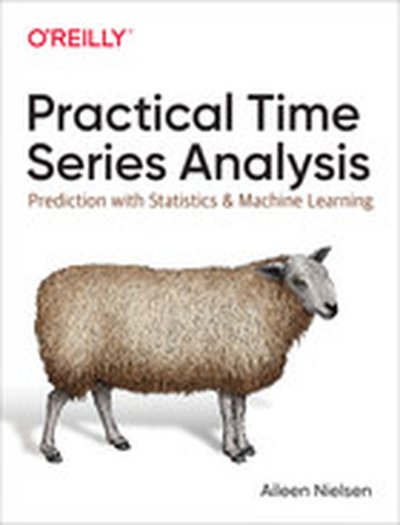
Practical Time Series Analysis

Time series data analysis is increasingly important due to the massive production of such data through the internet of things, the digitalization of healthcare, and the rise of smart cities. As continuous monitoring and data collection become more common, the need for competent time series analysis with both statistical and machine learning techniques will increase. Covering innovations in time series data analysis and use cases from the real world, this practical guide will help you solve the most common data engineering and analysis challengesin time series, using both traditional statistical and modern machine learning techniques. Author Aileen Nielsen offers an accessible, well-rounded introduction to time series in both R and Python that will have data scientists, software engineers, and researchers up and running quickly. You’ll get the guidance you need to confidently: Find and wrangle time series data Undertake exploratory time series data analysis Store temporal data Simulate time series data Generate and select features for a time series Measure error Forecast and classify time series with machine or deep learning Evaluate accuracy and performance
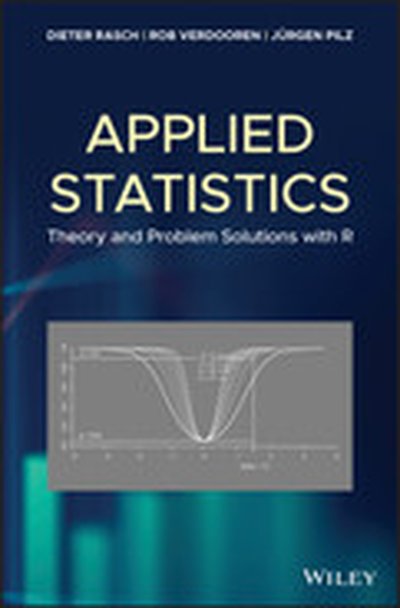
Applied Statistics

Instructs readers on how to use methods of statistics and experimental design with R software Applied statistics covers both the theory and the application of modern statistical and mathematical modelling techniques to applied problems in industry, public services, commerce, and research. It proceeds from a strong theoretical background, but it is practically oriented to develop one's ability to tackle new and non-standard problems confidently. Taking a practical approach to applied statistics, this user-friendly guide teaches readers how to use methods of statistics and experimental design without going deep into the theory. Applied Statistics: Theory and Problem Solutions with R includes chapters that cover R package sampling procedures, analysis of variance, point estimation, and more. It follows on the heels of Rasch and Schott's Mathematical Statistics via that book's theoretical background—taking the lessons learned from there to another level with this book’s addition of instructions on how to employ the methods using R. But there are two important chapters not mentioned in the theoretical back ground as Generalised Linear Models and Spatial Statistics. Offers a practical over theoretical approach to the subject of applied statistics Provides a pre-experimental as well as post-experimental approach to applied statistics Features classroom tested material Applicable to a wide range of people working in experimental design and all empirical sciences Includes 300 different procedures with R and examples with R-programs for the analysis and for determining minimal experimental sizes Applied Statistics: Theory and Problem Solutions with R will appeal to experimenters, statisticians, mathematicians, and all scientists using statistical procedures in the natural sciences, medicine, and psychology amongst others.

A Gentle Introduction to Statistics Using SASⓇ Studio

Point and click your way to performing statistics! Many people are intimidated by learning statistics, but A Gentle Introduction to Statistics Using SAS Studio is here to help. Whether you need to perform statistical analysis for a project or, perhaps, for a course in education, psychology, sociology, economics, or any other field that requires basic statistical skills, this book teaches the fundamentals of statistics, from designing your experiment through calculating logistic regressions. Serving as an introduction to many common statistical tests and principles, it explains concepts in a non-technical way with little math and very few formulas. Once the basic statistical concepts are covered, the book then demonstrates how to use them with SAS Studio and SAS University Edition’s easy point-and-click interface. Topics included in this book are: How to install and use SAS University Edition Descriptive statistics One-sample tests T tests (for independent or paired samples) One-way analysis of variance (ANOVA) N-way ANOVA Correlation analysis Simple and multiple linear regression Binary logistic regression Categorical data, including two-way tables and chi-square Power and sample size calculations Questions are provided to test your knowledge and practice your skills.

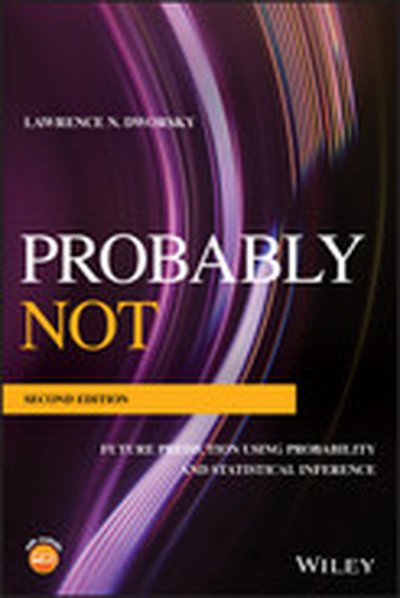
Probably Not, 2nd Edition

A revised edition that explores random numbers, probability, and statistical inference at an introductory mathematical level Written in an engaging and entertaining manner, the revised and updated second edition of Probably Not continues to offer an informative guide to probability and prediction. The expanded second edition contains problem and solution sets. In addition, the book’s illustrative examples reveal how we are living in a statistical world, what we can expect, what we really know based upon the information at hand and explains when we only think we know something. The author introduces the principles of probability and explains probability distribution functions. The book covers combined and conditional probabilities and contains a new section on Bayes Theorem and Bayesian Statistics, which features some simple examples including the Presecutor’s Paradox, and Bayesian vs. Frequentist thinking about statistics. New to this edition is a chapter on Benford’s Law that explores measuring the compliance and financial fraud detection using Benford’s Law. This book: Contains relevant mathematics and examples that demonstrate how to use the concepts presented Features a new chapter on Benford’s Law that explains why we find Benford’s law upheld in so many, but not all, natural situations Presents updated Life insurance tables Contains updates on the Gantt Chart example that further develops the discussion of random events Offers a companion site featuring solutions to the problem sets within the book Written for mathematics and statistics students and professionals, the updated edition of Probably Not: Future Prediction Using Probability and Statistical Inference, Second Edition combines the mathematics of probability with real-world examples. LAWRENCE N. DWORSKY, PhD, is a retired Vice President of the Technical Staff and Director of Motorola’s Components Research Laboratory in Schaumburg, Illinois, USA. He is the author of Introduction to Numerical Electrostatics Using MATLAB from Wiley.

Hands-On Web Scraping with Python

This book, "Hands-On Web Scraping with Python", is your comprehensive guide to mastering web scraping techniques and tools. Harnessing the power of Python libraries like Scrapy, Beautiful Soup, and Selenium, you'll learn how to extract and analyze data from websites effectively and efficiently. What this Book will help me do Master the foundational concepts of web scraping using Python. Efficiently use libraries such as Scrapy, Beautiful Soup, and Selenium for data extraction. Handle advanced scenarios such as forms, logins, and dynamic content in scraping. Leverage XPath, CSS selectors, and Regex for precise data targeting and processing. Improve scraping reliability and manage challenges like cookies, API use, and web security. Author(s) None Chapagain is an accomplished Python programmer and an expert in web scraping methodologies. With years of experience in applying Python to solve practical data challenges, they bring a clear and insightful approach to teaching these skills. Readers appreciate their practical examples and ready-to-use guidance for real-world applications. Who is it for? This book is designed for Python developers and data enthusiasts eager to master web scraping. Whether you're a beginner looking to dep dive into new techniques or an analyst needing reliable data extraction methods, this book offers clear guidance. A basic understanding of Python is recommended to fully benefit from this text.

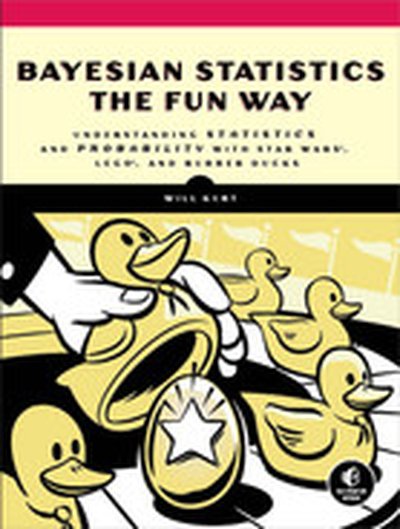
Bayesian Statistics the Fun Way

Probability and statistics are increasingly important in a huge range of professions. But many people use data in ways they don’t even understand, meaning they aren’t getting the most from it. Bayesian Statistics the Fun Way will change that. This book will give you a complete understanding of Bayesian statistics through simple explanations and un-boring examples. Find out the probability of UFOs landing in your garden, how likely Han Solo is to survive a flight through an asteroid belt, how to win an argument about conspiracy theories, and whether a burglary really was a burglary, to name a few examples. By using these off-the-beaten-track examples, the author actually makes learning statistics fun. And you’ll learn real skills, like how to: •How to measure your own level of uncertainty in a conclusion or belief •Calculate Bayes theorem and understand what it’s useful for •Find the posterior, likelihood, and prior to check the accuracy of your conclusions •Calculate distributions to see the range of your data •Compare hypotheses and draw reliable conclusions from them Next time you find yourself with a sheaf of survey results and no idea what to do with them, turn to Bayesian Statistics the Fun Way to get the most value from your data.

Associations and Correlations

"Associations and Correlations: Unearth the powerful insights buried in your data" is a comprehensive guide for understanding and utilizing associations and correlations in data analysis. This book walks you through methods of classifying data, selecting appropriate statistical tests, and interpreting results effectively. By the end, you'll have mastered how to reveal data insights clearly and reliably. What this Book will help me do Identify and prepare datasets suitable for analysis with confidence. Understand and apply the principles of associations and correlations in data analytics. Use statistical tests to uncover univariate and multivariate relationships. Classify and interpret data into qualitative and quantitative segments effectively. Develop visual representations of data relationships to communicate insights clearly. Author(s) Lee Baker is an experienced statistician and data scientist with a passion for education. With years of teaching and mentoring professionals in data analysis, Lee excels in breaking down complex statistical concepts into understandable insights. Lee's approachable style aims to empower learners to harness their data's full potential. Who is it for? This book is designed for budding data analysts and data scientists, targeting those starting their journey into data analytics. It serves well as an introduction to the fundamentals of associations and correlations, making it suitable for beginners. If you seek a foundational understanding or a recap of key concepts, this book is for you.

Digital Processing of Random Oscillations

This book deals with the autoregressive method for digital processing of random oscillations. The method is based on a one-to-one transformation of the numeric factors of the Yule series model to linear elastic system characteristics. This parametric approach allowed to develop a formal processing procedure from the experimental data to obtain estimates of logarithmic decrement and natural frequency of random oscillations. A straightforward mathematical description of the procedure makes it possible to optimize a discretization of oscillation realizations providing efficient estimates. The derived analytical expressions for confidence intervals of estimates enable a priori evaluation of their accuracy. Experimental validation of the method is also provided. Statistical applications for the analysis of mechanical systems arise from the fact that the loads experienced by machineries and various structures often cannot be described by deterministic vibration theory. Therefore, a sufficient description of real oscillatory processes (vibrations) calls for the use of random functions. In engineering practice, the linear vibration theory (modeling phenomena by common linear differential equations) is generally used. This theory’s fundamental concepts such as natural frequency, oscillation decrement, resonance, etc. are credited for its wide use in different technical tasks. In technical applications two types of research tasks exist: direct and inverse. The former allows to determine stochastic characteristics of the system output X(t) resulting from a random process E(t) when the object model is considered known. The direct task enables to evaluate the effect of an operational environment on the designed object and to predict its operation under various loads. The inverse task is aimed at evaluating the object model on known processes E(t) and X(t), i.e. finding model (equations) factors. This task is usually met at the tests of prototypes to identify (or verify) its model experimentally. To characterize random processes a notion of "shaping dynamic system" is commonly used. This concept allows to consider the observing process as the output of a hypothetical system with the input being stationary Gauss-distributed ("white") noise. Therefore, the process may be exhaustively described in terms of parameters of that system. In the case of random oscillations, the "shaping system" is an elastic system described by the common differential equation of the second order: X ̈(t)+2hX ̇(t)+ ω_0^2 X(t)=E(t), where ω0 = 2π/Т0 is the natural frequency, T0 is the oscillation period, and h is a damping factor. As a result, the process X(t) can be characterized in terms of the system parameters – natural frequency and logarithmic oscillations decrement δ = hT0 as well as the process variance. Evaluation of these parameters is subjected to experimental data processing based on frequency or time-domain representations of oscillations. It must be noted that a concept of these parameters evaluation did not change much during the last century. For instance, in case of the spectral density utilization, evaluation of the decrement values is linked with bandwidth measurements at the points of half-power of the observed oscillations. For a time-domain presentation, evaluation of the decrement requires measuring covariance values delayed by a time interval divisible by T0. Both estimation procedures are derived from a continuous description of research phenomena, so the accuracy of estimates is linked directly to the adequacy of discrete representation of random oscillations. This approach is similar a concept of transforming differential equations to difference ones with derivative approximation by corresponding finite differences. The resulting discrete model, being an approximation, features a methodical error which can be decreased but never eliminated. To render such a presentation more accurate it is imperative to decrease the discretization interval and to increase realization size growing requirements for computing power. The spectral density and covariance function estimates comprise a non-parametric (non-formal) approach. In principle, any non-formal approach is a kind of art i.e. the results depend on the performer’s skills. Due to interference of subjective factors in spectral or covariance estimates of random signals, accuracy of results cannot be properly determined or justified. To avoid the abovementioned difficulties, the application of linear time-series models with well-developed procedures for parameter estimates is more advantageous. A method for the analysis of random oscillations using a parametric model corresponding discretely (no approximation error) with a linear elastic system is developed and presented in this book. As a result, a one-to-one transformation of the model’s numerical factors to logarithmic decrement and natural frequency of random oscillations is established. It allowed to develop a formal processing procedure from experimental data to obtain the estimates of δ and ω0. The proposed approach allows researchers to replace traditional subjective techniques by a formal processing procedure providing efficient estimates with analytically defined statistical uncertainties.

Getting Started with Tableau 2019.2 - Second Edition

"Getting Started with Tableau 2019.2" is your primer to mastering the latest version of Tableau, a leading tool for data visualization and analysis. Whether you're new to Tableau or looking to upgrade your skills, this book will guide you through both foundational and advanced features, enabling you to create impactful dashboards and visual analytics. What this Book will help me do Understand and utilize the latest features introduced in Tableau 2019.2, including natural language queries in Ask Data. Learn how to connect to diverse data sources, transform data by pivoting fields, and split columns effectively. Gain skills to design intuitive data visualizations and dashboards using various Tableau mark types and properties. Develop interactive and storytelling-based dashboards to communicate insights visually and effectively. Discover methods to securely share your analyses through Tableau Server, enhancing collaboration. Author(s) Tristan Guillevin is an experienced data visualization consultant and an expert in Tableau. Having helped several organizations adopt Tableau for business intelligence, he brings a practical and results-oriented approach to teaching. Tristan's philosophy is to make data accessible and actionable for everyone, no matter their technical background. Who is it for? This book is ideal for Tableau users and data professionals looking to enhance their skills on Tableau 2019.2. If you're passionate about uncovering insights from data but need the right tools to communicate and collaborate effectively, this book is for you. It's suited for those with some prior experience in Tableau but also offers introductory content for newcomers. Whether you're a business analyst, data enthusiast, or BI professional, this guide will build solid foundations and sharpen your Tableau expertise.

GARCH Models, 2nd Edition

Provides a comprehensive and updated study of GARCH models and their applications in finance, covering new developments in the discipline This book provides a comprehensive and systematic approach to understanding GARCH time series models and their applications whilst presenting the most advanced results concerning the theory and practical aspects of GARCH. The probability structure of standard GARCH models is studied in detail as well as statistical inference such as identification, estimation, and tests. The book also provides new coverage of several extensions such as multivariate models, looks at financial applications, and explores the very validation of the models used. GARCH Models: Structure, Statistical Inference and Financial Applications, 2nd Edition features a new chapter on Parameter-Driven Volatility Models, which covers Stochastic Volatility Models and Markov Switching Volatility Models. A second new chapter titled Alternative Models for the Conditional Variance contains a section on Stochastic Recurrence Equations and additional material on EGARCH, Log-GARCH, GAS, MIDAS, and intraday volatility models, among others. The book is also updated with a more complete discussion of multivariate GARCH; a new section on Cholesky GARCH; a larger emphasis on the inference of multivariate GARCH models; a new set of corrected problems available online; and an up-to-date list of references. Features up-to-date coverage of the current research in the probability, statistics, and econometric theory of GARCH models Covers significant developments in the field, especially in multivariate models Contains completely renewed chapters with new topics and results Handles both theoretical and applied aspects Applies to researchers in different fields (time series, econometrics, finance) Includes numerous illustrations and applications to real financial series Presents a large collection of exercises with corrections Supplemented by a supporting website featuring R codes, Fortran programs, data sets and Problems with corrections GARCH Models, 2nd Edition is an authoritative, state-of-the-art reference that is ideal for graduate students, researchers, and practitioners in business and finance seeking to broaden their skills of understanding of econometric time series models.

Hands-On Time Series Analysis with R

Dive into the intricacies of time series analysis and forecasting with R in this comprehensive guide. From foundational concepts to practical implementations, this book equips you with the tools and techniques to analyze, understand, and predict time-dependent data. What this Book will help me do Develop insights by visualizing time-series data and identifying patterns. Master statistical time-series concepts including autocorrelation and moving averages. Learn and implement forecasting models like ARIMA and exponential smoothing. Apply machine learning methodologies for advanced time-series predictions. Work with key R packages for cleaning, manipulating, and analyzing time-series data. Author(s) Rami Krispin is an accomplished statistician and R programmer with extensive experience in data analysis and time-series modeling. His hands-on approach in utilizing R packages and libraries brings clarity to complex time-series concepts. With a passion for teaching and simplifying intricate topics, Rami ensures readers both grasp the theories and apply them effectively. Who is it for? This book is ideal for data analysts, statisticians, and R developers interested in mastering time-series analysis for real-world applications. Designed for readers with a basic understanding of statistics and R programming, it offers a practical approach to learning effective forecasting and data visualization techniques. Professionals aiming to expand their skillset in predictive analytics will find it particularly beneficial.

Practical Applications of Bayesian Reliability

Demonstrates how to solve reliability problems using practical applications of Bayesian models This self-contained reference provides fundamental knowledge of Bayesian reliability and utilizes numerous examples to show how Bayesian models can solve real life reliability problems. It teaches engineers and scientists exactly what Bayesian analysis is, what its benefits are, and how they can apply the methods to solve their own problems. To help readers get started quickly, the book presents many Bayesian models that use JAGS and which require fewer than 10 lines of command. It also offers a number of short R scripts consisting of simple functions to help them become familiar with R coding. Practical Applications of Bayesian Reliability starts by introducing basic concepts of reliability engineering, including random variables, discrete and continuous probability distributions, hazard function, and censored data. Basic concepts of Bayesian statistics, models, reasons, and theory are presented in the following chapter. Coverage of Bayesian computation, Metropolis-Hastings algorithm, and Gibbs Sampling comes next. The book then goes on to teach the concepts of design capability and design for reliability; introduce Bayesian models for estimating system reliability; discuss Bayesian Hierarchical Models and their applications; present linear and logistic regression models in Bayesian Perspective; and more. Provides a step-by-step approach for developing advanced reliability models to solve complex problems, and does not require in-depth understanding of statistical methodology Educates managers on the potential of Bayesian reliability models and associated impact Introduces commonly used predictive reliability models and advanced Bayesian models based on real life applications Includes practical guidelines to construct Bayesian reliability models along with computer codes for all of the case studies JAGS and R codes are provided on an accompanying website to enable practitioners to easily copy them and tailor them to their own applications Practical Applications of Bayesian Reliability is a helpful book for industry practitioners such as reliability engineers, mechanical engineers, electrical engineers, product engineers, system engineers, and materials scientists whose work includes predicting design or product performance.

Data Analysis and Applications 1

This series of books collects a diverse array of work that provides the reader with theoretical and applied information on data analysis methods, models, and techniques, along with appropriate applications. Volume 1 begins with an introductory chapter by Gilbert Saporta, a leading expert in the field, who summarizes the developments in data analysis over the last 50 years. The book is then divided into three parts: Part 1 presents clustering and regression cases; Part 2 examines grouping and decomposition, GARCH and threshold models, structural equations, and SME modeling; and Part 3 presents symbolic data analysis, time series and multiple choice models, modeling in demography, and data mining.

Data Analysis and Applications 2

This series of books collects a diverse array of work that provides the reader with theoretical and applied information on data analysis methods, models and techniques, along with appropriate applications. Volume 2 begins with an introductory chapter by Gilbert Saporta, a leading expert in the field, who summarizes the developments in data analysis over the last 50 years. The book is then divided into four parts: Part 1 examines (in)dependence relationships, innovation in the Nordic countries, dentistry journals, dependence among growth rates of GDP of V4 countries, emissions mitigation, and five-star ratings; Part 2 investigates access to credit for SMEs, gender-based impacts given Southern Europe’s economic crisis, and labor market transition probabilities; Part 3 looks at recruitment at university job-placement offices and the Program for International Student Assessment; and Part 4 examines discriminants, PageRank, and the political spectrum of Germany.

Statistics for Biomedical Engineers and Scientists

Statistics for Biomedical Engineers and Scientists: How to Analyze and Visualize Data provides an intuitive understanding of the concepts of basic statistics, with a focus on solving biomedical problems. Readers will learn how to understand the fundamental concepts of descriptive and inferential statistics, analyze data and choose an appropriate hypothesis test to answer a given question, compute numerical statistical measures and perform hypothesis tests ‘by hand’, and visualize data and perform statistical analysis using MATLAB. Practical activities and exercises are provided, making this an ideal resource for students in biomedical engineering and the biomedical sciences who are in a course on basic statistics. Presents a practical guide on how to visualize and analyze statistical data Provides numerous practical examples and exercises to illustrate the power of statistics in biomedical engineering applications Gives an intuitive understanding of statistical tests Covers practical skills by showing how to perform operations ‘by hand’ and by using MATLAB as a computational tool Includes an online resource with downloadable materials for students and teachers

Statistics Essentials For Dummies

Statistics Essentials For Dummies (9781119590309) was previously published as Statistics Essentials For Dummies (9780470618394). While this version features a new Dummies cover and design, the content is the same as the prior release and should not be considered a new or updated product. Statistics Essentials For Dummies not only provides students enrolled in Statistics I with an excellent high-level overview of key concepts, but it also serves as a reference or refresher for students in upper-level statistics courses. Free of review and ramp-up material, Statistics Essentials For Dummies sticks to the point, with content focused on key course topics only. It provides discrete explanations of essential concepts taught in a typical first semester college-level statistics course, from odds and error margins to confidence intervals and conclusions. This guide is also a perfect reference for parents who need to review critical statistics concepts as they help high school students with homework assignments, as well as for adult learners headed back into the classroom who just need a refresher of the core concepts. The Essentials For Dummies Series Dummies is proud to present our new series, The Essentials For Dummies. Now students who are prepping for exams, preparing to study new material, or who just need a refresher can have a concise, easy-to-understand review guide that covers an entire course by concentrating solely on the most important concepts. From algebra and chemistry to grammar and Spanish, our expert authors focus on the skills students most need to succeed in a subject.

Analyzing Social Media Networks with NodeXL, 2nd Edition

Analyzing Social Media Networks with NodeXL: Insights from a Connected World, Second Edition, provides readers with a thorough, practical and updated guide to NodeXL, the open-source social network analysis (SNA) plug-in for use with Excel. The book analyzes social media, provides a NodeXL tutorial, and presents network analysis case studies, all of which are revised to reflect the latest developments. Sections cover history and concepts, mapping and modeling, the detailed operation of NodeXL, and case studies, including e-mail, Twitter, Facebook, Flickr and YouTube. In addition, there are descriptions of each system and types of analysis for identifying people, documents, groups and events. This book is perfect for use as a course text in social network analysis or as a guide for practicing NodeXL users. Walks users through NodeXL while also explaining the theory and development behind each step Demonstrates how visual analytics research can be applied to SNA tools for the mass market Includes updated case studies from researchers who use NodeXL on popular networks like email, Facebook, Twitter, and Instagram Includes downloadable companion materials and online resources at https://www.smrfoundation.org/nodexl/teaching-with-nodexl/teaching-resources/

Introduction to Probability.

An essential guide to the concepts of probability theory that puts the focus on models and applications Introduction to Probability offers an authoritative text that presents the main ideas and concepts, as well as the theoretical background, models, and applications of probability. The authors—noted experts in the field—include a review of problems where probabilistic models naturally arise, and discuss the methodology to tackle these problems. A wide-range of topics are covered that include the concepts of probability and conditional probability, univariate discrete distributions, univariate continuous distributions, along with a detailed presentation of the most important probability distributions used in practice, with their main properties and applications. Designed as a useful guide, the text contains theory of probability, de finitions, charts, examples with solutions, illustrations, self-assessment exercises, computational exercises, problems and a glossary. This important text: • Includes classroom-tested problems and solutions to probability exercises • Highlights real-world exercises designed to make clear the concepts presented • Uses Mathematica software to illustrate the text’s computer exercises • Features applications representing worldwide situations and processes • Offers two types of self-assessment exercises at the end of each chapter, so that students may review the material in that chapter and monitor their progress. Written for students majoring in statistics, engineering, operations research, computer science, physics, and mathematics, Introduction to Probability: Models and Applications is an accessible text that explores the basic concepts of probability and includes detailed information on models and applications.

Visual Analytics with Tableau

A four-color journey through a complete Tableau visualization Tableau is a popular data visualization tool that’s easy for individual desktop use as well as enterprise. Used by financial analysts, marketers, statisticians, business and sales leadership, and many other job roles to present data visually for easy understanding, it’s no surprise that Tableau is an essential tool in our data-driven economy. Visual Analytics with Tableau is a complete journey in Tableau visualization for a non-technical business user. You can start from zero, connect your first data, and get right into creating and publishing awesome visualizations and insightful dashboards. • Learn the different types of charts you can create • Use aggregation, calculated fields, and parameters • Create insightful maps • Share interactive dashboards Geared toward beginners looking to get their feet wet with Tableau, this book makes it easy and approachable to get started right away.

Learn D3.js

Dive into the world of data visualization with 'Learn D3.js'. This comprehensive guide introduces D3.js-the leading JavaScript library for creating interactive, data-driven visualizations on the web. By following practical examples, you'll understand core concepts of D3.js, learn to implement various types of visualizations, and develop skills to bring dynamic, responsive graphics to your projects. What this Book will help me do Master the fundamentals of D3.js and use it to produce stunning web-based data visualizations. Bind data to the DOM using D3.js and configure interactive transitions and animations. Gain experience generating a multitude of chart types such as bar, pie, scatter charts, and more. Incorporate user interactivity into your visualizations using D3.js effectively. Work with map-based data visualizations using GIS data and various geographical projections. Author(s) Helder da Rocha is an experienced developer and educator with a passion for data visualization. With a solid background in JavaScript and web technologies, he has crafted this book to make the complexities of D3.js accessible and engaging. His approach emphasizes practical, hands-on learning, nurturing both new and seasoned developers alike. Who is it for? Are you a web developer, designer, or data scientist aiming to create interactive data visualizations for the web? If you have foundational knowledge of HTML, CSS, and JavaScript, this book is your perfect guide. Whether you're dipping your toes into web-based charts or seeking to craft advanced interactive graphics, 'Learn D3.js' is tailored to empower your journey.

D3 for the Impatient

If you’re in a hurry to learn D3.js, the leading JavaScript library for web-based graphics and visualization, this book is for you. Written for technically savvy readers with a background in programming or data science, the book moves quickly, emphasizing unifying concepts and patterns. Anticipating common difficulties, author Philipp K. Janert teaches you how to apply D3 to your own problems. Assuming only a general programming background, but no previous experience with contemporary web development, this book explains supporting technologies such as SVG, HTML5, CSS, and the DOM as needed, making it a convenient one-stop resource for a technical audience. Understand D3 selections, the library’s fundamental organizing principle Learn how to create data-driven documents with data binding Create animated graphs and interactive user interfaces Draw figures with curves, shapes, and colors Use the built-in facilities for heatmaps, tree graphs, and networks Simplify your work by writing your own reusable components

Nonparametric Statistical Process Control

A unique approach to understanding the foundations of statistical quality control with a focus on the latest developments in nonparametric control charting methodologies Statistical Process Control (SPC) methods have a long and successful history and have revolutionized many facets of industrial production around the world. This book addresses recent developments in statistical process control bringing the modern use of computers and simulations along with theory within the reach of both the researchers and practitioners. The emphasis is on the burgeoning field of nonparametric SPC (NSPC) and the many new methodologies developed by researchers worldwide that are revolutionizing SPC. Over the last several years research in SPC, particularly on control charts, has seen phenomenal growth. Control charts are no longer confined to manufacturing and are now applied for process control and monitoring in a wide array of applications, from education, to environmental monitoring, to disease mapping, to crime prevention. This book addresses quality control methodology, especially control charts, from a statistician’s viewpoint, striking a careful balance between theory and practice. Although the focus is on the newer nonparametric control charts, the reader is first introduced to the main classes of the parametric control charts and the associated theory, so that the proper foundational background can be laid. Reviews basic SPC theory and terminology, the different types of control charts, control chart design, sample size, sampling frequency, control limits, and more Focuses on the distribution-free (nonparametric) charts for the cases in which the underlying process distribution is unknown Provides guidance on control chart selection, choosing control limits and other quality related matters, along with all relevant formulas and tables Uses computer simulations and graphics to illustrate concepts and explore the latest research in SPC Offering a uniquely balanced presentation of both theory and practice, Nonparametric Methods for Statistical Quality Control is a vital resource for students, interested practitioners, researchers, and anyone with an appropriate background in statistics interested in learning about the foundations of SPC and latest developments in NSPC.

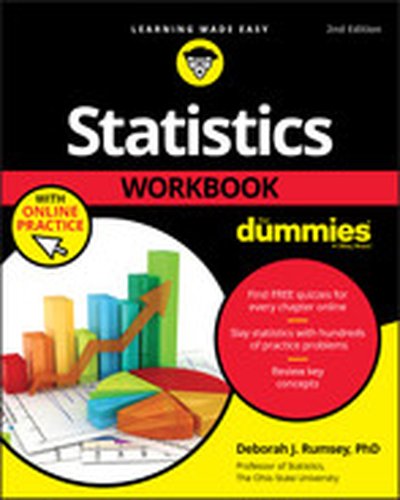
Statistics Workbook For Dummies with Online Practice, 2nd Edition

Practice your way to a higher statistics score The adage that "practice makes perfect" is never truer than with math problems. S tatistics Workbook For Dummies with Online Practice provides succinct content reviews for every topic, with plenty of examples and practice problems for each concept, in the book and online. Every lesson begins with a concept review, followed by a few example problems and plenty of practice problems. There's a step-by-step solution for every problem, with tips and tricks to help with comprehension and retention. New for this edition, free online practice quizzes for each chapter provide extra opportunities to test your knowledge and understanding. Get FREE access to chapter quizzes in an online test bank Work along with each chapter or use the test bank for final exam review Discover which statistical measures are most meaningful Scoring high in your Statistics class has never been easier!

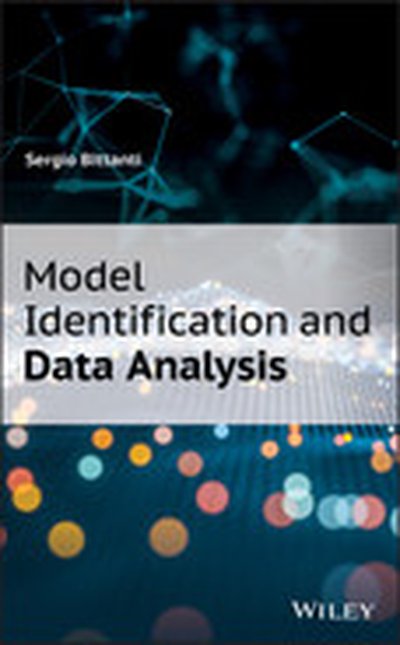
Model Identification and Data Analysis

This book is about constructing models from experimental data. It covers a range of topics, from statistical data prediction to Kalman filtering, from black-box model identification to parameter estimation, from spectral analysis to predictive control. Written for graduate students, this textbook offers an approach that has proven successful throughout the many years during which its author has taught these topics at his University. The book: Contains accessible methods explained step-by-step in simple terms Offers an essential tool useful in a variety of fields, especially engineering, statistics, and mathematics Includes an overview on random variables and stationary processes, as well as an introduction to discrete time models and matrix analysis Incorporates historical commentaries to put into perspective the developments that have brought the discipline to its current state Provides many examples and solved problems to complement the presentation and facilitate comprehension of the techniques presented