talk-data.com talk-data.com

Event

O'Reilly Data Visualization Books

2007-12-18 – 2026-02-25 Oreilly Visit website ↗

Activities tracked

48

Collection of O'Reilly books on Data Visualization.

Filtering by: data-visualization ×

Sessions & talks

Showing 26–48 of 48 · Newest first

Search within this event →
Data Visualization: Representing Information on Modern Web

Unleash the power of data by creating interactive, engaging, and compelling visualizations for the web About This Book Get a portable, versatile, and flexible data visualization design approach that will help you navigate the complex path towards success Get thorough explanation of the many visual variables and visualization taxonomy to provide you with a menu of creative options A comprehensive and contemporary introduction to data-driven visualization design and the most effective approaches to designing impact-maximizing and cognition-amplifying visualizations Who This Book Is For This course is for developers who are excited about data and who want to share that excitement with others and it will be handy for the web developers or data scientists who want to create interactive visualizations for the web. Prior knowledge of developing web applications is required. You should have a working knowledge of both JavaScript and HTML. What You Will Learn Harness the power of D3 by building interactive and real-time data-driven web visualizations Find out how to use JavaScript to create compelling visualizations of social data Identify the purpose of your visualization and your project's parameters to determine overriding design considerations across your project's execution Apply critical thinking to visualization design and get intimate with your dataset to identify its potential visual characteristics Explore the various features of HTML5 to design creative visualizations Discover what data is available on Stack Overflow, Facebook, Twitter, and Google+ Gain a solid understanding of the common D3 development idioms Find out how to write basic D3 code for server using Node.js In Detail Do you want to create more attractive charts? Or do you have huge data sets and need to unearth the key insights in a visual manner? Data visualization is the representation and presentation of data, using proven design techniques to bring alive the patterns, stories, and key insights that are locked away. This learning path is divided into three modules. The first module will equip you with the key techniques required to overcome contemporary data visualization challenges. After getting familiar with key concepts of data visualization, it's time to incorporate it with various technologies. In the second module, Social Data Visualization with HTML5 and JavaScript, it teaches you how to leverage HTML5 techniques through JavaScript to build visualizations. It also clears up how the often complicated OAuth protocol works to help you unlock a universe of social media data from sites such as Twitter, Facebook, and Google+. Once you are familiar with the concepts of incorporating data visualization with HTML5 and JavaScript, third module, Learning d3.js Data Visualization, will lead you to D3, which has emerged as one of the leading platforms to develop beautiful, interactive visualizations over the web. This module provides a strong foundation in designing compelling web visualizations with D3.js. By the end of this course, you will have unlocked the mystery behind successful data visualizations. This Learning Path combines some of the best that Packt has to offer in one complete, curated package. It includes content from the following Packt products: Data Visualization: a successful design process by Andy Kirk Social Data Visualization with HTML5 and JavaScript by Simon Timms Learning d3.js Data Visualization, Second Edition by Ændrew Rininsland and Swizec Teller Style and approach This course includes all the resources that will help you jump into creating interactive and engaging visualizations for the web. Through this comprehensive course, you’ll learn how to create engaging visualizations for the web to represent your data from start to finish! Downloading the example code for this book. You can download the example code files for all Packt books you have purchased from your account at http://www.PacktPub.com. If you purchased this book elsewhere, you can visit http://www.PacktPub.com/support and register to have the code file.
Tableau: Creating Interactive Data Visualizations

Illustrate your data in a more interactive way by implementing data visualization principles and creating visual stories using Tableau About This Book Use data visualization principles to help you to design dashboards that enlighten and support business decisions Integrate your data to provide mashed-up dashboards Connect to various data sources and understand what data is appropriate for Tableau Public Understand chart types and when to use specific chart types with different types of data Who This Book Is For Data scientists who have just started using Tableau and want to build on the skills using practical examples. Familiarity with previous versions of Tableau will be helpful, but not necessary. What You Will Learn Customize your designs to meet the needs of your business using Tableau Use Tableau to prototype, develop, and deploy the final dashboard Create filled maps and use any shape file Discover features of Tableau Public, from basic to advanced Build geographic maps to bring context to data Create filters and actions to allow greater interactivity to Tableau Public visualizations and dashboards Publish and embed Tableau visualizations and dashboards in articles In Detail With increasing interest for data visualization in the media, businesses are looking to create effective dashboards that engage as well as communicate the truth of data. Tableau makes data accessible to everyone, and is a great way of sharing enterprise dashboards across the business. Tableau is a revolutionary toolkit that lets you simply and effectively create high-quality data visualizations. This course starts with making you familiar with its features and enable you to develop and enhance your dashboard skills, starting with an overview of what dashboard is, followed by how you can collect data using various mathematical formulas. Next, you'll learn to filter and group data, as well as how to use various functions to present the data in an appealing and accurate way. In the first module, you will learn how to use the key advanced string functions to play with data and images. You will be walked through the various features of Tableau including dual axes, scatterplot matrices, heat maps, and sizing.In the second module, you'll start with getting your data into Tableau, move onto generating progressively complex graphics, and end with the finishing touches and packaging your work for distribution. This module is filled with practical examples to help you create filled maps, use custom markers, add slider selectors, and create dashboards. You will learn how to manipulate data in various ways by applying various filters, logic, and calculating various aggregate measures. Finally, in the third module, you learn about Tableau Public using which allows readers to explore data associations in multiple-sourced public data, and uses state-of-the-art dashboard and chart graphics to immerse the users in an interactive experience. In this module, the readers can quickly gain confidence in understanding and expanding their visualization, creation knowledge, and quickly create interesting, interactive data visualizations to bring a richness and vibrancy to complex articles. The course provides a great overview for beginner to intermediate Tableau users, and covers the creation of data visualizations of varying complexities. Style and approach The approach will be a combined perspective, wherein we start by performing some basic recipes and move on to some advanced ones. Finally, we perform some advanced analytics and create appealing and insightful data stories using Tableau Public in a step-by-step manner.

Data Visualization Toolkit: Using JavaScript, Rails™, and Postgres to Present Data and Geospatial Information

Create Beautiful Visualizations that Free Your Data to Tell Powerful Truths “The depth of Barrett Clark’s knowledge shines through in his writing: clear, concise, and confident. Barrett has been practicing all of this stuff in his day job for many years–Postgres, D3, GIS, all of it. The knowledge in this book is real-world and hard-earned!” –From the Foreword by Obie Fernandez is your hands-on, practical, and holistic guide to the art of visualizing data. You’ll learn how to use Rails, jQuery, D3, Leaflet, PostgreSQL, and PostGIS together, creating beautiful visualizations and maps that give your data a voice and to make it “dance.” Data Visualization Toolkit Barrett Clark teaches through real-world problems and examples developed specifically to illuminate every technique you need to generate stunningly effective visualizations. You’ll move from the absolute basics toward deep dives, mastering diverse visualizations and discovering when to use each. Along the way, you’ll build three start-to-finish visualization applications, using actual real estate, weather, and travel datasets. Clark addresses every component of data visualization: your data, database, application server, visualization libraries, and more. He explains data transformations; presents expert techniques in JavaScript, Ruby, and SQL; and illuminates key concepts associated with both descriptive statistics and geospatial data. Throughout, everything is aimed at one goal: to help you cut through the clutter and let your data tell all it can. This guide will help you Explore and understand the data visualization technology stack Master the thought process and steps involved in importing data Extract, transform, and load data in usable, reliable form Handle spotty data, or data that doesn’t line up with what your chart expects Use D3 to build pie and bar charts, scatter and box plots, and more Work effectively with time-series data Tweak Ruby and SQL to optimize performance with large datasets Use raw SQL in Rails: window functions, subqueries, and common table expressions Build chord diagrams and time-series aggregates Use separate databases or schema for reporting databases Integrate geographical data via geospatial SQL queries Construct maps with Leaflet and Rails Query geospatial data the “Rails way” and the “raw SQL way”

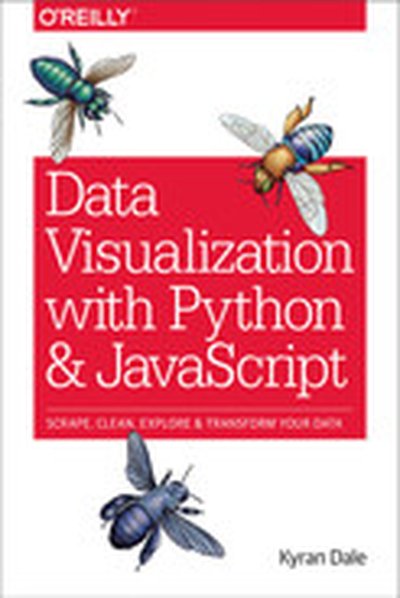
Data Visualization with Python and JavaScript

Learn how to turn raw data into rich, interactive web visualizations with the powerful combination of Python and JavaScript. With this hands-on guide, author Kyran Dale teaches you how build a basic dataviz toolchain with best-of-breed Python and JavaScript libraries—including Scrapy, Matplotlib, Pandas, Flask, and D3—for crafting engaging, browser-based visualizations. As a working example, throughout the book Dale walks you through transforming Wikipedia’s table-based list of Nobel Prize winners into an interactive visualization. You’ll examine steps along the entire toolchain, from scraping, cleaning, exploring, and delivering data to building the visualization with JavaScript’s D3 library. If you’re ready to create your own web-based data visualizations—and know either Python or JavaScript— this is the book for you. Learn how to manipulate data with Python Understand the commonalities between Python and JavaScript Extract information from websites by using Python’s web-scraping tools, BeautifulSoup and Scrapy Clean and explore data with Python’s Pandas, Matplotlib, and Numpy libraries Serve data and create RESTful web APIs with Python’s Flask framework Create engaging, interactive web visualizations with JavaScript’s D3 library

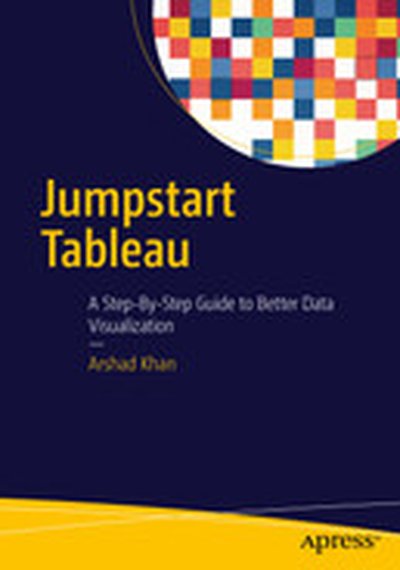
Jumpstart Tableau: A Step-By-Step Guide to Better Data Visualization

This book simplifies the use of Tableau software functionality for novice users so that they can create powerful data visualizations easily and quickly. Since it is often very difficult and expensive to provide external training on BI tools, this book aims to equip the reader with the resource they need to do it themselves. Jumpstart Tableau covers the basic reporting and analysis functions that most BI users perform in their day-to-day work. These include connecting to a data source, working with dimensions and measures, developing reports and charts, saving workbooks, filtering, swapping, sorting, formatting, grouping, creating hierarchies, forecasting, exporting, distributing, as well developing various chart types. Each exercise in Jumpstart Tableau provides screenshots that cover every step from start to finish. The exercises are based on a comprehensive sample Excel-based data source that Tableau Software (version 9) has provided, which makes it very easy to duplicate the exercises on the real software. In addition, the book: Enables readers to develop reports, queries, and visualizations Perform data analysis Execute each function in a step-by-step manner Provides the basic hands-on ability which can enable users to work up to more advanced and complex Tableau functionality Shows how to integrate individual development of content, such as tables/charts and visualizations., onto a dashboard for an effective presentation

Mastering Data Visualization with Microsoft Visio Professional 2016

Microsoft Visio Professional 2016 is an essential tool for creating sophisticated data visualizations across a variety of contexts and industries. In 'Mastering Data Visualization with Microsoft Visio Professional 2016', you'll learn how to utilize Visio's powerful features to transform data into compelling graphics and actionable insights. What this Book will help me do Understand how to integrate external data from various sources into your Visio diagrams. Master the use of Visio's tools to represent information using data-driven graphics. Learn the process of designing and utilizing custom shapes and templates for tailored visualizations. Discover methods for automating diagram creation from structured and external data sources. Gain techniques to share and present interactive and professional visuals with a wide audience. Author(s) John Marshall, the author of 'Mastering Data Visualization with Microsoft Visio Professional 2016,' brings years of experience in data modeling and visualization. With an extensive technical background, Marshall is a renowned expert in leveraging visual tools to communicate complex ideas effectively. His approachable writing style makes highly technical concepts accessible to professionals at various levels. Who is it for? If you're a business intelligence professional, technical analyst, or a Microsoft Office power user looking to enhance your skills in creating impactful visualizations, this book is for you. Its step-by-step approach is ideal for users of Visio Professional starting out or seeking advanced techniques. You'll gain practical insights and learn to apply them effectively in your business or technical workflows, achieving refined data presentations.

Python Data Visualization Cookbook (Second Edition)

In 'Python Data Visualization Cookbook (Second Edition)', you'll learn how to create stunning and meaningful visual representations of data using Python's powerful libraries. Through step-by-step, recipe-based guidance, this book equips you to transform raw data into comprehensible and compelling visual stories. What this Book will help me do Master setting up Python and its libraries for data visualization. Learn how to import, clean, and organize data effectively. Create a variety of plots and charts tailored to your data's needs. Explore 3D visualizations and animations for more complex data insights. Incorporate visualization into environments like LaTeX and web frameworks. Author(s) The authors Igor Milovanovic, None Foures, and Giuseppe Vettigli bring extensive experience in Python programming and data analysis. With a passion for teaching and a clear instructional style, they make complex topics approachable and engaging. Their expertise ensures you gain practical knowledge you can apply immediately. Who is it for? This book is perfect for Python programmers who want to deepen their understanding of data and learn how to visualize it effectively. It's suitable for readers with basic Python knowledge, looking to elevate their skills in data visualization. Whether you aim to improve at data-driven storytelling or analyze data in clarity, this book has you covered.

Building Responsive Data Visualization for the Web

Unchain your data from the desktop with responsive visualizations Building Responsive Data Visualization for the Web is a handbook for any front-end development team needing a framework for integrating responsive web design into the current workflow. Written by a leading industry expert and design lead at Starbase Go, this book provides a wealth of information and practical guidance from the perspective of a real-world designer. You'll walk through the process of building data visualizations responsively as you learn best practices that build upon responsive web design principles, and get the hands-on practice you need with exercises, examples, and source code provided in every chapter. These strategies are designed to be implemented by teams large and small, with varying skill sets, so you can apply these concepts and skills to your project right away. Responsive web design is the practice of building a website to suit base browser capability, then adding features that enhance the experience based on the user's device's capabilities. Applying these ideas to data produces visualizations that always look as if they were designed specifically for the device through which they are viewed. This book shows you how to incorporate these principles into your current practices, with highly practical hands-on training. Examine the hard data surrounding responsive design Master best practices with hands-on exercises Learn data-based document manipulation using D3.js Adapt your current strategies to responsive workflows Data is growing exponentially, and the need to visualize it in any context has become crucial. Traditional visualizations allow important data to become lost when viewed on a small screen, and the web traffic speaks for itself – viewers repeatedly demonstrate their preference for responsive design. If you're ready to create more accessible, take-anywhere visualizations, Building Responsive Data Visualization for the Web is your tailor-made solution.

Mastering Python Data Visualization

Mastering Python Data Visualization provides thorough, hands-on guidance for creating impactful visual representations of data by leveraging Python's powerful libraries such as Matplotlib, Pandas, and Scikit-Learn. By following this book, you will gain proficiency in understanding data, performing analyses, and ultimately presenting your findings in a clear and engaging way. What this Book will help me do Effectively transform raw data into insightful visualizations using Python's rich ecosystem of libraries. Understand and apply best practices for selecting the most appropriate visualization techniques for different datasets and objectives. Master the use of Python for interactive plotting, regression analysis, clustering, and classification tasks. Develop a solid foundation in data visualization aesthetics and how to convey information clearly through visuals. Utilize Python for specialized fields such as finance, bioinformatics, and social network analysis, incorporating advanced computation techniques. Author(s) Kirthi Raman is an experienced data scientist and Python advocate with a strong background in technical computing and data visualization. He has hands-on experience in using Python's ecosystem to solve real-world data problems and a passion for sharing knowledge. Raman's writing focuses on blending practical insights with comprehensive explanations, ensuring readers not only learn the tools but also apply them effectively. Who is it for? This book is ideal for data analysts, data scientists, and researchers who want to deepen their knowledge of Python-based data visualization techniques. It requires readers to have a basic understanding of Python and data manipulation. If your goal is to create professional and informative visual narratives that are both visually appealing and data-driven, this book is for you.

Data Visualization with D3 and AngularJS

In "Data Visualization with D3 and AngularJS," you'll discover how to create dynamic, data-driven visualizations with the power of D3.js integrated seamlessly into AngularJS apps. This book offers a hands-on approach, demonstrating step-by-step how to leverage the strengths of these technologies to build interactive dashboards and visual components. What this Book will help me do Build and integrate interactive dashboards using D3.js and AngularJS. Design varied types of charts, including scatter plots, bar graphs, and area charts. Understand how to load, parse, and preprocess external data for visualizations. Develop modular and reusable visualization components in AngularJS. Create custom animations and interactions for user engagement with data visualizations. Author(s) With years of experience in front-end development and data visualization, the authors None Hanchett and None Körner bring expert insight and clarity to these topics. Their instructional approach focuses on practical, real-world applications, aiming to empower readers to achieve professional results through clear explanations and well-structured examples. Who is it for? This book is tailored for web developers familiar with AngularJS who are eager to incorporate advanced visualizations into their applications. Whether you're looking to build professional dashboards or simply explore the capabilities of D3.js, this book provides the knowledge you need. Ideal for those aiming to gain hands-on experience and enhance their development skill set.

Visualization Analysis and Design

This book provides a systematic, comprehensive framework for thinking about visualization in terms of principles and design choices. It features a unified approach encompassing information visualization techniques for abstract data, scientific visualization techniques for spatial data, and visual analytics techniques for interweaving data transformation and analysis with interactive visual exploration. Suitable for both beginners and more experienced designers, the book does not assume any experience with programming, mathematics, human-computer interaction, or graphic design.

Data Visualization, 2nd Edition

This book explores the study of processing and visually representing data sets. Data visualization is closely related to information graphics, information visualization, scientific visualization, and statistical graphics. This second edition presents a better treatment of the relationship between traditional scientific visualization and information visualization, a description of the emerging field of visual analytics, and updated techniques using the GPU and new generations of software tools and packages. This edition is also enhanced with exercises and downloadable code and data sets.

Visual Storytelling with D3: An Introduction to Data Visualization in JavaScript™

Master D3, Today’s Most Powerful Tool for Visualizing Data on the Web Data-driven graphics are everywhere these days, from websites and mobile apps to interactive journalism and high-end presentations. Using D3, you can create graphics that are visually stunning and powerfully effective. is a hands-on, full-color tutorial that teaches you to design charts and data visualizations to tell your story quickly and intuitively, and that shows you how to wield the powerful D3 JavaScript library. Visual Storytelling with D3 Drawing on his extensive experience as a professional graphic artist, writer, and programmer, Ritchie S. King walks you through a complete sample project—from conception through data selection and design. Step by step, you’ll build your skills, mastering increasingly sophisticated graphical forms and techniques. If you know a little HTML and CSS, you have all the technical background you’ll need to master D3. This tutorial is for web designers creating graphics-driven sites, services, tools, or dashboards; online journalists who want to visualize their content; researchers seeking to communicate their results more intuitively; marketers aiming to deepen their connections with customers; and for any data visualization enthusiast. Coverage includes Identifying a data-driven story and telling it visually Creating and manipulating beautiful graphical elements with SVG Shaping web pages with D3 Structuring data so D3 can easily visualize it Using D3’s data joins to connect your data to the graphical elements on a web page Sizing and scaling charts, and adding axes to them Loading and filtering data from external standalone datasets Animating your charts with D3’s transitions Adding interactivity to visualizations, including a play button that cycles through different views of your data Finding D3 resources and getting involved in the thriving online D3 community About the Website All of this book’s examples are available at ritchiesking.com/book, along with video tutorials, updates, supporting material, and even more examples, as they become available.

The Visual Organization: Data Visualization, Big Data, and the Quest for Better Decisions

The era of Big Data as arrived, and most organizations are woefully unprepared. Slowly, many are discovering that stalwarts like Excel spreadsheets, KPIs, standard reports, and even traditional business intelligence tools aren't sufficient. These old standbys can't begin to handle today's increasing streams, volumes, and types of data. Amidst all of the chaos, though, a new type of organization is emerging. In The Visual Organization, award-winning author and technology expert Phil Simon looks at how an increasingly number of organizations are embracing new dataviz tools and, more important, a new mind-set based upon data discovery and exploration. Simon adroitly shows how Amazon, Apple, Facebook, Google, Twitter, and other tech heavyweights use powerful data visualization tools to garner fascinating insights into their businesses. But make no mistake: these companies are hardly alone. Organizations of all types, industries, sizes are representing their data in new and amazing ways. As a result, they are asking better questions and making better business decisions. Rife with real-world examples and case studies, The Visual Organization is a full-color tour-de-force.

Data Visualization For Dummies

A straightforward, full-color guide to showcasing data so your audience can see what you mean, not just read about it Big data is big news! Every company, industry, not-for-profit, and government agency wants and needs to analyze and leverage datasets that can quickly become ponderously large. Data visualization software enables different industries to present information in ways that are memorable and relevant to their mission. This full-color guide introduces you to a variety of ways to handle and synthesize data in much more interesting ways than mere columns and rows of numbers. Learn meaningful ways to show trending and relationships, how to convey complex data in a clear, concise diagram, ways to create eye-catching visualizations, and much more! Effective data analysis involves learning how to synthesize data, especially big data, into a story and present that story in a way that resonates with the audience This full-color guide shows you how to analyze large amounts of data, communicate complex data in a meaningful way, and quickly slice data into various views Explains how to automate redundant reporting and analyses, create eye-catching visualizations, and use statistical graphics and thematic cartography Enables you to present vast amounts of data in ways that won't overwhelm your audience Part technical manual and part analytical guidebook, Data Visualization For Dummies is the perfect tool for transforming dull tables and charts into high-impact visuals your audience will notice...and remember.

Tableau Your Data!: Fast and Easy Visual Analysis with Tableau Software

Best practices and step-by-step instructions for using the Tableau Software toolset Although the Tableau Desktop interface is relatively intuitive, this book goes beyond the simple mechanics of the interface to show best practices for creating effective visualizations for specific business intelligence objectives. It illustrates little-known features and techniques for getting the most from the Tableau toolset, supporting the needs of the business analysts who use the product as well as the data and IT managers who support it. This comprehensive guide covers the core feature set for data analytics, illustrating best practices for creating and sharing specific types of dynamic data visualizations. Featuring a helpful full-color layout, the book covers analyzing data with Tableau Desktop, sharing information with Tableau Server, understanding Tableau functions and calculations, and Use Cases for Tableau Software. Includes little-known, as well as more advanced features and techniques, using detailed, real-world case studies that the author has developed as part of his consulting and training practice Explains why and how Tableau differs from traditional business information analysis tools Shows you how to deploy dashboards and visualizations throughout the enterprise Provides a detailed reference resource that is aimed at users of all skill levels Depicts ways to leverage Tableau across the value chain in the enterprise through case studies that target common business requirements Endorsed by Tableau Software Tableau Your Data shows you how to build dynamic, best-of-breed visualizations using the Tableau Software toolset.

Data Visualization with D3.js Cookbook

Dive into the world of data visualization with 'Data Visualization with D3.js Cookbook'. This book provides a hands-on approach to mastering data visualization using D3.js, a powerful JavaScript library that brings data to life using HTML, SVG, and CSS. Through step-by-step recipes, you'll learn everything you need to create stunning, interactive, and effective visualizations. What this Book will help me do Develop expertise in functional JavaScript to create elegant D3 visualizations. Learn to work with HTML and SVG elements efficiently to design effective visuals. Master the use of D3 scales and interpolators to represent data accurately. Enhance your understanding of D3 layouts and force-directed visuals for complex data. Create interactive and responsive visualizations for web applications. Author(s) Nick Zhu is an experienced software engineer and data visualization enthusiast with extensive expertise in JavaScript and web development. Authoring 'Data Visualization with D3.js Cookbook', Nick adeptly shares his knowledge, making complex topics approachable. His passion for clear communication shines in his instructive writing style. Who is it for? This book is designed for developers who have some knowledge of HTML, CSS, and JavaScript and aim to excel in data visualization using D3.js. If you strive for deeper mastery of D3 and wish to enhance your ability to create compelling graphics, this book is ideal for you. It serves both as a learning resource for newcomers and a quick reference for experienced practitioners. Your goal to transform data into impactful visuals aligns perfectly with the insights offered.

Visual Intelligence: Microsoft Tools and Techniques for Visualizing Data

Go beyond design concepts and learn to build state-of-the-art visualizations The visualization experts at Microsoft's Pragmatic Works have created a full-color, step-by-step guide to building specific types of visualizations. The book thoroughly covers the Microsoft toolset for data analysis and visualization, including Excel, and explores best practices for choosing a data visualization design, selecting tools from the Microsoft stack, and building a dynamic data visualization from start to finish. You'll examine different types of visualizations, their strengths and weaknesses, and when to use each one. Data visualization tools unlock the stories within the data, enabling you to present it in a way that is useful for making business decisions This full-color guide introduces data visualization design concepts, then explains the various Microsoft tools used to store and display data Features a detailed discussion of various classes of visualizations, their uses, and the appropriate tools for each Includes practical implementations of various visualizations and best practices for using them Covers out-of-the-box Microsoft tools, custom-developed illustrations and implementations, and code examples Visual Intelligence: Microsoft Tools and Techniques for Visualizing Data arms you with best practices and the knowledge to choose and build dynamic data visualizations.

Data Points: Visualization That Means Something

A fresh look at visualization from the author of Visualize This Whether it's statistical charts, geographic maps, or the snappy graphical statistics you see on your favorite news sites, the art of data graphics or visualization is fast becoming a movement of its own. In Data Points: Visualization That Means Something, author Nathan Yau presents an intriguing complement to his bestseller Visualize This, this time focusing on the graphics side of data analysis. Using examples from art, design, business, statistics, cartography, and online media, he explores both standard-and not so standard-concepts and ideas about illustrating data. Shares intriguing ideas from Nathan Yau, author of Visualize This and creator of flowingdata.com, with over 66,000 subscribers Focuses on visualization, data graphics that help viewers see trends and patterns they might not otherwise see in a table Includes examples from the author's own illustrations, as well as from professionals in statistics, art, design, business, computer science, cartography, and more Examines standard rules across all visualization applications, then explores when and where you can break those rules Create visualizations that register at all levels, with Data Points: Visualization That Means Something.

Interactive Data Visualization for the Web

Create and publish your own interactive data visualization projects on the Web—even if you have little or no experience with data visualization or web development. It’s easy and fun with this practical, hands-on introduction. Author Scott Murray teaches you the fundamental concepts and methods of D3, a JavaScript library that lets you express data visually in a web browser. Along the way, you’ll expand your web programming skills, using tools such as HTML and JavaScript. This step-by-step guide is ideal whether you’re a designer or visual artist with no programming experience, a reporter exploring the new frontier of data journalism, or anyone who wants to visualize and share data. Learn HTML, CSS, JavaScript, and SVG basics Dynamically generate web page elements from your data—and choose visual encoding rules to style them Create bar charts, scatter plots, pie charts, stacked bar charts, and force-directed layouts Use smooth, animated transitions to show changes in your data Introduce interactivity to help users explore data through different views Create customized geographic maps with data Explore hands-on with downloadable code and over 100 examples

Data Visualization: a successful design process

Dive into the world of data visualization with 'Data Visualization: a Successful Design Process'. Learn to convert complex datasets into vivid, insightful visuals using proven design methodologies and tools. This resource equips you to craft visuals that not only engage your audience but also uncover critical trends and narratives hidden in data. What this Book will help me do Master the fundamentals of visualization taxonomy to choose the ideal design for your data. Develop analytical questions and identify key narratives to structure your data representation. Understand the human visual system and how it impacts effective visual communication. Apply critical thinking to select visualization techniques suited to different data types. Gain an in-depth knowledge of data visualization tools and contemporary practices. Author(s) The author of this book is a seasoned expert in the field of data visualization, known for their innovative approach to transforming data into impactful visuals. With years of experience navigating the intersection of data science and design, their method focuses on empowering professionals to communicate insights effectively. Their writing combines a deep understanding of technical skills with actionable, inspiring guidance. Who is it for? This book is perfect for professionals, analysts, and designers who aim to improve their data visualization skills. Whether you are a beginner or an experienced individual seeking to refine your approach, this book caters to all skill levels. If your goal includes communicating data insights clearly and effectively to varied audiences, this book is for you.

Designing Data Visualizations

Data visualization is an efficient and effective medium for communicating large amounts of information, but the design process can often seem like an unexplainable creative endeavor. This concise book aims to demystify the design process by showing you how to use a linear decision-making process to encode your information visually. Delve into different kinds of visualization, including infographics and visual art, and explore the influences at work in each one. Then learn how to apply these concepts to your design process. Learn data visualization classifications, including explanatory, exploratory, and hybrid Discover how three fundamental influences—the designer, the reader, and the data—shape what you create Learn how to describe the specific goal of your visualization and identify the supporting data Decide the spatial position of your visual entities with axes Encode the various dimensions of your data with appropriate visual properties, such as shape and color See visualization best practices and suggestions for encoding various specific data types

Making Sense of Data II: A Practical Guide to Data Visualization, Advanced Data Mining Methods, and Applications

A hands-on guide to making valuable decisions from data using advanced data mining methods and techniques This second installment in the Making Sense of Data series continues to explore a diverse range of commonly used approaches to making and communicating decisions from data. Delving into more technical topics, this book equips readers with advanced data mining methods that are needed to successfully translate raw data into smart decisions across various fields of research including business, engineering, finance, and the social sciences. Following a comprehensive introduction that details how to define a problem, perform an analysis, and deploy the results, Making Sense of Data II addresses the following key techniques for advanced data analysis: Data Visualization reviews principles and methods for understanding and communicating data through the use of visualization including single variables, the relationship between two or more variables, groupings in data, and dynamic approaches to interacting with data through graphical user interfaces. Clustering outlines common approaches to clustering data sets and provides detailed explanations of methods for determining the distance between observations and procedures for clustering observations. Agglomerative hierarchical clustering, partitioned-based clustering, and fuzzy clustering are also discussed. Predictive Analytics presents a discussion on how to build and assess models, along with a series of predictive analytics that can be used in a variety of situations including principal component analysis, multiple linear regression, discriminate analysis, logistic regression, and Naïve Bayes. Applications demonstrates the current uses of data mining across a wide range of industries and features case studies that illustrate the related applications in real-world scenarios. Each method is discussed within the context of a data mining process including defining the problem and deploying the results, and readers are provided with guidance on when and how each method should be used. The related Web site for the series ( www.makingsenseofdata.com) provides a hands-on data analysis and data mining experience. Readers wishing to gain more practical experience will benefit from the tutorial section of the book in conjunction with the TraceisTM software, which is freely available online. With its comprehensive collection of advanced data mining methods coupled with tutorials for applications in a range of fields, Making Sense of Data II is an indispensable book for courses on data analysis and data mining at the upper-undergraduate and graduate levels. It also serves as a valuable reference for researchers and professionals who are interested in learning how to accomplish effective decision making from data and understanding if data analysis and data mining methods could help their organization.