talk-data.com talk-data.com

Event

O'Reilly Data Visualization Books

2007-12-18 – 2026-02-25 Oreilly Visit website ↗

Activities tracked

22

Collection of O'Reilly books on Data Visualization.

Filtering by: Analytics ×

Sessions & talks

Showing 1–22 of 22 · Newest first

Search within this event →
Managing and Visualizing BIM Data with AI

Unlock the potential of your BIM workflows with artificial intelligence and data visualization tools. This book provides guided instruction on using software like Revit, Dynamo, Python, and Power BI to automate processes, derive insights, and craft tailored dashboards that empower data-driven decisions in AEC projects. What this Book will help me do Effectively preprocess and manage BIM data for analysis and visualization. Design interactive and insightful dashboards in Power BI for project stakeholders. Integrate real-time IoT data and advanced analytics into BIM projects. Automate repetitive tasks in Revit using Dynamo and Python scripting. Understand the ethical considerations and emerging trends in AI for BIM. Author(s) Bruno Martorelli, a seasoned BIM manager, specializes in integrating technology and data analytics into construction workflows. With a background in architecture and programming, he bridges the gap between traditional methods and modern innovations. Bruno is dedicated to sharing practical strategies for data automation and visualization. Who is it for? This book is tailored for architects, engineers, and construction managers interested in elevating their BIM practices. If you're familiar with Revit and possess a basic understanding of data management, you'll find this resource invaluable. Beginners in Python or Power BI will also find accessible guidance to start applying advanced techniques in their workflows.
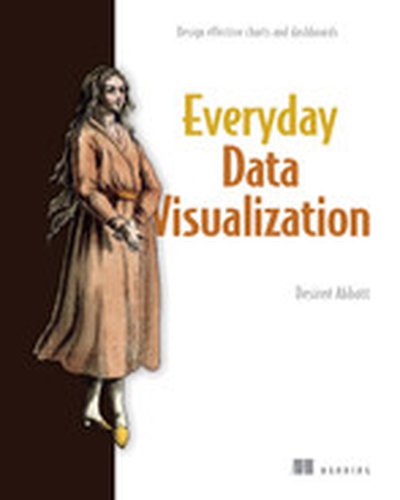
Everyday Data Visualization

Radically improve the quality of your data visualizations by employing core principles of color, typography, chart types, data storytelling, and more. Everyday Data Visualization is a field guide for design techniques that will improve the charts, reports, and data dashboards you build every day. Everything you learn is tool-agnostic, with universal principles you can apply to any data stack. In Everyday Data Visualization you’ll learn important design principles for the most common data visualizations: Harness the power of perception to guide a user’s attention Bring data to life with color and typography Choose the best chart types for your data story Design for interactive visualizations Keep the user’s needs first throughout your projects This book gives you the tools you need to bring your data to life with clarity, precision, and flair. You’ll learn how human brains perceive and process information, wield modern accessibility standards, get the basics of color theory and typography, and more. About the Technology Even mundane presentations like charts, dashboards, and infographics can become engaging and inspiring data stories! This book shows you how to upgrade the visualizations you create every day by improving the layout, typography, color, and accessibility. You’ll discover timeless principles of design that help you highlight important features, compensate for missing information, and interact with live data flows. About the Book Everyday Data Visualization guides you through basic graphic design for the most common types of data visualization. You’ll learn how to enhance charts with color, encourage users to interact and explore data and create visualizations accessible to everyone. Along the way, you’ll practice each new skill as you take a dashboard project from research to publication. What's Inside Bring data to life with color and typography Choose the best chart types for your data story Design interactive visualizations About the Reader For readers experienced with data analysis tools. About the Author Desireé Abbott has over a decade of experience in product analytics, business intelligence, science, design, and software engineering. The technical editor on this book was Michael Petrey. Quotes A delightful blend of data viz principles, guidance, and design tips. The treasure trove of insights I wish I had years ago! - Alli Torban, Author of Chart Spark With vibrant enthusiasm and engaging conversational style, this book shines. - RJ Andrews, data storyteller Elegantly simplifies complex concepts, making them accessible even to beginners. An enlightening journey. - Renato Sinohara, Westwing Group SE Desiree’s approachable writing style makes it easy to dive straight into this book, and you’re in deep before you even know it. I guarantee you’ll learn plenty. - Neil Richards, 5xTableau Visionary, Author of Questions in Dataviz

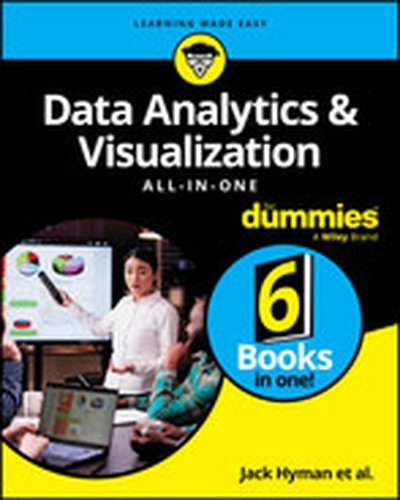
Data Analytics & Visualization All-in-One For Dummies

Install data analytics into your brain with this comprehensive introduction Data Analytics & Visualization All-in-One For Dummies collects the essential information on mining, organizing, and communicating data, all in one place. Clocking in at around 850 pages, this tome of a reference delivers eight books in one, so you can build a solid foundation of knowledge in data wrangling. Data analytics professionals are highly sought after these days, and this book will put you on the path to becoming one. You’ll learn all about sources of data like data lakes, and you’ll discover how to extract data using tools like Microsoft Power BI, organize the data in Microsoft Excel, and visually present the data in a way that makes sense using a Tableau. You’ll even get an intro to the Python, R, and SQL coding needed to take your data skills to a new level. With this Dummies guide, you’ll be well on your way to becoming a priceless data jockey. Mine data from data sources Organize and analyze data Use data to tell a story with Tableau Expand your know-how with Python and R New and novice data analysts will love this All-in-One reference on how to make sense of data. Get ready to watch as your career in data takes off.

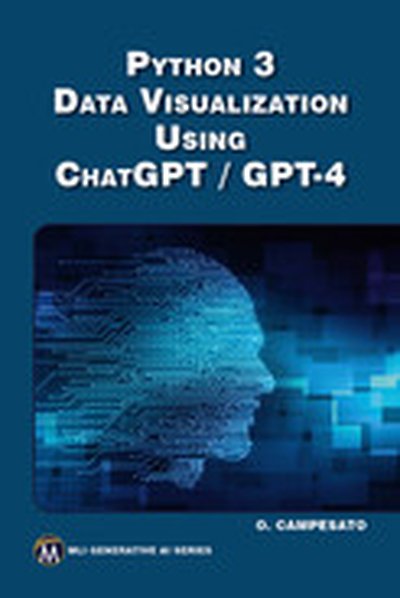
Python 3 and Data Visualization Using ChatGPT /GPT-4

This book is designed to show readers the concepts of Python 3 programming and the art of data visualization. It also explores cutting-edge techniques using ChatGPT/GPT-4 in harmony with Python for generating visuals that tell more compelling data stories. Chapter 1 introduces the essentials of Python, covering a vast array of topics from basic data types, loops, and functions to more advanced constructs like dictionaries, sets, and matrices. In Chapter 2, the focus shifts to NumPy and its powerful array operations, leading into data visualization using prominent libraries such as Matplotlib. Chapter 6 includes Seaborn's rich visualization tools, offering insights into datasets like Iris and Titanic. Further, the book covers other visualization tools and techniques, including SVG graphics, D3 for dynamic visualizations, and more. Chapter 7 covers information about the main features of ChatGPT and GPT-4, as well as some of their competitors. Chapter 8 contains examples of using ChatGPT in order to perform data visualization, such as charts and graphs that are based on datasets (e.g., the Titanic dataset). Companion files with code, datasets, and figures are available for downloading. From foundational Python concepts to the intricacies of data visualization, this book is ideal for Python practitioners, data scientists, and anyone in the field of data analytics looking to enhance their storytelling with data through visuals. It's also perfect for educators seeking material for teaching advanced data visualization techniques.

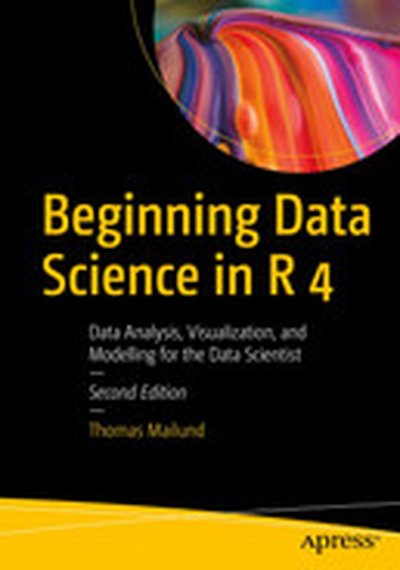
Beginning Data Science in R 4: Data Analysis, Visualization, and Modelling for the Data Scientist

Discover best practices for data analysis and software development in R and start on the path to becoming a fully-fledged data scientist. Updated for the R 4.0 release, this book teaches you techniques for both data manipulation and visualization and shows you the best way for developing new software packages for R. Beginning Data Science in R 4, Second Edition details how data science is a combination of statistics, computational science, and machine learning. You’ll see how to efficiently structure and mine data to extract useful patterns and build mathematical models. This requires computational methods and programming, and R is an ideal programming language for this. Modern data analysis requires computational skills and usually a minimum of programming. After reading and using this book, you'll have what you need to get started with R programming with data science applications. Source code will be available to support your next projects as well. Source code is available at github.com/Apress/beg-data-science-r4. What You Will Learn Perform data science and analytics using statistics and the R programming language Visualize and explore data, including working with large data sets found in big data Build an R package Test and check your code Practice version control Profile and optimize your code Who This Book Is For Those with some data science or analytics background, but not necessarily experience with the R programming language.

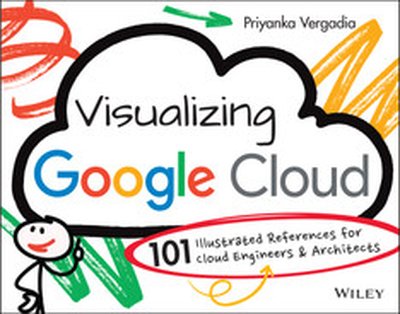
Visualizing Google Cloud

Easy-to-follow visual walkthrough of every important part of the Google Cloud Platform The Google Cloud Platform incorporates dozens of specialized services that enable organizations to offload technological needs onto the cloud. From routine IT operations like storage to sophisticated new capabilities including artificial intelligence and machine learning, the Google Cloud Platform offers enterprises the opportunity to scale and grow efficiently. In Visualizing Google Cloud: Illustrated References for Cloud Engineers & Architects, Google Cloud expert Priyanka Vergadia delivers a fully illustrated, visual guide to matching the best Google Cloud Platform services to your own unique use cases. After a brief introduction to the major categories of cloud services offered by Google, the author offers approximately 100 solutions divided into eight categories of services included in Google Cloud Platform: Compute Storage Databases Data Analytics Data Science, Machine Learning and Artificial Intelligence Application Development and Modernization with Containers Networking Security You’ll find richly illustrated flowcharts and decision diagrams with straightforward explanations in each category, making it easy to adopt and adapt Google’s cloud services to your use cases. With coverage of the major categories of cloud models—including infrastructure-, containers-, platforms-, functions-, and serverless—and discussions of storage types, databases and Machine Learning choices, Visualizing Google Cloud: Illustrated References for Cloud Engineers & Architects is perfect for Every Google Cloud enthusiast, of course. It is for anyone who is planning a cloud migration or new cloud deployment. It is for anyone preparing for cloud certification, and for anyone looking to make the most of Google Cloud. It is for cloud solutions architects, IT decision-makers, and cloud data and ML engineers. In short, this book is for YOU.

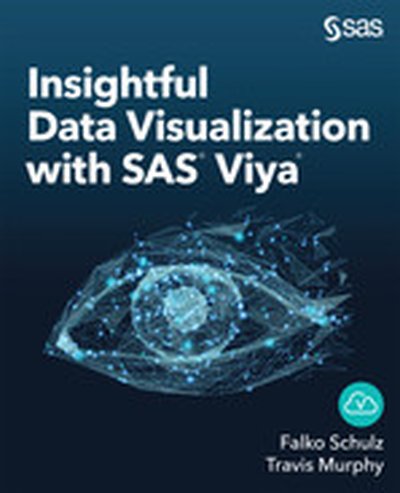
Insightful Data Visualization with SAS Viya

Elevate your storytelling with SAS Visual Analytics Data visualization is the gateway to artificial intelligence (AI) and big data. Insightful Data Visualization with SAS Viya shows how the latest SAS Viya tools can be used to create data visualizations in an easier, smarter, and more engaging way than ever before. SAS Visual Analytics combined with human creativity can produce endless possibilities. In this book, you will learn tips and techniques for getting the most from your SAS Visual Analytics investment. From beginners to advanced SAS users, this book has something for everyone. Use AI wizards to create data visualization automatically, learn to use advanced analytics in your dashboards to surface smarter insights, and learn to extend SAS Visual Analytics with advanced integrations and options. Topics covered in this book include: SAS Visual Analytics Data visualization with SAS Reports and dashboards SAS code examples Self-service analytics SAS data access Extending SAS beyond drag and drop

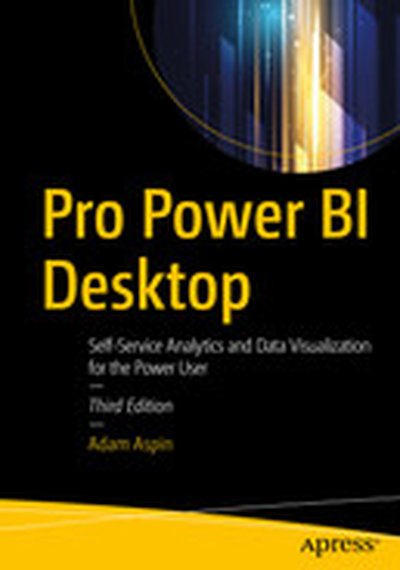
Pro Power BI Desktop: Self-Service Analytics and Data Visualization for the Power User

Deliver eye-catching and insightful business intelligence with Microsoft Power BI Desktop. This new edition has been updated to cover all the latest features of Microsoft’s continually evolving visualization product. New in this edition is help with storytelling—adapted to PCs, tablets, and smartphones—and the building of a data narrative. You will find coverage of templates and JSON style sheets, data model annotations, and the use of composite data sources. Also provided is an introduction to incorporating Python visuals and the much awaited Decomposition Tree visual. Pro Power BI Desktop shows you how to use source data to produce stunning dashboards and compelling reports that you mold into a data narrative to seize your audience’s attention. Slice and dice the data with remarkable ease and then add metrics and KPIs to project the insights that create your competitive advantage. Convert raw data into clear, accurate, and interactive information with Microsoft’s free self-service BI tool. This book shows you how to choose from a wide range of built-in and third-party visualization types so that your message is always enhanced. You will be able to deliver those results on PCs, tablets, and smartphones, as well as share results via the cloud. The book helps you save time by preparing the underlying data correctly without needing an IT department to prepare it for you. What You Will Learn Deliver attention-grabbing information, turning data into insight Find new insights as you chop and tweak your data as never before Build a data narrative through interactive reports with drill-through and cross-page slicing Mash up data from multiple sources into a cleansed and coherent data model Build interdependent charts, maps, and tables to deliver visually stunninginformation Create dashboards that help in monitoring key performance indicators of your business Adapt delivery to mobile devices such as phones and tablets Who This Book Is For Power users who are ready to step up to the big leagues by going beyond what Microsoft Excel by itself can offer. The book also is for line-of-business managers who are starved for actionable data needed to make decisions about their business. And the book is for BI analysts looking for an easy-to-use tool to analyze data and share results with C-suite colleagues they support.

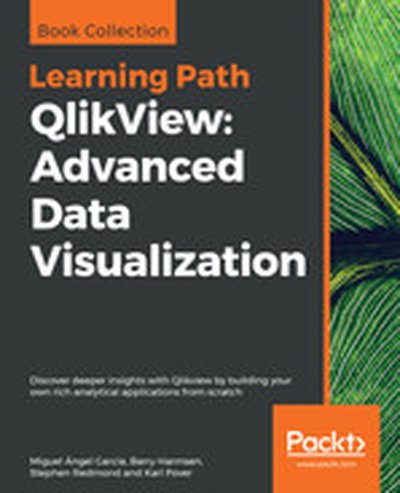
QlikView: Advanced Data Visualization

Build powerful data analytics applications with this business intelligence tool and overcome all your business challenges Key Features Master time-saving techniques and make your QlikView development more efficient Perform geographical analysis and sentiment analysis in your QlikView applications Explore advanced QlikView techniques, tips, and tricks to deliver complex business requirements Book Description QlikView is one of the most flexible and powerful business intelligence platforms around, and if you want to transform data into insights, it is one of the best options you have at hand. Use this Learning Path, to explore the many features of QlikView to realize the potential of your data and present it as impactful and engaging visualizations. Each chapter in this Learning Path starts with an understanding of a business requirement and its associated data model and then helps you create insightful analysis and data visualizations around it. You will look at problems that you might encounter while visualizing complex data insights using QlikView, and learn how to troubleshoot these and other not-so-common errors. This Learning Path contains real-world examples from a variety of business domains, such as sales, finance, marketing, and human resources. With all the knowledge that you gain from this Learning Path, you will have all the experience you need to implement your next QlikView project like a pro. This Learning Path includes content from the following Packt products: QlikView for Developers by Miguel Angel Garcia, Barry Harmsen Mastering QlikView by Stephen Redmond Mastering QlikView Data Visualization by Karl Pover What you will learn Deliver common business requirements using advanced techniques Load data from disparate sources to build associative data models Understand when to apply more advanced data visualization Utilize the built-in aggregation functions for complex calculations Build a data architecture that supports scalable QlikView deployments Troubleshoot common data visualization errors in QlikView Protect your QlikView applications and data Who this book is for This Learning Path is designed for developers who want to go beyond their technical knowledge of QlikView and understand how to create analysis and data visualizations that solve real business needs. To grasp the concepts explained in this Learning Path, you should have a basic understanding of the common QlikView functions and some hands-on experience with the tool. Downloading the example code for this book You can download the example code files for all Packt books you have purchased from your account at http://www.PacktPub.com. If you purchased this book elsewhere, you can visit http://www.PacktPub.com/support and register to have the files e-mailed directly to you.

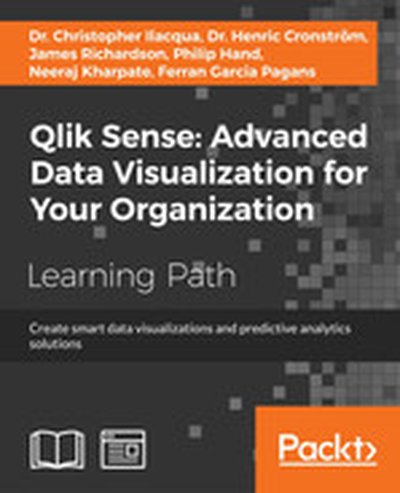
Qlik Sense: Advanced Data Visualization for Your Organization

Perform Interactive Data Analysis with Smarter Visualizations and Support your Enterprise-wide Analytical Needs About This Book Get a practical demonstration of discovering data for sales, human resources, and more using Qlik Sense Create dynamic dashboards for business intelligence and predictive analytics Create and collaborate comprehensive analytical solutions using Rattle and Qlik Sense Who This Book Is For This course is for anyone who wishes to understand and utilize the various new approaches to business intelligence actively in their business practice. Knowing the basics of business intelligence concepts would be helpful when picking up this course, but is not mandatory. What You Will Learn Build simple visualization models with Rattle and Qlik Sense Desktop Get to grips with the life cycle and new visualization functions of a Qlik Sense application Discover simple ways to examine data and get it ready for analysis Visualize your data with Qlik Sense's engaging and informative graphs Build efficient and responsive Associative Models Optimize Qlik Sense for sales, human resources, and demographic data discovery Explore various tips and tricks of navigation for the Qlik Sense® front end Develop creative extensions for your Qlik Sense® dashboard In Detail Qlik Sense is powerful and creative visual analytics software that allows users to discover data, explore it, and dig out meaningful insights in order to make a profit and make decisions for your business. This course begins by introducing you to the features and functions of the most modern edition of Qlik Sense so you get to grips with the application. The course will teach you how to administer the data architecture in Qlik Sense, enabling you to customize your own Qlik Sense application for your business intelligence needs. It also contains numerous recipes to help you overcome challenging situations while creating fully featured desktop applications in Qlik Sense. It explains how to combine Rattle and Qlik Sense Desktop to apply predictive analytics to your data to develop real-world interactive data applications. The course includes premium content from three of our most popular books: Learning Qlik Sense: The Official Guide Second Edition Qlik Sense Cookbook Predictive Analytics using Rattle and Qlik Sense On completion of this course, you will be self-sufficient in improving your data analysis and will know how to apply predictive analytics to your datasets. Through this course, you will be able to create predictive models and data applications, allowing you to explore your data insights much deeper. Style and approach The course will follow a practical approach with rich set of examples through which it will demonstrate its concepts, features and its implementation. The course will also feature numerous solutions which will cover entire spectrum of BI use cases.

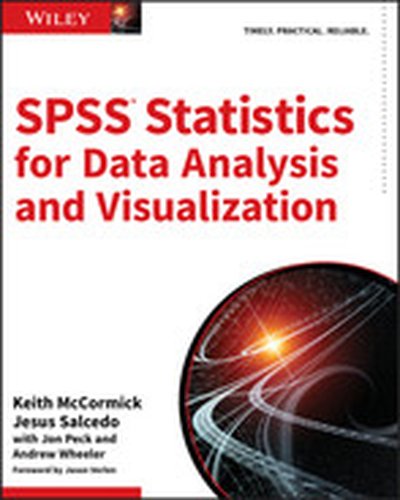
SPSS Statistics for Data Analysis and Visualization

Dive deeper into SPSS Statistics for more efficient, accurate, and sophisticated data analysis and visualization SPSS Statistics for Data Analysis and Visualization goes beyond the basics of SPSS Statistics to show you advanced techniques that exploit the full capabilities of SPSS. The authors explain when and why to use each technique, and then walk you through the execution with a pragmatic, nuts and bolts example. Coverage includes extensive, in-depth discussion of advanced statistical techniques, data visualization, predictive analytics, and SPSS programming, including automation and integration with other languages like R and Python. You'll learn the best methods to power through an analysis, with more efficient, elegant, and accurate code. IBM SPSS Statistics is complex: true mastery requires a deep understanding of statistical theory, the user interface, and programming. Most users don't encounter all of the methods SPSS offers, leaving many little-known modules undiscovered. This book walks you through tools you may have never noticed, and shows you how they can be used to streamline your workflow and enable you to produce more accurate results. Conduct a more efficient and accurate analysis Display complex relationships and create better visualizations Model complex interactions and master predictive analytics Integrate R and Python with SPSS Statistics for more efficient, more powerful code These "hidden tools" can help you produce charts that simply wouldn't be possible any other way, and the support for other programming languages gives you better options for solving complex problems. If you're ready to take advantage of everything this powerful software package has to offer, SPSS Statistics for Data Analysis and Visualization is the expert-led training you need.

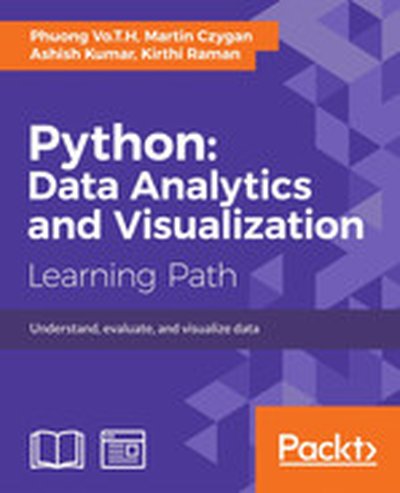
Python: Data Analytics and Visualization

Understand, evaluate, and visualize data About This Book Learn basic steps of data analysis and how to use Python and its packages A step-by-step guide to predictive modeling including tips, tricks, and best practices Effectively visualize a broad set of analyzed data and generate effective results Who This Book Is For This book is for Python Developers who are keen to get into data analysis and wish to visualize their analyzed data in a more efficient and insightful manner. What You Will Learn Get acquainted with NumPy and use arrays and array-oriented computing in data analysis Process and analyze data using the time-series capabilities of Pandas Understand the statistical and mathematical concepts behind predictive analytics algorithms Data visualization with Matplotlib Interactive plotting with NumPy, Scipy, and MKL functions Build financial models using Monte-Carlo simulations Create directed graphs and multi-graphs Advanced visualization with D3 In Detail You will start the course with an introduction to the principles of data analysis and supported libraries, along with NumPy basics for statistics and data processing. Next, you will overview the Pandas package and use its powerful features to solve data-processing problems. Moving on, you will get a brief overview of the Matplotlib API .Next, you will learn to manipulate time and data structures, and load and store data in a file or database using Python packages. You will learn how to apply powerful packages in Python to process raw data into pure and helpful data using examples. You will also get a brief overview of machine learning algorithms, that is, applying data analysis results to make decisions or building helpful products such as recommendations and predictions using Scikit-learn. After this, you will move on to a data analytics specialization - predictive analytics. Social media and IOT have resulted in an avalanche of data. You will get started with predictive analytics using Python. You will see how to create predictive models from data. You will get balanced information on statistical and mathematical concepts, and implement them in Python using libraries such as Pandas, scikit-learn, and NumPy. You'll learn more about the best predictive modeling algorithms such as Linear Regression, Decision Tree, and Logistic Regression. Finally, you will master best practices in predictive modeling. After this, you will get all the practical guidance you need to help you on the journey to effective data visualization. Starting with a chapter on data frameworks, which explains the transformation of data into information and eventually knowledge, this path subsequently cover the complete visualization process using the most popular Python libraries with working examples This Learning Path combines some of the best that Packt has to offer in one complete, curated package. It includes content from the following Packt products: Getting Started with Python Data Analysis, Phuong Vo.T.H &Martin Czygan Learning Predictive Analytics with Python, Ashish Kumar Mastering Python Data Visualization, Kirthi Raman Style and approach The course acts as a step-by-step guide to get you familiar with data analysis and the libraries supported by Python with the help of real-world examples and datasets. It also helps you gain practical insights into predictive modeling by implementing predictive-analytics algorithms on public datasets with Python. The course offers a wealth of practical guidance to help you on this journey to data visualization

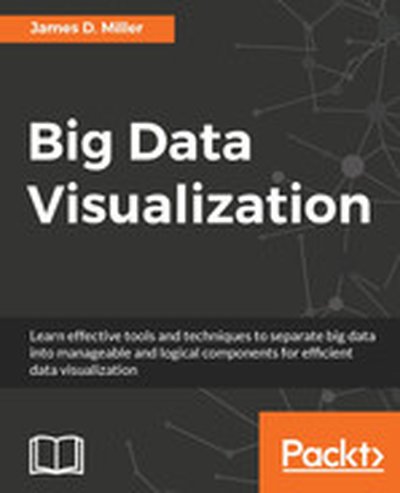
Big Data Visualization

Dive into 'Big Data Visualization' and uncover how to tackle the challenges of visualizing vast quantities of complex data. With a focus on scalable and dynamic techniques, this guide explores the nuances of effective data analysis. You'll master tools and approaches to display, interpret, and communicate data in impactful ways. What this Book will help me do Understand the fundamentals of big data visualization, including unique challenges and solutions. Explore practical techniques for using D3 and Python to visualize and detect anomalies in big data. Learn to leverage dashboards like Tableau to present data insights effectively. Address and improve data quality issues to enhance analysis accuracy. Gain hands-on experience with real-world use cases for tools such as Hadoop and Splunk. Author(s) James D. Miller is an IBM-certified expert specializing in data analytics and visualization. With years of experience handling massive datasets and extracting actionable insights, he is dedicated to sharing his expertise. His practical approach is evident in how he combines tool mastery with a clear understanding of data complexities. Who is it for? This book is designed for data analysts, data scientists, and others involved in interpreting and presenting big datasets. Whether you are a beginner looking to understand big data visualization or an experienced professional seeking advanced tools and techniques, this guide suits your needs perfectly. A foundational knowledge in programming languages like R and big data platforms such as Hadoop is recommended to maximize your learning.

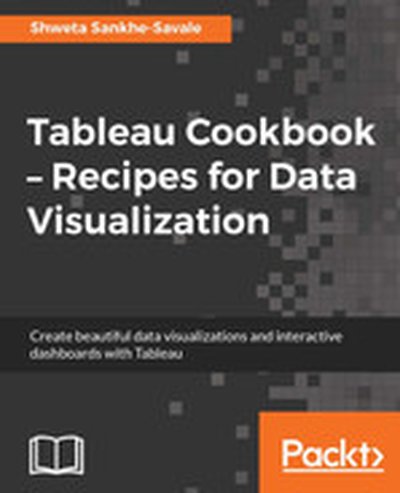
Tableau Cookbook - Recipes for Data Visualization

"Tableau Cookbook - Recipes for Data Visualization" walks you through the features and tools of Tableau, one of the industry-leading platforms for building data visualizations. Using over 50 hands-on recipes, you'll learn to create professional dashboards and storyboards to effectively present data trends and patterns. What this Book will help me do Understand the Tableau interface and connect it to various data sources. Build basic and advanced charts, from bar graphs to histograms and maps. Design interactive dashboards that link multiple visual components. Utilize parameters and calculations for advanced data visualizations. Integrate multiple data sources and leverage Tableau's data blending features. Author(s) Shweta Savale brings years of experience in data visualization and analytics to her writing of this cookbook. As a Tableau expert, Shweta has taught and consulted with professionals across industries, empowering them to gain insights from data. Her step-by-step instructional style makes learning both engaging and approachable. Who is it for? This book caters to both beginners looking to learn Tableau from scratch and advanced users needing a quick reference guide. It's perfect for data professionals, analysts, and anyone seeking to visualize and interpret data effectively. If you're looking to simplify Tableau's functions or sharpen your visualization skills, this book is for you.

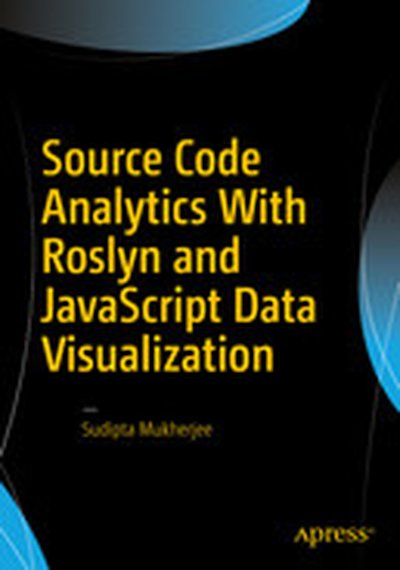
Source Code Analytics With Roslyn and JavaScript Data Visualization

Learn how to build an interactive source code analytics system using Roslyn and JavaScript. This concise 150 page book will help you create and use practical code analysis tools utilizing the new features of Microsoft's Roslyn compiler to understand the health of your code and identify parts of the code for refactoring. Source code is one of the biggest assets of a software company. However if not maintained well, it can become a big liability. As source code becomes larger. more complex and accessed via the cloud, maintaining code quality becomes even more challenging. The author provides straightforward tools and advice on how to manage code quality in this new environment. Roslyn exposes a set of APIs which allow developers to parse their C# and VB.NET code and drastically lower the barrier to entry for Meta programming in .NET. Roslyn has a dedicated set of APIs for creating custom refactoring for integrating with Visual Studio. This title will show readers how to use Roslyn along with industry standard JavaScript visualization APIs like HighCharts, D3.js etc to create a scalable and highly responsive source code analytics system. What You Will Learn Understand the Roslyn Syntax API Use Data Visualization techniques to assist code analysis process visually Code health monitoring matrices (from the standard of Code Query Language) Code mining techniques to identify design patterns used in source code Code forensics techniques to identify probable author of a given source code Techniques to identify duplicate/near duplicate code Who This Book is For .NET Software Developers and Architects

Tableau: Creating Interactive Data Visualizations

Illustrate your data in a more interactive way by implementing data visualization principles and creating visual stories using Tableau About This Book Use data visualization principles to help you to design dashboards that enlighten and support business decisions Integrate your data to provide mashed-up dashboards Connect to various data sources and understand what data is appropriate for Tableau Public Understand chart types and when to use specific chart types with different types of data Who This Book Is For Data scientists who have just started using Tableau and want to build on the skills using practical examples. Familiarity with previous versions of Tableau will be helpful, but not necessary. What You Will Learn Customize your designs to meet the needs of your business using Tableau Use Tableau to prototype, develop, and deploy the final dashboard Create filled maps and use any shape file Discover features of Tableau Public, from basic to advanced Build geographic maps to bring context to data Create filters and actions to allow greater interactivity to Tableau Public visualizations and dashboards Publish and embed Tableau visualizations and dashboards in articles In Detail With increasing interest for data visualization in the media, businesses are looking to create effective dashboards that engage as well as communicate the truth of data. Tableau makes data accessible to everyone, and is a great way of sharing enterprise dashboards across the business. Tableau is a revolutionary toolkit that lets you simply and effectively create high-quality data visualizations. This course starts with making you familiar with its features and enable you to develop and enhance your dashboard skills, starting with an overview of what dashboard is, followed by how you can collect data using various mathematical formulas. Next, you'll learn to filter and group data, as well as how to use various functions to present the data in an appealing and accurate way. In the first module, you will learn how to use the key advanced string functions to play with data and images. You will be walked through the various features of Tableau including dual axes, scatterplot matrices, heat maps, and sizing.In the second module, you'll start with getting your data into Tableau, move onto generating progressively complex graphics, and end with the finishing touches and packaging your work for distribution. This module is filled with practical examples to help you create filled maps, use custom markers, add slider selectors, and create dashboards. You will learn how to manipulate data in various ways by applying various filters, logic, and calculating various aggregate measures. Finally, in the third module, you learn about Tableau Public using which allows readers to explore data associations in multiple-sourced public data, and uses state-of-the-art dashboard and chart graphics to immerse the users in an interactive experience. In this module, the readers can quickly gain confidence in understanding and expanding their visualization, creation knowledge, and quickly create interesting, interactive data visualizations to bring a richness and vibrancy to complex articles. The course provides a great overview for beginner to intermediate Tableau users, and covers the creation of data visualizations of varying complexities. Style and approach The approach will be a combined perspective, wherein we start by performing some basic recipes and move on to some advanced ones. Finally, we perform some advanced analytics and create appealing and insightful data stories using Tableau Public in a step-by-step manner.

Mastering QlikView Data Visualization

"Mastering QlikView Data Visualization" is your essential guide to becoming proficient in advanced data visualization and analysis using QlikView. Through practical examples and real-world scenarios, this book enables you to create insightful and meaningful QlikView applications tailored to business needs. What this Book will help me do Design and implement advanced QlikView applications using realistic data and scenarios. Understand and fulfill business requirements across varied organizational departments. Create advanced charts and visualizations including frequency polygons and XmR charts. Integrate geographical, sentiment, and planning analysis into your QlikView models. Develop troubleshooting strategies for common QlikView data visualization challenges. Author(s) None Pover, an expert in data analytics and QlikView technologies, has extensive experience in implementing QlikView applications to address real-world business challenges. They are passionate about teaching practical solutions, ensuring readers gain actionable insights. With hands-on expertise, the author delivers clear, structured guidance in technical learning. Who is it for? If you're a QlikView developer wanting to go beyond the basics, this book is perfect for you. It is designed for individuals who have foundational knowledge of QlikView and are looking to enhance their ability to handle advanced projects. Whether you're focusing on analytics for sales, finance, or operations, you'll find this guide extremely useful.

Visualization Analysis and Design

This book provides a systematic, comprehensive framework for thinking about visualization in terms of principles and design choices. It features a unified approach encompassing information visualization techniques for abstract data, scientific visualization techniques for spatial data, and visual analytics techniques for interweaving data transformation and analysis with interactive visual exploration. Suitable for both beginners and more experienced designers, the book does not assume any experience with programming, mathematics, human-computer interaction, or graphic design.

Data Visualization, 2nd Edition

This book explores the study of processing and visually representing data sets. Data visualization is closely related to information graphics, information visualization, scientific visualization, and statistical graphics. This second edition presents a better treatment of the relationship between traditional scientific visualization and information visualization, a description of the emerging field of visual analytics, and updated techniques using the GPU and new generations of software tools and packages. This edition is also enhanced with exercises and downloadable code and data sets.

Real-Time Analytics: Techniques to Analyze and Visualize Streaming Data

Construct a robust end-to-end solution for analyzing and visualizing streaming data Real-time analytics is the hottest topic in data analytics today. In Real-Time Analytics: Techniques to Analyze and Visualize Streaming Data, expert Byron Ellis teaches data analysts technologies to build an effective real-time analytics platform. This platform can then be used to make sense of the constantly changing data that is beginning to outpace traditional batch-based analysis platforms. The author is among a very few leading experts in the field. He has a prestigious background in research, development, analytics, real-time visualization, and Big Data streaming and is uniquely qualified to help you explore this revolutionary field. Moving from a description of the overall analytic architecture of real-time analytics to using specific tools to obtain targeted results, Real-Time Analytics leverages open source and modern commercial tools to construct robust, efficient systems that can provide real-time analysis in a cost-effective manner. The book includes: A deep discussion of streaming data systems and architectures Instructions for analyzing, storing, and delivering streaming data Tips on aggregating data and working with sets Information on data warehousing options and techniques Real-Time Analytics includes in-depth case studies for website analytics, Big Data, visualizing streaming and mobile data, and mining and visualizing operational data flows. The book's "recipe" layout lets readers quickly learn and implement different techniques. All of the code examples presented in the book, along with their related data sets, are available on the companion website.

Tableau Your Data!: Fast and Easy Visual Analysis with Tableau Software

Best practices and step-by-step instructions for using the Tableau Software toolset Although the Tableau Desktop interface is relatively intuitive, this book goes beyond the simple mechanics of the interface to show best practices for creating effective visualizations for specific business intelligence objectives. It illustrates little-known features and techniques for getting the most from the Tableau toolset, supporting the needs of the business analysts who use the product as well as the data and IT managers who support it. This comprehensive guide covers the core feature set for data analytics, illustrating best practices for creating and sharing specific types of dynamic data visualizations. Featuring a helpful full-color layout, the book covers analyzing data with Tableau Desktop, sharing information with Tableau Server, understanding Tableau functions and calculations, and Use Cases for Tableau Software. Includes little-known, as well as more advanced features and techniques, using detailed, real-world case studies that the author has developed as part of his consulting and training practice Explains why and how Tableau differs from traditional business information analysis tools Shows you how to deploy dashboards and visualizations throughout the enterprise Provides a detailed reference resource that is aimed at users of all skill levels Depicts ways to leverage Tableau across the value chain in the enterprise through case studies that target common business requirements Endorsed by Tableau Software Tableau Your Data shows you how to build dynamic, best-of-breed visualizations using the Tableau Software toolset.

Making Sense of Data II: A Practical Guide to Data Visualization, Advanced Data Mining Methods, and Applications

A hands-on guide to making valuable decisions from data using advanced data mining methods and techniques This second installment in the Making Sense of Data series continues to explore a diverse range of commonly used approaches to making and communicating decisions from data. Delving into more technical topics, this book equips readers with advanced data mining methods that are needed to successfully translate raw data into smart decisions across various fields of research including business, engineering, finance, and the social sciences. Following a comprehensive introduction that details how to define a problem, perform an analysis, and deploy the results, Making Sense of Data II addresses the following key techniques for advanced data analysis: Data Visualization reviews principles and methods for understanding and communicating data through the use of visualization including single variables, the relationship between two or more variables, groupings in data, and dynamic approaches to interacting with data through graphical user interfaces. Clustering outlines common approaches to clustering data sets and provides detailed explanations of methods for determining the distance between observations and procedures for clustering observations. Agglomerative hierarchical clustering, partitioned-based clustering, and fuzzy clustering are also discussed. Predictive Analytics presents a discussion on how to build and assess models, along with a series of predictive analytics that can be used in a variety of situations including principal component analysis, multiple linear regression, discriminate analysis, logistic regression, and Naïve Bayes. Applications demonstrates the current uses of data mining across a wide range of industries and features case studies that illustrate the related applications in real-world scenarios. Each method is discussed within the context of a data mining process including defining the problem and deploying the results, and readers are provided with guidance on when and how each method should be used. The related Web site for the series ( www.makingsenseofdata.com) provides a hands-on data analysis and data mining experience. Readers wishing to gain more practical experience will benefit from the tutorial section of the book in conjunction with the TraceisTM software, which is freely available online. With its comprehensive collection of advanced data mining methods coupled with tutorials for applications in a range of fields, Making Sense of Data II is an indispensable book for courses on data analysis and data mining at the upper-undergraduate and graduate levels. It also serves as a valuable reference for researchers and professionals who are interested in learning how to accomplish effective decision making from data and understanding if data analysis and data mining methods could help their organization.