talk-data.com talk-data.com

Event

O'Reilly Data Visualization Books

2007-12-18 – 2026-02-25 Oreilly Visit website ↗

Activities tracked

11

Collection of O'Reilly books on Data Visualization.

Filtering by: Big Data ×

Sessions & talks

Showing 1–11 of 11 · Newest first

Search within this event →
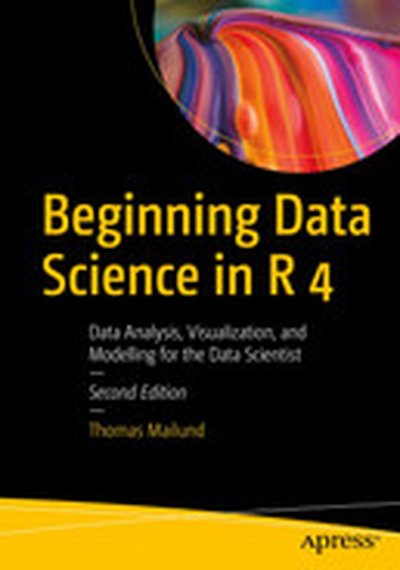
Beginning Data Science in R 4: Data Analysis, Visualization, and Modelling for the Data Scientist

Discover best practices for data analysis and software development in R and start on the path to becoming a fully-fledged data scientist. Updated for the R 4.0 release, this book teaches you techniques for both data manipulation and visualization and shows you the best way for developing new software packages for R. Beginning Data Science in R 4, Second Edition details how data science is a combination of statistics, computational science, and machine learning. You’ll see how to efficiently structure and mine data to extract useful patterns and build mathematical models. This requires computational methods and programming, and R is an ideal programming language for this. Modern data analysis requires computational skills and usually a minimum of programming. After reading and using this book, you'll have what you need to get started with R programming with data science applications. Source code will be available to support your next projects as well. Source code is available at github.com/Apress/beg-data-science-r4. What You Will Learn Perform data science and analytics using statistics and the R programming language Visualize and explore data, including working with large data sets found in big data Build an R package Test and check your code Practice version control Profile and optimize your code Who This Book Is For Those with some data science or analytics background, but not necessarily experience with the R programming language.
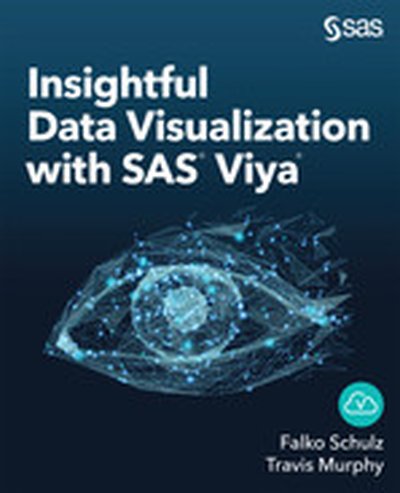
Insightful Data Visualization with SAS Viya

Elevate your storytelling with SAS Visual Analytics Data visualization is the gateway to artificial intelligence (AI) and big data. Insightful Data Visualization with SAS Viya shows how the latest SAS Viya tools can be used to create data visualizations in an easier, smarter, and more engaging way than ever before. SAS Visual Analytics combined with human creativity can produce endless possibilities. In this book, you will learn tips and techniques for getting the most from your SAS Visual Analytics investment. From beginners to advanced SAS users, this book has something for everyone. Use AI wizards to create data visualization automatically, learn to use advanced analytics in your dashboards to surface smarter insights, and learn to extend SAS Visual Analytics with advanced integrations and options. Topics covered in this book include: SAS Visual Analytics Data visualization with SAS Reports and dashboards SAS code examples Self-service analytics SAS data access Extending SAS beyond drag and drop

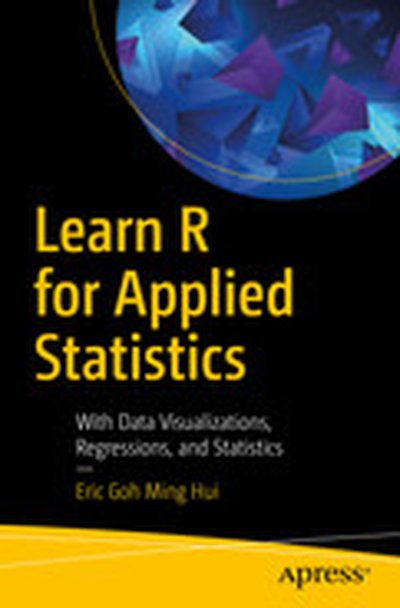
Learn R for Applied Statistics: With Data Visualizations, Regressions, and Statistics

Gain the R programming language fundamentals for doing the applied statistics useful for data exploration and analysis in data science and data mining. This book covers topics ranging from R syntax basics, descriptive statistics, and data visualizations to inferential statistics and regressions. After learning R’s syntax, you will work through data visualizations such as histograms and boxplot charting, descriptive statistics, and inferential statistics such as t-test, chi-square test, ANOVA, non-parametric test, and linear regressions. Learn R for Applied Statistics is a timely skills-migration book that equips you with the R programming fundamentals and introduces you to applied statistics for data explorations. What You Will Learn Discover R, statistics, data science, data mining, and big data Master the fundamentals of R programming, including variables and arithmetic, vectors, lists, data frames, conditional statements, loops, and functions Work with descriptive statistics Create data visualizations, including bar charts, line charts, scatter plots, boxplots, histograms, and scatterplots Use inferential statistics including t-tests, chi-square tests, ANOVA, non-parametric tests, linear regressions, and multiple linear regressions Who This Book Is For Those who are interested in data science, in particular data exploration using applied statistics, and the use of R programming for data visualizations.

Big Data Visualization

Dive into 'Big Data Visualization' and uncover how to tackle the challenges of visualizing vast quantities of complex data. With a focus on scalable and dynamic techniques, this guide explores the nuances of effective data analysis. You'll master tools and approaches to display, interpret, and communicate data in impactful ways. What this Book will help me do Understand the fundamentals of big data visualization, including unique challenges and solutions. Explore practical techniques for using D3 and Python to visualize and detect anomalies in big data. Learn to leverage dashboards like Tableau to present data insights effectively. Address and improve data quality issues to enhance analysis accuracy. Gain hands-on experience with real-world use cases for tools such as Hadoop and Splunk. Author(s) James D. Miller is an IBM-certified expert specializing in data analytics and visualization. With years of experience handling massive datasets and extracting actionable insights, he is dedicated to sharing his expertise. His practical approach is evident in how he combines tool mastery with a clear understanding of data complexities. Who is it for? This book is designed for data analysts, data scientists, and others involved in interpreting and presenting big datasets. Whether you are a beginner looking to understand big data visualization or an experienced professional seeking advanced tools and techniques, this guide suits your needs perfectly. A foundational knowledge in programming languages like R and big data platforms such as Hadoop is recommended to maximize your learning.

Data Visualization, Volume I

Data visualization involves graphical and visual tools used in data analysis and decision making. The emphasis in this book is on recent trends and applications of visualization tools using conventional and big data. These tools are widely used in data visualization and quality improvement to analyze, enhance, and improve the quality of products and services. Data visualization is an easy way to obtain a first look at the data visually. The book provides a collection of visual and graphical tools widely used to gain an insight into the data before applying more complex analysis. The focus is on the key application areas of these tools including business process improvement, business data analysis, health care, finance, manufacturing, engineering, process improvement, and Lean Six Sigma. The key areas of application include data and data analysis concepts, recent trends in data visualization and ÒBig Data,Ó widely used charts and graphs and their applications, analysis of the relationships between two or more variables graphically using scatterplots, bubble graphs, matrix plots, etc., data visualization with big data, computer applications and implementation of widely used graphical and visual tools, and computer instructions to create the graphics presented along with the data files.

Visualizing Graph Data

Visualizing Graph Data teaches you not only how to build graph data structures, but also how to create your own dynamic and interactive visualizations using a variety of tools. This book is loaded with fascinating examples and case studies to show you the real-world value of graph visualizations. About the Technology Assume you are doing a great job collecting data about your customers and products. Are you able to turn your rich data into important insight? Complex relationships in large data sets can be difficult to recognize. Visualizing these connections as graphs makes it possible to see the patterns, so you can find meaning in an otherwise over-whelming sea of facts. About the Book Visualizing Graph Data teaches you how to understand graph data, build graph data structures, and create meaningful visualizations. This engaging book gently introduces graph data visualization through fascinating examples and compelling case studies. You'll discover simple, but effective, techniques to model your data, handle big data, and depict temporal and spatial data. By the end, you'll have a conceptual foundation as well as the practical skills to explore your own data with confidence. What's Inside Techniques for creating effective visualizations Examples using the Gephi and KeyLines visualization packages Real-world case studies About the Reader No prior experience with graph data is required. About the Author Corey Lanum has decades of experience building visualization and analysis applications for companies and government agencies around the globe. Quotes Shows you how to solve visualization problems and explore complex data sets. A pragmatic introduction. - John D. Lewis, DDN Excellent! Hands-on! Shows you how to kick-start your graph data visualization. - Rocio Chongtay, University of Southern Denmark A clear and concise guide to both graph theory and visualization. - Jonathan Suever, PhD, Georgia Institute of Technology Great coverage, with real-life business use cases. - Sumit Pal, Big Data consultant

R: Data Analysis and Visualization

Master the art of building analytical models using R About This Book Load, wrangle, and analyze your data using the world's most powerful statistical programming language Build and customize publication-quality visualizations of powerful and stunning R graphs Develop key skills and techniques with R to create and customize data mining algorithms Use R to optimize your trading strategy and build up your own risk management system Discover how to build machine learning algorithms, prepare data, and dig deep into data prediction techniques with R Who This Book Is For This course is for data scientist or quantitative analyst who are looking at learning R and take advantage of its powerful analytical design framework. It's a seamless journey in becoming a full-stack R developer. What You Will Learn Describe and visualize the behavior of data and relationships between data Gain a thorough understanding of statistical reasoning and sampling Handle missing data gracefully using multiple imputation Create diverse types of bar charts using the default R functions Familiarize yourself with algorithms written in R for spatial data mining, text mining, and so on Understand relationships between market factors and their impact on your portfolio Harness the power of R to build machine learning algorithms with real-world data science applications Learn specialized machine learning techniques for text mining, big data, and more In Detail The R learning path created for you has five connected modules, which are a mini-course in their own right. As you complete each one, you'll have gained key skills and be ready for the material in the next module! This course begins by looking at the Data Analysis with R module. This will help you navigate the R environment. You'll gain a thorough understanding of statistical reasoning and sampling. Finally, you'll be able to put best practices into effect to make your job easier and facilitate reproducibility. The second place to explore is R Graphs, which will help you leverage powerful default R graphics and utilize advanced graphics systems such as lattice and ggplot2, the grammar of graphics. You'll learn how to produce, customize, and publish advanced visualizations using this popular and powerful framework. With the third module, Learning Data Mining with R, you will learn how to manipulate data with R using code snippets and be introduced to mining frequent patterns, association, and correlations while working with R programs. The Mastering R for Quantitative Finance module pragmatically introduces both the quantitative finance concepts and their modeling in R, enabling you to build a tailor-made trading system on your own. By the end of the module, you will be well-versed with various financial techniques using R and will be able to place good bets while making financial decisions. Finally, we'll look at the Machine Learning with R module. With this module, you'll discover all the analytical tools you need to gain insights from complex data and learn how to choose the correct algorithm for your specific needs. You'll also learn to apply machine learning methods to deal with common tasks, including classification, prediction, forecasting, and so on. Style and approach Learn data analysis, data visualization techniques, data mining, and machine learning all using R and also learn to build models in quantitative finance using this powerful language.

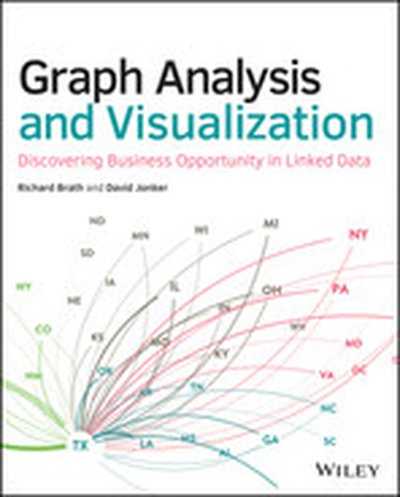
Graph Analysis and Visualization: Discovering Business Opportunity in Linked Data

Wring more out of the data with a scientific approach to analysis Graph Analysis and Visualization brings graph theory out of the lab and into the real world. Using sophisticated methods and tools that span analysis functions, this guide shows you how to exploit graph and network analytic techniques to enable the discovery of new business insights and opportunities. Published in full color, the book describes the process of creating powerful visualizations using a rich and engaging set of examples from sports, finance, marketing, security, social media, and more. You will find practical guidance toward pattern identification and using various data sources, including Big Data, plus clear instruction on the use of software and programming. The companion website offers data sets, full code examples in Python, and links to all the tools covered in the book. Science has already reaped the benefit of network and graph theory, which has powered breakthroughs in physics, economics, genetics, and more. This book brings those proven techniques into the world of business, finance, strategy, and design, helping extract more information from data and better communicate the results to decision-makers. Study graphical examples of networks using clear and insightful visualizations Analyze specifically-curated, easy-to-use data sets from various industries Learn the software tools and programming languages that extract insights from data Code examples using the popular Python programming language There is a tremendous body of scientific work on network and graph theory, but very little of it directly applies to analyst functions outside of the core sciences - until now. Written for those seeking empirically based, systematic analysis methods and powerful tools that apply outside the lab, Graph Analysis and Visualization is a thorough, authoritative resource.

Real-Time Analytics: Techniques to Analyze and Visualize Streaming Data

Construct a robust end-to-end solution for analyzing and visualizing streaming data Real-time analytics is the hottest topic in data analytics today. In Real-Time Analytics: Techniques to Analyze and Visualize Streaming Data, expert Byron Ellis teaches data analysts technologies to build an effective real-time analytics platform. This platform can then be used to make sense of the constantly changing data that is beginning to outpace traditional batch-based analysis platforms. The author is among a very few leading experts in the field. He has a prestigious background in research, development, analytics, real-time visualization, and Big Data streaming and is uniquely qualified to help you explore this revolutionary field. Moving from a description of the overall analytic architecture of real-time analytics to using specific tools to obtain targeted results, Real-Time Analytics leverages open source and modern commercial tools to construct robust, efficient systems that can provide real-time analysis in a cost-effective manner. The book includes: A deep discussion of streaming data systems and architectures Instructions for analyzing, storing, and delivering streaming data Tips on aggregating data and working with sets Information on data warehousing options and techniques Real-Time Analytics includes in-depth case studies for website analytics, Big Data, visualizing streaming and mobile data, and mining and visualizing operational data flows. The book's "recipe" layout lets readers quickly learn and implement different techniques. All of the code examples presented in the book, along with their related data sets, are available on the companion website.

The Visual Organization: Data Visualization, Big Data, and the Quest for Better Decisions

The era of Big Data as arrived, and most organizations are woefully unprepared. Slowly, many are discovering that stalwarts like Excel spreadsheets, KPIs, standard reports, and even traditional business intelligence tools aren't sufficient. These old standbys can't begin to handle today's increasing streams, volumes, and types of data. Amidst all of the chaos, though, a new type of organization is emerging. In The Visual Organization, award-winning author and technology expert Phil Simon looks at how an increasingly number of organizations are embracing new dataviz tools and, more important, a new mind-set based upon data discovery and exploration. Simon adroitly shows how Amazon, Apple, Facebook, Google, Twitter, and other tech heavyweights use powerful data visualization tools to garner fascinating insights into their businesses. But make no mistake: these companies are hardly alone. Organizations of all types, industries, sizes are representing their data in new and amazing ways. As a result, they are asking better questions and making better business decisions. Rife with real-world examples and case studies, The Visual Organization is a full-color tour-de-force.

Data Visualization For Dummies

A straightforward, full-color guide to showcasing data so your audience can see what you mean, not just read about it Big data is big news! Every company, industry, not-for-profit, and government agency wants and needs to analyze and leverage datasets that can quickly become ponderously large. Data visualization software enables different industries to present information in ways that are memorable and relevant to their mission. This full-color guide introduces you to a variety of ways to handle and synthesize data in much more interesting ways than mere columns and rows of numbers. Learn meaningful ways to show trending and relationships, how to convey complex data in a clear, concise diagram, ways to create eye-catching visualizations, and much more! Effective data analysis involves learning how to synthesize data, especially big data, into a story and present that story in a way that resonates with the audience This full-color guide shows you how to analyze large amounts of data, communicate complex data in a meaningful way, and quickly slice data into various views Explains how to automate redundant reporting and analyses, create eye-catching visualizations, and use statistical graphics and thematic cartography Enables you to present vast amounts of data in ways that won't overwhelm your audience Part technical manual and part analytical guidebook, Data Visualization For Dummies is the perfect tool for transforming dull tables and charts into high-impact visuals your audience will notice...and remember.