
talk-data.com talk-data.com

Topic

AI/ML

Artificial Intelligence/Machine Learning

data_science algorithms predictive_analytics

9014

tagged

Activity Trend

1532 peak/qtr
2020-Q1 2026-Q1

Activities

9014 activities · Newest first

Ever wonder how companies in the crowded data and AI space build powerful alliances to drive revenue and growth? In this episode, I sit down with Eleanor Thompson, a partnerships expert based in London and founder of a successful partnerships consultancy. Drawing from her experience running the partner program at Fivetran during its hyper-growth phase, Eleanor shares the essential strategies for building a successful partnership ecosystem from the ground up. We also also discuss the mental fortitude required for entrepreneurship, drawing surprising parallels between running a business and competing in high-intensity fitness events like Hyrox.

Tune in to learn: The fundamental reasons why partnerships are critical for expanding your reach and generating revenue. When is the right time for a startup to focus on partnerships (hint: it's not day one). Eleanor's "4A" framework (Alignment, Ability, Audience, Accountability) for identifying the perfect partner. The key roles, from Partner Sales Engineers to Partner Ops, needed to build a successful partnerships team. Red flags to watch for when a potential partner is more focused on margin than customer value. How AI can be used to identify ideal partners and even predict their future success.

Find Eleanor Thompson online: LinkedIn: Eleanor Thompson Website: https://branchworks.io

BusinessPartnerships #DataEngineering #AI #Entrepreneurship #Tech #Startup #GoToMarket

Timestamps 00:49 - Who is Eleanor Thompson? 02:25 - Why Do Business Partnerships Exist? 05:26 - When is the Right Time for a Company to Start Building Partnerships? 06:40 - The 4A Framework for Defining Your Ideal Partner Profile 08:20 - Joe's Experience Partnering with Big Tech 12:33 - How to Structure a Partnerships Team in a Growing Tech Company 20:49 - What is Partner Operations and Why is It a Critical Hire? 22:30 - The Importance of Trust and Referral Fees 25:15 - Eleanor's Journey as an "Accidental CEO" 30:10 - The Mental Fitness and Resilience Required to Be a Founder 41:20 - How to Use AI in Your Partnership Strategy 45:00 - How to Spot a Good Partner on the Very First Call 46:33 - Red Flags to Watch For in Potential Partners 51:35 - How Fitness and Hyrox Competitions Fuel Business Success 59:45 - Where to Find Eleanor Thompson

Está no ar, o Data Hackers News !! Os assuntos mais quentes da semana, com as principais notícias da área de Dados, IA e Tecnologia, que você também encontra na nossa Newsletter semanal, agora no Podcast do Data Hackers !! Aperte o play e ouça agora, o Data Hackers News dessa semana ! Para saber tudo sobre o que está acontecendo na área de dados, se inscreva na Newsletter semanal: ⁠⁠⁠⁠⁠⁠⁠⁠⁠⁠⁠⁠⁠⁠⁠⁠⁠⁠⁠⁠⁠⁠⁠⁠⁠⁠⁠⁠⁠⁠⁠⁠https://www.datahackers.news/⁠⁠⁠⁠⁠⁠⁠⁠⁠⁠⁠⁠⁠⁠⁠⁠⁠⁠⁠⁠⁠⁠⁠⁠⁠⁠⁠⁠⁠⁠⁠⁠ Conheça nossos comentaristas do Data Hackers News: ⁠⁠⁠⁠⁠⁠⁠⁠⁠⁠⁠⁠⁠⁠⁠⁠⁠⁠⁠⁠⁠⁠⁠⁠⁠⁠⁠⁠Monique Femme⁠⁠⁠⁠⁠⁠⁠⁠⁠⁠⁠⁠⁠⁠⁠⁠⁠⁠⁠⁠⁠⁠⁠⁠⁠⁠⁠⁠⁠ ⁠Matérias/assuntos comentados: Evento Mettup Itaú Matéria Netflix Matéria CEO da AWS Demais canais do Data Hackers: ⁠⁠⁠⁠⁠⁠⁠⁠⁠⁠⁠⁠⁠⁠⁠⁠⁠⁠⁠⁠⁠⁠⁠⁠⁠⁠⁠⁠⁠⁠⁠⁠Site⁠⁠⁠⁠⁠⁠⁠⁠⁠⁠⁠⁠⁠⁠⁠⁠⁠⁠⁠⁠⁠⁠⁠⁠⁠⁠⁠⁠⁠⁠⁠⁠ ⁠⁠⁠⁠⁠⁠⁠⁠⁠⁠⁠⁠⁠⁠⁠⁠⁠⁠⁠⁠⁠⁠⁠⁠⁠⁠⁠⁠⁠⁠⁠⁠Linkedin⁠⁠⁠⁠⁠⁠⁠⁠⁠⁠⁠⁠⁠⁠⁠⁠⁠⁠⁠⁠⁠⁠⁠⁠⁠⁠⁠⁠⁠⁠⁠⁠ ⁠⁠⁠⁠⁠⁠⁠⁠⁠⁠⁠⁠⁠⁠⁠⁠⁠⁠⁠⁠⁠⁠⁠⁠⁠⁠⁠⁠⁠⁠⁠⁠Instagram⁠⁠⁠⁠⁠⁠⁠⁠⁠⁠⁠⁠⁠⁠⁠⁠⁠⁠⁠⁠⁠⁠⁠⁠⁠⁠⁠⁠⁠⁠⁠⁠ ⁠⁠⁠⁠⁠⁠⁠⁠⁠⁠⁠⁠⁠⁠⁠⁠⁠⁠⁠⁠⁠⁠⁠⁠⁠⁠⁠⁠⁠⁠⁠⁠Tik Tok⁠⁠⁠⁠⁠⁠⁠⁠⁠⁠⁠⁠⁠⁠⁠⁠⁠⁠⁠⁠⁠⁠⁠⁠⁠⁠⁠⁠⁠⁠⁠⁠ ⁠⁠⁠⁠⁠⁠⁠⁠⁠⁠⁠⁠⁠⁠⁠⁠⁠⁠⁠⁠⁠⁠⁠⁠⁠⁠⁠⁠⁠⁠⁠⁠You Tube⁠⁠⁠⁠⁠⁠⁠⁠⁠⁠⁠⁠⁠⁠⁠⁠⁠⁠⁠⁠⁠⁠⁠⁠⁠⁠⁠⁠⁠⁠⁠

Date: 2025-08-27. Hands-on webinar demystifying how AI agents work and how you can start using them to drive results in your organization. What you'll learn: what AI agents are and how they’re used today; real-world examples of intelligent automation in action; tips for integrating AI agents into your existing systems; tools and platforms that make automation easier.

Send us a text Ready to reclaim your time and live with intention? In this episode, Katherine Mayne sits down with Jacob Hicks, Coach and Speaker, to explore the intersection of productivity and intentional living. We dive into the tools, habits, and strategies that can help you master time management, optimize your workflow, and unlock your full potential. From the Four Disciplines of Execution to Atomic Habits and the role of AI in coaching, Jacob shares practical, real-world insights you can put into action today. Whether you’re a leader, entrepreneur, or simply looking to get more out of your day, this conversation will give you the frameworks and mindset shifts you need. 🕒 Episode Timestamps 01:34 Meet Jacob Hicks 04:12 Mastering Time Management via WPRI 14:01 Four Disciplines of Execution 15:12 Time Management Misconceptions 21:30 What Stops People from Managing Time 23:32 Tools and Giving AI a Role 26:31 Atomic Habits 28:11 What to Stop 29:36 Coaching and AI 31:05 Jacob's Coaching Business

🔗 Connect with Jacob Hicks LinkedIn: Jacob HicksWebsite: jacobhickscoach.comPodcast: Purpose Driven Progress

MakingDataSimple #TimeManagement #IntentionalLiving #AtomicHabits #AIandCoaching #ProductivityHacks #Leadership #WorkflowOptimization #JacobHicks

Want to be featured as a guest on Making Data Simple? Reach out to us at [email protected] and tell us why you should be next. The Making Data Simple Podcast is hosted by Al Martin, WW VP Technical Sales, IBM, where we explore trending technologies, business innovation, and leadership ... while keeping it simple & fun.

Why do C. elegans lay eggs only when food is around? In this episode, we explore a newly uncovered neuromodulatory circuit that links food detection to reproductive behaviour using a clever form of disinhibition. At the heart of this is the AVK interneuron — silenced by dopamine when food is present — which normally blocks egg-laying until conditions are right.

We unpack:

How AVK neurons act as gatekeepers for egg-laying behaviour Dopamine from food-sensing neurons inhibits AVKs via DOP-3 receptors AVKs release a cocktail of neuropeptides (PDF-1, NLP-10, NLP-21) that modulate downstream AIY neurons Functional imaging, CRISPR mutants, and optogenetics map the full food-to-egg pathway How this reveals general principles of neuromodulation and disinhibition

📖 Based on the research article: “Food sensing controls C. elegans reproductive behavior by neuromodulatory disinhibition” Yen-Chih Chen, Kara E. Zang, Hassan Ahamed, Niels Ringstad Published in Science Advances (2025) 🔗 https://doi.org/10.1126/sciadv.adu5829

🎧 Subscribe to the WOrM Podcast for more full-organism insights at the interface of environment, brain, and behaviour.

This podcast is generated with artificial intelligence and curated by Veeren. If you’d like your publication featured on the show, please get in touch.

📩 More info: 🔗 ⁠⁠www.veerenchauhan.com⁠⁠ 📧 [email protected]

Today, we’re joined by Marc Gonyea, Cofounder + Managing Partner of Blue Tusk Partners, an incubator for aspiring entrepreneurs, as well as a Cofounder + Board Member of memoryBlue, provider of sales development services for B2B and B2G technology companies. We talk about:

The tough, tactical, and not sexy work of outbound salesWhat Marc & his cofounder did when faced with few things two knucklehead salespeople could do early in their careersWhere AI does – and does not- fit in the sales processHow memoryBlue helps make young professionals valuable to the marketplaceUsing AI tools to enrich data, build workflows, & automate emails. But then what??

AI, data, and analytics pick three cookable dinners from the ingredients and appliances you already have—no grocery run. We use AI, data, and a rules-first analytics score to rank real meals you can make tonight with what’s in your pantry. A lightweight rules engine avoids AI hallucinations; Chef-AI adds safe swaps and one-line directions. You’ll learn a copy-paste AI prompt, how to reduce waste, and how analytics rank time, fit, and vibe. 3 bullets (skimmable): Rules > raw AI for reliable, cookable resultsAnalytics score to rank fastest/best-fit mealsCopy-paste prompt for 3 ideas in under a minuteYou’ll learn Why a rules engine beats raw AI for reliable, cookable recipesHow an analytics score prioritizes the best matches fastA copy-paste AI prompt that returns 3 make-tonight ideas in under a minuteHow to reduce waste and keep weeknight meals simple & tastyTry this prompt: I have [3–5 ingredients] and these appliances: [list]. Suggest 3 meals I can make in under 30 minutes. If something’s missing, suggest simple pantry substitutions. Keep it realistic and give one-line directions for each. Quick quiz True or False — If you only rely on AI, it may assume tools you don’t have and suggest impossible recipes. Answer: True. Start with rules; use AI for riffs and swaps. Discussion question When you’re deciding on dinner, do you want structure (reliable classics) or creativity (something new)? Reply on Substack or X—I'll share the poll next week. Resources & links Blog Link: https://mukundansankar.substack.com/p/pantry-plate-the-aifirst-way-to-decideKey takeaways Put rules before AI for cookable results.One clear AI prompt can end dinner indecision in minutes.AI is a partner, not the chef.Affiliate partners (links below): RSS: your podcast, get free transcripts, and earn ad revenue with as few as 10 monthly downloads. Sign up here.Sider AI. AI-powered research and productivity assistant for breaking down job descriptions into keywords. Try Sider here.Riverside FM: Record your podcast in studio-quality audio and 4K video from anywhere. Get started with Riverside here.Affiliate disclosure: Some links may be affiliates. If you use them, I may earn at no extra cost to you. Answer: True. Keywords: ai, ai meal planner, data, data analytics, analytics, time-saving tools, pantry, dinner ideas, recipe generator, meal planning

Josh Gledhill was a music‑industry professional who, after 1,026 days of unemployment, landed not one but two data job offers. In this episode, he shares how he overcame dyslexia and how he used Threads, a 40‑page PRINTED Portfolio, and the SPN Method to become a data analyst at Staffordshire County Council. ✨ Try Julius today at https://landadatajob.com/Julius-YT 💌 Join 10k+ aspiring data analysts & get my tips in your inbox weekly 👉 https://www.datacareerjumpstart.com/newsletter 🆘 Feeling stuck in your data journey? Come to my next free "How to Land Your First Data Job" training 👉 https://www.datacareerjumpstart.com/training 👩‍💻 Want to land a data job in less than 90 days? 👉 https://www.datacareerjumpstart.com/daa 👔 Ace The Interview with Confidence 👉 https://www.datacareerjumpstart.com/interviewsimulator

⌚ TIMESTAMPS 00:00 - Introduction 01:36 - Josh's Background in Music and Transition to Data Analytics 07:13 - Overcoming Dyslexia and Study Tips 10:44 - Building a Personal Brand on Threads 16:19 - The SPN Method 22:06 - Navigating the Interview Process (and flopping the technical interview) 33:04 - Differences in Data Jobs: UK vs. US 41:29 - Ethics and AI in the UK

🔗 CONNECT WITH JOSH 🧵 Threads: https://www.threads.com/@databyjosh 🤝 LinkedIn: https://www.linkedin.com/in/josh-gledhill/ 🎥 YouTube Channel: https://www.youtube.com/channel/UCSzkvTFrQdKAdESHepjSP3Q 🤝 X: https://x.com/macinjosh

🔗 CONNECT WITH AVERY 🎥 YouTube Channel: https://www.youtube.com/@averysmith 🤝 LinkedIn: https://www.linkedin.com/in/averyjsmith/ 📸 Instagram: https://instagram.com/datacareerjumpstart 🎵 TikTok: https://www.tiktok.com/@verydata 💻 Website: https://www.datacareerjumpstart.com/ Mentioned in this episode: Join the last cohort of 2025! The LAST cohort of The Data Analytics Accelerator for 2025 kicks off on Monday, December 8th and enrollment is officially open!

To celebrate the end of the year, we’re running a special End-of-Year Sale, where you’ll get: ✅ A discount on your enrollment 🎁 6 bonus gifts, including job listings, interview prep, AI tools + more

If your goal is to land a data job in 2026, this is your chance to get ahead of the competition and start strong.

👉 Join the December Cohort & Claim Your Bonuses: https://DataCareerJumpstart.com/daa https://www.datacareerjumpstart.com/daa

Summary In this episode of the Data Engineering Podcast Professor Paul Groth, from the University of Amsterdam, talks about his research on knowledge graphs and data engineering. Paul shares his background in AI and data management, discussing the evolution of data provenance and lineage, as well as the challenges of data integration. He explores the impact of large language models (LLMs) on data engineering, highlighting their potential to simplify knowledge graph construction and enhance data integration. The conversation covers the evolving landscape of data architectures, managing semantics and access control, and the interplay between industry and academia in advancing data engineering practices, with Paul also sharing insights into his work with the intelligent data engineering lab and the importance of human-AI collaboration in data engineering pipelines.

Announcements Hello and welcome to the Data Engineering Podcast, the show about modern data managementData migrations are brutal. They drag on for months—sometimes years—burning through resources and crushing team morale. Datafold's AI-powered Migration Agent changes all that. Their unique combination of AI code translation and automated data validation has helped companies complete migrations up to 10 times faster than manual approaches. And they're so confident in their solution, they'll actually guarantee your timeline in writing. Ready to turn your year-long migration into weeks? Visit dataengineeringpodcast.com/datafold today for the details.Your host is Tobias Macey and today I'm interviewing Paul Groth about his research on knowledge graphs and data engineeringInterview IntroductionHow did you get involved in the area of data management?Can you start by describing the focus and scope of your academic efforts?Given your focus on data management for machine learning as part of the INDELab, what are some of the developing trends that practitioners should be aware of?ML architectures / systems changing (matteo interlandi) GPUs for data mangementYou have spent a large portion of your career working with knowledge graphs, which have largely been a niche area until recently. What are some of the notable changes in the knowledge graph ecosystem that have resulted from the introduction of LLMs?What are some of the other ways that you are seeing LLMs change the methods of data engineering?There are numerous vague and anecdotal references to the power of LLMs to unlock value from unstructured data. What are some of the realitites that you are seeing in your research?A majority of the conversations in this podcast are focused on data engineering in the context of a business organization. What are some of the ways that management of research data is disjoint from the methods and constraints that are present in business contexts?What are the most interesting, innovative, or unexpected ways that you have seen LLM used in data management?What are the most interesting, unexpected, or challenging lessons that you have learned while working on data engineering research?What do you have planned for the future of your research in the context of data engineering, knowledge graphs, and AI?Contact Info WebsiteemailParting Question From your perspective, what is the biggest gap in the tooling or technology for data management today?Closing Announcements Thank you for listening! Don't forget to check out our other shows. Podcast.init covers the Python language, its community, and the innovative ways it is being used. The AI Engineering Podcast is your guide to the fast-moving world of building AI systems.Visit the site to subscribe to the show, sign up for the mailing list, and read the show notes.If you've learned something or tried out a project from the show then tell us about it! Email [email protected] with your story.Links INDELabData ProvenanceElsevierSIGMOD 2025Digital TwinKnowledge GraphWikiDataKuzuDBPodcast Episodedata.worldPodcast EpisodeGraphRAGSPARQLSemantic WebGQL == Graph Query LanguageCypherAmazon NeptuneRDF == Resource Description FrameworkSwellDBFlockMTLDuckDBPodcast EpisodeMatteo InterlandiPaolo PapottiNeuromorphic ComputingPoint CloudsLongform.aiBASIL DBThe intro and outro music is from The Hug by The Freak Fandango Orchestra / CC BY-SA

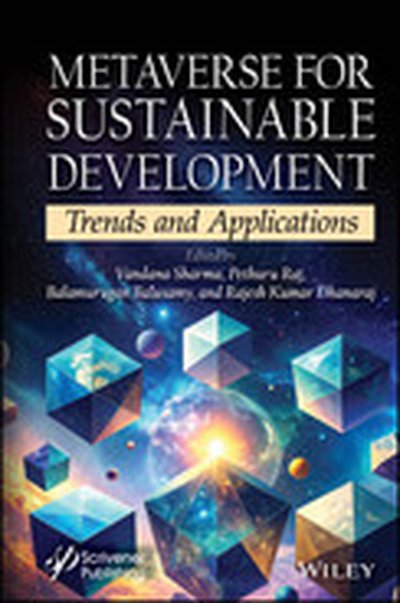
Metaverse for Sustainable Development

Unlock the future of technology and sustainable development by purchasing Metaverse for Sustainable Development: Trends and Applications, a comprehensive guide that delves into immersive application building, groundbreaking innovations, and the transformative potential of the metaverse across various industries. Metaverse for Sustainable Development: Trends and Applications explains the fine details of metaverse application building, demonstrating how integrated platforms in association with a suite of tools come in handy for enabling application construction. The metaverse is the next big thing influenced by virtual and augmented reality paradigms. This user experience will be more immersive and mesmerizing, empowering innovative, disruptive, and transformative technologies to create a spectacular platform for visualizing and realizing business-critical and people-centric metaverse systems. This book explores various metaverse models for healthcare information systems, including the latest technologies, such as the Brain-Computer Interface. Through real-world data and case studies, readers will gain a comprehensive understanding of the metaverse’s potential for the Internet of Things, blockchain, artificial intelligence, 5G, and 3D modelling for creating and sustaining immersive virtual worlds. Metaverse for Sustainable Development: Trends and Applications is a vital resource for understanding the end-to-end implementation of metaverse technologies.

Every day, knowledge workers face the challenge of managing competing priorities and constant interruptions. When systems are managing us rather than us managing them, productivity suffers and morale plummets. But what if the key to improvement isn't complex reorganization but rather understanding how work actually flows through your team or organization? How can visualizing your workflow and regulating for flow transform productivity? What small, incremental changes might lead to dramatic improvements in both output and job satisfaction? Nelson P. Repenning is the Faculty Director of the MIT Leadership Center and the School of Management Distinguished Professor of System Dynamics and Organization Studies at the MIT Sloan School of Management. His early work focused on understanding the inability of organizations to leverage well-established tools and practices. He has worked extensively with organizations trying to develop new capabilities in both manufacturing and new product development. Nelson has also studied the failure to use the safety practices that often lead to industrial accidents and has helped investigate several major incidents. This line of research has been recognized with several awards, including best paper recognition from both the California Management Review and the Journal of Product Innovation Management. Building on his earlier work, Nelson now focuses on developing the theory and practice of Dynamic Work Design—a new approach to designing work that is both effective and engaging—and Dynamic Management Systems, a method for ensuring that day-to-day work is tightly linked to the strategic objectives of the firm. His book (co-authored with Don Kieffer) There Has Got to Be a Better Way describing Dynamic Work Design will be published by Public Affairs in 2025. He is also a partner at ShiftGear Work Design and serves as its chief social scientist. In 2003, Nelson received the International System Dynamics Society’s Jay Wright Forrester Award, which recognizes the best work in the field in the previous five years. In 2011 he received the Jamieson Prize for Excellence in Teaching. He was recently recognized by Poets and Quants as one of the country's top instructors in executive education. Donald Kieffer is a Senior Lecturer in Operations Management at MIT Sloan.He is a career operations executive and co-creator of Dynamic Work Design. Kieffer started working running equipment in factories at age 17. He was VP of operational excellence at Harley-Davidson where he worked for 15 years. Since 2007, he has been advising executive teams around the globe in a range of areas including strategy deployment, product development, and operational improvement. Don has worked with industries as diverse as oil/gas, medical, biomedical, and banking. His guidance was instrumental in transforming both the production and technical development areas of a Cambridge-based genomic sequencing organization, now an industry leader, using the techniques of Dynamic Work Design. He is founder of ShiftGear Work Design, LLC and also teaches Operations Management at AVT in Copenhagen. In the episode, Richie, Nelson and Don explore the challenges of daily firefighting at work, the principles of dynamic work design, how to improve productivity by addressing real problems, the role of AI in business, the importance of setting clear priorities, and much more. Links Mentioned in the Show: Nelson & Don’s Book - There's Got to Be a Better Way: How to Deliver Results and Get Rid of the Stuff That Gets in the Way of Real WorkConnect with Nelson & Dona...

Building Effective Privacy Programs

Presents a structured approach to privacy management, an indispensable resource for safeguarding data in an ever-evolving digital landscape In today’s data-driven world, protecting personal information has become a critical priority for organizations of all sizes. Building Effective Privacy Programs: Cybersecurity from Principles to Practice equips professionals with the tools and knowledge to design, implement, and sustain robust privacy programs. Seamlessly integrating foundational principles, advanced privacy concepts, and actionable strategies, this practical guide serves as a detailed roadmap for navigating the complex landscape of data privacy. Bridging the gap between theoretical concepts and practical implementation, Building Effective Privacy Programs combines in-depth analysis with practical insights, offering step-by-step instructions on building privacy-by-design frameworks, conducting privacy impact assessments, and managing compliance with global regulations. In-depth chapters feature real-world case studies and examples that illustrate the application of privacy practices in a variety of scenarios, complemented by discussions of emerging trends such as artificial intelligence, blockchain, IoT, and more. Providing timely and comprehensive coverage of privacy principles, regulatory compliance, and actionable strategies, Building Effective Privacy Programs: Addresses all essential areas of cyberprivacy, from foundational principles to advanced topics Presents detailed analysis of major laws, such as GDPR, CCPA, and HIPAA, and their practical implications Offers strategies to integrate privacy principles into business processes and IT systems Covers industry-specific applications for healthcare, finance, and technology sectors Highlights successful privacy program implementations and lessons learned from enforcement actions Includes glossaries, comparison charts, sample policies, and additional resources for quick reference Written by seasoned professionals with deep expertise in privacy law, cybersecurity, and data protection, Building Effective Privacy Programs: Cybersecurity from Principles to Practice is a vital reference for privacy officers, legal advisors, IT professionals, and business executives responsible for data governance and regulatory compliance. It is also an excellent textbook for advanced courses in cybersecurity, information systems, business law, and business management.

podcast_episode
by Joe Reis (DeepLearning.AI)

Is reality setting in for the AI bubble? Who the hell knows. This is definitely the most bipolar bubble I've ever seen, making the dotcom bubble look downright tame.

In this rant, I discuss why AI is in its televangelist moment, and why a reality check is necessary to keep real progress on AI on track.

In this episode, We talked with Pastor, a medical doctor who built a career in machine learning while studying medicine. Pastor shares how he balanced both fields, leveraged live courses and public sharing to grow his skills, and found opportunities through freelancing and mentoring.TIMECODES00:00 Pastor’s background and early programming journey06:05 Learning new tools and skills on the job while studying medicine11:44 Balancing medical studies with data science work and motivation13:48 Applying medical knowledge to data science and vice versa18:44 Starting freelance work on Upwork and overcoming language challenges24:03 Joining the machine learning engineering course and benefits of live cohorts27:41 Engaging with the course community and sharing progress publicly35:16 Using LinkedIn and social media for career growth and interview opportunities41:03 Building reputation, structuring learning, and leveraging course projects50:53 Volunteering and mentoring with DeepLearning.AI and Stanford Coding Place57:00 Managing time and staying productive while studying medicine and machine learningConnect with Pastor Twitter - https://x.com/PastorSotoB1Linkedin -   / pastorsoto  Github - https://github.com/sotoblancoWebsite - https://substack.com/@pastorsotoConnect with DataTalks.Club: Join the community - https://datatalks.club/slack.htmlSubscribe to our Google calendar to have all our events in your calendar - https://calendar.google.com/calendar/...Check other upcoming events - https://lu.ma/dtc-eventsGitHub: https://github.com/DataTalksClubLinkedIn -   / datatalks-club   Twitter -   / datatalksclub   Website - https://datatalks.club/

Como é manter a operação de um dos maiores ecossistemas de mídia da América Latina com uma estratégia de cultura de dados que gera valor de forma responsável? Neste episódio, conversamos com Leonardo Blunk, Felipe Alvarenga e Vicente Cosel Fiebig, da Globo, sobre os aprendizados e reflexões que marcaram a Semana do Uso Consciente de Dados e IA. O evento reuniu as áreas de Governança de Dados e IA, Segurança da Informação, Privacidade e Proteção de Dados em torno de um propósito comum: refletir, aprender e evoluir juntos. Durante a conversa, os convidados falaram sobre o papel das áreas na construção de uma abordagem mais responsável e colaborativa para o uso de dados e inteligência artificial, além dos desafios que surgem com o avanço da IA generativa. Uma jornada que tem, no centro de tudo, as pessoas. Lembrando que você pode encontrar todos os podcasts da comunidade Data Hackers no Spotify, iTunes, Google Podcast, Castbox e muitas outras plataformas. Nossa Bancada Data Hackers: Paulo Vasconcellos — Co-founder da Data Hackers e Principal Data Scientist na Hotmart. Monique Femme — Head of Community Management na Data Hackers Referências: ● Globo Ads ● Documentário Air France ● Oportunidades na Globo

AI is moving fast, but are organizations prepared to keep up? In this episode, data professional Laura Madsen joins us to unpack why most companies are lagging behind, how tech debt is holding businesses back, and why knowledge graphs are the way forward. Join us for a bold conversation on why the AI revolution needs better data governance, not just bigger models. What You'll Learn: Who's thriving in disruption, which industries embrace AI, and why others are stuck The hidden cost of tech debt and why most organizations avoid real transformation The power of knowledge graphs, and why they're the key to making AI work at scale  What AI still can't do for us, and the gaps we need to fill with human expertise   Follow Laura on LinkedIn!   Register for free to be part of the next live session: https://bit.ly/3XB3A8b   Follow us on Socials: LinkedIn YouTube Instagram (Mavens of Data) Instagram (Maven Analytics) TikTok Facebook Medium X/Twitter

This session introduces Dana, a local-first agent programming language designed for building AI agents. Get a working expert agent in minutes. Features include long running, multi-step agent workflows on a single line; built-in concurrency for parallel LLM calls with zero async keywords; and deterministic execution with learning loops to improve reliability over time. Ideal for sensitive data, air-gapped environments, or cloud API limitations.

In this episode of Hub & Spoken, Jason Foster, CEO & Founder of Cynozure, speaks with David Germain, portfolio Non-Executive Director and former senior technology and transformation leader in banking, financial services and insurance. Drawing on 30 years of global experience, David shares how sustainable business growth depends on more than just strategy and technology - it's rooted in inclusive leadership, organisational culture, and curiosity at every level. They explore why leadership teams must reflect their customer base, how to create psychological safety to encourage innovation, and why "constructive disruption" is essential for long-term success. David discusses the challenge of balancing today's operational pressures with the future ambitions of an organisation, and why trust, diversity of thought, and resilience are non-negotiables. The conversation also examines the role of technology, particularly AI, as both an enabler and a disruptor, and why leaders must prepare their people for the cultural and operational shifts it brings. If you're a business leader seeking practical ways to align people, culture, and technology for lasting impact, this episode offers clear, real-world perspectives. —— Cynozure is a leading data, analytics and AI company that helps organisations to reach their data potential. It works with clients on data and AI strategy, data management, data architecture and engineering, analytics and AI, data culture and literacy, and data leadership. The company was named one of The Sunday Times' fastest-growing private companies in both 2022 and 2023 and recognised as The Best Place to Work in Data by DataIQ in 2023 and 2024. Cynozure is a certified B Corporation. 

The release of Kimi K2 mixture-of-expert (MoE) models has firmly established them as the leading architecture of large language models (LLMs) at the intelligence frontier. Due to their massive size (+1 trillion parameters) and sparse computation pattern, selectively activating parameter subsets rather than the entire model for each token, MoE-style LLMs present significant challenges for inference workloads, significantly altering the underlying inference economics. With the ever-growing consumer demand for AI models, as well as the internal need of AGI companies to generate trillions of tokens of synthetic data, the \"cost per token\" is becoming an even more important factor, determining the profit margins and the cost of capex required for internal reinforcment learning (RL) training rollouts. In this talk we will go through the details of the cost structure of generating a \"DeepSeek token,\" we will discuss the tradeoffs between latency/throughput and cost, and we will try to estimate the optimal setup to run it.\n\nIf you want to join this event, please sign up on our Luma page: https://lu.ma/2ae8czbn\n​⚠️ Registration is free, but required due to building security.\n\nSpeakers:\n\n* Piotr Mazurek (https://x.com/tugot17), Senior AI Inference Engineer

Abstract: Ever notice how your AI interactions start strong but quickly deteriorate with complexity? We've all been there – carefully crafting detailed prompts for AI models, only to receive increasingly mediocre responses as our inputs grow longer. The conventional wisdom says more context equals better results, but real-world evidence suggests otherwise. In this session, I'll share discoveries from analyzing thousands of AI interactions across various domains that reveal a surprising truth: the relationship between prompt length and response quality isn't linear – it's parabolic. There's a sweet spot, and most of us are operating well beyond it.