Abstract: Detecting problems as they happen is essential in today’s fast-moving, data-driven world. In this talk, you’ll learn how to build a flexible, real-time anomaly detection pipeline using Apache Kafka and Apache Flink, backed by statistical and machine learning models. We’ll start by demystifying what anomaly really means - exploring the different types (point, contextual, and collective anomalies) and the difference between unintentional issues and intentional outliers like fraud or abuse. Then, we’ll look at how anomaly detection is solved in practice: from classical statistical models like ARIMA to deep learning models like LSTM. You’ll learn how ARIMA breaks time series into AutoRegressive, Integrated, and Moving Average components, no math degree required (just a Python library). We’ll also uncover why forgetting is a feature, not a bug, when it comes to LSTMs, and how these models learn to detect complex patterns over time. Throughout, we’ll show how Kafka handles high-throughput streaming data and how Flink enables low-latency, stateful processing to catch issues as they emerge. You’ll leave knowing not just how these systems work, but when to use each type of model depending on your data and goals. Whether you're monitoring system health, tracking IoT devices, or looking for fraud in transactions, this talk will give you the foundations and tools to detect the unexpected - before it becomes a problem.
 talk-data.com
Topic
AI/ML
Artificial Intelligence/Machine Learning
9014
tagged
Activity Trend
Top Events
Está no ar, o Data Hackers News !! Os assuntos mais quentes da semana, com as principais notícias da área de Dados, IA e Tecnologia, que você também encontra na nossa Newsletter semanal, agora no Podcast do Data Hackers !! Aperte o play e ouça agora, o Data Hackers News dessa semana ! Para saber tudo sobre o que está acontecendo na área de dados, se inscreva na Newsletter semanal: https://www.datahackers.news/ Acesse os links: Inscrições do Data Hackers Challenge 2025 Live Zoho: Decisões Baseadas em Dados: Aplicando Machine Learning com o Zoho Analytics Conheça nossos comentaristas do Data Hackers News: Monique Femme Matérias/assuntos comentados: Live finalistas do Data Hackers Challenge 2025 (Concorra a prêmios); Evento Mettup Itaú Materia da Meta Matéria Sam Altman Demais canais do Data Hackers: Site Linkedin Instagram Tik Tok You Tube
What are the hidden dangers lurking beneath the surface of vibe coded apps and hyped-up CEO promises? And what is Influence Ops?I'm joined by Susanna Cox (Disesdi), an AI security architect, researcher, and red teamer who has been working at the intersection of AI and security for over a decade. She provides a masterclass on the current state of AI security, from explaining the "color teams" (red, blue, purple) to breaking down the fundamental vulnerabilities that make GenAI so risky.We dive into the recent wave of AI-driven disasters, from the Tea dating app that exposed its users' sensitive data to the massive Catholic Health breach. We also discuss why the trend of blindly vibe coding is an irresponsible and unethical shortcut that will create endless liabilities in the near term.Susanna also shares her perspective on AI policy, the myth of separating "responsible" from "secure" AI, and the one threat that truly keeps her up at night: the terrifying potential of weaponized globally scaled Influence Ops to manipulate public opinion and democracy itself.Find Disesdi Susanna Cox:Substack: https://disesdi.substack.com/Socials (LinkedIn, X, etc.): @DisesdiKEY MOMENTS:00:26 - Who is Disesdi Susanna Cox?03:52 - What are Red, Blue, and Purple Teams in Security?07:29 - Probabilistic vs. Deterministic Thinking: Why Data & Security Teams Clash12:32 - How GenAI Security is Different (and Worse) than Classical ML14:39 - Recent AI Disasters: Catholic Health, Agent Smith & the "T" Dating App18:34 - The Unethical Problem with "Vibe Coding"24:32 - "Vibe Companies": The Gaslighting from CEOs About AI30:51 - Why "Responsible AI" and "Secure AI" Are the Same Thing33:13 - Deconstructing the "Woke AI" Panic44:39 - What Keeps an AI Security Expert Up at Night? Influence Ops52:30 - The Vacuous, Haiku-Style Hellscape of LinkedIn
¿Es posible que la inteligencia artificial te ayude en tus finanzas? Conversamos con @Wps.consulting cómo esta herramienta puede convertirse una gran aliada financiera😳📈.
Comparamos distintas herramientas de Inteligencia Artificial y cuáles son las más prácticas para tu día a día🤌🏼
La IA no es solo futuro, es el presente, y está transformando la manera en que entendemos y manejamos nuestra vida y finazas.
In this episode, we dive into a milestone in C. elegans systems biology — the first application of SILAC-style metabolic proteome labelling in a whole animal. By feeding worms lysine auxotroph E. coli labelled with heavy lysine (Lys8), researchers enabled quantitative proteomics with precision typically reserved for cell culture.
But it gets better — they made it RNAi compatible, allowing side-by-side comparisons of wild-type vs mutant proteomes in the same run.
We discuss:
How worms were labelled with heavy lysine using auxotrophic E. coli How this enabled 94–97% incorporation of label in just one generation The creation of RNAi-ready NJF01 bacteria for knockdown and labelling Case study: NHR-49 loss alters lipid metabolism proteins at scale Why this approach paves the way for whole-organism proteogenomics
📖 Based on the research article: “Quantitative proteomics by amino acid labeling in C. elegans” Fredens, J., Engholm-Keller, K., Giessing, A., Pultz, D., Larsen, M.R., Højrup, P., Møller-Jensen, J., & Færgeman, N.J. Published in Nature Methods (2011) 🔗 https://doi.org/10.1038/nmeth.1675
🎧 Subscribe to the WOrM Podcast for more full-organism breakthroughs in metabolism, proteomics, and systems biology!
This podcast is generated with artificial intelligence and curated by Veeren. If you’d like your publication featured on the show, please get in touch.
📩 More info: 🔗 www.veerenchauhan.com 📧 [email protected]
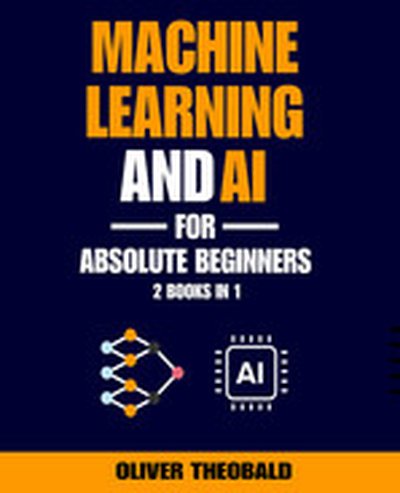
Explore AI and Machine Learning fundamentals, tools, and applications in this beginner-friendly guide. Learn to build models in Python and understand AI ethics. Key Features Covers AI fundamentals, Machine Learning, and Python model-building Provides a clear, step-by-step guide to learning AI techniques Explains ethical considerations and the future role of AI in society Book Description This book is an ideal starting point for anyone interested in Artificial Intelligence and Machine Learning. It begins with the foundational principles of AI, offering a deep dive into its history, building blocks, and the stages of development. Readers will explore key AI concepts and gradually transition to practical applications, starting with machine learning algorithms such as linear regression and k-nearest neighbors. Through step-by-step Python tutorials, the book helps readers build and implement models with hands-on experience. As the book progresses, readers will dive into advanced AI topics like deep learning, natural language processing (NLP), and generative AI. Topics such as recommender systems and computer vision demonstrate the real-world applications of AI technologies. Ethical considerations and privacy concerns are also addressed, providing insight into the societal impact of these technologies. By the end of the book, readers will have a solid understanding of both the theory and practice of AI and Machine Learning. The final chapters provide resources for continued learning, ensuring that readers can continue to grow their AI expertise beyond the book. What you will learn Understand key AI and ML concepts and how they work together Build and apply machine learning models from scratch Use Python to implement AI techniques and improve model performance Explore essential AI tools and frameworks used in the industry Learn the importance of data and data preparation in AI development Grasp the ethical considerations and the future of AI in work Who this book is for This book is ideal for beginners with no prior knowledge of AI or Machine Learning. It is tailored to those who wish to dive into these topics but are not yet familiar with the terminology or techniques. There are no prerequisites, though basic programming knowledge can be helpful. The book caters to a wide audience, from students and hobbyists to professionals seeking to transition into AI roles. Readers should be enthusiastic about learning and exploring AI applications for the future.
Speaker session with Nasser Qadri.
Speaker session with Sean Wheelock.
ECA is a free OSS tool to use alongside your editor, it gives you AI capabilities for pair programming sharing a same experience across editors.
I first built an AI that thinks like an analyst. Now I have built a better AI Data analyst for the practical use of AI. This episode breaks down the simple rebuild: start with a clear objective, pick 5–8 focus columns, and ship a one-page Markdown brief. You’ll also get a 3-minute quiz (10:33), a Substack discussion (17:04), and a 9-step checklist you can use today. What you’ll learn How to start with a clear business goal (not charts)Why focusing on 5–8 columns increases signalHow a 1-page brief moves work faster than a dashboardQuiz & Discussion Take the Lightning QuizJoin the Substack discussion: https://mukundansankar.substack.com/(Tell your day-two story, your one metric, and your 5–8 focus columns.)Listener Checklist Copy/paste: 1) Objective (one line) 2) 5–8 focus columns 3) 10 questions + why 4) Quick data health checks 5) Export 1-page brief 6) Share in Slack/Notion/Jira 7) Run 2–3 quick analyses today 8) Log learning + next decision 9) Repeat tomorrow Links Blog version: (with Medium membership): https://medium.com/data-science-collective/i-built-an-ai-that-thinks-like-a-data-analyst-then-it-went-viral-so-i-made-it-smarter-1f3206a8254b(Free): https://mukundansankar.substack.com/p/i-built-an-ai-that-thinks-like-aSubstack Note (comments hub): https://mukundansankar.substack.com/notesTools I use for my Podcast:Recording Partner: Riverside → Sign up here (affiliate)Host Your Podcast: RSS.com (affiliate )Research Tools: Sider.ai (affiliate)🔗 Connect with Me:Free Email Newsletter: https://data-ai-with-ms.kit.com/bae4d0c550Website: https://mukundansankar.substack.com/Twitter/X: @sankarmukund475LinkedIn: https://www.linkedin.com/in/mukundansankar/YouTube: https://www.youtube.com/@MukundSankar
Feeling behind on your data journey? Don't worry. Today, I'll list down the 13 signs that prove you're actually ahead (even if you're actually doing just some of these). ✨ Try Julius today at https://landadatajob.com/Julius-YT 💌 Join 10k+ aspiring data analysts & get my tips in your inbox weekly 👉 https://www.datacareerjumpstart.com/newsletter 🆘 Feeling stuck in your data journey? Come to my next free "How to Land Your First Data Job" training 👉 https://www.datacareerjumpstart.com/training 👩💻 Want to land a data job in less than 90 days? 👉 https://www.datacareerjumpstart.com/daa 👔 Ace The Interview with Confidence 👉 https://www.datacareerjumpstart.com/interviewsimulator ⌚ TIMESTAMPS 00:00 Introduction 00:05 #1 You can analyze data in Excel without panicking 00:52 #2 You know how to write basic SQL queries 01:17 #3 You can build a bar chart and scatter plot in Tableau or Power BI 01:59 #4 You can Google (or ChatGPT) your way through any error 02:45 #5 You can send me one portfolio project right now 03:45 #6 You talk about your data journey with friends and family regularly 05:50 #7 You’re actually applying to jobs (not just watching tutorials) 07:03 #8 You’ve joined a data community 07:48 #9 Your resume now includes (lots of) the right keywords 10:11 #10 You’ve optimized your LinkedIn for data roles 10:45 #11 A recruiter reaches out to you on LinkedIn 11:58 #12 You’ve had at least one real interview 12:52 #13 You’re comfortable not knowing everything (yet) 🔗 CONNECT WITH AVERY 🎥 YouTube Channel: https://www.youtube.com/@averysmith 🤝 LinkedIn: https://www.linkedin.com/in/averyjsmith/ 📸 Instagram: https://instagram.com/datacareerjumpstart 🎵 TikTok: https://www.tiktok.com/@verydata 💻 Website: https://www.datacareerjumpstart.com/ Mentioned in this episode: Join the last cohort of 2025! The LAST cohort of The Data Analytics Accelerator for 2025 kicks off on Monday, December 8th and enrollment is officially open!
To celebrate the end of the year, we’re running a special End-of-Year Sale, where you’ll get: ✅ A discount on your enrollment 🎁 6 bonus gifts, including job listings, interview prep, AI tools + more
If your goal is to land a data job in 2026, this is your chance to get ahead of the competition and start strong.
👉 Join the December Cohort & Claim Your Bonuses: https://DataCareerJumpstart.com/daa https://www.datacareerjumpstart.com/daa
This is part two of the framework; if you missed part one, head to episode 175 and start there so you're all caught up.
In this episode of Experiencing Data, I continue my deep dive into the MIRRR UX Framework for designing trustworthy agentic AI applications. Building on Part 1’s “Monitor” and “Interrupt,” I unpack the three R’s: Redirect, Rerun, and Rollback—and share practical strategies for data product managers and leaders tasked with creating AI systems people will actually trust and use. I explain human-centered approaches to thinking about automation and how to handle unexpected outcomes in agentic AI applications without losing user confidence. I am hoping this control framework will help you get more value out of your data while simultaneously creating value for the human stakeholders, users, and customers.
Highlights / Skip to:
Introducing the MIRRR UX Framework (1:08) Designing for trust and user adoption plus perspectives you should be including when designing systems. (2:31) Monitor and interrupt controls let humans pause anything from a single AI task to the entire agent (3:17) Explaining “redirection” in the example context of use cases for claims adjusters working on insurance claims—so adjusters (users) can focus on important decisions. (4:35) Rerun controls: lets humans redo an angentic task after unexpected results, preventing errors and building trust in early AI rollouts (11:12) Rerun vs. Redirect: what the difference is in the context of AI, using additional use cases from the insurance claim processing domain (12:07) Empathy and user experience in AI adoption, and how the most useful insights come from directly observing users—not from analytics (18:28) Thinking about agentic AI as glue for existing applications and workflows, or as a worker (27:35)
Quotes from Today’s Episode
The value of AI isn’t just about technical capability, it’s based in large part on whether the end-users will actually trust and adopt it. If we don’t design for trust from the start, even the most advanced AI can fail to deliver value."
"In agentic AI, knowing when to automate is just as important as knowing what to automate. Smart product and design decisions mean sometimes holding back on full automation until the people, processes, and culture are ready for it."
"Sometimes the most valuable thing you can do is slow down, create checkpoints, and give people a chance to course-correct before the work goes too far in the wrong direction."
"Reruns and rollbacks shouldn’t be seen as failures, they’re essential safety mechanisms that protect both the integrity of the work and the trust of the humans in the loop. They give people the confidence to keep using the system, even when mistakes happen."
"You can’t measure trust in an AI system by counting logins or tracking clicks. True adoption comes from understanding the people using it, listening to them, observing their workflows, and learning what really builds or breaks their confidence."
"You’ll never learn the real reasons behind a team’s choices by only looking at analytics, you have to actually talk to them and watch them work."
"Labels matter, what you call a button or an action can shape how people interpret and trust what will happen when they click it."
Quotes from Today’s Episode
Part 1: The MIRRR UX Framework for Designing Trustworthy Agentic AI Applications
Imagine a world where business users simply fire up their analytics AI tool, ask for some insights, and get a clear and accurate response in return. That's the dream, isn't it? Is it just around the corner, or is it years away? Or is that vision embarrassingly misguided at its core? The very real humans who responded to our listener survey wanted to know where and how AI would be fitting into the analyst's toolkit, and, frankly, so do we! Maybe they (and you!) can fire up ol' Claude and ask it to analyze this episode with Juliana Jackson from the Standard Deviation podcast and Beyond the Mean Substack to find out!
For complete show notes, including links to items mentioned in this episode and a transcript of the show, visit the show page.

The book is essential for anyone seeking to understand and leverage the transformative power of intelligent automation technologies, providing crucial insights into current trends, challenges, and effective solutions that can significantly enhance operational efficiency and decision-making within organizations. Intelligent automation systems, also called cognitive automation, use automation technologies such as artificial intelligence, business process management, and robotic process automation, to streamline and scale decision-making across organizations. Intelligent automation simplifies processes, frees up resources, improves operational efficiencies, and has a variety of applications. Intelligent automation systems aim to reduce costs by augmenting the workforce and improving productivity and accuracy through consistent processes and approaches, which enhance quality, improve customer experience, and address compliance and regulations with confidence. Handbook of Intelligent Automation Systems Using Computer Vision and Artificial Intelligence explores the significant role, current trends, challenges, and potential solutions to existing challenges in the field of intelligent automation systems, making it an invaluable guide for researchers, industry professionals, and students looking to apply these innovative technologies. Readers will find the volume: Offers comprehensive coverage on intelligent automation systems using computer vision and AI, covering everything from foundational concepts to real-world applications and ethical considerations; Provides actionable knowledge with case studies and best practices for intelligent automation systems, computer vision, and AI; Explores the integration of various techniques, including facial recognition, natural language processing, neuroscience and neuromarketing. Audience The book is designed for AI and data scientists, software developers and engineers in industry and academia, as well as business leaders and entrepreneurs who are interested in the applications of intelligent automation systems.
Summary In this episode of the Data Engineering Podcast Prashanth Rao, an AI engineer at KuzuDB, talks about their embeddable graph database. Prashanth explains how KuzuDB addresses performance shortcomings in existing solutions through columnar storage and novel join algorithms. He discusses the usability and scalability of KuzuDB, emphasizing its open-source nature and potential for various graph applications. The conversation explores the growing interest in graph databases due to their AI and data engineering applications, and Prashanth highlights KuzuDB's potential in edge computing, ephemeral workloads, and integration with other formats like Iceberg and Parquet.
Announcements Hello and welcome to the Data Engineering Podcast, the show about modern data managementData migrations are brutal. They drag on for months—sometimes years—burning through resources and crushing team morale. Datafold's AI-powered Migration Agent changes all that. Their unique combination of AI code translation and automated data validation has helped companies complete migrations up to 10 times faster than manual approaches. And they're so confident in their solution, they'll actually guarantee your timeline in writing. Ready to turn your year-long migration into weeks? Visit dataengineeringpodcast.com/datafold today for the details.Your host is Tobias Macey and today I'm interviewing Prashanth Rao about KuzuDB, an embeddable graph databaseInterview IntroductionHow did you get involved in the area of data management?Can you describe what KuzuDB is and the story behind it?What are the core use cases that Kuzu is focused on addressing?What is explicitly out of scope?Graph engines have been available and in use for a long time, but generally for more niche use cases. How would you characterize the current state of the graph data ecosystem?You note scalability as a feature of Kuzu, which is a phrase with many potential interpretations. Typically horizontal scaling of graphs has been complicated, in what sense does Kuzu make that claim?Can you describe some of the typical architecture and integration patterns of Kuzu?What are some of the more interesting or esoteric means of architecting with Kuzu?For cases where Kuzu is rendering a graph across an external data repository (e.g. Iceberg, etc.), what are the patterns for balancing data freshness with network/compute efficiency? (e.g. read and create every time or persist the Kuzu state)Can you describe the internal architecture of Kuzu and key design factors?What are the benefits and tradeoffs of using a columnar store with adjacency lists vs. a more graph-native storage format?What are the most interesting, innovative, or unexpected ways that you have seen Kuzu used?What are the most interesting, unexpected, or challenging lessons that you have learned while working on Kuzu?When is Kuzu the wrong choice?What do you have planned for the future of Kuzu?Contact Info WebsiteLinkedInParting Question From your perspective, what is the biggest gap in the tooling or technology for data management today?Links KuzuDBBERTTransformer ArchitectureDuckDBPodcast EpisodeMonetDBUmbra DBsqliteCypher Query LanguageProperty GraphNeo4JGraphRAGContext EngineeringWrite-Ahead LogBauplanIcebergDuckLakeLanceLanceDBArrowPolarsArrow DataFusionGQLClickHouseAdjacency ListWhy Graph Databases Need New Join AlgorithmsKuzuDB WASMRAG == Retrieval Augmented GenerationNetworkXThe intro and outro music is from The Hug by The Freak Fandango Orchestra / CC BY-SA
Combining LLMs with enterprise knowledge bases is creating powerful new agents that can transform business operations. These systems are dramatically improving on traditional chatbots by understanding context, following conversations naturally, and accessing up-to-date information. But how do you effectively manage the knowledge that powers these agents? What governance structures need to be in place before deployment? And as we look toward a future with physical AI and robotics, what fundamental computing challenges must we solve to ensure these technologies enhance rather than complicate our lives? Jun Qian is an accomplished technology leader with extensive experience in artificial intelligence and machine learning. Currently serving as Vice President of Generative AI Services at Oracle since May 2020, Jun founded and leads the Engineering and Science group, focusing on the creation and enhancement of Generative AI services and AI Agents. Previously held roles include Vice President of AI Science and Development at Oracle, Head of AI and Machine Learning at Sift, and Principal Group Engineering Manager at Microsoft, where Jun co-founded Microsoft Power Virtual Agents. Jun's career also includes significant contributions as the Founding Manager of Amazon Machine Learning at AWS and as a Principal Investigator at Verizon. In the episode, Richie and Jun explore the evolution of AI agents, the unique features of ChatGPT, the challenges and advancements in chatbot technology, the importance of data management and security in AI, and the future of AI in computing and robotics, and much more. Links Mentioned in the Show: OracleConnect with JunCourse: Introduction to AI AgentsJun at DataCamp RADARRelated Episode: A Framework for GenAI App and Agent Development with Jerry Liu, CEO at LlamaIndexRewatch RADAR AI New to DataCamp? Learn on the go using the DataCamp mobile appEmpower your business with world-class data and AI skills with DataCamp for business
What's the nature of skills and competency when we're all just AI enabled button pushers? I rant about why we need to retain our sense of competence and uniqueness in an age where everything is rapidly becoming a sea of sameness and lameness.
Struggling with data trust issues, dashboard drama, or constant pipeline firefighting? In this deep‑dive interview, Lior Barak shows you how to shift from a reactive “fix‑it” culture to a mindful, impact‑driven practice rooted in Zen/Wabi‑Sabi principles. You’ll learn: Why 97 % of CEOs say they use data, but only 24 % call themselves data‑driven The traffic‑light dashboard pattern (green / yellow / red) that instantly tells execs whether numbers are safe to use A practical rule for balancing maintenance, rollout, and innovation—and avoiding team burnout How to quantify ROI on data products, kill failing legacy systems, and handle ad‑hoc exec requests without derailing roadmaps Turning “imperfect” data into business value with mindful communication, root‑cause logs, and automated incident review loops
🕒 TIMECODES 00:00 Community and mindful data strategy 04:06 Career journey and product management insights 08:03 Wabi-sabi data and the trust crisis 11:47 AI, data imperfection, and trust challenges 20:05 Trust crisis examples and root cause analysis 25:06 Regaining trust through mindful data management 30:47 Traffic light system and effective communication 37:41 Communication gaps and team workload balance 39:58 Maintenance stress and embracing Zen mindset 49:29 Accepting imperfection and measuring impact 56:19 Legacy systems and managing executive requests 01:00:23 Role guidance and closing reflections
🔗 Connect with Lior LinkedIn - https://www.linkedin.com/in/liorbarak Website - https://cookingdata.substack.com/ Cooking Data newsletter: https://cookingdata.substack.com/ Product product lifecycle manager: https://app--data-product-lifecycle-manager-c81b10bb.base44.app/
🔗 Connect with DataTalks.Club Join the community - https://datatalks.club/slack.html Subscribe to our Google calendar to have all our events in your calendar - https://calendar.google.com/calendar/u/0/r?cid=ZjhxaWRqbnEwamhzY3A4ODA5azFlZ2hzNjBAZ3JvdXAuY2FsZW5kYXIuZ29vZ2xlLmNvbQ Check other upcoming events - https://lu.ma/dtc-events GitHub: https://github.com/DataTalksClub LinkedIn - https://www.linkedin.com/company/datatalks-club/ Twitter - https://x.com/DataTalksClub Website - https://datatalks.club/
🔗 Connect with Alexey Twitter - https://x.com/Al_Grigor Linkedin - https://www.linkedin.com/in/agrigorev/
In this episode, Rita Gupta, AMD Fellow and recent recipient of the Superwomen of FMS Leadership Award, shares her 25-year journey in technology—from being one of the only women in engineering school to leading innovation in CXL, memory technologies, and supercomputing infrastructure at AMD. She opens up about career-defining moments, the importance of embracing discomfort for growth, and her mission to mentor the next generation of women in tech. Discover how Rita is helping shape the future of data centers, AI infrastructure, and memory architecture—and why diversity of thought is essential for solving tomorrow’s challenges. Powered by Hammerspace – Learn more at https://hammerspace.com Cyberpunk by jiglr | https://soundcloud.com/jiglrmusic Music promoted by https://www.free-stock-music.com Creative Commons Attribution 3.0 Unported License https://creativecommons.org/licenses/by/3.0/deed.en_US
AMD #DataCenters #CXL #Supercomputing #WomenInTech #Leadership #AI #MemoryInnovation #FutureOfTech #TechLeadership #DataInfrastructure #AIInfrastructure #ServerArchitecture #TechCareers #Mentorship #DataUnchained #Hammerspace #STEM #Engineering #TechInnovation
Hosted on Acast. See acast.com/privacy for more information.
To be updated