The world of data is being reset by AI, and the infrastructure needs to evolve with it. I sit down with streaming legend Tyler Akidau to discuss how the principles of stream processing are forming the foundation for the next generation of "agentic AI" systems. Tyler, who was an AI cynic until recently, explains why he's now convinced that AI agents will fundamentally change how businesses operate and what problems we need to solve to deploy them safely. Key topics we explore: From Human Analytics to Agentic Systems: How data architectures built for human analysis must be re-imagined for a world with thousands of AI agents operating at machine speed.Auditing Everything: Why managing AI requires a new level of governance where we must record all data an agent touches, not just metadata, to diagnose its complex and opaque behaviorThe End of Windowing's Dominance: Tyler reflects on the influential Dataflow paper he co-authored and explains why he now sees a table-based abstraction as a more powerful and user-friendly model than focusing on windowing.The D&D Alignment of AI: Tyler's brilliant analogy for why enterprises are struggling to adopt AI: we're trying to integrate "chaotic" agents into systems built for "lawful good" employees.A Reset for the Industry: Why the rise of AI feels like the early 2010s of streaming, where the problems are unsolved and everyone is trying to figure out the answers.
 talk-data.com
Topic
AI/ML
Artificial Intelligence/Machine Learning
9014
tagged
Activity Trend
Top Events
Send us a text We're joined by Douwe Kiela, CEO of Contextual.ai and pioneer in RAG research. From deploying AI agents at Fortune 500 companies to shedding light on data privacy and security, Douwe shares his expertise and insights on how to make data simple, effective, and secure. 00:46 Introducing Douwe Kiela 01:37 RAG - Here to Stay or Go? 06:59 LLMs with Context 08:20 Making AI Successful 10:34 Why Contextual AI? 17:18 LLM versus SLMs 20:28 Speed over Perfection 22:07 Hallucinations 26:02 Making AI Easy to Consume 28:50 Defining an Agent 32:53 Reaching Contextual AI 33:14 The Contrarian View 34:37 The Risks of AI 36:53 For Fun
LinkedIn: linkedin.com/in/douwekiela Website: https://contextual.ai/ Want to be featured as a guest on Making Data Simple? Reach out to us at [email protected] and tell us why you should be next. The Making Data Simple Podcast is hosted by Al Martin, WW VP Technical Sales, IBM, where we explore trending technologies, business innovation, and leadership ... while keeping it simple & fun. Want to be featured as a guest on Making Data Simple? Reach out to us at [email protected] and tell us why you should be next. The Making Data Simple Podcast is hosted by Al Martin, WW VP Technical Sales, IBM, where we explore trending technologies, business innovation, and leadership ... while keeping it simple & fun.
Data interviews do not have to feel messy. In this episode, I share a simple AI Interview Copilot that works for data analyst, data scientist, analytics engineer, product analyst, and marketing analyst roles. What you will learn today: How to Turn a Job Post into a Skills Map: Know Exactly What to Study First.How to build role-specific SQL drills (joins, window functions, cohorts, retention, time series).How to practice product/case questions that end with a decision and a metric you can defend.How to prepare ML/experimentation basics (problem framing, features, success metrics, A/B test sanity checks).How to plan take-home assignments (scope, assumptions, readable notebook/report structure).How to create a 6-story STAR bank with real numbers and clear outcomes.How to follow a 7-day rhythm so you make steady progress without burnout.How to keep proof of progress so your confidence comes from evidence, not hope.Copy-and-use prompts from the show: JD → Skills Map: “Parse this job post. Table: Skill/Theme | Where mentioned | My level (guess) | Study action | Likely interview questions. Then give 5 bullets: what they are really hiring for.”SQL Drill Factory (Analyst/Product/Marketing): “Create 20 SQL tasks + hint + how to check results using orders, users, events, campaigns. Emphasize joins, windows, conditional agg, cohorts, funnels, retention, time windows.”Case Coach (Data/Product): “Run a 15-minute case: key metric is down. Ask one question at a time. Score clarity, structure, metrics, trade-offs. End with gaps + practice list.”ML/Experimentation Basics (Data Science): “Create a 7-step outline for framing a modeling problem (goal, data, features, baseline, evaluation, risks, comms). Add an A/B test sanity checklist (power, SRM, population, metric guardrails).”Take-Home Planner: “Given this brief, propose scope, data assumptions, 3–5 analysis steps, visuals, and a short results section. Output a clear report outline.”Behavioral STAR Bank: “Draft 6 STAR stories (120s) for conflict, ambiguity, failure, leadership without title, stakeholder influence, measurable impact. Put numbers in Results.”
How can a worm’s intestine influence its descendants’ lifespan? This episode explores how lysosomes send metabolic signals through the epigenome to extend longevity across generations.
Researchers found that activating lysosomal lipid metabolism triggers transcriptional up-regulation of a histone variant, H3.3 (his-71), in the intestine. This histone is transported to the germ line, where it’s methylated at K79 by the methyltransferase DOT-1.3. The result is a heritable epigenetic state that promotes longer life across multiple generations of C. elegans.
The work reveals how metabolic signalling through lysosomes interacts with chromatin to link soma and germ line, showing how environmental changes like starvation can shape longevity inheritance.
📖 Based on: Zhang Q., Dang W., Wang M.C. Science (2025). “Lysosomes signal through the epigenome to regulate longevity across generations.” https://doi.org/10.1126/science.adn8754
🎧 Subscribe to the WOrM Podcast for more deep dives into the molecular lives of worms.
This podcast is generated with artificial intelligence and curated by Veeren. If you’d like your publication featured on the show, please get in touch.
📩 More info: 🔗 www.veerenchauhan.com 📧 [email protected]
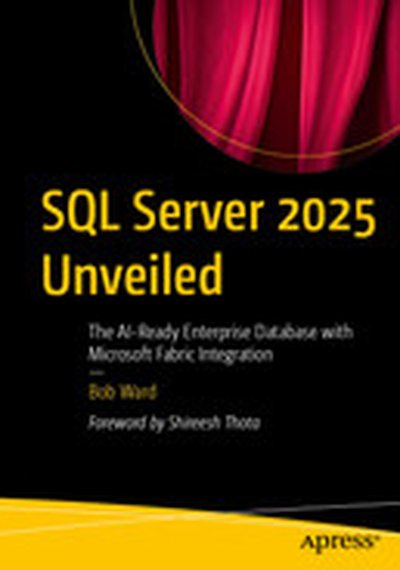
Unveil the data platform of the future with SQL Server 2025—guided by one of its key architects . With built-in AI for application development and advanced analytics powered by Microsoft Fabric, SQL Server 2025 empowers you to innovate—securely and confidently. This book shows you how. Author Bob Ward, Principal Architect for the Microsoft Azure Data team, shares exclusive insights drawn from over three decades at Microsoft. Having worked on every version of SQL Server since OS/2 1.1, Ward brings unmatched expertise and practical guidance to help you navigate this transformative release. Ward covers everything from setup and upgrades to advanced features in performance, high availability, and security. He also highlights what makes this the most developer-friendly release in a decade: support for JSON, RegEx, REST APIs, and event streaming. Most critically, Ward explores SQL Server 2025’s advanced, scalable AI integrations, showing you how to build AI-powered applications deeply integrated with the SQL engine—and elevate your analytics to the next level. But innovation doesn’t come at the cost of safety: this release is built on a foundation of enterprise-grade security, helping you adopt AI safely and responsibly. You control which models to use, how they interact with your data, and where they run—from ground to cloud, or integrated with Microsoft Fabric. With built-in features like Row-Level Security (RLS), Transparent Data Encryption (TDE), Dynamic Data Masking, and SQL Server Auditing, your data remains protected at every layer. The AI age is here. Make sure your SQL Server databases are ready—and built for secure, scalable innovation . What You Will Learn [if !supportLists] · [endif]Grasp the fundamentals of AI to leverage AI with your data, using the industry-proven security and scale of SQL Server [if !supportLists] · [endif]Utilize AI models of your choice, services, and frameworks to build new AI applications [if !supportLists] · [endif]Explore new developer features such as JSON, Regular Expressions, REST API, and Change Event Streaming [if !supportLists] · [endif]Discover SQL Server 2025's powerful new engine capabilities to increase application concurrency [if !supportLists] · [endif]Examine new high availability features to enhance uptime and diagnose complex HADR configurations [if !supportLists] · Use new query processing capabilities to extend the performance of your application [if !supportLists] · [endif]Connect SQL Server to Azure with Arc for advanced management and security capabilities [if !supportLists] · [endif]Secure and govern your data using Microsoft Entra [if !supportLists] · [endif]Achieve near-real-time analytics with the unified data platform Microsoft Fabric [if !supportLists] · [endif]Integrate AI capabilities with SQL Server for enterprise AI [if !supportLists] · [endif]Leverage new tools such as SQL Server Management Studio and Copilot experiences to assist your SQL Server journey Who This Book Is For The SQL Server community, including DBAs, architects, and developers eager to stay ahead with the latest advancements in SQL Server 2025, and those interested in the intersection of AI and data, particularly how artificial intelligence (AI) can be seamlessly integrated with SQL Server to unlock deeper insights and smarter solutions
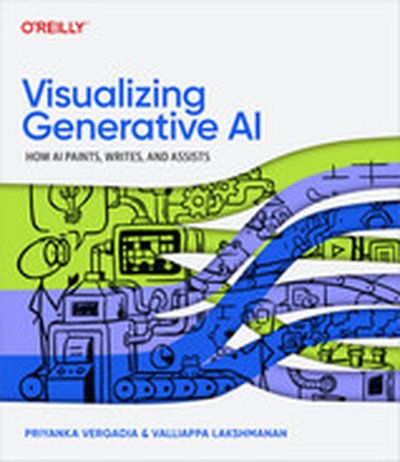
Generative AI has the potential to innovate and evolve business processes, but workers are still figuring out how to build with, optimize, and prompt GenAI tools to fit their needs. And of course, there are pitfalls to avoid, like security risks and hallucinations. Getting it right requires an intuitive understanding of the technology’s capabilities and limitations. This approachable guidebook helps learners of all levels navigate GenAI—and have fun while doing it. Loaded with insightful diagrams and illustrations, Visualizing Generative AI is the perfect entry point for curious IT professionals, business leaders who want to stay on top of the latest technologies, students exploring careers in cloud computing and AI, and anyone else interested in getting started with GenAI. You’ll traverse the generative AI landscape, exploring everything from how this technology works to the ways organizations are already leveraging it to great success. Understand how generative AI has evolved, with a focus on major breakthroughs Get acquainted with the available tools and platforms for GenAI workloads Examine real-world applications, such as chatbots and workflow automation Learn fundamentals that you can build upon as you continue your GenAI journey
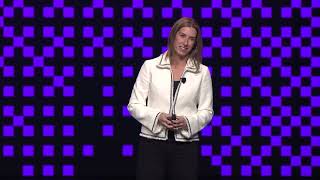
The future of AI is here. Join AI and data industry thought leader Ashley Kramer from OpenAI as she shares how AI-powered development and intelligent systems act as force multipliers for organizations—and how to confidently embrace these accelerants at scale. In the second half of the keynote, she'll be joined by a panel of product leaders from across the data stack for a discussion on the future of analytics in an AI-driven world and how dbt and ecosystem partners are innovating to rewrite what’s possible: turning yesterday's science fiction into today's reality. For our Coalesce Online attendees, join us on Slack in #coalesce-2025 to stay connected during keynote!
Learn why dbt is the best place for analysts to build reliable data products quickly, combining structured workflows with context-aware AI. We will explore how dbt Canvas, dbt Studio, and more give analysts the visibility, control, and flexibility they need to move from exploration to production without relying on engineers. You will also see how AI agents in dbt accelerate development by recommending logic, surfacing relevant models, and helping troubleshoot issues—making self-service both faster and more trusted.
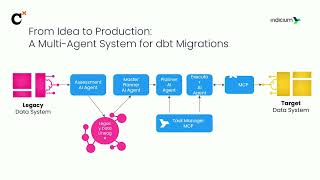
Aura Minerals cut pipeline migration time by 87%, transforming a 45-hour manual process into a 6-hour lift with relatively little manual oversight. In this session, learn how the team used AI tools to accelerate their shift from a complex PySpark environment to a streamlined, modern dbt workflow. You’ll walk away with a clear view of the strategy, the tools they used, and what it looks like to modernize your data stack with AI as a force multiplier.
Get hands-on with dbt Copilot, the AI assistant built into dbt that helps you move faster and write better code. In this workshop, you’ll learn how to use copilot to generate sql, create data tests and documentation, and build semantic models and metrics —all within your existing workflow. What to bring: You must bring your own laptop to complete the hands-on exercises. We will provide all the other sandbox environments for dbt and data platform.
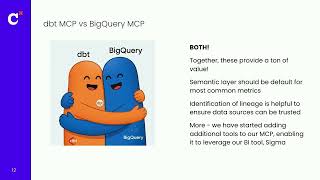
Bilt Rewards turned their dbt project into a natural language interface. By connecting their semantic layer and underlying data warehouse to an LLM, business users and data analysts can ask real business questions and get trusted and creative insights. This session shows how they modeled their data for AI, how they kept accuracy intact, and increased data driven conversations across the business.
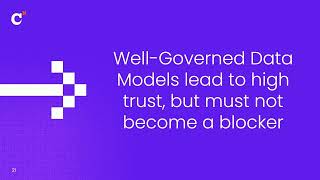
The session details how our lean central data team has achieved significant output by: Deploying the optimal tools (dbt and Lightdash) that supercharge DevEx Democratizing dbt development effectively Leveraging AI driven development Effectively using Kanban prioritization
Talk by Rhea Mendonca on data quality and AI.
Talk by Brain John Aboze on formal verification in ML.
At EQT, we use dbt as the backbone for contracts, metadata, and increasingly, semantic models. Many of our users work in Excel, so we built a custom add-in to make governed data and shared metrics directly accessible where exploration happens. This setup also lets us experiment with AI-assisted discovery and text-to-SQL, connecting both raw data and dbt’s semantic layer to live, auditable analysis.
Ce talk démontre comment exploiter la puissance de l’IA pour créer un avantage concurrentiel durable et en s’appuyant sur des études et rapports de référence (DORA, CodeScene, Stripe), afin de prévenir les effets négatifs de l’IA tout en amplifiant les bénéfices pour l’équipe et le business.
Join our panellists for an insightful discussion on AI's transformation of software development. From team dynamics to development practices, discover how AI is reshaping the future of engineering and creating new opportunities for innovation.
Join our panellists for an insightful discussion on AI's transformation of software development. From team dynamics to development practices, discover how AI is reshaping the future of engineering and creating new opportunities for innovation.
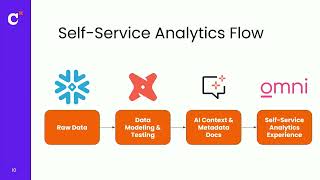
We transformed our entire stack to turn data into a competitive asset for our team and clients—going from scattered SQL scripts to a governed, scalable, AI-enabled architecture. Learn how we eliminated silos and standardized logic to create a data-forward culture with dbt as our transformation backbone.
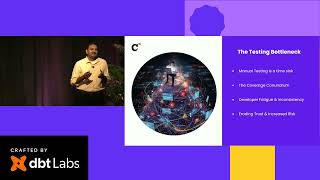
AI is reshaping every stage of the analytics process. And at Docusign, that transformation is already underway. The data team is using AI to boost data quality, save engineers time, and deliver insights business users can actually trust. This session takes you end to end, from automated unit tests to governed metrics, showing how Docusign connects AI-driven development with self-serve analytics powered by the dbt Semantic Layer. The result: faster delivery, fewer surprises, and smarter decisions across the org.