talk-data.com talk-data.com

Topic

Athena

Amazon Athena

serverless query_service aws

24

tagged

Activity Trend

7 peak/qtr
2020-Q1 2026-Q1

Activities

24 activities · Newest first

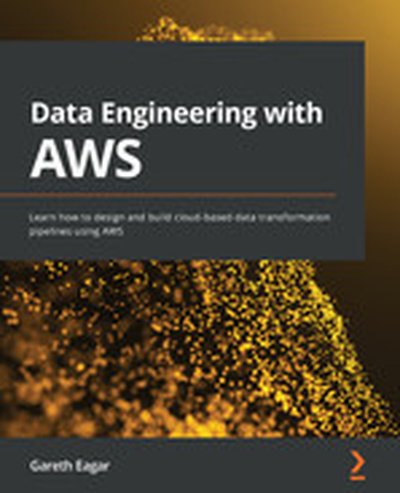
Data Engineering with AWS

Discover how to effectively build and manage data engineering pipelines using AWS with "Data Engineering with AWS". In this hands-on book, you'll explore the foundational principles of data engineering, learn to architect data pipelines, and work with essential AWS services to process, transform, and analyze data. What this Book will help me do Understand and implement modern data engineering pipelines with AWS services. Gain proficiency in automating data ingestion and transformation using Amazon tools. Perform efficient data queries and analysis leveraging Amazon Athena and Redshift. Create insightful data visualizations using Amazon QuickSight. Apply machine learning techniques to enhance data engineering processes. Author(s) None Eagar, a Senior Data Architect with over twenty-five years of experience, specializes in modern data architectures and cloud solutions. With a rich background in applying data engineering to real-world problems, None Eagar shares expertise in a clear and approachable way for readers. Who is it for? This book is perfect for data engineers and data architects aiming to grow their expertise in AWS-based solutions. It's also geared towards beginners in data engineering wanting to adopt the best practices. Those with a basic understanding of big data and cloud platforms will find it particularly valuable, but prior AWS experience is not required.

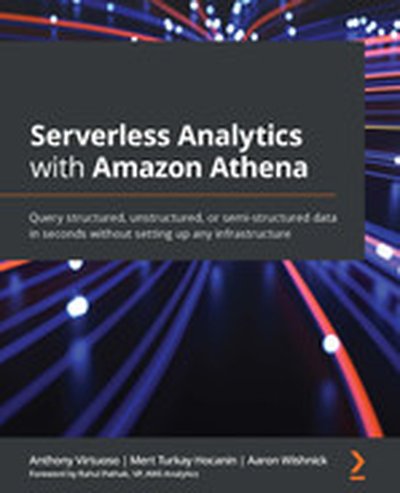
Serverless Analytics with Amazon Athena

Delve into the serverless world of Amazon Athena with the comprehensive book 'Serverless Analytics with Amazon Athena'. This guide introduces you to the power of Athena, showing you how to efficiently query data in Amazon S3 using SQL without the hassle of managing infrastructure. With clear instructions and practical examples, you'll master querying structured, unstructured, and semi-structured data seamlessly. What this Book will help me do Effectively query and analyze both structured and unstructured data stored in S3 using Amazon Athena. Integrate Athena with other AWS services to create powerful, secure, and cost-efficient data workflows. Develop ETL pipelines and machine learning workflows leveraging Athena's compatibility with AWS Glue. Monitor and troubleshoot Athena queries for consistent performance and build scalable serverless data solutions. Implement security best practices and optimize costs when managing your Athena-driven data solutions. Author(s) None Virtuoso, along with co-authors Mert Turkay Hocanin None and None Wishnick, brings a wealth of experience in cloud solutions, serverless technologies, and data engineering. They excel in demystifying complex technical topics and have a passion for empowering readers with practical skills and knowledge. Who is it for? This book is tailored for business intelligence analysts, application developers, and system administrators who want to harness Amazon Athena for seamless, cost-efficient data analytics. It suits individuals with basic SQL knowledge looking to expand their capabilities in querying and processing data. Whether you're managing growing datasets or building data-driven applications, this book provides the know-how to get it right.

Summary

Business intelligence is a necessity for any organization that wants to be able to make informed decisions based on the data that they collect. Unfortunately, it is common for different portions of the business to build their reports with different assumptions, leading to conflicting views and poor choices. Looker is a modern tool for building and sharing reports that makes it easy to get everyone on the same page. In this episode Daniel Mintz explains how the product is architected, the features that make it easy for any business user to access and explore their reports, and how you can use it for your organization today.

Preamble

Hello and welcome to the Data Engineering Podcast, the show about modern data management When you’re ready to build your next pipeline you’ll need somewhere to deploy it, so check out Linode. With private networking, shared block storage, node balancers, and a 40Gbit network, all controlled by a brand new API you’ve got everything you need to run a bullet-proof data platform. Go to dataengineeringpodcast.com/linode to get a $20 credit and launch a new server in under a minute. Go to dataengineeringpodcast.com to subscribe to the show, sign up for the mailing list, read the show notes, and get in touch. Join the community in the new Zulip chat workspace at dataengineeringpodcast.com/chat Your host is Tobias Macey and today I’m interviewing Daniel Mintz about Looker, a a modern data platform that can serve the data needs of an entire company

Interview

Introduction How did you get involved in the area of data management? Can you start by describing what Looker is and the problem that it is aiming to solve?

How do you define business intelligence?

How is Looker unique from other approaches to business intelligence in the enterprise?

How does it compare to open source platforms for BI?

Can you describe the technical infrastructure that supports Looker? Given that you are connecting to the customer’s data store, how do you ensure sufficient security? For someone who is using Looker, what does their workflow look like?

How does that change for different user roles (e.g. data engineer vs sales management)

What are the scaling factors for Looker, both in terms of volume of data for reporting from, and for user concurrency? What are the most challenging aspects of building a business intelligence tool and company in the modern data ecosystem?

What are the portions of the Looker architecture that you would do differently if you were to start over today?

What are some of the most interesting or unusual uses of Looker that you have seen? What is in store for the future of Looker?

Contact Info

LinkedIn

Parting Question

From your perspective, what is the biggest gap in the tooling or technology for data management today?

Links

Looker Upworthy MoveOn.org LookML SQL Business Intelligence Data Warehouse Linux Hadoop BigQuery Snowflake Redshift DB2 PostGres ETL (Extract, Transform, Load) ELT (Extract, Load, Transform) Airflow Luigi NiFi Data Curation Episode Presto Hive Athena DRY (Don’t Repeat Yourself) Looker Action Hub Salesforce Marketo Twilio Netscape Navigator Dynamic Pricing Survival Analysis DevOps BigQuery ML Snowflake Data Sharehouse

The intro and outro music is from The Hug by The Freak Fandango Orchestra / CC BY-SA Support Data Engineering Podcast

Summary

Elasticsearch is a powerful tool for storing and analyzing data, but when using it for logs and other time oriented information it can become problematic to keep all of your history. Chaos Search was started to make it easy for you to keep all of your data and make it usable in S3, so that you can have the best of both worlds. In this episode the CTO, Thomas Hazel, and VP of Product, Pete Cheslock, describe how they have built a platform to let you keep all of your history, save money, and reduce your operational overhead. They also explain some of the types of data that you can use with Chaos Search, how to load it into S3, and when you might want to choose it over Amazon Athena for our serverless data analysis.

Preamble

Hello and welcome to the Data Engineering Podcast, the show about modern data management When you’re ready to build your next pipeline you’ll need somewhere to deploy it, so check out Linode. With private networking, shared block storage, node balancers, and a 40Gbit network, all controlled by a brand new API you’ve got everything you need to run a bullet-proof data platform. Go to dataengineeringpodcast.com/linode to get a $/0 credit and launch a new server in under a minute. You work hard to make sure that your data is reliable and accurate, but can you say the same about the deployment of your machine learning models? The Skafos platform from Metis Machine was built to give your data scientists the end-to-end support that they need throughout the machine learning lifecycle. Skafos maximizes interoperability with your existing tools and platforms, and offers real-time insights and the ability to be up and running with cloud-based production scale infrastructure instantaneously. Request a demo at dataengineeringpodcast.com/metis-machine to learn more about how Metis Machine is operationalizing data science. Go to dataengineeringpodcast.com to subscribe to the show, sign up for the mailing list, read the show notes, and get in touch. Join the community in the new Zulip chat workspace at dataengineeringpodcast.com/chat Your host is Tobias Macey and today I’m interviewing Pete Cheslock and Thomas Hazel about Chaos Search and their effort to bring historical depth to your Elasticsearch data

Interview

Introduction How did you get involved in the area of data management? Can you start by explaining what you have built at Chaos Search and the problems that you are trying to solve with it?

What types of data are you focused on supporting? What are the challenges inherent to scaling an elasticsearch infrastructure to large volumes of log or metric data?

Is there any need for an Elasticsearch cluster in addition to Chaos Search? For someone who is using Chaos Search, what mechanisms/formats would they use for loading their data into S3? What are the benefits of implementing the Elasticsearch API on top of your data in S3 as opposed to using systems such as Presto or Drill to interact with the same information via SQL? Given that the S3 API has become a de facto standard for many other object storage platforms, what would be involved in running Chaos Search on data stored outside of AWS? What mechanisms do you use to allow for such drastic space savings of indexed data in S3 versus in an Elasticsearch cluster? What is the system architecture that you have built to allow for querying terabytes of data in S3?

What are the biggest contributors to query latency and what have you done to mitigate them?

What are the options for access control when running queries against the data stored in S3? What are some of the most interesting or unexpected uses of Chaos Search and access to large amounts of historical log information that you have seen? What are your plans for the future of Chaos Search?

Contact Info

Pete Cheslock

@petecheslock on Twitter Website

Thomas Hazel

@thomashazel on Twitter LinkedIn

Parting Question

From your perspective, what is the biggest gap in the tool