talk-data.com talk-data.com

Topic

BI

Business Intelligence (BI)

data_visualization reporting analytics

179

tagged

Activity Trend

111 peak/qtr
2020-Q1 2026-Q2

Activities

Showing filtered results

Filtering by: O'Reilly Data Engineering Books ×
Professional Microsoft® SQL Server® 2008 Reporting Services

Teaches solution architects, designers, and developers how to use Microsoft's reporting platform to create reporting and business intelligence (BI) solutions Updated with new information about holistic BI solutions, comprehensive OLAP/Analysis Services reporting, and complete production deployment scenarios Includes programming examples focused on specific, scenario-based solutions Explains reporting services architecture and business intelligence, teaches the fundamentals of designing reports through the use of careful planning considerations, and covers advanced report design and filtering techniques

Microsoft® SQL Server™ 2008 Analysis Services Unleashed

As the foundation of the Microsoft Business Intelligence Strategy, Microsoft SQL Server 2008 Analysis Services provides users with faster access to data and even more tools for managing and analyzing data across multidimensional objects (databases, dimensions, cubes). Microsoft SQL Server 2008 Analysis Services Unleashed is the ultimate guide for anyone who is planning to use the latest version of Analysis Services. It gives readers insight into the way Analysis Services functions, and explains practical methods for designing and creating multidimensional objects. It also provides valuable insight into the reasons behind the design decisions taken by the product development team. The authors have been involved with Analysis Services from its earliest days. They have documented in detail the internal features of Analysis Services 2008, explaining server architecture, main data structures, data processing, and query resolution algorithms. Discover the new functionality introduced in Analysis Services 2008 including MDX enhancements and new DMV (dynamic memory views) Work with the Business Intelligence Development Studio, the new Dimension Editor, and Aggregation Designer interfaces Enjoy complete coverage of new Shared Scalable Databases scale-out infrastructure Learn the key concepts of multidimensional modeling Explore the multidimensional object model and its definition language Integrate multidimensional and relational databases Build client applications to access data in Analysis Services Unravel the inner workings of the server architecture, including main data structures, data processing, and query resolution algorithms Learn the main concepts of the MDX language and gain an in-depth understanding of advanced MDX concepts Gain a deeper understanding of the internal and external protocols for data transfer, including the XML/A protocol Discover how Analysis Services manages memory Explore the security model, including role-based security, code-access security, and data security Category: Microsoft SQL Server Covers: Microsoft SQL Server 2008 Analysis Services User Level: Intermediate-Advanced $59.99 USA / $65.99 CAN / £38.99 Net UK±

Microsoft® SQL Server® 2008 Step by Step

Teach yourself SQL Server 2008—one step at a time. Get the practical guidance you need to build database solutions that solve real-world business problems. Learn to integrate SQL Server data in your applications, write queries, develop reports, and employ powerful business intelligence systems. Discover how to: Install and work with core components and tools Create tables and index structures Manipulate and retrieve data Secure, manage, back up, and recover databases Apply tuning plus optimization techniques to generate high-performing database applications Optimize availability through clustering, database mirroring, and log shipping Tap business intelligence tools—Reporting, Analysis, and Integration Services CD features: Practice exercises and code samples Fully searchable eBook For customers who purchase an ebook version of this title, instructions for downloading the CD files can be found in the ebook.

Professional Microsoft® SQL Server® 2008 Administration

SQL Server 2008 represents a sizable jump forward in scalability, performance, and usability for the DBA, developer, and business intelligence (BI) developer. It is no longer unheard of to have 20-terabyte databases running on a SQL Server. SQL Server administration used to just be the job of a database administrator (DBA), but as SQL Server proliferates throughout smaller companies, many developers have begun to act as administrators as well. Additionally, some of the new features in SQL Server are more developer-centric, and poor configuration of these features can result in poor performance. SQL Server now enables you to manage the policies on hundreds of SQL Servers in your environment as if you were managing a single instance. We've provided a comprehensive, tutorial-based book to get you over the learning curve of how to configure and administer SQL Server 2008. Whether you're an administrator or developer using SQL Server, you can't avoid wearing a DBA hat at some point. Developers often have SQL Server on their own workstations and must provide guidance to the administrator about how they'd like the production configured. Oftentimes, they're responsible for creating the database tables and indexes. Administrators or DBAs support the production servers and often inherit the database from the developer. This book is intended for developers, DBAs, and casual users who hope to administer or may already be administering a SQL Server 2008 system and its business intelligence features, such as Integration Services. This book is a professional book, meaning the authors assume that you know the basics about how to query a SQL Server and have some rudimentary concepts of SQL Server already. For example, this book does not show you how to create a database or walk you through the installation of SQL Server using the wizard. Instead, the author of the installation chapter may provide insight into how to use some of the more advanced concepts of the installation. Although this book does not cover how to query a SQL Server database, it does cover how to tune the queries you've already written. The first ten chapters of the book are about administering the various areas of SQL Server, including the developer and business intelligence features. Chapter 1 briefly covers the architecture of SQL Server and the changing role of the DBA. Chapters 2 and 3 dive into best practices on installing and upgrading to SQL Server 2008. Managing your SQL Server database instance is talked about in Chapter 4. This chapter also describes some of the hidden tools you may not even know you have. Once you know how to manage your SQL Server, you can learn in Chapter 5 how to automate many of the redundant monitoring and maintenance tasks. This chapter also discusses best practices on configuring SQL Server Agent. Chapters 6 and 7 cover how to properly administer and automate many tasks inside of the Microsoft business intelligence products, such as Integration Services and Analysis Services. Developers will find that Chapter 8 is very useful, as it covers how to administer the development features, such as SQL CLR. Chapter 9 explains how to secure your SQL Server from many common threats and how to create logins and users. Chapter 10 covers how to create a SQL Server project and do proper change management in promoting your scripts through the various environments. It also covers the Policy-Based Management framework in SQL Server. Chapters 11 through 15 make up the performance tuning part of the book. Chapter 11 discusses how to choose the right hardware configuration for your SQL Server in order to achieve optimal performance. After the hardware and operating system is configured, Chapter 12 shows you how to optimize your SQL Server instance for the best performance. Chapter 13 describes how to monitor your SQL Server instance for problematic issues such as blocking and locking. Chapters 14 and 15 discuss how to optimize the T-SQL that accesses your tables and then how to index your tables appropriately. Chapters 16 through 20 consist of the high-availability chapters of the book. Chapter 16 covers how to use the various forms of replication, while database mirroring is covered in Chapter 17. Classic issues and best practices with backing up and recovering your database are discussed in Chapter 18. Chapter 19 dives deeply into the role of log shipping in your high-availability strategy, and Chapter 20 presents a step-by-step guide to clustering your SQL Server and Windows 2008 server. This edition of the book covers all the same great information we covered in the last book, and we've added loads of new content for SQL Server 2008, which adds numerous new features to improve the DBA's life. In short, the new version of SQL Server focuses on improving your efficiency, the scale of your server, and the performance of your environment, so you can do more in much less time, and with fewer resources and people. This means you can manage many servers at one time using Policy-Based Management, scale your I/O load using compression, and collect valuable information about your environment using data collectors, to name just a few key new features. To follow the examples in this book, you will need to have SQL Server 2008 installed. If you wish to learn how to administer the business intelligence features, you need to have Analysis Services and the Integration Services components installed. You need a machine that can support the minimum hardware requirements to run SQL Server 2008; and you also need the AdventureWorks2008 and AdventureWorksDW2008 databases installed. Instructions for accessing these databases can be found in the ReadMe file on this book's Web site. Some features in this book (especially in the high-availability part) require the Enterprise or Developer Edition of SQL Server. If you do not have this edition, you will still be able to follow through some of the examples in the chapter with Standard Edition.

Crystal Reports® 2008 Official Guide

CRYSTAL REPORTS® 2008 OFFICIAL GUIDE Whether you’re a DBA, data warehousing or business intelligence professional, Every significant enhancement introduced in Crystal Reports 2008 is covered, including its new visualization options and more robust Web services capabilities. The book concludes by showing how to use Crystal Reports’ powerful .NET and Java SDKs to customize and extend enterprise reporting in virtually unlimited ways. • Learn hands-on, through step-by-step examples and exercises–and discover tips and tricks proven in real-world enterprise environments • Master new Crystal Reports 2008 features, including interactive report viewing, Xcelsius dashboarding, Flex, and Flash integration, Report Designer improvements, report bursting, and more • Publish professional-quality reports against virtually any data source, including relational and OLAP databases, Universes, SAP, PeopleSoft, JavaBeans, .NET/COM objects, XML, and more • Discover advanced visualization techniques using Xcelsius, charts, and maps • Learn methods for distributing reports and integrating content into other applications • Learn about the latest reporting addition to the Business Objects family–Xcelsius and begin creating dynamic and interactive dashboards NEIL FITZGERALD has spent several years working at Business Objects and with one of Business Objects’ largest providers of custom BI and enterprise reporting solutions. BOB COATES currently works as a Sales Consultant for Business Objects, an SAP company, where he has been employed for more than eleven years. RYAN GOODMAN is the founder of Centigon Solutions, Inc., and remains one of the top Xcelsius experts and evangelists in the world. MICHAEL VOLOSHKO is a senior presales consultant for the financial services team at Business Objects. ON THE WEB Find all this and more at informit.com/sams: • Java and .NET sample reports and code samples for all examples in the book • Bonus chapters, tips, tricks, and links to great reporting resources CATEGORY: Database COVERS: Crystal Reports 2008, Crystal Reports Server 2008, Crystal Reports Viewer, crystalreports.com, Xcelsius 2008 USER LEVEL: Beginning–Intermediate informit.com/sams

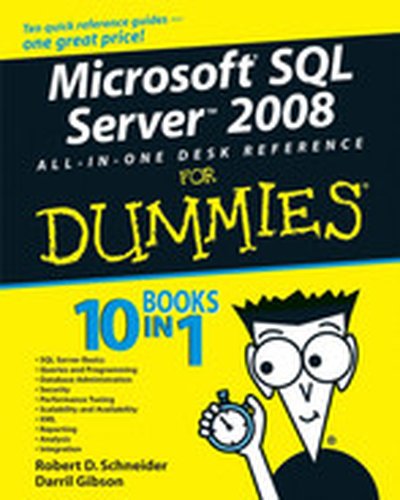
Microsoft® SQL Server™ 2008 All-In-One Desk Reference For Dummies®

If you’re in charge of database administration, developing database software, or looking for database solutions for your company, Microsoft SQL Server 2008 All-In-One Desk Reference For Dummies can help you get a handle on this extremely popular relational database management system. Here you’ll find what’s new in the latest version; how to choose and install the right variation for your needs; how to monitor, maintain, and protect your data; and what it takes to keep your database healthy. You’ll discover how to: Build and maintain tables Design a database and communicate with it Retrieve, analyze, and report data Build solid, robust database applications Use the SQL Server Optimizer and Query Designer Navigate SQL Server with Visual Studio Develop useful reports with the Report Builder and Report Designer Create Business Intelligence solutions with Business Intelligence Development Studio Configure your server and perform major administrative tasks To help you quickly find what you need, Microsoft SQL Server 2008 All-In-One Desk Reference For Dummies is divided into nine minibooks: Essential Concepts Designing and Using Databases Interacting With Your Data Database Programming Reporting Services Analysis Services Performance Tips and Tricks Database Administration Appendixes Microsoft SQL Server 2008 All-In-One Desk Reference For Dummies gets you started, helps you solve problems, and will even answer your questions down the road!

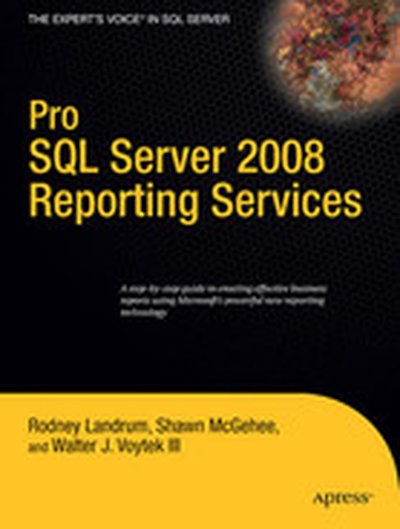
Pro SQL Server 2008 Reporting Services

Take full advantage of everything SQL Server 2008 Reporting Services has to offer and deliver customizable, web–enabled reports across your business at a reasonable cost. Learn best–practices from professionals who use SQL Server Reporting Services daily to deliver solutions to paying clients and gain the competitive edge on using Microsoft's enterprise–level reporting platform. Provides best–practices for using Reporting Services Written by practicing professionals with paying clients Your key to delivering business intelligence across the enterprise

Upgrading SAP®

The purpose of this book is to remove the veil of secrecy surrounding SAP upgrade techniques and concepts, and to provide the user with a detailed description of the steps needed for a successful implementation. Today more than 12 million people in 120 countries who are working for 36,200 companies are using SAP on a regular basis. This popular, but very complex software system must be constantly reconfigured and upgraded to accommodate its latest releases. Upgrading SAP provides a complete overview of the process to upgrade from one SAP release to the next one and explains with detailed descriptions, the use of all relevant SAP upgrade tools. Along with a technical description of the SAP NetWeaver Application Server (AS), it also discusses personnel issues and the economic ramifications of such an upgrade project. Examples in this book are based on various different SAP products and releases, such as SAP NetWeaver 2004, 2004S (also known as NetWeaver 7.0 and 7.1), and SAP Business Suite 2005 with SAP ERP 6.0, BI, CRM, SCM, and SRM. Conceived as both a teaching book and as a reference manual, it covers all the techniques, background information, notes, tips, and tricks needed for any SAP upgrade project. A CD-ROM accompanies the book with templates and outlines for the upgrading process, as well as third-party SAP-related material.

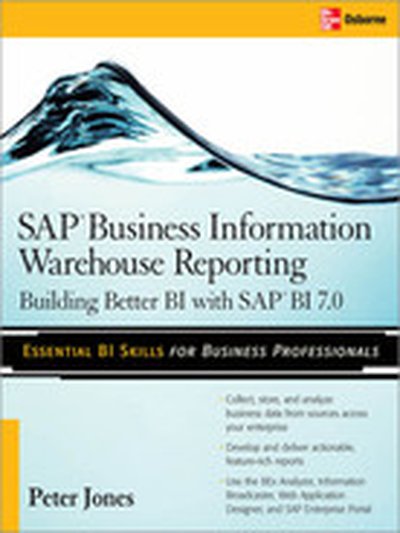
SAP Business Information Warehouse Reporting

Your Hands-On Guide to SAP Business Information Warehouse Give your company the competitive edge by delivering up-to-date, pertinent business reports to users inside and outside your enterprise. SAP Business Information Warehouse Reporting shows you how to construct Enterprise Data Warehouses, create workbooks and queries, analyze and format results, and supply meaningful reports. Learn how to use the BEx and Web Analyzers, Web Application Designer, Visual Composer, and Information Broadcaster. You will also find out how to forecast future business trends, build enterprise portals and websites, and tune performance. Group data into InfoCubes and DataStore Objects and generate reports using queries and workbooks Work with the BEx Analyzer, Web Analyzer, and Query Designer Build queries and reports using the Business Administration Workbench Add attachments and drill-through using Document Integration and RRI Format and distribute results using Report Designer and Information Broadcaster Extend functionality with Enterprise Portal, Data Modeling, and Visual Composer Deploy charts, maps, diagrams, and unit of measure conversions Predict trends and possible outcomes using SBC and Integrated Planning Generate HTML pages using Enterprise Reporting and Web Application Designer Create BI-based corporate Web and intranet sites using SAP Enterprise Portal

Infrastructure Solutions: Design, Manage, and Optimize a 60 TB SAP NetWeaver Business Intelligence Data Warehouse

In order to improve the performance and operational efficiency of businesses worldwide, a customer using SAP® wanted to establish a global business program to define and implement a standardized, group-wide business process architecture and associated master data for the parameterization of the group of software tools. The expected growth of the number of users and the size of the database would be at a level never reached by other customers, however, so IBM® was asked to undertake the following tasks: * Test the application to be sure that it can sustain such growth. This project illustrates the new near real time business intelligence (BI) context approached by customers who want the ability to rapidly analyze their business data to gain market shares. Data today comes from many diverse global sources and needs to be merged into an intelligent data warehouse. This IBM Redbooks® publication describes the testing that was done in terms of performance and manageability in an SAP NetWeaver® BI and DB2® environment on IBM System p™ when scaling a client's solution to a data warehouse of 60 terabytes (TB). This book resulted from a joint cooperative effort that included the PSSC, the IBM/SAP International Competency Center, the DB2-SAP Center of Excellence, SAP AG, and a customer. The customer involved in this project is a worldwide company employing more than 250,000 employees with factories and logistics operations in almost every country in the world. This project involved multiple technical skills and multiple products, as described here: * Chapter 1, "Project overview: business objectives, architecture, infrastructure, and results" on page 1, summarizes the entire project, starting from the business needs through the description of the environment and options used, to the results achieved. This chapter can be viewed as an executive summary from an IT specialist perspective. * Chapter 2, "The SAP NetWeaver BI perspective" on page 47; Chapter 3, "The DB2 perspective" on page 127; and Chapter 4, "The IBM System p perspective" on page 287, provide detailed views of the project from the perspectives of SAP specialists, DB2 specialists, and System p and AIX® specialists, respectively. * Chapter 5, "The system storage perspective" on page 319, and Chapter 6, "The Tivoli Storage Manager perspective" on page 349, describe the storage environment and the manageability issues in such a large environment. * Finally Appendix A, "The scripts used" on page 395, provides the scripts that we needed to develop for this project.

The Data Warehouse Lifecycle Toolkit

The world of data warehousing has changed remarkably since the first edition of The Data Warehouse Lifecycle Toolkit was published in 1998. With this new edition, Ralph Kimball and his colleagues have refined the original set of Lifecycle methods and techniques based on their consulting and training experience. They walk you through the detailed steps of designing, developing, and deploying a data warehousing/business intelligence system. With substantial new and updated content, this second edition again sets the standard in data warehousing for the next decade.

Oracle Database 11g New Features

FOREWORD by Tom Kyte Your Must-Have Guide to Everything New in Oracle Database 11 g Realize the full potential of Oracle Database 11 g with help from the experts. Written by Robert G. Freeman, and with insightful commentary throughout from Arup Nanda, this Oracle Press guide offers full details on the architectural changes, database administration upgrades, availability and recovery revisions, security enhancements, and programming innovations. Every new and updated feature is covered and presented with screenshots, code samples, tables, and charts. Find out how to take full advantage of all the new and improved capabilities of Oracle Database 11 g, including: New Oracle Automatic Storage Management features, such as Fast Disk Resync, Compatibility Attributes, P referred Mirror Read, and Rolling Upgrade components Improved Automated Memory Management capabilities New database design features, such as virtual columns, tablespace encryption, and true table-level data compression New Database Advisors for data recovery and repair, partitioning, and streams performance New tuning features, such as Automatic SQL Tuning and SQL Performance Analyzer Enhancements to Oracle RMAN, including active database duplication and UNDO backup optimization Improved auditing and security capabilities Advanced BI, data warehousing, and partitioning features New SQL and PL/SQL enhancements

Microsoft® SQL Server™ 2005 Integration Services Step by Step

Teach yourself the fundamentals of SQL Server Integration Services—one step at a time. This practical, learn-by-doing tutorial delivers the guidance you need to transform and consolidate data—and build solutions that support your business intelligence needs. Discover how to: Design and execute packages that transform data between files and relational databases Configure connection managers to access other data sources Create data flows that alter, split, match, and merge data Develop event-handlers and monitor package performance Encrypt sensitive information and control access to packages Customize script code to automate Control Flow and Data Flow tasks Debug, troubleshoot, and optimize packages CD features: All practice exercises Sample databases Fully searchable eBook For customers who purchase an ebook version of this title, instructions for downloading the CD files can be found in the ebook.

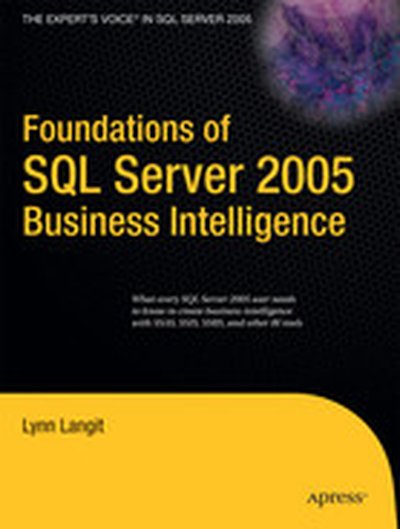
Foundations of SQL Server 2005 Business Intelligence

Just as every business needs to effectively employ business intelligence (BI) to stay competitive, every IT professional needs to master BI to stay employed in this fastest-growing segment of information technology. Foundations of SQL Server 2005 Business Intelligence is the quickest path to understanding BI, and it is essential reading for all who work with SQL Server 2005. It is written from a practical perspective, perfect for anyone who uses the tools in SQL Server 2005s extraordinarily rich BI product suite. This book explains how best to use Analysis Services, SQL Server Integration Services, SQL Server Reporting Services, and SQL Server Data Mining. It also describes best practices for implementing end-to-end BI solutions in small, medium, and large business environments. And it provides important information about integrating BI with various client tools, including Excel, Business Scorecards, Proclarity, and SharePoint Portal Server. Developers, end users, and even managers will find this an enlightening guide to the power and promise of SQL Server 2005 BI.

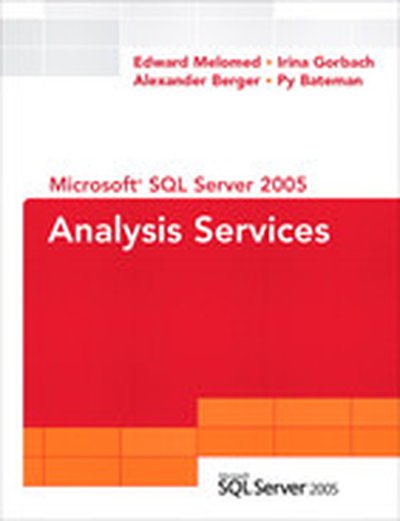
Microsoft SQL Server 2005 Analysis Services

Microsoft SQL Server Analysis Services provides fast access to data by means of multidimensional data structures and the multidimensional query languag MDX. Analysis Services provides the capability to design, create, and manage multidimensional cubes based on data warehouse tables, and it serves as the foundation for the Microsoft Business Intelligence strategy. Microsoft SQL Server 2005 Analysis Services gives the reader insight into the way Analysis Services functions. It not only explains ways to design and create multidimensional objects, databases, dimensions, and cubes, but also provides invaluable information about the reasons behind design decisions made by the development team. Here's what you will find inside: Understand the key concepts of multidimensional modeling Explore the multidimensional object model and its definition language Learn the main concepts of the MDX language and gain an in-depth understanding of advanced MDX concepts Understand the mechanisms of integrating multidimensional and relational databases Learn how to build client applications to access data in Analysis Services Examine server architecture, including main data structures, data processing, and query resolution algorithms Gain a deep understanding of the internal and external protocols for data transfer, including the XML/A protocol Explore how Analysis Services manages memory Explore the security model, including role-based security, code-access security, and data security Discover how to monitor and manage Analysis Services All the code for the sample database used in the book can be found at www.informit.com/title/0672327821.

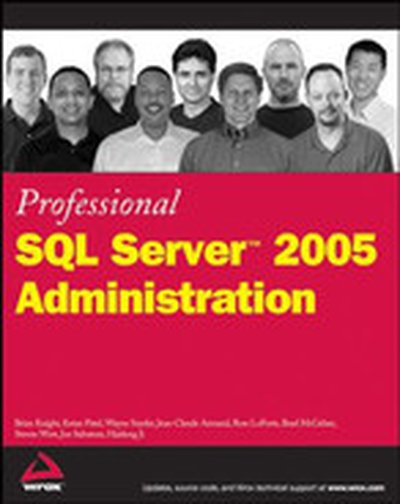
Professional SQL Server™ 2005 Administration

SQL Server 2005 is the largest leap forward for SQL Server since its inception. With this update comes new features that will challenge even the most experienced SQL Server DBAs. Written by a team of some of the best SQL Server experts in the industry, this comprehensive tutorial shows you how to navigate the vastly changed landscape of the SQL Server administration. Drawing on their own first-hand experiences to offer you best practices, unique tips and tricks, and useful workarounds, the authors help you handle even the most difficult SQL Server 2005 administration issues, including blocking and locking. You'll learn how to fine-tune queries you've already written, automate redundant monitoring and maintenance tasks, and use hidden tools so that you can quickly get over the learning curve of how to configure and administer SQL Server 2005. What you will learn from this book How to use some of the more advanced concepts of installation Techniques for properly administering development features such as SQL CLR Ways to secure your SQL Server from common threats How to choose the right hardware configuration Best practices for backing up and recovering your database Step-by-step guidelines for clustering your SQL Server Who this book is for This book is for experienced developers and database administrators who plan to administer or are already administering an SQL Server 2005 system and its business intelligence features. Wrox Professional guides are planned and written by working technologists to meet the real-world needs of programmers, developers, and IT professionals. Focused and relevant, they address the issues technology professionals face every day. They provide examples, practical solutions, and expert education in new technologies, all designed to help programmers do a better job.

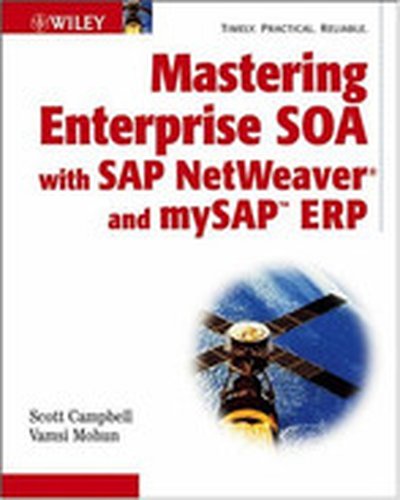
Mastering Enterprise SOA with SAP NetWeaver® and mySAP™ ERP
  • SAP is investing billions to redesign its flagship R/3 product line based on its ESA, and that ESA will become the standard framework for developing all new SAP ERP applications with NetWeaver * This book provides an overview of the core building blocks of SAP's new ESA, and shows how ESA works with the NetWeaver platform as well as mySAP ERP * A step-by-step action plan proposes ideas for designing ESA-based SAP applications * The companion Web site contains in-depth case examples that show how to build various SAP services and applications using the NetWeaver development tools, plus third-party tools * Some of the SAP tools covered include NetWeaver Developer Studio, WebDynPro and NetWeaver Portal, NetWeaver BI, and the SAP Composite Application Framework
Inside SQL Server 2005 Tools

Direct from Microsoft Insiders: the Complete Hands-On Guide to SQL Server 2005’s Powerful Tools! Microsoft SQL Server 2005’s high-powered management tools can dramatically improve DBA productivity and effectiveness. Now there’s a comprehensive guide to SQL Server 2005’s toolset, straight from the Microsoft team that created it. This book covers the entire toolset in unprecedented depth, guides database professionals in choosing the right tools, and shows them how to use various tools collectively to solve real-world problems. The authors present “how-to” solutions and never-before-published tips for SQL Server 2005 installation, upgrades, configuration, authoring, schema design, development, deployment, optimization, troubleshooting, and more. Coverage includes  Understanding how SQL Server 2005 tools differ from their predecessors  Leveraging the new Business Intelligence Development Studio and Management Studio to accomplish dozens of common tasks  Improving security by reducing the “surface area” you expose  Executing queries with the new Query Editor and SQLCMD query tools  Optimizing with the revamped SQL Server Profiler and Database Engine Tuning Advisor  Scheduling maintenance tasks with the SQL Server Agent  Monitoring with the Activity Monitor, SQL Server Agent, and other tools  Moving data efficiently and reliably with Integration Services  Using SQL Server’s new e-mail tool, Database Mail  Managing replication in complex distributed environments  Mastering SQL Server’s Analysis Services’ OLAP and Data Mining tools  Using Notification Services 2.0, Reporting Services, and more  Extending functionality using underlying APIs and the included CD-ROM’s sample code. MICHAEL RAHEEM is the senior product manager of the Microsoft SQL Server team and led the design and implementation of several SQL Server tools, such as SQL Server Management Studio, Database Mail, Upgrade Advisors, and Surface Area Configuration. He currently leads the SQL Server enterprise marketing efforts including high availability, scalability, and performance. DIMA SONKIN is development lead in the SQL Server Tools group responsible for SQL Server Agent, SMO, DMO, SQL Profiler, Database Engine Tuning Advisor, Database Mail, SQLMail, SqlCmd, and OSQL. THIERRY D’HERS is the lead program manager on Microsoft’s SQL BI Analysis Services team and has spent five years designing and specifying Analysis Services tools. KAMI LEMONDS is the documentation manager for Microsoft’s SQL Server User Education team and contributed to the SQL Server 2000 Resource Kit. CD-ROM contains all sample code from the book and corresponding Visual Studio project files. Contents Foreword . . . . . . . . . . . . . . . . . . . . . . . . . . . . . . . xvii Preface . . . . . . . . . . . . . . . . . . . . . . . . . . . . . . . . xix Acknowledgments . . . . . . . . . . . . . . . . . . . . . . . xxvi About the Authors . . . . . . . . . . . . . . . . . . . . . . . xxvii Chapter 1 Inside the Fundamentals. . . . . . . . . . . . . . . . . . . . . 1 Chapter 2 Inside the Installation and Upgrade Tools. . . . . . . 23 Chapter 3 Inside the Configuration Tools . . . . . . . . . . . . . . . 73 Chapter 4 Inside Management and Administration Tools . . 129 Chapter 5 Inside Data Authoring Tools . . . . . . . . . . . . . . . . 181 Chapter 6 Inside SQLCMD Query Tools . . . . . . . . . . . . . . . . 199 Chapter 7 Inside Tuning and Optimization Tools . . . . . . . . . 237 Chapter 8 Inside Scheduling Tools . . . . . . . . . . . . . . . . . . . 273 Chapter 9 Inside Monitoring Tools. . . . . . . . . . . . . . . . . . . . 305 Chapter 10 Inside Email Tools . . . . . . . . . . . . . . . . . . . . . . . . 337 Chapter 11 Inside Programming Object Models . . . . . . . . . . 357 Chapter 12 Inside Replication Tools . . . . . . . . . . . . . . . . . . . 385 Chapter 13 Inside Analysis Services OLAP Tools . . . . . . . . . 429 Chapter 14 Inside Analysis Services Data Mining Tools . . . . . . . . . . . . . . . . . . . . . . . . . . . . 519 Chapter 15 Inside Notification Services Tools . . . . . . . . . . . 543 Chapter 16 Inside Integration Services Tools . . . . . . . . . . . . 601 Chapter 17 Inside the Reporting Services Tools . . . . . . . . . . 679 Appendix A Sample KPI Client Code— Retrieving and Exposing Your First KPI. . . . . . . . . . . . . . . . . . . . 711 Appendix B KPI Utilities—Code for Parsing Display Folders and Getting Image Indexes . . . . . . . . . . 713 Appendix C KPI Viewer . . . . . . . . . . . . . . . . . . . . . . . . . . . . . 721 Appendix D Complete List of Data Mining Stored Procedures . . . . . . . . . . . . . . . . . . . . . . . . . . . . . 723 Index . . . . . . . . . . . . . . . . . . . . . . . . . . . . . . . . . . 733

Microsoft SQL Server 2005 Integration Services

All medium to large companies have to deal with data being stored in a number of databases, spreadsheets and proprietary applications. Bringing all this data together into one system can be useful to analyzing the business; but can also be quite difficult to do. Integration Services is the next big bet in Microsoft's business intelligence lineup, providing you with true enterprise extract transform and load features (ETL). Microsoft SQL Server 2005 Integration Services concentrates on providing you with real world solutions to real world problems, giving you a head start on various projects. If you are only evaluating Integration Services, you'll be able to focus on the early chapters with the option of drilling down into details in the later chapters where some of the more complex concepts will be discussed in detail. The interesting sidebars peppered throughout the book provide insight into the processes, people and decisions that yielded the final IS product.

Administrator’s Guide to SQL Server 2005

“Buck Woody’s new book will help new and experienced users alike in getting productive with SQL Server 2005 quickly. His special attention to security and performance make this an exceptional reference that is sure to remain relevant for some time.” —Chip Andrews, CISSP, MCDBA, Director of Research and Development Special Ops Security, Inc. “SQL 2005 is the most exciting upgrade to come out of Redmond in years; this book will help you get up and running quickly to take full advantage of it! If you are looking for a book about upgrading to SQL 2005, look no further, this one is all you need. It gives you all you need to take advantage of everything SQL 2005 has to offer, and that is a lot!” —Doug Ellis, Area Technical Manager, Cognos “Buck Woody provides insight into administering SQL Server 2005 that all developers and database administrators will find useful; the book assumes very little knowledge by providing ‘DBA 101’ sections which will not alienate the experienced reader while providing the necessary introduction to topics for those less experienced.” —Doug Holland, Visual C# MVP, Precision Objects “SQL Server 2005 is a landmark release and this title does an awesome job of hitting everything new in SQL 2005. It covers new and improved administration tools, and contains an overview of Notification Services, SQL Server Service Broker, Reporting Services, Integration Services, and Analysis Services. As a result, you’ll be able to work on your own SQL Server 2005 solutions quickly and painlessly. Ultimately, this book provides you with a starting point, a roadmap, and then the tools and knowledge to exploit this powerful new database server to its fullest power. So, start your computer and get ready to learn SQL Server 2005!” —Alexzander N. Nepomnjashiy, SQL Server DBA, NeoSystems NorthWest “A solid introduction to administering SQL 2005. The ‘DBA 101’ sections provide useful tips for the new DBA, good review for the experienced DBA, and the 101 label enables the seasoned DBA to skip basic material and jump ahead to where the REAL action is…. Buck’s conversational writing style makes this an enjoyable and refreshing contrast to the majority of tech books written these days.” —Brad Russell, MCDBA, Visionary Integration Professionals The Complete, Practical, 100% Useful Guide for Every SQL Server 2005 DBA! This book has one goal: to help database administrators and their managers run SQL Server 2005 with maximum efficiency, reliability, and performance. Renowned SQL Server expert Buck Woody covers every facet of database administration, from installation and configuration through maintaining enterprise-class business intelligence environments. If you’re a new SQL Server administrator, Buck will help you master core tasks rapidly—and avoid costly mistakes that only show up when it’s too late. If you’re familiar with previous versions of SQL Server, he’ll get you up-to-speed fast on everything new that matters, from high availability improvements and Integration Services to the SQL Server Management Studio. Whatever your background, you’ll find best practices, real-world scenarios, and easy-to-use automation scripts—all grounded in Buck’s unsurpassed SQL Server knowledge. • Timesaving tips, practical applications, and start-to-finish examples throughout • Understand the key “decision points” at every stage of your SQL Server deployment • Perform day-to-day maintenance more efficiently, from hotfixes to backup/recovery • Automate maintenance tasks with the SQL Server Agent • Establish and audit security on SQL Server 2005 and the underlying Windows Server platform • Monitor and optimize SQL Server: baselining, profiling, index strategies, query refactoring, and more • Maximize availability using replication, clustering, mirroring, and SQL Server’s new online indexing • Leverage important new improvements in Integration Services and Reporting Services • Use Analysis Services to support enterprise-class Business Intelligence deployments • Even set up a simple configuration of SQL Server 2005 for free—legally! Foreword xviii Chapter 1: Installation and Configuration 1 Chapter 2: Architecture and Tools 35 Chapter 3: Maintenance and Automation 99 Chapter 4: Security 173 Chapter 5: Monitoring and Optimization 237 Chapter 6: High Availability 295 Chapter 7: Notification Services and the Service Broker 365 Chapter 8: Integration Services 399 Chapter 9: Reporting Services 451 Chapter 10: Analysis Services 515 Appendix A: Upgrading to SQL Server 2005 581 Index 605