talk-data.com talk-data.com

Topic

BI

Business Intelligence (BI)

data_visualization reporting analytics

34

tagged

Activity Trend

111 peak/qtr
2020-Q1 2026-Q1

Activities

Showing filtered results

Filtering by: Databricks DATA + AI Summit 2023 ×
The Best Data Warehouse is a Lakehouse

Reynold Xin, Co-founder and Chief Architect at Databricks, presented during Data + AI Summit 2024 on Databricks SQL and its advancements and how to drive performance improvements with the Databricks Data Intelligence Platform.

Speakers: Reynold Xin, Co-founder and Chief Architect, Databricks Pearl Ubaru, Technical Product Engineer, Databricks

Main Points and Key Takeaways (AI-generated summary)

Introduction of Databricks SQL: - Databricks SQL was announced four years ago and has become the fastest-growing product in Databricks history. - Over 7,000 customers, including Shell, AT&T, and Adobe, use Databricks SQL for data warehousing.

Evolution from Data Warehouses to Lakehouses: - Traditional data architectures involved separate data warehouses (for business intelligence) and data lakes (for machine learning and AI). - The lakehouse concept combines the best aspects of data warehouses and data lakes into a single package, addressing issues of governance, storage formats, and data silos.

Technological Foundations: - To support the lakehouse, Databricks developed Delta Lake (storage layer) and Unity Catalog (governance layer). - Over time, lakehouses have been recognized as the future of data architecture.

Core Data Warehousing Capabilities: - Databricks SQL has evolved to support essential data warehousing functionalities like full SQL support, materialized views, and role-based access control. - Integration with major BI tools like Tableau, Power BI, and Looker is available out-of-the-box, reducing migration costs.

Price Performance: - Databricks SQL offers significant improvements in price performance, which is crucial given the high costs associated with data warehouses. - Databricks SQL scales more efficiently compared to traditional data warehouses, which struggle with larger data sets.

Incorporation of AI Systems: - Databricks has integrated AI systems at every layer of their engine, improving performance significantly. - AI systems automate data clustering, query optimization, and predictive indexing, enhancing efficiency and speed.

Benchmarks and Performance Improvements: - Databricks SQL has seen dramatic improvements, with some benchmarks showing a 60% increase in speed compared to 2022. - Real-world benchmarks indicate that Databricks SQL can handle high concurrency loads with consistent low latency.

User Experience Enhancements: - Significant efforts have been made to improve the user experience, making Databricks SQL more accessible to analysts and business users, not just data scientists and engineers. - New features include visual data lineage, simplified error messages, and AI-driven recommendations for error fixes.

AI and SQL Integration: - Databricks SQL now supports AI functions and vector searches, allowing users to perform advanced analysis and query optimizations with ease. - The platform enables seamless integration with AI models, which can be published and accessed through the Unity Catalog.

Conclusion: - Databricks SQL has transformed into a comprehensive data warehousing solution that is powerful, cost-effective, and user-friendly. - The lakehouse approach is presented as a superior alternative to traditional data warehouses, offering better performance and lower costs.
Data + AI Summit Keynote Day 1 - Full
video
by Patrick Wendall (Databricks) , Fei-Fei Li (Stanford University) , Brian Ames (General Motors) , Ken Wong (Databricks) , Ali Ghodsi (Databricks) , Jackie Brosamer (Block) , Reynold Xin (Databricks) , Jensen Huang (NVIDIA)

Databricks Data + AI Summit 2024 Keynote Day 1

Experts, researchers and open source contributors — from Databricks and across the data and AI community gathered in San Francisco June 10 - 13, 2024 to discuss the latest technologies in data management, data warehousing, data governance, generative AI for the enterprise, and data in the era of AI.

Hear from Databricks Co-founder and CEO Ali Ghodsi on building generative AI applications, putting your data to work, and how data + AI leads to data intelligence.

Plus a fireside chat between Ali Ghodsi and Nvidia Co-founder and CEO, Jensen Huang, on the expanded partnership between Nvidia and Databricks to accelerate enterprise data for the era of generative AI

Product announcements in the video include: - Databricks Data Intelligence Platform - Native support for NVIDIA GPU acceleration on the Databricks Data Intelligence Platform - Databricks open source model DBRX available as an NVIDIA NIM microservice - Shutterstock Image AI powered by Databricks - Databricks AI/BI - Databricks LakeFlow - Databricks Mosaic AI - Mosaic AI Agent Framework - Mosaic AI Agent Evaluation - Mosaic AI Tools Catalog - Mosaic AI Model Training - Mosaic AI Gateway

In this keynote hear from: - Ali Ghodsi, Co-founder and CEO, Databricks (1:45) - Brian Ames, General Motors (29:55) - Patrick Wendall, Co-founder and VP of Engineering, Databricks (38:00) - Jackie Brosamer, Head of AI, Data and Analytics, Block (1:14:42) - Fei Fei Li, Professor, Stanford University and Denning Co-Director, Stanford Institute for Human-Centered AI (1:23:15) - Jensen Huang, Co-founder and CEO of NVIDIA with Ali Ghodsi, Co-founder and CEO of Databricks (1:42:27) - Reynold Xin, Co-founder and Chief Architect, Databricks (2:07:43) - Ken Wong, Senior Director, Product Management, Databricks (2:31:15) - Ali Ghodsi, Co-founder and CEO, Databricks (2:48:16)

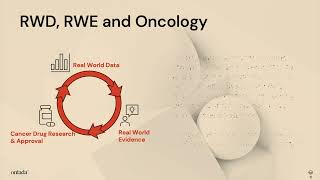
Using Lakehouse to Fight Cancer:Ontada’s Journey to Establish a RWD Platform on Databricks Lakehouse

Ontada, a McKesson business, is an oncology real-world data and evidence, clinical education and provider of technology business dedicated to transforming the fight against cancer. Core to Ontada’s mission is using real-world data (RWD) and evidence generation to improve patient health outcomes and to accelerate life science research.

To support its mission, Ontada embarked on a journey to migrate its enterprise data warehouse (EDW) from an on-premise Oracle database to Databricks Lakehouse. This move allows Ontada to now consume data from any source, including structured and unstructured data from its own EHR and genomics lab results, and realize faster time to insight. In addition, using the Lakehouse has helped Ontada eliminate data silos, enabling the organization to realize the full potential of RWD – from running traditional descriptive analytics to extracting biomarkers from unstructured data. The session will cover the following topics:

  • Oracle to Databricks: migration best practices and lessons learned
  • People, process, and tools: expediting innovation while protecting patient information using Unity Catalog
  • Getting the most out of the Databricks Lakehouse: from BI to genomics, running all analytics under one platform
  • Hyperscale biomarker abstraction: reducing the manual effort needed to extract biomarkers from large unstructured data (medical notes, scanned/faxed documents) using spaCY and John Snow Lab NLP libraries

Join this session to hear how Ontada is transforming RWD to deliver safe and effective cancer treatment.

Talk by: Donghwa Kim

Connect with us: Website: https://databricks.com Twitter: https://twitter.com/databricks LinkedIn: https://www.linkedin.com/company/databricks Instagram: https://www.instagram.com/databricksinc Facebook: https://www.facebook.com/databricksinc

Sponsored: Sisense-Developing Data Products: Infusion & Composability Are Changing Expectations

Composable analytics is the next progression of business intelligence. We will discuss how current analytics rely on two key principles: composability and agility. Through modularizing our analytics capabilities, we can rapidly “compose” new data applications. An organization uses these building blocks to deliver customized analytics experiences at a customer level.

This session will orientate business intelligence leaders to composable data and analytics.

  • How data teams can use composable analytics to decrease application development time.
  • How an organization can leverage existing and new tools to maximize value-based, data-driven insights.
    • Requirements for effectively deploying composable analytics.
    • Utilizing no, low-code and high-code analytics capabilities.
    • Extracting full value from your customer data and metadata.
    • Leveraging analytics building blocks to create new products and revenue streams.

Talk by: Scott Castle

Here’s more to explore: Why the Data Lakehouse Is Your next Data Warehouse: https://dbricks.co/3Pt5unq Lakehouse Fundamentals Training: https://dbricks.co/44ancQs

Connect with us: Website: https://databricks.com Twitter: https://twitter.com/databricks LinkedIn: https://www.linkedin.com/company/databricks Instagram: https://www.instagram.com/databricksinc Facebook: https://www.facebook.com/databricksinc

JetBlue’s Real-Time AI & ML Digital Twin Journey Using Databricks

JetBlue has embarked over the past year on an AI and ML transformation. Databricks has been instrumental in this transformation due to the ability to integrate streaming pipelines, ML training using MLflow, ML API serving using ML registry and more in one cohesive platform. Using real-time streams of weather, aircraft sensors, FAA data feeds, JetBlue operations and more are used for the world's first AI and ML operating system orchestrating a digital-twin, known as BlueSky for efficient and safe operations. JetBlue has over 10 ML products (multiple models each product) in production across multiple verticals including dynamic pricing, customer recommendation engines, supply chain optimization, customer sentiment NLP and several more.

The core JetBlue data science and analytics team consists of Operations Data Science, Commercial Data Science, AI and ML engineering and Business Intelligence. To facilitate the rapid growth and faster go-to-market strategy, the team has built an internal Data Catalog + AutoML + AutoDeploy wrapper called BlueML using Databricks features to empower data scientists including advanced analysts with the ability to train and deploy ML models in less than five lines of code.

Talk by: Derrick Olson and Rob Bajra

Connect with us: Website: https://databricks.com Twitter: https://twitter.com/databricks LinkedIn: https://www.linkedin.com/company/databricks Instagram: https://www.instagram.com/databricksinc Facebook: https://www.facebook.com/databricksinc

Why a Major Japanese Financial Institution Chose Databricks To Accelerate its Data AI-Driven Journey

In this session, NTT DATA presents a case study involving of one of the largest and most prominent financial institutions in Japan. The project involved migration from the largest data analysis platform to Databricks, a project that required careful navigation of very strict security requirements while accommodating the needs of evolving technical solutions so they could support a wide variety of company structures. This session is for those who want to accelerate their business by effectively utilizing AI as well as BI.

NTT DATA is one of the largest system integrators in Japan, providing data analytics infrastructure to leading companies to help them effectively drive the democratization of data and AI as many in the Japanese market are now adding AI into their BI offering.

Talk by: Yuki Saito

Connect with us: Website: https://databricks.com Twitter: https://twitter.com/databricks LinkedIn: https://www.linkedin.com/company/databricks Instagram: https://www.instagram.com/databricksinc Facebook: https://www.facebook.com/databricksinc

Databricks SQL: Why the Best Serverless Data Warehouse is a Lakehouse

Many organizations rely on complex cloud data architectures that create silos between applications, users and data. This fragmentation makes it difficult to access accurate, up-to-date information for analytics, often resulting in the use of outdated data. Enter the lakehouse, a modern data architecture that unifies data, AI, and analytics in a single location.

This session explores why the lakehouse is the best data warehouse, featuring success stories, use cases and best practices from industry experts. You'll discover how to unify and govern business-critical data at scale to build a curated data lake for data warehousing, SQL and BI. Additionally, you'll learn how Databricks SQL can help lower costs and get started in seconds with on-demand, elastic SQL serverless warehouses, and how to empower analytics engineers and analysts to quickly find and share new insights using their preferred BI and SQL tools such as Fivetran, dbt, Tableau, or Power BI.

Talk by: Miranda Luna and Cyrielle Simeone

Connect with us: Website: https://databricks.com Twitter: https://twitter.com/databricks LinkedIn: https://www.linkedin.com/company/databricks Instagram: https://www.instagram.com/databricksinc Facebook: https://www.facebook.com/databricksinc

Real-Time Streaming Solution for Call Center Analytics: Business Challenges and Technical Enablement

A large international client with a business footprint in North America, Europe and Africa reached out to us with an interest in having a real-time streaming solution designed and implemented for its call center handling incoming and outgoing client calls. The client had a previous bad experience with another vendor, who overpromised and underdelivered on the latency of the streaming solution. The previous vendor delivered an over-complex streaming data pipeline resulting in the data taking over five minutes to reach a visualization layer. The client felt that architecture was too complex and involved many services integrated together.

Our immediate challenges involved gaining the client's trust and proving that our design and implementation quality would supersede a previous experience. To resolve an immediate challenge of the overly complicated pipeline design, we deployed a Databricks Lakehouse architecture with Azure Databricks at the center of the solution. Our reference architecture integrated Genesys Cloud : App Services : Event Hub : Databricks : : Data Lake : Power BI.

The streaming solution proved to be low latency (seconds) during the POV stage, which led to subsequent productionalization of the pipeline with deployment of jobs, DLTs pipeline, including multi-notebook workflow and business and performance metrics dashboarding relied on by the call center staff for a day-to-day performance monitoring and improvements.

Talk by: Natalia Demidova

Connect with us: Website: https://databricks.com Twitter: https://twitter.com/databricks LinkedIn: https://www.linkedin.com/company/databricks Instagram: https://www.instagram.com/databricksinc Facebook: https://www.facebook.com/databricksinc

Streaming Data Analytics with Power BI and Databricks

This session is comprised of a series of end-to-end technical demos illustrating the synergy between Databricks and Power BI for streaming use cases, and considerations around when to choose which scenario:

Scenario 1: DLT + Power BI Direct Query and Auto Refresh

Scenario 2: Structured Streaming + Power BI streaming datasets

Scenario 3: DLT + Power BI composite datasets

Talk by: Liping Huang and Marius Panga

Connect with us: Website: https://databricks.com Twitter: https://twitter.com/databricks LinkedIn: https://www.linkedin.com/company/databricks Instagram: https://www.instagram.com/databricksinc Facebook: https://www.facebook.com/databricksinc

Building Apps on the Lakehouse with Databricks SQL

BI applications are undoubtedly one of the major consumers of a data warehouse. Nevertheless, the prospect of accessing data using standard SQL is appealing to many more stakeholders than just the data analysts. We’ve heard from customers that they experience an increasing demand to provide access to data in their lakehouse platforms from external applications beyond BI, such as e-commerce platforms, CRM systems, SaaS applications, or custom data applications developed in-house. These applications require an “always on” experience, which makes Databricks SQL Serverless a great fit.

In this session, we give an overview of the approaches available to application developers to connect to Databricks SQL and create modern data applications tailored to needs of users across an entire organization. We discuss when to choose one of the Databricks native client libraries for languages such as Python, Go, or node.js and when to use the SQL Statement Execution API, the newest addition to the toolset. We also explain when ODBC and JDBC might not be the best for the task and when they are your best friends. Live demos are included.

Talk by: Adriana Ispas and Chris Stevens

Connect with us: Website: https://databricks.com Twitter: https://twitter.com/databricks LinkedIn: https://www.linkedin.com/company/databricks Instagram: https://www.instagram.com/databricksinc Facebook: https://www.facebook.com/databricksinc

Databricks SQL Serverless Under the Hood: How We Use ML to Get the Best Price/Performance

Join this session to learn how Databricks SQL Serverless warehouses use ML to make large improvements in price-performance for both ETL and BI workloads. We will demonstrate how they can cater to an organization’s peak concurrency needs for BI and showcase the latest advancements in resource-based scheduling, autoscaling, and caching enhancements that allow for seamless performance and workload management. We will deep dive into new features such as Predictive I/O and Intelligent Workload Management, and show new price/performance benchmarks.

Talk by: Gaurav Saraf, Mostafa Mokhtar, and Jeremy Lewallen

Connect with us: Website: https://databricks.com Twitter: https://twitter.com/databricks LinkedIn: https://www.linkedin.com/company/databricks Instagram: https://www.instagram.com/databricksinc Facebook: https://www.facebook.com/databricksin

Best Practices for Setting Up Databricks SQL at Enterprise Scale

To learn more, visit the Databricks Security and Trust Center: https://www.databricks.com/trust

In this session, we will talk about the best practices for setting up Databricks to run at large enterprise scale with thousands of users, departmental security and governance, and end-to-end lineage from ingestion to BI tools. We’ll showcase the power of Unity Catalog and Databricks SQL as the core of your modern data stack and how to achieve both data, environment, and financial governance while empowering your users to quickly find and access the data they need.

Talk by: Siddharth Bhai, Paul Roome, Jeremy Lewallen, and Samrat Ray

Connect with us: Website: https://databricks.com Twitter: https://twitter.com/databricks LinkedIn: https://www.linkedin.com/company/databricks Instagram: https://www.instagram.com/databricksinc Facebook: https://www.facebook.com/databricksin

Clean Room Primer: Using Databricks Clean Rooms to Use More & Better Data in your BI, ML, & Beyond

In this session, we will discuss the foundational changes in the ecosystem, the implications of data insights on marketing, analytics, and measurement, and how companies are coming together to collaborate through data clean rooms in new and exciting ways to power mutually beneficial value for their businesses while preserving privacy and governance.

We will delve into the concept and key features of clean room technology and how they can be used to access more and better data for business intelligence (BI), machine learning (ML), and other data-driven initiatives. By examining real-world use cases of clean rooms in action, attendees will gain a clear understanding of the benefits they can bring to industries like CPG, retail, and media and entertainment. In addition, we will unpack the advantages of using Databricks as a clean room platform, specifically showcasing how interoperable clean rooms can be leveraged to enhance BI, ML and other compute scenarios. By the end of this session, you will be equipped with the knowledge and inspiration to explore how clean rooms can unlock new collaboration opportunities that drive better outcomes for your business and improved experiences for consumers.

Talk by: Matthew Karasick, and Anil Puliyeril

Connect with us: Website: https://databricks.com Twitter: https://twitter.com/databricks LinkedIn: https://www.linkedin.com/company/databricks Instagram: https://www.instagram.com/databricksinc Facebook: https://www.facebook.com/databricksinc

Sponsored by: Microsoft | Next-Level Analytics with Power BI and Databricks

The widely-adopted combination of Power BI and Databricks has been a game-changer in providing a comprehensive solution for modern data analytics. In this session, you’ll learn how self-service analytics combined with the Databricks Lakehouse Platform can allow users to make better-informed decisions by unlocking insights hidden in complex data. We’ll provide practical examples of how organizations have leveraged these technologies together to drive digital transformation, lower total cost of ownership (TCO), and increase revenue. By the end of the presentation and demo, you’ll understand how Power BI and Databricks can help drive real-time insights at scale for organizations in any industry.

Talk by: Bob Zhang and Mahesh Prakriya

Connect with us: Website: https://databricks.com Twitter: https://twitter.com/databricks LinkedIn: https://www.linkedin.com/company/databricks Instagram: https://www.instagram.com/databricksinc Facebook: https://www.facebook.com/databricksinc

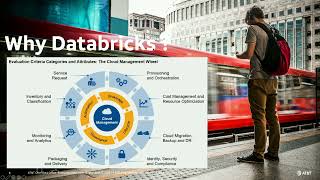
Building & Managing a Data Platform for a Delta Lake Exceeding 13PB & 1000s of Users: AT&T's Story

Data runs AT&T’s business, just like it runs most businesses these days. Data can lead to a greater understanding of a business and when translated correctly into information can provide human and business systems valuable insights to make better decisions. Unique to AT&T is the volume of data we support, how much of our work that is driven by AI and the scale at which data and AI drive value for our customers and stakeholders.

Our cloud migration journey includes making data and AI more accessible to employees throughout AT&T so they can use their deep business expertise to leverage data more easily and rapidly. We always had to balance this data democratization and desire for speed with keeping our data private and secure. We loved the open ecosystem model of Lakehouse that enables data, BI and ML tools to be seamlessly integrated on a single pane arena; it simplifies the architecture and reduces dependencies between technologies in the cloud. Being clear in our architecture guidelines and patterns was very important to us for our success.

We are seeing more interest from our business unit partners and continuing to build the AI capability AI as a service to support more citizen data scientists. To scale up our Lakehouse journey, we built a Databricks center of excellence (CoE) function in AT&T which today has approximately 1400+ active members, further concentrating existing expertise and resources in ML/AI discipline to collaborate on all things Databricks like technical support, trainings, FAQ’s and best practices to attain and sustain world-class performance and drive business value for AT&T. Join us to learn more about how we process and manage over 10 petabytes of our network Lakehouse with Delta Lake and Databricks.

What’s New in Databricks Workflows -- With Live Demos

Databricks Workflows provides unified orchestration for the Lakehouse. Since it was first announced last year, thousands of organizations have been leveraging Workflows for orchestrating lakehouse workloads such as ETL, BI dashboard refresh and ML model training.

In this session, the Workflows product team will cover and demo the latest features and capabilities of Databricks Workflows in the areas of workflow authoring, observability and more. This session will also include an outlook for future innovations you can expect to see in the coming months.

Talk by: Muhammad Bilal Aslam

Connect with us: Website: https://databricks.com Twitter: https://twitter.com/databricks LinkedIn: https://www.linkedin.com/company/databricks Instagram: https://www.instagram.com/databricksinc Facebook: https://www.facebook.com/databricksinc

How To Use Databricks SQL for Analytics on Your Lakehouse

Most organizations run complex cloud data architectures that silo applications, users, and data. As a result, most analysis is performed with stale data and there isn’t a single source of truth of data for analytics.

Join this interactive follow-along deep dive demo to learn how Databricks SQL allows you to operate a multicloud lakehouse architecture that delivers data warehouse performance at data lake economics — with up to 12x better price/performance than traditional cloud data warehouses. Now data analysts and scientists can work with the freshest and most complete data and quickly derive new insights for accurate decision-making.

Here’s what we’ll cover: • Managing data access and permissions and monitoring how the data is being used and accessed in real time across your entire lakehouse infrastructure • Configuring and managing compute resources for fast performance, low latency, and high user concurrency to your data lake • Creating and working with queries, dashboards, query refresh, troubleshooting features and alerts • Creating connections to third-party BI and database tools (Power BI, Tableau, DbVisualizer, etc.) so that you can query your lakehouse without making changes to your analytical and dashboarding workflows

Connect with us: Website: https://databricks.com Facebook: https://www.facebook.com/databricksinc Twitter: https://twitter.com/databricks LinkedIn: https://www.linkedin.com/company/data... Instagram: https://www.instagram.com/databricksinc/

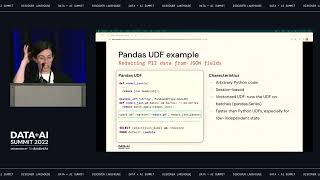
Power to the (SQL) People: Python UDFs in DBSQL

Databricks SQL (DB SQL) allows customers to leverage the simple and powerful Lakehouse architecture with up to 12x better price/performance compared to traditional cloud data warehouses. Analysts can use standard SQL to easily query data and share insights using a query editor, dashboards or a BI tool of their choice, and analytics engineers can build and maintain efficient data pipelines, including with tools like dbt.

While SQL is great at querying and transforming data, sometimes you need to extend its capabilities with the power of Python, a full programming language. Users of Databricks notebooks already enjoy seamlessly mixing SQL, Python and several other programming languages. Use cases include masking or encrypting and decrypting sensitive data, complex transformation logic, using popular open source libraries or simply reusing code that has already been written elsewhere in Databricks. In many cases, it is simply prohibitive or even impossible to rewrite the logic in SQL.

Up to now, there was no way to use Python from within DBSQL. We are removing this restriction with the introduction of Python User Defined Functions (UDFs). DBSQL users can now create, manage and use Python UDFs using standard SQL. UDFs are registered in Unity Catalog, which means they can be governed and used throughout Databricks, including in notebooks.

Connect with us: Website: https://databricks.com Facebook: https://www.facebook.com/databricksinc Twitter: https://twitter.com/databricks LinkedIn: https://www.linkedin.com/company/data... Instagram: https://www.instagram.com/databricksinc/

Near Real-Time Analytics with Event Streaming, Live Tables, and Delta Sharing

Microservices is an increasingly popular architecture much loved by application teams, for it allows services to be developed and scaled independently. Data teams, though, often need a centralized repository where all data from different services come together to join and aggregate. The data platform can serve as a single source of company facts, enable near real time analytics, and secure sharing of massive data sets across clouds.

A viable microservices ingestion pattern is Change Data Capture, using AWS Database Migration Services or Debezium. CDC proves to be a scalable solution ideal for stable platforms, but it has several challenges for evolving services: Frequent schema changes, complex, unsupported DDL during migration, and automated deployments are but a few. An event streaming architecture can address these challenges.

Confluent, for example, provides a schema registry service where all services can register their event schemas. Schema registration helps with verifying that the events are being published based on the agreed contracts between data producers and consumers. It also provides a separation between internal service logic and the data consumed downstream. The services write their events to Kafka using the registered schemas with a specific topic based on the type of the event.

Data teams can leverage Spark jobs to ingest Kafka topics into Bronze tables in the Delta Lake. On ingestion, the registered schema from schema registry is used to validate the schema based on the provided version. A merge operation is sometimes called to translate events into final states of the records per business requirements.

Data teams can take advantage of Delta Live Tables on streaming datasets to produce Silver and Gold tables in near real time. Each input data source also has a set of expectations to ensure data quality and business rules. The pipeline allows Engineering and Analytics to collaborate by mixing Python and SQL. The refined data sets are then fed into Auto ML for discovery and baseline modeling.

To expose Gold tables to more consumers, especially non spark users across clouds, data teams can implement Delta Sharing. Recipients can accesses Silver tables from a different cloud and build their own analytics data sets. Analytics teams can also access Gold tables via pandas Delta Sharing client and BI tools.

Connect with us: Website: https://databricks.com Facebook: https://www.facebook.com/databricksinc Twitter: https://twitter.com/databricks LinkedIn: https://www.linkedin.com/company/data... Instagram: https://www.instagram.com/databricksinc/