talk-data.com talk-data.com

Topic

data-engineering

3377

tagged

Activity Trend

1 peak/qtr
2020-Q1 2026-Q1

Activities

Showing filtered results

Filtering by: O'Reilly Data Engineering Books ×
Introducing Geographic Information Systems with ArcGIS: A Workbook Approach to Learning GIS, 3rd Edition

An integrated approach that combines essential GIS background with a practical workbook on applying the principles in ArcGIS® 10.0 and 10.1 Introducing Geographic Information Systems with ArcGIS® integrates a broad introduction to GIS with a software-specific workbook for Esri's ArcGIS®. Where most courses make do using two separate texts, one covering GIS and another the software, this book enables students and instructors to use a single text with an integrated approach covering both in one volume with a common vocabulary and instructional style. This revised edition focuses on the latest software updates—ArcGIS® 10.0 and 10.1. In addition to its already successful coverage, the book allows students to experience publishing maps on the Internet through new exercises, and introduces the idea of programming in the language Esri has chosen for applications (i.e., Python). A DVD is packaged with the book, as in prior editions, containing data for working out all of the exercises. This complete, user-friendly coursebook: Is updated for the latest ArcGIS® releases—ArcGIS® 10.0 and 10.1 Introduces the central concepts of GIS and topics needed to understand spatial information analysis Provides a considerable ability to operate important tools in ArcGIS® Demonstrates new capabilities of ArcGIS® 10.0 and 10.1 Provides a basis for the advanced study of GIS and the study of the newly emerging field of GIScience Introducing Geographic Information Systems with ArcGIS®, Third Edition is the ideal guide for undergraduate students taking courses such as Introduction to GIS, Fundamentals of GIS, and Introduction to ArcGIS® Desktop. It is also an important guide for professionals looking to update their skills for ArcGIS® 10.0 and 10.1.
Microsoft SQL Server 2012 Reporting Services

Use your SQL Server skills to create and manage key data reports Deliver interactive business intelligence reports using SQL Server 2012 Reporting Services, and help facilitate real-time decision making throughout the enterprise. SQL Server expert Stacia Misner shows you in detail how to design, manage, and access custom reports that capture data from multiple sources. This book is ideal for experienced SQL Server developers, whether you’re new to Reporting Services or upgrading from an earlier version. Discover how to: Use the latest features, including the Power View ad hoc reporting tool Design reports by understanding how your audience accesses and uses data Add interactive features to help end users sort and filter data Create rich data visualization with charts, gauges, indictors, and data maps Configure your report server, provide security, and monitor report contents Use SharePoint or Report Manager to search and access reports online Create a library of report parts that clients can use for ad hoc reporting Build and manage reports using Reporting Services as a development platform

IBM SAN and SVC Stretched Cluster and VMware Solution Implementation

This IBM® Redbooks® publication describes the IBM Storage Area Network and IBM SAN Volume Controller Stretched Cluster solution when combined with VMware. We describe guidelines, settings, and implementation steps necessary to achieve a satisfactory implementation. Business continuity and continuous application availability are among the top requirements for many organizations today. Advances in virtualization, storage, and networking have made enhanced business continuity possible. Information technology solutions can now be designed to manage both planned and unplanned outages, and the flexibility and cost efficiencies available from cloud computing models. IBM has designed a solution that offers significant functionality for maintaining business continuity in a VMware environment. This functionality provides the capability to dynamically move applications across data centers without interruption to those applications. The live application mobility across data centers relies on these products and technology: The industry-proven VMware Metro vMotion IBM System Storage® SAN Volume Controller Stretched Cluster solution A Layer 2 IP Network and storage networking infrastructure for high performance traffic management

IBM Real-time Compression Appliance Version 4.1

Continuing its commitment to developing and delivering industry-leading storage technologies, IBM is introducing the IBM Real-time Compression Appliance for NAS, an innovative new storage offering that delivers essential storage efficiency technologies, combined with exceptional ease of use and performance. In an era when the amount of information, particularly in unstructured files, is exploding, but budgets for storing that information are stagnant, IBM Real-time Compression technology offers a powerful tool for better information management, protection and access. IBM Real-time Compression can help slow the growth of storage acquisition, reducing storage costs while simplifying both operations and management. It also enables organizations to keep more data available for use rather than storing it offsite or on tape that is more difficult to access, so they can support improved analytics and decision-making. IBM Real-time Compression Appliance provides online storage optimization through real-time data compression, delivering dramatic cost reduction without performance degradation. This IBM Redbooks publication is for system administrators and IT architects. It describes the enhancements made in version 4.1 of the Real-time Compression Appliance as compared to previous releases. This book is a companion to the publication Introduction to IBM Real-time Compression Appliances, SG24-7953.

MySQL, 5th Edition

MySQL, Fifth Edition by Paul DuBois The definitive guide to using, programming and administering MySQL 5.5 and MySQL 5.6 MySQL provides a comprehensive guide to effectively using and administering the MySQL database management system (DBMS). Author Paul DuBois describes everything from the basics of getting information into a database and formulating queries, to using MySQL with PHP or Perl to generate dynamic web pages, to writing your own programs that access MySQL databases, to administering MySQL servers. The book also includes a comprehensive reference section providing detailed information on MySQL’s structure, language, syntax, and APIs. The fifth edition of this bestselling book has been meticulously revised and updated to thoroughly cover the latest features and capabilities of MySQL 5.5, as well as to add new coverage of features introduced with MySQL 5.6. MySQL is an open source relational database management system (DBMS) that has experienced a phenomenal growth in popularity and use. Known for its speed and ease of use, MySQL has proven itself to be particularly well-suited for developing database-backed websites and applications. MySQL runs on anything from modest hardware all the way up to enterprise servers, and its performance rivals any database system put up against it. Paul DuBois’ MySQL, Fifth Edition, is the definitive guide to fully exploiting all the power and versatility of MySQL 5.5 and MySQL 5.6 Contents at a Glance Part I: General MySQL Use Chapter 1 Getting Started with MySQL Chapter 2 Using SQL to Manage Data Chapter 3 Data Types Chapter 4 Views and Stored Programs Chapter 5 Query Optimization Part II: Using MySQL Programming Interfaces Chapter 6 Introduction to MySQL Programming Chapter 7 Writing MySQL Programs Using C Chapter 8 Writing MySQL Programs Using Perl DBI Chapter 9 Writing MySQL Programs Using PHP Part III: MySQL Administration Chapter 10 Introduction to MySQL Administration Chapter 11 The MySQL Data Directory Chapter 12 General MySQL Administration Chapter 13 Security and Access Control Chapter 14 Database Maintenance, Backups, and Replication Part IV: Appendixes Appendix A Software Required to Use This Book Appendix B Data Type Reference Appendix C Operator and Function Reference Appendix D System, Status, and User Variable Reference Appendix E SQL Syntax Reference Appendix F MySQL Program Reference Online Appendixes: Appendix G C API Reference Appendix H Perl DBI API Reference Appendix I PHP API Reference .

Access 2013 For Dummies

The easy guide to Microsoft Access returns with updates on the latest version! Microsoft Access allows you to store, organize, view, analyze, and share data; the new Access 2013 release enables you to build even more powerful, custom database solutions that integrate with the web and enterprise data sources. Access 2013 For Dummies covers all the new features of the latest version of Accessand serves as an ideal reference, combining the latest Access features with the basics of building usable databases. You'll learn how to create an app from the Welcome screen, get support for your desktop databases, and much more. Includes coverage of all the new features of Access 2013, including the updated interface Shows you how to create and share reports Features special videos and materials created by the authors to help reinforce the lessons included in the book Helps you build data analysis and interface tools for your specific needs Offers plenty of techniques and tips for solving common problems Access 2013 For Dummies provides you with access to the latest version of this database tool.

Concepts of Database Management System

Concepts of Database Management System is designed to meet the syllabi requirements of undergraduate students of computer applications and computer science. It describes the concepts in an easy-to-understand language with sufficient number of examples. The overview of emerging trends in databases is thoroughly explained. A brief introduction to PL/SQL, MS-Access and Oracle is discussed to help students get a flavor of different types of database management systems.

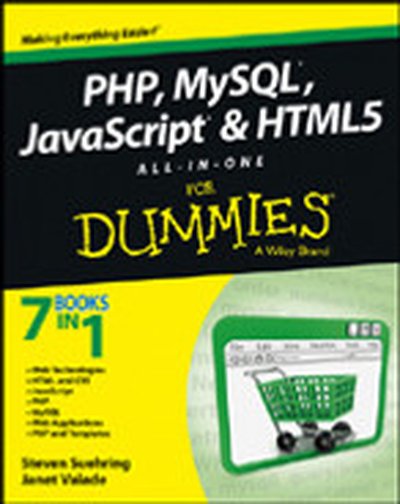
PHP, MySQL, JavaScript & HTML5 All-in-One For Dummies

Get the basics on four key web programming tools in one great book! PHP, JavaScript, and HTML5 are essential programming languages for creating dynamic websites that work with the MySQL database. PHP and MySQL provide a robust, easy-to-learn, open-source solution for creating superb e-commerce sites and content management. JavaScript and HTML5 add support for the most current multimedia effects. This one-stop guide gives you what you need to know about all four! Seven self-contained minibooks cover web technologies, HTML5 and CSS3, PHP programming, MySQL databases, JavaScript, PHP with templates, and web applications. Addresses how PHP, MySQL, JavaScript, and HTML5 are vital tools for creating dynamic, database-driven websites and are especially important for e-commerce sites Serves as essential reading for web designers who are new to these technologies, offering a crash course covering all of these powerful technologies in this handy volume of seven self-contained minibooks Covers how to program in PHP and how to create and administer a MySQL database as well as how to manipulate MySQL data via a web interface Shows how to create a secure website and how to code popular e-business applications such as login programs and shopping carts With seven books in one, PHP, MySQL, JavaScript & HTML5 All-in-One For Dummies will turn your website into the center of attention in no time at all.

IBM Flex System V7000 Storage Node Introduction and Implementation Guide

IBM® Flex System™ products are ideally suited for data center environments that require flexible, cost-effective, secure, and energy-efficient hardware. The IBM Flex System V7000 Storage Node is the latest addition to the IBM Flex Systems product family and is a modular storage system designed to fit into the IBM Flex System Enterprise chassis. When purchased in the IBM PureFlex configurations, the IBM Flex System V7000 Storage Node is configured from the factory into the hardware solution purchased. If, however, the configuration wanted is not offered in the predefined offerings, then a "Build to Order" configuration is designed to meet your needs. The IBM Flex System V7000 Storage Node includes the capability to virtualize its own internal storage in the same manner as the IBM Storwize® V7000 does. It is designed to be a scalable internal storage system to support the compute nodes of the IBM Flex System environment. This IBM® Redbooks® publication introduces the features and functions of the IBM Flex System V7000 Storage Node through several examples. This book is aimed at pre-sales and post-sales technical support and marketing personnel and storage administrators. It can help you understand the architecture of the IBM Flex System V7000 Storage Node, how to implement it, and how to take advantage of the industry leading functions and features.

IBM System Storage SAN Volume Controller and Storwize V7000 Replication Family Services

This IBM® Redbooks® publication describes the new features that have been added with the release of the IBM System Storage® SAN Volume Controller (SVC) and IBM System Storage Storwize® V7000 6.4.0 code, including Replication Family Services. Replication Family Services refers to the various copy services available on the SVC and Storwize V7000 including IBM FlashCopy®, Metro Mirror and Global Mirror, Global Mirror with Change Volumes, Volume Mirroring, and Stretched Cluster Volume Mirroring. The details behind the theory and practice of these services are examined, and SAN design suggestions and troubleshooting tips are provided. Planning requirements, automating copy services processed, and fabric design are explained. Multiple examples including implementation and server integration are included, along with a discussion of software solutions and services that are based on Replication Family Services. This book is intended for use by pre-sales and post-sales support, and storage administrators. Readers are expected to have an advanced knowledge of the SVC, Storwize V7000, and the SAN environment. The following publications are useful resources that provide background information: Implementing the IBM System Storage SAN Volume Controller V6.3, SG24-7933 Implementing the IBM Storwize V7000 V6.3, SG24-7938 IBM SAN Volume Controller and Brocade Disaster Recovery Solutions for VMware, REDP-4626[ IBM System Storage SAN Volume Controller Upgrade Path from Version 4.3.1 to 6.1, REDP-4716[ Real-time Compression in SAN Volume Controller and Storwize V7000, REDP-4859 SAN Volume Controller: Best Practices and Performance Guidelines, SG24-7521 Implementing the Storwize V7000 and the IBM System Storage SAN32B-E4 Encryption Switch, SG24-7977

Oracle Application Express for Mobile Web Applications

Oracle Application Express for Mobile Web Applications is an action driven book, taking you by the hand through all required steps in building your very own web application that will run on phones, tablets, and other mobile devices. Because you've built every piece of it yourself, you will know exactly how every tiny part is used and how you can tweak it to your own – or your customer's – taste. Oracle Application Express is widely known in the Oracle community as a great tool for creating web applications suitable for desktop browsers. Features have now been added to open up the world of mobile browsing, bringing the simplicity and expressiveness of Appliction Express to bear in developing applications to run with an almost-native look and feel on platforms such as iOS, Android, and Windows Phone. Oracle Application Express for Mobile Web Applications helps you translate your knowledge of Oracle Application Express into developing for mobile devices. The book and its running example provide all the knowledge you need to create professional looking mobile web applications. Takes you through building a mobile web application from start to finish. Gives insight into the components necessary for a professional looking mobile application. Helps you become an even better and more all-round Oracle Application Express developer. What you'll learn Build mobile applications to run from iPhones, iPads, Android devices, and Windows-based phones and tablets. Make enterprise reporting and business functions accessible to mobile devices. Customize the look-and-feel of your mobile applications. Respond to gestures such as swiping and pointing, and to changes in device orientation. Enhance mobile applications through the use of plugins. Deploy applications into the Apple and Android stores. Who this book is for Oracle Application Express for Mobile Web Applications is aimed at Oracle Application Express developers wanting to develop and deploy applications for use on mobile devices. The book is also useful to any developer in an Oracle Database environment who is looking for a quick-and-easy, yet powerful way to extend business functions and reporting to mobile devices.

Beginning Oracle Application Express 4.2, Second Edition

Beginning Oracle Application Express 4.2 introduces version 4.2 of the popular and productive Oracle Application Express development platform. Called APEX for short, the platform enables rapid and easy development of web-based applications that make full use of Oracle Database. The release of APEX 4.2 brings extensive new Flash and HTML 5 charting capabilities, enhanced themes for mobile applications usable from phones and tablets, RESTful web services support, enhanced application packaging, and the many redesigned wizards give a new and fresh feel to the user interface. Whether you're new to Oracle or an old hand who's yet to test the waters of APEX, Beginning Oracle Application Express 4.2 introduces the processes and best practices you'll need to become proficient with APEX. The book shows off the programming environment, the utilities and tools available, and then continues by walking through the process of building a working system from the ground up. All code is documented and explained so that those new to the languages will not be lost. After reading this book, power users and programmers alike can quickly put together robust and scalable applications for use by one person, by a department, by an entire company. Covers brand-new functionality in APEX 4.2 Provides fully documented and explained example code Guides you through creating a working and fully deployable application What you'll learn Design, code, and troubleshoot APEX applications Create forms and generate reports Create charts using Flash and HTML 5 Apply best-practices to database and application design Create intuitive navigation that inspires confidence among users Secure your applications from outside attack Deploy applications for one, a dozen, or hundreds of users Choose between desktop and mobile user interfaces for deployed applications Who this book is for Beginning Oracle Application Express 4.2 is for programmers and power users wanting to create rich, data-centric applications that are web-based, and that rest on Oracle's industry-leading database technology.

Hidden Visual Studio LightSwitch: Secrets from the Real World for Creating Great Apps

This eBook offers practical tips and tricks as well as useful guidance on how to implement common features in LightSwitch, such as those for working with documents, business analysis, screen customization, optimal server configuration, usage with databases other than SQL Server, and so on. What you can expect to find is solutions for everyday problems, with suggestions on how to implement requirements that are very common in any business application, especially for running across distributed networks in the enterprise. In summary, what you’ll find in this eBook is how to solve problems you will face in the real world. This eBook is intended for developers who have at least basic knowledge of Microsoft Visual Studio LightSwitch, as well as some experience in creating, configuring, and publishing applications.

Instant PostgreSQL Backup and Restore How-to

Are you tasked with managing and protecting your PostgreSQL databases? "Instant PostgreSQL Backup and Restore How-to" provides practical, step-by-step guidance for backing up and restoring both simple and complex PostgreSQL databases safely and efficiently. You'll learn essential skills to ensure your critical data is always secure and available. What this Book will help me do Master the process of backing up and restoring PostgreSQL databases effectively. Learn to target specific data for backup with partial dumps for higher flexibility. Utilize advanced compression techniques to optimize backup time and storage. Implement streaming replication for up-to-date standby servers. Apply file system snapshot techniques to ensure consistent online binary backups. Author(s) The authors of this book are experienced database administrators and PostgreSQL experts. They bring years of hands-on expertise in safeguarding and managing enterprise-level databases. Known for their engaging teaching style, they focus on delivering clear instructions and actionable insights to enable all database professionals to succeed with PostgreSQL. Who is it for? This book is designed for database administrators and IT professionals responsible for the durability, reliability, and recovery of data housed in PostgreSQL systems. It is well-suited for professionals ranging from beginners looking to understand PostgreSQL backup basics to experienced admins seeking to refine advanced restoration techniques. Readers should possess a basic familiarity with database concepts but do not need prior experience with PostgreSQL backup procedures.

Oracle E-Business Suite R12 Integration and OA Framework Development and Extension Cookbook

Have you ever wanted to customize or extend Oracle E-Business Suite but didn't know where to begin? This comprehensive cookbook provides a detailed guide to building and deploying extensions for Oracle E-Business Suite Release 12. Through step-by-step examples, you will learn key techniques for OA Framework development, desktop integration, and BI Publisher. What this Book will help me do Understand the architecture of Oracle E-Business Suite Release 12 and how it supports extensibility. Follow detailed instructions to set up a development environment using JDeveloper for OA Framework extensions. Learn to personalize and develop Oracle Application Framework (OAF) pages with hands-on examples. Gain skills in creating and using BI Publisher templates for generating professional reports. Acquire techniques for configuring and utilizing desktop integrator tools for enhancing business workflows. Author(s) Andy Penver is an experienced Oracle consultant with a vast knowledge in Oracle E-Business Suite and business application development. With over a decade of hands-on development experience, Andy has mentored teams globally in employing Oracle E-Business Suite efficiently. His warm teaching approach ensures that he conveys technical concepts in a way that's understandable and actionable. Who is it for? This book is ideal for developers, functional consultants, and IT professionals working with Oracle E-Business Suite. Beginners with minimal technical expertise will find the structured approach and comprehensive explanations accessible. Seasoned professionals seeking to deepen their skills in EBS customization will also benefit. If you want to master extending Oracle E-Business Suite, this book is for you.

Migration Use Cases with the Migration Manager Version 7.5

By using the Migration Manager, you can migrate configuration content from one production environment to another. The typical use is to migrate configuration content from a development environment to a test environment and then on to production for the Tivoli® process automation engine and its applications, such as IBM® SmartCloud® Control Desk. The goal of migration is to ensure that your production environment fully meets the needs of your users. This IBM Redbooks® publication is an update of the existing book Migration Use Cases with the Migration Manager, SG24-7906 and covers the most common migration use cases with the Migration Manager, including the capabilities that were introduced with Tivoli's process automation engine V7.5. These use cases are only a small subset of the possible migration scenarios that can be performed by the Migration Manager, but they were chosen to be representative of the capabilities of the Migration Manager. In addition to these use cases, the book presents a migration strategy and a comprehensive chapter about troubleshooting possible migration problems when the Migration Manager is used. We strongly suggest that you read Chapter 1, "Migration strategy" on page 1 first before reading the other chapters. This chapter give syou a good foundation for all of the migration scenarios that are covered in the book. This book is a reference for IT Specialists and IT Architects working on migrating configuration content from one production environment to another by using the Migration Manager.

Extending z/OS System Management Functions with IBM zAware

This IBM® Redbooks® publication explains the capabilities of the IBM System z® Advanced Workload Analysis Reporter (IBM zAware), and shows how you can use it as an integral part of your existing System z management tools. IBM zAware is an integrated, self-learning, analytics solution for IBM z/OS® that helps identify unusual system behavior in near real time. It is designed to help IT personnel improve problem determination so they can restore service quickly and improve overall availability. The book gives you a conceptual description of the IBM zAware appliance. It will help you to understand how it fits into the family of IBM mainframe system management tools that include Runtime Diagnostics, Predictive Failure Analysis (PFA), IBM Health Checker for z/OS, and z/OS Management Facility (z/OSMF). You are provided with the information you need to get IBM zAware up and running so you can start to benefit from its capabilities immediately. You will learn how to manage an IBM zAware environment, and see how other products can use the IBM zAware Application Programming Interface to extract information from IBM zAware for their own use. The target audience includes system programmers, system operators, configuration planners, and system automation analysts.

IBM i 7.1 Technical Overview with Technology Refresh Updates

This IBM® Redbooks® publication introduces a technical overview of the new features, functions, and enhancements available in IBM i 7.1. It provides a summary and brief explanation of new capabilities and what changed in the operating system. This publication also describes many of the licensed programs and application development tools that are associated with IBM i. This publication includes all the enhancements that were delivered with the Technology Refresh 4 and 5 that were made available in 2012. Many new and enhanced functions are described: IBM DB2® for i support for XML and column level encryption IBM PowerHA® for i asynchronous Geographic Mirroring and LUN-level switching Virtualization enhancements for IBM i hosted partitions and IBM PowerVM® Storage management enhancements for solid-state drives Systems management enhancements for Systems Director Navigator for i IBM Rational® software development product enhancements Zend PHP Enhancements Web Application Serving enhancements The information that is provided in this book is useful for clients, IBM Business Partners, and IBM service professionals that are involved with planning, supporting, upgrading, and implementing IBM i 7.1 solutions.

Oracle SQL Tuning with Oracle SQLTXPLAIN

Oracle SQL Tuning with SQLTXPLAIN is a practical guide to SQL tuning the way Oracle's own experts do it, using a freely downloadable tool called SQLTXPLAIN. Using this simple tool you'll learn how to tune even the most complex SQL, and you'll learn to do it quickly, without the huge learning curve usually associated with tuning as a whole. Firmly based in real world problems, this book helps you reclaim system resources and avoid the most common bottleneck in overall performance, badly tuned SQL. You'll learn how the optimizer works, how to take advantage of its latest features, and when it's better to turn them off. Quickly tune any SQL statement no matter how complex. Build and tune test cases without affecting production. Use the latest tuning features with confidence. What you'll learn How and why complex SQL goes wrong When statistics are crucial and when they are not How and when the tuning facilities of the database can help or hinder When to tune and when not to tune Which steps in an execution plan are crucial to performance How the optimizer works out the execution plan Who this book is for Oracle SQL Tuning with SQLTXPLAIN is ideal for everyone who deals with SQL and SQL tuning. Both developers and DBA's will benefit from learning how to use the SQLTXPLAIN tool along with the problem solving approach described in this book.

IBM Platform Computing Integration Solutions

This IBM® Redbooks® publication describes the integration of IBM Platform Symphony® with IBM BigInsights™. It includes IBM Platform LSF® implementation scenarios that use IBM System x® technologies. This IBM Redbooks publication is written for consultants, technical support staff, IT architects, and IT specialists who are responsible for providing solutions and support for IBM Platform Computing solutions. This book explains how the IBM Platform Computing solutions and the IBM System x platform can help to solve customer challenges and to maximize systems throughput, capacity, and management. It examines the tools, utilities, documentation, and other resources that are available to help technical teams provide solutions and support for IBM Platform Computing solutions in a System x environment. In addition, this book includes a well-defined and documented deployment model within a System x environment. It provides a planned foundation for provisioning and building large scale parallel high-performance computing (HPC) applications, cluster management, analytics workloads, and grid applications.