talk-data.com talk-data.com

Topic

data-science-tasks

794

tagged

Activity Trend

1 peak/qtr
2020-Q1 2026-Q1

Activities

Showing filtered results

Filtering by: O'Reilly Data Science Books ×
Bayesian Statistics: An Introduction, 4th Edition

Bayesian Statistics is the school of thought that combines prior beliefs with the likelihood of a hypothesis to arrive at posterior beliefs. The first edition of Peter Lee's book appeared in 1989, but the subject has moved ever onwards, with increasing emphasis on Monte Carlo based techniques. This new fourth edition looks at recent techniques such as variational methods, Bayesian importance sampling, approximate Bayesian computation and Reversible Jump Markov Chain Monte Carlo (RJMCMC), providing a concise account of the way in which the Bayesian approach to statistics develops as well as how it contrasts with the conventional approach. The theory is built up step by step, and important notions such as sufficiency are brought out of a discussion of the salient features of specific examples. This edition: Includes expanded coverage of Gibbs sampling, including more numerical examples and treatments of OpenBUGS, R2WinBUGS and R2OpenBUGS. Presents significant new material on recent techniques such as Bayesian importance sampling, variational Bayes, Approximate Bayesian Computation (ABC) and Reversible Jump Markov Chain Monte Carlo (RJMCMC). Provides extensive examples throughout the book to complement the theory presented. Accompanied by a supporting website featuring new material and solutions. More and more students are realizing that they need to learn Bayesian statistics to meet their academic and professional goals. This book is best suited for use as a main text in courses on Bayesian statistics for third and fourth year undergraduates and postgraduate students.
Infographics: The Power of Visual Storytelling

Transform your marketing efforts through the power of visual content In today's fast-paced environment, you must communicate your message in a concise and engaging way that sets it apart from the noise. Visual content—such as infographics and data visualization—can accomplish this. With DIY functionality, Infographics: The Power of Visual Storytelling will teach you how to find stories in your data, and how to visually communicate and share them with your audience for maximum impact. Infographics will show you the vast potential to using the communication medium as a marketing tool by creating informative and shareable infographic content. Learn how to explain an object, idea, or process using strong illustration that captures interest and provides instant clarity Discover how to unlock interesting stories (in previously buried or boring data) and turn them into visual communications that will help build brands and increase sales Use the power of visual content to communicate with and engage your audience, capture attention, and expand your market.

The Functional Art: An introduction to information graphics and visualization

Unlike any time before in our lives, we have access to vast amounts of free information. With the right tools, we can start to make sense of all this data to see patterns and trends that would otherwise be invisible to us. By transforming numbers into graphical shapes, we allow readers to understand the stories those numbers hide. In this practical introduction to understanding and using information graphics, you’ll learn how to use data visualizations as tools to see beyond lists of numbers and variables and achieve new insights into the complex world around us. Regardless of the kind of data you’re working with–business, science, politics, sports, or even your own personal finances–this book will show you how to use statistical charts, maps, and explanation diagrams to spot the stories in the data and learn new things from it. Condé Nast Traveler’s John Grimwade , National Geographic Magazine’s Fernando Baptista, The New York Times’ Steve Duenes, The Washington Post’s Hannah Fairfield, Hans Rosling of the Gapminder Foundation, Stanford’s Geoff McGhee, and European superstars Moritz Stefaner, Jan Willem Tulp, Stefanie Posavec, and Gregor Aisch. The Functional Art reveals: In this introductory course on information graphics, Alberto Cairo goes into greater detail with even more visual examples of how to create effective information graphics that function as practical tools for aiding perception. You’ll learn how to: incorporate basic design principles in your visualizations, create simple interfaces for interactive graphics, and choose the appropriate type of graphic forms for your data. Cairo also deconstructs successful information graphics from The New York Times and National Geographic magazine with sketches and images not shown in the book.

Experiment!: Website conversion rate optimization with A/B and multivariate testing

Testing is a surefire way to dramatically improve your website’s conversion rate and increase revenue. When you run experiments with changes to design or content, you’ll quickly discover which changes better motivate your users to take action. This book shows how to learn from your customers’ behavior and decisions, and how their responses reveal the strengths and weaknesses of your site. It will show you how to make websites that work harder and convert better. Learn how to approach experiments to improve conversion Understand the various methods of testing including A/B and multivariate Discover experiment ideas, and go beyond optimization to innovation Recognize the UX and design implications of experimenting Learn to analyze data and deliver results Experimenting changes the way you think about design and the way you work. It helps prevent the loudest voice from deciding direction; instead, through an experiment, you’ll ask the most important voices--your customers--“What do you think?”

Experiment!: Planning, Implementing and Interpreting

Experiments are the most effective way to learn about the world. By cleverly interfering with something to see how it reacts we are able to find out how it works. In contrast to passive observation, experimenting provides us with data relevant to our research and thus less time and effort is spent separating relevant from irrelevant information. The art of experimentation is often learnt by doing, so an intuitive understanding of the experimental method usually evolves gradually through years of trial and error. This book speeds up the journey for the reader to becoming a proficient experimenter. Organized in two parts, this unique text begins by providing a general introduction to the scientific approach to experimentation. It then describes the processes and tools required, including the relevant statistical and experimental methods. Towards the end of the book a methodology is presented, which leads the reader through the three phases of an experiment: 'Planning', 'Data Collection', and 'Analysis and Synthesis'. Experiment! Provides an excellent introduction to the methodology and implementation of experimentation in the natural, engineering and medical sciences Puts practical tools into scientific context Features a number of selected actual experiments to explore what are the key characteristics of good experiments Includes examples and exercises in every chapter This book focuses on general research skills, such as adopting a scientific mindset, learning how to plan meaningful experiments and understanding the fundamentals of collecting and interpreting data. It is directed to anyone engaged in experiments, especially Ph.D. and masters students just starting to create and develop their own experiments.

Regression Analysis

The technique of regression analysis is used so often in business and economics today that an understanding of its use is necessary for almost everyone engaged in the field. This book will teach you the essential elements of building and understanding regression models in a business/economic context in an intuitive manner. The authors take a non-theoretical treatment that is accessible even if you have a limited statistical background. It is specifically designed to teach the correct use of regression, while advising you of its limitations and teaching about common pitfalls. This book describes exactly how regression models are developed and evaluated —where real data is used, instead of contrived textbook-like problems. Completing this book will allow you to understand and build basic business/economic models using regression analysis. You will be able to interpret the output of those models and you will be able to evaluate the models for accuracy and shortcomings. Even if you never build a model yourself, at some point in your career it is likely that you will find it necessary to interpret one; this book will make that possible. Included are instructions for using Microsoft Excel to build business/economic models using regression analysis with an appendix using screen shots and step-by-step instructions.

Applied Data Mining for Forecasting Using SAS

Applied Data Mining for Forecasting Using SAS, by Tim Rey, Arthur Kordon, and Chip Wells, introduces and describes approaches for mining large time series data sets. Written for forecasting practitioners, engineers, statisticians, and economists, the book details how to select useful candidate input variables for time series regression models in environments when the number of candidates is large, and identifies the correlation structure between selected candidate inputs and the forecast variable.

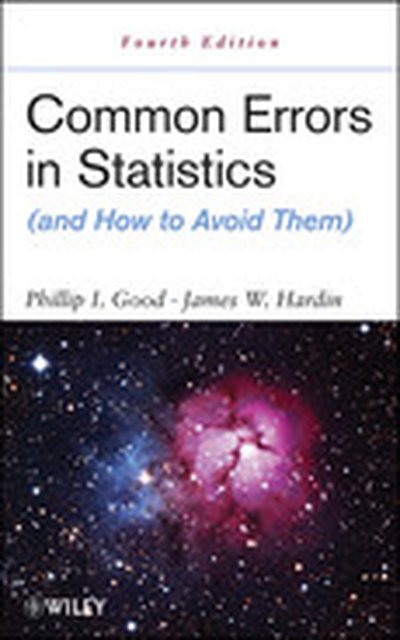
Common Errors in Statistics (and How to Avoid Them), 4th Edition

Praise for Common Errors in Statistics (and How to Avoid Them) "A very engaging and valuable book for all who use statistics in any setting." —CHOICE "Addresses popular mistakes often made in data collection and provides an indispensable guide to accurate statistical analysis and reporting. The authors' emphasis on careful practice, combined with a focus on the development of solutions, reveals the true value of statistics when applied correctly in any area of research." —MAA Reviews Common Errors in Statistics (and How to Avoid Them), Fourth Edition provides a mathematically rigorous, yet readily accessible foundation in statistics for experienced readers as well as students learning to design and complete experiments, surveys, and clinical trials. Providing a consistent level of coherency throughout, the highly readable Fourth Edition focuses on debunking popular myths, analyzing common mistakes, and instructing readers on how to choose the appropriate statistical technique to address their specific task. The authors begin with an introduction to the main sources of error and provide techniques for avoiding them. Subsequent chapters outline key methods and practices for accurate analysis, reporting, and model building. The Fourth Edition features newly added topics, including: Baseline data Detecting fraud Linear regression versus linear behavior Case control studies Minimum reporting requirements Non-random samples The book concludes with a glossary that outlines key terms, and an extensive bibliography with several hundred citations directing readers to resources for further study. Presented in an easy-to-follow style, Common Errors in Statistics, Fourth Edition is an excellent book for students and professionals in industry, government, medicine, and the social sciences.

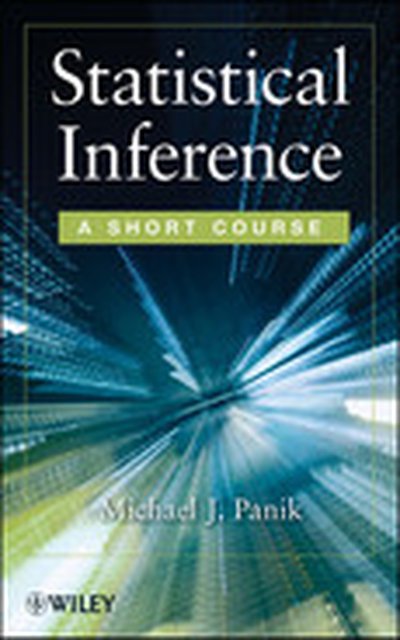
Statistical Inference: A Short Course

A concise, easily accessible introduction to descriptive and inferential techniques Statistical Inference: A Short Course offers a concise presentation of the essentials of basic statistics for readers seeking to acquire a working knowledge of statistical concepts, measures, and procedures. The author conducts tests on the assumption of randomness and normality, provides nonparametric methods when parametric approaches might not work. The book also explores how to determine a confidence interval for a population median while also providing coverage of ratio estimation, randomness, and causality. To ensure a thorough understanding of all key concepts, Statistical Inference provides numerous examples and solutions along with complete and precise answers to many fundamental questions, including: How do we determine that a given dataset is actually a random sample? With what level of precision and reliability can a population sample be estimated? How are probabilities determined and are they the same thing as odds? How can we predict the level of one variable from that of another? What is the strength of the relationship between two variables? The book is organized to present fundamental statistical concepts first, with later chapters exploring more advanced topics and additional statistical tests such as Distributional Hypotheses, Multinomial Chi-Square Statistics, and the Chi-Square Distribution. Each chapter includes appendices and exercises, allowing readers to test their comprehension of the presented material. Statistical Inference: A Short Course is an excellent book for courses on probability, mathematical statistics, and statistical inference at the upper-undergraduate and graduate levels. The book also serves as a valuable reference for researchers and practitioners who would like to develop further insights into essential statistical tools.

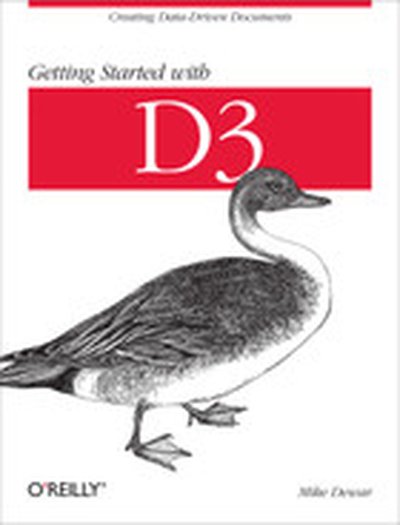
Getting Started with D3

Learn how to create beautiful, interactive, browser-based data visualizations with the D3 JavaScript library. This hands-on book shows you how to use a combination of JavaScript and SVG to build everything from simple bar charts to complex infographics. You’ll learn how to use basic D3 tools by building visualizations based on real data from the New York Metropolitan Transit Authority. Using historical tables, geographical information, and other data, you’ll graph bus breakdowns and accidents and the percentage of subway trains running on time, among other examples. By the end of the book, you’ll be prepared to build your own web-based data visualizations with D3. Join a dataset with elements of a webpage, and modify the elements based on the data Map data values onto pixels and colors with D3’s scale objects Apply axis and line generators to simplify aspects of building visualizations Create a simple UI that allows users to investigate and compare data Use D3 transitions in your UI to animate important aspects of the data Get an introduction to D3 layout tools for building more sophisticated visualizations If you can code and manipulate data, and know how to work with JavaScript and SVG, this book is for you.

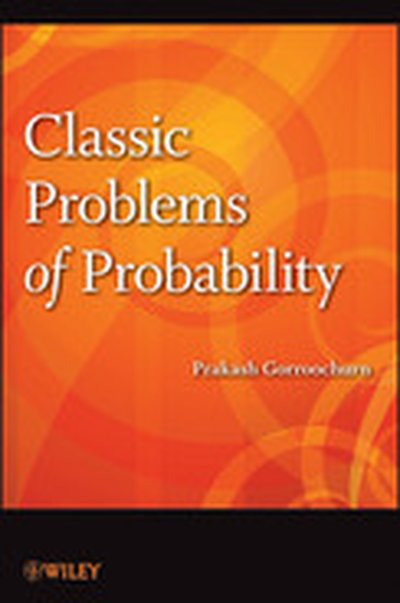
Classic Problems of Probability

"A great book, one that I will certainly add to my personal library." --Paul J. Nahin, Professor Emeritus of Electrical Engineering, University of New Hampshire Classic Problems of Probability presents a lively account of the most intriguing aspects of statistics. The book features a large collection of more than thirty classic probability problems which have been carefully selected for their interesting history, the way they have shaped the field, and their counterintuitive nature. From Cardano's 1564 Games of Chance to Jacob Bernoulli's 1713 Golden Theorem to Parrondo's 1996 Perplexing Paradox, the book clearly outlines the puzzles and problems of probability, interweaving the discussion with rich historical detail and the story of how the mathematicians involved arrived at their solutions. Each problem is given an in-depth treatment, including detailed and rigorous mathematical proofs as needed. Some of the fascinating topics discussed by the author include: Buffon's Needle problem and its ingenious treatment by Joseph Barbier, culminating into a discussion of invariance Various paradoxes raised by Joseph Bertrand Classic problems in decision theory, including Pascal's Wager, Kraitchik's Neckties, and Newcomb's problem The Bayesian paradigm and various philosophies of probability Coverage of both elementary and more complex problems, including the Chevalier de Méré problems, Fisher and the lady testing tea, the birthday problem and its various extensions, and the Borel-Kolmogorov paradox Classic Problems of Probability is an eye-opening, one-of-a-kind reference for researchers and professionals interested in the history of probability and the varied problem-solving strategies employed throughout the ages. The book also serves as an insightful supplement for courses on mathematical probability and introductory probability and statistics at the undergraduate level.

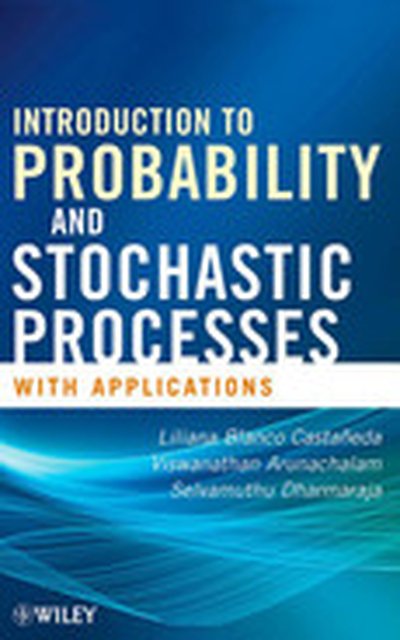
Introduction to Probability and Stochastic Processes with Applications

An easily accessible, real-world approach to probability and stochastic processes Introduction to Probability and Stochastic Processes with Applications presents a clear, easy-to-understand treatment of probability and stochastic processes, providing readers with a solid foundation they can build upon throughout their careers. With an emphasis on applications in engineering, applied sciences, business and finance, statistics, mathematics, and operations research, the book features numerous real-world examples that illustrate how random phenomena occur in nature and how to use probabilistic techniques to accurately model these phenomena. The authors discuss a broad range of topics, from the basic concepts of probability to advanced topics for further study, including Itô integrals, martingales, and sigma algebras. Additional topical coverage includes: Distributions of discrete and continuous random variables frequently used in applications Random vectors, conditional probability, expectation, and multivariate normal distributions The laws of large numbers, limit theorems, and convergence of sequences of random variables Stochastic processes and related applications, particularly in queueing systems Financial mathematics, including pricing methods such as risk-neutral valuation and the Black-Scholes formula Extensive appendices containing a review of the requisite mathematics and tables of standard distributions for use in applications are provided, and plentiful exercises, problems, and solutions are found throughout. Also, a related website features additional exercises with solutions and supplementary material for classroom use. Introduction to Probability and Stochastic Processes with Applications is an ideal book for probability courses at the upper-undergraduate level. The book is also a valuable reference for researchers and practitioners in the fields of engineering, operations research, and computer science who conduct data analysis to make decisions in their everyday work.

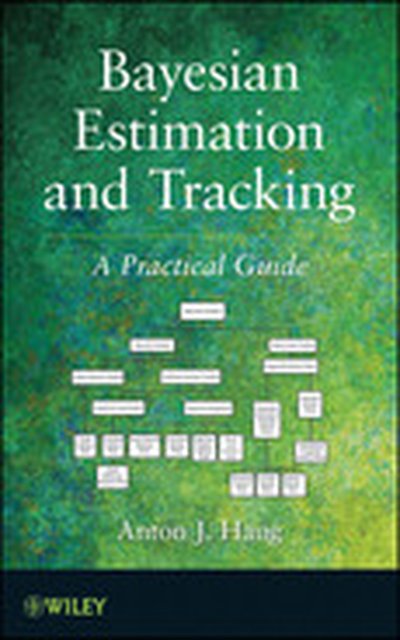
Bayesian Estimation and Tracking: A Practical Guide

A practical approach to estimating and tracking dynamic systems in real-worl applications Much of the literature on performing estimation for non-Gaussian systems is short on practical methodology, while Gaussian methods often lack a cohesive derivation. Bayesian Estimation and Tracking addresses the gap in the field on both accounts, providing readers with a comprehensive overview of methods for estimating both linear and nonlinear dynamic systems driven by Gaussian and non-Gaussian noices. Featuring a unified approach to Bayesian estimation and tracking, the book emphasizes the derivation of all tracking algorithms within a Bayesian framework and describes effective numerical methods for evaluating density-weighted integrals, including linear and nonlinear Kalman filters for Gaussian-weighted integrals and particle filters for non-Gaussian cases. The author first emphasizes detailed derivations from first principles of eeach estimation method and goes on to use illustrative and detailed step-by-step instructions for each method that makes coding of the tracking filter simple and easy to understand. Case studies are employed to showcase applications of the discussed topics. In addition, the book supplies block diagrams for each algorithm, allowing readers to develop their own MATLAB toolbox of estimation methods. Bayesian Estimation and Tracking is an excellent book for courses on estimation and tracking methods at the graduate level. The book also serves as a valuable reference for research scientists, mathematicians, and engineers seeking a deeper understanding of the topics.

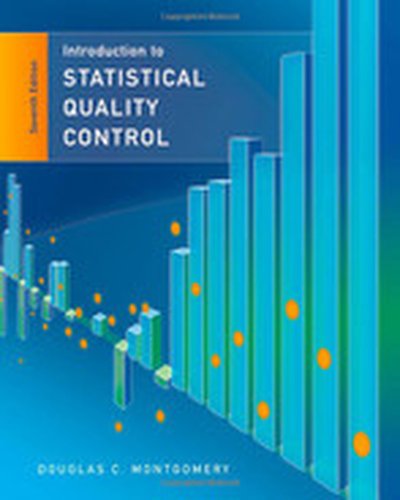
Statistical Quality Control, 7th Edition

The Seventh Edition of Introduction to Statistical Quality Control provides a comprehensive treatment of the major aspects of using statistical methodology for quality control and improvement. Both traditional and modern methods are presented, including state-of-the-art techniques for statistical process monitoring and control and statistically designed experiments for process characterization, optimization, and process robustness studies. The seventh edition continues to focus on DMAIC (define, measure, analyze, improve, and control--the problem-solving strategy of six sigma) including a chapter on the implementation process. Additionally, the text includes new examples, exercises, problems, and techniques. Statistical Quality Control is best suited for upper-division students in engineering, statistics, business and management science or students in graduate courses.

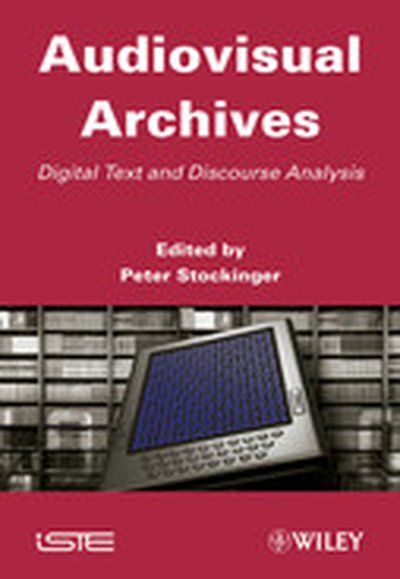
Audiovisual Archives: Digital Text and Discourse Analysis

Today, audiovisual archives and libraries have become very popular especially in the field of collecting, preserving and transmitting cultural heritage. However, the data in these archives or libraries - videos, images, soundtracks, etc. - constitute as such only potential cognitive resources for a given public (or "target community"). One of the most crucial issues of digital audiovisual libraries is indeed to enable users to actively appropriate audiovisual resources for their own concern (in research, education or any other professional or non-professional context). This means, an adaptation of the audiovisual data to the specific needs of a user or user group can be represented by small and closed "communities" as well as by networks of open communities around the globe. "Active appropriation" is, basically speaking, the use of existing digital audiovisual resources by users or user communities according to their expectations, needs, interests or desires. This process presupposes: 1) the definition and development of models or "scenarios" of cognitive processing of videos by the user; 2) the availability of tools necessary for defining, developing, reusing and sharing meta-linguistic resources such as thesauruses, ontologies or description models by users or user communities. Both aspects are central to the so-called semiotic turn in dealing with digital (audiovisual) texts, corpora of texts or again entire (audiovisual) archives and libraries. They demonstrate practically and theoretically the well-known "from data to metadata" or "from (simple) information to (relevant) knowledge" problem, which obviously directly influences the effective use, social impact and relevancy, and therefore also the future, of digital knowledge archives. This book offers a systematic, comprehensive approach to these questions from a theoretical as well as practical point of view. Contents Part 1. The Practical, Technical and Theoretical Context 1. Analysis of an Audiovisual Resource. 2. The Audiovisual Semiotic Workshop (ASW) Studio - A Brief Presentation. 3. A Concrete Example of a Model for Describing Audiovisual Content. 4. Model of Description and Task of Analysis. Part 2. Tasks in Analyzing an Audiovisual Corpus 5. The Analytical Task of "Describing the Knowledge Object". 6. The Analytical Task of "Contextualizing the Domain of Knowledge". 7. The Analytical Task of "Analyzing the Discourse Production around a Subject". Part 3. Procedures of Description 8. Definition of the Domain of Knowledge and Configuration of the Topical Structure. 9. The Procedure of Free Description of an Audiovisual Corpus. 10. The Procedure of Controlled Description of an Audiovisual Corpus. Part 4. The ASW System of Metalinguistic Resources 11. An Overview of the ASW Metalinguistic Resources. 12. The Meta-lexicon Representing the ASW Universe of Discourse.

Beginning R: The Statistical Programming Language

Conquer the complexities of this open source statistical language R is fast becoming the de facto standard for statistical computing and analysis in science, business, engineering, and related fields. This book examines this complex language using simple statistical examples, showing how R operates in a user-friendly context. Both students and workers in fields that require extensive statistical analysis will find this book helpful as they learn to use R for simple summary statistics, hypothesis testing, creating graphs, regression, and much more. It covers formula notation, complex statistics, manipulating data and extracting components, and rudimentary programming. R, the open source statistical language increasingly used to handle statistics and produces publication-quality graphs, is notoriously complex This book makes R easier to understand through the use of simple statistical examples, teaching the necessary elements in the context in which R is actually used Covers getting started with R and using it for simple summary statistics, hypothesis testing, and graphs Shows how to use R for formula notation, complex statistics, manipulating data, extracting components, and regression Provides beginning programming instruction for those who want to write their own scripts Beginning R offers anyone who needs to perform statistical analysis the information necessary to use R with confidence.

Mind Mapping For Dummies

Unlock your brain's potential using mind mapping Mind mapping is a popular technique that can be applied in a variety of situations and settings. Students can make sense of complex topics and structure their revision with mind mapping; business people can manage projects and collaborate with colleagues using mind maps, and any creative process can be supported by using a mind map to explore ideas and build upon them. Mind maps allow for greater creativity when recording ideas and information whatever the topic, and enable the note-taker to associate words with visual representations. Mind Mapping For Dummies explains how mind mapping works, why it's so successful, and the many ways it can be used. It takes you through the wide range of approaches to mind mapping, looks at the available mind mapping software options, and investigates advanced mind mapping techniques for a range of purposes, including studying for exams, improving memory, project management, and maximizing creativity. Suitable for students of all ages and study levels An excellent resource for people working on creative projects who wish to use mind mapping to develop their ideas Shows businesspeople how to maximize their efficiency, manage projects, and brainstorm effectively If you're a student, artist, writer, or businessperson, Mind Mapping For Dummies shows you how to unlock your brain's potential.

Probability, Statistics, and Stochastic Processes, 2nd Edition

Praise for the First Edition ". . . an excellent textbook . . . well organized and neatly written." — Mathematical Reviews ". . . amazingly interesting . . ." — Technometrics Thoroughly updated to showcase the interrelationships between probability, statistics, and stochastic processes, Probability, Statistics, and Stochastic Processes, Second Edition prepares readers to collect, analyze, and characterize data in their chosen fields. Beginning with three chapters that develop probability theory and introduce the axioms of probability, random variables, and joint distributions, the book goes on to present limit theorems and simulation. The authors combine a rigorous, calculus-based development of theory with an intuitive approach that appeals to readers' sense of reason and logic. Including more than 400 examples that help illustrate concepts and theory, the Second Edition features new material on statistical inference and a wealth of newly added topics, including: Consistency of point estimators Large sample theory Bootstrap simulation Multiple hypothesis testing Fisher's exact test and Kolmogorov-Smirnov test Martingales, renewal processes, and Brownian motion One-way analysis of variance and the general linear model Extensively class-tested to ensure an accessible presentation, Probability, Statistics, and Stochastic Processes, Second Edition is an excellent book for courses on probability and statistics at the upper-undergraduate level. The book is also an ideal resource for scientists and engineers in the fields of statistics, mathematics, industrial management, and engineering.

Research Methods for Studying Groups and Teams

This volume provides an overview of the methodological issues and challenges inherent in the study of small groups from the perspective of seasoned researchers in communication, psychology and other fields in the behavioral and social sciences. It summarizes the current state of group methods in a format that is readable, insightful, and useful for both new and experienced group researchers. This collection of essays will inspire new and established researchers alike to look beyond their current methodological approaches, covering both traditional and new methods for studying groups and exploring the full range of groups in face-to-face and online settings. The volume will be an important addition to graduate study on group research and will be a valuable reference for established group researchers, consultants and other practitioners. The essays in this volume when considered as a whole will be a contemporary interdisciplinary integration on group research methods.

Information Visualization, 3rd Edition

Most designers know that yellow text presented against a blue background reads clearly and easily, but how many can explain why, and what really are the best ways to help others and ourselves clearly see key patterns in a bunch of data? When we use software, access a website, or view business or scientific graphics, our understanding is greatly enhanced or impeded by the way the information is presented. This book explores the art and science of why we see objects the way we do. Based on the science of perception and vision, the author presents the key principles at work for a wide range of applications--resulting in visualization of improved clarity, utility, and persuasiveness. The book offers practical guidelines that can be applied by anyone: interaction designers, graphic designers of all kinds (including web designers), data miners, and financial analysts. Complete update of the recognized source in industry, research, and academic for applicable guidance on information visualizing Includes the latest research and state of the art information on multimedia presentation More than 160 explicit design guidelines based on vision science A new final chapter that explains the process of visual thinking and how visualizations help us to think about problems Packed with over 400 informative full color illustrations, which are key to understanding of the subject